 MSME & Udyam
CIPET in 2026: Courses, Fees, Admission, Centres and Testing Services
CIPET in 2026: full form, all 40 centres by state, DPT/DPMT/PGD-PPT courses with official fees, CIPET JEE admission, free skill courses and plastics testing.
 Edited by Sumeet YadavFounder & editor, MSMETOOLS · fact-checked against official sources
Contents (10)
- 1. What CIPET is (and the full form)
- 2. CIPET centres by state
- 3. CIPET courses: diplomas, degrees and skill programmes
- 4. CIPET fees in 2026: what you actually pay
- 5. Admission: how CIPET JEE works
- 6. Placements: what to expect
- 7. Free CIPET skill training: who qualifies
- 8. CIPET for MSMEs: testing, inspection and tool room
- 9. Common mistakes to avoid
- 10. What to do next
CIPET is the Government of India's specialist institute for plastics and polymers — part college, part skill-training network, part testing lab. Students search for it to find a diploma that leads to a job in moulding, extrusion or packaging; small manufacturers search for it when a buyer or tender asks for a "CIPET test report". This guide covers both: what CIPET is, every centre by state, the courses with the fees CIPET itself publishes, how CIPET JEE admission works in 2026, the free sponsored skill programmes, and the testing and inspection services an MSME can use.
Quick answer
CIPET is the Central Institute of Petrochemicals Engineering & Technology, a Government of India institute under the Ministry of Chemicals & Fertilizers, founded in Chennai in 1968. It now runs about 40 locations in 22 states, offering diplomas, degrees and short skill courses in plastics, plus NABL-accredited testing for industry.
Main diplomas: DPT and DPMT (3 years (6 semesters), after Class 10) and PGD-PPT (2 years (4 semesters), after a science degree)
Tuition (official fee page): ₹16,700 per semester for DPT/DPMT, ₹20,000 for PGD-PPT/PD-PMD
Admission is through CIPET JEE, a computer-based test; courses start in August
Sponsored skill courses charge no fee to the trainee; testing and inspection are open to any manufacturer
What CIPET is (and the full form)
CIPET was set up in 1968 at Guindy, Chennai with help from the United Nations Development Programme, with the International Labour Organization as executing agency. At the time India had no institute that trained people for the plastics industry. The original name was Central Institute of Plastics Engineering & Technology; on 28 May 2020 the Ministry of Chemicals & Fertilizers renamed it Central Institute of Petrochemicals Engineering & Technology so it could serve the wider petrochemical sector. The acronym did not change.
CIPET is a society under the Department of Chemicals & Petrochemicals. Its work falls into four streams:
- Academics — diplomas, B.Tech/M.Tech, M.Sc and PhD programmes in plastics and polymer engineering.
- Skill training — short NSQF-aligned courses for school leavers, ITI holders and the unemployed.
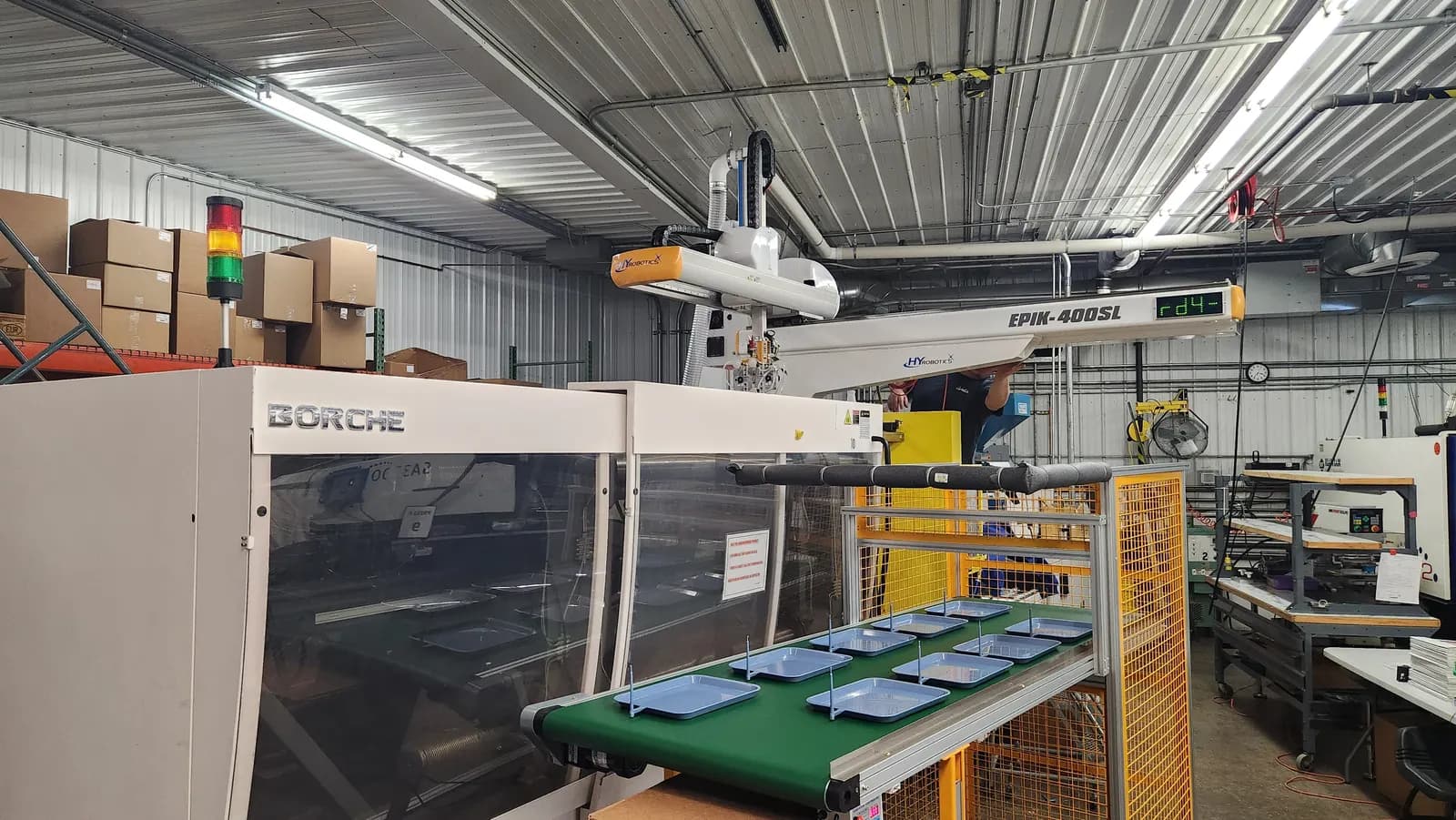
- Technology support — product and mould design, CAD/CAM/CAE, tool room, processing trials, testing, inspection and consultancy.
- Research — three dedicated research units in Chennai, Bhubaneswar and Bengaluru.
If you are comparing CIPET with the MSME Ministry's tool rooms, note the difference: CIPET is plastics-first, while CTTC Bhubaneswar and the Indo-German Tool Rooms focus on metal tooling, CNC and mechatronics. Our technology centre directory lists both kinds.
CIPET centres by state
CIPET groups its locations into four types. An IPT (Institute of Plastics Technology) is a full campus that teaches degrees and diplomas. A CSTS (Centre for Skilling & Technical Support) focuses on diplomas, skill training and industry services. SARP units are research labs, and PWMC centres work on plastic waste management. The table follows CIPET's own institute menu as of October 2026.
| State | Centre (type) |
|---|---|
| Tamil Nadu | Chennai (IPT, head office at Guindy), Madurai (CSTS), Chennai ARSTPS (SARP) |
| Gujarat | Ahmedabad (IPT) with Bhavnagar sub-centre, Navsari (CSTS) |
| Uttar Pradesh | Lucknow (IPT), Varanasi (CSTS + PWMC), Ayodhya (CSTS) |
| Odisha | Bhubaneswar (IPT), Bhubaneswar (CSTS) with Paradip PPEC, Balasore (CSTS), Bhubaneswar LARPM (SARP) |
| Kerala | Kochi (IPT) with Palakkad sub-centre |
| Chhattisgarh | Raipur (IPT), Korba (CSTS) |
| Rajasthan | Jaipur (IPT and CSTS) |
| Haryana | Murthal (IPT) |
| Bihar | Bihta (IPT), Hajipur (CSTS), Bhagalpur (CSTS + PWMC) |
| Madhya Pradesh | Bhopal (CSTS) with Tamot APPSEC, Gwalior (CSTS) |
| Maharashtra | Chhatrapati Sambhajinagar (CSTS), Chandrapur (CSTS) |
| Assam | Guwahati (CSTS and PWMC) |
| Karnataka | Mysuru (CSTS), Bengaluru APDDRL (SARP), Bengaluru PEWMC |
| Telangana / Andhra Pradesh | Hyderabad (CSTS) / Vijayawada (CSTS) |
| North-East and hills | Imphal, Agartala, Dehradun, Baddi (all CSTS) |
| Punjab / Jharkhand / West Bengal | Amritsar / Ranchi / Haldia (all CSTS) |
The most searched campuses — CIPET Lucknow, Raipur, Guwahati, Chennai (Guindy), Bhubaneswar, Balasore, Ahmedabad, Murthal and Ranchi — all appear above. Not every centre runs every course in every year; seat allotment by centre is published with each admission notice.
CIPET courses: diplomas, degrees and skill programmes
Diploma and postgraduate diploma courses
These four programmes are what most people mean by "CIPET courses". All are full time and, per CIPET's FAQ, approved by AICTE.
CIPET diploma programmes (official FAQ)
| Course | Duration | Who can apply | Tuition per semester |
|---|---|---|---|
DPT — Diploma in Plastics Technology | 3 years (6 semesters) | Class 10 pass (result-awaited can apply) | ₹16,700 |
DPMT — Diploma in Plastics Mould Technology | 3 years (6 semesters) | Class 10 pass (result-awaited can apply) | ₹16,700 |
PGD-PPT — PG Diploma in Plastics Processing & Testing | 2 years (4 semesters) | 3-year B.Sc or other science degree | ₹20,000 |
PD-PMD — Post Diploma in Plastics Mould Design with CAD/CAM | 1½ years (3 semesters) | 3-year diploma in mechanical, plastics, tool & die, production, mechatronics and allied branches, or DPT/DPMT | ₹20,000 |
DPT — Diploma in Plastics Technology
- Duration
3 years (6 semesters)
- Who can apply
Class 10 pass (result-awaited can apply)
- Tuition per semester
₹16,700
DPMT — Diploma in Plastics Mould Technology
- Duration
3 years (6 semesters)
- Who can apply
Class 10 pass (result-awaited can apply)
- Tuition per semester
₹16,700
PGD-PPT — PG Diploma in Plastics Processing & Testing
- Duration
2 years (4 semesters)
- Who can apply
3-year B.Sc or other science degree
- Tuition per semester
₹20,000
PD-PMD — Post Diploma in Plastics Mould Design with CAD/CAM
- Duration
1½ years (3 semesters)
- Who can apply
3-year diploma in mechanical, plastics, tool & die, production, mechatronics and allied branches, or DPT/DPMT
- Tuition per semester
₹20,000
DPT is processing-oriented: materials, extrusion, injection and blow moulding, testing and quality. DPMT is tooling-oriented: mould design, machining, CNC and tool room practice. If you want to design and build moulds, pick DPMT; if you want to run a moulding or film plant, DPT fits better. There is no upper age limit, and a diploma holder can join a B.E./B.Tech in plastics or polymer engineering through lateral entry.
Degrees after Class 12
Several IPT campuses run B.Tech programmes (plastics, manufacturing, mechanical, petrochemical) and M.Tech/M.Sc programmes in affiliation with state universities. Admission follows the university's or state's process, not CIPET JEE — CIPET Bhubaneswar, for example, published its 2026 B.Tech notice under OJEE, Odisha's entrance test. So the answer to "CIPET courses after 12th" is: DPT/DPMT through CIPET JEE, or a B.Tech through your state engineering entrance.
Short-term skill courses
CIPET is recognised by NCVET as both an awarding body and an assessment agency. Its latest list of NSQF-aligned qualifications (published 29 October 2025) has 23 courses from NSQF level 3 to 5.5, each of 480–660 notional hours. Entry-level options include Assistant Machine Operator for injection moulding, extrusion, blow moulding or plastics recycling; mid-level ones cover CNC lathe and milling operator-programmer and tool room operator; the top tier includes Plastics Mould Making Specialist, Quality Control Inspector and Designer – Plastic Products & Moulds. The format is roughly 20–30% theory and 70–80% practical.
CIPET fees in 2026: what you actually pay
CIPET publishes one fee table for all centres. The page is still headed "academic year 2022-23", but the same tuition figures appear in the diploma FAQ updated in October 2025, and no newer table has been posted. Treat these as the current official numbers, and check the admission booklet issued with your call letter before paying.
Official CIPET diploma fees (per CIPET fee page)
₹16,700
DPT / DPMT tuition
per semester
₹20,000
PGD-PPT / PD-PMD tuition
per semester
₹1,500
Admission fee
one-time
₹10,000
Hostel room rent
per semester, mess extra
Other charges on the same page: ₹500 caution money and ₹150 alumni fee at admission, ₹100 a year for student insurance, ₹200 per theory or practical paper in semester exams (₹250 for a supplementary paper), and a refundable ₹1,000 hostel caution deposit. Overseas applicants pay USD 1,750 per semester.
Worked example — three years of DPMT, day scholar. Tuition 6 × ₹16,700 = ₹1,00,200. Add the one-time ₹1,500 + ₹500 + ₹150 = ₹2,150 and insurance of ₹300 over three years, and you are at about ₹1,02,650 before exam fees. If you stay in the hostel, six semesters of room rent add ₹60,000 plus mess at actual cost. State scholarships can offset part of this — CIPET's FAQ says students can claim them under their state's policy.
Admission: how CIPET JEE works
Admission to every CIPET diploma, post-diploma and PG diploma is through the CIPET Joint Entrance Examination, an all-India computer-based test. CIPET's FAQ says the advertisement appears between March and April in newspapers and on cipet.gov.in, and classes begin in August.
CIPET JEE admission, step by step
- 1
Watch for the notice (March–April)
The admission advertisement and online form appear on cipet.gov.in. In the 2026 cycle the window ran from December 2025 to 28 May 2026, with the test on 7 June 2026 — expect a similar pattern next year, but go by the official notice.
- 2
Apply online and choose centres
Fill the form, pick your course and preferred CIPET centres, upload documents and pay the application fee. Class 10 students awaiting results can apply.
- 3
Take the computer-based test
The CBT is an objective paper. Selection is on JEE performance; reservation is SC 15%, ST 7.5%, OBC-NCL 27%, EWS 10%, with 3% horizontal reservation for persons with disabilities.
- 4
Accept the provisional seat
Selected candidates get a call letter for a specific centre. Accept within the stated date — otherwise the seat goes to the waiting list.
- 5
Report with certificates and fees
Submit original marksheets and category certificates and pay the first-semester and one-time fees. Classes start in August.
Tip: Ask the centre about hostel seats early — hostel allotment is handled locally.
There is no age limit for the diplomas. Whatever dates education portals show, the only binding schedule is the notice on cipet.gov.in.
Placements: what to expect
CIPET says its placement record is above 90%, a figure that includes higher studies and entrepreneurship as well as jobs. The placement cell registers final-year students, runs mock interviews and group discussions, and invites plastics, packaging, automotive-component and appliance makers for campus recruitment. The diploma FAQ adds that a large share of graduates are placed abroad.
CIPET does not publish centre-wise salary data, and the salary figures on aggregator sites are self-reported. Before you accept a seat, ask the centre for its last batch's recruiter list. DPMT graduates also have an option outside plastics: the CNC, EDM and mould-making skills they learn are the same ones general tool rooms hire for.
Free CIPET skill training: who qualifies
The Skill Development Training Programmes are different from the diplomas. They are short, sponsored by a central or state agency, PSU or company, and — per CIPET's FAQ — carry no course fee for the trainee. Residential batches include free boarding and lodging; course material, tool kit, uniform and shoes are supplied. Any stipend comes from the sponsor, paid straight to the trainee's bank account.
Who can join: school drop-outs, ITI and polytechnic holders, undergraduates who want a skill, unemployed youth, people from economically weaker sections and women candidates. You must be at least 18. Selection is by a committee following the sponsor's guidelines, and CIPET says it helps about 80% of successful trainees into jobs in plastics processing and allied industries.
To join, watch the centre's notices or newspaper advertisements, or walk in to the nearest CIPET centre and ask which sponsored batch is open. CIPET also runs fee-paying short courses, such as CAD/CAM/CAE, mould design and processing upgrades for working professionals; fees for these vary by centre.
CIPET for MSMEs: testing, inspection and tool room
For a small plastics manufacturer, CIPET is often more useful as a lab than as a college.
What an MSME can get from CIPET
0/6Test requests go through CIPET's Laboratory Information Management System (LIMS) portal, where you create a test request, send samples to the chosen centre and download the report. Every CIPET test or inspection report carries a hologram; buyers who want to confirm a report is genuine can write to the head office PDI cell. Government and PSU buyers of plastic pipes, tanks and packaging often name a CIPET or other NABL-lab report in their tender conditions.
Keep your Udyam registration current — some state industrial policies reimburse part of testing and certification costs for registered MSMEs, so ask your District Industries Centre. If you also bid on central tenders, NSIC's Single Point Registration exempts you from the tender fee and EMD.
Common mistakes to avoid
- Paying an "admission agent". CIPET admissions are online through its own portal; seats are allotted on CIPET JEE merit only.
- Trusting fees on aggregator sites. Some quote old or one-centre figures. Use the official fee page and your admission booklet.
- Confusing a CSTS with an IPT. If you want a B.Tech or a large campus, check that the centre is an IPT; many CSTS centres run only diplomas and skill courses.
- Assuming every skill course is free. Only sponsored batches are free; ask who the sponsor is before you join.
- Sending samples without a LIMS request. Raise the request first so the lab can quote and schedule the test.
Official CIPET links
- CIPET home and admission noticesJEE notice, results, centre notifications
- Diploma admission procedureHow to apply, reservation
- Diploma fee structureTuition, hostel, exam fees
- Skill development FAQFree sponsored courses, eligibility
- Testing services and centre contactsNABL labs, LIMS, report verification
- Placement cellHead office placement contact
What to do next
If you are a student, shortlist two or three CIPET centres near you from the table above, then set a reminder for the March–April admission notice. If you run a plastics unit, open a LIMS account and get your main product tested once — the report usually pays for itself in the first tender. Also compare the MSME Ministry's metal-tooling centres, CTTC Bhubaneswar and the Indo-German Tool Rooms. Before you invest in a new mould or machine, run the numbers with our break-even calculator.
Frequently asked questions
CIPET stands for Central Institute of Petrochemicals Engineering & Technology. Until May 2020 it was the Central Institute of Plastics Engineering & Technology; the Ministry of Chemicals & Fertilizers renamed it so the institute could serve the whole petrochemical sector. The acronym and the head office in Guindy, Chennai stayed the same. In Hindi searches it is often asked as 'CIPET kya hai' — the answer is the same institute.
CIPET's official fee page lists tuition of ₹16,700 per semester for DPT and DPMT, and ₹20,000 per semester for PGD-PPT and PD-PMD with CAD/CAM. Add a one-time admission fee of ₹1,500, ₹500 caution money, ₹150 alumni fee, ₹100 a year insurance and ₹200 per exam paper. Hostel rent is ₹10,000 per semester plus mess. Confirm in the current admission booklet.
Yes. The diploma courses DPT and DPMT need only Class 10, so a Class 12 pass can apply through CIPET JEE. If you want a degree, some CIPET institutes run B.Tech programmes in plastics, manufacturing, mechanical or petrochemical engineering through an affiliated university; admission is by that state's engineering entrance, such as OJEE for CIPET Bhubaneswar. A science graduate can take the two-year PGD-PPT.
Yes. CIPET is a Government of India institute under the Department of Chemicals & Petrochemicals, Ministry of Chemicals & Fertilizers, registered as a society. Its FAQ states the diploma programmes are AICTE approved, and diploma holders can enter B.E./B.Tech in plastics or polymer engineering through lateral entry.
Short-term Skill Development Training Programmes sponsored by central or state agencies, PSUs and similar bodies carry no course fee for the trainee, according to CIPET's FAQ. Residential programmes include free boarding and lodging, and course material, uniform and tool kit are supplied. You must be at least 18. Self-financed short courses do charge a fee, so ask the centre.
CIPET test and inspection reports carry a hologram. To check that a report submitted by a supplier is genuine, CIPET asks you to email the pre-delivery inspection cell at its head office ([email protected]) with the report details. Tenders that ask for a 'CIPET test report' usually mean a report from one of its NABL-accredited labs.
Sources & verification
Figures on this page were checked against the sources below when it was last reviewed on 7 October 2026. Each rate and limit is stored once with its own official source and review date, and official update channels are monitored daily so changes are picked up. How we verify
- 1.About CIPET — Overview — CIPET (Ministry of Chemicals & Fertilizers) · accessed 7 October 2026
- 2.FAQ's — Diploma Programs — CIPET · accessed 7 October 2026
- 3.Diploma Programs — Fees Structure — CIPET · accessed 7 October 2026
- 4.Admission Procedure — Diploma Programs — CIPET · accessed 7 October 2026
- 5.Skill Training — Overview and FAQ's on Skill Development Training Programs — CIPET · accessed 7 October 2026
- 6.Technology Support — Testing — CIPET · accessed 7 October 2026
- 7.CIPET Qualifications (NSQF aligned) approved by NCVET — list published 29-10-2025 — CIPET · accessed 7 October 2026
- 8.Placement — Overview — CIPET · accessed 7 October 2026
- 9.CIPET renamed as Central Institute of Petrochemicals Engineering & Technology (28 May 2020) — Press Information Bureau · accessed 7 October 2026
- 10.CIPET JEE 2026 exam dates — CollegeDekho · accessed 7 October 2026
MSMETOOLS is an independent platform and is not affiliated with any government agency, ministry or department.
Tools for this
Break Even Calculator
Find your break even point and units.
Profit Margin Calculator
Calculate profit, markup and margin for your products or services.
Related guides
 CTTC Bhubaneswar 2026: Courses, Fees, Admission & HostelRead guide
 NSIC Technical Services Centre 2026: Courses, Testing & SPRSRead guide
 IGTR 2026: Indo-German Tool Room Courses, Fees & AdmissionRead guide
 IDEMI Mumbai 2026: Courses, Fees, Calibration & NABL TestingRead guide
Official links open the government site in a new tab.