 Government schemes & funding
How to Apply for Government Tenders in India in 2026: Portals, DSC, MSE Benefits and a Worked Bid
How to apply for government tenders in 2026: CPPP and state portals, Class III DSC, EMD exemption for MSEs, the L1+15% rule, 25% MSE target and a worked bid.
 Edited by Sumeet YadavFounder & editor, MSMETOOLS · fact-checked against official sources
Contents (11)
- 1. Where government tenders are published
- 2. Which purchases are tendered: the GFR value limits
- 3. What you need before you bid
- 4. MSE benefits in central tenders
- 5. How to apply for a tender on CPPP, step by step
- 6. Worked example: an MSE using the L1+15% rule
- 7. Common mistakes and how rejected bids get fixed
- 8. State government tenders: what changes
- 9. After you win: delivery, payment and building a track record
- 10. Official links
- 11. What to do next
Government buying in India runs into lakhs of crores of rupees every year, and a fixed share of it is earmarked for micro and small enterprises. Yet most small firms never bid, because the process looks opaque: which portal, what signature, how much deposit, and why the lowest price doesn't always win. This guide explains how to apply for government tenders in 2026 — central tenders on the Central Public Procurement Portal (CPPP), state portals, the digital signature you need, the MSE benefits that waive your earnest money and let you match the lowest price, the online bid process, and a worked example with real numbers.
Quick answer
To apply for a government tender, enrol free on eprocure.gov.in (central tenders) or your state's e-procurement portal, attach a Class III digital signature certificate, find a tender in your category, and upload a signed technical cover and price schedule before the deadline. Items that are listed on GeM are bought there instead. Udyam-registered micro and small enterprises don't pay EMD and can win part of a tender by matching the lowest price.
CPPP enrolment: Free — you pay only for the DSC and any tender-specific fees
Open (advertised) tenders for goods start at ₹50 lakh; below that, buyers can use limited tenders or GeM
MSEs: EMD exempt, free tender documents, and up to 25% of a tender by matching L1 if quoted within L1 + 15%
Central buyers must source at least 25% of annual procurement from MSEs
Where government tenders are published
Indian public procurement happens on three kinds of platforms, and the first job is knowing which one your buyer uses.
Government e-Marketplace (GeM). Under rule 149 of the General Financial Rules (GFR) 2017, central ministries and departments must buy common-use goods and services through GeM whenever those items are available there. Office furniture, computers, stationery, vehicles on hire, manpower, security and cleaning services all sit on GeM. If your product has a GeM category, most central demand for it will reach you through GeM orders and bids, not through a tender on another portal. Our GeM registration guide and the companion guide on the GeM bid process cover that route.
Central Public Procurement Portal (CPPP). The CPPP at eprocure.gov.in, run by the National Informatics Centre (NIC) for the Department of Expenditure, is where central ministries, attached offices, autonomous bodies and many central public sector enterprises publish and receive tenders that don't go through GeM: civil and electrical works, specialised equipment, laboratory instruments, annual maintenance contracts, and custom procurements. Its e-procurement module is NIC's GePNIC software, and the same software powers many state portals, so once you learn one, the others feel familiar.
State and PSU portals. Each state runs its own e-procurement system, and state departments, municipal bodies, state boards and corporations publish there. Large PSUs and defence also run their own sites — for example the Defence Procurement Portal at defproc.gov.in. You will need a separate bidder enrolment on each portal you use, although the same digital signature certificate works on all of them.
| Buyer | Where tenders appear | Examples |
|---|---|---|
| Central ministry or department, item on GeM | GeM orders and bids | Furniture, IT hardware, manpower |
| Central ministry, works or non-GeM items | CPPP — eprocure.gov.in | Building repairs, lab equipment, AMCs |
| Central PSUs | CPPP, GeM or the PSU's own portal | Railways, oil, power utilities |
| Defence establishments | defproc.gov.in and GeM | Spares, works, stores |
| State departments and local bodies | State e-procurement portal | mahatenders.gov.in, tntenders.gov.in, eproc.rajasthan.gov.in, wbtenders.gov.in, etenders.kerala.gov.in, kppp.karnataka.gov.in |
Which purchases are tendered: the GFR value limits
How a central buyer purchases depends on the estimated value. The limits were doubled by the Department of Expenditure's Office Memorandum of 10 July 2024, and they explain why smaller orders never appear as public tenders.
Central purchase routes for goods under GFR 2017 (as amended July 2024)
| Route | Estimated value | What it means for you |
|---|---|---|
Purchase without quotation (rule 154) | Up to ₹50,000 per occasion | Officer buys from a reasonable supplier; no tender |
Local purchase committee (rule 155) | above ₹50,000 and up to ₹5 lakh | Committee surveys the market; be visible locally |
GeM direct purchase / L1 (rule 149) | Up to ₹50,000 direct; L1 up to ₹10 lakh | Your GeM catalogue price decides |
Limited tender enquiry (rule 162) | Up to ₹50 lakh | Invitation only — get on the buyer's registered-supplier list |
Advertised (open) tender (rule 161) | ₹50 lakh and above | Published on CPPP; anyone eligible can bid |
Purchase without quotation (rule 154)
- Estimated value
Up to ₹50,000 per occasion
- What it means for you
Officer buys from a reasonable supplier; no tender
Local purchase committee (rule 155)
- Estimated value
above ₹50,000 and up to ₹5 lakh
- What it means for you
Committee surveys the market; be visible locally
GeM direct purchase / L1 (rule 149)
- Estimated value
Up to ₹50,000 direct; L1 up to ₹10 lakh
- What it means for you
Your GeM catalogue price decides
Limited tender enquiry (rule 162)
- Estimated value
Up to ₹50 lakh
- What it means for you
Invitation only — get on the buyer's registered-supplier list
Advertised (open) tender (rule 161)
- Estimated value
₹50 lakh and above
- What it means for you
Published on CPPP; anyone eligible can bid
Two points follow from the table. First, a limited tender goes only to suppliers the department has registered or shortlisted, so if you want mid-sized orders from a particular organisation, apply for vendor registration with it — many central bodies, railways zones and PSUs keep open vendor registration. Second, the same July 2024 memo raised the limit for limited tenders for non-consulting services to ₹50 lakh, and for works the open-tender band moved to ₹10 lakh–₹60 lakh under rule 139, with smaller works allowed by limited tender. Departments often have their own manuals with stricter rules, so the tender notice always governs.
What you need before you bid
Most rejections happen before the price is even opened, because a document is missing or a certificate is in the wrong name. Build your bid file once and keep it current.
Your standing bid file
0/12Udyam registration. The Public Procurement Policy treats the Udyam certificate as proof of MSE status. If you haven't registered, do it first on the free government portal — our Udyam registration guide walks through it — and make sure your Udyam record shows the right activity (manufacturing or services) and the NIC codes that match the items you bid for. A bid for steel furniture backed by an Udyam certificate that lists only trading activity is a common reason for the MSE claim to be rejected. If your details have changed, update your Udyam registration before you bid.
Turnover and experience. Tenders usually ask for minimum average turnover over three years and past supply of similar items. Central ministries may relax prior turnover and prior experience conditions for micro and small enterprises, and for DPIIT-recognised startups, as long as quality and technical specifications are met. The relaxation is not automatic — the tender says whether it applies, and buyers usually don't relax it for items tied to public safety, health or critical security.
The digital signature certificate (DSC)
CPPP and state portals require a Class III digital signature certificate with signing key usage, issued by a Certifying Authority licensed by the Controller of Certifying Authorities (CCA). You use it to log in, to sign each uploaded document and, on most portals, to encrypt your bid so no one can open it before the opening date. Buy a certificate that supports both signing and encryption, issued in the name of the person who will sign bids for the firm, with the organisation's name on it.
Each bidder account can register only one valid DSC, and the portal instructions warn bidders never to lend their DSC to anyone, because every document signed with it binds your firm. Certificates are issued for one to three years; prices from licensed providers typically run in the low thousands of rupees including the USB token (a market estimate — prices vary by provider and validity). Renew well before expiry: an expired DSC on bid day means a missed tender.
MSE benefits in central tenders
The Public Procurement Policy for Micro and Small Enterprises Order, 2012, issued under the MSMED Act and mandatory since 1 April 2015, applies to every central ministry, department and central public sector enterprise. Its benefits are the main reason small firms should take tenders seriously.
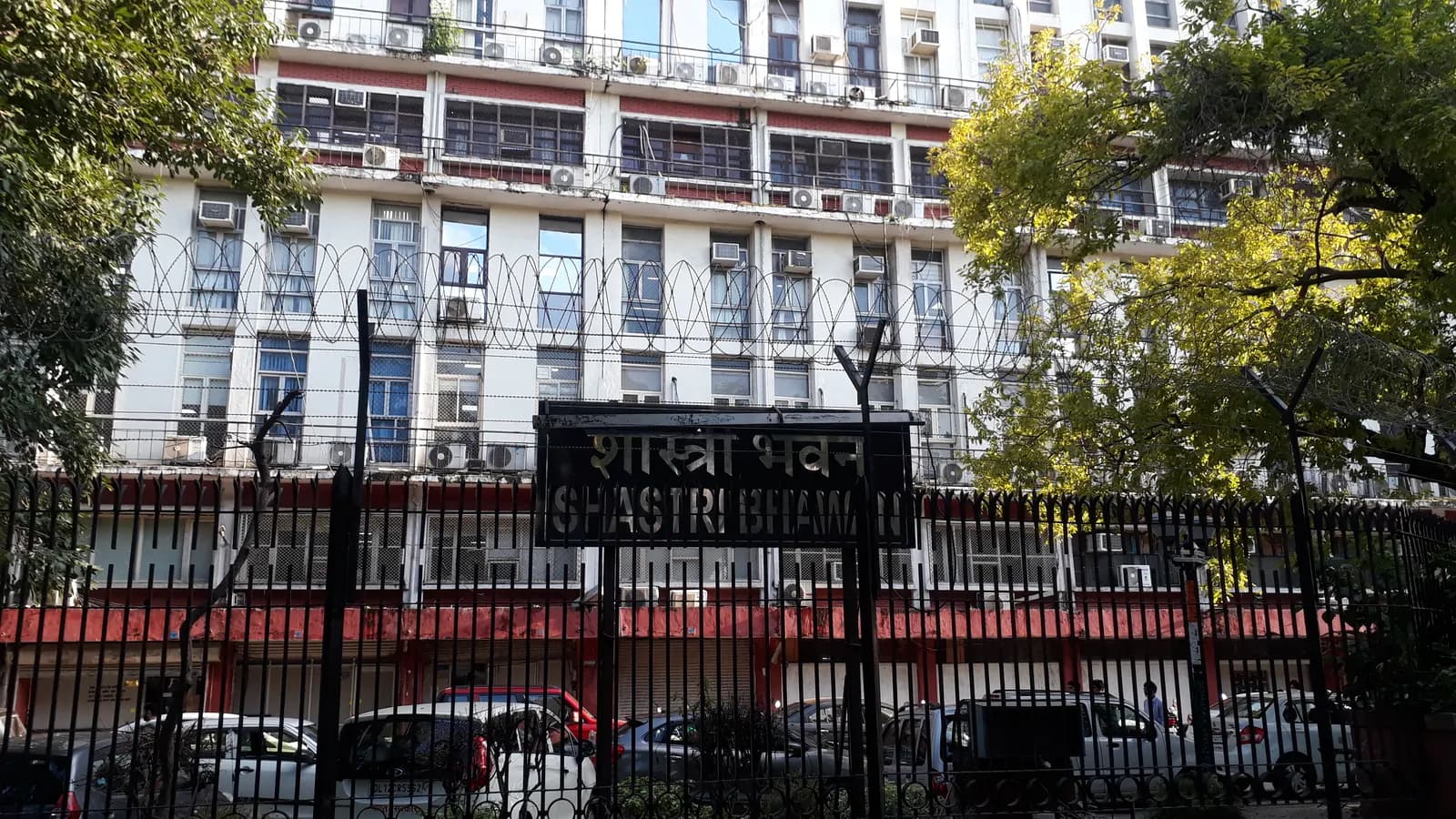
EMD exemption. Rule 170 of GFR 2017 sets bid security (earnest money deposit, EMD) at 2% to 5% of the estimated value of the estimated value, but exempts micro and small enterprises and firms registered with the buying ministry. The Department of Expenditure's November 2020 memo went further and told ministries to use a Bid Security Declaration — a signed undertaking that you will be suspended from bidding for a stated period if you withdraw or change your bid during its validity — in place of EMD, and to ask for EMD only with higher approval. In practice you will still see tenders that demand EMD; as a Udyam-registered MSE, upload your certificate in the EMD section and claim the exemption.
Free tender documents. MSEs receive tender sets free of cost, so tender document fees are waived where a buyer still charges them.
Purchase preference (the L1+15% rule). When the lowest bidder (L1) is not an MSE, any MSE whose price is within L1 + 15% can supply up to 25% of the tendered quantity if it agrees to bring its price down to L1. If several MSEs qualify, the quantity is shared among them. Where the item can't be split, the whole order may go to the MSE that matches. The sub-targets for SC/ST-owned and women-owned MSEs are applied out of the same share.
Reserved items. 358 items are reserved for purchase only from MSEs — buyers can't buy them from larger firms.
Three limits catch people out. Traders and distributors don't qualify — the policy covers goods produced and services rendered by MSEs, and works contracts are outside it. Medium enterprises don't qualify either. And the exemption covers bid security only: if you win, you must still furnish performance security of 3% to 10% of the contract value of the contract value under rule 171, usually as a bank guarantee — see our bank guarantee guide for how banks price these.
Make in India preference
Separately, the Public Procurement (Preference to Make in India) Order gives purchase preference to Class-I local suppliers — those whose goods or services have local content of 50% or more. A Class-I supplier quoting within a 20% margin of L1 can be asked to match L1; for divisible items, half the quantity goes to L1 and the rest is offered to Class-I suppliers. Class-II local suppliers (local content more than 20% but less than 50%) can bid but get no preference, and in many smaller tenders only Class-I and Class-II suppliers are allowed to bid at all. You must declare local content in every bid; a false declaration can get your firm debarred. Where both the MSE and Make in India preferences apply, the tender document spells out the order in which they are applied, so read that clause carefully.
How to apply for a tender on CPPP, step by step
From enrolment to award on eprocure.gov.in
- 1
Enrol as a bidder
CPPP e-procurement (central)Open eprocure.gov.in/eprocure/app, click Online Bidder Enrollment, choose a user ID and password, and give an email and mobile number the portal will use for every alert. Enrolment is free.
- 2
Register your DSC
Plug in the USB token, refresh the page, select your Class III certificate and map it to your profile. From then on you log in with password plus DSC.
Tip: Install the token driver and the signer utility the portal recommends before bid day — most last-minute failures are driver problems.
- 3
Find tenders and track them
Search by organisation, location, value, product category or keyword. Move relevant tenders to My Tenders so the portal emails and texts you every corrigendum.
- 4
Read the tender and ask questions
Note the number of covers, eligibility, technical specifications, delivery period, EMD and performance-security terms, and the pre-bid meeting date. Raise clarifications in writing before the pre-bid deadline.
- 5
Prepare the covers
Cover 1 (technical) holds eligibility documents, the signed tender form, declarations, EMD exemption proof and technical compliance. Cover 2 (financial) is the price schedule — usually the portal's BoQ spreadsheet, where you fill only the unprotected cells.
- 6
Sign, encrypt and submit
Upload each document, sign it with the DSC, and freeze the bid before the closing time. Download the bid acknowledgement — it is your proof of submission.
Tip: Submit a day early. Portals slow down in the last hours and late bids are never accepted.
- 7
Follow the opening and evaluation
Technical bids are opened online on the stated date; you can view the opening summary. After technical evaluation, financial bids of qualified bidders are opened and the L1 is declared.
- 8
Accept the award and perform
On award, accept the letter of award or purchase order, submit performance security within the stated time, supply to specification, and raise your invoice with the documents the contract lists.
The price bid deserves particular care. Most CPPP tenders use an Excel bill of quantities (BoQ) supplied with the tender, and the portal rejects files where protected cells were changed or the file was renamed. Quote the rate in the column asked for — some BoQs want a rate inclusive of GST, others want GST shown separately. If you bid for works, our guide to the bill of quantities explains how item rates and quantities are built up.

Worked example: an MSE using the L1+15% rule
A Udyam-registered micro manufacturer of steel almirahs in Pune bids in an open central tender for 400 almirahs, estimated at ₹80 lakh. The tender is divisible and asks for bid security of 2% of the estimated value.
At submission. Because the firm is an MSE manufacturer, it doesn't pay the ₹1.6 lakh EMD (2% of ₹80 lakh); it uploads its Udyam certificate instead and pays no tender fee. It quotes ₹21,000 per unit before GST.
At financial opening. Four bids pass technical evaluation. L1 is a large non-MSE firm at ₹19,000 a unit. The price band is L1 + 15% = ₹19,000 × 1.15 = ₹21,850. The Pune firm's ₹21,000 falls inside the band, and it is the only MSE that does.
The offer. The buyer awards 75% of the quantity — 300 units, worth ₹57 lakh — to L1, and offers the MSE up to 25%, or 100 units, at the L1 price of ₹19,000. If the MSE accepts, it wins an order of 100 × ₹19,000 = ₹19 lakh plus GST. Had two MSEs been in the band, the 100 units would have been split between them.
After award. The contract asks for performance security of 3% — ₹57,000 on a ₹19 lakh order — as a bank guarantee valid until 60 days after the warranty ends. The firm's margin calculation must now work at ₹19,000, not ₹21,000; the 15% band is a right to match, not a right to be paid more. If the firm couldn't make money at ₹19,000, declining the offer costs it nothing.
What could have gone wrong. Had the firm only traded almirahs made by someone else, or registered on Udyam with a trading activity, it would have been treated as a non-MSE and lost both the EMD exemption and the match offer. Had its quote been ₹22,000, it would have been outside the band.
Common mistakes and how rejected bids get fixed
If you think a tender is unfair — say, a turnover criterion that shuts out MSEs without reason, or a brand-specific specification — raise it at the pre-bid meeting or in writing before the clarification deadline. After award, the tender's grievance clause and the procuring entity's grievance redressal committee are the route. Payment delays beyond 45 days for MSE suppliers can be taken to the MSE Facilitation Council through MSME Samadhaan, and our delayed payment calculator shows the interest you are owed. Large buyers including central PSUs are also on TReDS, where you can discount accepted invoices instead of waiting.
| Mistake | What happens | Fix |
|---|---|---|
| DSC expired or registered to a former employee | Can't log in or sign on bid day | Renew early; register the new DSC to the account before the deadline |
| Missed a corrigendum | Bid evaluated against changed terms; often rejected | Keep the tender in My Tenders; re-read all corrigenda before freezing |
| Turnover certificate not in the asked format | Technical rejection | Use the tender's format, signed by a CA with UDIN |
| Udyam activity doesn't match the item | MSE claim refused; EMD demanded | Update Udyam before bidding; quote only items you make or services you render |
| BoQ edited or wrong file uploaded | Financial bid rejected | Fill only unprotected cells and keep the file name |
| Conditional or deviating offer | Bid treated as non-responsive | Raise deviations at pre-bid stage, not in the bid |
| Local-content declaration missing | Bid ineligible where only local suppliers may bid | Attach the Make in India self-certificate every time |
State government tenders: what changes
States make their own procurement rules, so the central MSE order does not bind a state department or municipal body. Many states have their own MSE procurement policies — some give a price preference to local units, some reserve items for MSEs or exempt them from EMD, and some require enrolment as a "registered contractor" with the state public works department before you can bid for works. The portal mechanics, however, are similar: separate enrolment, the same Class III DSC, technical and financial covers, and online opening.
Before bidding in a new state, download its procurement rules or MSE policy from the state portal's "rules and procedures" section, check whether your Udyam registration is enough or the state wants its own registration, and look for a local-supplier preference you can claim. Startups registered under a state startup policy sometimes get further relaxation of turnover and experience criteria.
After you win: delivery, payment and building a track record
A first government contract is valuable mostly for what it unlocks: a completion certificate that counts as "past experience" in the next tender. Deliver exactly to specification and on time — inspection rejections and liquidated damages for late delivery eat into thin margins quickly, and poor performance can lead to removal from vendor lists. Keep copies of the purchase order, delivery challans, inspection reports, the receipt certificate and the payment advice; together they make the experience certificate buyers ask for.
After the award — what the buyer expects
Step 1
Accept award / PO
within the stated days
Step 2
Performance security
3% to 10% of the contract value of contract value
Step 3
Supply and inspection
to specification, on time
Step 4
Invoice and receipt
PO number, HSN, GST split
Step 5
Payment
MSE suppliers: within 45 days
Invoice the way the contract asks, with the purchase order number, HSN codes and GST correctly split — our free invoice generator can help. Ask the buyer for a performance certificate once the warranty period runs, and file it with your standing bid file.
Official links
Official tendering links
- CPPP e-procurement (central tenders)Bidder enrolment, search, bid submission
- Central Public Procurement Portal homeCentral and state tender listings, help, training
- Government e-MarketplaceMandatory for GeM-listed items
- Defence Procurement PortalDefence tenders
- DoE OM on Bid Security / EMD (PDF)MSE exemption and Bid Security Declaration
- Public Procurement Policy FAQs (PDF)L1+15%, 25% share, reserved items
- Udyam Registration portalProof of MSE status
What to do next
Start with the paperwork that every tender asks for: register or update on Udyam, collect three years of audited accounts and ITRs, and buy a Class III DSC. Enrol on CPPP and your home state's portal, save searches for your product categories, and bid on a few small, local tenders to build experience certificates. If your products are on GeM, set up your GeM seller account in parallel — for central buyers it is now the bigger market. Use our quotation generator to work out your rates before you fill the BoQ.
This is general information, not legal or tax advice — confirm on the official source or with a professional.
Frequently asked questions
Enrol free on the Central Public Procurement Portal (eprocure.gov.in) or your state's e-procurement portal, register a Class III digital signature certificate, search for tenders in your category and download the documents. Prepare the technical cover and the price schedule exactly as asked, sign and upload them before the deadline, then track bid opening online. GeM-listed items are bought on GeM instead.
Yes, for micro and small enterprises. GFR rule 170 and the Public Procurement Policy for MSEs exempt Udyam-registered micro and small manufacturers and service providers from bid security in central tenders, and tender documents are supplied free. Medium enterprises and traders do not get the exemption. Performance security after award is still payable at 3% to 10% of the contract value.
L1 is the lowest evaluated price among bidders who passed the technical stage. Contracts normally go to L1. Under the MSE policy, a micro or small enterprise that quoted within L1 + 15% can supply up to 25% of the quantity if it agrees to match the L1 price, when L1 itself is not an MSE.
CPPP asks for a Class III digital signature certificate with signing key usage, issued by a Certifying Authority licensed by the Controller of Certifying Authorities, usually on a USB token. Many tenders also need encryption capability, so buy a signing-plus-encryption certificate in the name of the authorised signatory, and register only one valid DSC per bidder account.
Often, yes. Central ministries may relax prior turnover and prior experience conditions for micro and small enterprises and for DPIIT-recognised startups, provided they meet quality and technical specifications. The relaxation is discretionary and is usually not given for items linked to public safety, health or security, so read the eligibility clause of each tender.
Not automatically. The 25% target, L1+15% preference and EMD exemption come from a central order binding central ministries, departments and central public sector enterprises. States have their own procurement rules and MSE preference policies, which may offer price preference, EMD concessions or reservations for local units. Check the state's procurement rules on its e-tender portal.
Sources & verification
Figures on this page were checked against the sources below when it was last reviewed on 11 October 2026. Each rate and limit is stored once with its own official source and review date, and official update channels are monitored daily so changes are picked up. How we verify
- 1.Instructions for Online Bid Submission on the CPP Portal (Part-A) — IIT Kanpur tender document, September 2026 — Indian Institute of Technology Kanpur (central procuring entity) · accessed 11 October 2026
- 2.Central Public Procurement Portal — NIC with Department of Expenditure, Ministry of Finance · accessed 11 October 2026
- 3.Amendment in General Financial Rules, 2017 — OM F.1/3/2024-PPD dated 10.07.2024 (text) — Department of Expenditure, Ministry of Finance (reproduced by StaffNews) · accessed 11 October 2026
- 4.Office Memorandum F.9/4/2020-PPD — Bid Security / Earnest Money Deposit (12 November 2020) — Department of Expenditure, Ministry of Finance · accessed 11 October 2026
- 5.Public Procurement Policy for Micro and Small Enterprises (Lok Sabha reply) — Press Information Bureau, Ministry of MSME · accessed 11 October 2026
- 6.FAQs on Public Procurement Policy for MSEs (25.03.2022) — Office of the DC (MSME), Ministry of MSME · accessed 11 October 2026
- 7.Relaxation of norms for startups and MSEs in public procurement — Startup India / DPIIT · accessed 11 October 2026
MSMETOOLS is an independent platform and is not affiliated with any government agency, ministry or department.
Tools for this
Quotation Generator
Create professional quotes for clients.
MSME Delayed Payment Calculator (India)
Calculate interest owed on late payments under the MSMED Act.
Invoice Generator
Create professional invoices with tax, logo and custom details.
Related guides
 GeM Bid Process 2026: Direct Purchase, L1, Bids & RARead guide
 SBI Business Loan 2026: MSME Products, Limits & How to ApplyRead guide
 NSIC Schemes 2026: Raw Material, Bill Discounting & SPRSRead guide
 Instant Loan for Business 2026: RBI Rules, Costs & Red FlagsRead guide
Official links open the government site in a new tab.