 Finance & accounting
TReDS Platform in 2026: How MSMEs Turn Accepted Invoices into Cash
TReDS in 2026: RBI's new TReDS Directions, the ₹250 crore buyer rule, the CPSE mandate, how MSMEs discount invoices, costs and a worked ₹10 lakh example.
 Edited by Sumeet YadavFounder & editor, MSMETOOLS · fact-checked against official sources
Contents (9)
- 1. What TReDS is and why it exists
- 2. The 2023–2026 rule changes you should know
- 3. How an MSME discounts an invoice on TReDS
- 4. What TReDS costs an MSME
- 5. Worked example: a ₹10 lakh invoice to a large buyer
- 6. TReDS and your bank cash credit limit
- 7. Getting your buyers to accept invoices
- 8. Common mistakes and how to fix them
- 9. What to do next
If you supply a large company, a government company or a PSU and wait 45 days or more to be paid, TReDS is the cheapest way most MSMEs have to get that money early. This guide explains what changed in 2026 — RBI's new TReDS Directions, the CPSE settlement mandate and the Budget measures — then walks through registration, the discounting flow, costs and a worked ₹10 lakh invoice, so you can decide whether to use it and how to get your buyers on board.
Quick answer
TReDS (Trade Receivables Discounting System) is an RBI-authorised online exchange where an MSME uploads an invoice, its buyer accepts it, and banks and NBFC-factors bid to pay the MSME early. The MSME is paid on T+1 after accepting a bid, without recourse, and the buyer pays the financier on the due date.
Five platforms are authorised: RXIL, M1xchange, Invoicemart, C2treds and DTX
Companies with turnover above ₹250 crore and all CPSEs must be registered as buyers
From the notification of 30 June 2026, CPSEs must settle MSME invoices through TReDS
RBI's new TReDS Directions dated 23 June 2026 replaced the 2014 guidelines
Your cost: registration fee + platform charge + GST + the winning bid's discount
What TReDS is and why it exists
A TReDS platform is a marketplace for one thing: invoices that MSMEs have raised on bigger buyers. The MSME (the seller) uploads the invoice or bill, the buyer logs in and accepts it, and from that moment the accepted invoice — called a factoring unit — becomes a firm promise by the buyer to pay on the due date. Financiers registered on the platform then bid the rate at which they will pay the MSME today in exchange for collecting from the buyer later.
The design solves the problem that makes ordinary bill discounting hard for small firms. A bank discounting your bill normally looks at your credit, wants collateral and keeps recourse to you if the buyer fails. On TReDS the financier is lending against the buyer's promise, so pricing follows the buyer's credit rating, and the seller walks away once paid. RBI's MSME lending FAQ describes the aim as letting MSMEs encash receivables without delay while putting "greater discipline on corporates to pay their dues on time."
TReDS platforms have operated since 2017 and the scale is no longer small. According to the Ministry of MSME, invoice discounting on TReDS grew from ₹40,000 crore in FY 2021-22 to ₹3.47 lakh crore in FY 2025-26, and the 2026-27 Budget Speech put the cumulative amount made available to MSMEs at more than ₹7 lakh crore.
Who takes part
RBI's June 2026 Directions name four kinds of participant. Sellers must be micro, small or medium enterprises under the MSMED Act, 2006 — medium enterprises were added after the 2024-25 Budget — and the platform must validate that MSME status. Buyers are anyone who owes a trade receivable: companies, government departments, PSUs. Financiers are entities allowed to do factoring under the Factoring Regulation Act, 2011, which covers banks, NBFC-factors and others. Insurance companies and the government's credit guarantee trust can also participate.
Factoring and reverse factoring
In factoring, you (the seller) upload the invoice and you bear the discount. In reverse factoring, the buyer uploads the invoice it has received, and the commercial terms decide who pays the interest — many large buyers absorb it as a supplier-support measure. Ask your buyer which model it uses before you price your quotation, because it changes your effective margin.
TReDS at a glance (2026)
5
RBI-authorised platforms
RXIL, M1xchange, Invoicemart, C2treds, DTX
₹250 crore
Buyer turnover above which onboarding is mandatory
plus all CPSEs
₹3.47 lakh crore
Invoices discounted in FY 2025-26
Ministry of MSME
T+1
Credit to the MSME after bid acceptance
The 2023–2026 rule changes you should know
TReDS has been reshaped three times in three years. If you read an older explainer, check it against the points below.
June 2023 — wider pool of financiers and insurance. RBI let every entity permitted to do factoring under the Factoring Regulation Act join as a financier, allowed credit insurance as a "fourth participant" so financiers would bid on lower-rated buyers, and let platforms run a secondary market for discounted units. The rule that the insurance premium can never be charged to the MSME seller started here and survives in the 2026 Directions.
November 2024 — buyer threshold halved. Following the 2024-25 Budget, the Ministry of MSME's notification S.O. 4845(E) of 7 November 2024 lowered the turnover above which companies must register on TReDS from ₹500 crore to ₹250 crore, kept all CPSEs in scope, and set 31 March 2025 as the onboarding deadline. The Finance Ministry estimated the change would bring about 7,000 more companies and 22 more CPSEs onto the platforms. Registration is the obligation; the rule does not force a registered buyer to accept every invoice on the platform.
February 2026 — four Budget measures. Paragraph 30 of the 2026-27 Budget Speech announced that TReDS would become the settlement platform for all CPSE purchases from MSMEs, that CGTMSE would offer a credit guarantee for invoice discounting on TReDS, that the Government e-Marketplace (GeM) would share government purchase data with TReDS financiers, and that TReDS receivables would be introduced as asset-backed securities to build a secondary market.
June 2026 — RBI's new TReDS Directions. On 23 June 2026 RBI issued the Reserve Bank of India (Trade Receivables Discounting System) Directions, 2026, effective immediately. They replace the 2014 guidelines and the 2023 circular. The press release highlights that the earlier requirement for platforms to carry out due diligence on MSME sellers has been removed — platforms now run customer due diligence on buyers and simply validate the seller's MSME status — and that operators need a minimum net worth of ₹25 crore, which existing operators must reach by 31 March 2028. Financiers may now obtain guarantee cover from a government credit guarantee trust on TReDS exposures, which is the legal hook the CGTMSE announcement needed.
30 June 2026 — the CPSE settlement mandate. The Ministry of MSME notified that all operating Central Public Sector Enterprises must route settlement of invoices for goods and services bought from MSMEs through RBI-authorised TReDS platforms. CPSEs must disclose MSME invoices routed and settled this way, and their statutory auditor must certify TReDS registration and compliance in the annual audit. For a supplier to a CPSE, the practical effect is that your invoices should start flowing through TReDS whether or not you choose to discount them.
How TReDS rules changed
2014
RBI guidelines for setting up and operating TReDS
2017
First platforms start operating
Nov 2018
Companies above ₹500 crore turnover and all CPSEs told to register as buyers
June 2023
RBI widens financiers, allows insurance and a secondary market
7 Nov 2024
S.O. 4845(E): threshold cut to ₹250 crore; deadline 31 March 2025
1 Feb 2026
Budget 2026-27 announces four TReDS measures
23 June 2026
RBI (TReDS) Directions, 2026 replace the 2014 guidelines
30 June 2026
CPSEs must settle MSME invoices through TReDS
Two Budget items had not shown up in an operative scheme document we could locate as of October 2026: the CGTMSE guarantee for TReDS invoice discounting and the GeM–TReDS data link. Ask your platform whether either is live before you count on a cheaper rate from them.
How an MSME discounts an invoice on TReDS
The flow is the same on all five platforms, though screens and cut-off times differ. Here is what happens from upload to the buyer's final payment.
From invoice to cash
- 1
Register as a seller
Apply on one or more platforms with PAN, GST registration, bank details, KYC of the authorised signatory and proof of MSME status. Sign the platform's master agreement.
Tip: Register on the platforms your largest buyers already use — a buyer can only accept your invoice on a platform where both of you are registered.
- 2
Upload the invoice (factoring unit)
Enter the invoice details and due date, attach the invoice and supporting documents such as the purchase order or delivery proof.
- 3
Buyer accepts
The buyer checks the invoice against goods received and accepts it. Once accepted, the buyer's obligation to pay on the due date is unconditional — it cannot later deduct for quality disputes.
Tip: This is the step that stalls. Follow up with the buyer's accounts team the day you upload.
- 4
Financiers bid
Banks and NBFC-factors with a limit on your buyer quote a discount rate. You see competing bids and their validity.
- 5
Accept a bid
Whoever bears the cost — you in factoring, sometimes the buyer in reverse factoring — accepts the best bid within the platform's window, typically 9 am to 9 pm on working days.
- 6
Get paid on T+1
The financier's account is debited and yours is credited on the next working day, net of the discount. The platform files the assignment with CERSAI.
- 7
Buyer pays the financier on the due date
The buyer's account is auto-debited on the due date. If the buyer defaults, the financier pursues the buyer — not you.
Three legal features make the accepted invoice bankable. First, RBI's Directions give accepted factoring units the same sanctity and enforceability as physical instruments under the Negotiable Instruments Act and the Factoring Regulation Act. Second, the master agreement makes the buyer's payment unconditional once it accepts. Third, the platform registers the assignment of the receivable with CERSAI, so the financier's claim is on public record and the same invoice cannot quietly be financed twice.
Documents you will need
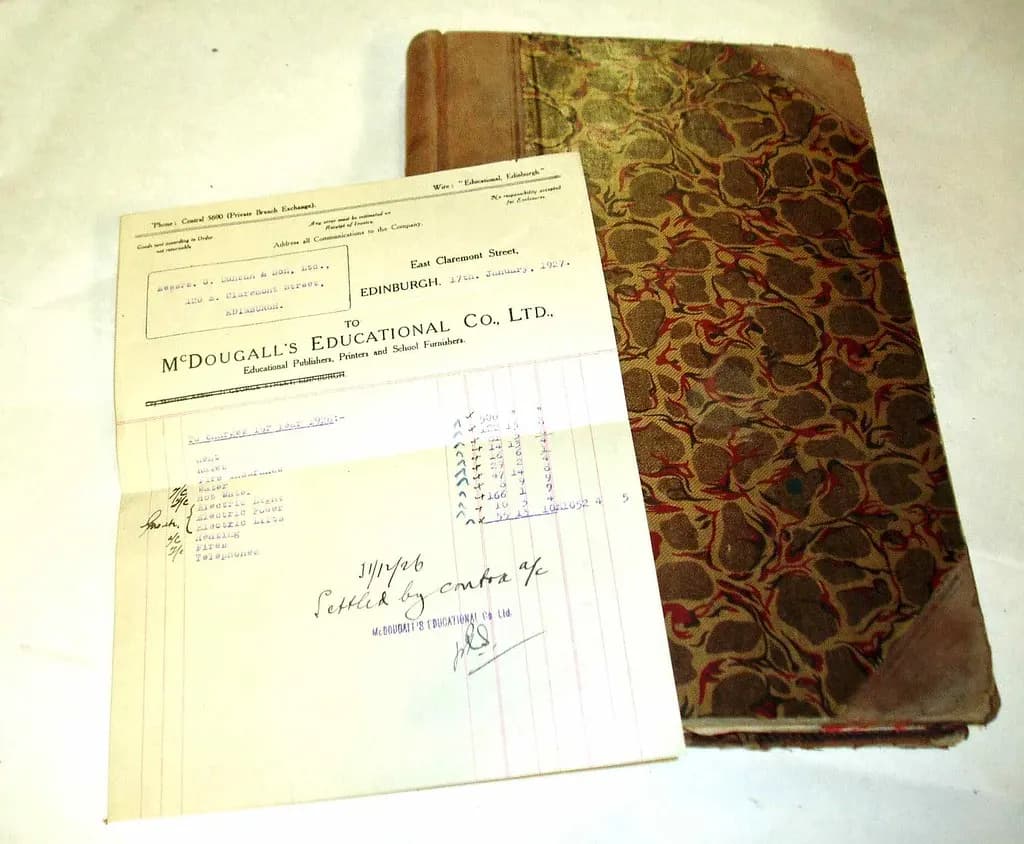
Platforms follow RBI's KYC rules, so the list is similar everywhere. M1xchange, for example, says a GST certificate is mandatory (with a declaration on letterhead if you are GST-exempt), the GST certificate does not count as address proof, partnership firms need a power of attorney even when partners are family members, and a chartered accountant's certificate of MSME classification is required. Keep these ready: PAN of the business, GST certificate, Udyam registration, address proof such as a lease deed or recent utility bill, cancelled cheque or bank letter, constitution documents (partnership deed, LLP certificate or company incorporation papers), board resolution or authority letter, and KYC of the signatories.
Registration usually takes a few working days after documents are complete — M1xchange quotes two to three days. Plan for a week if you need to collect a board resolution or a CA certificate.
What TReDS costs an MSME
There are three layers of cost, and only one of them — the discount — is decided by competition.
Registration and annual fees. Each platform publishes its own schedule. M1xchange lists a supplier registration fee of ₹5,000 plus GST and stamp duty. RXIL says all participants pay a one-time, non-refundable registration fee plus an annual fee due by 30 April each year, and it can withhold transaction rights from participants who have not paid.
Platform transaction charges. Platforms charge a fee on each financed unit, usually expressed as a small percentage a year of the invoice value for the financing tenor, plus 18% GST. Invoicemart's FAQ says the transaction charge is borne by the party that bears the cost of funds and by the financier. RXIL notes that if an invoice is not financed and the buyer simply pays you through the platform, the buyer bears the transaction charge.
The discount. This is the interest the winning financier deducts upfront. It depends almost entirely on your buyer's credit rating and the days left to the due date — a AAA-rated PSU buyer attracts finer bids than a BBB-rated private company. RBI's Directions say nothing about rate caps; the competitive auction is the price control. Insurance premiums, where a financier buys credit insurance, cannot be passed on to the seller.
TReDS vs other ways to get paid early
| Option | Priced on | Recourse to you | Collateral | Speed |
|---|---|---|---|---|
TReDS discounting | Buyer's credit | None once discounted | None | T+1 after bid acceptance |
Bank bill discounting | Your credit | Usually with recourse | Often within your CC limit | Depends on bank |
Cash credit drawdown | Your credit and stock | Full — it's your loan | Stock, debtors, often property | Immediate up to drawing power |
Waiting for payment | — | — | — | Due date; MSMED Act caps it at 45 days for micro and small |
TReDS discounting
- Priced on
Buyer's credit
- Recourse to you
None once discounted
- Collateral
None
- Speed
T+1 after bid acceptance
Bank bill discounting
- Priced on
Your credit
- Recourse to you
Usually with recourse
- Collateral
Often within your CC limit
- Speed
Depends on bank
Cash credit drawdown
- Priced on
Your credit and stock
- Recourse to you
Full — it's your loan
- Collateral
Stock, debtors, often property
- Speed
Immediate up to drawing power
Waiting for payment
- Priced on
—
- Recourse to you
—
- Collateral
—
- Speed
Due date; MSMED Act caps it at 45 days for micro and small
Worked example: a ₹10 lakh invoice to a large buyer
Meera runs a small auto-components unit in Pune with a cash credit limit at her bank. She supplies brackets worth ₹10,00,000 (including GST) to a car-parts company with turnover well above ₹250 crore. They have agreed in writing on 45-day payment terms — the maximum the MSMED Act allows for a micro or small supplier. Her buyer accepts the invoice on TReDS five days after delivery, leaving 40 days to the due date.
Suppose the best bid on the platform is 9.00% a year — we use that figure purely to illustrate the arithmetic; the real number comes from the live auction on your buyer's name. The discount is ₹10,00,000 × 9.00% × 40 ÷ 365 = ₹9,863. On T+1 Meera receives about ₹9,90,137, less the platform's transaction charge and 18% GST on that charge. On day 45 the buyer pays ₹10,00,000 directly to the financier. Meera has no further liability.
Compare that with funding the same 40 days from her cash credit. Axis Bank's published small-business grid shows cash credit at repo plus 4.95%–5.20%; with the repo rate now at 5.50%, that implies roughly 10.45%–10.70% a year after the next reset. Forty days on ₹10 lakh at 10.45% costs ₹11,452. So in this illustration TReDS is cheaper by about ₹1,600 and — more importantly — the cash credit limit stays free for buying raw material.

There is one more comparison worth making. If Meera had not used TReDS and the buyer paid on day 75 instead of day 45, the MSMED Act would entitle her to compound interest at 3× the RBI bank rate from the appointed day — with the bank rate at 5.75%, that is 17.25% a year. Claiming it means filing on MSME Samadhaan and waiting months. TReDS converts a slow legal right into cash next week, which is why many suppliers use both: TReDS for buyers who accept invoices promptly, Samadhaan for those who don't.
What a late buyer owes you under the MSMED Act
TReDS and your bank cash credit limit
Many MSMEs on TReDS already have a cash credit or overdraft with a bank, and the two interact in ways that trip people up.
Under the master agreement, you declare that no other financier or working capital bank has financed the goods or services behind the invoice. RBI's Directions also require the platform to inform the banks holding the buyer's and seller's working capital accounts whenever a factoring unit is financed. In practice your bank will remove that receivable from the debtors it counts in your drawing power. If you keep showing a TReDS-discounted invoice in your monthly stock and book-debt statement, you are claiming the same asset twice — a breach that banks treat seriously at stock audit.
The clean way to run both: send TReDS proceeds into your cash credit account so the balance comes down, and drop discounted invoices from the book-debts list in your next stock statement. Our guide to the cash credit limit explains how drawing power is calculated.
Getting your buyers to accept invoices
The biggest practical weakness of TReDS is that acceptance is voluntary. M1xchange says plainly that it does not guarantee timely acceptance by corporates and that there is currently no mandatory acceptance period. A buyer that registered to meet the ₹250 crore rule may still ask you to send paper invoices and pay you in 60 or 90 days.
Here is what tends to work, in order:
- Put TReDS in the purchase order. When you negotiate terms, ask for "payment through TReDS, invoice to be accepted within X days of goods receipt." Large buyers' procurement teams increasingly agree because it shortens their own supplier disputes.
- Cite the law on payment days. For micro and small suppliers, section 15 of the MSMED Act, 2006 caps payment at 45 days from acceptance, and companies must report overdue MSE dues in their half-yearly MSME-1 return. Buyers who accept on TReDS and pay the financier on time have a clean record.
- For CPSE buyers, cite the 30 June 2026 mandate. CPSEs must now settle MSME invoices through TReDS, and their auditors must certify compliance. A CPSE accounts team that refuses is out of step with its own audit requirement.
- Escalate unpaid invoices. If acceptance and payment both stall beyond 45 days, file on MSME Samadhaan; the Facilitation Council can award the statutory interest.
Before your first TReDS transaction
0/7Common mistakes and how to fix them
Registering on the wrong platform. You and your buyer must be on the same platform. If your buyer is on Invoicemart and you registered only on RXIL, nothing happens. Ask the buyer's accounts payable team which platform it uses, and register there first.
Uploading with the wrong due date. The due date fixes the tenor and the discount. If you enter the invoice date plus 90 days when your contract says 45, the buyer will reject the unit or, worse, accept it and stretch your payment. Use the contractual date.
Treating acceptance as payment. Acceptance is a promise. Until you accept a bid and the T+1 credit lands, you have not been paid. Watch the bid validity window — bids lapse.
Double financing. Covered above, but it is the mistake with the worst consequences: it is a misrepresentation to the financier and to your bank. Keep a simple register of every invoice you discount on TReDS and reconcile it with your book-debt statement.
Ignoring the platform fee in pricing. On small invoices with long tenors, platform charges plus GST can be a meaningful share of the cost. Check the effective rate, not just the bid rate.
Assuming the buyer's rating doesn't matter. If your buyer is unrated or lowly rated, few financiers will have limits on it and bids may not come. Credit insurance and the announced CGTMSE guarantee are meant to fix this, but until they are routinely available, expect thinner bidding on smaller buyers.
Official links
- RBI (TReDS) Directions, 2026The rulebook for platforms, buyers, sellers and financiers
- RBI press release on the final TReDS Directions (23 June 2026)What changed from the April 2026 draft
- PIB: CPSE TReDS settlement mandate (10 July 2026)Notification of 30 June 2026
- Budget Speech 2026-27 (para 30)Four TReDS measures
- RBI FAQs on MSME lendingQ.25 on TReDS
- MSME SamadhaanFile delayed-payment cases against buyers
What to do next
List your five largest buyers, find out which TReDS platform each uses, and register on those first. Before your first transaction, work out your working capital gap so you know how much early payment actually helps, and make sure your Udyam registration shows the right category — platforms validate it. If a buyer won't accept invoices or pays late, use the delayed payment calculator to see what it owes you and file on MSME Samadhaan.
This is general information, not legal or tax advice — confirm on the official source or with a professional.
Frequently asked questions
TReDS stands for Trade Receivables Discounting System. It is an online exchange authorised by the Reserve Bank of India under the Payment and Settlement Systems Act, 2007, where MSME sellers upload invoices accepted by their buyers and banks, NBFC-factors and other financiers bid to discount them. The MSME gets paid the next working day after it accepts a bid, and the buyer repays the financier on the due date.
Under the Ministry of MSME notification S.O. 4845(E) of 7 November 2024, every company with turnover above ₹250 crore and every Central Public Sector Enterprise had to onboard as a buyer by 31 March 2025. A further notification dated 30 June 2026 requires all operating CPSEs to route settlement of their MSME invoices through TReDS, with auditor certification.
Without recourse to the MSME seller. Paragraph 20 of RBI's TReDS Directions, 2026 says discounted factoring units are without recourse to the seller, so if the buyer defaults on the due date the financier recovers from the buyer, not from you. You still owe the financier if your own declarations were false — for example, if the same invoice was already financed by your bank.
There are three parts: a registration fee (M1xchange publishes ₹5,000 plus GST and stamp duty; RXIL charges a one-time fee plus an annual fee), a per-transaction platform charge with 18% GST, and the discount (interest) set by the winning bid. In reverse factoring the buyer may bear the interest. RBI bars passing any credit-insurance premium on to the seller.
Once your buyer accepts the invoice and financiers bid, you choose a bid during the platform's window (RXIL and Invoicemart run 9 am to 9 pm on working days). Money is credited on T+1 — the working day after bid acceptance. The slow step is usually the buyer's acceptance, which no rule currently time-bounds on most platforms.
Yes, but you must declare that no other financier or working capital bank has financed the same goods. The platform notifies the banks holding your and your buyer's working capital accounts when a unit is financed, and your bank will exclude that receivable from your drawing power. Financing the same invoice twice is a serious breach.
Sources & verification
Figures on this page were checked against the sources below when it was last reviewed on 9 October 2026. Each rate and limit is stored once with its own official source and review date, and official update channels are monitored daily so changes are picked up. How we verify
- 1.Reserve Bank of India (Trade Receivables Discounting System) Directions, 2026 — Reserve Bank of India · accessed 9 October 2026
- 2.RBI issues final directions on TReDS (Press Release 2026-2027/519, 23 June 2026) — Reserve Bank of India · accessed 9 October 2026
- 3.Government mandates TReDS for settlement of all MSME invoices by CPSEs (PIB, 10 July 2026) — Press Information Bureau, Ministry of MSME · accessed 9 October 2026
- 4.Budget Speech 2026-27, paragraph 30 (Liquidity Support) — Ministry of Finance · accessed 9 October 2026
- 5.Union Budget 2024-25: eight new measures for MSMEs (PIB) — Press Information Bureau, Ministry of Finance · accessed 9 October 2026
- 6.RBI FAQs on MSME lending (Q.25 TReDS) — Reserve Bank of India · accessed 9 October 2026
- 7.M1xchange — FAQs — M1xchange (RBI-authorised TReDS) · accessed 9 October 2026
- 8.RXIL — FAQs — Receivables Exchange of India Ltd (RBI-authorised TReDS) · accessed 9 October 2026
- 9.Invoicemart — FAQs — A.TReDS Ltd (Invoicemart) · accessed 9 October 2026
- 10.Companies with turnover above ₹250 crore to register on TReDS by 31 March 2025 (S.O. 4845(E)) — VJM & Associates (secondary) · accessed 9 October 2026
MSMETOOLS is an independent platform and is not affiliated with any government agency, ministry or department.
Tools for this
MSME Delayed Payment Calculator (India)
Calculate interest owed on late payments under the MSMED Act.
Working Capital Calculator
Check working capital, current and quick ratios.
Invoice Generator
Create professional invoices with tax, logo and custom details.
Related guides
 What Is Working Capital? Formula, Cycle & Bank Limits 2026Read guide
 Cash Credit Limit 2026: Drawing Power, Interest & RulesRead guide
 Gold Loan for Business 2026: RBI LTV Rules, Rates & RisksRead guide
 SIDBI Loan for MSME 2026: Schemes, Limits & How to ApplyRead guide
Official links open the government site in a new tab.