 Government schemes & funding
NSIC Schemes for MSMEs in 2026: Finance, Government Tenders and Marketing Support
NSIC schemes in 2026: raw material and bill discounting rates from 8.25%, Single Point Registration fees and tender benefits, marketing support and how to apply.
 Edited by Sumeet YadavFounder & editor, MSMETOOLS · fact-checked against official sources
Contents (10)
- 1. What NSIC does and who can use it
- 2. Raw Material Assistance Scheme
- 3. Bill Discounting against Bank Guarantee
- 4. AWRT: NSIC's scheme for traders
- 5. Input materials and bank credit facilitation
- 6. Single Point Registration Scheme (SPRS)
- 7. Marketing support: tenders, trade fairs and more
- 8. How to apply and what to expect
- 9. Common mistakes and how to fix them
- 10. What to do next
The National Small Industries Corporation (NSIC) is a central public sector enterprise under the Ministry of MSME, and it does three things for small businesses that most people mix up: it finances raw material and bills, it registers small firms for government purchases, and it helps them market their products. This guide is for manufacturers, service firms and — for one scheme — traders deciding which NSIC scheme is worth their time in 2026. You will get the current rate card (revised from 10 July 2026), the real cost of the bank guarantee these schemes need, Single Point Registration fees with a worked example, and how to apply.
Quick answer
NSIC's main schemes are Raw Material Assistance (credit for up to 180 days at 9.25%–10.75%), Bill Discounting (8.25%–9.75%), AWRT for traders, the Single Point Registration Scheme for government tenders, and marketing support for tenders and trade fairs. The finance schemes need a bank guarantee for the full amount.
Rates effective 10 July 2026; cheapest for units with an SME 1 rating who repay on time
SPRS fee from ₹3,000 (micro) to a cap of ₹1 lakh, plus GST; valid 2 years
SPRS gives free tender sets, EMD exemption and purchase preference within L1 + 15%
Marketing Facilitation Scheme: annual fee from ₹1,000 + GST, 5% fee on contracts won
Apply at the nearest NSIC branch; SPRS is fully online
What NSIC does and who can use it
NSIC is a Government of India enterprise owned by the Ministry of MSME, with zonal and branch offices across states and a set of NSIC Technical Services Centres that train workers and run testing labs (see our NSIC Technical Services Centre guide). It is not a bank and does not take deposits. Its finance schemes work like trade credit: NSIC pays your supplier, or buys your accepted bill, and you repay NSIC later — with a bank guarantee as security.
Almost every scheme needs Udyam registration. Most are open to manufacturing and service MSMEs and closed to pure traders, with AWRT as the exception. Medium enterprises can use the finance schemes; SPRS and the Marketing Facilitation Scheme are only for micro and small enterprises, because they are built around the Public Procurement Policy for MSEs.
NSIC schemes at a glance
| Scheme | What you get | Who | Key cost |
|---|---|---|---|
Raw Material Assistance | NSIC pays your raw-material supplier; you repay within 180 days | Manufacturing/service MSMEs | 9.25%–10.75% + bank guarantee |
Bill Discounting | Cash against bills accepted by your buyer | Manufacturing/service MSMEs | 8.25%–9.75% + bank guarantee |
AWRT | Purchase limit for wholesalers and retailers | Profitable traders with Udyam + GST | Limit 30% of average sales of average sales; bank guarantee |
Input Material Support | Bulk steel, aluminium, cement via NSIC tie-ups | MSMEs | Service charge from 0.25% of delivery-order value |
Bank Credit Facilitation | Help applying to tie-up banks | Any MSME | Free |
Single Point Registration | Tender benefits under the Public Procurement Policy | Micro and small (not traders) | From ₹3,000 + GST |
Marketing Facilitation | NSIC matches you with government buyers | SPRS-registered MSEs | ₹1,000 + GST a year + 5% of award |
Trade fairs (PMSS/SMAS) | Subsidised stalls at exhibitions | Udyam-registered MSMEs | Up to ₹1.5 lakh support per event |
Raw Material Assistance
- What you get
NSIC pays your raw-material supplier; you repay within 180 days
- Who
Manufacturing/service MSMEs
- Key cost
9.25%–10.75% + bank guarantee
Bill Discounting
- What you get
Cash against bills accepted by your buyer
- Who
Manufacturing/service MSMEs
- Key cost
8.25%–9.75% + bank guarantee
AWRT
- What you get
Purchase limit for wholesalers and retailers
- Who
Profitable traders with Udyam + GST
- Key cost
Limit 30% of average sales of average sales; bank guarantee
Input Material Support
- What you get
Bulk steel, aluminium, cement via NSIC tie-ups
- Who
MSMEs
- Key cost
Service charge from 0.25% of delivery-order value
Bank Credit Facilitation
- What you get
Help applying to tie-up banks
- Who
Any MSME
- Key cost
Free
Single Point Registration
- What you get
Tender benefits under the Public Procurement Policy
- Who
Micro and small (not traders)
- Key cost
From ₹3,000 + GST
Marketing Facilitation
- What you get
NSIC matches you with government buyers
- Who
SPRS-registered MSEs
- Key cost
₹1,000 + GST a year + 5% of award
Trade fairs (PMSS/SMAS)
- What you get
Subsidised stalls at exhibitions
- Who
Udyam-registered MSMEs
- Key cost
Up to ₹1.5 lakh support per event
Raw Material Assistance Scheme
What it is. NSIC finances the purchase of raw material — indigenous or imported — so you can buy in bulk or for cash discounts without draining your bank limit. NSIC pays the supplier you choose, or supplies material from producers it has agreements with, and gives you up to 180 days to repay. The FAQ says NSIC can also arrange material against advance payment if you do not need credit.
Who qualifies. Any manufacturing or service MSME with Udyam registration. Raw material for trading is excluded. Limits are sanctioned on your raw-material needs, financial position and the bank guarantee you can offer, valid for one year and renewable. The ceiling on exposure is ₹10 crore for a single manufacturing unit and ₹6 crore for a service unit.
Rates effective 10 July 2026. NSIC's rate card links your rate to your credit rating:
| Unit | Micro | Small & medium |
|---|---|---|
| Valid SME 1 rating | 9.25% | 9.75% |
| Valid SME 2 rating | 9.75% | 10.25% |
| Other units | 10.25% | 10.75% |
The rated-unit concessions apply only if you repay within 180 days; a late payer drops to the "other units" rate. Anything outstanding beyond 180 days carries a penal charge of 1.25% a quarter on top. The processing fee is 1% a year on new sanctions, and on renewal 0.5% a year for micro units and 1% for small and medium ones.
The bank guarantee is the catch. NSIC's security is a bank guarantee from an approved bank for the assistance amount. Your bank will usually count that guarantee against your non-fund limits and charge a guarantee commission, and may ask for a cash margin or collateral. Add those costs to NSIC's rate before comparing it with simply drawing on your cash credit.
Worked example: ₹50 lakh of steel for 120 days
A micro fabrication unit in Rajkot without an SME rating buys ₹50 lakh of steel through NSIC and repays in 120 days.
- Interest: ₹50,00,000 × 10.25% × 120/365 ≈ ₹1.68 lakh.
- Processing fee: 1% a year of the sanctioned limit — ₹50,000 on a ₹50 lakh limit, plus GST.
- Bank guarantee: if the bank charges, say, 1.5% a year commission on a ₹50 lakh guarantee, that is about ₹75,000 a year — an illustrative figure; your bank's rate may differ.
If the same unit had an SME 1 rating and repaid on time, the interest would fall to about ₹1.52 lakh. The scheme makes most sense when NSIC's bulk tie-ups or a cash discount from the supplier outweigh the guarantee cost.
Bill Discounting against Bank Guarantee
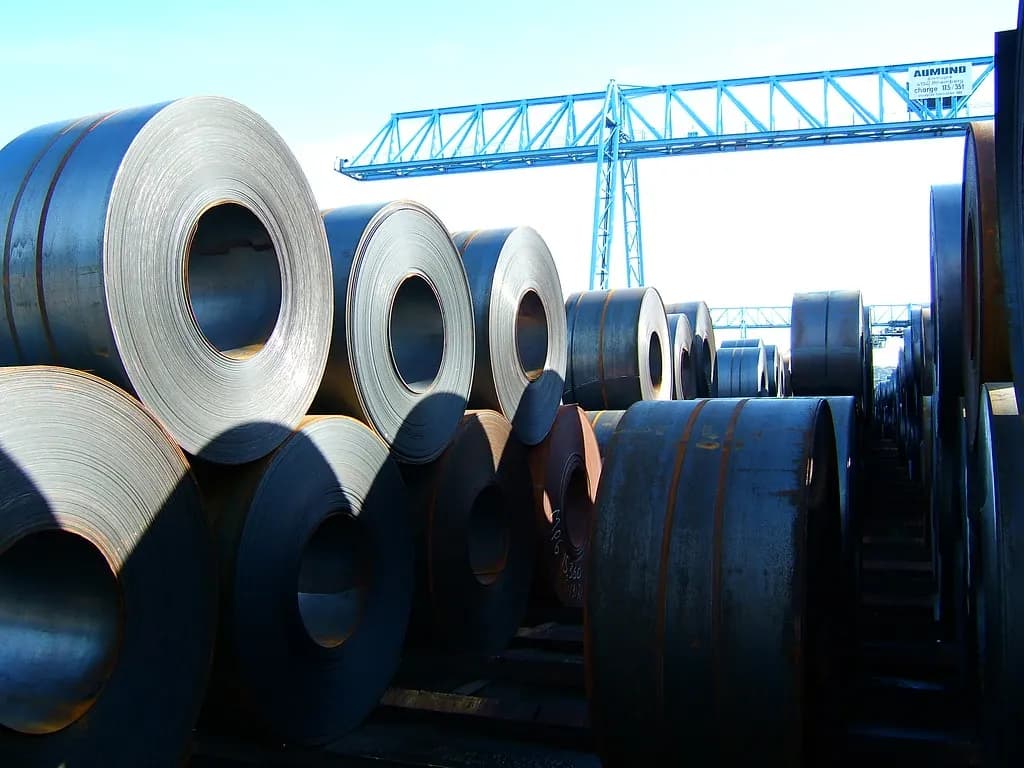
If you sell to large buyers on credit, NSIC can pay you early against a bill of exchange your buyer has accepted. The scheme covers genuine supplies by manufacturing and service MSMEs (not traders) to government departments and undertakings, public and private limited companies, partnership firms and LLPs. Either the buyer applies for an annual purchaser-wise limit and lists its MSME suppliers, or the seller applies for a seller-wise limit. Bills can run for up to 180 days.
Discount rates from 10 July 2026 run from 8.25% for a micro unit with an SME 1 rating to 9.75% for other small and medium units. A penal 1.25% a quarter applies if the bill is not paid on its due date, and processing fees match the raw material scheme. Security is a bank guarantee — from either the buyer or the seller — plus personal guarantees of the proprietor, partners or directors.
How does it compare with TReDS? TReDS discounting is without recourse to you and needs no bank guarantee, but your buyer has to be on the platform and accept invoices there. NSIC's scheme works with buyers who accept a paper bill of exchange, but the bank guarantee makes it costlier unless the buyer provides it.
NSIC in one state — Andhra Pradesh, 2025-26 (to 28 Feb 2026)
78
Units given raw material assistance
₹282 crore
Raw material assistance sanctioned
117
SPRS registrations
₹6.27 crore
Bills discounted
PIB, 12 Mar 2026
Those Andhra Pradesh figures, from a March 2026 reply to Parliament, suggest how the schemes are used: raw material assistance is NSIC's workhorse, running to hundreds of crores a year even in one state, while bill discounting is a niche product used by a handful of units.
AWRT: NSIC's scheme for traders
Traders are shut out of most NSIC finance, so the Assistance to Wholesalers and Retail Traders (AWRT) scheme fills the gap. NSIC sets a limit of 30% of average sales of your average sales over the last three years (subject to the bank guarantee you can arrange), and pays your chosen suppliers directly. NSIC can also source bulk materials — aluminium, zinc, copper, iron and steel, cement — through its producer agreements.
The bar is high. You need Udyam and GST registration, profit before tax in each of the last three audited years, sales above ₹150 lakh a year for wholesalers or ₹100 lakh for retailers, purchases from at least two GST-registered manufacturers, the right trade licences or dealership certificates, and proper premises (a warehouse for wholesalers). Commodity-market traders are excluded.
Input materials and bank credit facilitation
Input Material Support Scheme (IMSS). NSIC pools MSMEs' demand for input materials and arranges supply from primary producers such as SAIL, RINL, NALCO, AM/NS India and Cement Corporation of India, plus regional suppliers. You pay a service charge — a minimum of 0.25% of delivery-order value of the delivery-order or invoice value, or ₹150 a tonne for SAIL and RINL iron and steel. The benefit is access to producer prices and quantities a small unit could not negotiate alone.
Bank Credit Facilitation. NSIC has agreements with public and private banks — including SBI, Bank of Baroda, Canara Bank, Union Bank, Punjab National Bank, HDFC Bank, ICICI Bank, Axis Bank, Kotak and several small finance banks. An NSIC officer helps you complete the bank's documents, submits the proposal and follows up, at no charge. The loan and its terms come from the bank.
From Udyam to a government order
Step 1
Udyam registration
Step 2
SPRS certificate
optional; inspected monetary limit
Step 3
Bid on GeM or tender
Step 4
EMD exempt, L1+15% preference
for MSEs
Step 5
Supply and get paid
Single Point Registration Scheme (SPRS)
SPRS enlists micro and small enterprises for government purchases. Enlisted units get the benefits of the Public Procurement Policy for MSEs Order, 2012, as amended in November 2018:
- tender sets free of cost and exemption from earnest money deposit;
- purchase preference: an MSE quoting within L1 + 15% can supply up to 25% of the requirement by matching the L1 price, where L1 is not an MSE;
- central ministries, departments and CPSEs must buy at least 25% of their annual purchases from MSEs, with 4% earmarked for SC/ST-owned units and 3% for women-owned units;
- 358 items are reserved for purchase only from MSEs.
Do you need it if you have Udyam? The Office of the Development Commissioner (MSME) says in its Public Procurement Policy FAQs that the policy applies to all MSEs with Udyam registration — NSIC registration is not a precondition. On the Government e-Marketplace, a Udyam-registered MSE can claim EMD exemption and purchase preference directly — see our GeM registration guide. SPRS adds an inspected monetary limit and a list of approved stores, which some departments, PSUs and tender documents still ask for, and it is a precondition for NSIC's Marketing Facilitation Scheme. Read your target tenders before paying for it.
Eligibility. All micro and small enterprises with Udyam registration in manufacturing or services. Traders, wholesale and retail businesses and commission agents cannot register; nor can makers of allopathic medicines (AYUSH units can), blacklisted firms, or firms whose proprietor, partner or director has a criminal conviction. A unit that has started production but is less than a year old can take provisional registration for one year with a monetary limit of ₹5 lakh.
Fees. For turnover up to ₹100 lakh, the fresh fee is ₹3,000 for a micro enterprise and ₹5,000 for a small one; it rises for each additional ₹100 lakh of turnover, to a cap of ₹1 lakh, plus GST and the inspection agency's charges. Renewal and amendments cost half the fresh fee (capped at ₹60,000) if you renew before expiry. North-East MSEs get a 20% concession. SC/ST-owned units paid a nominal ₹100 + GST for 2021-22 to 2025-26; NSIC's page had not announced whether that continues after March 2026, so check with your branch.
Validity. The certificate is valid for 2 years; apply for renewal up to six months before expiry to get the reduced fee.
How NSIC fixes your monetary limit
Your SPRS certificate states the maximum value of orders you can bid for under it. NSIC bases it on net sales turnover in the last three audited years:
| Track record (last 3 audited years) | Monetary limit |
|---|---|
| No loss, plant and machinery not reduced | 50% of the highest turnover |
| Loss in one of three years | 40% of average turnover |
| Loss in two of three years | 30% of average turnover |
| Loss in all three years | 20% of average turnover |
Example: a small enterprise with turnover of ₹3.2 crore, ₹4.0 crore and ₹4.6 crore, profitable each year, gets a limit of 50% × ₹4.6 crore = ₹2.3 crore. If it had made a loss in one of those years, the limit would be 40% of the ₹3.93 crore average — about ₹1.57 crore.
Registering under SPRS
- 1
Get Udyam registration
Udyam portalSPRS is linked to your Udyam number and PAN.
- 2
Apply online
NSIC SPRS onlineFill the form on NSIC's SPRS portal, upload documents from the checklist and pay the fee. You can save and resume using PAN and Udyam.
- 3
Choose an inspection agency
Pick an empanelled third-party inspection agency for your trade and region; it inspects the unit and your stores.
- 4
Get the certificate
Once inspection passes and fees are cleared, the certificate is issued online and a copy is posted by the NSIC office.
Tip: Register all factories at one NSIC branch, even if they are in different states.
Marketing support: tenders, trade fairs and more
Marketing Facilitation Scheme. Revised in 2024, this replaced NSIC's older tender marketing scheme. NSIC identifies tenders and requirements from central and state government bodies, PSUs and reputed companies and recommends the lowest-quoting empanelled MSE to the buyer, which then awards the contract directly — NSIC does not invoice. Only SPRS-registered MSEs (or those applying with inspection done) can be empanelled. The annual fee is ₹1,000 + GST plus GST if your SPRS limit is up to ₹100 lakh, ₹2,500 up to ₹500 lakh and ₹5,000 above; SC/ST-owned units are exempt. On any contract won, NSIC charges 5% of the award (incl. GST), collected in stages as you execute and get paid. Units can also bid as consortia.
Trade fairs and exhibitions. NSIC runs MSME participation in domestic exhibitions under two ministry schemes: the Procurement and Marketing Support Scheme (PMSS) and the Special Marketing Assistance Scheme for SC-ST entrepreneurs (under the National SC-ST Hub). Under the 2022 PMSS guidelines, the government pays most of the stall rent (all of it for SC/ST, women, North-East, differently-abled and aspirational-district units) plus contingency expenses up to ₹25,000, within a cap of ₹1.5 lakh per event in metros and A-class cities and ₹80,000 elsewhere, for at most two events a year. Applications go online through NSIC's PRISM system, 90 days before the event for PMSS and 31 days for SMAS. Like many ministry schemes, PMSS was approved for 2021-26; confirm with NSIC that a fair is still being sanctioned before you book travel.
Other services. NSIC also runs MSME Global Mart for online B2B listings, a machinery-buying aggregation scheme where you book machines from empanelled manufacturers with a 10% (minimum ₹5,000) advance, an aggregation service for pre-priced digital and compliance services, and the MSME SAARTHI channel of independent associates who generate leads for its schemes — treat a SAARTHI as a sales channel, not as an NSIC official.
How to apply and what to expect
For the finance schemes, download the application form from the scheme page or collect it free from an NSIC branch, attach the documents on NSIC's checklist (Udyam, GST, audited accounts, bank statements, a bank guarantee commitment from your bank), and submit it at the nearest branch. NSIC appraises the unit, often inspects it, sanctions a limit, signs an agreement with you and then releases payments to suppliers or against bills.
Common mistakes and how to fix them
Applying for raw material assistance as a trader. Trading activity is excluded. Traders should look at AWRT, or at bank and NBFC working capital.
Ignoring the guarantee cost. NSIC's rate looks low until you add the bank's guarantee commission, margin money and processing fees. Calculate the all-in cost for your expected days of use.
Losing the rating concession. The SME 1 and SME 2 concessions apply only while the rating is valid and only if you repay within 180 days (or the bill's usance). One late payment moves you to the higher rate.
Paying for SPRS when Udyam would do. If you only bid on GeM, Udyam may already give you the procurement benefits. Pay for SPRS when a buyer or tender asks for it, or when you want NSIC's tender support.
Letting SPRS lapse. Renewing after expiry costs the full fresh fee. Diary the date and apply up to six months early for the 50% renewal fee.
Trusting agents with the SPRS form. The form is online, and NSIC charges only the published fee plus GST and inspection charges. Use NSIC's own portal and fee calculator.
Official links
- NSIC — Raw Material AssistanceRates, forms, FAQs
- NSIC — Bill DiscountingRates and application form
- NSIC — Single Point Registration SchemeBenefits, checklists, fee calculator
- NSIC SPRS online portalFresh registration and renewal
- NSIC — Marketing Facilitation SchemeEmpanelment and fees
- NSIC — Participation in exhibitions (PMSS/SMAS)Guidelines and how to apply
- NSIC branch searchFind your nearest office
What to do next
If you mainly need cheaper raw material credit, get your bank's guarantee terms first and compare NSIC's all-in cost with your cash credit. If government buyers are your target, register on GeM and read three or four live tenders in your product line to see whether they ask for NSIC registration. Use our working capital calculator to size your need, and see the MSME schemes list for the ministry's other programmes.
This is general information, not legal or financial advice — confirm on the official source or with a professional.
Frequently asked questions
NSIC's schemes fall into three groups. Finance: Raw Material Assistance and Bill Discounting against a bank guarantee, AWRT for traders, input material aggregation and bank credit facilitation. Government purchase: the Single Point Registration Scheme (SPRS) and the Marketing Facilitation Scheme for tenders. Marketing: subsidised trade-fair participation under the ministry's PMSS and SC-ST Hub schemes, and technology centres for training and testing.
For assistance availed on or after 10 July 2026, NSIC charges 9.25% a year to micro units with a valid SME 1 rating, up to 10.25% for other micro units and 10.75% for other small and medium units, for up to 180 days. Dues beyond 180 days attract 1.25% a quarter extra. A 1% a year processing fee applies on new sanctions.
The fresh SPRS fee is ₹3,000 for a micro enterprise and ₹5,000 for a small one for turnover up to ₹100 lakh, rising with turnover to a cap of ₹1 lakh, plus GST and inspection charges. Renewal costs half the fresh fee. North-East MSEs get a 20% concession; SC/ST units paid ₹100 + GST up to 2025-26.
Udyam is enough for most Public Procurement Policy benefits on GeM, including EMD exemption. NSIC's SPRS certificate still helps where a tender or buyer asks for it, because it states an inspected monetary limit and product list. It is also required to empanel under NSIC's Marketing Facilitation Scheme. Check the tender document before paying for SPRS.
Traders cannot register under SPRS or use Raw Material Assistance, which are for manufacturing and service MSMEs. NSIC's Assistance to Wholesalers and Retail Traders (AWRT) scheme is the exception: profitable wholesalers with sales over ₹150 lakh and retailers over ₹100 lakh in each of the last three years can get a purchase limit of 30% of average sales of average sales against a bank guarantee.
Not under its main finance schemes. Raw Material Assistance, Bill Discounting and AWRT all require a bank guarantee from an approved bank for the full assistance. For a collateral-free loan, NSIC's bank credit facilitation desk helps you apply to tie-up banks such as SBI, Bank of Baroda or HDFC Bank, free of charge — the loan itself comes from the bank.
Sources & verification
Figures on this page were checked against the sources below when it was last reviewed on 9 October 2026. Each rate and limit is stored once with its own official source and review date, and official update channels are monitored daily so changes are picked up. How we verify
- 1.NSIC — Raw Material Assistance against Bank Guarantee — NSIC · accessed 9 October 2026
- 2.NSIC — FAQs on Raw Material Assistance Scheme (18 Aug 2025) — NSIC · accessed 9 October 2026
- 3.NSIC — Bill Discounting against Bank Guarantee — NSIC · accessed 9 October 2026
- 4.NSIC — Assistance to Wholesalers and Retail Traders (AWRT) — NSIC · accessed 9 October 2026
- 5.NSIC — Single Point Registration Scheme — NSIC · accessed 9 October 2026
- 6.NSIC — SPRS registration fee structure (revised 12 Jan 2023) — NSIC · accessed 9 October 2026
- 7.NSIC — Marketing Facilitation Scheme — NSIC · accessed 9 October 2026
- 8.NSIC — Input Material Support Scheme and Bank Credit Facilitation — NSIC · accessed 9 October 2026
- 9.Procurement and Marketing Support Scheme — guidelines (OM 29 Jul 2022) — Ministry of MSME / NSIC · accessed 9 October 2026
- 10.Public Procurement Policy for MSEs — FAQs (25 Mar 2022) — Office of DC (MSME), Ministry of MSME · accessed 9 October 2026
- 11.NSIC implements various schemes that greatly benefit MSMEs in Andhra Pradesh (12 Mar 2026) — PIB / Ministry of MSME · accessed 9 October 2026
MSMETOOLS is an independent platform and is not affiliated with any government agency, ministry or department.
Tools for this
Working Capital Calculator
Check working capital, current and quick ratios.
MSME Delayed Payment Calculator (India)
Calculate interest owed on late payments under the MSMED Act.
Quotation Generator
Create professional quotes for clients.
Related guides
 List of Government Schemes for MSME 2026: Status & BenefitsRead guide
 SC ST Hub Scheme 2026: 25% Subsidy, Refunds & How to ApplyRead guide
 How to Apply for Government Tenders in India (2026 Guide)Read guide
 Technology Upgradation Fund (ATUFS) 2026: Status & What's OpenRead guide
Official links open the government site in a new tab.