 Starting & growing a business
What Is a Bill of Quantities (BOQ)? Format, Measurement Rules and a Worked Example (2026)
What is a bill of quantities? BOQ format, CPWD DSR and SOR rates, IS 1200 units, rate analysis, GST on works contracts and a worked 2026 example in rupees.
 Edited by Sumeet YadavFounder & editor, MSMETOOLS · fact-checked against official sources
Contents (10)
- 1. What a bill of quantities is and why it matters
- 2. How a BOQ is structured
- 3. Where the rates come from: CPWD DSR and state SORs
- 4. Measuring quantities under IS 1200
- 5. Rate analysis: how a BOQ rate is built
- 6. A worked BOQ excerpt: foundation and plinth for a boundary-wall job
- 7. GST, TDS and the BOQ
- 8. From BOQ to running bills
- 9. Common mistakes in BOQs and how to avoid them
- 10. What to do next
If you build, renovate or bid for civil work in India, almost every job starts and ends with a bill of quantities. Owners use it to compare contractors on the same scope; contractors use it to price a tender; site engineers use it to measure and pay for work month by month. This guide explains what a BOQ is, how it is structured, where the rates come from (CPWD's Delhi Schedule of Rates and state SORs), how quantities are measured under IS 1200, how a rate is analysed, how GST fits in, and walks through a priced BOQ excerpt for a small foundation job in rupees.
Quick answer
A bill of quantities (BOQ) is an itemised list of all the work in a construction contract, giving each item's description, unit, quantity, rate and amount. In India, items are usually described and priced from CPWD's Delhi Schedule of Rates (DSR 2023) or a state PWD schedule of rates, and quantities are measured by the rules in IS 1200.
Every bidder prices the same items, so bids are comparable
Units follow IS 1200: m³ for earthwork and concrete, m² for plaster and flooring, kg for steel, numbers for fittings
Rates come from the schedule of rates plus cost index, or from rate analysis for non-schedule items
Works contracts attract 18% GST with input tax credit; check whether the BOQ rates already include it
What a bill of quantities is and why it matters
A bill of quantities turns drawings and specifications into a priced list. The engineer or quantity surveyor reads the drawings, breaks the work into items that can be measured — excavation, plain concrete, reinforced concrete, brickwork, plaster, flooring, doors, painting, plumbing, electrical — and works out how much of each is needed. Each item gets a precise description, so that "brickwork" means the same brick class, mortar mix and height range to every bidder.
That shared list does three jobs. Before the contract, it lets the owner compare bids line by line rather than as lump sums, and it exposes unbalanced bidding — a contractor quoting very high on items they expect to grow and very low on items they expect to shrink. During the contract, it is the basis for measuring work done and paying running bills, because each measured quantity is multiplied by the agreed rate. And when the scope changes, it gives an agreed rate for extra quantities of existing items and a starting point for pricing new ones.
In Indian public works, the BOQ is often called the "schedule of quantities" or "Schedule A" of the tender. In an item-rate tender, contractors quote a rate for every item. In a percentage-rate tender, the department prices the BOQ itself from the schedule of rates and contractors quote one percentage above or below that estimated cost. Either way, the quantities are the department's; the contractor is paid on what is actually measured.
How a BOQ is structured
A typical BOQ has a cover page and preambles, followed by the priced bill itself, grouped by trade or sub-head and ending in a summary.
| Column | What goes in it | Example |
|---|---|---|
| Item no. | Running number, often with the DSR or SOR item code | 2.8.1 |
| Description | Full specification of the work, materials, mix, height or lead | Earthwork in excavation by manual means in foundation trenches, all kinds of soil, lift up to 1.5 m, lead up to 50 m |
| Unit | Unit of measurement per IS 1200 | cum |
| Quantity | Worked out from drawings, to two decimals | 27.00 |
| Rate | Price per unit, from schedule of rates or rate analysis | ₹300 |
| Amount | Quantity × rate | ₹8,100 |
The preambles matter more than people think. They say which specifications apply (for central works, CPWD Specifications), how measurement will be done (IS 1200 or the department's own modes), whether rates include taxes, cess, lead and lift, and how extra items will be priced. A contractor who prices only the item lines and ignores the preambles can lose money on things like a long lead for excavated earth or a requirement to supply water and electricity.
On building jobs, the bill is usually grouped by sub-heads that mirror the schedule of rates: earthwork, concrete, reinforced concrete, brickwork, stone work, woodwork, steel work, flooring, roofing, finishing, repairs, plumbing, sanitary installations and so on. Electrical and mechanical items come in a separate bill. A summary sheet totals each sub-head, then adds anything the BOQ treats separately — GST, labour cess, contingencies, provisional sums for items not yet designed — to reach the contract value.
Where the rates come from: CPWD DSR and state SORs
For central government work, the reference is the Delhi Schedule of Rates published by the Central Public Works Department. It lists thousands of standard items with full descriptions and rates for Delhi, and is backed by separate volumes of Analysis of Rates that show how each rate is built from materials, labour, tools and overheads. The current civil edition is DSR 2023: in July 2025 the Railway Board told all zonal railways to adopt CPWD's DSR-2023 and its analysis of rates by mid-August 2025, describing it as applicable across India with a suitable Building Cost Index.
The cost index is how a Delhi rate becomes a local one. CPWD publishes cost indices for different stations, and departments can work out their own by pricing a basket of materials and labour at local rates against the Delhi base. CPWD's Plinth Area Rates 2025, for example, carry a base date of 1 April 2025 with Delhi set at 100 and include a proforma for calculating a local building cost index. If your station's index is 110, a DSR item priced at ₹1,000 would be estimated at about ₹1,100 there.
Most states publish their own schedules of rates through the PWD, water resources or rural works departments, and state-funded works use those instead of the DSR. Item descriptions, rates and revision dates differ from state to state — Maharashtra, Tamil Nadu, Karnataka and others each have their own district-wise or circle-wise schedules — so a contractor working in two states needs both. Municipal bodies, railways, defence (MES) and public sector companies may use the DSR, a state SOR or their own schedule. The tender always says which one applies.
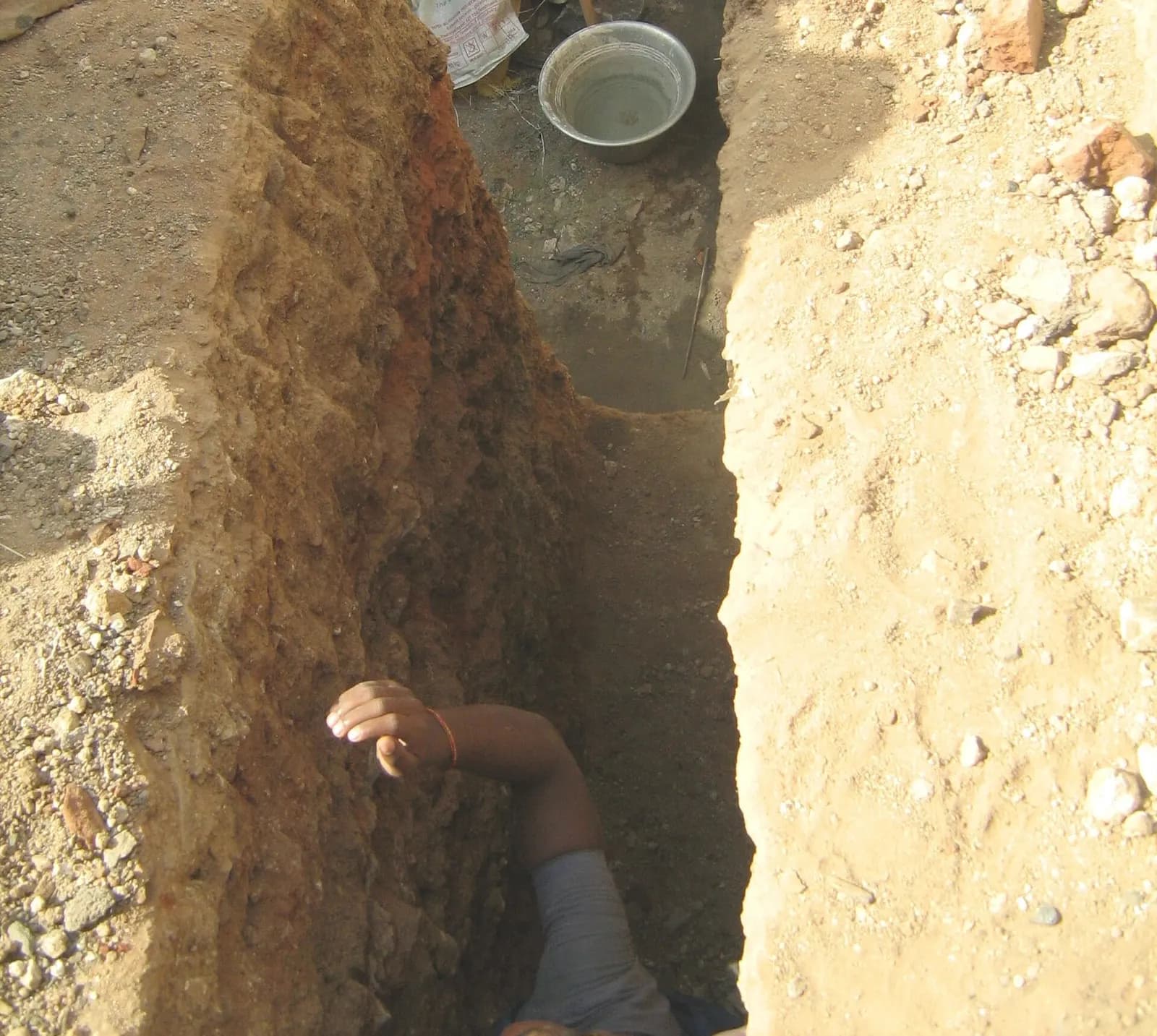
When a BOQ item isn't in the schedule — a proprietary waterproofing system, a special tile, a new construction technology — it is a non-schedule item. The department prices it by rate analysis using current market rates, and CPWD's Plinth Area Rates note that for any item not in the DSR, the authority approving the tender should give a per-unit rate and specification in the tender document.
Measuring quantities under IS 1200
Quantities in Indian BOQs are worked out according to IS 1200, the Bureau of Indian Standards' method of measurement of building and civil engineering works. It runs to more than 25 parts, one for each trade — Part 1 earthwork, Part 2 concrete, Part 3 brickwork, Part 13 whitewashing and painting, and so on. CPWD and most state departments either follow it directly or have their own modes of measurement based on it.
The general rules are simple. Work is measured net, as fixed in place. Dimensions are booked in the order length, breadth or width, then height, depth or thickness. Each dimension is taken to the nearest 0.01 m, areas to the nearest 0.01 m² and volumes to the nearest 0.01 m³.
| Work | Unit under IS 1200 | Notes |
|---|---|---|
| Earthwork in excavation or filling | m³ | Lead measured in 50 m units up to 250 m; lift in stages of 1.5 m |
| Plain and reinforced concrete | m³ | No deduction for reinforcement or for openings up to 0.1 m² |
| Formwork (centering and shuttering) | m² | Area of concrete in contact with the formwork |
| Reinforcement steel | kg or tonne | From bar bending schedule; laps as specified |
| Brickwork more than one brick thick | m³ | In multiples of half-brick thickness; no deduction for openings up to 0.1 m² |
| Brick walls one brick thick or less | m² | Thickness stated |
| Plaster, flooring, painting | m² | Painting: no deduction for openings up to 0.5 m²; full deduction above 3 m² |
| Skirting, pipes, fair cutting | running metre | Size or girth stated |
| Doors, fittings, fixtures | number | Size and specification stated |
The deduction rules are where disputes start. IS 1200 tells you what not to deduct — small openings, bearings of beams up to a set section, chases up to 50 cm girth in brickwork, the volume of reinforcement in concrete — because the labour of working around them roughly cancels out the material saved. If your BOQ was prepared on one set of deduction rules and the site engineer measures on another, the running bills won't match your estimate. Read the mode of measurement in the tender and follow it when you take off quantities.
Rate analysis: how a BOQ rate is built
Rate analysis breaks one unit of an item into the materials, labour and tools needed, prices each at current rates, then adds water charges and the contractor's profit and overheads. CPWD's Analysis of Rates follows this pattern; secondary guides to DSR 2023 describe the contractor's profit and overheads as 15% on the cost of materials, labour and tools. Here is an illustrative analysis for one cubic metre of brickwork in cement mortar 1:6 in a superstructure. The quantities follow a common thumb-rule; the prices are estimates for a mid-sized city in 2026, not schedule rates.
| Component | Quantity | Rate | Amount |
|---|---|---|---|
| Bricks | 500 nos | ₹8 each | ₹4,000 |
| Cement (for about 0.25 m³ of mortar) | 1.3 bags | ₹380 a bag | ₹494 |
| Sand | 0.28 m³ | ₹2,200 per m³ | ₹616 |
| Mason | 0.7 day | ₹1,000 a day | ₹700 |
| Helper (beldar) | 1.4 days | ₹650 a day | ₹910 |
| Cost of materials and labour | ₹6,720 | ||
| Water charges at 1% | ₹67 | ||
| Contractor's profit and overheads at 15% | ₹1,018 | ||
| Rate per m³ (before GST) | about ₹7,805 |
Two points stand out. First, bricks are more than half the cost, so a ₹1 rise in brick price moves the rate by about ₹575 a cubic metre after overheads. Second, labour rates must be at least the applicable minimum wage for construction workers in that state; departments revise schedules partly because wage notifications change. When you price a tender, build a rate analysis for your ten biggest items rather than trusting a schedule rate that may be two years old — that is where most of the money sits.
A worked BOQ excerpt: foundation and plinth for a boundary-wall job
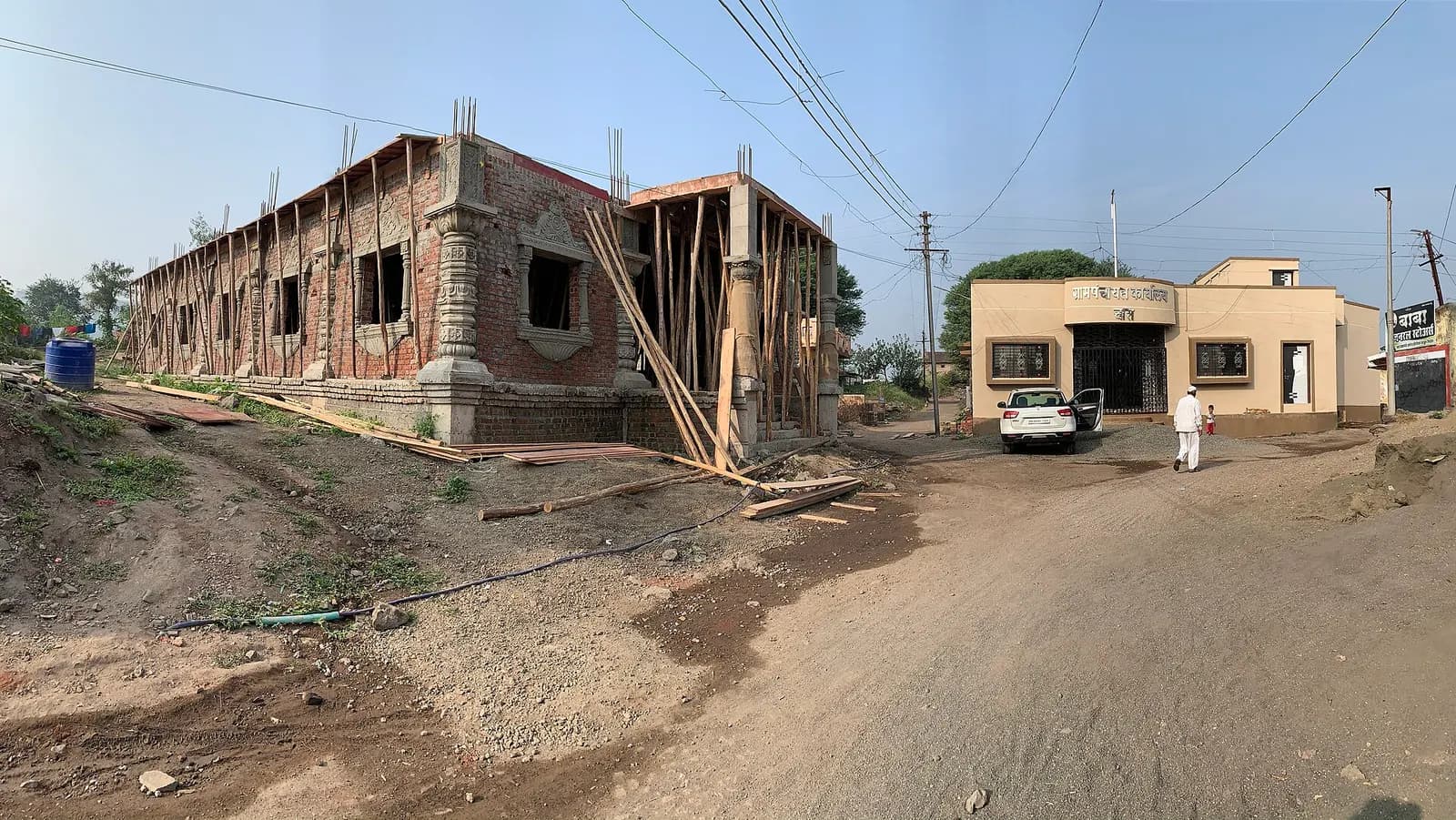
Here is part of a BOQ for the foundation and plinth of a 30 m long load-bearing wall. Quantities are taken off the drawing using IS 1200 rules; rates are illustrative estimates before GST, not DSR rates, and will differ by city.
| No. | Description | Unit | Qty | Rate (₹) | Amount (₹) |
|---|---|---|---|---|---|
| 1 | Earthwork in excavation in foundation trenches, all kinds of soil, lift up to 1.5 m, lead up to 50 m (30 × 0.90 × 1.00) | m³ | 27.00 | 300 | 8,100 |
| 2 | Plain cement concrete 1:4:8 below foundation (30 × 0.90 × 0.10) | m³ | 2.70 | 6,500 | 17,550 |
| 3 | Brickwork in cement mortar 1:6 in foundation and plinth (30 × 0.35 × 1.20) | m³ | 12.60 | 7,800 | 98,280 |
| 4 | Reinforced cement concrete M25 in plinth beam, excluding steel and formwork (30 × 0.23 × 0.30) | m³ | 2.07 | 9,500 | 19,665 |
| 5 | Reinforcement steel, cut, bent and placed (about 100 kg per m³) | kg | 207 | 85 | 17,595 |
| 6 | Formwork to sides of plinth beam (30 × 0.30 × 2) | m² | 18.00 | 550 | 9,900 |
| 7 | 12 mm cement plaster 1:6 on exposed plinth, both faces (30 × 0.45 × 2) | m² | 27.00 | 350 | 9,450 |
| Total before GST | 1,80,540 | ||||
| GST on works contract at 18% | 32,497 | ||||
| Total including GST | 2,13,037 |
Notice how the description carries the measurement logic: the lift and lead for earthwork, the mix for concrete and mortar, and what the RCC rate excludes, so steel and formwork are not paid twice. Notice too that brickwork is almost 55% of this excerpt, which tells you where to concentrate your rate analysis and your negotiation with suppliers. If the owner later deepens the trench to 1.2 m, item 1 grows to 32.40 m³ and is paid at the same ₹300 rate — that is the point of a measured contract.
GST, TDS and the BOQ
A contract to build, repair or renovate immovable property where the contractor supplies both material and labour is a works contract under GST, taxed as a service at 18% with input tax credit for private and government clients alike since 22 September 2025. Labour-only construction services are also at 18%, with exemptions for pure labour on a single residential unit and on government housing schemes. Our GST on works contract guide explains the rate history and exemptions.
For the BOQ, the practical question is whether item rates include GST. CPWD's Plinth Area Rates 2025 say their rates include contractor's profit and overheads, GST and labour welfare cess. Tender BOQs vary: many government NITs ask contractors to quote rates inclusive of all taxes, while private clients usually want GST shown as a separate line, as above. Because the contractor can claim input tax credit on cement (18%), steel (18%) and other inputs, a rate analysis for a GST-exclusive quote should use material prices net of the GST you will recover.
Payments against the BOQ attract deductions at source. Government departments deduct GST TDS at 2% (1% CGST + 1% SGST, or 2% IGST) when the taxable contract value exceeds ₹2.5 lakh, and most clients deduct income-tax TDS on contract payments at 1% for individuals and HUFs or 2% for others once the thresholds are crossed. Build these into your cash-flow plan; they come back as credits, but months later.
From BOQ to running bills
Once work starts, the BOQ becomes a payment tool. The site engineer records measurements in a measurement book, item by item, in the units of the BOQ. Each month or at agreed stages, those measurements are multiplied by the BOQ rates to produce a running account bill, from which the client deducts earlier payments, security deposit or retention, taxes at source and any recoveries for materials it supplied. The final bill reconciles total measured quantities against the BOQ.
How to prepare a BOQ for a small job
- 1
Collect drawings and specifications
Architectural, structural and services drawings plus the specification the client wants — for government work, usually CPWD Specifications or the state's.
- 2
Break the work into schedule items
Use the DSR or your state SOR item list as a checklist so nothing is missed and descriptions are standard.
- 3
Take off quantities by IS 1200
Book length × breadth × depth to two decimals, apply the deduction rules, and keep your take-off sheets for later disputes.
- 4
Price each item
Apply the schedule rate with the local cost index, or build a rate analysis from current material and labour prices for non-schedule and high-value items.
- 5
Add the summary and taxes
Create a quotationTotal each sub-head, then show GST, cess and any provisional sums clearly — or state that rates are inclusive.
Differences between BOQ quantities and actual measured quantities are normal; contracts usually set a deviation limit, beyond which rates for the excess are renegotiated. New items not in the BOQ are "extra items" and are priced by rate analysis. Keep every rate analysis and supplier quote you used — they are your evidence if a claim goes to the engineer-in-charge or arbitration.
Common mistakes in BOQs and how to avoid them
Vague descriptions. "RCC work" without grade, location or what is excluded invites disputes over whether formwork, steel or finishing are included. Copy the full schedule description and add anything specific to the job.
Mixing measurement rules. Taking off plaster with every opening deducted when the contract follows IS 1200's no-deduction rule for small openings undervalues your work. Agree the mode of measurement before you price.
Using an old schedule without the cost index. A 2023 schedule rate applied in 2026 without the current index can be well below market. Check the cost index notified for your station.
Ignoring lead and lift. Earthwork rates assume a set lead and lift. If you have to cart soil 2 km or excavate 3 m deep, those are separate items or extra-over charges.
Forgetting non-schedule items. Waterproofing systems, special fittings and site-specific temporary works are often missing from early BOQs. Flag them before you sign, not after.
Official references
- CPWD publicationsDSR, analysis of rates, specifications
- CPWD Plinth Area Rates 2025 (PDF)Rates, cost index proforma, specifications
- Railway Board — adoption of DSR 2023 (PDF)DSR-2023 with Building Cost Index
- BIS standards portalCurrent editions of IS 1200 parts
- CBIC GST rate notificationsWorks contract rate
What to do next
If you are starting a contracting business, our construction business plan covers registration, CPWD enlistment and working capital, and our construction cost per sq ft guide shows how CPWD's plinth area rates give a quick check on a BOQ total. Use the concrete calculator for material quantities and the quotation generator to send a priced BOQ to a client.
This is general information, not legal or tax advice — confirm on the official source or with a professional.
Frequently asked questions
A bill of quantities is an itemised list of every piece of work in a construction job — excavation, concrete, brickwork, plaster, flooring and so on — with a description, unit, quantity and, once priced, a rate and amount for each item. It lets every bidder price the same scope, becomes part of the contract, and is the basis for measuring and paying for work as it is done.
An estimate is the owner's or engineer's forecast of cost, usually built from a schedule of rates such as the CPWD DSR. A BOQ is the list of items and quantities issued to bidders; the contractor prices it. In government tenders the department's priced BOQ becomes the estimated cost, and contractors quote rates or a percentage above or below it.
Central government and many other departments use CPWD's Delhi Schedule of Rates — currently DSR 2023 — adjusted by a cost index for the location. State public works departments publish their own schedules of rates (SORs). Items not in the schedule are priced by rate analysis from market rates of materials and labour.
Indian BOQs follow IS 1200. Earthwork, concrete and thick brickwork are measured in cubic metres; walls one brick thick or less, plaster, flooring, painting and formwork in square metres; skirting, pipes and fair cutting in running metres; reinforcement in kilograms or tonnes; and fittings in numbers. Dimensions are taken to the nearest 0.01 m.
It depends on the document. CPWD's Plinth Area Rates 2025 are stated to include GST, contractor's profit and overheads, and labour cess. For tenders, read the tax clause: many government NITs ask for rates inclusive of all taxes, while private BOQs often show GST separately. Works contracts are taxed at 18% with input tax credit.
On larger projects a quantity surveyor or the consultant's estimation team prepares it from the drawings and specifications. In government departments the divisional engineers prepare it from the DSR or SOR. Small contractors and builders often prepare their own BOQ to price a client's drawings or to check a consultant's quantities before bidding.
Sources & verification
Figures on this page were checked against the sources below when it was last reviewed on 9 October 2026. Each rate and limit is stored once with its own official source and review date, and official update channels are monitored daily so changes are picked up. How we verify
- 1.IS 1200 (Part 1): 1992 — Method of measurement of building and civil engineering works: Earthwork — Bureau of Indian Standards (via Public.Resource.Org) · accessed 9 October 2026
- 2.IS 1200 (Part 3): 1976 — Brickwork — Bureau of Indian Standards (via Public.Resource.Org) · accessed 9 October 2026
- 3.IS 1200 (Part 2): 1974 — Concrete works — Bureau of Indian Standards (via Public.Resource.Org) · accessed 9 October 2026
- 4.IS 1200 (Part 13): 1994 — Whitewashing, colour washing, distempering and painting — Bureau of Indian Standards (via Public.Resource.Org) · accessed 9 October 2026
- 5.Adoption of CPWD Delhi Schedules of Rates-2023 (DSR Vol I, II; AOR Vol I, II) — Railway Board, Ministry of Railways (3 July 2025) · accessed 9 October 2026
- 6.CPWD Plinth Area Rates 2025 — Central Public Works Department · accessed 9 October 2026
- 7.Notification No. 15/2025-Central Tax (Rate) — CBIC · accessed 9 October 2026
- 8.DSR 2023 complete guide (secondary) — InfraLens · accessed 9 October 2026
MSMETOOLS is an independent platform and is not affiliated with any government agency, ministry or department.
Tools for this
Construction Material Calculator
Estimate cement, sand and aggregate for slabs.
Quotation Generator
Create professional quotes for clients.
Invoice Generator
Create professional invoices with tax, logo and custom details.
Related guides
 Construction Cost per Sq Ft 2026: CPWD Rates & EstimateRead guide
 Construction Business Plan 2026: Costs, CPWD Classes & GSTRead guide
 How to Start an Import Export Business in India (2026)Read guide
 Solar Panel Installation Business 2026: Vendor Rules & ProfitRead guide
Official links open the government site in a new tab.