 Government schemes & funding
SBI Business Loans in 2026: MSME Products, Limits, Eligibility and How to Apply
Loan for business from SBI in 2026: SBI's MSME products — Mudra, Digi Sugam, PABL, Smart Score, Asset Backed Loan, Sahaj — with limits, pricing and steps.
 Edited by Sumeet YadavFounder & editor, MSMETOOLS · fact-checked against official sources
Contents (11)
- 1. How SBI prices business loans
- 2. SBI's MSME loan products at a glance
- 3. Mudra and e-Mudra loans at SBI
- 4. Pre-approved and digital loans for existing customers
- 5. SME Smart Score, SME Credit Card and SBI Asmita
- 6. Asset Backed Loans and loans against property
- 7. CGTMSE and other government schemes at SBI
- 8. A worked example: three SBI routes for ₹10 lakh
- 9. Documents and how to apply
- 10. After sanction: prepayment, renewals and complaints
- 11. What to do next
State Bank of India is the country's largest lender to small businesses, and "loan for business from SBI" covers more than a dozen separate products — from a ₹50,000 Shishu Mudra loan to a ₹20 crore loan against commercial property. This guide maps the MSME products SBI publishes on its official website (now at sbi.bank.in), with the limits, margins, tenures, fees and credit rules exactly as SBI states them and the date each page was last updated. It is a neutral explainer, not a recommendation: compare SBI's offer with at least one other bank before you sign.
Quick answer
SBI lends to MSMEs through Mudra (PMMY) loans for micro units, pre-approved and digital loans for existing customers (PABL up to ₹20 lakh, SME Digi Sugam up to ₹50 lakh), SME Smart Score for ₹10–50 lakh, Asset Backed Loans against property up to ₹20 crore, MSME Sahaj invoice loans, and scheme loans backed by CGTMSE. Pricing is linked to SBI's External Benchmark Rate — repo + 2.65%, i.e. 8.15% — plus a risk premium.
Udyam registration is required on most MSME products and for CGTMSE cover
No collateral on micro and small enterprise loans up to ₹20 lakh (RBI rule)
Apply at the branch, online enquiry form, YONO Business, JanSamarth (Mudra) or PSB Loans in 59 Minutes
No prepayment penalty on floating-rate MSE loans sanctioned from 1 January 2026
How SBI prices business loans
SBI doesn't publish one "business loan interest rate", and pages that quote a single figure are guessing. All floating-rate loans to MSMEs at SBI have been linked to an external benchmark since 1 October 2019, and the benchmark is the RBI repo rate. SBI's product pages, updated as recently as 7 October 2026, describe its External Benchmark Rate (EBR) as the repo rate plus 2.65%. With the repo rate at 5.50%, that puts the EBR at 8.15%.
Your rate then adds premiums. SBI's EBLR history lists its lending rate as "EBLR + CRP + BSP" — a credit-risk premium (CRP) set by your rating, the security or guarantee and the product, and a business strategy premium (BSP) the bank sets by product. Product pages say rates are based on "rating of the borrower / external rating or scheme-specific rating". Loans to non-MSMEs are linked to the six-month MCLR instead; SBI's one-year MCLR was 8.70% from 15 July 2026. A note of caution: SBI's EBLR history page was last updated in December 2025 and doesn't yet reflect later repo moves, so rely on the product pages and your sanction letter.
How your SBI MSME rate is built
Step 1
RBI repo rate 5.50%
Step 2
+ SBI spread 2.65% = EBR 8.15%
Step 3
+ credit-risk premium (your rating, security)
Step 4
+ business strategy premium (by product)
Step 5
Your rate, reset at least every 3 months
APR in the Key Facts Statement adds fees
Because the base is the repo rate, every RBI policy change flows into your loan at the next reset — which RBI requires at least once at least once every three months. Before you sign, ask for the Key Facts Statement, which shows the annual percentage rate (APR) including all fees, and ask how the CRP was set and what would lower it.
SBI's MSME loan products at a glance
SBI groups its business lending under SME loans, small business loans, digital loans and government schemes. The table puts them in order of size. All limits are as published on sbi.bank.in when we checked on 9 October 2026.
| Product | Amount | Facility | Main conditions |
|---|---|---|---|
| PMMY (Mudra) — Shishu / Kishore / Tarun | Up to ₹50,000 / ₹5 lakh / ₹10 lakh (SBI page) | Term loan or working capital | Non-farm micro units, new or existing; CGFMU guarantee; margin nil up to ₹50,000, 20% above |
| Micro Credit Card | ₹50,000–₹5 lakh | RuPay business credit card | Udyam "micro" units already financed by SBI under a government scheme |
| SME Credit Card | Up to ₹10 lakh | Cash credit and/or term loan | 2-year satisfactory track record; CGFMU cover; ₹1,000 + GST fee |
| Pre-Approved Small Business Loan (PAsBL) | Above ₹50,000 to ₹10 lakh | Dropline OD | Existing customers classed as informal micro enterprises; promoter up to 60 |
| Pre-approved Business Loan (PABL) | Above ₹50,000 to ₹20 lakh | Dropline OD, 48 months | Current-account customers, micro/small; collateral-free; 0.30% fee |
| MSME Sahaj (invoice finance) | Up to ₹10 lakh per unit | Demand loan per invoice | Proprietors with GST turnover up to ₹5 crore; no existing working capital limit |
| SME Digi Sugam | ₹1 lakh–₹50 lakh | Dropline OD, 36 months | Proprietors, 2-year vintage, GST over 24 months, no working capital limit |
| SME Smart Score | Above ₹10 lakh to ₹50 lakh | Term loan / CC / dropline OD | Scoring model ≥60%; CMR go/no-go; CGTMSE cover |
| SBI Asmita (women) | Above ₹10 lakh to ₹5 crore | Term loan, working capital, OD | Women-run units, >50% women shareholding; nil collateral with CGTMSE |
| Digital loans (contactless lending) | Up to ₹5 crore | Cash credit and term loan | Online assessment; CGTMSE/CGFMU or collateral |
| ABL (Saral) — loan against property | Above ₹20 lakh to ₹5 crore | Dropline OD, cash credit | Property mortgage, LTV 70%, 25% margin |
| Asset Backed Loan | Above ₹5 crore to ₹20 crore | Dropline OD or cash credit | Property mortgage, LTV 65%, up to ₹50 crore case-to-case |
Mudra and e-Mudra loans at SBI
For micro businesses — a tailoring shop, a mobile repair counter, a small food unit — Pradhan Mantri Mudra Yojana loans are the usual starting point. SBI's PMMY page describes them as working capital and term loans for non-corporate, non-farm small and micro enterprises in manufacturing, trading and services, including allied agricultural activities, for both new and existing units.
SBI's page lists three bands: Shishu up to ₹50,000, Kishore from ₹50,001 to ₹5 lakh, and Tarun from ₹5 lakh to ₹10 lakh. Note that the page, last updated in December 2025, still gives ₹10 lakh as the maximum, whereas the national scheme now goes up to ₹20 lakh through the Tarun Plus category for borrowers who have repaid a Tarun loan — ask the branch if you qualify. Margin is nil up to ₹50,000 and 20% above that. Loans below ₹5 lakh are repayable over a maximum of five years including up to six months' moratorium; loans of ₹5 lakh to ₹10 lakh over up to seven years including up to 12 months' moratorium. The loans are guaranteed under CGFMU through NCGTC, so no collateral is taken. There is no processing fee for Shishu and Kishore loans to MSE units; Tarun loans carry 0.50% of the loan plus tax.

e-Mudra (online application). The phrase "SBI e-Mudra" is searched heavily, but SBI's PMMY page now routes online Mudra applications through the government's JanSamarth portal, with a bank-specific link at jansamarth.in/apply/sbi. You can also walk into any SBI branch. Never pay an agent or a website that promises an "e-Mudra approval" — applying is free. Our Mudra loan guide covers the scheme in full.
Pre-approved and digital loans for existing customers
If you already have a current account with SBI, the fastest route is often an offer the bank has already worked out from your account data.
Pre-approved Business Loan (PABL). For current-account customers who are individuals, proprietors or partnerships classified as micro or small. It's a dropline overdraft of above ₹50,000 up to ₹20 lakh, repayable over a fixed 48 months, with no collateral and a processing fee of 0.30% of the limit plus GST. The promoter must be no older than 70. Pre-Approved Small Business Loan (PAsBL) is the equivalent for existing customers classed as informal micro enterprises — above ₹50,000 up to ₹10 lakh, same 0.30% fee, promoter up to 60.
SME Digi Sugam. A fully digital working-capital loan for individuals and proprietorships with at least two years' vintage, Udyam registration, GST registration for more than 24 months, two years of income-tax returns, and no existing working capital limit from any lender. The limit is ₹1 lakh to ₹50 lakh, set at 25% of the lowest of GST sales, bank credits and projected turnover for the next 12 months, as a dropline overdraft repayable over 36 months. SBI's credit filter is published: CMR-1 to CMR-7, or a personal score of 650 or no history where there is no CMR, and no write-off or settlement in the last two years. Charges are a flat ₹10,000 at sanction. Top-ups of up to 15% are possible after 12 months if the account hasn't been reported as SMA-1 or SMA-2.
SBI's quick-credit products side by side
| PABL | SME Digi Sugam | MSME Sahaj | |
|---|---|---|---|
Who | Micro/small current-account customers | Proprietors, 2-year vintage | Proprietors, GST turnover ≤ ₹5 crore |
Amount | Above ₹50,000 to ₹20 lakh | ₹1 lakh–₹50 lakh | Up to ₹10 lakh |
Repayment | 48 months | 36 months | Bullet, on invoice due date |
Fee | 0.30% + GST | Flat ₹10,000 | Nil |
Credit filter | Pre-approved by SBI | CMR 1–7 or score 650/-1 | CMR 1–6 or score 650/-1 |
Who
- PABL
Micro/small current-account customers
- SME Digi Sugam
Proprietors, 2-year vintage
- MSME Sahaj
Proprietors, GST turnover ≤ ₹5 crore
Amount
- PABL
Above ₹50,000 to ₹20 lakh
- SME Digi Sugam
₹1 lakh–₹50 lakh
- MSME Sahaj
Up to ₹10 lakh
Repayment
- PABL
48 months
- SME Digi Sugam
36 months
- MSME Sahaj
Bullet, on invoice due date
Fee
- PABL
0.30% + GST
- SME Digi Sugam
Flat ₹10,000
- MSME Sahaj
Nil
Credit filter
- PABL
Pre-approved by SBI
- SME Digi Sugam
CMR 1–7 or score 650/-1
- MSME Sahaj
CMR 1–6 or score 650/-1
MSME Sahaj. Invoice financing for sole proprietors with GST turnover up to ₹5 crore and an SBI current account but no working capital limit anywhere. SBI lends 85% of each domestic B2B GST invoice of ₹50,000 to ₹1 lakh — for example, ₹42,500 on a ₹50,000 invoice — up to ₹10 lakh per unit, repaid in one go when the invoice falls due within 90 days. There is no processing fee; the rate depends on your CMR or credit score (CMR-1 to CMR-6 or 650+). At least 25% of your GST sales must flow through your SBI account, and the invoice can't be more than 10 days old. A three-day cooling-off period applies under RBI's digital lending rules.
Digital loans up to ₹5 crore. SBI's contactless lending platform offers cash credit and term loans for working capital and fixed assets, with up to 20% margin and term loans of up to 10 years, priced off the EBLR. Loans must be covered by CGFMU, CGTMSE or eligible collateral, with the guarantee fee paid by the borrower. Public sector bank loans can also be started on PSB Loans in 59 Minutes, which gives a digital in-principle approval before the branch's checks.
SME Smart Score, SME Credit Card and SBI Asmita
SME Credit Card. Despite the name, this is a small loan rather than a plastic card: cash credit and/or a term loan of up to ₹10 lakh for micro enterprises, small traders, professionals and the self-employed with a satisfactory two-year track record. Working capital is assessed at 20% of the last 12 months' turnover through the account; for professionals, 50% of gross annual income in the income-tax return. Margin is nil up to ₹50,000 and 10% above. There's no collateral — loans are covered under CGFMU — and the unified processing fee is ₹1,000 plus GST. Applicants must score at least 60% on SBI's scoring model.
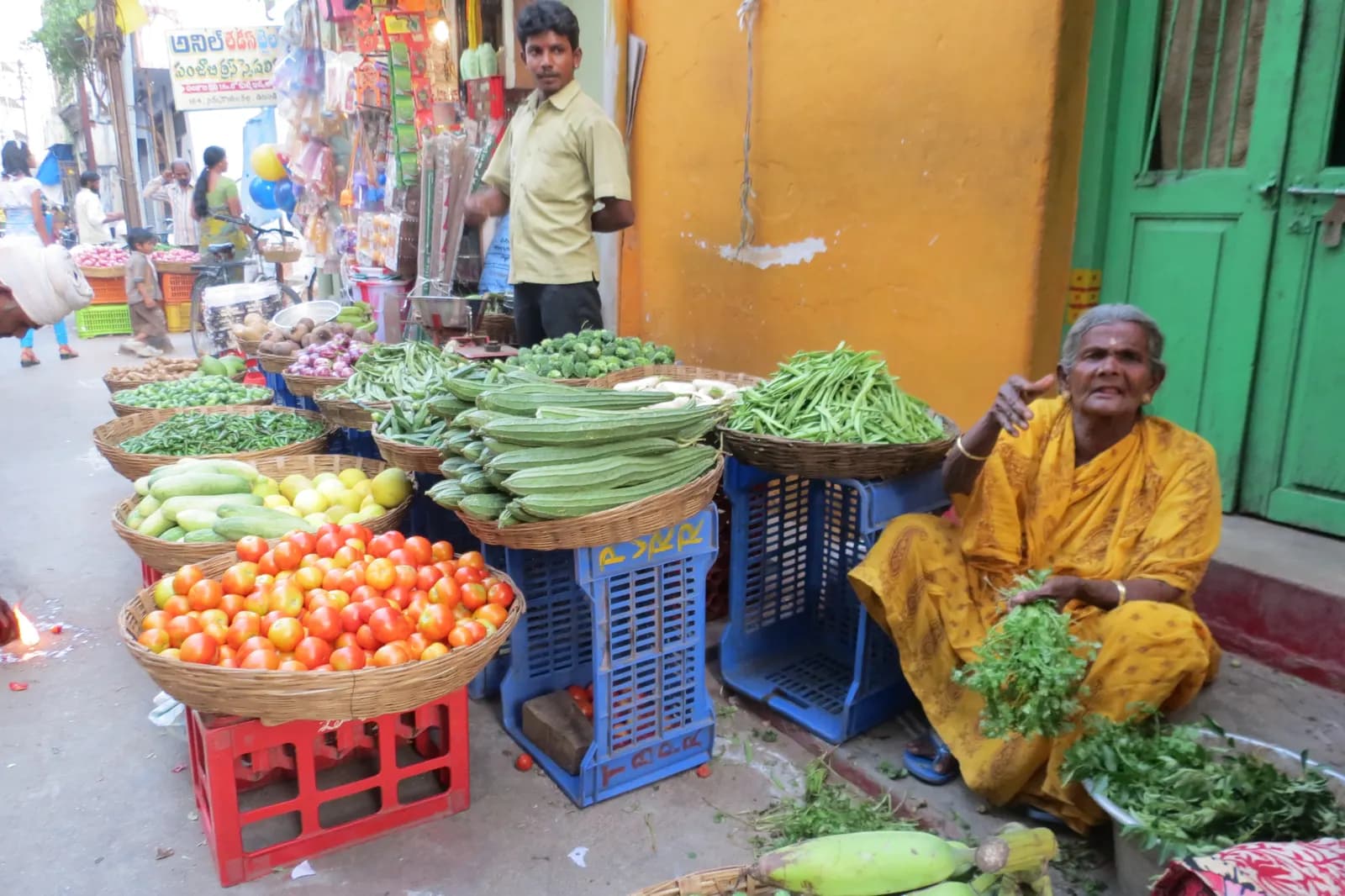
SME Smart Score. For MSMEs needing above ₹10 lakh up to ₹50 lakh — proprietorships, partnerships and closely held companies. Facilities can be a term loan, cash credit, dropline overdraft or a mix. Margin is 20% on working capital and 33% on term loans; term loans run up to seven years including up to six months' moratorium; the processing fee is 0.40%. PAN, Udyam registration and GST (where applicable) are mandatory, both commercial and consumer credit reports must be satisfactory, the CMR "go/no-go" test must be passed, the chief promoter must be 18 to 65, and the application must score at least 60% overall with 50% in each section. Loans are covered by CGTMSE.
SBI Asmita. For units run by women entrepreneurs, including partnerships and companies where women hold more than 50%. Amounts run from above ₹10 lakh to ₹5 crore for term loans, working capital, overdrafts or non-fund facilities, with no collateral — all eligible loans are covered by CGTMSE, with the guarantee fee borne by the borrower. Pre-payment is allowed without penalty. Udyam or Udyam Assist registration is mandatory.
Asset Backed Loans and loans against property
When the requirement is large and you have property to offer, SBI's Asset Backed Loan family lends against immovable property belonging to the unit, its proprietor, partners or directors, or their close relatives. The property must be enforceable under the SARFAESI Act.
ABL (Saral) covers above ₹20 lakh to ₹5 crore for building current and fixed assets, expansion, modernisation or short-term working capital, for manufacturers, service businesses, traders, professionals and the self-employed. Margin is 25% and the loan can go up to 70% of the property's realisable value. Dropline overdrafts run from 12 to 180 months with a moratorium of up to six months, during which interest is paid monthly; cash credit is repayable on demand.
Asset Backed Loan (SME) covers above ₹5 crore up to ₹20 crore, with up to ₹50 crore allowed case by case. Margin is again 25%, the loan-to-value ceiling is 65%, and dropline overdrafts can run from 12 to 240 months with up to 18 months' moratorium. Udyam registration is mandatory for MSME units, although non-MSMEs can also borrow under this product. A separate ABL CRE product covers loans against commercial real estate.
A point worth weighing: if you're a micro or small enterprise and need less than ₹20 lakh, RBI's rule means you shouldn't need to pledge property at all; above that, ask whether CGTMSE cover could replace the mortgage before you offer your house.
CGTMSE and other government schemes at SBI
SBI is a member lending institution of CGTMSE, which guarantees collateral-free loans to micro and small enterprises — including traders — up to ₹10 crore. Udyam registration is mandatory for the cover. Under the hybrid security model, SBI can take collateral for part of a loan and cover the unsecured part under CGTMSE, within the same overall ceiling. SBI's CGTMSE page lists the annual guarantee fee slabs from 1 April 2025, excluding GST:
| Loan amount | Annual guarantee fee |
|---|---|
| Up to ₹10 lakh | 0.37% |
| Above ₹10 lakh to ₹50 lakh | 0.55% |
| Above ₹50 lakh to ₹1 crore | 0.60% |
| Above ₹1 crore to ₹2 crore | 0.85% |
| Above ₹2 crore to ₹5 crore | 1.00% |
| Above ₹5 crore to ₹8 crore | 1.10% |
| Above ₹8 crore to ₹10 crore | 1.20% |
The fee is usually borne by the borrower, so add it to the APR when comparing offers. SBI also finances PMEGP projects, Stand-Up India loans for SC/ST and women entrepreneurs, and loans under the West Asia crisis line ECLGS 5.0 — though the national ECLGS 5.0 guarantee ceiling was almost fully used by August 2026, so check availability before you apply. Our guide to government loans for business compares these schemes.
A worked example: three SBI routes for ₹10 lakh
The rates below are illustrative — SBI publishes the EBR but not the premium it will charge you — so treat the figures as a way to compare structures, not as quotes.
A Nagpur printing shop, a proprietorship with three years of GST returns and an SBI current account, needs ₹10 lakh to buy a second digital press. Assume the bank prices the loan at EBR (8.15%) plus 2%, or 10.15%.
Route 1 — PABL (if pre-approved). 48-month dropline overdraft, no collateral, fee 0.30% (₹3,000 + GST). EMI-equivalent about ₹25,435; total interest about ₹2.21 lakh.
Route 2 — Mudra Tarun. Five-year term loan with up to 12 months' moratorium, 20% margin (so ₹8 lakh borrowed against a ₹10 lakh press), fee 0.50% of the loan plus tax. On the full ₹10 lakh over 60 months the EMI would be about ₹21,321 and interest about ₹2.79 lakh; with the margin, borrowing and EMI fall by a fifth.
Route 3 — SME Smart Score (if more is needed). For a combined machine and working capital need above ₹10 lakh, with 33% margin on the term loan, CGTMSE cover and a 0.40% fee.
The PABL is quickest and needs no margin but repays faster; the Mudra loan asks you to bring in money but spreads repayment and adds a moratorium. A one-point difference in the premium — 11.15% instead of 10.15% over five years — adds about ₹30,000 of interest on ₹10 lakh.
Compare SBI loan structures
Documents and how to apply
SBI publishes an indicative MSME document checklist, and RBI requires every bank to show one on its website. It asks for identity and address proof of the proprietor, partners or directors; proof of business address and any lease; three years of audited financials and income-tax returns; two years of GST returns; Udyam and other registrations and licences; the partnership deed or memorandum and articles; a statement of the promoters' assets and liabilities; sanction letters of existing loans; and, for term loans, a project report naming the machinery, suppliers and prices. Asset Backed Loans also need the title deeds of the property offered. Digital and pre-approved products need far less, because the bank reads your data electronically.
There are five ways in. The home branch or SBI's SME centres handle every product and are the right place for larger or more complex loans. SBI's online "Apply Online — Business" enquiry form on sbi.bank.in captures your details for a callback. YONO Business and SBI's corporate internet banking carry the digital products — SBI's digital lending page names SME Digi Sugam and MSME Sahaj on this channel. JanSamarth is the route for Mudra and other credit-linked government schemes, and PSB Loans in 59 Minutes gives a digital in-principle approval for loans from public sector banks including SBI.
Applying for an SBI business loan
- 1
Match the product to the need
Mudra for small micro loans, PABL/Digi Sugam if you bank with SBI, Smart Score for ₹10–50 lakh, ABL if you have property and need more.
- 2
Check eligibility and credit reports
MSME loan eligibility guideUdyam current, GST and ITR filed, owners' scores and the business CMR within SBI's published ranges.
- 3
Apply through the right channel
SBI — Apply Online (Business)Branch, online enquiry form, YONO Business, JanSamarth (Mudra) or PSB Loans in 59 Minutes. Note the application number.
- 4
Read the KFS and sanction letter
Check the EBR, CRP/BSP, APR, fees, CGTMSE fee, margin, moratorium and security before signing.
- 5
Escalate if stuck
MSE loans up to ₹25 lakh should be decided within 14 working days; rejections must be explained in writing. Then SBI's grievance officers, then the RBI Ombudsman.
After sanction: prepayment, renewals and complaints
On prepayment, the 2026 rules work in your favour. Under RBI's Pre-payment Charges on Loans Directions, 2025, commercial banks such as SBI cannot charge any pre-payment penalty on floating-rate business loans to individuals and micro and small enterprises sanctioned or renewed from 1 January 2026, whether you prepay in part or in full and wherever the money comes from. SBI's Digi Sugam page already says pre-payment charges won't be recovered from MSEs even on takeover by another bank, and SBI Asmita permits prepayment without penalty.
Cash credit and overdraft limits are reviewed every year (every two years for Smart Score cash credit, with an annual performance review), so keep GST and ITR filings current and avoid SMA reporting — a single overdue spell can block digital top-ups for 12 months.
If something goes wrong, SBI's digital lending page lists toll-free customer care numbers, grievance redressal officers and a principal nodal officer at its Mumbai head office. If SBI doesn't resolve a complaint within 30 days, or you're unhappy with the reply, file it with the RBI Ombudsman at cms.rbi.org.in.
Official links
- SBI — SME loansAll SBI MSME products
- SBI — PMMY (Mudra)Bands, margin, fees, JanSamarth link
- SBI — Digital loansDigi Sugam, Sahaj, PABL, contactless lending
- SBI — MSME document checklist (PDF)Indicative list
- JanSamarth — SBI Mudra applicationOnline Mudra (e-Mudra) route
- RBI Master Direction — Lending to MSME SectorCollateral-free limit, timelines
- RBI Complaint Management SystemOmbudsman complaints
What to do next
Decide the amount and purpose, pick the SBI product that fits from the table above, and check your eligibility against SBI's published credit rules. Get a Key Facts Statement from SBI and from at least one other lender — through PSB Loans in 59 Minutes or your second bank — and compare the APR. For how MSME loans are priced and secured in general, read the MSME loan guide; for machinery purchases, the term loan guide.
This is general information, not financial or legal advice — confirm the terms on the official source or with your bank.
Frequently asked questions
Pick the product that matches your need and size — a Mudra loan for a small micro unit, a pre-approved or digital loan if you already bank with SBI, SME Smart Score for ₹10–50 lakh, or an Asset Backed Loan against property for larger amounts. Apply at your home branch, through SBI's online business enquiry form or YONO Business, through JanSamarth for Mudra and other scheme loans, or via PSB Loans in 59 Minutes.
SBI links MSME loans to its External Benchmark Rate, which its product pages describe as the repo rate plus 2.65% — 8.15% with the repo rate at 5.50%. Your actual rate adds a credit-risk premium based on your rating, security and the product, and sometimes a business strategy premium. SBI's pages don't publish a single business-loan rate, so ask for the Key Facts Statement.
Yes, for micro and small enterprises. RBI tells banks not to take collateral on MSE loans up to ₹20 lakh, and several SBI products are collateral-free by design: Mudra loans and the SME Credit Card under the CGFMU guarantee, pre-approved business loans up to ₹20 lakh, and SBI Asmita and SME Smart Score loans covered by CGTMSE.
SBI's PMMY page directs online Mudra applicants to the JanSamarth portal, with an SBI-specific link at jansamarth.in/apply/sbi. You can also apply at any SBI branch. Shishu and Kishore loans to micro and small units carry no processing fee; Tarun loans carry 0.50% plus tax. The loan is guaranteed under CGFMU, so no collateral is taken.
SBI's published MSME checklist includes identity and address proof of the proprietor, partners or directors, business address proof, three years of audited financials and ITRs, two years of GST returns, Udyam and other registrations, constitution documents, a statement of promoters' assets and liabilities, existing loan sanction letters, and a project report with machinery quotations for term loans.
Under RBI's directions, SBI as a commercial bank cannot charge pre-payment penalties on floating-rate business loans to individuals and micro and small enterprises sanctioned or renewed from 1 January 2026. Some SBI product pages already say so — SME Digi Sugam says pre-payment charges won't be recovered from MSEs even on takeover, and SBI Asmita allows pre-payment without penalty.
Sources & verification
Figures on this page were checked against the sources below when it was last reviewed on 9 October 2026. Each rate and limit is stored once with its own official source and review date, and official update channels are monitored daily so changes are picked up. How we verify
- 1.SBI — Asset Backed Loan (last updated 7 October 2026) — State Bank of India · accessed 9 October 2026
- 2.SBI — ABL (Saral) (last updated 7 October 2026) — State Bank of India · accessed 9 October 2026
- 3.SBI — PMMY (Mudra) (last updated 3 December 2025) — State Bank of India · accessed 9 October 2026
- 4.SBI — SME Smart Score, SME Credit Card, Pre-approved Business Loans, Pre-Approved Small Business Loan, SME Digi Sugam, MSME Sahaj, Digital Loans up to ₹5 crore — State Bank of India · accessed 9 October 2026
- 5.SBI — SME Loan to Women Entrepreneur (SBI Asmita) — State Bank of India · accessed 9 October 2026
- 6.SBI — CGTMSE (last updated 8 August 2025) — State Bank of India · accessed 9 October 2026
- 7.SBI — Micro Credit Card (last updated 27 July 2026) — State Bank of India · accessed 9 October 2026
- 8.SBI — EBLR historical data and MCLR historical data — State Bank of India · accessed 9 October 2026
- 9.SBI — Required documents checklist for MSME customers — State Bank of India · accessed 9 October 2026
- 10.SBI — Digital Lending Guidelines (updated 29 September 2026) — State Bank of India · accessed 9 October 2026
- 11.Master Direction – Lending to MSME Sector (updated 9 February 2026) — Reserve Bank of India · accessed 9 October 2026
- 12.Reserve Bank of India (Pre-payment Charges on Loans) Directions, 2025 — Reserve Bank of India · accessed 9 October 2026
- 13.MUDRA — Frequently Asked Questions — MUDRA (SIDBI) · accessed 9 October 2026
MSMETOOLS is an independent platform and is not affiliated with any government agency, ministry or department.
Tools for this
EMI Calculator
Calculate loan EMIs for business and personal loans.
Loan Eligibility Calculator
Check your business loan eligibility based on income and existing loans.
Working Capital Calculator
Check working capital, current and quick ratios.
Related guides
 Mudra Loan 2026: Shishu to Tarun Plus, Rates & How to ApplyRead guide
 PSB Loans in 59 Minutes (2026): Eligibility, Fee & StepsRead guide
 MSME Loan Eligibility 2026: Criteria, CIBIL & Scheme RulesRead guide
 Cent Kalyani Scheme 2026: Loan Limit, Rate & EligibilityRead guide
Official links open the government site in a new tab.