 Government schemes & funding
The GeM Bid Process in 2026: How Direct Purchase, L1, Bids and Reverse Auctions Work for Sellers
The GeM bid process in 2026: direct purchase vs L1 vs bid and reverse auction, EMD and ePBG, MSE preference, H1 elimination and a worked bid for MSE sellers.
 Edited by Sumeet YadavFounder & editor, MSMETOOLS · fact-checked against official sources
Contents (11)
- 1. Three ways a buyer can buy from you on GeM
- 2. Bid types you will meet
- 3. How to participate in a GeM bid, step by step
- 4. Money you put up: EMD, ePBG and the end of caution money
- 5. How a GeM reverse auction works
- 6. MSE and Make in India preferences on GeM
- 7. Worked example: an MSE manufacturer in a GeM bid with RA
- 8. Common mistakes in GeM bids
- 9. Payment, ratings and the next bid
- 10. Official links
- 11. What to do next
Registering on GeM is the easy part. Winning orders depends on understanding how government buyers actually choose a seller on the Government e-Marketplace — sometimes by clicking "buy" on your catalogue, sometimes by comparing three offers, and for larger orders through a formal bid that may end in a live reverse auction. This guide explains the GeM bid process in 2026 from the seller's side: which purchase route applies at which value, the bid types you'll meet, EMD and ePBG, the MSE and Make in India preferences, how reverse auctions qualify and run, and a worked bid for a small manufacturer.
Quick answer
On GeM, central buyers order directly up to ₹50,000, buy from the lowest of at least three manufacturers' offers (L1) up to ₹10 lakh, and use a bid or reverse auction (RA) above that. To bid, open the bid on bidplus, check eligibility, upload documents and an encrypted price before the end date, then follow technical evaluation, price opening and any RA.
No fee to bid; caution money was discontinued in 2025
MSEs and DPIIT startups are exempt from EMD; winners still submit ePBG within 15 days of award
If L1 is an MSE it gets the whole quantity; otherwise an MSE within L1 + 15% can match L1 for the buyer's set share, usually 25%
In an RA, a bid in the last minutes extends the auction by 15 minutes
Three ways a buyer can buy from you on GeM
Rule 149 of the General Financial Rules (GFR) 2017 decides how central ministries and departments buy on GeM, and the limits were doubled by the Department of Expenditure's memo of 10 July 2024. Public sector undertakings and state buyers often follow similar slabs under their own manuals.
GeM purchase routes under GFR rule 149 (as amended July 2024)
| Route | Order value | How the seller is chosen |
|---|---|---|
Direct purchase | Up to ₹50,000 | Any seller whose product meets the quality, specification and delivery period |
L1 purchase | Above ₹50,000 up to ₹10 lakh | Lowest price among offers from at least three different manufacturers |
Bid or reverse auction | Above ₹10 lakh | Formal bid, optionally followed by an online reverse auction; buyers may also bid below this value |
Direct purchase
- Order value
Up to ₹50,000
- How the seller is chosen
Any seller whose product meets the quality, specification and delivery period
L1 purchase
- Order value
Above ₹50,000 up to ₹10 lakh
- How the seller is chosen
Lowest price among offers from at least three different manufacturers
Bid or reverse auction
- Order value
Above ₹10 lakh
- How the seller is chosen
Formal bid, optionally followed by an online reverse auction; buyers may also bid below this value
The practical effect is that most of your GeM business below ₹10 lakh is won without you ever seeing a bid. For direct and L1 purchases, the buyer filters the catalogue by specification and picks from the results, so your listing is your bid. Keep the price competitive, the stock quantity accurate, the delivery period realistic and the specifications complete — buyers filter by them, and a missing parameter can hide your product from the comparison altogether. An L1 purchase needs offers from at least three manufacturers, so a niche product with only one or two OEMs on GeM may push the buyer to a bid instead.
For orders above ₹10 lakh, and whenever a buyer wants custom specifications, a bid is created on bidplus.gem.gov.in. Every seller who has a live catalogue (or service offering) in the bid's category gets notified and can participate.
Bid types you will meet
A GeM bid document starts with a summary page that tells you most of what you need: end date, offer validity, item category, whether MSE or startup relaxation of experience and turnover applies, the documents required, whether Bid-to-RA is enabled, the RA qualification rule, the type of bid, the evaluation method, EMD and ePBG details, and the MSE and Make in India preferences. Read that page before anything else.
| Bid feature | What it means for you |
|---|---|
| Single packet bid | Technical documents and price are submitted together; prices of qualified sellers are opened after technical evaluation |
| Two packet bid | Technical bid evaluated first; only technically qualified sellers' prices are opened |
| BoQ bid | Several items in one bid; you upload a price sheet (CSV) for the bill of quantities |
| Bunch bid | Connected products or services bunched together; only sellers with catalogues in all bunched categories can take part |
| PAC bid | Proprietary article — only the specified make and model can be offered |
| Custom bid | Buyer's own specifications for an item or service not standard on GeM |
| Evaluation: total value / item-wise / schedule-wise | Decides whether you must quote every item, or can skip whole schedules |
| Bid to RA enabled | A reverse auction will follow price opening among qualifying sellers |
Eligibility clauses are where most sellers are knocked out. The bid can ask for minimum average turnover, years of past experience and past supply of similar items. GeM caps the turnover a buyer can demand at 0.5 times the estimated bid value. If the buyer has switched on MSE relaxation or startup relaxation of experience and turnover, eligible sellers are exempt from those two criteria — but only if the bid summary says "Yes", and you must upload the supporting document (Udyam certificate or DPIIT recognition). If it says "No", the relaxation doesn't apply to that bid.
Bid end dates can move. Many bids carry an automatic extension: if fewer than a set number of bids have arrived by the end date, the bid is extended by a stated number of days, a stated number of times. A recent defence-PSU bid, for example, was set to extend by seven days once if fewer than five bids came in. Buyers also issue corrigenda that change dates, quantities or specifications, and a corrigendum reopens the representation window for 48 hours. Check the bid page again on the day you submit, not just the day you first saw it.
Services bids work the same way, with a few differences. Instead of a product catalogue you need an active service offering in the right category — security, manpower, cleaning, vehicle hire, catering and so on — and the price is often quoted as a rate per person-month, per vehicle-month or per unit of service, with statutory minimum wages, EPF and ESIC built in. Read the bid's wage and compliance clauses carefully: quoting below statutory cost is a common ground for rejection in manpower bids.
Income tax returns. If your business is more than 24 months old, your GeM profile needs ITR details before you can bid at all. Add them during registration — see our GeM registration guide.

How to participate in a GeM bid, step by step
From bid notification to contract
- 1
Find the bid
GeM bid list (bidplus)Log in to GeM, open Bids and filter by your categories, or watch the bid list on bidplus.gem.gov.in. Note the bid number, end date and time, and offer validity.
- 2
Read the bid document and ATC
Download the bid document, the buyer's specification file and any additional terms and conditions (ATC). Check every eligibility clause, document requirement, delivery period and consignee location.
Tip: ATC can override standard GeM terms — payment period, inspection and ePBG duration are common changes.
- 3
Raise a representation if a term is unfair
If a clause is restrictive, file a representation within the window: 1 day for 3–5 day bids, 2 days for 6–9 day bids, 4 days for bids of 10 days or more. One representation per bid.
- 4
Make sure your offering matches
Your catalogue or service offering must be in the bid's category and meet its key parameters. Resellers need OEM authorisation; for MSE-reserved bids, participate as the OEM.
- 5
Upload documents and the price
Upload each document asked for, claim EMD exemption or upload the EMD, declare MSE status and Make in India local content, and enter your price inclusive of GST at the correct rate.
Tip: Your price is encrypted until opening, but your MSE/MII selection and quantity are visible after opening. You cannot revise the price once the bid is opened.
- 6
Respond during evaluation
Answer technical clarifications within the time the buyer allows. If you are disqualified, you can make a one-time representation within 48 hours of the technical result.
- 7
Take part in the RA or price match
If Bid-to-RA is enabled and you qualify, bid in the reverse auction. If you are an MSE within the price band, accept or decline the offer to match L1.
- 8
Accept the contract and submit ePBG
Accept the contract, submit the ePBG within 15 days of award if the bid asks for one, deliver, and raise the bill online after the consignee issues the receipt-cum-acceptance certificate (CRAC).
Money you put up: EMD, ePBG and the end of caution money
GeM bid money in 2026
Nil
Fee to participate in a bid
₹5 lakh
Estimated value above which EMD can apply
MSEs and DPIIT startups exempt
3% to 10% of the contract value
Performance security range (GFR rule 171)
set as ePBG % in each bid
15 days
Time to submit ePBG after award
Earnest money deposit (EMD). Where a buyer asks for EMD — possible when the estimated bid value is above ₹5 lakh — the bid summary shows the amount and the advisory bank. Udyam-registered MSEs whose details validate online are exempt, and so are DPIIT-recognised startups. Unsuccessful bidders' EMD is returned within 15 days of award or bid-validity expiry, whichever is earlier. If you are claiming exemption, upload the Udyam certificate (or DPIIT certificate) in the EMD section; an exemption claimed without the document is a common rejection reason.
Electronic performance bank guarantee (ePBG). This is the performance security the winner provides, usually as a bank guarantee. The bid shows the percentage — for goods and services it typically sits within the GFR range of 3% to 10% of the contract value — and how many months it must remain valid. MSEs are not exempt from ePBG. You generate the ePBG request from the order details, get your bank to issue it, upload it, and the buyer verifies it. Our bank guarantee guide explains margin money and charges.
Caution money. From 2020 GeM required sellers to keep a refundable, turnover-linked caution money deposit, which could be forfeited for misconduct in bids. GeM's seller FAQ now says the provision was discontinued in 2025. If you deposited caution money earlier, withdraw it from Dashboard → Manage Caution Money Account → Recalculate Threshold → Withdraw Excess Funds after adding a verified bank account. Misconduct in bids is still dealt with through incidents, suspension and debarment under GeM's terms.
How a GeM reverse auction works
A reverse auction (RA) is a timed online auction in which qualified sellers lower their prices against each other. On GeM it usually follows a bid ("Bid to RA"): technical evaluation first, then price opening, then an RA among those who qualify.
Bid to RA on GeM
Step 1
Bid closes
documents + encrypted price
Step 2
Technical evaluation
clarifications, representations
Step 3
Prices opened
L1 from the bid becomes the RA reference price
Step 4
RA qualification
H1 elimination or top 50%
Step 5
Live RA
auto-extends 15 minutes on late bids
Step 6
Award
L1, with MSE/MII preferences applied
Who gets into the RA. The buyer picks one of two qualification rules when creating the bid. Under H1 elimination, every technically qualified seller except the highest-priced one goes into the RA. Under the 50% rule, only the lowest-priced half of technically qualified sellers is invited, subject to a minimum number of sellers and OEMs. Bid documents list the exceptions in which the H1 seller still participates: when only two or three sellers qualify, when the buyer splits the order among several sellers and H1 falls within that number, when eliminating H1 would leave only one OEM, and when H1 is an eligible MSE within 15% of a non-MSE L1 (or an eligible Make in India seller within 20% of a non-MII L1).
During the RA. The bid's L1 price is the RA's reference price, and each new bid must beat the current lowest. If anyone submits a price in the last 15 minutes, the RA is automatically extended by 15 minutes, and there's no limit on extensions. A tie for L1 after price opening forces the buyer to run an RA.
Plan your floor before it starts. Work out your lowest acceptable price, including GST, freight to each consignee, ePBG cost, warranty and GeM's transaction charge, and don't go below it in the heat of the auction. The buyer can also ask the L1 seller to negotiate after an RA; you get 72 hours to submit a revised price, which is final once submitted.
MSE and Make in India preferences on GeM
GeM applies the Public Procurement Policy for Micro and Small Enterprises in bids where the buyer switches it on. Recent bid documents state the rules in a standard clause:
- Who qualifies. MSEs with a valid Udyam registration that validates online, which the buyer then approves after checking documents. For goods, you must be the manufacturer (OEM) of the offered product; traders and resellers get no preference. For services, you must be the service provider.
- If L1 is an MSE. The entire bid quantity goes to the L1 MSE seller.
- If L1 is not an MSE. Any MSE whose price is within L1 plus the margin the buyer selects — normally L1 + 15% — is offered the chance to match L1 for the percentage of quantity the buyer has set, normally 25%.
- Buyer must enable it. MSE purchase preference, and MSE relaxation of experience and turnover, apply only if the buyer selected them while creating the bid. Check the bid summary.
The Make in India preference works alongside: Class-I local suppliers (local content of 50% or more) within 20% of a non-local L1 can be asked to match. Where both preferences apply, buyers are told to follow the Department of Expenditure's memo of 18 May 2023 on applying the MSE and Make in India orders together. The detail is in each bid's clause, so read it rather than assuming.
Worked example: an MSE manufacturer in a GeM bid with RA
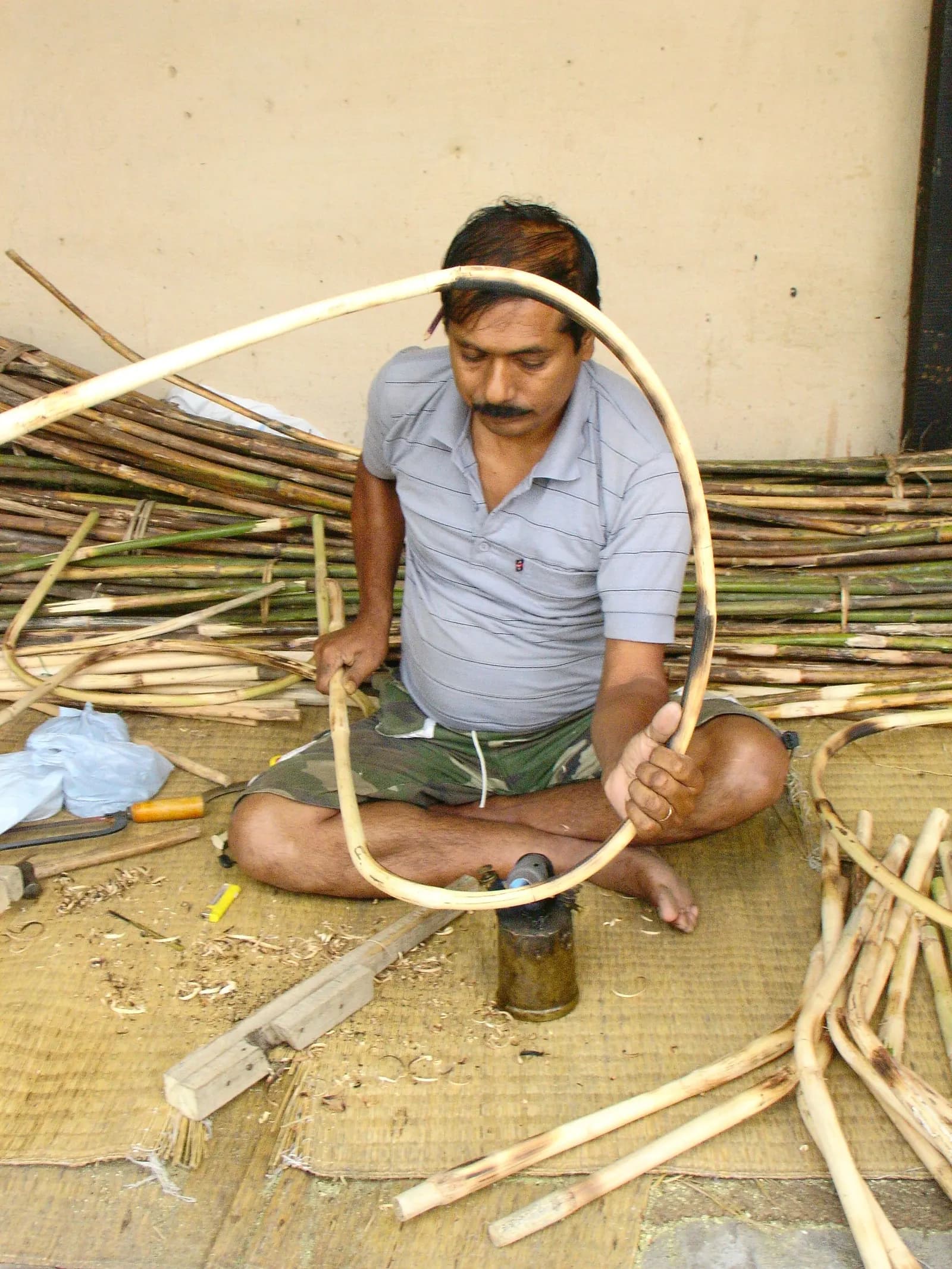
A Udyam-registered micro manufacturer of office chairs in Faridabad sees a two-packet GeM bid from a central department for 250 ergonomic chairs, estimated at ₹12.5 lakh (₹5,000 a chair). The bid summary says: EMD required, Bid to RA enabled with H1 elimination, MSE purchase preference "Yes" at L1 + 15% for 25% of the quantity, ePBG 3% for 24 months, and MSE relaxation of experience and turnover "Yes".
Bid stage. The firm uploads its Udyam certificate twice — once as EMD exemption, once as proof for the experience and turnover relaxation, because it has only one year of supply history. It declares MSE status and Class-I local content and quotes ₹4,900 a chair, GST included. Six sellers qualify technically.
RA stage. The highest-priced seller is eliminated, and the other five go into the RA with the bid's L1 of ₹4,600 as reference. After two auto-extensions, the RA closes with a non-MSE trader-brand importer at ₹4,200 (L1) and the Faridabad firm at ₹4,700.
The MSE match. The band is ₹4,200 × 1.15 = ₹4,830. At ₹4,700, the firm is inside it. The buyer awards 75% — 188 chairs — to L1 and offers the firm up to 25% of the quantity, about 62 chairs, at ₹4,200. If it accepts, its contract is about 62 × ₹4,200 = ₹2,60,400 including GST.
What it costs to perform. ePBG at 3% = ₹7,812, valid for 24 months plus any claim period. The order is under ₹10 lakh, so GeM charges no transaction fee on it; if the firm's total sales on GeM in the year cross ₹20 lakh, it pays the Annual Milestone Charge of ₹10,000 + GST once.
When does it get paid? GeM's terms default to payment within 10 days of the CRAC and the online bill, but bid-specific terms can change this — many PSU bids say 30 or 45 days, and some allow payment through TReDS. Read the payment timeline in the bid summary before you quote, and use TReDS if the buyer offers it.
Had the firm been L1 at ₹4,150, it would have won all 250 chairs. Had it been a dealer reselling another maker's chairs, it would have had to pay EMD and would have had no right to match.
Common mistakes in GeM bids
| Mistake | Result | Avoid it by |
|---|---|---|
| Not reading the ATC | Unexpected payment period, inspection or ePBG duration | Download and read every buyer attachment before quoting |
| Claiming EMD exemption without uploading Udyam | Bid rejected at technical stage | Upload the certificate in the EMD section |
| Udyam details don't validate online or don't match the GeM profile | MSE preference refused | Keep Udyam and GeM details identical; update both together |
| Quoting a price excluding GST | Wrong evaluation; can't revise after opening | Enter the all-inclusive price at the correct GST rate |
| Wrong local-content declaration | Penalties, possible suspension | Work out local content honestly and keep the calculation |
| Participating as reseller in an MSE-reserved bid | No preference; possible rejection | Participate as the OEM of your own product |
| Ignoring a technical clarification request | Disqualification | Watch email and the GeM dashboard daily while a bid is open |
| Going below cost in an RA | Loss-making contract you must perform | Set a floor price before the RA |
Withdrawing after winning, or failing to supply, has consequences: the buyer can forfeit the ePBG, raise an incident, and GeM can suspend the seller. If you can't perform, use the bid validity and contract terms properly rather than walking away.
Payment, ratings and the next bid
Once you've delivered, the consignee issues a CRAC (for goods) or a service delivery acceptance certificate (for services). You then submit the bill online, and payment should follow within the contract's timeline. GeM lets sellers raise an incident for pending payments after 10 days of CRAC, and it flags buyers with many unpaid orders. If you are an MSE and payment drags beyond 45 days, the MSMED Act's interest provisions apply — see our delayed payment calculator.
Every completed order adds to your GeM performance record and gives you a fresh experience certificate for future bids. Keep your catalogue current, reply to buyers quickly, and watch the bid list for your categories. For tenders that aren't on GeM — works, specialised equipment, state departments — see our guide on how to apply for government tenders.
Official links
Official GeM links
- GeM bid list (bidplus)Live bids and RAs
- GeM seller FAQsBid, RA, EMD, ePBG, caution money, MSE rules
- GeM seller sign-upRegister before you bid
- GeM training videos for sellersWalkthroughs of bid participation
- Public Procurement Policy FAQs (PDF)L1+15%, 25% share, EMD exemption
- Udyam Registration portalMSE status that GeM validates online
What to do next
If you haven't registered, start with our GeM registration guide, and make sure your Udyam registration is current and shows the right activity — it decides your EMD exemption and MSE preference. Then list a few products with sharp prices for direct and L1 purchases, and set alerts for bids in your categories. Use our quotation generator to work out a floor price before your first reverse auction.
This is general information, not legal or tax advice — confirm on the official source or with a professional.
Frequently asked questions
A buyer creates a bid with specifications, eligibility, EMD and ePBG terms. Sellers whose catalogue matches the category upload documents and an encrypted price before the bid end date. The buyer evaluates technical documents, opens prices of qualified sellers and either awards to L1 or, if Bid-to-RA is enabled, runs a reverse auction. The winner accepts the contract and submits ePBG.
Under GFR rule 149, a central buyer can order directly from any GeM seller meeting the requirement up to ₹50,000. Above that and up to ₹10 lakh, it must compare at least three manufacturers' offers and buy from the lowest (L1). Above ₹10 lakh, it must use a bid or reverse auction, though buyers may also bid for smaller values.
No. Udyam-registered micro and small enterprises whose credentials validate online are exempt from EMD on GeM, as are DPIIT-recognised startups. Upload the exemption document in the EMD section. EMD can apply when the estimated bid value is above ₹5 lakh; the exemption does not cover the ePBG a winning seller must submit.
No. GeM's seller FAQ says the caution money provision was discontinued in 2025. Sellers who deposited caution money earlier can withdraw it from the dashboard through Manage Caution Money Account after adding a verified bank account. Bid participation itself has no fee; GeM charges apply only on sales, under its revenue policy.
It is one of two rules a buyer can choose to decide who enters the reverse auction. Under H1 elimination, the technically qualified seller with the highest price is dropped. The other rule admits only the lowest-priced half of qualified sellers. An MSE or Make in India seller within the preference band of a non-MSE or non-MII L1 stays in regardless.
GeM's seller FAQ says that when the L1 seller is an eligible MSE, the full bid quantity is awarded to that L1 MSE. If L1 is not an MSE, an MSE within L1 + 15% gets the chance to match the L1 price for the share the buyer has set, usually 25% of the quantity.
Sources & verification
Figures on this page were checked against the sources below when it was last reviewed on 11 October 2026. Each rate and limit is stored once with its own official source and review date, and official update channels are monitored daily so changes are picked up. How we verify
- 1.GeM — Seller FAQs — Government e-Marketplace (GeM SPV) · accessed 11 October 2026
- 2.GeM Bid Document GEM/2026/B/7492648 (Garden Reach Shipbuilders & Engineers, 30 April 2026) — Government e-Marketplace bid document published by GRSE (Ministry of Defence PSU) · accessed 11 October 2026
- 3.Amendment in General Financial Rules, 2017 — OM F.1/3/2024-PPD dated 10.07.2024 (text) — Department of Expenditure, Ministry of Finance (reproduced by StaffNews) · accessed 11 October 2026
- 4.GeM celebrates 100 days of governance; announces drastic reduction in its transaction charges — Press Information Bureau, Ministry of Commerce & Industry · accessed 11 October 2026
- 5.FAQs on Public Procurement Policy for MSEs (25.03.2022) — Office of the DC (MSME), Ministry of MSME · accessed 11 October 2026
- 6.GeM General Terms and Conditions (payment terms, clause 12) — Government e-Marketplace · accessed 11 October 2026
MSMETOOLS is an independent platform and is not affiliated with any government agency, ministry or department.
Tools for this
Quotation Generator
Create professional quotes for clients.
Invoice Generator
Create professional invoices with tax, logo and custom details.
MSME Delayed Payment Calculator (India)
Calculate interest owed on late payments under the MSMED Act.
Related guides
 How to Apply for Government Tenders in India (2026 Guide)Read guide
 Instant Loan for Business 2026: RBI Rules, Costs & Red FlagsRead guide
 Startup India Registration 2026: DPIIT Rules, Steps, BenefitsRead guide
 MSME Champions Scheme 2026: ZED, LEAN, Innovative & StatusRead guide
Official links open the government site in a new tab.