 Starting & growing a business
Pickle Making Business in India (2026): From Home Kitchen to Small Unit — FSSAI, Labelling, GST, PMFME and Profit
Start a pickle making business from home or a small unit in 2026: FSSAI registration and pickle standards, labelling, 5% GST, PMFME subsidy status and a ₹ profit.
 Edited by Sumeet YadavFounder & editor, MSMETOOLS · fact-checked against official sources
Contents (11)
- 1. Starting at home: what is allowed and what is not
- 2. FSSAI registration, licence and the legal pickle standard
- 3. Making pickles that do not spoil
- 4. Labelling and packaging rules
- 5. GST on pickles
- 6. Costs: home start vs small unit
- 7. Worked example: monthly profit for a small pickle unit
- 8. Funding: PMFME, PMEGP and Mudra
- 9. Other registrations for a pickle unit
- 10. Mistakes that sink pickle businesses
- 11. What to do next
Almost every Indian family has a pickle it swears by — mango in summer, lime and chilli through the year, gongura in Andhra, tender mango kadumanga in Kerala, mixed vegetable in Punjab. That loyalty is why homemade pickles sell so easily to friends, and why so many pickle businesses start in a home kitchen. Turning that into a business that lasts takes more: a food licence, a label that meets the law, consistent batches that do not spoil on a shop shelf, and prices that cover oil, jars and courier costs. This guide takes you from a home kitchen to a small unit. It covers FSSAI registration and the legal pickle standard, labelling and packaging, GST, PMFME and other funding, set-up costs and a worked monthly profit in rupees.
Quick answer
You can start a pickle making business from home with FSSAI basic registration (₹100/year a year for turnover up to ₹1.5 crore), a compliant label and food-grade jars. Pickles carry 5% GST since 22 September 2025. Budget roughly ₹25,000–₹60,000 to start at home and ₹4–10 lakh for a small unit (our estimates). PMFME offers 35% of eligible project cost, up to ₹10 lakh, but its approved period ended on 30 September 2026 and an extension is pending.
FSSAI's pickle standard bans synthetic colours, alum and mineral acid and sets a minimum drained weight of 60%
Every jar needs the veg logo, FSSAI number, ingredients, nutrition information, net weight, MRP, unit sale price and month and year of manufacture
The mango season (April–June) decides your year: buy, cut and cure in bulk, and carry stock
Margins come from your own label; bulk supply to hotels is volume at thin margins
Starting at home: what is allowed and what is not
Selling pickles made in your home kitchen is legal in India once you hold an FSSAI registration for those premises. FSSAI does not have a separate "home food" category: a home kitchen is registered like any small food business, and the same hygiene requirements apply. On FoSCoS you choose the kind of business that matches what you do — making and selling a food product — and give your kitchen's address as the premises. Our FSSAI registration guide explains the forms.
What changes when you sell rather than cook for family:
- Separation. Keep pickle-making utensils, jars, oil and spices apart from household cooking, and make pickles at set times when the kitchen is cleaned for the purpose.
- Water. Use potable water for washing vegetables and jars; in a unit you will need periodic water testing.
- Records. Note each batch — date, ingredients, quantities and who bought it — so you can trace any complaint.
- Pets and people. Keep pets out of the work area and do not make food while unwell.
Many home makers outgrow the kitchen within a year or two: mango season needs space for cutting, drying and curing hundreds of kilograms, and buyers such as supermarkets and corporate gift companies ask to see the premises. Moving to a small rented unit — even a 300–500 sq ft room with washable walls, a sink and a store — makes the next steps easier.
FSSAI registration, licence and the legal pickle standard
Which registration. From 1 April 2026 FSSAI decides the category by turnover alone: basic registration up to ₹1.5 crore a year (₹100/year), a state licence above that up to ₹50 crore (₹2,000 – ₹5,000/year), and a central licence above ₹50 crore. Since the same date, registrations and licences have perpetual validity. You keep paying the annual fee — FSSAI lets you pay several years at once — but there is no renewal. Inspections follow a risk-based system, so a clean compliance record means fewer visits.
What the law says a pickle is. FSSAI's Food Products Standards, regulation 2.3.43, define pickles as a preparation of fruits, vegetables or other edible plant material, including mushrooms, free from insect damage or fungal infection, preserved in salt, acid, sugar or any combination of the three. A pickle may contain onion, garlic, ginger, sugar, jaggery, edible vegetable oil, chillies, spices and spice extracts, lime juice, vinegar or acetic acid, citric acid, dry fruits and nuts. It must be free from mineral acid, alum and synthetic colours, and must show no sign of fermentation. Only additives permitted under the regulations may be used, and the product must meet the microbiological limits in Appendix B.
| Type | FSSAI requirement |
|---|---|
| Pickles in oil | Drained weight at least 60%; pieces practically submerged in oil |
| Pickles in brine | Drained weight at least 60%; sodium chloride at least 12% |
| Pickles in citrus juice | Drained weight at least 60%; acidity as citric acid at least 1.2% |
| Pickles in vinegar | Drained weight at least 60%; acetic acid in the vinegar at least 2.0% |
| Pickle without medium | Any other pickle, labelled as "(name of fruit or vegetable) Pickle" |
What this means in practice. Drained weight is the solid fruit or vegetable left after draining the oil or brine; a jar that is mostly masala and oil fails. "No synthetic colour" rules out the bright red dye some sellers add to chilli or carrot pickles — use Kashmiri chilli or beetroot for colour instead. "No sign of fermentation" means fizzing, swelling lids or a sour, yeasty smell is a defect, not character. Have each recipe tested once at an NABL-accredited food lab before launch, and keep the reports.
Making pickles that do not spoil
Most pickle complaints are about spoilage: mould on top, fermentation, rancid oil or soft, mushy pieces. The causes are almost always water, air and hygiene.
Moisture control. Wash, then dry fruit and vegetables completely — sun-dry or air-dry cut pieces until the surface moisture is gone. Use dry spoons, dry jars and dry hands. A single wet spoon can start mould in a 5 kg batch.
Salt, acid and oil. Salt and acid draw out water and stop microbes; oil seals the surface. Follow tested ratios rather than cutting salt or oil to make the product "healthier", unless you have lab data that the new recipe stays stable. Keep a layer of oil above the pieces in every jar.
Curing. Let large batches cure in food-grade containers in a cool, dry place for the time your recipe needs, stirring with a clean, dry ladle. Pack only cured pickle.
Preservatives. FSSAI's additive rules allow some preservatives in pickles within set limits. Many small brands sell "no preservatives" as a selling point and rely on salt, oil and acid; if you do use a preservative, use only what the regulations permit for pickles, at or below the limit, and declare it on the label.
Oil quality. Use fresh, licensed edible oil — mustard oil in the north and east, gingelly (sesame) oil in the south — and never reuse frying oil. Rancid oil is the most common reason for a pickle tasting "off" after a few months.
Shelf life. Set your best-before date from your own storage trials, not from what competitors print: keep sample jars at room temperature and check them monthly.
Labelling and packaging rules
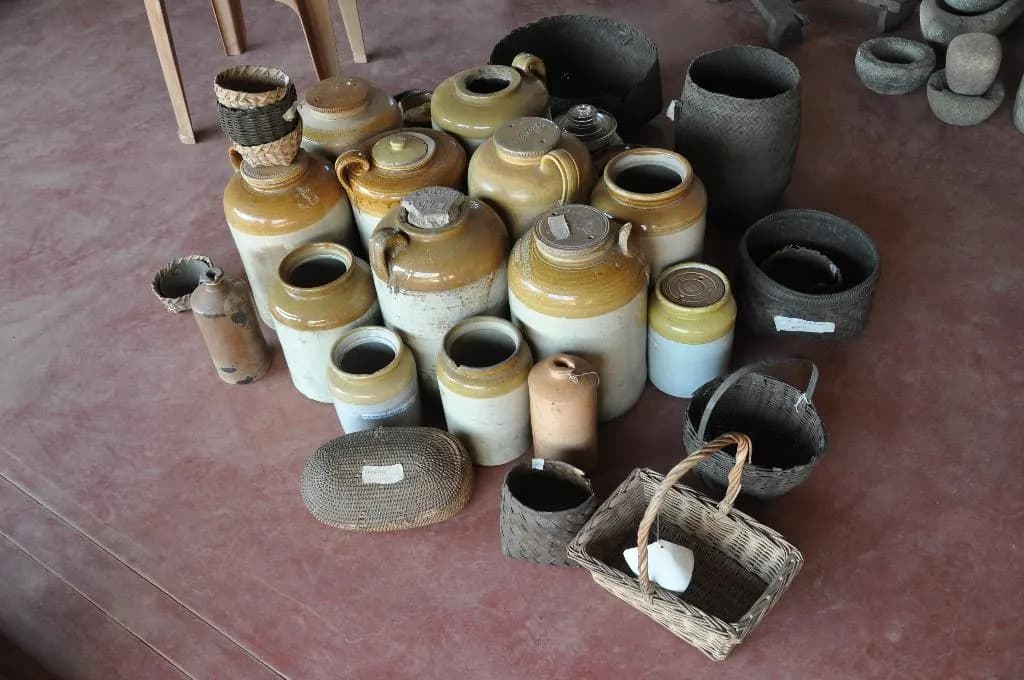
A jar of pickle sold in a shop or online is a pre-packaged food, so it must meet both FSSAI's labelling rules and the Legal Metrology rules.
FSSAI (Labelling and Display) Regulations, 2020. The product name and the green vegetarian logo go on the front of the jar; FSSAI's FAQs say the veg logo cannot be dropped even on small packs. The label must also carry the FSSAI logo with your 14-digit registration or licence number, the list of ingredients in descending order of weight, nutrition information per 100 g (a pickle is a multi-ingredient food, so the single-ingredient exemption does not apply), any additives by class and name or number, net quantity, lot or batch number, date of manufacture or packing, a best-before date, and the name and address of the manufacturer. Declare allergens such as mustard, sesame or nuts where they are ingredients.
Legal Metrology (Packaged Commodities) Rules, 2011. Retail packs must declare the name and address of the manufacturer or packer, the common name of the commodity, net quantity, MRP inclusive of taxes, unit sale price (for example ₹ per 100 g), the month and year of manufacture, and consumer care details. Unit sale price and the month and year of manufacture became mandatory on all retail packs from 1 January 2024.
Packaging. Use food-grade glass or PET jars with an induction seal or a tight lid and a liner. Oil leaks are the biggest headache with courier shipments: induction sealing plus a shrink band and bubble wrap cuts breakage and leakage claims sharply. Glass looks premium but breaks and weighs more, raising courier costs; PET is lighter and safer for online orders.
GST on pickles
| Product | HSN | GST |
|---|---|---|
| Fruit and vegetables prepared or preserved in vinegar or acetic acid | 2001 | 5% |
| Other vegetables prepared or preserved (oil and brine pickles), not frozen | 2005 | 5% |
| Fruit and other edible parts of plants otherwise prepared or preserved | 2008 | 5% |
| Chutneys, sauces and mixed condiments | 2103 | 5% |
| Food processing machinery | 8438 | 18% |
Rates are from Notification 9/2025-Central Tax (Rate), effective 22 September 2025. Before that date pickles in vinegar (2001) and sauces and mixed condiments (2103) were taxed at 12%, so update old price lists, MRPs and billing software. Most Indian oil and brine pickles are not preserved by vinegar, so your CA may classify them under 2005 or 2008 rather than 2001; the rate is the same, but use one heading consistently on invoices.
Do you need GST registration? The intra-state threshold for goods is ₹40 lakh in most states. Selling to buyers in another state needs registration from the first sale. Under Notification 34/2023-Central Tax, sellers supplying goods only within their own state through an e-commerce operator, below the threshold, can enrol on the GST portal with their PAN instead of registering — see our guide to selling on Meesho for how the enrolment route works. Your inputs — mango, lime, chillies — are mostly exempt fresh produce, while oil, spices and jars are taxed, so input credit is modest; registering mainly matters because supermarkets, gift companies and marketplaces want GST invoices. The composition scheme at 1% of turnover suits small units that sell only within the state. Read our GST on food guide and check prices with the GST calculator.
Costs: home start vs small unit
Set-up cost estimates — home kitchen vs small unit
| Item | Home kitchen | Small unit (400–800 sq ft) |
|---|---|---|
Vessels, knives, cutting boards, drying trays | ₹8,000 – ₹15,000 | ₹40,000 – ₹1,00,000 |
Vegetable cutter, masala mixer, stainless steel tanks | — | ₹1,00,000 – ₹3,00,000 |
Induction sealer, weighing scale, labelling | ₹5,000 – ₹15,000 | ₹40,000 – ₹1,50,000 |
Premises fit-out (washable walls, sink, insect screens, storage) | ₹2,000 – ₹5,000 | ₹50,000 – ₹1,50,000 |
First season's raw material, oil, spices, jars | ₹10,000 – ₹20,000 | ₹1,00,000 – ₹2,50,000 |
FSSAI registration, lab tests, label design, trademark filing | ₹3,000 – ₹8,000 | ₹20,000 – ₹50,000 |
Estimated total | ₹28,000 – ₹63,000 | ₹3,50,000 – ₹10,00,000 |
Vessels, knives, cutting boards, drying trays
- Home kitchen
₹8,000 – ₹15,000
- Small unit (400–800 sq ft)
₹40,000 – ₹1,00,000
Vegetable cutter, masala mixer, stainless steel tanks
- Home kitchen
—
- Small unit (400–800 sq ft)
₹1,00,000 – ₹3,00,000
Induction sealer, weighing scale, labelling
- Home kitchen
₹5,000 – ₹15,000
- Small unit (400–800 sq ft)
₹40,000 – ₹1,50,000
Premises fit-out (washable walls, sink, insect screens, storage)
- Home kitchen
₹2,000 – ₹5,000
- Small unit (400–800 sq ft)
₹50,000 – ₹1,50,000
First season's raw material, oil, spices, jars
- Home kitchen
₹10,000 – ₹20,000
- Small unit (400–800 sq ft)
₹1,00,000 – ₹2,50,000
FSSAI registration, lab tests, label design, trademark filing
- Home kitchen
₹3,000 – ₹8,000
- Small unit (400–800 sq ft)
₹20,000 – ₹50,000
Estimated total
- Home kitchen
₹28,000 – ₹63,000
- Small unit (400–800 sq ft)
₹3,50,000 – ₹10,00,000
These are MSMETOOLS estimates for 2026 based on typical kitchen-equipment and packaging prices; get quotes for your city. The biggest swing item is raw material: a unit that cures several tonnes of mango in April and May ties up lakhs of rupees in stock that sells over the following twelve months.
Raw material planning. Raw mango for pickling is available only for a few weeks each summer, and prices are lowest at the peak of the season. Lime, chilli, garlic and mixed vegetables are available most of the year. Plan a year's mango pickle in one or two big batches; plan other pickles in smaller monthly batches so stock stays fresh.
Worked example: monthly profit for a small pickle unit
All figures are our illustrative estimates for a rented 500 sq ft unit in a tier-2 city, run by the owner with three helpers, selling mainly to local shops, a few supermarkets and online.
Assumptions. The unit sells 1,200 kg of pickles a month in 250 g and 500 g PET jars: 900 kg to shops and distributors at an average ₹260 a kilogram, and 300 kg online direct to customers at ₹450 a kilogram, all before GST. Ingredients (fruit or vegetable, oil, spices, salt) average ₹120 a kilogram of finished pickle; jars, lids, seals and labels ₹40 a kilogram. Online orders cost ₹130 a kilogram extra in marketplace commission, shipping, packaging and breakage.
| Monthly line | Amount (₹) |
|---|---|
| Sales to shops and distributors: 900 kg × ₹260 | 2,34,000 |
| Online sales: 300 kg × ₹450 | 1,35,000 |
| Ingredients: 1,200 kg × ₹120 | 1,44,000 |
| Jars, lids, seals, labels: 1,200 kg × ₹40 | 48,000 |
| Online selling costs: 300 kg × ₹130 | 39,000 |
| Contribution | 1,38,000 |
| Rent | 15,000 |
| Three helpers | 39,000 |
| Power, gas and water | 6,000 |
| Delivery to shops, samples, marketing | 12,000 |
| Loan EMI (about ₹5 lakh over five years) | 10,000 |
| Lab tests, FSSAI fee and sundries (monthly average) | 2,000 |
| Profit before tax | 54,000 |
Shop sales contribute ₹100 a kilogram; online sales contribute ₹160 after selling costs. Fixed costs are ₹84,000 a month. Try your numbers in the food cost calculator and the break-even calculator.
What moves profit most. Mango and oil prices: a ₹20 a kilogram rise in mustard or gingelly oil adds roughly ₹4–5 a kilogram to pickle cost. Spoilage and returns: one batch that ferments on shop shelves can cost a month's profit and the shop's trust. Online mix: direct sales earn more per kilogram, but only if breakage and returns stay low — induction-sealed PET jars and good packing pay for themselves.

Funding: PMFME, PMEGP and Mudra
PMFME. The PM Formalisation of Micro Food Processing Enterprises scheme is the government programme most relevant to pickle makers. Individual micro units can get a credit-linked capital subsidy of 35% of eligible project cost, up to ₹10 lakh for setting up or upgrading, with at least 10% of project cost from you and a bank loan for the rest. Self-help group members in food processing can get seed capital of up to ₹40,000 per SHG member, and groups can get a 50% of the cost grant for branding and marketing. A District Resource Person helps prepare the project report and loan application on the PMFME portal.
The catch in 2026: PMFME's approved period ran to 30 September 2026. The food processing ministry has proposed continuing it for 2026-31 with revised norms, but as of October 2026 we found no Cabinet approval or new extension order. Before you spend money expecting a PMFME subsidy, ask your District Resource Person or the state nodal agency whether new applications are being sanctioned. Our PMFME scheme guide tracks the status and the worked subsidy calculation.
PMEGP. The Prime Minister's Employment Generation Programme funds new manufacturing units up to ₹50 lakh with margin money of 15% to 35% of project cost depending on your category and location. Unlike PMFME, it is open for new applications. For a ₹6 lakh pickle unit, a woman entrepreneur in a rural area would contribute about ₹30,000 and receive margin money of about ₹2.1 lakh. See our PMEGP loan guide.
Mudra. A home pickle business fits within Mudra Shishu (up to ₹50,000) or Kishore (up to ₹5 lakh) without collateral — useful for buying the mango season's stock. Register on Udyam (Free) first.
Other registrations for a pickle unit
Beyond FSSAI and GST, a small unit needs Udyam registration, a trade licence or permission from the municipality or panchayat, and labour registrations once you employ staff. Food processing units with wastewater under 10 kilolitres a day and no boiler are in the green category in CPCB's 2025 classification; ask your state pollution control board whether you need consent to operate. If you are building a brand, file a trademark application early — pickle names are crowded, and a name you cannot protect is hard to build on.
From home kitchen to pickle brand — step by step
- 1
Perfect three recipes
Pick three pickles you make best. Write exact recipes by weight and make test batches until each tastes the same.
- 2
Register
FoSCoS portalFSSAI registration on FoSCoS (₹100/year a year up to ₹1.5 crore turnover) and Udyam (Free).
- 3
Test and label
Get each recipe tested at an NABL-accredited lab, run shelf-life trials, and design a label with every FSSAI and Legal Metrology declaration.
- 4
Sell locally first
Place jars in five to ten shops on sale-or-return, collect feedback, and fix problems before you scale.
- 5
Scale up
Move to a small unit, plan the mango season, and apply for PMEGP or Mudra — or PMFME if your district confirms it is sanctioning.
Mistakes that sink pickle businesses
Skipping the label rules. A jar without the veg logo, FSSAI number, ingredients, nutrition table, MRP and unit sale price can be refused by shops and marketplaces and attract action.
Adding colour. Synthetic colour in pickles is not allowed. Use naturally bright chilli varieties.
Cutting salt or oil without testing. "Low-oil" pickles that ferment in summer cost more in returns than they earn.
Underpricing. Home makers often price at ingredient cost plus a little, forgetting jars, labels, gas, their own time, shop margins and courier charges. Cost every jar before you set the MRP.
Shipping glass without testing. Send ten test parcels to friends in other cities before you list online.
What to do next
Write down your three best recipes by weight, register on FoSCoS, and get a lab test and a proper label before you sell your first jar outside friends and family. Cost every jar with the food cost calculator, then plan funding through PMEGP, Mudra or — once its status is confirmed — PMFME. If you are also considering spice blends, our masala business guide covers the FSSAI spice standards.
This is general information, not legal or tax advice — confirm on the official source or with a professional.
Frequently asked questions
Yes. Every food business, including a home kitchen, needs at least FSSAI basic registration before selling. With turnover up to ₹1.5 crore a year it costs ₹100/year and is applied for on FoSCoS. Marketplaces, shops and corporate gifting buyers will ask for your FSSAI number, and it must be printed on every jar's label.
Pickles — vegetables and fruit prepared or preserved in vinegar, oil, brine or otherwise (HSN 2001, 2005, 2008) — carry 5% GST from 22 September 2025 under Notification 9/2025-Central Tax (Rate). Before that, pickles under heading 2001 were taxed at 12%. Chutneys and other mixed condiments under heading 2103 are also 5%.
Our estimate is ₹25,000–₹60,000 to start from a home kitchen with large vessels, jars, a sealing machine, labels and the first season's mango and oil, and ₹4–10 lakh for a small unit with a separate processing room, cutting and mixing machines, stainless steel tanks, a filling line and working capital. These are MSMETOOLS estimates; quotes vary by city.
Yes, if you sell under your own label rather than in bulk. In our worked example, a small unit selling 1,200 kg of pickles a month in 250 g and 500 g jars earns about ₹54,000 a month before tax. Margins are thinner on bulk supply to hotels and higher on premium regional pickles sold online, but online selling adds commissions, shipping and breakage.
PMFME offers 35% of eligible project cost, up to ₹10 lakh for micro food processing units, and pickles are a common product. Its approved period ran to 30 September 2026; as of October 2026 we found no Cabinet approval for the proposed 2026-31 continuation. Ask your District Resource Person whether applications are being sanctioned, and look at PMEGP and Mudra as alternatives.
Small sellers who sell goods only within their own state through an e-commerce marketplace, and stay below the registration threshold, can enrol on the GST portal with their PAN instead of registering, under Notification 34/2023-Central Tax. Selling to buyers in other states through a marketplace still requires GST registration. Our guide to selling on Meesho explains the enrolment route.
Sources & verification
Figures on this page were checked against the sources below when it was last reviewed on 9 October 2026. Each rate and limit is stored once with its own official source and review date, and official update channels are monitored daily so changes are picked up. How we verify
- 1.Food Products Standards — Chapter 2.3: Fruit and vegetable products (Version 2, 4 November 2024), regulation 2.3.43 Pickles — FSSAI · accessed 9 October 2026
- 2.Notification No. 9/2025-Central Tax (Rate), 17 September 2025 — Ministry of Finance (Department of Revenue) · accessed 9 October 2026
- 3.GST rates on goods (compiled schedule before September 2025) — GST Council · accessed 9 October 2026
- 4.Order dated 13 March 2026 — revised turnover thresholds for food businesses — FSSAI · accessed 9 October 2026
- 5.FAQs on FSS (Licensing and Registration) Amendment Regulations, 2026 (27 March 2026) — FSSAI · accessed 9 October 2026
- 6.FAQs on FSS (Labelling and Display) Regulations, 2020 (1 November 2023) — FSSAI · accessed 9 October 2026
- 7.Lok Sabha Unstarred Question 2673 — Legal Metrology (Packaged Commodities) Rules (7 August 2024) — Department of Consumer Affairs · accessed 9 October 2026
- 8.Media interaction on PMFME scheme (22 May 2026) — PIB (Ministry of Food Processing Industries) · accessed 9 October 2026
- 9.Classification of Sectors into Red, Orange, Green, White and Blue Categories (January 2025) — Central Pollution Control Board (copy hosted by Pollution Control Board, Assam) · accessed 9 October 2026
MSMETOOLS is an independent platform and is not affiliated with any government agency, ministry or department.
Tools for this
Food Cost Calculator
Calculate food cost, menu pricing and profit margins.
Break Even Calculator
Find your break even point and units.
GST Calculator (India)
Calculate GST for your sales and purchases with current rates.
Profit Margin Calculator
Calculate profit, markup and margin for your products or services.
Related guides
 Masala Business in India 2026: FSSAI, GST, Machines & ProfitRead guide
 How to Start a Cloud Kitchen in India (2026): Costs & LicencesRead guide
 Tiffin Service Business 2026: FSSAI, GST, Cost & ProfitRead guide
 Flour Mill Business in India 2026: Chakki Cost, GST & ProfitRead guide
Official links open the government site in a new tab.