 Starting & growing a business
Tiffin Service Business in India (2026): Start from Home with FSSAI Registration, GST, Packaging, Pricing and a Worked Profit
Start a tiffin service from home in 2026: FSSAI registration up to ₹1.5 crore turnover, 5% GST, packaging rules, a price list, setup cost and monthly profit.
 Edited by Sumeet YadavFounder & editor, MSMETOOLS · fact-checked against official sources
Contents (11)
- 1. Which tiffin model suits you
- 2. FSSAI registration for a tiffin service
- 3. Running a food business from a home kitchen
- 4. GST on a tiffin service
- 5. Packaging and delivery rules
- 6. Tiffin service price list (estimate)
- 7. Setup cost (estimate)
- 8. Worked example: monthly profit and break-even
- 9. Funding and support
- 10. Mistakes that sink new tiffin services
- 11. What to do next
A tiffin service sells something every working person in an Indian city misses: a home-style meal, on time, at a price they can pay every day. Students in PGs, office workers, elderly couples and patients on special diets all buy them, and most tiffin services start in the owner's own kitchen with a few neighbours as the first customers. Growing from ten tiffins to a hundred is where people get stuck — food safety registration, consistent taste, delivery, packaging rules, GST and pricing that covers wastage. This guide covers all of it for 2026: FSSAI registration under the new turnover limits, home kitchen rules, GST, packaging, a price list, setup costs and a worked monthly profit. Rules were checked against FSSAI, CBIC and environment ministry sources in October 2026.
Quick answer
You can start a tiffin service from home with FSSAI basic registration — now available for turnover up to ₹1.5 crore (the old ₹12 lakh limit ended on 31 March 2026) at ₹100/year. Budget roughly ₹30,000–₹75,000 to start (our estimate). Tiffin and mess meals are taxed at 5% (no input tax credit) once you register for GST above ₹20 lakh turnover.
Registrations issued from 1 April 2026 have perpetual validity — no renewal, but the annual fee and hygiene rules continue
No newspaper for wrapping, no single-use plastic cutlery; carry bags at least 120 microns
Monthly subscriptions paid in advance give you predictable demand and working capital
Food cost of 40–50% of the price is typical; wastage and delivery decide your margin
Which tiffin model suits you
Start by deciding who you'll feed, because that decides your menu, your delivery radius and your price.
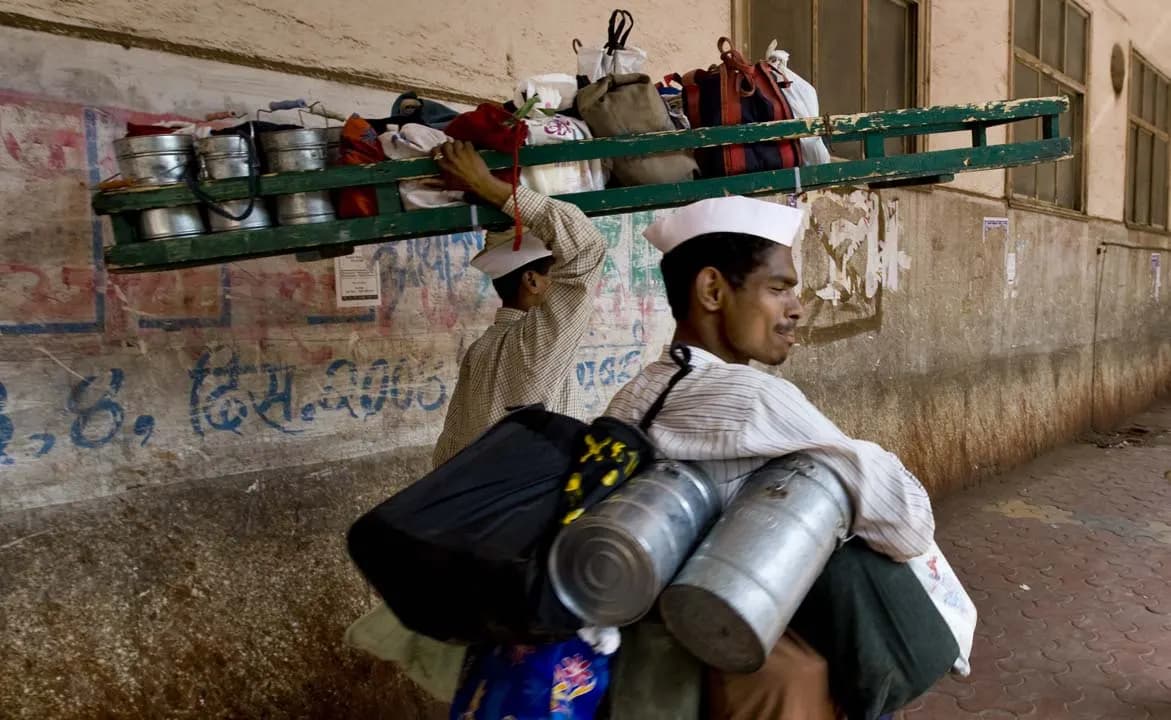
- Home tiffin for working people and students. Lunch, dinner or both, delivered daily on a monthly plan. This is the classic model, and most services begin with 10–30 customers within a few kilometres.
- Office and corporate tiffins. Bulk lunches for a small office or a shop's staff, billed monthly to the employer. Fewer customers to manage, but they want GST invoices and fixed quality.
- Diet and health tiffins. Low-oil, diabetic-friendly, high-protein, Jain or satvik meals at higher prices. You need a reliable recipe system and, ideally, a dietitian's input.
- Hostel and PG mess supply. Bulk meals to a paying-guest house or hostel. Volume is steady, but prices are negotiated hard and payment can be slow.
- App-based tiffins. Listing a daily thali or meal combo on Swiggy, Zomato or ONDC-linked apps. Good for discovery, but commissions take a large slice; see our cloud kitchen guide for how platforms work.
Most successful services mix two of these: a core of monthly subscribers for steady volume, plus one bulk customer that uses spare capacity.
FSSAI registration for a tiffin service
Every food business in India, including one run from a home kitchen, must be registered or licensed under the Food Safety and Standards Act, 2006 before it sells. A home tiffin service doesn't get a special category: you register like any small food business, give your home kitchen as the premises and choose the kind of business on FoSCoS that matches what you do — cooking and supplying meals.
The 2026 thresholds. FSSAI's order of 13 March 2026 replaced the old limits from 1 April 2026. Businesses with turnover up to ₹1.5 crore now take basic registration; between that and ₹50 crore they need a state licence, and above that a central licence. Many websites still say registration is only for turnover up to ₹12 lakh — that limit no longer applies, so a tiffin service turning over ₹30 lakh or ₹1 crore can stay on simple registration. If you also cater weddings or parties, check whether FoSCoS puts that activity in the caterer category, which has its own licence rules; our catering guide explains them.
Fee and validity. Basic registration costs ₹100/year. Under the 2026 amendment, registrations and licences issued on or after 1 April 2026 have perpetual validity — they stay valid unless suspended, cancelled or surrendered, so there is no renewal. FSSAI's FAQs explain that the fee is still annual, but you can pay for any number of years at once. Existing registration holders who now fall in a lower category migrate without a modification fee.
How to apply. On foscos.fssai.gov.in, choose registration, fill Form A with your details, the food you'll supply and your kitchen address, upload a photo ID and address proof, pay the fee and submit. FSSAI aims to process registrations within 7 days, and an inspection may happen before or after it is granted. Our FSSAI registration guide walks through each screen.
Why it matters. Platforms, corporate customers and housing societies ask for your 14-digit FSSAI number, and it must appear on your bills, menu cards and any labels. A business large enough to need a licence that operates without one faces imprisonment of up to six months and a fine of up to ₹5 lakh under section 63 of the Act, and an unregistered small kitchen can be ordered to stop selling.
Getting registered — the order that works
- 1
Check your premises
Confirm your housing society or landlord allows a small food business from the flat, and that you can keep business stock separate.
- 2
Apply for FSSAI basic registration
Open FoSCoSForm A on FoSCoS with photo ID, address proof and the list of foods. Pay ₹100/year for one or more years.
- 3
Open a bank account and UPI handle in the business name
Keeps subscription money separate and builds the record a bank will want for a loan.
- 4
Register for GST when you cross the threshold
Mandatory above ₹20 lakh of turnover; earlier if an office client needs a GST invoice.
- 5
Add Shops Act and trade licence if you move out of home
A rented kitchen needs your state's Shops and Establishments registration and, in most cities, a municipal health or trade licence.
Running a food business from a home kitchen
Selling from a home kitchen is legal once you're registered, but the hygiene requirements are the same as for any small food business. The basic hygiene and sanitary practices for registered businesses are set out in Part I of Schedule 4 to FSSAI's licensing regulations; in practice they come down to a few habits that inspectors and customers both notice.
- Separate the business. Keep business groceries, utensils and containers apart from family cooking, and cook for customers at fixed times after the kitchen has been cleaned.
- Clean water and clean hands. Use potable water for cooking and washing; wash hands before handling food, cover hair and keep nails short. Nobody with a fever, diarrhoea or an infected cut should cook or pack.
- Temperature and time. Cook close to dispatch, keep cooked food covered, refrigerate leftovers quickly and don't reuse yesterday's dal or rice in today's tiffins. Most food-poisoning complaints come from food held warm for hours.
- Pests and pets. No pets in the kitchen during cooking, closed bins, and mesh on windows if flies are a problem.
- Records. Note what you cooked each day, who you bought ingredients from and which customers received it. If one customer falls ill, you can trace the batch.
Local rules. Some municipal corporations and housing societies restrict commercial cooking in residential flats, especially once you hire staff, run several stoves or have riders queuing at the gate. Ask your society committee before you start and keep relations good with neighbours. Use commercial LPG cylinders for business cooking rather than household cylinders, which are meant for domestic use, and keep a fire extinguisher near the stove.
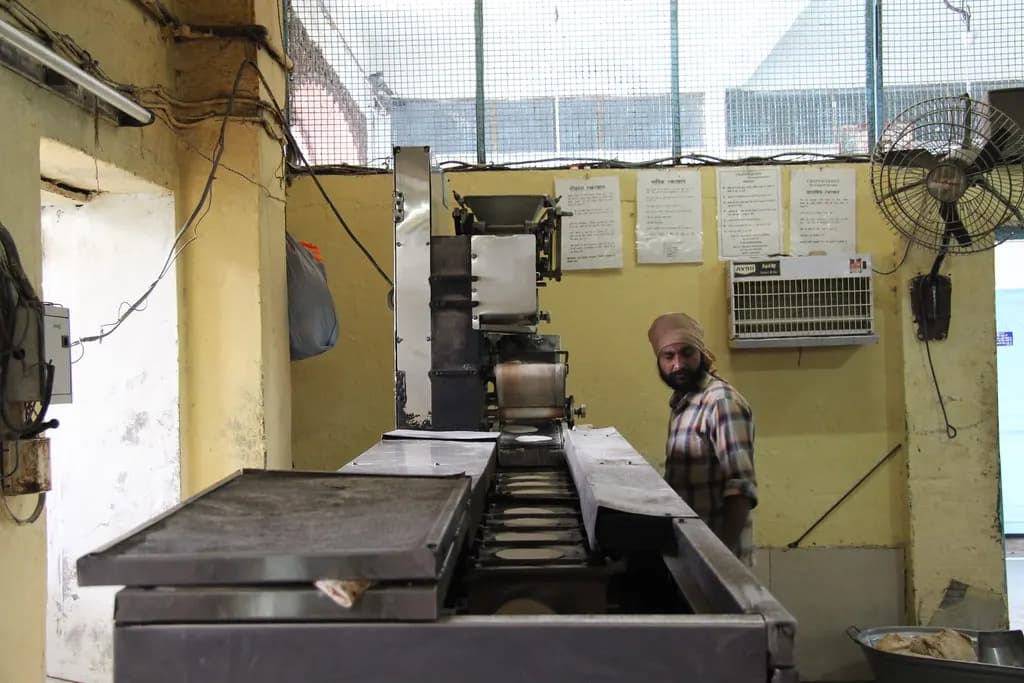
When to move out. Once you are cooking more than about 60–80 meals a day, employ two or more helpers or need a chapati machine, a small rented kitchen is usually safer and easier to license. It then needs your state's Shops and Establishments registration and, in most cities, a municipal health or trade licence — the same set a cloud kitchen needs.
GST on a tiffin service
Do you need to register? A tiffin service supplies a service, so GST registration becomes compulsory once aggregate turnover crosses ₹20 lakh in a financial year, or ₹10 lakh in the special category states. Below that you can operate without GST, unless a corporate client insists on a GST invoice. If you sell through Swiggy or Zomato only, the rule forcing all e-commerce sellers to register doesn't apply, because the platform pays the tax on restaurant services under section 9(5); you still count those sales towards the threshold. Our GST registration guide covers the steps.
What rate? Cooked meals supplied as a service by a restaurant, eating joint, mess or canteen fall under the restaurant-service entry and are taxed at 5% (no input tax credit) — 2.5% CGST and 2.5% SGST — without input tax credit. CBIC's Circular 28/02/2018-GST confirmed that food supplied by a mess or canteen falls in this 5% entry, and tiffin services that cook and deliver meals are generally treated the same way. The higher 18% with ITC rate applies only at "specified premises" such as hotels with expensive rooms, which doesn't fit a tiffin kitchen. Read our GST on food guide for the edge cases.
No input credit. Because the 5% (no input tax credit) rate comes without credit, GST you pay on containers, equipment, rent or platform commissions is a cost, not something you recover. Build it into your prices.
Composition. A tiffin business can opt for composition and pay 5% of turnover, filing simpler quarterly returns, but it cannot then charge GST on its bills. Since the regular rate is also 5% without credit, the main benefit is less paperwork; corporate clients may prefer a regular GST invoice.
Worked example. A monthly lunch plan priced at ₹3,000 for 26 meals, sold by a GST-registered tiffin service, carries GST of ₹150 (₹75 CGST + ₹75 SGST) for a total of ₹3,150. If you'd rather keep a round ₹3,000 that includes GST, your taxable value is ₹2,857 and the GST is ₹143.
Packaging and delivery rules
Packaging is where many new tiffin services break rules without knowing it.
Tiffin packaging — allowed and not allowed
| Use | Avoid | Rule |
|---|---|---|
Butter paper, food-grade tissue, aluminium foil | Newspaper to wrap rotis or soak oil | FSS (Packaging) Regulations, 2018; FSSAI direction June 2026 |
Steel tiffins, food-grade virgin plastic or paper containers | Containers or bags made from recycled plastic | FSS (Packaging) Regulations, 2018 |
Wooden, bamboo or steel spoons; areca or bagasse plates | Plastic spoons, forks, plates, cups, straws, trays | Single-use plastic ban from 1 July 2022 |
Cloth, paper or carry bags of 120 microns or more | Thin plastic carry bags | Plastic Waste Management Rules |
Butter paper, food-grade tissue, aluminium foil
- Avoid
Newspaper to wrap rotis or soak oil
- Rule
FSS (Packaging) Regulations, 2018; FSSAI direction June 2026
Steel tiffins, food-grade virgin plastic or paper containers
- Avoid
Containers or bags made from recycled plastic
- Rule
FSS (Packaging) Regulations, 2018
Wooden, bamboo or steel spoons; areca or bagasse plates
- Avoid
Plastic spoons, forks, plates, cups, straws, trays
- Rule
Single-use plastic ban from 1 July 2022
Cloth, paper or carry bags of 120 microns or more
- Avoid
Thin plastic carry bags
- Rule
Plastic Waste Management Rules
- No newspaper. FSSAI's Packaging Regulations, 2018 prohibit using newspaper or similar material to store or wrap food, because printing inks can contain lead and other harmful chemicals. In June 2026 FSSAI repeated this as a direction to street vendors, caterers, cloud kitchens and other small food businesses after enforcement action in Mumbai — including newspaper used to soak oil off parathas or puris. Use butter paper, food-grade tissue or foil instead.
- No recycled plastic for food. The same regulations bar packaging made from recycled plastic, including carry bags, for food.
- Single-use plastic items are banned. Since 1 July 2022, plastic plates, cups, glasses, forks, spoons, knives, straws, trays and stirrers can't be sold or used. Plastic carry bags must be at least 120 microns thick. Wooden, bamboo or steel spoons, and areca or bagasse plates, are the usual replacements.
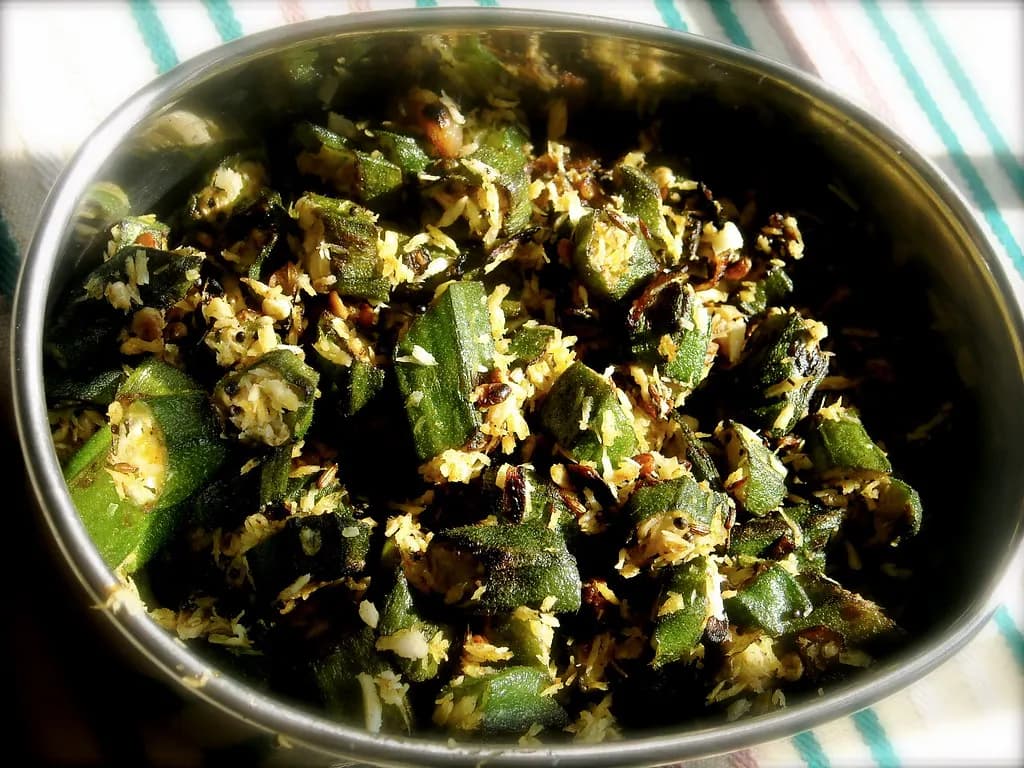
- Steel tiffins versus disposables. Steel carriers cost more upfront and need a collection run, but customers like them, food stays hot and you avoid a recurring packaging bill of ₹6–₹15 a meal. Disposables suit app orders and one-off customers. Many services use steel for monthly subscribers and food-grade disposable containers for everything else.
- Delivery. Use insulated bags, deliver within an hour of packing and agree a delivery window with each customer. Over a 3–5 km radius, a single rider on a scooter can usually cover 30–40 drops in a lunch run.
If you seal and label packaged items for sale — pickles, snacks or sweets alongside the tiffins — those packs must follow FSSAI's labelling rules and Legal Metrology declarations; see our pickle business guide for what a compliant label contains.
Tiffin service price list (estimate)
The table is a MSMETOOLS estimate of typical home-style tiffin prices in tier-1 and tier-2 Indian cities in 2026, for monthly plans of 26 meals. It is consistent with published 2026 small-business examples that price a basic tiffin at about ₹80 against a food-and-packing cost of about ₹50. Metro and premium plans sit at the upper end; small towns and student areas sit lower. Survey five local services before setting yours.
| Plan (per meal; monthly = 26 meals) | Typical range (estimate) | Monthly range |
|---|---|---|
| Basic veg: 4–5 chapatis, dal, sabzi, rice | ₹70 – ₹110 | ₹1,800 – ₹2,900 |
| Full veg thali: adds salad, curd or sweet | ₹100 – ₹150 | ₹2,600 – ₹3,900 |
| Non-veg (chicken or egg on some days) | ₹120 – ₹180 | ₹3,100 – ₹4,700 |
| Diet / diabetic / high-protein | ₹150 – ₹250 | ₹3,900 – ₹6,500 |
| Lunch + dinner combo (veg) | ₹160 – ₹260 a day | ₹4,200 – ₹6,800 |
Pricing rules that protect your margin. Collect monthly fees in advance — it funds groceries and reduces drop-outs. Decide your skip policy in writing (for example, credit for skipped meals only with a day's notice, carried to next month). Revise prices when vegetable or gas prices jump, with a month's notice. And cost every dish: a food cost calculator shows quickly whether paneer twice a week still leaves you a margin.
Setup cost (estimate)
The table is a MSMETOOLS estimate for two stages. The home column assumes 30–40 tiffins a day in your own kitchen; the rented column assumes a 200–300 sq ft kitchen serving 120–150 meals a day in a tier-2 city. Home-stage lines are corroborated by a 2026 small-business guide that budgets ₹15,000–₹20,000 for vessels, ₹8,000–₹12,000 for a commercial stove and ₹6,000–₹10,000 for 30–40 steel tiffins.
| Item | Home kitchen (estimate) | Rented kitchen (estimate) |
|---|---|---|
| Deposit and advance rent | — | ₹60,000 – ₹1,50,000 |
| Kitchen fit-out: platform, sink, exhaust, wiring | — | ₹80,000 – ₹2,00,000 |
| Large vessels, pressure cookers, kadhai, tawa | ₹15,000 – ₹20,000 | ₹40,000 – ₹80,000 |
| Commercial stove and cylinders | ₹8,000 – ₹15,000 | ₹25,000 – ₹50,000 |
| Refrigerator / deep freezer | Use existing | ₹30,000 – ₹60,000 |
| Chapati machine (semi-automatic) | — | ₹60,000 – ₹1,50,000 |
| Steel tiffins / containers, insulated bags | ₹8,000 – ₹15,000 | ₹30,000 – ₹60,000 |
| FSSAI, Shops Act, trade licence, fire extinguisher | ₹2,000 – ₹4,000 | ₹10,000 – ₹30,000 |
| First month's groceries and working capital | ₹15,000 – ₹25,000 | ₹1,00,000 – ₹2,00,000 |
| Total | ₹48,000 – ₹79,000 | ₹4,35,000 – ₹9,30,000 |
Put your own quotes into the startup cost calculator.
Worked example: monthly profit and break-even
Here's a sample plan for "Ghar Ka Khana Tiffins", run from the owner's home kitchen in a tier-2 city, delivering veg lunches on 26 days a month. All figures are illustrative estimates; the business is below the GST threshold.
Revenue assumption: 40 subscribers at ₹3,000 a month (about ₹115 a meal) = ₹1,20,000 a month.
Variable cost per meal: groceries ₹45, gas ₹5, disposable butter paper, foil and spoons ₹4, and an allowance of ₹4 for wastage and free replacement meals — ₹58 a meal, or ₹60,320 for 1,040 meals. Contribution per meal is about ₹57.
| Fixed monthly cost | Amount (estimate) |
|---|---|
| Kitchen helper (part-time, 5 hours a day) | ₹9,000 |
| Delivery rider (lunch run, own scooter, fuel included) | ₹9,000 |
| Extra electricity and water | ₹1,500 |
| Phone, UPI fees, WhatsApp catalogue | ₹500 |
| Container replacement and cleaning supplies | ₹1,000 |
| Marketing (society notice boards, flyers, referral offers) | ₹1,000 |
| Total fixed costs | ₹22,000 |
- Monthly contribution = ₹1,20,000 − ₹60,320 = about ₹59,680
- Profit before the owner's own salary = ₹59,680 − ₹22,000 = about ₹37,680 a month
- Break-even = ₹22,000 ÷ ₹57 = about 386 meals a month, or 15 subscribers
The numbers explain why tiffin services grow by adding dinner and a second bulk customer rather than by cutting prices: the helper and rider are already paid, so every extra meal on the same route adds almost the full ₹57. They also show the main risk. If grocery costs rise by ₹10 a meal and you don't revise prices, profit falls by more than ₹10,000 a month.
Try it — tiffin service break-even
Funding and support
- Mudra loans — collateral-free credit through banks: Shishu up to ₹50,000 suits a home tiffin service buying equipment; Kishore up to ₹5 lakh suits a move to a rented kitchen. See the Mudra loan guide.
- Schemes called Annapurna — the old women's catering loan of that name is no longer listed by banks, and the current Annapurna schemes are welfare payments rather than business loans; our Annapurna scheme guide sorts out which is which.
- PMEGP — a rented-kitchen tiffin unit can qualify as a service project up to ₹20 lakh with a margin-money subsidy; see our PMEGP guide.
Mistakes that sink new tiffin services
- Saying yes to every request. Separate menus for each customer explode your cost. Offer two or three fixed plans and a weekly menu.
- Ignoring wastage. Unsold food and replacement meals for late deliveries quietly eat the margin. Track them weekly.
- Underpricing to win the first customers. Raising prices later loses subscribers; start at a price that covers food, gas, packaging and your time.
- No registration. Corporate clients, platforms and housing societies ask for an FSSAI number, and food-safety officers can stop an unregistered kitchen.
- Newspaper and plastic shortcuts. They are illegal, and customers notice. Price proper packaging in from day one.
Official links
- FoSCoS — FSSAI registration and licensingApply for basic registration (Form A)
- FSSAI order on revised turnover thresholds (13 March 2026)Registration up to ₹1.5 crore from 1 April 2026
- FSSAI FAQs on the 2026 amendmentPerpetual validity and multi-year fees
- FSSAI newspaper direction (PIB, June 2026)No newspaper for packing or serving food
- Single-use plastic ban (PIB)Banned items and carry bag thickness
- CBIC Circular 28/02/2018-GSTMess and canteen food at 5%
- GST portalRegistration and composition option
What to do next
Start small and measure. Cook for ten paying customers for a month, record exactly what each meal costs and how much you throw away, then set your price from those numbers rather than from what a competitor charges. Apply for FSSAI registration before you take the first payment, cost your menu in the food cost calculator, and when you are ready to grow, use the break-even calculator to see how many subscribers a helper or rider needs to pay for themselves.
This is general information, not legal or tax advice — confirm on the official source or with a professional.
Frequently asked questions
Yes. A home tiffin service is a food business and needs at least FSSAI basic registration before you sell. Since 1 April 2026 registration covers businesses with turnover up to ₹1.5 crore — the old ₹12 lakh limit no longer applies. The fee is ₹100/year, payable for several years at once, and registrations issued from 1 April 2026 do not need renewal. Apply on FoSCoS with your home kitchen as the premises.
Only once you register. A tiffin service is a service supplier, so registration is compulsory once aggregate turnover crosses ₹20 lakh a year (₹10 lakh in special category states). Cooked meals supplied by a tiffin, mess or canteen service are taxed like restaurant service at 5% (no input tax credit), without input tax credit. Orders through Swiggy or Zomato are taxed by the platform under section 9(5).
Our estimate is ₹30,000–₹75,000 to start from a home kitchen serving 15–40 tiffins a day: large vessels, a commercial stove and cylinder, steel or food-grade containers, insulated bags, the first month's groceries and FSSAI registration. A rented kitchen of 200–300 sq ft serving 100–200 meals a day needs roughly ₹4–8 lakh including a chapati machine, refrigerator, deposit and working capital.
In our worked example, a home tiffin service with 40 lunch subscribers paying ₹3,000 a month (about ₹115 a meal over 26 days) earns roughly ₹38,000 a month after paying a part-time helper and a delivery rider, before the owner's own pay. Margins depend on food cost, which usually runs 40–50% of the price, and on wastage.
Yes, if you hold FSSAI registration, a bank account and usually a PAN; platforms list only registered food businesses. The platform pays the 5% (no input tax credit) GST on those orders under section 9(5), but its commission of roughly a fifth to a third of the order value plus 18% GST on that commission is a cost you can't recover, so price app menus higher than your direct subscriptions.
No. FSSAI's Packaging Regulations, 2018 prohibit using newspaper to store or wrap food, and FSSAI repeated the direction to small food businesses in June 2026. Single-use plastic cutlery, plates, cups, straws and trays have been banned since 1 July 2022, and plastic carry bags must be at least 120 microns thick. Use steel tiffins, food-grade containers, butter paper or foil.
Sources & verification
Figures on this page were checked against the sources below when it was last reviewed on 9 October 2026. Each rate and limit is stored once with its own official source and review date, and official update channels are monitored daily so changes are picked up. How we verify
- 1.Order dated 13 March 2026 — revised turnover thresholds for food businesses — FSSAI · accessed 9 October 2026
- 2.FAQs on FSS (Licensing and Registration) Amendment Regulations, 2026 (27 March 2026) — FSSAI · accessed 9 October 2026
- 3.Food Safety and Standards Act, 2006 — FSSAI · accessed 9 October 2026
- 4.FSSAI directs stakeholders to discontinue the use of newspaper for packaging or serving food products — PIB (FSSAI) · accessed 9 October 2026
- 5.Ban on identified single use plastic items from 1 July 2022 — PIB (Ministry of Environment, Forest and Climate Change) · accessed 9 October 2026
- 6.Circular No. 28/02/2018-GST — GST on college hostel mess fees (with corrigendum) — CBIC / GST Council · accessed 9 October 2026
- 7.CGST Act 2017, section 22 — persons liable for registration — CBIC · accessed 9 October 2026
- 8.Section 9, CGST Act — tax on supplies through e-commerce operators — CBIC · accessed 9 October 2026
- 9.How to start a tiffin service business in 2026: cost, licences and real earnings — OkCredit · accessed 9 October 2026
MSMETOOLS is an independent platform and is not affiliated with any government agency, ministry or department.
Tools for this
Food Cost Calculator
Calculate food cost, menu pricing and profit margins.
Break Even Calculator
Find your break even point and units.
Menu Profitability Checker
Find the most profitable items on your menu.
GST Calculator (India)
Calculate GST for your sales and purchases with current rates.
Related guides
 How to Start a Cloud Kitchen in India (2026): Costs & LicencesRead guide
 Catering Business Plan 2026: Per-Plate Cost, FSSAI & GSTRead guide
 Pickle Making Business 2026: FSSAI, GST, PMFME & ProfitRead guide
 How to Start a Tuition Centre in 2026: Rules, GST & ProfitRead guide
Official links open the government site in a new tab.