 Starting & growing a business
Flour Mill Business in India (2026): Atta Chakki vs Roller Mill, Costs, FSSAI, GST and Profit
Start a flour mill business in 2026: atta chakki vs roller mill, machine prices, power load, FSSAI, GST on loose vs packed atta and a worked ₹ profit margin.
 Edited by Sumeet YadavFounder & editor, MSMETOOLS · fact-checked against official sources

Contents (10)
- 1. Atta chakki, automatic chakki plant or roller mill?
- 2. Machines and what they cost
- 3. Power load and electricity cost
- 4. FSSAI registration and the legal standard for atta
- 5. GST on atta, grinding services and machines
- 6. Buying wheat and setting your prices
- 7. Worked example: monthly profit for a chakki shop
- 8. Registrations, pollution consent and funding
- 9. Mistakes that sink flour mills
- 10. What to do next
Even with packaged atta on every supermarket shelf, millions of Indian households still take their own wheat to the neighbourhood chakki, or buy freshly ground atta by the kilogram. A flour mill business can be that local chakki, a small automatic plant selling packed atta, or — at the other end — a roller flour mill supplying maida, suji and atta to bakeries and brands. This guide is for anyone weighing a flour mill business in India. It compares the models, gives machine prices and power needs, explains FSSAI registration and the legal standard for atta, sets out GST on loose versus packed atta and on machines, and works through a realistic monthly profit margin.
Quick answer
Most small flour mill businesses are atta chakkis: stone or emery mills of 5–20 HP that grind customers' wheat for a fee and sell their own atta. Budget roughly ₹1.5–4 lakh for a chakki shop and ₹8–20 lakh for a small automatic plant (our estimates). You need FSSAI registration and a three-phase power connection. Loose atta is Nil GST; pre-packaged and labelled atta up to 25 kg or 25 litres is 5%; milling machines are 18%.
Custom grinding brings steady cash; your own atta, multigrain flours and besan bring the margin
A roller flour mill is an industrial project measured in tonnes a day and crores of rupees
Flour mills (dry process) are a green-category industry; tiny domestic chakkis may not need separate consent
PMEGP funds manufacturing units up to ₹50 lakh; PMFME's status after 30 September 2026 is pending
Atta chakki, automatic chakki plant or roller mill?
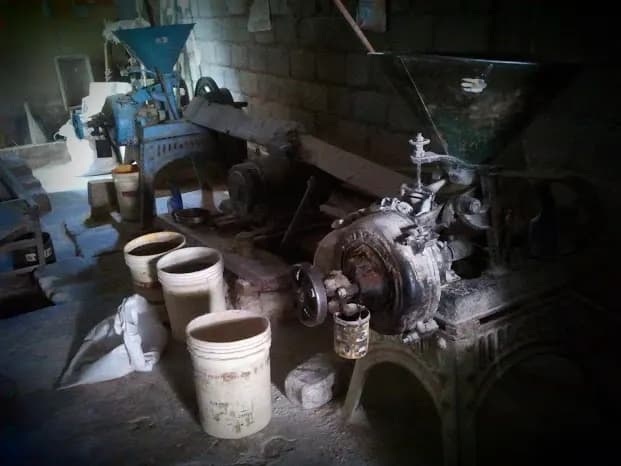
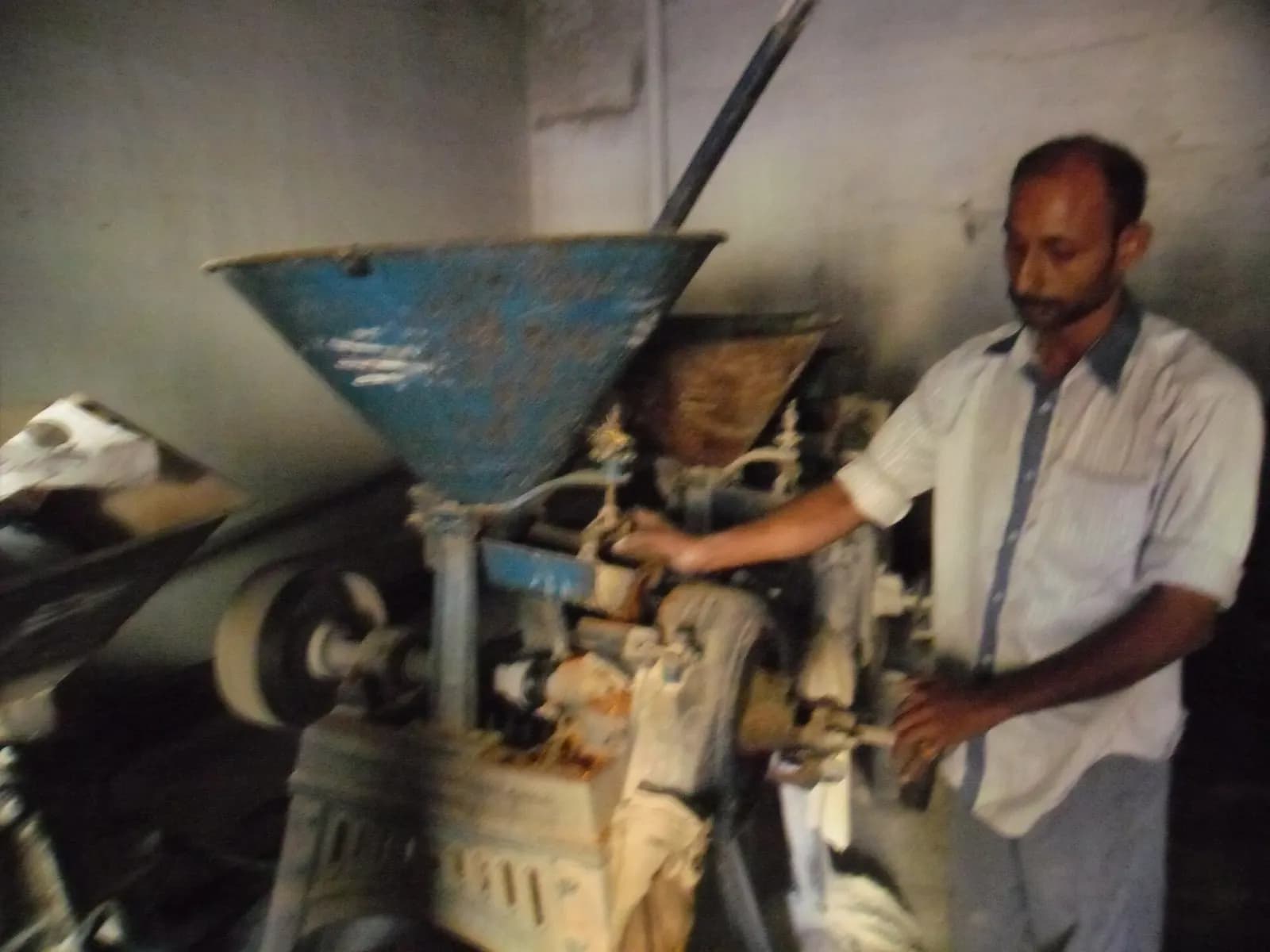
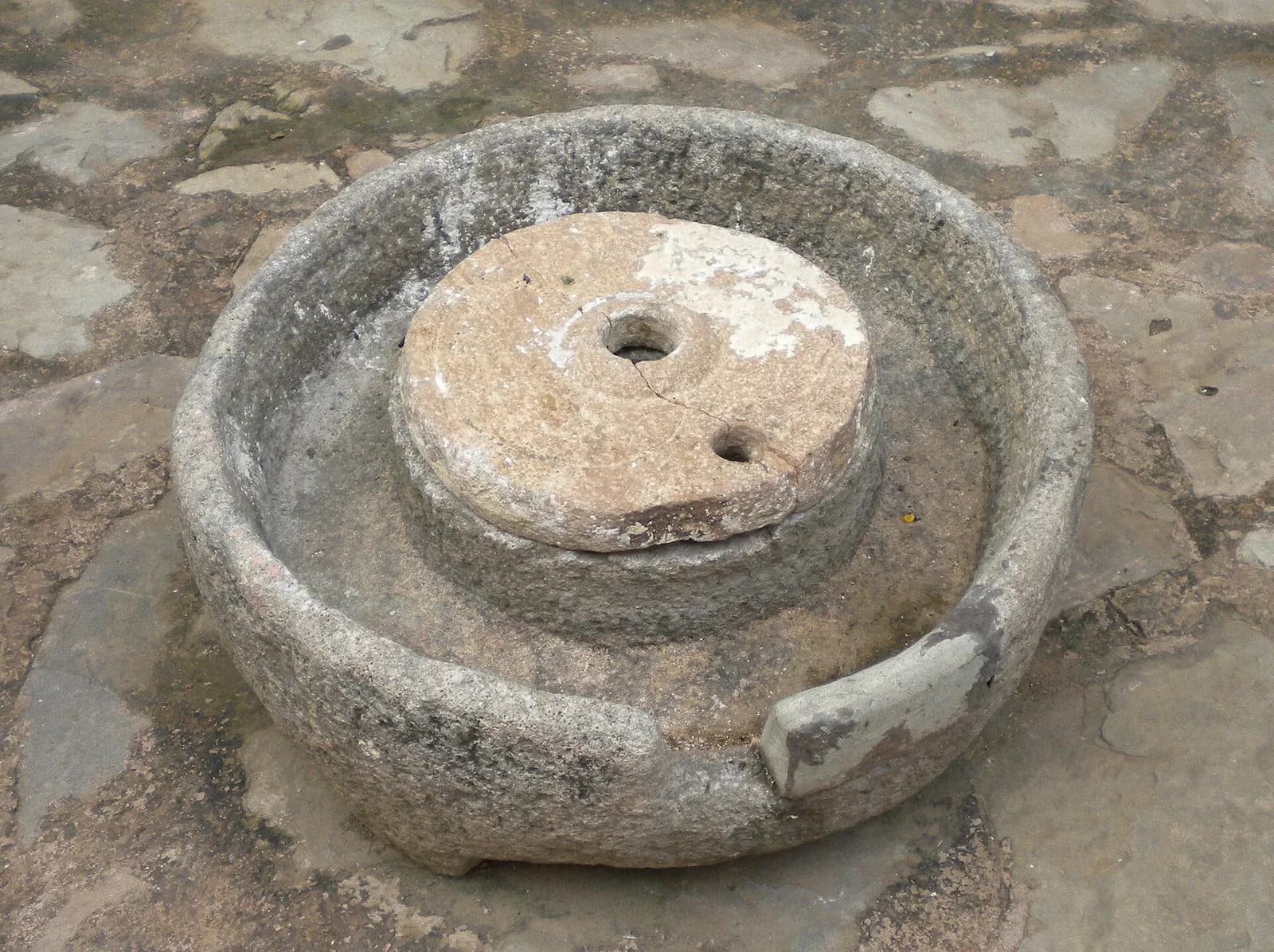
Atta chakki (custom grinding and loose atta). A commercial chakki has a pair of stones — natural or emery — 12 to 30 inches across, driven by an electric motor. Customers bring their wheat, jowar, bajra, ragi or chana, pay a grinding charge per kilogram, and take the flour home. Many chakkis also buy wheat, grind it and sell fresh atta loose or in bags. Stone grinding keeps the bran and germ in the flour and runs cooler than many high-speed machines, which customers associate with taste. This is the easiest entry: one shop, one or two machines, and customers who come back every week.
Automatic chakki plant. A step up: a pre-cleaner and destoner, a dampening or conditioning stage, two or more stone or emery mills, a sifter, elevators and a bagging station, producing 300 kg to a few tonnes an hour. The output is "chakki fresh atta" sold in 5, 10 and 25 kg bags to shops, or in 30–50 kg bags to hotels, caterers and bakeries.
Roller flour mill. An industrial plant that cleans, conditions and breaks wheat through a series of roller mills and plansifters, separating maida, suji (semolina), resultant atta and bran. Plants are rated in tonnes a day, need large wheat storage and a quality lab, and buy wheat in bulk from mandis, traders and FCI's open market sales. Our estimate is that even a small roller mill runs into several crore rupees once land, building, plant and working capital are counted; anyone considering one needs a detailed project report and a bank term loan, not a shop-level plan.
Which flour mill model fits you?
| Atta chakki shop | Automatic chakki plant | Roller flour mill | |
|---|---|---|---|
What you sell | Grinding service, loose atta | Bagged chakki atta, multigrain | Maida, suji, resultant atta, bran |
Typical buyers | Households nearby | Shops, hotels, caterers | Bakeries, biscuit makers, brands, distributors |
Capacity | 50–250 kg/hour | 300 kg – 2 tonnes/hour | Tens to hundreds of tonnes/day |
Estimated set-up cost | ₹1.5 – 4 lakh | ₹8 – 20 lakh | Several crore |
Power | 5–20 HP, three-phase | 30–100 HP | HT industrial connection |
FSSAI | Registration (most) | Registration or state licence | State or central licence |
What you sell
- Atta chakki shop
Grinding service, loose atta
- Automatic chakki plant
Bagged chakki atta, multigrain
- Roller flour mill
Maida, suji, resultant atta, bran
Typical buyers
- Atta chakki shop
Households nearby
- Automatic chakki plant
Shops, hotels, caterers
- Roller flour mill
Bakeries, biscuit makers, brands, distributors
Capacity
- Atta chakki shop
50–250 kg/hour
- Automatic chakki plant
300 kg – 2 tonnes/hour
- Roller flour mill
Tens to hundreds of tonnes/day
Estimated set-up cost
- Atta chakki shop
₹1.5 – 4 lakh
- Automatic chakki plant
₹8 – 20 lakh
- Roller flour mill
Several crore
Power
- Atta chakki shop
5–20 HP, three-phase
- Automatic chakki plant
30–100 HP
- Roller flour mill
HT industrial connection
FSSAI
- Atta chakki shop
Registration (most)
- Automatic chakki plant
Registration or state licence
- Roller flour mill
State or central licence
Machines and what they cost
The costs below are MSMETOOLS estimates for 2026 based on IndiaMART listings in October 2026. Listed prices ranged from about ₹15,000–₹30,000 for 12–14 inch chakkis (25–40 kg an hour, 2–3 HP), ₹42,000–₹68,000 for 16 inch machines (around 100 kg an hour, up to 7.5 HP), ₹45,000–₹1.8 lakh for 24 inch machines (around 250 kg an hour, 5–15 HP), and ₹6.5 lakh for a 17 HP, 500 kg unit. Sellers quote capacity on clean, dry wheat — expect less on millets and pulses.
| Equipment | Use | Estimated cost |
|---|---|---|
| Domestic or small commercial chakki, 1–3 HP | Home-based grinding, tiny shops | ₹15,000 – ₹35,000 |
| Commercial chakki, 16–20 inch stone, 7.5–10 HP | Neighbourhood custom grinding | ₹45,000 – ₹90,000 |
| Commercial chakki, 24–30 inch stone, 10–20 HP | Busy shops and small atta supply | ₹70,000 – ₹1,80,000 |
| Pulveriser (second machine) | Spices, rice flour, besan | ₹40,000 – ₹1,00,000 |
| Cleaning sieve, destoner, weighing scales | Cleaning wheat, weighing customers' grain | ₹10,000 – ₹50,000 |
| Bag stitching or sealing machine | Packed atta | ₹5,000 – ₹25,000 |
| Automatic chakki plant (cleaning, 2–4 mills, sifter, elevators) | 300 kg – 2 tonnes an hour | ₹6,00,000 – ₹18,00,000 |
Stones matter. Natural stones need periodic dressing (re-cutting the grooves) by a skilled mistri; emery stones last longer but must be replaced when worn. Ask the seller who dresses or replaces stones locally, how often, and at what cost, and budget for it monthly.
Dust and noise. Flour dust is a nuisance and, in enclosed spaces, a fire and explosion risk around motors and switches. Fit a cyclone or bag on the outlet, keep the room ventilated, and clean daily. A chakki in a residential lane will draw complaints about noise; check local rules and your neighbours before you sign a lease.
Power load and electricity cost
Electricity is the largest running cost of a chakki after wheat. A commercial chakki needs a three-phase connection; a 10 HP motor is about 7.5 kW and a 20 HP motor about 15 kW, and you will add lighting and a second machine. Apply to your state distribution company for a commercial or small industrial (LT) connection for the total sanctioned load, with wiring and an earthing certificate from a licensed electrical contractor. Tariffs, fixed charges and the category a flour mill falls into differ from state to state, so get the tariff order or a written estimate from the distribution company before you choose motor sizes — an oversized sanctioned load raises your fixed charge every month.
As an MSMETOOLS estimate, a well-maintained 15 HP chakki grinding about 150 kg of wheat an hour draws roughly 0.07–0.1 unit per kilogram. At ₹8–10 a unit, that is ₹0.60–₹1 per kilogram of flour before fixed charges. Worn stones, wet grain and overfeeding all push consumption up. Some states have subsidised tariffs for small rural industries; ask your District Industries Centre.
FSSAI registration and the legal standard for atta
Registration or licence. Milling grain into flour is food processing. From 1 April 2026 FSSAI sets categories by turnover alone: basic registration up to ₹1.5 crore (₹100/year a year), a state licence above that up to ₹50 crore (₹2,000 – ₹5,000/year), and a central licence beyond. FSSAI's March 2026 order says these turnover limits supersede the earlier criteria, which used daily production capacity and treated grain milling units separately. Registrations and licences are now perpetual; you pay the annual fee but do not renew. Apply on FoSCoS — see our FSSAI registration guide.
The atta standard. FSSAI's Food Products Standards (regulation 2.4.1) define wheat flour (atta) as the product of milling clean wheat, free from abnormal flavours, odours, living insects and filth. "Resultant atta" is the blend of fractions left in roller mills after maida or suji is separated. Both must meet these limits:
| Parameter | Limit |
|---|---|
| Moisture | Not more than 14% by mass |
| Total ash (dry basis) | Not more than 2.0% |
| Ash insoluble in dilute HCl (dry basis) | Not more than 0.15% |
| Gluten (dry basis) | Not less than 6.0% |
| Alcoholic acidity as H2SO4 (dry basis) | Not more than 0.18% |
| Crude fibre (dry basis) | Not more than 2.5% |
| Granularity | At least 98% through a 500-micron (35 mesh) sieve |
| Uric acid | Not more than 100 mg/kg |
Acid-insoluble ash is mostly sand and grit; it fails when wheat is not cleaned or stones shed grit. Alcoholic acidity rises as atta goes stale, which is why chakki atta is best sold within days. Uric acid indicates insect infestation. Clean your wheat well, store it dry, sell fresh, and have your own atta tested at an NABL-accredited lab at least once a year.
Labelling. Packed atta needs an FSSAI-compliant label: product name and veg logo on the front, your FSSAI number and logo, net quantity, lot number, date of packing and best-before date, and your address. FSSAI's labelling FAQs exempt single-ingredient and minimally processed foods such as cereals and flours from nutrition information, so plain atta can skip the nutrition table; a multigrain mix with added ingredients cannot. Agmark grade standards exist for wheat atta but are voluntary.
GST on atta, grinding services and machines
GST on flour turns on one phrase: pre-packaged and labelled.
| Supply | HSN | GST |
|---|---|---|
| Wheat flour (atta) and other cereal flours — loose, or in packs above 25 kg | 1101, 1102 | Nil |
| Wheat flour and other cereal flours — pre-packaged and labelled (up to 25 kg) | 1101, 1102 | 5% |
| Wheat — loose / pre-packaged and labelled | 1001 | Nil / 5% |
| Wheat bran (sold as cattle feed) | 2302 | Nil |
| Milling and grain-cleaning machinery | 8437 | 18% |
Rates are from Notifications 9/2025 and 10/2025-Central Tax (Rate), effective 22 September 2025. Both notifications define "pre-packaged and labelled" as a commodity meant for retail sale, containing not more than 25 kg or 25 litres, that is "pre-packed" under the Legal Metrology Act and must carry the declarations required by that Act. In practice:
- Atta sold loose by weight from a bin: exempt.
- A 5 kg or 10 kg sealed bag with your name, net weight and MRP printed or stuck on: 5%.
- A 30 kg or 50 kg bag for a hotel or bakery: outside the definition, so exempt — but check how your invoice describes it.
This replaced the older "registered brand name" test in July 2022 and was restated when the GST rate schedules were rewritten in September 2025. Many pages still describe the old rule; ignore them.
Custom grinding is a service. When a customer brings their own wheat and you charge for grinding, you are supplying a service, not selling atta. The registration threshold for services is ₹20 lakh in most states, and most neighbourhood chakkis stay below it. If your grinding income and other taxable turnover cross the threshold, the GST treatment of job-work milling depends on who the customer is and how the service is classified — get a CA's opinion before you charge or skip tax.
Mixed businesses. A chakki that sells only loose atta and grinding services below the threshold need not register. Once you sell packed atta, you are making taxable supplies at 5%. Registering then lets you claim the 18% paid on new machines against your output tax, but credit attributable to exempt loose atta must be reversed. Most small mills that move into packed atta register and keep clear records of exempt and taxable sales. Use the GST calculator and see our GST on food guide.
Buying wheat and setting your prices
Wheat is the biggest cost of your own atta. The government's minimum support price sets a floor for the market: ₹2,585 per quintal for wheat harvested and marketed in 2026, and ₹2,610 per quintal announced on 30 September 2026 for the 2027-28 marketing season. Open-market prices move around the MSP depending on the crop, procurement and stock levels, and the Food Corporation of India periodically sells wheat to flour millers and other bulk buyers through open market sale e-auctions when it wants to cool prices. Small chakkis buy from local traders or the nearest mandi; buy around harvest (April–June) when prices are lowest if you have dry, pest-free storage.
Pricing loose and packed atta. Start from your landed cost of wheat per kilogram, add cleaning and grinding loss (1–3% for whole-wheat chakki atta), power, bags and labour, then compare with packed brands and other chakkis in your area. Customers pay a premium for fresh-ground, single-variety wheat — Sharbati or MP wheat, for example — and for visible cleanliness.
Pricing grinding. Grinding charges are set by local competition and usually quoted per kilogram, with a minimum per visit. Price millets, chana and spices higher than wheat — they are harder on stones and slower to grind.
Worked example: monthly profit for a chakki shop
All figures are our illustrative estimates for a rented 300 sq ft shop in a tier-2 town with one 15 HP commercial chakki and a small pulveriser, run by the owner and one helper.
Assumptions. The shop grinds 6,500 kg of customers' grain a month at an average ₹4 a kilogram. It also buys wheat at ₹30 a kilogram landed and sells 3,000 kg of loose atta at ₹40 a kilogram and 1,000 kg in 5 kg and 10 kg packs at ₹46 a kilogram before GST. Grinding loss is 2%, so atta costs about ₹30.60 a kilogram in wheat; packed bags and labels add ₹2 a kilogram.
| Monthly line | Amount (₹) |
|---|---|
| Grinding income: 6,500 kg × ₹4 | 26,000 |
| Loose atta sales: 3,000 kg × ₹40 | 1,20,000 |
| Packed atta sales: 1,000 kg × ₹46 | 46,000 |
| Wheat cost: 4,000 kg × ₹30.60 | 1,22,400 |
| Bags and labels: 1,000 kg × ₹2 | 2,000 |
| Contribution | 67,600 |
| Rent | 10,000 |
| Helper | 12,000 |
| Electricity (about 1,100 units plus fixed charge) | 11,500 |
| Stone dressing and maintenance | 2,500 |
| Loan EMI (about ₹2.5 lakh over five years) | 5,000 |
| FSSAI fee, testing, sundries (monthly average) | 1,600 |
| Profit before tax | 25,000 |
Profit margin. Custom grinding earns about ₹3 a kilogram after power — a high margin on a small fee. Loose atta earns about ₹9 a kilogram (roughly 23% of the selling price) and packed atta about ₹13 (29%). Across the business, profit before tax is about 13% of sales and income, on top of the owner's own wage. Fixed costs are ₹42,600 a month; check your own break-even in the break-even calculator and margins in the profit margin calculator.
GST position. Grinding income and loose atta here are below the services and goods thresholds and mostly exempt, but the ₹46,000 of packed atta is taxable at 5%. If the owner wants to sell packed atta through a marketplace or to a supermarket that insists on a GST invoice, registration becomes necessary.
What moves profit most. Wheat price: a ₹2 a kilogram rise wipes out ₹8,000 a month unless you pass it on. Volume of custom grinding: it costs almost nothing extra to run, so every additional regular customer adds margin. Product mix: multigrain atta, besan, rice flour and spice grinding each earn more per kilogram than plain wheat atta.
Registrations, pollution consent and funding
A flour mill needs FSSAI registration or a licence, Udyam registration (Free), a trade licence or permission from the municipality or panchayat, a three-phase power connection, GST registration once you cross the threshold or sell packed atta to businesses that need invoices, and, if you pack atta for retail, compliance with Legal Metrology declarations — net quantity, MRP, unit sale price and the month and year of manufacture, mandatory on all packs from 1 January 2024.
Pollution control. CPCB's 2025 classification places flour mills (dry process) in the green category, with a note that domestic flour mills may not need separate classification. A green-category plant generally needs consent to establish and operate from the state pollution control board, under a simpler process; a single neighbourhood chakki may be treated as domestic. Ask your state board in writing which applies to you.
PMEGP. The Prime Minister's Employment Generation Programme funds new manufacturing units up to ₹50 lakh with margin money of 15% (general, urban) to 35% (special categories, rural) of project cost; you contribute 10% or 5%. A ₹10 lakh automatic chakki plant set up by a woman entrepreneur in a village would receive margin money of about ₹3.5 lakh. See our PMEGP loan guide.
PMFME. The PM Formalisation of Micro Food Processing Enterprises scheme offers 35% of eligible project cost, up to ₹10 lakh for micro food processing units, including flour and millet processing. Its approved period ran to 30 September 2026, and as of October 2026 we found no Cabinet approval for the proposed 2026-31 continuation — check with your District Resource Person before relying on it. See our PMFME scheme guide.
Mudra. A chakki shop fits easily within Mudra Kishore (up to ₹5 lakh) without collateral. Register on Udyam first.
Starting a flour mill — step by step
- 1
Pick the model and location
Count households, competing chakkis and packed-atta shops within a kilometre. Check that the premises can take a three-phase connection and that noise will not trigger complaints.
- 2
Apply for power early
Get a load estimate from an electrician and apply to the distribution company; connections can take weeks.
- 3
Register
FSSAI registration on FoSCoS, Udyam, local trade licence; ask the state pollution control board about consent.
- 4
Buy machines and test
See the machine grind your local wheat and millets; agree on stone dressing and service.
- 5
Launch and test your atta
Have your atta tested against FSSAI's atta standard before you sell packs, and register for GST before your first packed sale to a business.
Mistakes that sink flour mills
Choosing motor size before checking the tariff. An oversized sanctioned load raises fixed charges every month whether you grind or not.
Skipping wheat cleaning. Grit raises acid-insoluble ash above the legal limit and wears stones; cleaning is cheaper than failed samples.
Holding atta too long. Chakki atta goes stale and rises in acidity. Grind to order and keep only a few days' stock.
Ignoring the 25 kg line. Selling labelled 5 kg packs as if they were loose, or invoicing 30 kg bags as packed, gets the GST wrong in both directions.
Under-pricing millets and spices. They grind slower and wear stones faster. Charge more per kilogram.
What to do next
Spend a week watching two busy chakkis: count customers, note what they grind and what they pay. Then cost your plan in the startup cost calculator, apply for power and FSSAI registration, and approach a bank under PMEGP or Mudra. If you plan to grind spices too, read our masala business guide.
This is general information, not legal or tax advice — confirm on the official source or with a professional.
Frequently asked questions
Our estimate is ₹1.5–4 lakh for an atta chakki shop with one or two commercial stone mills, a cleaning sieve, scales and the electrical connection, and ₹8–20 lakh for a small automatic chakki plant with cleaning, grinding, sifting and bagging. A roller flour mill making maida, suji and atta is an industrial project that typically runs into crores. These are MSMETOOLS estimates based on October 2026 B2B listings.
Loose atta — and atta in packs above 25 kg — is exempt (Nil). Atta that is pre-packaged and labelled, meaning a retail pack of up to 25 kg or 25 litres that must carry Legal Metrology declarations, attracts 5%. The same rule applies to other cereal flours. Rates are from Notifications 9/2025 and 10/2025-Central Tax (Rate).
Commercial milling machinery under HSN 8437 attracts 18% GST under Schedule II of Notification 9/2025-Central Tax (Rate). If you are GST-registered and the machine is used for taxable supplies, you can usually claim that tax as input tax credit; if all your sales are exempt loose atta, you cannot.
An atta chakki gives a steady but modest income: in our worked example a single-shop chakki that grinds customers' wheat and sells its own loose and packed atta earns about ₹25,000 a month after costs, plus the owner's wage. Profit rises when you add packed atta, multigrain flours, besan and spice grinding, or supply hotels and caterers.
Yes. Milling grain into flour is food processing, so you need at least FSSAI basic registration (₹100/year a year for turnover up to ₹1.5 crore) and a state licence above that. Even a chakki that only grinds customers' own wheat should register — food safety officers inspect mills, and buyers of your own atta will ask for your FSSAI number.
Commercial chakkis run on 5–20 HP motors (roughly 4–15 kW) and need a three-phase connection. As a rough estimate, a 15 HP chakki grinding 150 kg an hour uses about 0.07–0.1 unit of electricity per kilogram of wheat. Your power bill also includes a fixed or demand charge on your sanctioned load, so ask your distribution company for the tariff before you choose motor sizes.
Sources & verification
Figures on this page were checked against the sources below when it was last reviewed on 9 October 2026. Each rate and limit is stored once with its own official source and review date, and official update channels are monitored daily so changes are picked up. How we verify
- 1.Notification No. 9/2025-Central Tax (Rate), 17 September 2025 — Ministry of Finance (Department of Revenue) · accessed 9 October 2026
- 2.Notification No. 10/2025-Central Tax (Rate), 17 September 2025 — Ministry of Finance (Department of Revenue) · accessed 9 October 2026
- 3.Food Products Standards — Chapter 2.4: Cereals and cereal products (Version 4, 7 May 2025) — FSSAI · accessed 9 October 2026
- 4.Order dated 13 March 2026 — revised turnover thresholds for food businesses — FSSAI · accessed 9 October 2026
- 5.FAQs on FSS (Labelling and Display) Regulations, 2020 (1 November 2023) — FSSAI · accessed 9 October 2026
- 6.Classification of Sectors into Red, Orange, Green, White and Blue Categories (January 2025) — Central Pollution Control Board (copy hosted by Pollution Control Board, Assam) · accessed 9 October 2026
- 7.Cabinet approves MSP for Rabi crops for Marketing Season 2026-27 — PIB · accessed 9 October 2026
- 8.Union Cabinet hikes MSP for Rabi crops for 2027-28 marketing season (1 October 2026) — News On AIR (Prasar Bharati) · accessed 9 October 2026
- 9.Grades and standards — Agmark — Directorate of Marketing & Inspection, Ministry of Agriculture · accessed 9 October 2026
- 10.Flour mill machine listings — IndiaMART · accessed 9 October 2026
MSMETOOLS is an independent platform and is not affiliated with any government agency, ministry or department.
Tools for this
Break Even Calculator
Find your break even point and units.
Startup Cost Calculator
Estimate how much capital you need to launch.
GST Calculator (India)
Calculate GST for your sales and purchases with current rates.
Profit Margin Calculator
Calculate profit, markup and margin for your products or services.
Related guides
 Masala Business in India 2026: FSSAI, GST, Machines & ProfitRead guide
 Bakery Business Plan 2026: Costs, FSSAI, GST & ProfitRead guide
 Tiffin Service Business 2026: FSSAI, GST, Cost & ProfitRead guide
 Paper Bag Making Business 2026: Cost, Machines, GST & ProfitRead guide
Official links open the government site in a new tab.