 Starting & growing a business
Masala Business in India (2026): FSSAI Standards, GST, Labelling, Machines and Profit
Start a masala business in 2026: FSSAI licence and spice standards, 5% GST on whole and ground spices, Agmark, labelling, pulveriser costs and ₹ profit.
 Edited by Sumeet YadavFounder & editor, MSMETOOLS · fact-checked against official sources

Contents (12)
- 1. Four ways into the masala business
- 2. Raw spices and where to buy them
- 3. FSSAI licence and the legal standards for spice powders
- 4. Agmark: voluntary, but useful for some buyers
- 5. GST on spices: whole vs ground, loose vs packed
- 6. Packaging and labelling rules
- 7. Machines and equipment: what they cost
- 8. Setup cost and a worked monthly profit
- 9. Pollution control and workplace safety
- 10. Funding: PMFME, PMEGP and Mudra
- 11. Mistakes that sink masala businesses
- 12. What to do next
Every Indian kitchen buys chilli, turmeric and coriander powder, and most buy at least one blended masala. That steady demand is why a masala business is one of the most common food start-ups in India — and why it is crowded, from neighbourhood grinding mills to national brands. This guide is for anyone planning a masala business: a custom grinding shop, a home-based blended-masala brand or a small packing unit. It covers the FSSAI licence and the legal standards your powders must meet, GST on whole and ground spices, Agmark, packaging and labelling rules, machines and costs, funding, and a worked monthly profit in rupees.
Quick answer
A masala unit cleans, dries, roasts (for some blends), grinds, sifts, blends and packs spices. You need FSSAI registration (turnover up to ₹1.5 crore, ₹100/year) before the first sale, and every powder must meet FSSAI's spice standards. Dried spices carry 5% GST whether whole or ground. Budget roughly ₹1.5–3 lakh for a one-pulveriser unit and ₹8–15 lakh for a small packing unit (our estimates).
Single-spice powders are commodities; blended masalas under your own label carry the margin
FSSAI tested spices nationwide in 2024–25 and ran an enforcement drive at manufacturing units in October 2025
Agmark is voluntary; FSSAI standards and Legal Metrology pack declarations are compulsory
Spice grinding is a green-category industry; PMEGP and Mudra are open for new units, and PMFME's status after 30 September 2026 is pending
Four ways into the masala business
Custom grinding (job work). A neighbourhood mill grinds customers' own chilli, turmeric and coriander for a per-kilogram charge. It needs little working capital and no packaging, and is often run alongside an atta chakki. Income is steady but capped by your locality. See our flour mill business guide if you plan to combine the two.
Single-spice powders. You buy whole spices, clean, dry, grind and pack chilli, turmeric, coriander and cumin powder. These are the volume lines in every kitchen, but buyers compare prices per kilogram and big brands set the ceiling. The margin is in buying well and losing little in cleaning and grinding.
Blended masalas. Garam masala, chicken masala, sambar powder, chhole masala, pav bhaji masala, regional blends such as goda masala or Kashmiri mixes. These sell on taste and trust, so the price per kilogram is far above the cost of the spices. This is where small brands make money — and where FSSAI's rules on spice content and salt bite hardest.
Institutional and white-label supply. Supplying hotels, caterers, cloud kitchens and other brands in 5–25 kg bags. Lower packing cost, bigger orders, tighter specifications, and slower payment.
Most profitable small units combine a few single spices, which keep the grinders busy, with a short range of blends that earn most of the profit. Start with the buyer: visit kirana stores, wholesalers in your nearest spice market, and two or three restaurants, and note which blends, pack sizes and prices move.
Raw spices and where to buy them
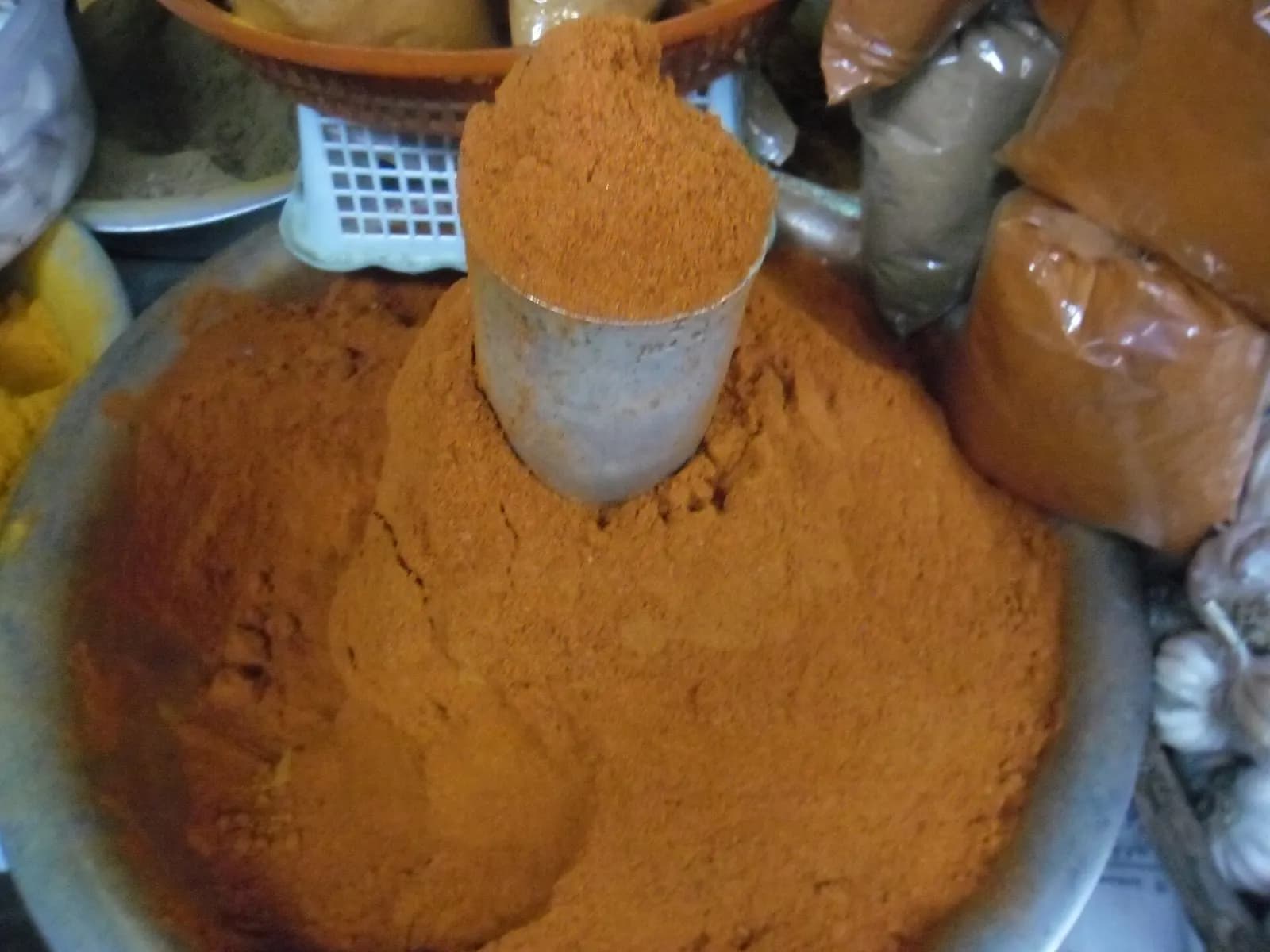
India grows most of the spices it eats, and buying is regional: dried red chillies from Guntur (Andhra Pradesh) and Byadgi (Karnataka), turmeric from Erode, Nizamabad and Sangli, coriander and cumin from Rajasthan and Gujarat (Unjha is the largest cumin market), pepper and cardamom from Kerala and Karnataka. Small units usually buy from wholesalers in the nearest city spice market; larger units buy in the producing mandis during the harvest season, when prices are lowest, and store in cool, dry godowns.
Spice prices swing sharply from year to year with the crop — chilli and cumin especially. Track prices on the Agmarknet and eNAM portals before you set your selling prices, and do not sign fixed-price supply contracts for more than a few months without a price-revision clause.
Quality at intake decides quality in the pack. Whole spices arrive with stones, stems, dust and sometimes insect damage. FSSAI's standards cap extraneous matter (for whole chillies, not more than 1% by weight; for whole turmeric, 1%), moisture and insect damage. Budget for 3–8% cleaning and grinding loss, keep a moisture meter, and reject lots that smell musty. A cleaning step — a destoner or at least sieving and hand-picking — is not optional.
FSSAI licence and the legal standards for spice powders
Registration or licence. Every food business needs one before it sells. From 1 April 2026 FSSAI decides the category by turnover alone: basic registration up to ₹1.5 crore a year (₹100/year), a state licence above that up to ₹50 crore (₹2,000 – ₹5,000/year), and a central licence above ₹50 crore. FSSAI's 13 March 2026 order says these limits supersede the older criteria, which used daily production capacity for manufacturers. Registrations and licences now have perpetual validity — you keep paying the annual fee but do not renew. Apply on FoSCoS; our FSSAI registration guide walks through the forms.
The standards your powders must meet. FSSAI's Food Products Standards, sub-regulation 2.9, set limits for each spice. A few that small units most often fail:
| Product | Key FSSAI requirements |
|---|---|
| Chilli powder | Moisture ≤ 11%; total ash ≤ 8%; acid-insoluble ash ≤ 1.3%; no added colour or mineral oil; edible oil up to 2% by weight only with a label declaration |
| Turmeric powder | Moisture ≤ 10%; curcuminoid content ≥ 2% on dry basis; lead chromate test negative; no added colour or foreign starch |
| Coriander powder | No added colour or starch; ash and moisture limits apply |
| Curry powder | Spices at least 85% by weight; salt ≤ 5% on dry basis; no added colour or preservatives other than salt; lead ≤ 10 ppm |
| Mixed masala powder | Minimum spice content declared on the label in one of three bands — 85%, 40% or 25% — with moisture, volatile oil and acid-insoluble ash limits for each band; salt above 5% declared on the label |
All spices must also meet the microbiological limits in Appendix B. The mixed masala powder standard, added in 2020, lets blends include starch, salt, dried vegetables, oils, nuts, pulses and sweeteners, but the spice-content band you declare decides which quality limits apply. A chicken masala made with a lot of salt and starch is legal — if the label says so.
Enforcement is real. FSSAI ran a pan-India surveillance on 13 spices between November 2024 and February 2025 and found non-compliance on quality parameters, contaminants, microbial counts and labelling. It then ordered an enforcement drive for October 2025 limited to manufacturing units, with samples sent to NABL-accredited laboratories. In 2024, after Hong Kong and Singapore acted against Indian spice blends over ethylene oxide, FSSAI tested spice manufacturers across the country; ethylene oxide is not permitted in food in India. In August 2026, FSSAI issued prohibition orders against two established hing makers over sub-standard compounded asafoetida and noted earlier masala labels that failed to declare salt above 5% and spice content. A small unit should test each new product at an NABL-accredited lab before launch and at least once a year after, and keep batch records that tie every pack to a lot of raw spice.
Agmark: voluntary, but useful for some buyers
Agmark is the Ministry of Agriculture's quality mark under the Agricultural Produce (Grading and Marking) Act, 1937, run by the Directorate of Marketing and Inspection (DMI). It covers 248 commodities, including spices, curry powder and wheat atta, under separate grading and marking rules. For spices sold in India it is voluntary — FSSAI standards apply to you whether you use Agmark or not.
To use it, you apply to DMI online for a certificate of authorisation, have each lot tested in your own approved laboratory or a DMI-approved one, and print the Agmark replica only through a permitted press. Expect grading charges per lot and a label charge.
Is it worth it? For a new kirana brand, usually not at first. It helps when government canteens, institutions or tender buyers ask for it. Weigh the testing cost per lot against those orders.
GST on spices: whole vs ground, loose vs packed
| Product | HSN | GST |
|---|---|---|
| Dried chillies, pepper — whole, crushed or ground | 0904 | 5% |
| Cardamom, cloves, cinnamon, nutmeg and mace | 0906–0908 | 5% |
| Coriander, cumin, fennel seeds and powders | 0909 | 5% |
| Turmeric, dried ginger, curry leaves and other spices, whole or ground | 0910 | 5% |
| Fresh ginger and fresh turmeric, not processed | 0910 11 10, 0910 30 10 | Nil |
| Mixed condiments and seasonings, curry paste | 2103 | 5% |
| Spice grinding and food processing machinery | 8438 | 18% |
Rates are from Notifications 9/2025 and 10/2025-Central Tax (Rate), effective 22 September 2025. Two points trip people up:
Ground spices are not taxed differently from whole spices. The spice headings cover whole, crushed and ground forms, and the rate does not depend on whether the pack is branded or loose. This is unlike atta, rice and pulses, where only pre-packaged and labelled packs are taxed. Seed-quality spices and fresh ginger and turmeric are the main exemptions.
Blends need the right heading. Mixtures of spices of different headings are classified within heading 0910 under the customs tariff's chapter notes, while sauces, mixed condiments and seasonings fall under 2103. Both are at 5% after September 2025, so the rate is the same, but use one heading consistently and ask your CA if a blend contains a lot of non-spice ingredients. Before September 2025, products under heading 2103 were taxed at 12%, so check that old price lists and billing software have been updated.
Registration and composition. The intra-state threshold for goods is ₹40 lakh in most states, but marketplace and inter-state sales need registration from the first invoice. Because your inputs (whole spices at 5%) and outputs (powders at 5%) sit at the same rate, a regular registration usually works well and lets you claim credit on machinery and packaging. The composition scheme at 1% of turnover suits only units that sell within the state to consumers. Try the GST calculator and read our GST on food guide.
Packaging and labelling rules
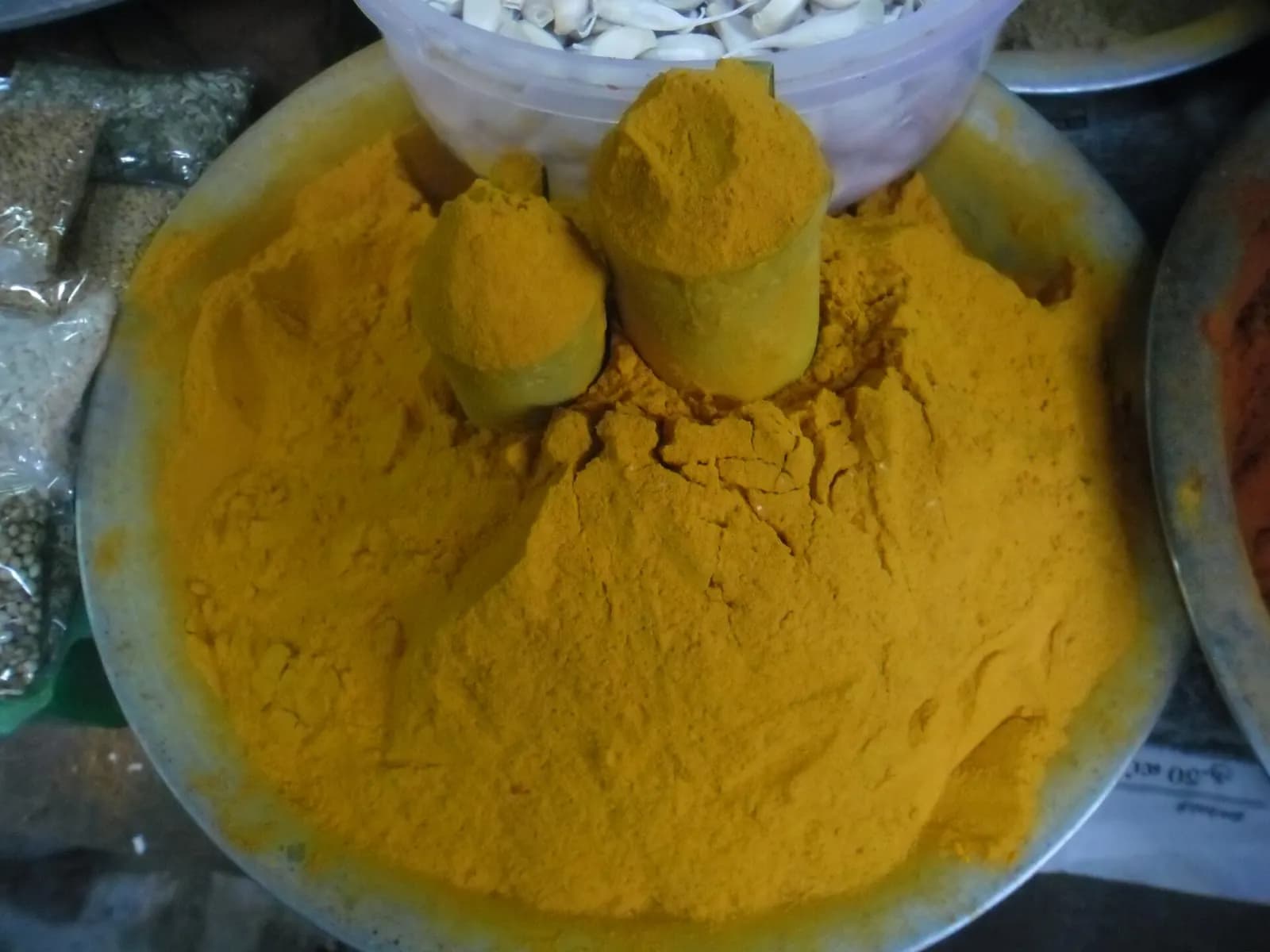
A retail pack of masala must satisfy two sets of rules.
FSSAI (Labelling and Display) Regulations, 2020. The name of the food and the green vegetarian logo go on the front of the pack; FSSAI's FAQs say the veg logo cannot be dropped even on very small packs. Add the FSSAI logo with your 14-digit registration or licence number, the ingredient list for blends, the net quantity, the batch or lot number, the date of manufacture or packing and the best-before date, and the name and address of the manufacturer. For mixed masala powder, add the minimum spice content and, if salt is above 5%, the salt content; for chilli powder with oil, the amount and type of oil.
Nutrition information. FSSAI has clarified that raw, minimally processed and single-ingredient foods — and grinding counts as minimal processing — need not carry nutrition information. A pack of plain turmeric or chilli powder can skip the table; a blended masala with salt or starch cannot.
Legal Metrology (Packaged Commodities) Rules, 2011. Every retail pack must declare the name and address of the manufacturer or packer, the common name of the commodity, net quantity, MRP, unit sale price (for example ₹ per 100 g), month and year of manufacture, and consumer care details. Unit sale price and the month and year of manufacture became mandatory on all packs from 1 January 2024. Manufacturers and packers of pre-packed goods also register with their state Legal Metrology department.
Packaging material. Spice powders lose aroma and pick up moisture fast. Use laminated or metallised pouches, nitrogen flushing for premium blends, and sealed outer cartons. Check seal strength every batch; a leaking chilli pouch ruins a whole carton.
Machines and equipment: what they cost
The costs below are MSMETOOLS estimates for 2026, based on IndiaMART listings in October 2026: a 1 HP stainless steel pulveriser was listed at ₹19,500 (about 9 kg an hour), blower-type pulverisers of 3–10 HP at ₹40,000–₹95,000 (20–100 kg an hour), 10 HP stainless steel models at ₹2.65–₹4.75 lakh, and small processing plants from ₹1.5 lakh upward.
| Equipment | Use | Estimated cost |
|---|---|---|
| Destoner, sieves, cleaning table | Removing stones, stems and dust | ₹15,000 – ₹60,000 |
| Dryer or drying room with trays | Bringing moisture down before grinding | ₹20,000 – ₹1,50,000 |
| Roaster (gas or electric drum) | Roasting coriander, cumin and blend ingredients | ₹40,000 – ₹2,00,000 |
| Pulveriser, 1–3 HP | Small batches, custom grinding | ₹15,000 – ₹45,000 |
| Pulveriser, 5–10 HP, blower type | 50–100 kg an hour of single spices | ₹50,000 – ₹1,00,000 |
| Stainless steel multi-stage pulveriser with cooling | Fine, aromatic powders with less heat damage | ₹2,50,000 – ₹5,00,000 |
| Vibro sifter | Uniform mesh size | ₹30,000 – ₹1,00,000 |
| Ribbon or drum blender | Mixing blends evenly | ₹40,000 – ₹1,50,000 |
| Band sealer and weighing scale | Manual packing | ₹10,000 – ₹30,000 |
| Automatic pouch filling and sealing machine | 10 g – 500 g pouches at speed | ₹1,50,000 – ₹6,00,000 |
Heat is the enemy of aroma. Grinding generates heat that drives off volatile oils — the very thing FSSAI's volatile-oil limits measure and customers smell. Do not run a pulveriser beyond its rated feed, give it rest cycles, and for premium blends consider stainless steel machines with water-cooled chambers. Use separate machines or a thorough clean-down between chilli and turmeric to avoid colour and flavour carry-over.
Power. A unit with two 10 HP pulverisers, a sifter and a blender needs a three-phase commercial or industrial connection of roughly 25–35 kW. Apply to your power distribution company early; a new connection can take weeks.
Setup cost and a worked monthly profit
Setup cost estimates — small unit vs packing unit
| Item | Small unit (1 pulveriser, manual packing) | Packing unit (2–3 pulverisers, roaster, auto filler) |
|---|---|---|
Cleaning, drying, roasting | ₹20,000 – ₹50,000 | ₹1,00,000 – ₹3,00,000 |
Pulverisers, sifter, blender | ₹50,000 – ₹1,00,000 | ₹2,00,000 – ₹5,00,000 |
Packing equipment | ₹10,000 – ₹30,000 | ₹1,50,000 – ₹4,00,000 |
Electrical connection, civil work, dust extraction | ₹15,000 – ₹40,000 | ₹1,00,000 – ₹2,00,000 |
Lab testing, registrations, label design | ₹10,000 – ₹25,000 | ₹40,000 – ₹1,00,000 |
Working capital (raw spices and packaging, about two months) | ₹50,000 – ₹1,00,000 | ₹2,00,000 – ₹3,00,000 |
Estimated total | ₹1,55,000 – ₹3,45,000 | ₹7,90,000 – ₹18,00,000 |
Cleaning, drying, roasting
- Small unit (1 pulveriser, manual packing)
₹20,000 – ₹50,000
- Packing unit (2–3 pulverisers, roaster, auto filler)
₹1,00,000 – ₹3,00,000
Pulverisers, sifter, blender
- Small unit (1 pulveriser, manual packing)
₹50,000 – ₹1,00,000
- Packing unit (2–3 pulverisers, roaster, auto filler)
₹2,00,000 – ₹5,00,000
Packing equipment
- Small unit (1 pulveriser, manual packing)
₹10,000 – ₹30,000
- Packing unit (2–3 pulverisers, roaster, auto filler)
₹1,50,000 – ₹4,00,000
Electrical connection, civil work, dust extraction
- Small unit (1 pulveriser, manual packing)
₹15,000 – ₹40,000
- Packing unit (2–3 pulverisers, roaster, auto filler)
₹1,00,000 – ₹2,00,000
Lab testing, registrations, label design
- Small unit (1 pulveriser, manual packing)
₹10,000 – ₹25,000
- Packing unit (2–3 pulverisers, roaster, auto filler)
₹40,000 – ₹1,00,000
Working capital (raw spices and packaging, about two months)
- Small unit (1 pulveriser, manual packing)
₹50,000 – ₹1,00,000
- Packing unit (2–3 pulverisers, roaster, auto filler)
₹2,00,000 – ₹3,00,000
Estimated total
- Small unit (1 pulveriser, manual packing)
₹1,55,000 – ₹3,45,000
- Packing unit (2–3 pulverisers, roaster, auto filler)
₹7,90,000 – ₹18,00,000
All figures below are our illustrative estimates for a rented 800 sq ft unit in a tier-2 city with two pulverisers, a roaster and a semi-automatic pouch filler. Spice prices are assumptions for illustration — check current mandi prices before you plan.
Assumptions. The unit sells 1,500 kg a month of chilli, turmeric and coriander powder to retailers and wholesalers at an average ₹260 a kilogram, and 600 kg of blended masalas at ₹520 a kilogram (in 50 g–200 g packs), all before GST. Single spices cost ₹180 a kilogram of finished powder after 5% loss, plus ₹20 for packing. Blends cost ₹260 a kilogram of ingredients plus ₹45 for smaller packs and cartons.
| Monthly line | Amount (₹) |
|---|---|
| Sales: single spices 1,500 kg × ₹260 | 3,90,000 |
| Sales: blends 600 kg × ₹520 | 3,12,000 |
| Materials and packing: single spices 1,500 × ₹200 | 3,00,000 |
| Materials and packing: blends 600 × ₹305 | 1,83,000 |
| Contribution | 2,19,000 |
| Rent | 20,000 |
| Four workers | 56,000 |
| Power | 18,000 |
| Distributor margins, samples, marketing | 35,000 |
| Lab testing and compliance (monthly average) | 5,000 |
| Loan EMI (about ₹8 lakh over five years) | 17,000 |
| Sundries | 8,000 |
| Profit before tax | 60,000 |
Single spices contribute ₹60 a kilogram; blends contribute ₹215. Fixed costs are ₹1.59 lakh a month. Blends are under a third of the volume but earn almost 60% of the contribution. Each extra 100 kg of blends sold adds about ₹21,500. Try your own numbers in the break-even calculator and the profit margin calculator.
What moves profit most. Buying: a ₹20 a kilogram swing in chilli prices moves monthly profit by ₹30,000 on this volume. Loss: every extra percentage point of cleaning and grinding loss costs about ₹2,700 a month on single spices. Returns and credit: kirana distributors often pay in 30–45 days and expect free replacements for damaged packs. If you sell to registered businesses with a Udyam certificate, the MSMED Act caps agreed credit at 45 days.
Pollution control and workplace safety
Spice grinding is a green-category industry (S.No. 165) in CPCB's 2025 classification of sectors. Green-category units need consent to establish and operate from the state pollution control board, usually under a simpler procedure and with longer validity than orange or red units; ask your board what applies. The main issue is fine dust: install a cyclone or bag filter on pulverisers, keep doors and windows screened, and give workers masks and eye protection — chilli dust is a strong irritant. Fine spice dust in a closed room can also be a fire risk near motors and switchboards, so clean down daily.
Funding: PMFME, PMEGP and Mudra
PMFME. The PM Formalisation of Micro Food Processing Enterprises scheme gives individual units a credit-linked capital subsidy of 35% of eligible project cost, up to ₹10 lakh, and spices are the One District One Product item in several districts. Its approved period ran to 30 September 2026; the food processing ministry has proposed continuing it for 2026-31, but as of October 2026 we found no Cabinet approval. Ask your District Resource Person whether new applications are being sanctioned before you plan on it. Our PMFME scheme guide tracks the status.
PMEGP. The Prime Minister's Employment Generation Programme funds new manufacturing units up to ₹50 lakh with margin money of 15%–35% of project cost depending on category and location. You contribute 10% (5% for special categories). See our PMEGP loan guide.
Mudra. For a small unit or working capital, Mudra loans go up to ₹5 lakh under Kishore and ₹10 lakh under Tarun without collateral. Register on Udyam first; it is free and banks ask for it.
Mistakes that sink masala businesses
Copying a brand's recipe and label. Lookalike packs invite a trademark notice, and copied claims ("100% pure") invite FSSAI scrutiny. Build your own blends and name.
Skipping lab tests. A chilli powder that fails on ash or colour, or a turmeric powder below 2% curcuminoids, is "sub-standard" under the law. Test before launch and keep the reports.
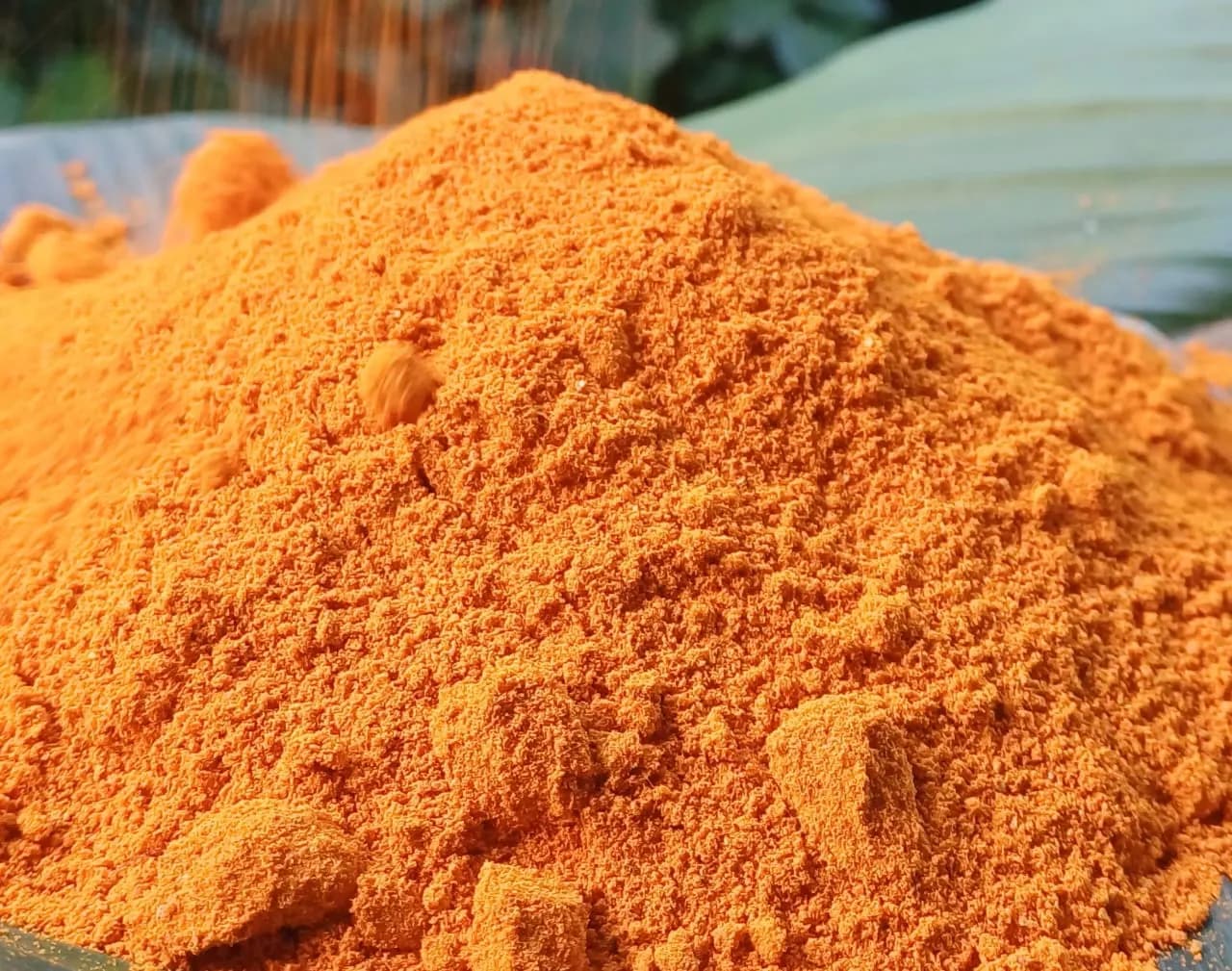
Adding colour to chilli or turmeric. Any added colour in single-spice powders is illegal; lead chromate in turmeric is dangerous. Buy good raw material instead.
Mislabelling blends. Leaving out the spice-content band or the salt declaration was one of the failures FSSAI flagged in recent enforcement. Get your label checked against the regulations before you print 10,000 pouches.
Buying at the wrong time. Buying a year's chilli at the top of the market can wipe out a year's margin. Buy in season, store dry and cool, and keep a price-revision clause in supply deals.
Official links
- FSSAI standards — Chapter 2.9 (spices and condiments)
- FoSCoS — FSSAI registration and licenceApply, pay annual fee, file returns
- Notification 9/2025-CT(Rate)Spices 0904–0910 and 2103 at 5%
- DMI — Agmark grades and standardsSpices and curry powder grading rules
- Agmark online (AQCMS)Certificate of authorisation applications
- PMEGP e-portal (KVIC)
What to do next
Make five blends in small batches, have them tested at an NABL-accredited lab, and put sample packs in ten shops before you buy an automatic filler. Register on FoSCoS and Udyam, cost the plan in the startup cost calculator, and compare funding under PMEGP and Mudra. If you are weighing other food-processing ideas, read our pickle business and flour mill business guides.
This is general information, not legal or tax advice — confirm on the official source or with a professional.
Frequently asked questions
You need FSSAI registration or a licence before the first sale. With turnover up to ₹1.5 crore a year, basic registration costs ₹100/year; above that you need a state licence. Add Udyam (Free), GST registration for inter-state or online sales, a local trade licence, and consent from your state pollution control board where it applies — spice grinding is in CPCB's green category.
Dried spices — pepper, chilli, coriander, cumin, cardamom, turmeric and the rest of headings 0904 to 0910 — carry 5% GST whether whole or ground, packed or loose. Mixed condiments and seasonings under heading 2103 are also 5%. Fresh, unprocessed ginger and turmeric are Nil. Rates are from Notifications 9/2025 and 10/2025-Central Tax (Rate).
No. Agmark certification under the Agricultural Produce (Grading and Marking) Act, 1937 is voluntary for spices sold in India. The Directorate of Marketing and Inspection has grade standards for spices and curry powder, and some buyers — government canteens, institutions and some exporters — prefer or ask for it. FSSAI standards apply to every spice product whether or not it carries Agmark.
Our estimate is ₹1.5–3 lakh for a small unit with one pulveriser, a sifter, a band sealer and starting stock, and ₹8–15 lakh for a unit with two or three pulverisers, a roaster, a mixer, an automatic pouch-filling machine and a testing budget. These are MSMETOOLS estimates based on October 2026 B2B listings; get quotes before you borrow.
It can be, mainly in blended masalas sold under your own label, where the price per kilogram is well above the cost of the spices. Single-spice powders such as chilli and turmeric are commodity products with thin margins. In our worked example, a small unit selling 1,500 kg of single spices and 600 kg of blends a month earns about ₹60,000 before tax.
Not for a single spice ground without additives. FSSAI's labelling FAQs exempt raw or minimally processed single-ingredient foods — grinding counts as minimal processing — from nutrition information. A blended masala with salt, starch or other ingredients needs the full nutrition panel, an ingredient list, the minimum spice content and, if salt exceeds 5%, the salt content.
Sources & verification
Figures on this page were checked against the sources below when it was last reviewed on 9 October 2026. Each rate and limit is stored once with its own official source and review date, and official update channels are monitored daily so changes are picked up. How we verify
- 1.Food Products Standards — Chapter 2.9: Salt, spices, condiments and related products (compendium) — FSSAI · accessed 9 October 2026
- 2.Enforcement drive on spices (whole and powder) for October 2025 — letter dated 17 September 2025 — FSSAI · accessed 9 October 2026
- 3.Order dated 13 March 2026 — revised turnover thresholds for food businesses — FSSAI · accessed 9 October 2026
- 4.FAQs on FSS (Labelling and Display) Regulations, 2020 (1 November 2023) — FSSAI · accessed 9 October 2026
- 5.Notification No. 9/2025-Central Tax (Rate), 17 September 2025 — Ministry of Finance (Department of Revenue) · accessed 9 October 2026
- 6.Notification No. 10/2025-Central Tax (Rate), 17 September 2025 — Ministry of Finance (Department of Revenue) · accessed 9 October 2026
- 7.Grades and standards — Agmark — Directorate of Marketing & Inspection, Ministry of Agriculture · accessed 9 October 2026
- 8.Lok Sabha Unstarred Question 2673 — Legal Metrology (Packaged Commodities) Rules (7 August 2024) — Department of Consumer Affairs · accessed 9 October 2026
- 9.Classification of Sectors into Red, Orange, Green, White and Blue Categories (January 2025) — Central Pollution Control Board (copy hosted by Pollution Control Board, Assam) · accessed 9 October 2026
- 10.FSSAI cracks down on hing powder makers (29 August 2026) — The Week · accessed 9 October 2026
- 11.Masala making machine listings — IndiaMART · accessed 9 October 2026
MSMETOOLS is an independent platform and is not affiliated with any government agency, ministry or department.
Tools for this
Break Even Calculator
Find your break even point and units.
Startup Cost Calculator
Estimate how much capital you need to launch.
GST Calculator (India)
Calculate GST for your sales and purchases with current rates.
Profit Margin Calculator
Calculate profit, markup and margin for your products or services.
Related guides
 Pickle Making Business 2026: FSSAI, GST, PMFME & ProfitRead guide
 Flour Mill Business in India 2026: Chakki Cost, GST & ProfitRead guide
 Agarbatti Making Business 2026: Machines, GST & ProfitRead guide
 Candle Making Business in India 2026: Cost, GST & ProfitRead guide
Official links open the government site in a new tab.