 Starting & growing a business
Agarbatti Making Business in 2026: Machines, Raw Materials, GST, BIS Standard and Profit
Start an agarbatti making business in 2026: machine prices, raw materials, 5% GST (HSN 3307 41), the new BIS standard, KVIC support and a ₹ profit example.
 Edited by Sumeet YadavFounder & editor, MSMETOOLS · fact-checked against official sources
Contents (12)
- 1. How the agarbatti trade actually works
- 2. Raw materials and what they cost
- 3. Machines and equipment: what they cost
- 4. Import curbs on agarbatti and bamboo sticks
- 5. GST on agarbatti — and when perfume causes an inverted duty
- 6. The BIS standard for agarbatti (IS 19412:2025)
- 7. Setup cost: home unit vs small workshop
- 8. Worked example: monthly profit for a two-machine unit
- 9. KVIC, Gramodyog Vikas Yojana and PMEGP support
- 10. Registrations and compliance
- 11. Mistakes that sink agarbatti units
- 12. What to do next
Agarbatti is lit in most Indian homes every day, in temples, shops and offices, and it is one of the few small manufacturing trades you can start in a single room. That makes it crowded. This guide is for anyone weighing an agarbatti making business — a home unit rolling raw sticks for a local perfumer, or a small workshop with automatic machines and its own scented brand. It covers raw materials, machine types and what they cost, the difference between raw and scented economics, GST after the September 2025 rate change, the new BIS standard, import curbs on raw agarbatti and bamboo sticks, KVIC and PMEGP support, and a worked monthly profit in rupees.
Quick answer
An agarbatti unit coats bamboo sticks with a charcoal–binder paste (raw agarbatti), dries them, and then perfumes and packs them. Budget roughly ₹30,000–₹60,000 for a home unit with pedal machines and ₹4–8 lakh for a small workshop with automatic machines (our estimates). Agarbatti carries 5% GST under HSN 3307 41 00, perfume compounds 18%. A voluntary BIS standard, IS 19412:2025, now bans certain insecticides and fragrance chemicals.
Raw agarbatti is a job-work trade with thin margins; perfuming, packing and your own label carry the profit
Imports of agarbatti are Restricted (licence needed) and round bamboo sticks attract 25% customs duty
PMEGP funds manufacturing projects up to ₹50 lakh; KVIC also distributes machines through training camps
Udyam registration is Free; no FSSAI licence is needed because agarbatti is not food
How the agarbatti trade actually works
The industry runs in two stages, and most new makers enter at the first one.
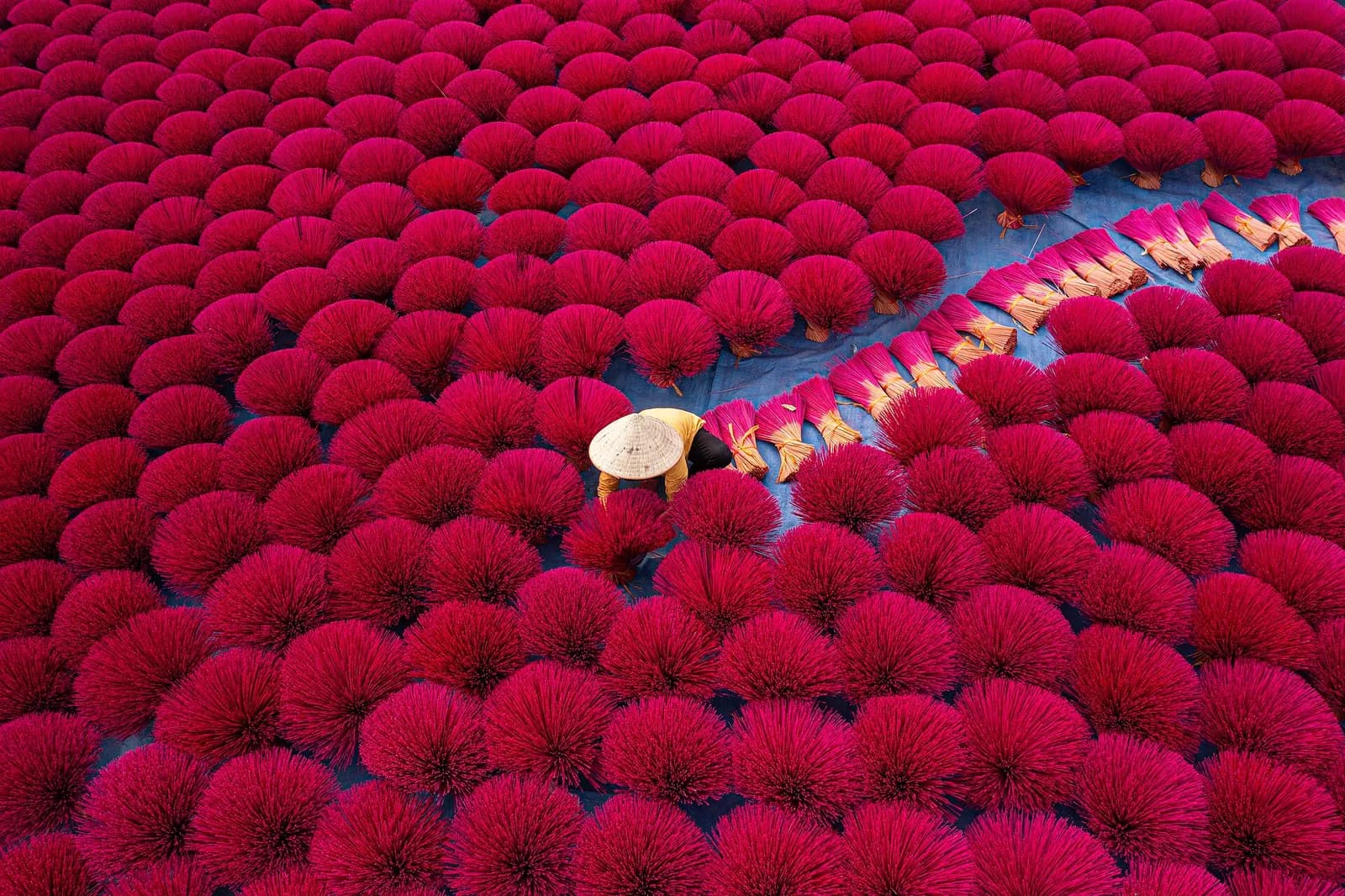
Stage one: raw agarbatti. A paste of charcoal powder, wood powder or sawdust and a binder (jigat or joss powder, made from the bark of the Litsea glutinosa tree, or a ready "premix") is rolled or extruded onto thin bamboo sticks. The sticks are dried in the sun or a dryer. The product — grey, black or white unscented sticks — is sold by the kilogram to perfumers and brands. This is high-volume work with small margins, and it is where most of the employment in the trade sits, much of it home-based and done by women.
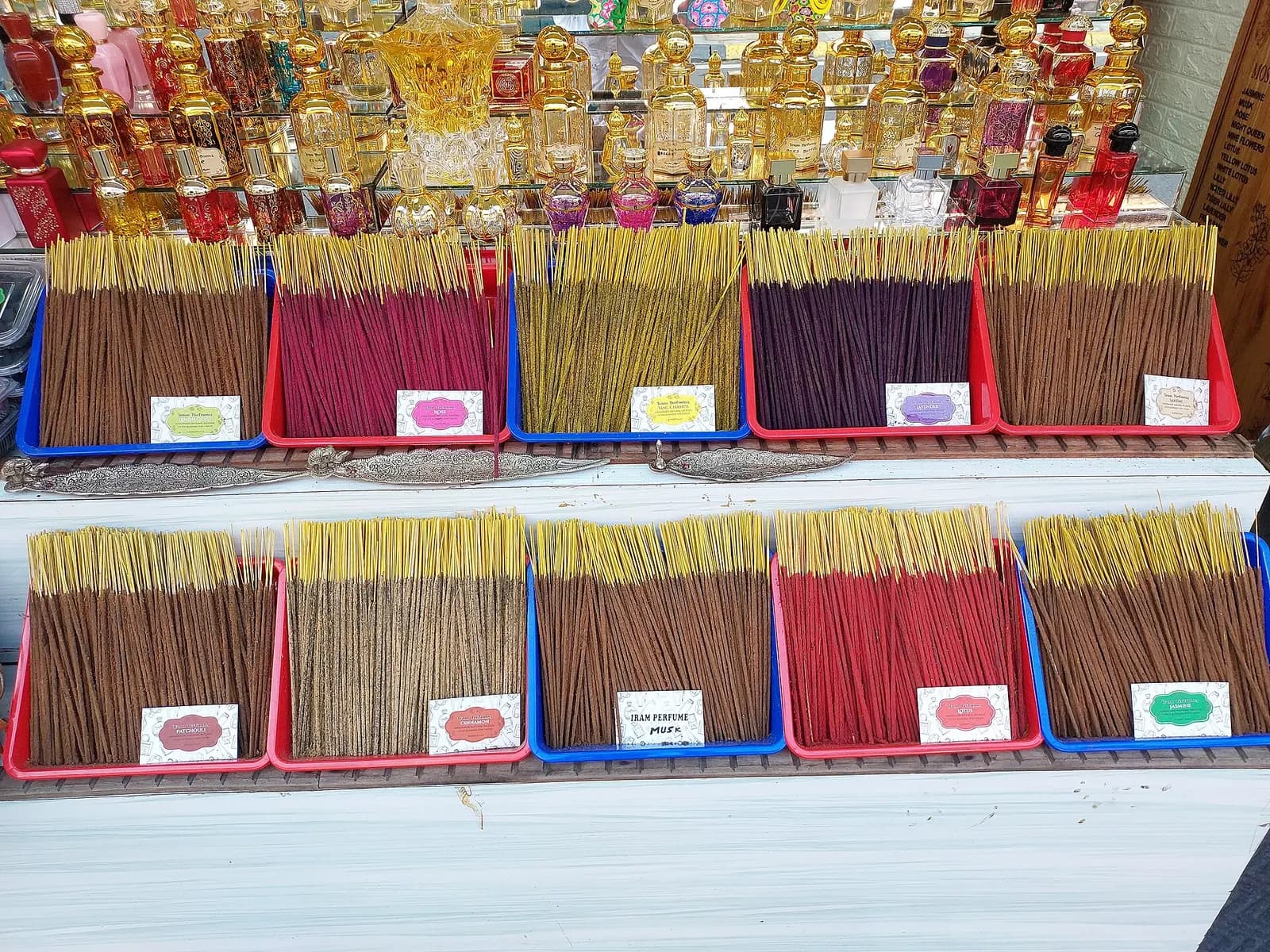
Stage two: perfuming and packing. Raw sticks are dipped in or sprayed with a fragrance compound diluted in a carrier solvent, dried again, and packed in boxes, pouches or cones. Brands and wholesale perfumers do this. They decide the fragrance, the price and the label, and that is where most of the value is added.
Masala agarbatti is different. The fragrance is mixed into the paste itself (resins, herbs, flowers and oils), so there is no dipping. It is slower to make, sells at a higher price and is popular in south India and for export. Dhoop sticks and cones use no bamboo at all.
The industry is large. The government puts it at about ₹8,000 crore a year, with exports of about ₹1,200 crore to more than 150 countries, and calls India the world's largest producer and exporter of agarbattis. The scale is the opportunity and the problem: hundreds of local brands compete for shelf space in every district.
Which stage should you start at? If you have little capital and no sales network, rolling raw agarbatti on job work for an established perfumer is the lowest-risk start: the perfumer often supplies sticks and premix and pays a making charge. If you have a sales channel — a chain of kirana shops, temples, a pooja-store distributor or an online audience — start with a small scented range from day one, even if you buy raw sticks from others.
Raw materials and what they cost
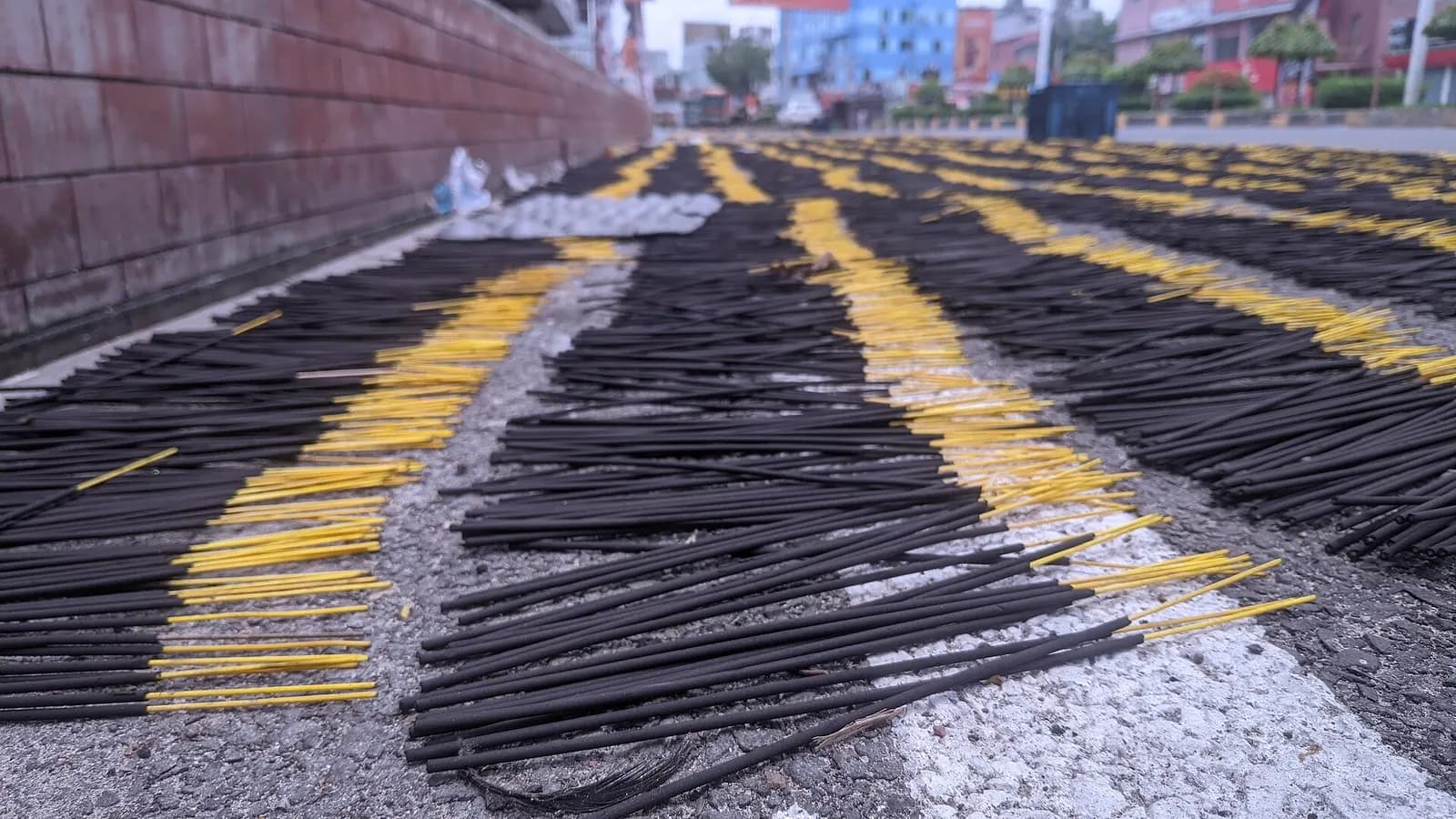
A raw agarbatti is roughly one-third bamboo stick and two-thirds dried paste by weight, though that varies with stick thickness and how heavily the machine coats it. KVIC's guidelines for its agarbatti pilots note that charcoal, sawdust, joss powder and bamboo sticks are about 20% of the cost of a finished agarbatti — fragrance, packing and selling make up the rest — but for a raw-stick maker they are almost the whole cost.
| Input | What it does | Typical HSN | GST |
|---|---|---|---|
| Bamboo sticks (round, 8–12 inch) | Core of the stick | Check supplier invoice | Check supplier invoice |
| Charcoal powder | Burning base, dark colour | 4402 | Nil |
| Sawdust / wood powder | Filler and burning base | 4401 | 5% |
| Jigat / joss powder or premix | Binder that holds the paste on the stick | Check supplier invoice | Check supplier invoice |
| Fragrance compounds | Scent for dipped agarbatti | 3302 | 18% |
| Essential oils | Premium and masala agarbatti | 3301 | 18% |
| Finished agarbatti, dhoop, sambrani | What you sell | 3307 41 00 | 5% |
Rates are from Notifications 9/2025 and 10/2025-Central Tax (Rate), effective 22 September 2025. Bamboo sticks and premixes are sold under different headings by different suppliers, so read the HSN on each invoice.
Prices. As MSMETOOLS estimates based on IndiaMART and other B2B listings checked in October 2026: ready bamboo sticks ₹110–₹130 a kilogram (cheaper lots exist, often thicker or uneven); black premix powder ₹15–₹25 a kilogram and white premix ₹35–₹50; jigat powder anywhere from ₹40 to over ₹200 a kilogram depending on grade. Raw agarbatti itself was listed at ₹55–₹135 a kilogram, typically ₹65–₹100 for plain black sticks. Prices move with bamboo supply from the north-east and with festival demand, so buy a month's stock at a time and test every new lot of binder on a few kilograms before a full batch.
Bamboo is the weak link. The Bambusa tulda species, mostly from the north-east and the east coast, is preferred for agarbatti sticks. Domestic stick-making capacity has grown since the 2020 duty increase, but supply is still uneven, and sticks that are crooked, too thick or too dry cause machine jams and paste that peels. Ask for a sample bundle, run it through your machine, and keep two suppliers.
Machines and equipment: what they cost
Agarbatti making ranges from hand-rolling on a wooden board to high-speed automatic machines. The costs below are MSMETOOLS estimates for 2026, based on IndiaMART listings in October 2026: automatic machines were listed at about ₹50,000–₹1 lakh for 200–400 strokes a minute and 10–25 kg an hour (a seller figure that you should test), 25 kg powder mixers at ₹18,000–₹60,000, and basic dryers at ₹15,000–₹30,000. KVIC's 2020 pilot guidelines budgeted ₹20,000 per pedal-operated machine.
| Equipment | Use | Estimated cost |
|---|---|---|
| Hand-rolling board and trays | Traditional and masala agarbatti at home | Under ₹2,000 |
| Pedal-operated (manual) machine | Raw agarbatti, one operator, no power needed | ₹15,000 – ₹30,000 |
| Automatic agarbatti machine (single head) | Raw agarbatti in volume, 1–2 HP | ₹50,000 – ₹1,10,000 |
| Powder mixer / kneader (25 kg batch) | Mixing premix, binder and water into paste | ₹18,000 – ₹60,000 |
| Agarbatti dryer (tray or cabinet) | Drying in monsoon and humid regions | ₹15,000 – ₹30,000 |
| Dipping trays, drying racks, sealing machine, weighing scale | Perfuming and packing | ₹15,000 – ₹50,000 |
| Dhoop cone or dhoop stick machine | Adds a second product line | ₹40,000 – ₹3,00,000 |
Seller output figures assume perfect sticks, perfect paste and a full shift. Plan on about half the listed hourly capacity for the first few months, and ask for a demonstration with your own sticks and premix before you pay. Check that a technician and spare parts (cams, cutters, feeder rollers) are available within a day's travel. Automatic machines need steady single-phase power; a voltage stabiliser is a cheap insurance.
Import curbs on agarbatti and bamboo sticks
Two policy changes reshaped the trade and still protect domestic makers.
August 2019 — agarbatti made "restricted". At KVIC's request, the Ministry of Commerce moved agarbatti from "free" to "restricted" in the import policy on 31 August 2019. Importing raw or finished agarbatti now needs an authorisation from DGFT. KVIC said at the time that raw agarbatti imports had grown from about 2% of consumption in 2009 to 80% in 2019, after customs duty was cut from 30% to 10% in 2011, and that roughly a quarter of Indian units had closed.
June 2020 — duty on round bamboo sticks raised. Once finished imports were blocked, traders switched to importing round bamboo sticks; KVIC put those imports at ₹370 crore in 2019-20, up from ₹210 crore a year earlier. In June 2020 the Finance Ministry raised basic customs duty on bamboo sticks from 10% to 25%. We found no later change to this rate as of October 2026, but check the current tariff on the CBIC site or with a customs broker before you import.
What it means for you. Domestic raw agarbatti units have a protected market, and new bamboo stick units have come up, notably in Assam. Small units rarely import directly; they buy sticks from traders, and the duty is already in that price.
Policy changes that shaped the agarbatti trade
2011
Customs duty on raw agarbatti cut from 30% to 10%; imports surge
31 Aug 2019
Agarbatti moved to the restricted import list
June 2020
Duty on round bamboo sticks raised from 10% to 25%
30 Jul 2020
Agarbatti programme approved under Gramodyog Vikas Yojana
22 Sep 2025
New GST rate schedules: agarbatti 5%, perfume compounds 18%
26 Dec 2025
BIS releases IS 19412:2025 for agarbatti
GST on agarbatti — and when perfume causes an inverted duty
Agarbatti, lobhan, dhoop batti, dhoop and sambrani under tariff item 3307 41 00 sit in Schedule I of Notification 9/2025-Central Tax (Rate), so they carry 5% GST from 22 September 2025. Be careful with the wording: the same tariff item also appears in Schedule II at 18% for "odoriferous preparations which operate by burning" other than those named products. Incense cones, sticks and dhoop sold under those names are at 5%; a product that is not one of them — some novelty or room-fragrance products that burn — may be at 18%. Invoice under the right description.
The inverted duty on scented sticks. Raw agarbatti inputs are lightly taxed — charcoal is Nil and sawdust 5% — so a raw-stick maker usually pays more GST on sales than on purchases. A perfumer is different. Fragrance compounds and essential oils carry 18%, and on heavily scented or premium sticks the GST paid on perfume can exceed the 5% charged on the finished product. Section 54(3) of the CGST Act lets you claim a refund of unutilised input tax credit built up because inputs are taxed at a higher rate than output. The refund counts credit on inputs only, not on machines or services, so file it only if the credit balance keeps growing month after month.
The BIS standard for agarbatti (IS 19412:2025)
On 26 December 2025, National Consumer Day, the consumer affairs minister released IS 19412:2025 — Incense Sticks (Agarbatti) — Specification, the first Indian Standard dedicated to agarbatti. It was drafted by BIS's Fragrance and Flavour Sectional Committee with CSIR laboratories, the Fragrance and Flavour Development Centre at Kannauj and the industry association.
What it does, according to the government's release:
- Bans certain insecticides in agarbatti — allethrin, permethrin, cypermethrin, deltamethrin and fipronil. Some low-cost "mosquito agarbattis" have used these; if you make or sell such products, stop.
- Bans certain synthetic fragrance intermediates — benzyl cyanide, ethyl acrylate and diphenylamine. Ask every fragrance supplier for a written declaration that their compounds contain none of these.
- Classifies agarbatti as machine-made, hand-made or traditional masala, and sets requirements for raw materials, burning quality, fragrance performance and chemical parameters.
Is it compulsory? The release says conforming products are "eligible" to carry the BIS Standard Mark. We found no quality control order making certification mandatory as of October 2026, so a small unit can sell without it. It is still worth reading: large retailers, modern-trade chains and export buyers increasingly ask suppliers to meet the standard, and a banned-substance problem is a reputational risk even without a licence requirement. If you want the mark, see our BIS certification guide for the application process and the fee concessions for micro and small units.
Setup cost: home unit vs small workshop
Setup cost estimates — home unit vs small workshop
| Item | Home unit (2 pedal machines, raw sticks) | Small workshop (2–3 automatic machines + perfuming) |
|---|---|---|
Machines | ₹30,000 – ₹50,000 | ₹1,50,000 – ₹3,00,000 |
Mixer, dryer, racks, scale, sealer | ₹3,000 – ₹10,000 | ₹60,000 – ₹1,20,000 |
Electrical work, ventilation, fire extinguishers | ₹1,000 – ₹3,000 | ₹30,000 – ₹80,000 |
First stock: sticks, premix, binder, fragrance, boxes | ₹5,000 – ₹10,000 | ₹80,000 – ₹1,50,000 |
Registrations, labels, branding | ₹1,000 – ₹3,000 | ₹20,000 – ₹50,000 |
Working capital (about two months) | ₹0 – ₹5,000 | ₹60,000 – ₹1,00,000 |
Estimated total | ₹40,000 – ₹81,000 | ₹4,00,000 – ₹8,00,000 |
Machines
- Home unit (2 pedal machines, raw sticks)
₹30,000 – ₹50,000
- Small workshop (2–3 automatic machines + perfuming)
₹1,50,000 – ₹3,00,000
Mixer, dryer, racks, scale, sealer
- Home unit (2 pedal machines, raw sticks)
₹3,000 – ₹10,000
- Small workshop (2–3 automatic machines + perfuming)
₹60,000 – ₹1,20,000
Electrical work, ventilation, fire extinguishers
- Home unit (2 pedal machines, raw sticks)
₹1,000 – ₹3,000
- Small workshop (2–3 automatic machines + perfuming)
₹30,000 – ₹80,000
First stock: sticks, premix, binder, fragrance, boxes
- Home unit (2 pedal machines, raw sticks)
₹5,000 – ₹10,000
- Small workshop (2–3 automatic machines + perfuming)
₹80,000 – ₹1,50,000
Registrations, labels, branding
- Home unit (2 pedal machines, raw sticks)
₹1,000 – ₹3,000
- Small workshop (2–3 automatic machines + perfuming)
₹20,000 – ₹50,000
Working capital (about two months)
- Home unit (2 pedal machines, raw sticks)
₹0 – ₹5,000
- Small workshop (2–3 automatic machines + perfuming)
₹60,000 – ₹1,00,000
Estimated total
- Home unit (2 pedal machines, raw sticks)
₹40,000 – ₹81,000
- Small workshop (2–3 automatic machines + perfuming)
₹4,00,000 – ₹8,00,000
A workshop needs 400–800 sq ft: a mixing corner, the machines, a drying area (racks, or the roof in dry months), a separate ventilated room for dipping, and a dry store. Perfume solvents are flammable, so keep dipping away from electrical panels and naked flames, and store fragrance drums in a closed, cool place.
Worked example: monthly profit for a two-machine unit
All figures are our illustrative estimates for a rented 600 sq ft workshop in a tier-2 or tier-3 town, with two automatic machines and a small dipping and packing line.
Assumptions. The two machines produce 120 kg of raw agarbatti a day between them (about half the seller-rated speed) for 25 days, or 3,000 kg a month. Material cost is ₹55 a kilogram of raw stick: about 0.33 kg of bamboo sticks at ₹120 and 0.67 kg of premix and binder at ₹22, plus wastage. The unit sells 2,000 kg raw to perfumers at ₹80 a kilogram, and dips and packs the other 1,000 kg itself, selling it in 1 kg loose packs to pooja stores and distributors at ₹180 a kilogram. Perfume and carrier cost ₹60 a kilogram and packing ₹8. All prices are before GST.
| Monthly line | Amount (₹) |
|---|---|
| Sales: raw agarbatti 2,000 kg × ₹80 | 1,60,000 |
| Sales: scented agarbatti 1,000 kg × ₹180 | 1,80,000 |
| Materials: raw 3,000 kg × ₹55 | 1,65,000 |
| Perfume and packing: 1,000 kg × ₹68 | 68,000 |
| Contribution | 1,07,000 |
| Rent | 12,000 |
| Three workers (two operators, one dipping and packing) | 36,000 |
| Power | 6,000 |
| Transport, samples, marketing | 10,000 |
| Loan EMI (about ₹3 lakh over five years) | 6,500 |
| Sundries and repairs | 4,500 |
| Profit before tax | 32,000 |
Raw sticks contribute ₹25 a kilogram; scented sticks contribute ₹57. Fixed costs are ₹75,000 a month. A unit selling only raw agarbatti would need to sell 3,000 kg a month at this margin just to break even — its entire output — which is why raw-only units survive on family labour and job work. Moving 500 kg more from raw to scented adds about ₹16,000 a month for little extra fixed cost. Test your own numbers in the break-even calculator.
The GST side of the same month. Output GST at 5% on ₹3.4 lakh of sales is ₹17,000. Input GST on ₹60,000 of fragrance at 18% alone is ₹10,800, and the scented line's output tax is only ₹9,000. Across the whole business, credit on raw inputs keeps the position close to balanced; a unit that sells only scented sticks would build up credit and should consider the refund route.
What moves profit most. Bamboo stick quality: a bad lot can cost 5–10% of output in breakage and peeling. Drying: in the monsoon, sticks that are packed damp grow fungus, and returns wipe out a month's margin — a cabinet dryer pays for itself in one season. Credit: perfumers and distributors often pay in 30–60 days; if you sell to a registered business and hold a Udyam certificate, the MSMED Act caps the agreed credit period at 45 days.
KVIC, Gramodyog Vikas Yojana and PMEGP support
Agarbatti is a recognised village industry, which opens three routes to support.
Gramodyog Vikas Yojana (GVY) — machines and training. On 30 July 2020 the MSME ministry approved an agarbatti programme under GVY, launched as pilots in which clusters of artisans received automatic agarbatti machines and powder mixing machines, with KVIC tying them to established manufacturers who supply raw material and buy back output. KVIC's operational guidelines for the pilots provide 10-day skill training in batches of up to 20, selection by a state-level committee, preference of at least 50% for SC/ST, women and BPL candidates, and pedal or automatic machines for artisans who complete training. The programme continues: a Lok Sabha reply in March this year showed 50 GVY agarbatti training programmes nationwide in 2021-22, 23 in 2022-23, 22 in 2023-24 and 24 in 2024-25, and KVIC still hands out agarbatti machines at its distribution camps this year. It is not an on-demand scheme. Contact your KVIC state office or state Khadi and Village Industries Board and ask when the next agarbatti training batch is planned.
PMEGP — your own unit. The Prime Minister's Employment Generation Programme, run by KVIC with banks, funds new manufacturing units up to ₹50 lakh. The margin-money subsidy is 15% of project cost for general-category applicants in urban areas and 25% in rural areas, rising to 25% and 35% for special categories (SC/ST, OBC, minorities, women, ex-servicemen, persons with disabilities, NER and hill areas). You put in 10% (5% for special categories). For a ₹6 lakh agarbatti workshop, a woman applicant in a rural area would contribute about ₹30,000 and receive margin money of about ₹2.1 lakh, held for 3 years before it is adjusted against the loan. See our PMEGP loan guide.
Mudra. For a home unit or working capital, Mudra loans go up to ₹50,000 under Shishu and ₹5 lakh under Kishore, without collateral. A home unit buying two pedal machines and stock fits within Shishu. Our KVIC schemes guide explains the other village-industry support, including SFURTI clusters.
Registrations and compliance
Registrations for an agarbatti unit
0/7GST registration and composition. The intra-state threshold for goods is ₹40 lakh in most states, but any sale to another state and most marketplace selling need registration from the first invoice. Raw agarbatti buyers and distributors usually want a GST invoice. A small unit selling only within the state to retailers can consider the composition scheme at 1% of turnover (limit ₹1.5 crore), but you then cannot sell inter-state, cannot claim credit, and your registered buyers cannot claim credit on your bills. Our composition scheme guide has the conditions; check numbers with the GST calculator.
No FSSAI licence is needed — agarbatti is not food. Packed agarbatti is a "pre-packaged commodity" under the Legal Metrology rules, and since 1 January 2024 every retail pack must show unit sale price and the month and year of manufacture alongside MRP. Register on Udyam first; it takes minutes and many of the other steps ask for it.
Mistakes that sink agarbatti units
Buying machines on seller output figures. A machine rated at 25 kg an hour rarely does that on mixed-quality sticks. Budget at half, and add a second machine only when buyers are asking for more.
Selling only raw sticks without a buyer contract. Raw agarbatti is bought by a small number of perfumers in each region, and they can drop prices or delay payment. Get a written rate and payment terms, or keep a scented line of your own.
Packing damp sticks. Fungus and a musty smell are the most common reason for returns, especially from June to September. Dry properly, and check moisture by snapping a few sticks from each batch.
Ignoring the fragrance chemistry. Cheap compounds that include a banned intermediate, or insecticides added to "mosquito" sticks, are now outside the BIS standard. Buy fragrance from suppliers who give a composition declaration.
Copying a big brand's packaging. Look-alike boxes and names invite a trademark notice. Build your own name and register it.
Official links
- Notification 9/2025-CT(Rate) — goods rate schedulesAgarbatti 3307 41 00 at 5% (Sch. I S.No. 250)
- PIB — BIS standard IS 19412:2025 for agarbattiBanned insecticides and fragrance chemicals
- KVIC — operational guidelines for agarbatti pilots under GVY
- PMEGP e-portal (KVIC)
- Udyam Registration portal
- GST portalRegistration and refund applications
What to do next
Roll or buy a few kilograms of raw sticks, dip a dozen trial fragrances, and take samples to five shops before you spend on machines. Build your numbers in the startup cost calculator and the business plan generator, register on Udyam, and apply under PMEGP or for a Mudra loan. If you are comparing small manufacturing ideas, our candle making business guide covers a similar festival-driven trade with its own inverted-duty problem.
This is general information, not legal or tax advice — confirm on the official source or with a professional.
Frequently asked questions
Our estimate is ₹30,000–₹60,000 for a home unit with one or two pedal machines and a mixer, and ₹4–8 lakh for a small workshop with two or three automatic machines, a powder mixer, a dryer, a dipping and packing area and two months of raw material. These are MSMETOOLS estimates based on October 2026 B2B listings; get written quotes before you borrow.
Agarbatti, lobhan, dhoop batti, dhoop and sambrani under HSN 3307 41 00 carry 5% GST under Notification 9/2025-Central Tax (Rate), effective 22 September 2025. Other incense-type products that work by burning but are not in that list fall in the 18% schedule. Perfume compounds you buy carry 18%.
Raw agarbatti is a thin-margin job-work trade — often ₹15–₹25 a kilogram over material cost in our estimate. The money is in perfuming, packing and selling under your own name. In our worked example, a two-machine unit that sells two-thirds of its output raw and one-third scented earns about ₹32,000 a month before tax; shifting more output to scented packs raises that quickly.
Yes. IS 19412:2025, Incense Sticks (Agarbatti) — Specification, was released on 26 December 2025. It bans certain insecticides and synthetic fragrance chemicals and sets requirements for raw materials, burning and fragrance. Certification is voluntary — we found no quality control order making it compulsory as of October 2026 — but certified sticks can carry the BIS Standard Mark.
Raw and finished agarbatti were moved to the 'restricted' import list on 31 August 2019, so you need an import authorisation from DGFT. Round bamboo sticks can be imported, but basic customs duty was raised to 25% in June 2020. Most small units buy Indian or imported sticks from traders rather than importing themselves.
KVIC distributes pedal-operated and automatic agarbatti machines to selected artisans and groups under Gramodyog Vikas Yojana, mostly through training camps run by its state offices. It is not an open, on-demand scheme: selection is by a state committee and depends on that year's targets. Individuals setting up their own unit usually apply under PMEGP instead.
Sources & verification
Figures on this page were checked against the sources below when it was last reviewed on 9 October 2026. Each rate and limit is stored once with its own official source and review date, and official update channels are monitored daily so changes are picked up. How we verify
- 1.Notification No. 9/2025-Central Tax (Rate), 17 September 2025 (Gazette of India) — Ministry of Finance (Department of Revenue) · accessed 9 October 2026
- 2.Notification No. 10/2025-Central Tax (Rate), 17 September 2025 (Gazette of India) — Ministry of Finance (Department of Revenue) · accessed 9 October 2026
- 3.Union Minister releases new BIS standard for incense sticks (26 December 2025) — PIB (Ministry of Consumer Affairs, Food & Public Distribution) · accessed 9 October 2026
- 4.Enhanced import duty on bamboo sticks to boost agarbatti and bamboo industries: KVIC (11 June 2020) — PIB (Ministry of MSME) · accessed 9 October 2026
- 5.Programme for agarbatti artisans under Gramodyog Vikas Yojana (31 July 2020) — PIB (Ministry of MSME) · accessed 9 October 2026
- 6.KVIC achieves significant gains in implementing Gramodyog Vikas Yojana (Lok Sabha reply, 12 March 2026) — PIB (Ministry of MSME) · accessed 9 October 2026
- 7.Operational guidelines for pilot projects of agarbatti industry under GVY — Khadi and Village Industries Commission · accessed 9 October 2026
- 8.KVIC distributes machines and toolkits in Gandhinagar (25 March 2026) — PIB (Ministry of MSME) · accessed 9 October 2026
- 9.Classification of Sectors into Red, Orange, Green, White and Blue Categories (January 2025) — Central Pollution Control Board (copy hosted by Pollution Control Board, Assam) · accessed 9 October 2026
- 10.Raw incense stick, agarbatti machine, mixer and dryer listings — IndiaMART · accessed 9 October 2026
MSMETOOLS is an independent platform and is not affiliated with any government agency, ministry or department.
Tools for this
Break Even Calculator
Find your break even point and units.
Startup Cost Calculator
Estimate how much capital you need to launch.
GST Calculator (India)
Calculate GST for your sales and purchases with current rates.
Profit Margin Calculator
Calculate profit, markup and margin for your products or services.
Related guides
 Candle Making Business in India 2026: Cost, GST & ProfitRead guide
 Paper Bag Making Business 2026: Cost, Machines, GST & ProfitRead guide
 Masala Business in India 2026: FSSAI, GST, Machines & ProfitRead guide
 How to Start a Jewellery Business in 2026: BIS, GST & PlanRead guide
Official links open the government site in a new tab.