 Starting & growing a business
Bakery Business Plan (2026): Setup Cost, FSSAI, GST and a Worked Monthly P&L
Bakery business plan for India in 2026: equipment and setup cost table, FSSAI registration, GST after GST 2.0 (cakes 5%, bread nil), funding and break-even.
 Edited by Sumeet YadavFounder & editor, MSMETOOLS · fact-checked against official sources
Contents (10)
- 1. Who a bakery suits — and which format to pick
- 2. Product mix and pricing
- 3. Bakery equipment and setup cost
- 4. FSSAI and other licences for a bakery
- 5. GST on bakery items after GST 2.0
- 6. Worked example: monthly P&L and break-even
- 7. Funding a bakery: PMEGP, PMFME, Mudra and Stand-Up India
- 8. Bakery business plan template
- 9. Mistakes that sink new bakeries
- 10. What to do next
A bakery looks simple on paper — flour, butter, sugar, an oven — but it lives or dies on three numbers: how much you sell each day, how much of it you throw away, and what your oven and staff cost when the shop is empty. This bakery business plan is written for first-time bakers in India, from a home baker selling cakes on Instagram to a neighbourhood bakery with its own oven. It covers who it suits, an estimated equipment and setup cost table with its basis, FSSAI and other licences, GST on bakery items after GST 2.0, funding, a worked monthly profit and loss, break-even and a fill-in plan template. Rules were checked against FSSAI, GST Council and PIB sources in October 2026.
Quick answer
A bakery business plan sets out your format (home, retail bakery or bakery-café), your product mix, setup costs, licences and a daily sales target that covers fixed costs. A small retail bakery with its own oven costs roughly ₹6–17 lakh to open (our estimate). Since 22 September 2025, cakes and pastries carry 5% GST and plain bread is Nil.
FSSAI basic registration covers turnover up to ₹1.5 crore from 1 April 2026, at ₹100/year
GST: cakes, pastries, biscuits and rusks 5%; bread, pizza bread, khakhra and roti Nil
Funding: PMEGP for manufacturing projects up to ₹50 lakh; Mudra up to ₹10 lakh without collateral
Worked example: a retail bakery breaks even at about 43 bills a day
Who a bakery suits — and which format to pick
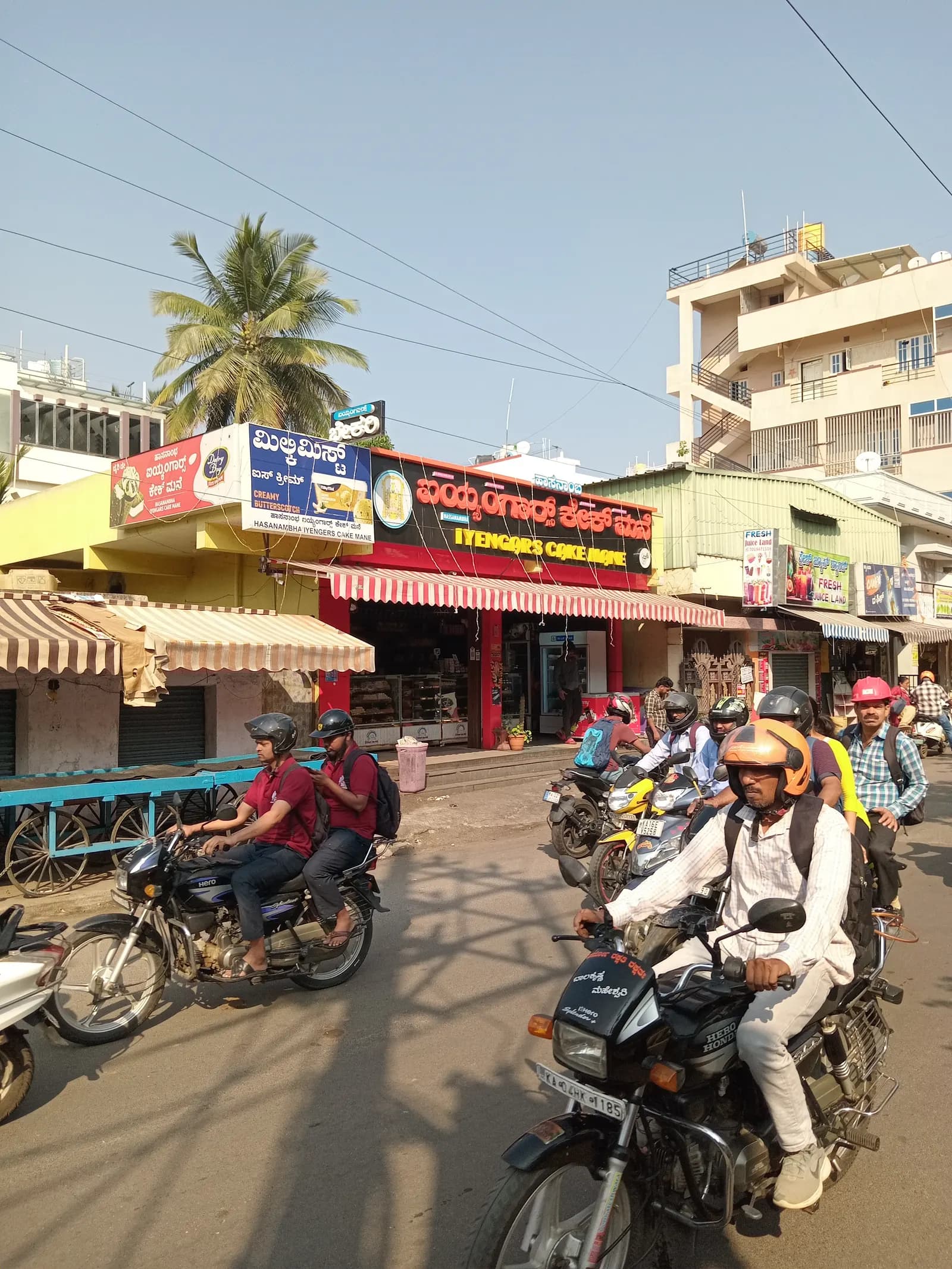
A bakery suits you if you can bake consistently (or will hire a baker who can), can work early mornings, and have a location with steady footfall: near schools, offices, a market or a residential cluster. Breads and buns sell daily; cakes sell on birthdays and festivals; cookies, rusks and puffs fill the gaps.
Decide the format first, because it changes your cost, licence and tax picture:
- Home bakery — custom cakes, brownies, cookies and festive hampers sold through WhatsApp, Instagram and delivery apps. Low cost, high margin per order, but limited by your own oven and hours. You still need FSSAI registration; your home kitchen is the registered premises.
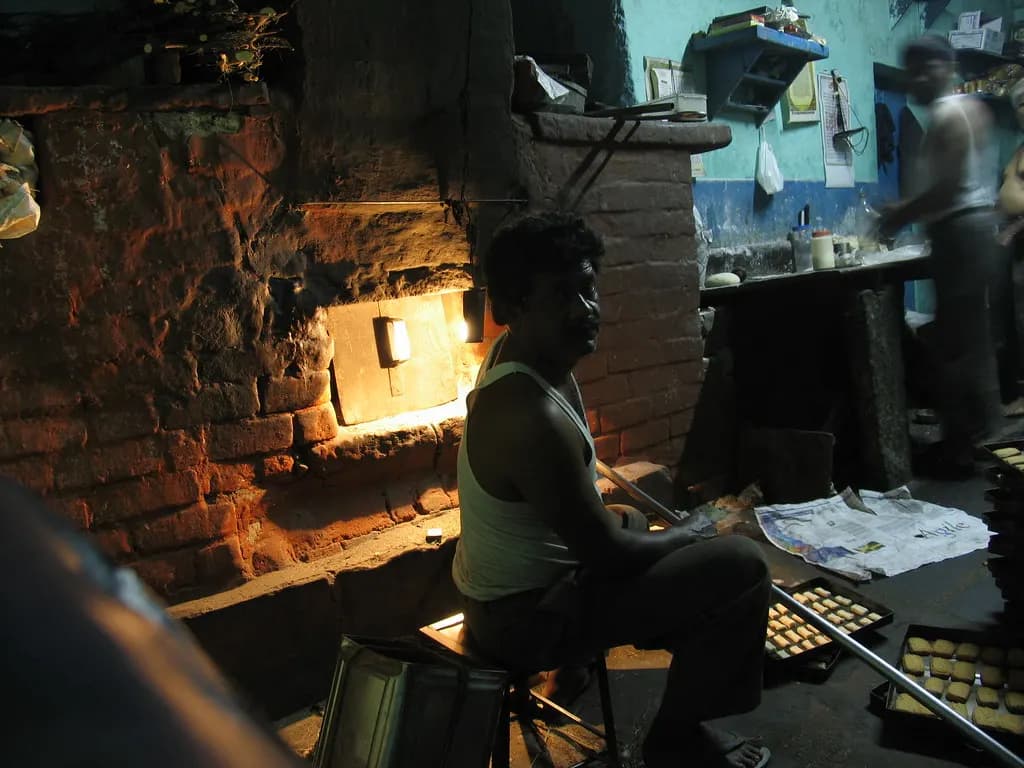
- Retail bakery with in-house baking (300–500 sq ft) — breads, pav, buns, puffs, pastries and made-to-order cakes sold over the counter. This is the format in our worked plan.
- Bakery-café — the retail bakery plus seating and coffee. Higher ticket, but the dine-in part is a restaurant service for GST, and rent and staff costs rise.
- Supply bakery — rusks, toast, pav or cookies supplied to kirana stores, tea stalls and hotels. Volume business with thin margins and credit to collect.
Product mix and pricing
Plan your menu in three groups, and cost each item before you print a price:
- Daily staples (bread, pav, buns, rusks): low margin, high volume, bring people in every morning. Plain bread carries no GST.
- Counter items (puffs, pastries, cookies, muffins, brownies): better margins, sold by the piece. Unsold stock is your biggest leak — bake in smaller batches twice a day rather than once.
- Made-to-order cakes (birthday, anniversary, theme and eggless): the highest margin and the lowest wastage, because you bake after taking an advance.
Price each item from its recipe: cost every ingredient by weight, add packaging (boxes, butter paper, cake boards), then set a price that keeps ingredient and packaging cost around 35–40% of the selling price. The food cost calculator does this per recipe. Compare your final prices with the three nearest bakeries — most customers won't pay a big premium for everyday bread, but will for a better cake.
Bakery equipment and setup cost
The table below is a MSMETOOLS estimate for a 300–500 sq ft retail bakery with its own baking area in a tier-2 city in 2026. The oven and mixer lines are based on current IndiaMART listings: a 2-deck, 4-tray deck oven is listed at roughly ₹75,000 to ₹1.5 lakh, and 20-litre planetary mixers at about ₹28,000 to ₹80,000. Deposits and interiors vary most by city — replace each line with real quotes.
| Setup item | Estimated range | Worked plan | Basis / notes |
|---|---|---|---|
| Shop deposit and advance rent | ₹1,00,000 – ₹3,00,000 | ₹1,80,000 | 3–6 months' rent |
| Interiors: counter, shelving, flooring, lighting, wiring | ₹1,00,000 – ₹3,00,000 | ₹1,80,000 | Washable surfaces in the baking area |
| Deck oven (2 deck, 4 tray, gas or electric) | ₹60,000 – ₹1,50,000 | ₹90,000 | IndiaMART listings |
| Planetary mixer (20 litre) | ₹28,000 – ₹80,000 | ₹45,000 | IndiaMART listings |
| Work tables, racks, trays, moulds, proofer, scales | ₹50,000 – ₹1,50,000 | ₹80,000 | Stainless steel tables last longest |
| Refrigeration: deep freezer, fridge, cake display chiller | ₹80,000 – ₹2,00,000 | ₹1,20,000 | Display chiller sells cakes |
| Commercial LPG connection, exhaust, fire extinguishers | ₹20,000 – ₹60,000 | ₹35,000 | Ask your fire department what applies |
| Opening ingredients and packaging | ₹40,000 – ₹1,00,000 | ₹60,000 | Flour, butter, cream, boxes |
| FSSAI, licences, billing system, signboard, launch | ₹25,000 – ₹75,000 | ₹50,000 | |
| Working capital (about 2 months of fixed costs) | ₹1,00,000 – ₹2,50,000 | ₹2,00,000 | Slow first months, festival stock |
| Total | ₹6,00,000 – ₹17,00,000 | ₹10,40,000 |
A home bakery needs far less: an OTG or small convection oven, a stand or hand mixer, moulds, a refrigerator you may already own, packaging and FSSAI registration — roughly ₹30,000 to ₹1.5 lakh by our estimate. Build your own list in the startup cost calculator.
FSSAI and other licences for a bakery
A bakery is a food manufacturer, so FSSAI comes first. From 1 April 2026, FSSAI's order of 13 March 2026 categorises food businesses only by turnover, superseding the older capacity-based criteria:
FSSAI category for a bakery (from 1 April 2026)
| Annual turnover | What you need | Fee | Applied on |
|---|---|---|---|
Up to ₹1.5 crore | Basic registration (Form A) | ₹100/year | FoSCoS portal |
Above ₹1.5 crore up to ₹50 crore | State licence (Form B) | ₹2,000 – ₹5,000/year | FoSCoS portal |
Above ₹50 crore | Central licence | ₹7,500/year | FoSCoS portal |
Up to ₹1.5 crore
- What you need
Basic registration (Form A)
- Fee
₹100/year
- Applied on
FoSCoS portal
Above ₹1.5 crore up to ₹50 crore
- What you need
State licence (Form B)
- Fee
₹2,000 – ₹5,000/year
- Applied on
FoSCoS portal
Above ₹50 crore
- What you need
Central licence
- Fee
₹7,500/year
- Applied on
FoSCoS portal
Registrations and licences now have perpetual validity — you no longer renew — but the annual fee continues and can be paid for several years at once. FSSAI's FAQs make clear that the bigger registration limit doesn't relax hygiene, safety or testing duties. Our FSSAI registration guide walks through the FoSCoS steps and documents.
Beyond FSSAI, a retail bakery usually needs:
- Trade or health trade licence from the municipal corporation, municipality or panchayat.
- Shops and Establishments registration or intimation with the state labour department.
- Fire safety clearance where your local rules require it — ovens and LPG cylinders are what inspectors look at.
- Packaged products (cookies, rusks, cakes in sealed boxes) must carry FSSAI labelling — product name, ingredients, veg/non-veg mark, FSSAI number, date and best-before — plus Legal Metrology declarations such as MRP and net quantity.
- GST registration once you cross the threshold (next section), and free Udyam registration to access MSME benefits.
GST on bakery items after GST 2.0
GST 2.0 took effect on 22 September 2025 and cut bakery rates sharply. Under Notification 9/2025-Central Tax (Rate), HSN 1905 — pastry, cakes, biscuits and other bakers' wares — and rusks and toasted bread now sit in the 5% schedule.
| What you sell | GST from 22 Sep 2025 | Before |
|---|---|---|
| Cakes, pastries, biscuits, cookies, muffins (HSN 1905) | 5% | 18% |
| Rusks and toasted bread (1905 40 00) | 5% | Higher slab |
| Plain bread, pizza bread, khakhra, chapati, roti | Nil | Bread was already exempt |
| Food served for eating at tables in your bakery-café | 5% without input tax credit (restaurant service) | Same |
When to register. A bakery that only sells goods registers once turnover crosses ₹40 lakh in most states (₹20 lakh in some). If you also serve dine-in food — a service — the ₹20 lakh services limit can apply, so check your mix with a CA. Exempt bread sales count towards aggregate turnover even though no tax is charged.
Composition option. A small bakery-manufacturer with turnover up to ₹1.5 crore can opt for the composition scheme and pay 1% of turnover on goods, with simpler returns but no input tax credit and no tax-charged invoices. It works best if most of your customers are consumers, not businesses that want credit. See our GST registration guide.
Worked example: monthly P&L and break-even
Here's a sample plan for "Morning Crust Bakery", a 400 sq ft retail bakery with an in-house deck oven in a tier-2 city, open 30 days a month. All figures are illustrative estimates.
Revenue assumption: 50 bills a day × ₹220 average bill = ₹11,000 a day, or ₹3,30,000 a month (about ₹39.6 lakh a year). The average blends ₹40 pav and bread purchases with ₹600–₹1,200 cake orders.
Variable cost: ingredients and packaging at about 42% of sales plus 3% wastage and unsold stock = 45%, or ₹99 per ₹220 bill. Contribution per bill = ₹121 (55%).
| Fixed monthly cost | Amount (estimate) |
|---|---|
| Rent (400 sq ft) | ₹30,000 |
| Baker, helper and counter staff | ₹46,000 |
| Electricity and commercial LPG | ₹22,000 |
| Repairs and maintenance reserve | ₹3,000 |
| Marketing (Google listing, Instagram, delivery-app fees) | ₹5,000 |
| Phone, billing software, accountant, FSSAI fee | ₹4,000 |
| Loan EMI (₹8 lakh, 10%, 5 years) | ₹17,000 |
| Owner's salary | ₹30,000 |
| Total fixed costs | ₹1,57,000 |
- Monthly contribution = ₹3,30,000 × 55% = ₹1,81,500
- Profit after the owner's salary = ₹1,81,500 − ₹1,57,000 = about ₹24,500 a month
- Break-even = ₹1,57,000 ÷ ₹121 = about 1,300 bills a month, or 43 a day (≈ ₹9,500 of sales a day)
The lesson for your plan: seven fewer bills a day wipes out the profit, and every point of wastage costs about ₹3,300 a month at this volume. Strong bakeries push pre-ordered cakes, sell yesterday's bread as rusk or toast, and bake counter items in two smaller batches.
Try it — bakery break-even
Funding a bakery: PMEGP, PMFME, Mudra and Stand-Up India
- PMEGP — a bakery is a manufacturing unit, so projects up to ₹50 lakh qualify. The margin-money subsidy runs from 15% (urban, general) to 35% (rural, special categories such as women and SC/ST), and your contribution is 10% or 5%. Apply on the KVIC portal with a project report. See our PMEGP guide.
- PMFME — the Ministry of Food Processing Industries' scheme gives a credit-linked subsidy of 35% of eligible project cost, up to ₹10 lakh to individual micro food processing units, and it explicitly supports bakery products. PIB reported in May 2026 that the scheme had been extended till September 2026, so check on the PMFME portal whether applications are open before building your plan around it. You can't take two capital subsidies for the same project.
- Mudra — collateral-free loans up to ₹10 lakh (Tarun Plus up to ₹20 lakh for repeat borrowers). No subsidy, but faster and simpler. See the Mudra loan guide.
- Stand-Up India — for women and SC/ST founders of a first enterprise, loans from ₹10 lakh to ₹1 crore; suits a larger bakery-café or a supply bakery.
Our worked plan uses ₹2.4 lakh of savings and an ₹8 lakh loan. Under PMEGP, an urban general-category applicant would get 15% of project cost as subsidy, kept in the bank for 3 years and adjusted against the loan.
Bakery business plan template
Tick off each line as you write your plan; the business plan generator can turn it into a formatted document for your bank.
Fill-in bakery business plan
0/11Mistakes that sink new bakeries
- Buying a big oven before you know your volume. A 3-deck oven costs more and burns more gas. Start with capacity for your expected daily sales plus festival peaks.
- Ignoring wastage. Track unsold stock daily. Five per cent wastage at ₹3.3 lakh sales is ₹16,500 a month.
- Quoting old tax and licence rules. Cakes are 5%, not 18%, and FSSAI registration now covers turnover up to ₹1.5 crore. Old templates get both wrong.
- Pricing from competitors only. If your butter-cream cake costs more to make than theirs, matching their price loses money on every order. Cost every recipe.
- Weak labelling on packed items. Missing best-before dates or FSSAI numbers on boxed cookies are an easy inspection failure and stop you selling to shops.
Official links
- FoSCoS — FSSAI registration and licensingApply for basic registration or licence
- FSSAI order — turnover thresholds from 1 April 2026₹1.5 crore / ₹50 crore
- GST Council — 56th meeting press releaseBakery and bread rate changes
- PMEGP e-portal (KVIC)Apply for PMEGP
- PMFME portalCredit-linked subsidy for micro food units
- Udyam Registration portalFree MSME registration
What to do next
Cost your top ten products in the food cost calculator, then plug your rent, staff and EMI into the break-even calculator to see the daily sales you need. Apply for FSSAI registration before your first sale, register on Udyam, and take your plan to a bank for PMEGP or Mudra.
This is general information, not legal or tax advice — confirm on the official source or with a professional. Classification of individual products can differ, so confirm the HSN and rate for anything unusual with your CA.
Frequently asked questions
Our estimate for a 300–500 sq ft retail bakery with its own baking area in a tier-2 city is about ₹6 lakh to ₹17 lakh, covering deposit, interiors, a deck oven, mixer, refrigeration, LPG set-up, opening stock, licences and working capital. A home bakery can start with roughly ₹30,000 to ₹1.5 lakh. These are estimates from listed equipment prices; get three local quotes before you finalise.
Since 22 September 2025, pastries, cakes, biscuits, cookies, rusks and other bakers' wares under HSN 1905 attract 5% GST, down from 18%. Plain bread, pizza bread, khakhra, chapati and roti are Nil. If customers eat at tables in your bakery, that part is a restaurant service, taxed at 5% without input tax credit.
From 1 April 2026, FSSAI categorises food businesses by turnover. A bakery with annual turnover up to ₹1.5 crore needs only basic registration, at ₹100/year. Between that and ₹50 crore you need a state licence, and above it a central licence. Registrations and licences now have perpetual validity, but the annual fee continues.
It can be, but margins are thinner than most people expect because ingredients, packaging, wastage and energy eat 45–50% of sales. In our worked example, a bakery selling ₹11,000 a day earns about ₹24,500 a month after paying the owner ₹30,000, and breaks even at about 43 bills a day. Custom cakes and bulk orders lift margins the most.
Yes. A bakery is a manufacturing unit under PMEGP, with project cost up to ₹50 lakh and a margin-money subsidy of 15–35%. PMFME offers a credit-linked subsidy of 35% of eligible project cost, up to ₹10 lakh for micro food processing units, though its current extension ran to September 2026. Mudra loans up to ₹10 lakh need no collateral but carry no subsidy.
Sources & verification
Figures on this page were checked against the sources below when it was last reviewed on 7 October 2026. Each rate and limit is stored once with its own official source and review date, and official update channels are monitored daily so changes are picked up. How we verify
- 1.Recommendations of the 56th GST Council meeting (press release) — GST Council / PIB · accessed 7 October 2026
- 2.Notification No. 9/2025-Central Tax (Rate), 17 September 2025 (compiled copy) — ICAI GST & Indirect Taxes Committee · accessed 7 October 2026
- 3.Order dated 13 March 2026 — revised turnover threshold for food businesses — FSSAI · accessed 7 October 2026
- 4.FAQs on FSS (Licensing and Registration) Amendment Regulations, 2026 (27 March 2026) — FSSAI · accessed 7 October 2026
- 5.Media interaction on PMFME scheme (22 May 2026) — PIB / Ministry of Food Processing Industries · accessed 7 October 2026
- 6.Continuation of PMEGP over the 15th Finance Commission cycle — PIB · accessed 7 October 2026
- 7.CGST Act 2017, section 22 — persons liable for registration — CBIC · accessed 7 October 2026
- 8.Deck ovens — latest price listings — IndiaMART · accessed 7 October 2026
- 9.20 litre planetary mixer listings — IndiaMART · accessed 7 October 2026
MSMETOOLS is an independent platform and is not affiliated with any government agency, ministry or department.
Tools for this
Break Even Calculator
Find your break even point and units.
Food Cost Calculator
Calculate food cost, menu pricing and profit margins.
Startup Cost Calculator
Estimate how much capital you need to launch.
Business Plan Generator (US)
Create a professional business plan for US investors and banks.
Related guides
 Catering Business Plan 2026: Per-Plate Cost, FSSAI & GSTRead guide
 Restaurant Business Plan India (2026): Costs, Licences & P&LRead guide
 Beauty Parlour Business Plan 2026: Costs, GST & ProfitRead guide
 Cost of Mineral Water Plant in 2026: Setup, Licences & P&LRead guide
Official links open the government site in a new tab.