 Starting & growing a business
Paper Bag Making Business in India (2026): Machines, Investment, GST, Funding and Break-even
Start a paper bag making business in India in 2026: plastic ban rules, machine types and costs, 5% GST and inverted duty, PMEGP and Mudra, and a worked break-even.
 Edited by Sumeet YadavFounder & editor, MSMETOOLS · fact-checked against official sources
Contents (10)
- 1. Why paper bags: what the plastic rules say
- 2. Which bags to make, and for whom
- 3. Machines and what they cost
- 4. Project economics: what a small unit costs to set up
- 5. GST on paper bags — and the inverted-duty problem
- 6. Worked example: break-even for an automatic V-bottom unit
- 7. Registrations and approvals
- 8. Funding: PMEGP and Mudra
- 9. Mistakes that sink paper bag units
- 10. What to do next
Thin plastic carry bags are illegal across India, and pharmacies, bakeries, sweet shops, garment stores and restaurants need something to replace them. That is the opening for a paper bag unit. This guide is for anyone weighing a paper bag making business — from a home set-up making handmade bags to a small factory with an automatic machine. It covers what the plastic rules actually require, the machine types and what they cost, project economics, GST after the September 2025 rate cut, PMEGP and Mudra funding, Udyam and other approvals, and a worked break-even in rupees.
Quick answer
A paper bag unit cuts, folds, glues and often prints kraft paper into bags. Budget roughly ₹2–5 lakh for a home or semi-automatic set-up and ₹12–25 lakh for an automatic flat or V-bottom bag line (our estimates). Paper bags carry 5% GST while kraft paper carries 18%, so plan for an inverted-duty refund. PMEGP covers manufacturing projects up to ₹50 lakh.
Plastic carry bags must be at least 120 microns thick; identified single-use plastics banned since 1 July 2022
Paper is 60–70% of cost — buy well and control waste
CPCB lists paper products made without boilers as White category
Udyam registration is Free; GST from the first inter-state sale
Why paper bags: what the plastic rules say
The market exists because of the Plastic Waste Management Rules, 2016 and their amendments. The 2021 amendment, notified in August 2021, did two things that matter to a bag maker:
- Thicker plastic carry bags. Plastic carry bags had to be at least 75 microns thick from 30 September 2021 and at least 120 microns from 31 December 2022. A 120-micron bag costs much more than the old thin ones, so for many shops a paper bag became the cheaper legal option.
- A ban on identified single-use plastics from 1 July 2022 — plastic plates, cups, cutlery, straws, stirrers, plastic sticks for balloons and ear buds, wrapping film around sweet boxes, invitation cards and cigarette packets, PVC banners under 100 microns, and thermocol decoration. Their manufacture, import, stocking, sale and use is prohibited.
Plastic packaging that isn't banned is handled through extended producer responsibility (EPR), which puts collection obligations on producers, importers and brand owners. Many brand owners now prefer paper to cut their EPR load. Several states and union territories have issued their own wider bans on plastic carry bags, so demand is stronger where enforcement is active. Check your state's notification and your municipal corporation's drives — they tell you which buyers are under pressure to switch.
One caution: a paper bag laminated with plastic film, or with a plastic window, is no longer simply a paper product for the buyer's purposes. Keep your core range plain kraft or paper with water-based inks and paper or cotton handles.
Which bags to make, and for whom
Pick your bag type from your buyers, not from the machine brochure:
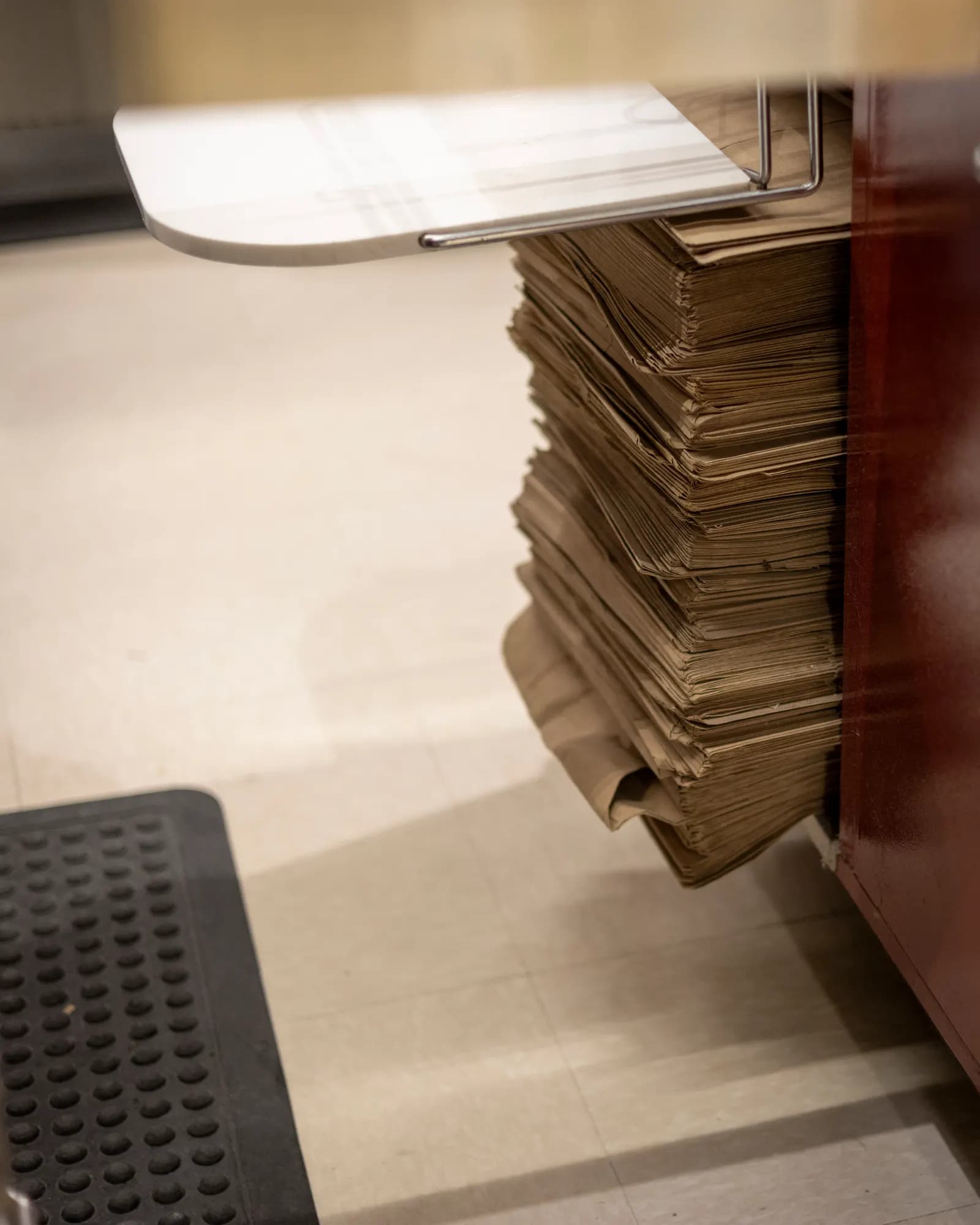
- Flat and V-bottom bags — small, unhandled bags for pharmacies, bakeries, sweet shops, dry fruit sellers, takeaway counters and grocery. High volume, low price per bag; automatic roll-fed machines make them fast.
- Square-bottom (SOS) bags — stand-up grocery and takeaway bags, with or without handles. Restaurants and food delivery kitchens use them heavily.
- Handle bags (twisted paper or flat paper handles) — for garment stores, gift shops, jewellers and brands. Higher price per bag, often printed with the shop's name, which is where margins are better.
- Handmade and die-cut bags — gift and boutique bags in coloured or textured paper, made at home or in a small workshop, with rope or ribbon handles.
The paper's weight (GSM) and size decide strength and cost. Light 40–60 GSM kraft suits small medicine and bakery bags; 80–120 GSM suits grocery and handle bags; heavier art or kraft board suits premium gift bags. Ask each buyer what weight they put in the bag — a bakery bag for half a kilo of rusk is not a grocery bag for five kilos of rice.
When you quote, work from paper weight, not from a competitor's price list. Weigh ten finished bags of each size, add your measured waste, multiply by your paper price, then add glue, ink, handles, labour and delivery. A quote built that way survives a paper price rise; one copied from a rival's rate card usually doesn't. Keep a one-page price sheet by size and GSM so every quote you send is consistent, and revisit it whenever your paper dealer changes rates.
Machines and what they cost
Paper bag machines range from hand tools to fully automatic lines. Prices below are MSMETOOLS estimates for 2026, based on supplier listings on B2B marketplaces and published planning ranges such as IIFL's guides; they vary with output speed, bag size range, in-line printing and whether the machine is imported. Treat them as a starting point for quotes, not prices.
| Machine / set-up | Makes | Typical output | Estimated cost |
|---|---|---|---|
| Manual set-up: cutting table, creasing boards, punching die, glue | Handmade, gift and die-cut bags | A few hundred to 2,000 bags a day with 2–4 workers | ₹30,000 – ₹1,00,000 |
| Semi-automatic: sheet cutter, creasing and handle-pasting machines | Handle and gift bags, small flat bags | 2,000 – 8,000 bags a day | ₹1,00,000 – ₹3,00,000 |
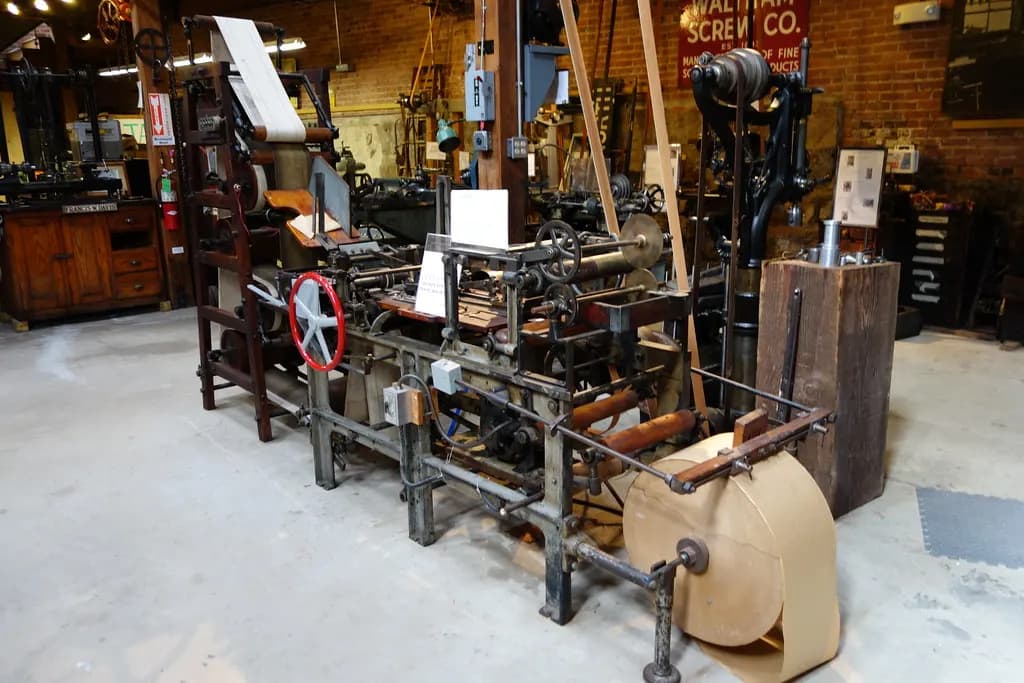
| Automatic roll-fed flat / V-bottom machine | Medicine, bakery and grocery bags | Tens of thousands a day | ₹6,00,000 – ₹15,00,000 |
| Automatic square-bottom (SOS) machine | Stand-up grocery and takeaway bags | Tens of thousands a day | ₹15,00,000 – ₹40,00,000 |
| Square-bottom line with handle unit | Handled shopping bags | Tens of thousands a day | ₹25,00,000 and up |
| Flexo printing unit (add-on or in-line) | One to four colours on the roll | Matches the bag machine | ₹1,50,000 – ₹8,00,000 |
Before you buy, ask the supplier to run your paper on the machine and show you the bags; check the size range it can change to, how long a changeover takes, the power load (most automatic machines need a three-phase connection), installation and training, spare parts and the nearest service engineer. A machine that sits idle waiting for a part is the most expensive machine you can own.
Project economics: what a small unit costs to set up
Here are two set-ups, again as our estimates. The home unit sells handmade and printed handle bags to local shops; the small factory runs one automatic V-bottom machine and buys printing in.
Setup cost estimates — home unit vs small factory
| Item | Home / semi-automatic unit | Small factory (automatic V-bottom) |
|---|---|---|
Machinery and tools | ₹1,00,000 – ₹2,00,000 | ₹8,00,000 – ₹15,00,000 |
Printing set-up (blocks, screen or flexo) | ₹10,000 – ₹40,000 | ₹1,50,000 – ₹3,00,000 |
Premises deposit, electrical work, three-phase connection | ₹20,000 – ₹75,000 | ₹1,00,000 – ₹3,00,000 |
First paper, glue and ink stock | ₹30,000 – ₹75,000 | ₹1,00,000 – ₹2,00,000 |
Registrations, CA, project report | ₹5,000 – ₹15,000 | ₹15,000 – ₹40,000 |
Working capital (about two months) | ₹50,000 – ₹1,00,000 | ₹2,00,000 – ₹4,00,000 |
Estimated total | ₹2,15,000 – ₹5,05,000 | ₹13,65,000 – ₹27,40,000 |
Machinery and tools
- Home / semi-automatic unit
₹1,00,000 – ₹2,00,000
- Small factory (automatic V-bottom)
₹8,00,000 – ₹15,00,000
Printing set-up (blocks, screen or flexo)
- Home / semi-automatic unit
₹10,000 – ₹40,000
- Small factory (automatic V-bottom)
₹1,50,000 – ₹3,00,000
Premises deposit, electrical work, three-phase connection
- Home / semi-automatic unit
₹20,000 – ₹75,000
- Small factory (automatic V-bottom)
₹1,00,000 – ₹3,00,000
First paper, glue and ink stock
- Home / semi-automatic unit
₹30,000 – ₹75,000
- Small factory (automatic V-bottom)
₹1,00,000 – ₹2,00,000
Registrations, CA, project report
- Home / semi-automatic unit
₹5,000 – ₹15,000
- Small factory (automatic V-bottom)
₹15,000 – ₹40,000
Working capital (about two months)
- Home / semi-automatic unit
₹50,000 – ₹1,00,000
- Small factory (automatic V-bottom)
₹2,00,000 – ₹4,00,000
Estimated total
- Home / semi-automatic unit
₹2,15,000 – ₹5,05,000
- Small factory (automatic V-bottom)
₹13,65,000 – ₹27,40,000
Working capital matters more than people expect. Paper suppliers usually want payment on delivery or within a few weeks, while shops and distributors pay you in 30–60 days. If your buyers are businesses, your Udyam certificate brings in the MSME rule that they must pay within the agreed period, which cannot exceed 45 days — useful, but no substitute for choosing buyers who pay.
GST on paper bags — and the inverted-duty problem
GST 2.0 changed the numbers for this business on 22 September 2025:
GST that matters for a paper bag unit (from 22 Sep 2025)
5%
Paper sacks and bags
Sch. I entry 319 (was 18%)
18%
Kraft paper (HSN 4804)
Sch. II entry 169
5%
Cartons and boxes (4819 10/20)
if you diversify
₹40 lakh
Registration threshold
intra-state goods, most states
Under Notification 9/2025-Central Tax (Rate), "paper sacks/bags and bio-degradable bags" of Chapters 39 and 48 sit in Schedule I at 2.5% central tax — 5% in all. Paper bags normally fall under heading 4819 (sub-headings 4819 30 for sacks and bags with a base of 40 cm or more, and 4819 40 for other sacks and bags); confirm the eight-digit code for your product with your CA or our HSN code finder. Uncoated kraft paper of heading 4804 sits in Schedule II at 9% central tax — 18%.
That gap is an inverted duty structure: you pay 18% on your biggest input and charge 5% on your output, so input tax credit piles up in your electronic credit ledger every month. Section 54(3) of the CGST Act lets you claim a refund of unutilised credit in that situation, using a formula that counts credit on inputs but not on input services or capital goods. File the refund regularly — monthly or quarterly — or the blocked credit will eat your working capital. Our GST on paper guide covers the refund and the 57th GST Council's October 2026 recommendation to widen it, which still needs notification.
Registration. The intra-state threshold for a goods supplier is ₹40 lakh in most states, but any sale to a buyer in another state needs registration from the first invoice. In practice most bag makers register early, because business buyers want a GST invoice to claim their own credit, and you need registration to claim the inverted-duty refund.
Composition? A manufacturer with turnover up to ₹1.5 crore can opt for composition at 1% of turnover. It looks cheap, but you lose all input tax credit — the 18% on paper becomes pure cost — you can't sell inter-state, and business buyers can't claim credit on your bills. For a bag maker buying paper at 18%, regular registration plus refunds is almost always better. See the composition scheme guide.
Worked example: break-even for an automatic V-bottom unit
All figures are our illustrative estimates for a small unit in a tier-2 industrial area running one shift.
Assumptions. One automatic V-bottom machine produces about 30,000 small bags a day over 25 working days: 7.5 lakh bags a month. Each bag uses roughly 6.5 grams of 60 GSM kraft, so 1 kg of paper makes about 150 bags. Kraft paper costs about ₹70 a kg before GST (check current mill and dealer rates). Bags sell to distributors and shops at an average of ₹0.75 each before GST.
| Monthly line | Amount (₹) |
|---|---|
| Sales: 7,50,000 bags × ₹0.75 | 5,62,500 |
| Paper: 5,000 kg × ₹70 | 3,50,000 |
| Glue, ink, packing | 25,000 |
| Contribution | 1,87,500 |
| Rent | 25,000 |
| Three workers (operator, helper, packer) | 42,000 |
| Power | 20,000 |
| Transport and delivery | 15,000 |
| Maintenance and sundries | 10,000 |
| Loan EMI (about ₹10 lakh over five years) | 22,000 |
| Profit before tax (owner's earnings) | 53,500 |
Each bag contributes about 25 paise after paper, glue and ink (₹0.75 − ₹0.50). Fixed costs are about ₹1.34 lakh a month, so the unit breaks even at roughly 5.4 lakh bags a month, or about 21,500 bags a day. Below that, every day loses money; above it, each extra 10,000 bags adds about ₹2,500.
The GST side of the same month. Output GST at 5% on ₹5.63 lakh is about ₹28,000. Input GST at 18% on ₹3.5 lakh of paper is ₹63,000. The ₹35,000 difference sits in the credit ledger until refunded — over a year, more than ₹4 lakh of cash. That is why refund filing belongs in your monthly routine, and why your bank should see it in your working-capital plan.
What moves profit most. A 5-paise rise in selling price adds about ₹37,500 a month; a ₹5 rise in paper price per kg costs ₹25,000; 5% paper waste costs ₹17,500. Printed bags for named buyers usually earn better margins than plain stock bags, because the buyer can't easily switch to the next supplier. Run your own figures in the break-even calculator.
Registrations and approvals
Approvals for a paper bag unit
0/7Pollution category. CPCB's January 2025 classification lists "cardboard or corrugated box and paper products", excluding paper or pulp manufacturing and without boilers, in the White category — the lightest one. White-category units generally don't need consent to establish and operate, but some states ask for an intimation. Printing presses appear separately in the Orange category; if you add a large stand-alone printing operation, ask your state pollution control board how it treats it.
Udyam. A paper bag unit is a manufacturing enterprise. Udyam registration is free, needs only the owner's Aadhaar and the business PAN, and is the gateway to PMEGP subsidy processing, priority-sector bank loans and the MSME delayed-payment protection. See our Udyam registration guide.
Food contact. Bakeries, sweet shops and restaurants put food straight into your bags. Use clean, food-grade paper and inks your buyer accepts, keep the stock area dry, and ask large food buyers for their packaging specifications in writing.
Funding: PMEGP and Mudra
PMEGP (Prime Minister's Employment Generation Programme), run by KVIC through banks, funds new manufacturing units up to ₹50 lakh. The government's margin-money subsidy is 15% of project cost for general-category applicants in urban areas and 25% in rural areas, rising to 25% and 35% for special categories (SC/ST, OBC, minorities, women, ex-servicemen, persons with disabilities, NER and hill areas). You contribute 10% of the project cost (5% for special categories); the bank lends the rest. Projects above ₹10 lakh (manufacturing) / ₹5 lakh (services) need the applicant to have passed class VIII. The subsidy is held for 3 years before it is adjusted against the loan. Our PMEGP loan guide walks through the online application and EDP training.
For a ₹15 lakh V-bottom project, a woman applicant (a special category) setting up in a rural area would put in about ₹75,000, receive margin money of about ₹5.25 lakh, and borrow the rest — which changes the break-even arithmetic above by cutting the EMI.
Mudra loans suit smaller units and working capital: Shishu up to ₹50,000, Kishore up to ₹5 lakh, Tarun up to ₹10 lakh, and Tarun Plus up to ₹20 lakh for borrowers who have repaid a Tarun loan — all without collateral. A home unit can start with Kishore; a factory can combine a PMEGP term loan with a Mudra or bank cash-credit limit for paper stock. See the Mudra loan guide and check your EMI with the EMI calculator.
Starting a paper bag unit — step by step
- 1
Find buyers first
Visit 30–50 pharmacies, bakeries, sweet shops, garment stores and wholesalers. Note bag sizes, monthly quantities, price paid today and payment terms.
- 2
Choose bag type and machine
Match the machine to the bags your buyers want. Get two or three quotes and see the machine run your paper.
- 3
Register
Udyam (Free), GST, local body licence, and confirm the pollution category with your state board.
- 4
Arrange funding
PMEGP portalPrepare a project report with machine quotes, buyer letters and a break-even, then apply under PMEGP or for a Mudra loan.
- 5
Set up and trial
Install, train operators, run trial lots and fix bag strength and gluing before taking bulk orders.
- 6
Sell, invoice, claim refunds
Issue GST invoices at 5%, track paper waste weekly, and file inverted-duty refunds regularly.
Mistakes that sink paper bag units
Buying the machine before the buyers. An automatic line needs about 20,000 bags a day to break even. Without signed buyers, it becomes an expensive way to make inventory.
Pricing per piece without weighing paper. Bag prices must follow paper GSM and size. Quote from the paper weight per bag plus waste, and add a price-revision clause tied to paper rates for long contracts.
Ignoring the credit ledger. Paying 18% on paper and charging 5% means cash locked with the government. Units that don't file refunds run out of working capital even when the P&L looks fine.
Weak bags. A bottom that opens under a bottle of oil loses you the customer. Test every new size with real loads and keep glue quality consistent.
Over-relying on a single buyer. A large restaurant chain can switch suppliers overnight. Keep no buyer above a third of your output in the first year.
Official links
- Notification 9/2025-CT(Rate) — goods rate schedulesPaper bags entry 319; kraft paper entry 169
- PIB — Plastic Waste Management Amendment Rules, 2021
- CPCB classification of sectors (2025)White category entry for paper products
- PMEGP e-portal (KVIC)
- Udyam Registration portal
- GST portalRegistration and refund applications (RFD-01)
What to do next
Spend a week with buyers before you spend a rupee on machines: collect sizes, quantities and the prices they pay now. Then build your numbers in the startup cost calculator and the business plan generator, register on Udyam, and apply under PMEGP. For the tax detail across all paper products, read our GST on paper guide.
This is general information, not legal or tax advice — confirm on the official source or with a professional.
Frequently asked questions
Our estimate is about ₹2–5 lakh for a home or semi-automatic unit making handmade and die-cut bags, ₹12–25 lakh for a small factory with an automatic roll-fed machine for flat or V-bottom bags, and ₹35 lakh or more for square-bottom bags with handles. These include machinery, a printing set-up, power connection, first paper stock and working capital. Get two or three supplier quotes before you borrow.
Paper sacks and bags carry 5% GST from 22 September 2025, under entry 319 of Schedule I to Notification 9/2025-Central Tax (Rate); they were taxed at 18% before. The kraft paper you buy (HSN 4804) carries 18%, so most bag makers build up unused input tax credit and claim an inverted-duty refund.
It can be, but margins per bag are thin and paper is most of the cost. In our worked example, an automatic V-bottom unit selling 7.5 lakh bags a month at 75 paise earns about ₹54,000 a month after paper, wages, power and the loan EMI, and breaks even at roughly 5.4 lakh bags. Steady buyers — pharmacies, bakeries, sweet shops, garment stores — matter more than the machine.
Yes, on a small scale. Handmade and die-cut bags need only a cutting table, a creasing and punching set-up, glue and printing blocks. Check that your local body allows manufacturing at home, register on Udyam for free, and sell to nearby shops. CPCB places paper products made without boilers in the White category, but confirm with your state pollution control board.
Not all of them. Under the Plastic Waste Management Rules as amended in 2021, plastic carry bags must be at least 120 microns thick from 31 December 2022, and a list of single-use plastic items has been banned since 1 July 2022. Several states go further under their own orders. Thin plastic carry bags are illegal everywhere, which is what opened the market for paper bags.
PMEGP suits a new manufacturing unit: projects up to ₹50 lakh qualify, with a margin-money subsidy of 15% to 35% depending on your category and location. Mudra loans up to ₹20 lakh work for a smaller unit or for working capital. Both need a project report showing machine quotes, buyers and a break-even.
Sources & verification
Figures on this page were checked against the sources below when it was last reviewed on 9 October 2026. Each rate and limit is stored once with its own official source and review date, and official update channels are monitored daily so changes are picked up. How we verify
- 1.Government notifies the Plastic Waste Management Amendment Rules, 2021 (PIB, 13 August 2021) — Ministry of Environment, Forest and Climate Change (Press Information Bureau) · accessed 9 October 2026
- 2.Notification No. 9/2025-Central Tax (Rate), 17 September 2025 (Gazette of India) — Ministry of Finance (Department of Revenue) · accessed 9 October 2026
- 3.Recommendations of the 56th GST Council — rate changes on goods (PIB press release) — GST Council / Press Information Bureau · accessed 9 October 2026
- 4.Classification of Sectors into Red, Orange, Green, White and Blue Categories (January 2025) — Central Pollution Control Board (copy hosted by Pollution Control Board, Assam) · accessed 9 October 2026
- 5.CGST Act, 2017 — section 10 (composition levy) — CBIC · accessed 9 October 2026
- 6.How to start a paper bag making business in Gujarat — IIFL Finance · accessed 9 October 2026
MSMETOOLS is an independent platform and is not affiliated with any government agency, ministry or department.
Tools for this
Break Even Calculator
Find your break even point and units.
Startup Cost Calculator
Estimate how much capital you need to launch.
GST Calculator (India)
Calculate GST for your sales and purchases with current rates.
EMI Calculator
Calculate loan EMIs for business and personal loans.
Related guides
 Candle Making Business in India 2026: Cost, GST & ProfitRead guide
 Agarbatti Making Business 2026: Machines, GST & ProfitRead guide
 Masala Business in India 2026: FSSAI, GST, Machines & ProfitRead guide
 Xerox and Printing Shop Business 2026: Cost, GST & ProfitRead guide
Official links open the government site in a new tab.