 Business registration & legal
Legal Metrology Registration for Packers (2026): Rule 27, Label Declarations, Unit Sale Price and Penalties
Legal metrology registration for packers in 2026: who must register under Rule 27, the ₹500 fee, pack declarations, unit sale price, e-commerce rules, penalties.
 Edited by Sumeet YadavFounder & editor, MSMETOOLS · fact-checked against official sources
Contents (13)
- 1. What legal metrology registration is — and what it is not
- 2. Who must register under Rule 27
- 3. Fee, timeline and validity
- 4. How to apply for packer registration
- 5. What every retail package must declare
- 6. Unit sale price: how to calculate it
- 7. MRP rules every packer should know
- 8. E-commerce rules: what online sellers must show
- 9. Penalties and the 2026 improvement notice
- 10. Common mistakes and how to fix them
- 11. How the rules have changed
- 12. After you register
- 13. What to do next
If you fill spices, snacks, detergent, oil, cosmetics or hardware into packets and sell them under your own name, the Legal Metrology law treats you as a packer — and a packer has to register with the state's Legal Metrology department and print a fixed set of declarations on every pack. This guide is for MSME manufacturers, contract packers, importers and D2C brands. It explains who needs Rule 27 registration (often called LMPC registration), the fee and timeline, what goes on the label, how to work out the unit sale price, the e-commerce rules that changed in July 2026, and the new improvement-notice regime for penalties.
Quick answer
Every manufacturer, packer and importer of pre-packaged goods for sale must apply to the Controller of Legal Metrology of their state (or the central Director) under Rule 27 of the Legal Metrology (Packaged Commodities) Rules, 2011, within 90 days of starting to pack or import. The fee is ₹500, there is no renewal, and every retail pack must carry the Rule 6 declarations, including MRP and unit sale price.
Register once for the business; alterations cost ₹100
Label must show maker/packer/importer, product name, net quantity, month and year of manufacture, MRP, unit sale price and consumer care details
Online sellers must show the same declarations on the product page; country-of-origin filter for imports from 1 July 2026
First-time lapses now get an improvement notice (from 1 May 2026); repeat or fraudulent lapses are still punished
What legal metrology registration is — and what it is not
The Legal Metrology Act, 2009 governs weights, measures and goods sold by weight, measure or number. Under it, the Department of Consumer Affairs made the Legal Metrology (Packaged Commodities) Rules, 2011, which apply from 1 April 2011 to anything packed in advance without the buyer present — a "pre-packaged commodity". Rule 27 of those rules creates a simple registration for the people who make, pack or import such goods. Most consultants call it LMPC registration (Legal Metrology Packaged Commodities).
It is easy to confuse with three other legal metrology permissions, so separate them now:
- Licence to manufacture, repair or deal in weights and measures — for businesses that make, mend or sell weighing scales, fuel dispensers, measuring tapes and similar instruments.
- Registration as an importer of weights and measures — for businesses importing those instruments.
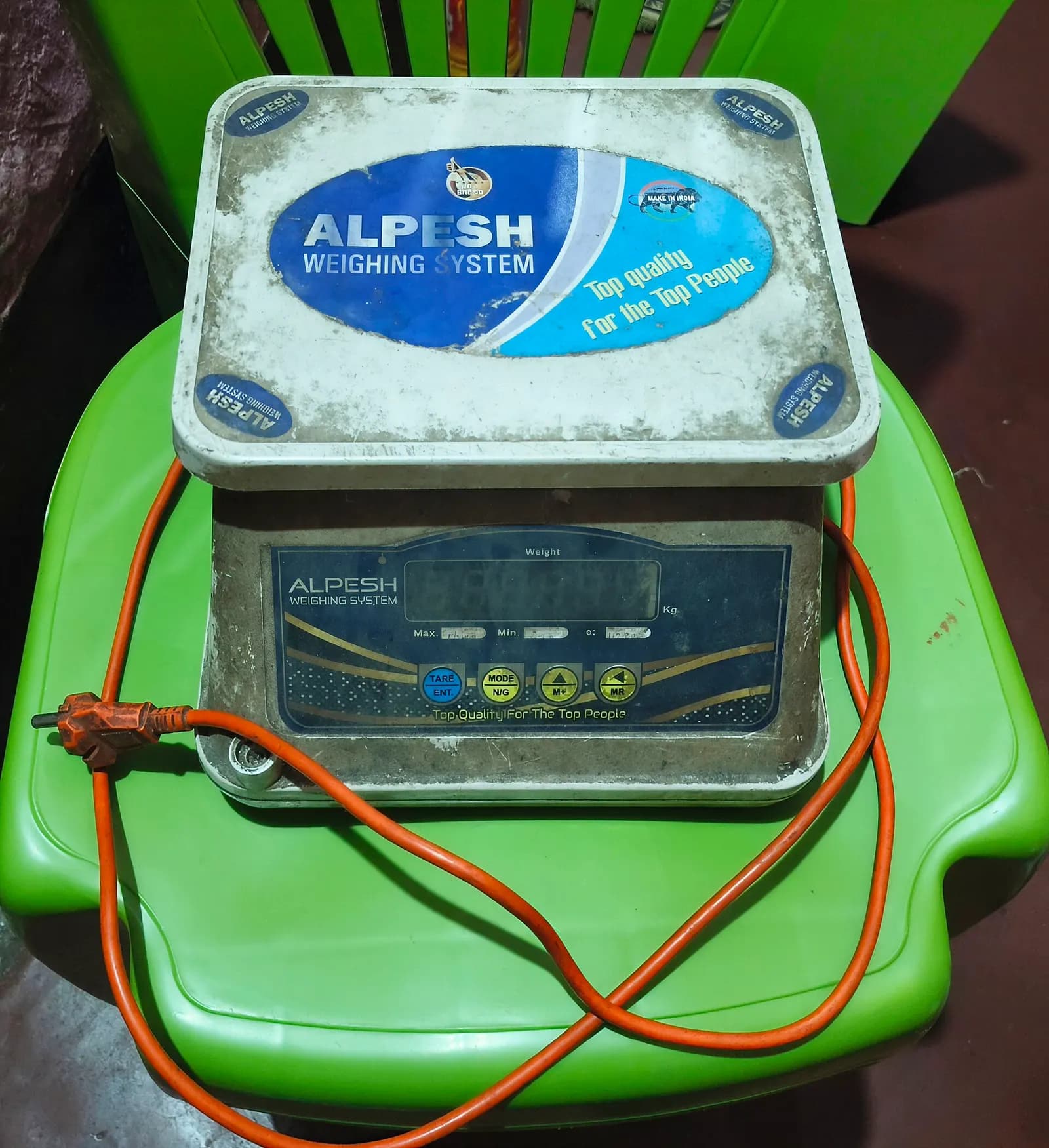
- Verification and stamping of your own scales — every scale you use in a packing line or shop must be verified and stamped periodically.
A spice packer typically needs Rule 27 registration plus verified and stamped scales, but not a dealer or repairer licence. Rule 27 registration also does not replace product-specific approvals: a food packer still needs FSSAI registration, and goods under a quality control order still need BIS certification.
Who must register under Rule 27
The duty falls on anyone — an individual, a firm, an LLP, a company, a society or an HUF — who pre-packs or imports a commodity for sale, distribution or delivery. In practice that covers:
- Manufacturers who pack their own goods — a namkeen unit, an agarbatti maker, a paint factory filling tins.
- Packers — a trader who buys rice, dal or masala in bulk and repacks it in 500 g and 1 kg pouches under a brand, or a contract packer filling packs for another brand.
- Importers — anyone bringing pre-packed goods into India for retail sale, who must also be named on the pack as the importer.
The registration is for your business, not per product. West Bengal's official guidance, for example, says a concern with several factories registers only once, at its registered office or head office, and lists its packing units in the application.
Rule 27 registration at a glance (2026)
₹500
Registration fee
one-time
90 days
Deadline to apply
from start of packing or import
None
Renewal
valid until surrendered or cancelled
₹100
Alteration fee
change of name, address or products
Who does not need it
The retail declaration chapter of the rules does not apply to packages of more than 25 kg or 25 litres (cement and fertiliser in bags up to 50 kg are the exception and remain covered), or to packs made for industrial or institutional consumers — buyers such as hotels, hospitals, transport operators or factories that use the goods themselves and receive packs marked "not for retail sale". A kirana or supermarket that only resells sealed packs made by someone else does not register under Rule 27, although it must not sell above MRP or tamper with the printed price. Goods weighed out in front of the customer are not pre-packaged at all, but the scale used must be verified and stamped.
Brand owners using contract packers
D2C brands often outsource the packing. The packer that physically fills the packs needs Rule 27 registration, and the label must name both the manufacturer and the packer where they are different businesses. If your brand appears on the pack as the packer or marketer, register in your own name as well — it costs ₹500 and is the first document marketplaces and modern-trade buyers ask for during vendor onboarding.
Fee, timeline and validity
Rule 27 is one of the cheapest registrations in Indian compliance. You pay ₹500 to register the name and complete address of the business, and ₹100 for each later change to the certificate. The application must state your name, the complete address of each premises and the name of every commodity you pack or import.
Apply within 90 days of the day you start pre-packing or importing. If the Controller finds the application incomplete, the rules require it to be returned within seven working days so you can fix it; a complete application leads to a registration certificate. There is no renewal under the current rules, but keep the certificate current — add new product lines and new packing addresses through an alteration, because inspectors compare the certificate with what they find on your shelf.
The registration cannot be transferred. If you sell the business or convert a proprietorship into a company, the new entity applies afresh.
How to apply for packer registration
Each state runs its own Legal Metrology department, usually under the Food, Civil Supplies and Consumer Affairs department, and some sit under the Labour department. Most now take Rule 27 applications online through their own portal or the state's single-window system, and the Department of Consumer Affairs has built a national Legal Metrology portal, eMaap, to bring these services onto one platform. A few states still accept paper applications with a demand draft.
Registering as a packer, step by step
- 1
Find your state's Legal Metrology portal
Search for the Controller of Legal Metrology of the state where your registered office or head office is located. Check whether it accepts Rule 27 applications online, through the state single-window portal, or on paper.
Tip: Ignore look-alike sites that charge thousands for a government fee of ₹500.
- 2
Create an applicant account
Register with a mobile number and email. Choose the service for registration of manufacturer, packer or importer of packaged commodities under Rule 27.
- 3
Fill in business and product details
Enter the legal name, constitution (proprietor, firm, LLP, company), registered office, the address of each factory or packing unit, the names of proprietors, partners or directors, and every commodity you pack or import.
- 4
Upload documents and a label
Attach identity and address proof, proof of the business premises and a sample label or photograph of the pack showing the Rule 6 declarations.
- 5
Pay the fee and submit
Pay ₹500 online or by demand draft as your state specifies. Keep the acknowledgement.
- 6
Respond to queries and download the certificate
If the Controller returns the application, correct it and resubmit. Once approved, download the registration certificate and keep a copy at each packing unit.
Documents to keep ready:
- PAN of the business and identity proof of the proprietor, partners or directors
- Proof of the business: trade licence, GST registration, Udyam certificate, partnership deed or certificate of incorporation
- Address proof of the registered office and each packing unit (rent agreement or ownership papers with a utility bill)
- List of commodities you pack or import, with pack sizes
- Sample label or photo of the package showing all declarations
- Verification certificates of the weighing scales used in packing
- IEC, for importers of pre-packaged goods
West Bengal's official guidance is a good example of what Controllers check on paper: a copy of the current trade licence, a label or photocopy of the label, the application in duplicate, and a demand draft of ₹500 drawn in favour of the Controller. Online portals ask for the same evidence as uploads.

What every retail package must declare
Registration is a one-time task; labelling is where most packers get caught. Rule 6 lists the mandatory declarations, and the Department of Consumer Affairs summarised them in a Lok Sabha answer in August 2024.
| Declaration | What to print | Example for a 500 g turmeric pouch |
|---|---|---|
| Name and address | Manufacturer, and packer or importer if different | "Packed by: Sharma Spices, Plot 12, MIDC, Nagpur 440016" |
| Country of origin | For imported goods | "Country of origin: Vietnam" (for imported pepper) |
| Common or generic name | What the product is | "Turmeric powder" |
| Net quantity | In standard units, or by number | "Net quantity: 500 g" |
| Month and year of manufacture | When it was made or packed | "Mfd: 09/2026" |
| Retail sale price (MRP) | Maximum price, inclusive of all taxes, in Indian rupees | "MRP ₹120.00 (incl. of all taxes)" |
| Unit sale price | Price per standard unit | "Unit sale price ₹0.24 per g" |
| Best before / use by | Where the product can become unfit for use | "Best before 12 months from manufacture" |
| Consumer care | Name, address, phone and email for complaints | "Consumer care: 1800-XXX-XXXX, care@…" |
These declarations go on the principal display panel — the part of the pack most likely to be seen at the point of sale. Letters must be at least 1 mm high (2 mm if blown, moulded or embossed on the container), and the minimum height of numerals in the net-quantity declaration rises with the size of the panel under the table in Rule 7. Food products also carry FSSAI labelling, which overlaps but does not replace these rules.
Unit sale price: how to calculate it
Since 1 January 2024, the unit sale price has been compulsory alongside the MRP on retail packs, under the amendment notified as GSR 722(E) on 6 October 2023. The aim is simple: let shoppers compare a 200 g pack with a 1 kg pack without doing maths in the aisle. The price is shown in rupees rounded to two decimal places, and the unit depends on how much is in the pack:
Which unit to use for unit sale price
| Net quantity | Show unit sale price | Worked example |
|---|---|---|
Less than 1 kg | Per gram | 200 g biscuits, MRP ₹40 → ₹0.20 per g |
More than 1 kg | Per kilogram | 5 kg atta, MRP ₹265 → ₹53.00 per kg |
Less than 1 litre | Per millilitre | 500 ml oil, MRP ₹95 → ₹0.19 per ml |
More than 1 litre | Per litre | 2 litre cleaner, MRP ₹310 → ₹155.00 per litre |
Less than 1 metre | Per centimetre | 50 cm ribbon, MRP ₹30 → ₹0.60 per cm |
More than 1 metre | Per metre | 5 m cable, MRP ₹450 → ₹90.00 per m |
Sold by number | Per unit or number | Pack of 6 soaps, MRP ₹210 → ₹35.00 per unit |
Less than 1 kg
- Show unit sale price
Per gram
- Worked example
200 g biscuits, MRP ₹40 → ₹0.20 per g
More than 1 kg
- Show unit sale price
Per kilogram
- Worked example
5 kg atta, MRP ₹265 → ₹53.00 per kg
Less than 1 litre
- Show unit sale price
Per millilitre
- Worked example
500 ml oil, MRP ₹95 → ₹0.19 per ml
More than 1 litre
- Show unit sale price
Per litre
- Worked example
2 litre cleaner, MRP ₹310 → ₹155.00 per litre
Less than 1 metre
- Show unit sale price
Per centimetre
- Worked example
50 cm ribbon, MRP ₹30 → ₹0.60 per cm
More than 1 metre
- Show unit sale price
Per metre
- Worked example
5 m cable, MRP ₹450 → ₹90.00 per m
Sold by number
- Show unit sale price
Per unit or number
- Worked example
Pack of 6 soaps, MRP ₹210 → ₹35.00 per unit
Two situations need no unit sale price. If the MRP is the same as the unit sale price — a 1 kg pack of sugar, or a single item sold by number — you do not repeat it. And the 2023 amendment exempted combination packs, group packs and multi-piece packages, such as a gift box of a shampoo and a conditioner. Packs of exactly 1 kg or 1 litre are usually labelled per kg or per litre, which equals the MRP and therefore falls under the first exemption.
A quick check before you send artwork to the printer: divide the MRP by the net quantity in the right unit and round to two decimals. Price your pack first — our markup calculator helps you set an MRP that covers your costs and dealer margin — then work out the unit sale price from that final MRP.
MRP rules every packer should know
The MRP is the maximum price at which the pack can be sold to the consumer, and it must include all taxes. Rule 18 bars anyone in the chain — manufacturer, packer, importer, wholesaler or retailer — from selling above it, and bars dealers from smudging, over-writing or altering the printed MRP. A packer may sell below MRP; nobody may sell above it.
Changing an MRP on stock that is already printed needs government permission. When GST rates were cut from 22 September 2025, the Department of Consumer Affairs used Rule 33 to let manufacturers, packers and importers put a revised MRP on unsold stock by stamping, sticker or online printing until 31 December 2025, as long as the original MRP stayed visible, the new price passed on no more than the tax change, and the change was advertised in at least two newspapers and notified to dealers and Legal Metrology officers. That window has closed; packs printed now should carry the post-GST-change MRP. For the rate changes themselves, see our guide to GST 2.0.
E-commerce rules: what online sellers must show
Since 2018, Rule 6(10) has required every e-commerce entity to display, on its platform, all the declarations that Rule 6(1) requires on the physical pack — except the month and year of manufacture. That means the product page must show the manufacturer or packer, net quantity, MRP, unit sale price, country of origin and consumer care details. The rules also put responsibility on the seller or manufacturer where the marketplace only hosts the listing, which is why marketplaces ask sellers to fill in every one of these fields before a listing goes live.
The newest change is Rule 6(10A), inserted by the Legal Metrology (Packaged Commodities) Amendment Rules, 2026, notified on 13 February 2026. From 1 July 2026, every e-commerce entity selling imported goods must give buyers a searchable and sortable filter for country of origin. For a seller, the practical effect is that the country-of-origin field in your catalogue data must be accurate, because platforms now expose it as a filter and a wrong entry is visible to every buyer and inspector.
If you sell on marketplaces, keep three things aligned: the physical label, the catalogue data you upload, and your Rule 27 registration. Inconsistencies — a different packer address online than on the pack, or a net quantity typed wrongly — are among the easiest violations for an inspector to prove. Our guides to starting an e-commerce business and selling on Meesho cover the listing side.
Penalties and the 2026 improvement notice
Until 2026, almost every packaged-commodity lapse under the Legal Metrology Act went straight to fines and compounding. The Jan Vishwas (Amendment of Provisions) Act, 2026 changed that. Its Legal Metrology provisions came into force on 1 May 2026, and they let a Legal Metrology Officer issue an improvement notice for specified first-time procedural or regulatory lapses, naming the defect and giving you a reasonable time to fix it. If you comply in time, penal proceedings can be avoided altogether.
The offences eligible for an improvement notice include section 36(1) (selling or distributing packages that do not carry the required declarations or quantity), section 45 (manufacturing without registration), section 38 (importing without registration), section 41 (false information or returns) and the sections on non-standard weights and measures. Under the new scheme a second lapse can attract a civil penalty and later ones a criminal fine, and the Department of Consumer Affairs has said that fraud, tampering, deliberate violations and failure to act on a notice still face strict action.
Many legal metrology offences can also be compounded — settled by paying a fixed amount to the Controller instead of going to court. Fine amounts were revised by the 2026 amendments and some will rise every three years, so confirm the current figure with your state Controller or the amended Act on India Code (indiacode.nic.in) before you rely on any older penalty table you find online.
Legal metrology lapses — before and after 1 May 2026
| Situation | Before | Now |
|---|---|---|
First-time labelling or registration lapse | Fine or compounding | Improvement notice with time to fix |
Notice ignored or lapse repeated | Higher fine | Civil penalty, then criminal fine |
Short weight, sale above MRP, tampering, fraud | Fine and prosecution | Still penalised — not eligible for the notice route |
First-time labelling or registration lapse
- Before
Fine or compounding
- Now
Improvement notice with time to fix
Notice ignored or lapse repeated
- Before
Higher fine
- Now
Civil penalty, then criminal fine
Short weight, sale above MRP, tampering, fraud
- Before
Fine and prosecution
- Now
Still penalised — not eligible for the notice route
Short-weight packs are not a "procedural" lapse. Packing less than the declared quantity, over-charging above MRP or tampering with a price is treated far more seriously than a missing consumer-care line, so calibrate your filling machines and check-weigh samples every shift.
Common mistakes and how to fix them
Missing or wrong unit sale price. The most common defect since 2024. Recalculate from the final MRP, use the correct unit for the pack size, and round to two decimals.
MRP printed without "inclusive of all taxes". The MRP must include all taxes and be in Indian currency. Fix the artwork; for printed stock already in the market, ask your Controller before stickering.
Packer address does not match the registration. If you moved your packing unit or added a second one, file an alteration (₹100) before the new labels go out.
Net quantity in the wrong format. Use standard units (g, kg, ml, l, cm, m) or a number; avoid "approx." and avoid declaring gross weight as net.
Consumer care details missing. Every retail pack needs a name, address, phone number and email for complaints. A website address alone is not enough.
Assuming institutional packs are exempt from everything. A pack marked "not for retail sale" is outside the retail declaration chapter only if it really goes to an industrial or institutional consumer. If the same pack ends up on a retail shelf, the full Rule 6 requirements apply.
Registering in the wrong state. Register with the Controller where your registered or head office is, and list every packing unit, including those in other states. If an inspector in another state questions a pack, your certificate number and the packer address on the label should lead straight back to that registration.
How the rules have changed
Key changes to the packaged commodities rules
1 April 2011
Legal Metrology (Packaged Commodities) Rules, 2011 come into force, including Rule 27 registration
1 January 2018
E-commerce entities must display mandatory declarations online (Rule 6(10)); MRP must include all taxes
1 October 2022
GSR 226(E): standard pack sizes dropped; unit sale price per g/kg, ml/l, cm/m or number introduced
1 January 2024
GSR 722(E): unit sale price and month and year of manufacture mandatory; combination and multi-piece packs exempt from unit sale price
9 Sep – 31 Dec 2025
Revised MRP stickers allowed on old stock after the GST rate cuts
October 2025
Medical-device labels aligned with the Medical Devices Rules, 2017
1 May 2026
Jan Vishwas Act, 2026: improvement notice for first-time lapses
1 July 2026
Rule 6(10A): country-of-origin filter for imported goods on e-commerce
The October 2025 amendment matters only if you pack medical devices: their label font size, dimensions and principal display panel declarations now follow the Medical Devices Rules, 2017 instead of the Legal Metrology rules, ending years of overlapping requirements. If your products are regulated as drugs or devices, also see our guide to the drug licence.
After you register
Treat the registration as the start of a routine, not a one-time box. Keep the certificate at every packing unit, get your weighing scales and filling equipment verified and stamped on time, keep batch-wise records of quantities packed, and check every new label against Rule 6 before printing. When you add a product, a pack size or a packing location, file an alteration. If you also want to protect the brand name printed on those packs, file a trademark — the label is often the first place a copycat starts.
Official links
- eMaap — National Legal Metrology PortalDepartment of Consumer Affairs portal for legal metrology services
- Department of Consumer Affairs — Legal MetrologyActs, rules, amendments and notifications
- West Bengal — Rule 27 registration proformaExample of the state application and its guidance notes
- Lok Sabha answer on the Packaged Commodities Rules (Aug 2024)Official list of mandatory declarations and the 2024 changes
What to do next
Register with your state Controller before you print your first batch of labels, then design the label once and correctly: maker or packer, product name, net quantity, month and year of manufacture, MRP inclusive of taxes, unit sale price and consumer care. If you are packing food, line up FSSAI registration at the same time, and if you are starting a spice or snack brand, our masala business guide walks through the full set of licences.
This is general information, not legal or tax advice — confirm on the official source or with a professional.
Frequently asked questions
Yes. Rule 27 of the Legal Metrology (Packaged Commodities) Rules, 2011 requires every manufacturer, packer and importer of pre-packaged commodities meant for sale to apply for registration with the Director or the state Controller of Legal Metrology within 90 days of starting to pack or import. Shops that only resell sealed packs made by someone else do not need this registration.
Rule 27 sets a fee of ₹500 for registering the applicant's name and address, and ₹100 for each later alteration to the certificate. Your state may collect it online through its Legal Metrology or single-window portal, or by demand draft. Consultants charge separately; that charge is not a government fee.
Under the rules as they stand, a Rule 27 registration does not need renewal. West Bengal's official guidance says so in terms. You do need to apply for an alteration if your name, address or list of packed commodities changes, and the registration is not transferable to a new owner.
Since 1 January 2024, retail packs must show the unit sale price next to the MRP — per gram below 1 kg and per kg above it, with matching rules for millilitres, centimetres and number. It is not needed where the MRP equals the unit sale price, or on combination, group and multi-piece packages.
A marketplace seller needs Rule 27 registration only if it packs or imports the goods itself. Separately, every e-commerce entity must display the mandatory label declarations, except the month and year of manufacture, on the product page, and from 1 July 2026 must offer a searchable and sortable country-of-origin filter for imported goods.
Since 1 May 2026, first-time procedural lapses under sections such as 36(1) (non-standard packages) and 45 (manufacturing without registration) can be met with an improvement notice that gives you time to fix the problem. Ignoring the notice, repeating the lapse, fraud or tampering still attracts fines and prosecution, and many offences can be compounded by paying a fixed amount.
Sources & verification
Figures on this page were checked against the sources below when it was last reviewed on 9 October 2026. Each rate and limit is stored once with its own official source and review date, and official update channels are monitored daily so changes are picked up. How we verify
- 1.Proforma of application — Registration of Manufacturer/Packer under Rule 27 of the Legal Metrology (Packaged Commodities) Rules, 2011 — Controller of Legal Metrology, Consumer Affairs Department, Government of West Bengal · accessed 9 October 2026
- 2.Lok Sabha Unstarred Question 2673 — Legal Metrology (Packaged Commodities) Rules, 2011 (7 August 2024) — Department of Consumer Affairs, Government of India · accessed 9 October 2026
- 3.Legal Metrology (Packaged Commodities) Rules, 2011 — consolidated text with amendments to May 2022 — TaxGuru · accessed 9 October 2026
- 4.Legal Metrology Amendment Rules, 2022 to come into force on October 01, 2022 — S.S. Rana & Co. · accessed 9 October 2026
- 5.Legal Metrology (Packaged Commodities) Amendment Rules, 2026 explained — SCC Online · accessed 9 October 2026
- 6.Legal Metrology provisions of the Jan Vishwas (Amendment of Provisions) Act, 2026 brought into force — SCC Online · accessed 9 October 2026
- 7.Bill Summary — The Jan Vishwas (Amendment of Provisions) Bill, 2026 — PRS Legislative Research · accessed 9 October 2026
- 8.Jan Vishwas Act 2026 — improvement notice under the Legal Metrology Act — IndiaLaw LLP · accessed 9 October 2026
- 9.Govt allows MRP revision on unsold GST-affected stock — TaxGuru · accessed 9 October 2026
- 10.Legal Metrology (Packaged Commodities) Amendment Rules, 2025 — Drishti IAS (citing PIB) · accessed 9 October 2026
MSMETOOLS is an independent platform and is not affiliated with any government agency, ministry or department.
Tools for this
Markup Calculator
Turn cost and markup into a selling price.
GST Calculator (India)
Calculate GST for your sales and purchases with current rates.
Related guides
 Trademark Registration in India 2026: Fees, Process & ClassesRead guide
 BIS Certification 2026: ISI vs CRS, QCOs, Fees & ProcessRead guide
 What Is a Memorandum of Understanding (MoU)? Rules 2026Read guide
 Trade License Andhra Pradesh 2026: CDMA, D&O & RenewalRead guide
Official links open the government site in a new tab.