 Business registration & legal
Trade License in Andhra Pradesh (2026): The D&O Licence, Applying Through CDMA, Renewal Dates, Fees and Penalties
Trade licence in Andhra Pradesh for 2026: the D&O licence, applying on CDMA or at ward secretariats, the renewal window, deemed approval, fees and penalties.
 Edited by Sumeet YadavFounder & editor, MSMETOOLS · fact-checked against official sources
Contents (11)
- 1. What the trade licence is in Andhra Pradesh
- 2. Applying through CDMA, the ULB office or a ward secretariat
- 3. Documents you'll need
- 4. Workshops and factories: the separate section 264 permission
- 5. Fees: what the law says and what we couldn't find
- 6. Validity and renewal
- 7. Penalties, suspension and enforcement
- 8. Municipality vs corporation at a glance
- 9. Street vendors and home businesses
- 10. Common mistakes and how to fix them
- 11. What to do next
Opening a shop, hotel, workshop, clinic or office in Visakhapatnam, Vijayawada, Guntur, Tirupati, Nellore or any Andhra Pradesh town means taking a trade licence from the municipality — the licence locals still call the D&O licence. This guide is for owners and accountants dealing with Andhra Pradesh's municipal corporations, municipalities and nagar panchayats. It explains the law behind the licence, how to apply and renew through the state's CDMA platform or a ward secretariat, the application window and the deemed-approval rule most people have never heard of, fees, the separate permission for power-driven workshops, and what happens if you trade without one. We checked it against the AP Municipalities Act and the CDMA's own service pages in October 2026.
Quick answer
Andhra Pradesh's urban bodies license trades under their municipal laws — section 263 and Schedule IV of the AP Municipalities Act, 1965 in municipalities, and section 521 in corporations like Visakhapatnam, Vijayawada and Guntur. Apply or renew through the CDMA trade licence services, the ULB office or a ward secretariat. Licences run for the financial year (1 April – 31 March).
Apply not less than 30 and not more than 90 days before the year starts (or before opening)
No order in 90 days (new) or 30 days (renewal)? The application is deemed allowed
Fees are fixed by each council or corporation — no single state rate
Power-driven workshops need separate council permission, cleared with the Inspector of Factories
Unlicensed shops face notices, fines and sealing (Guntur warned in June 2026)
What the trade licence is in Andhra Pradesh
Andhra Pradesh's urban local bodies fall into two groups. Municipalities and nagar panchayats — Tenali, Chilakaluripet, Bhimavaram and many smaller towns — run under the Andhra Pradesh Municipalities Act, 1965. Municipal corporations such as Greater Visakhapatnam, Vijayawada, Guntur, Tirupati, Nellore and Kakinada run under the corporation laws that apply to them, which carry over the licensing scheme of the old Hyderabad corporation law: a commissioner's licence under section 521 for trades that are dangerous, unhealthy or a nuisance, with the licence's terms and enforcement under section 622.
That is why the licence is widely called the D&O (dangerous and offensive) trade licence. The name undersells it. Corporations read the section broadly. In June 2026, Guntur Municipal Corporation's commissioner said every business establishment within the city's limits must hold a valid D&O trade licence under section 521, and that those without one would be served notices. Visakhapatnam's corporation lists "D & O Trade Licence" among its core citizen services. In practice, if you run a shop, eatery, salon, clinic, workshop, godown or office in a corporation area, plan on needing one.
In municipalities, section 263 works through notification. The council publishes a notification that no place within municipal limits — or within 3 km of them, with the Government's sanction — may be used for any purpose in Schedule IV of the Act without the commissioner's licence. The notification takes effect 60 days after publication, and existing owners and occupiers then have 30 days to apply. Most municipalities have long-standing notifications covering the common trades, so the practical question is simply which category your business falls into.
A trade licence is permission to use a specific place for a specific trade. It isn't a business registration, doesn't cover your employees, and isn't proof of any right to the building.
Applying through CDMA, the ULB office or a ward secretariat
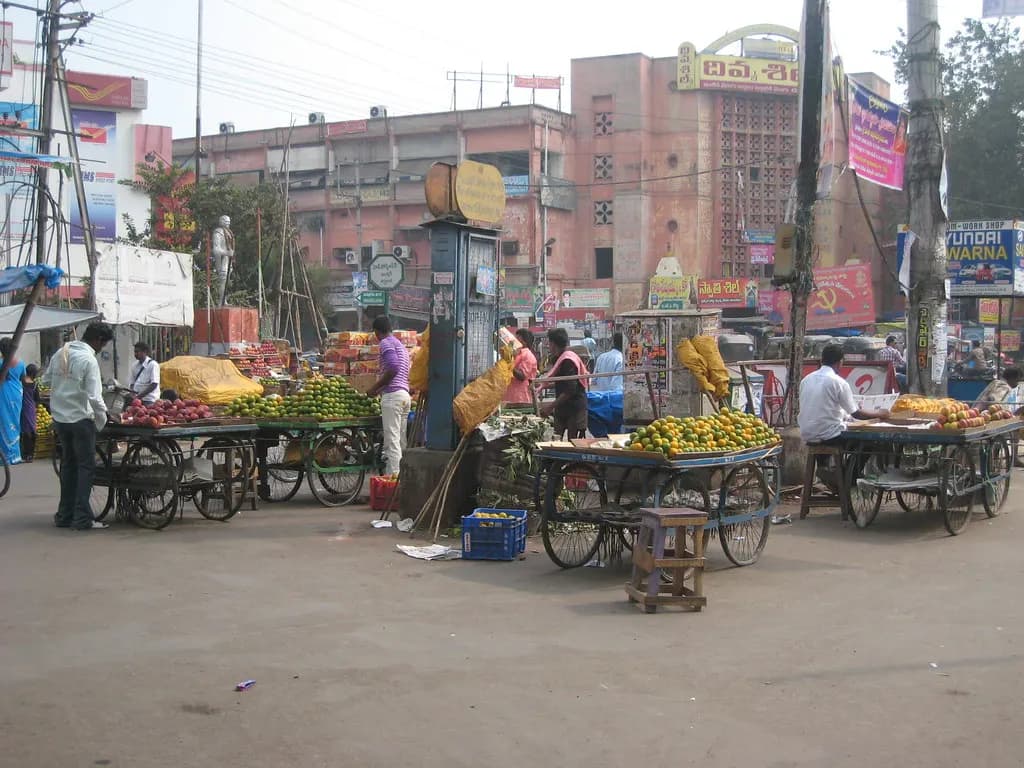
The Commissioner and Director of Municipal Administration (CDMA) runs a common online platform for Andhra Pradesh's urban bodies. Its trade licence section offers seven services: know your dues, a guide to filing, filing a new trade licence, renewal, closure, downloading a provisional, renewal or final certificate, and checking application status. You reach them by choosing your urban local body on the CDMA portal or your ULB's own website.
There are three other ways in. You can apply at the ULB office or your ward secretariat — the neighbourhood offices that handle municipal services — or use Mana Mitra, the state's WhatsApp governance service, on 95523 00009. Corporations also have their own counters; Guntur's commissioner pointed applicants to their area's sanitary secretary, sanitary inspector or ward secretariat.
New trade licence in an Andhra Pradesh town or city
- 1
Clear the property tax and check the use
Make sure the property tax on the premises is paid and that the building's approved use allows your trade. Arrears on the property often hold up a licence.
- 2
Choose your ULB and open the trade licence service
CDMA online servicesOn the CDMA online services page, select your municipality or corporation and choose 'File Your New Trade License'. Or apply at the ward secretariat or ULB office, or start on Mana Mitra WhatsApp.
- 3
Enter trade and premises details
Give the trade category, the floor area used, the property tax assessment number, owner or tenancy details and the applicant's identity details, and upload the documents.
- 4
Inspection and fee
A sanitary inspector or secretariat staff member verifies the premises and trade category, and the fee demand is raised for your category and area.
- 5
Pay and download the certificate
Pay online or at the counter, then download the provisional or final licence certificate from the same service. Display it at the premises.
When to apply. The Act sets a window: applications for a place that is about to open must be made not less than 30 and not more than 90 days before it opens, and renewals the same period before the year ends. If you're opening on 1 August, aim to apply in May or June rather than the week before.
The deemed-approval rule. Section 344(13) of the Municipalities Act protects applicants from delay. If the orders on your application aren't communicated within 90 days of the commissioner receiving a new application, or 30 days for a renewal, the application is treated as allowed for the year, or for the shorter period you asked for, subject to the Act's conditions. Keep the acknowledgement with its date; it's your evidence.
Paying doesn't guarantee the licence. The same section says that the council accepting a fee in advance gives you only a right to a refund if the licence is refused. A paid fee isn't a licence.
Documents you'll need
Documents for an Andhra Pradesh trade licence
0/8The commonest reasons for a held-up application are a property tax assessment in a different name with no consent letter, arrears on the property, and a trade category that doesn't match what the inspector finds. Fix those before you apply. If you rent, get the owner to sign a short consent letter naming your trade, and attach it.
Workshops and factories: the separate section 264 permission
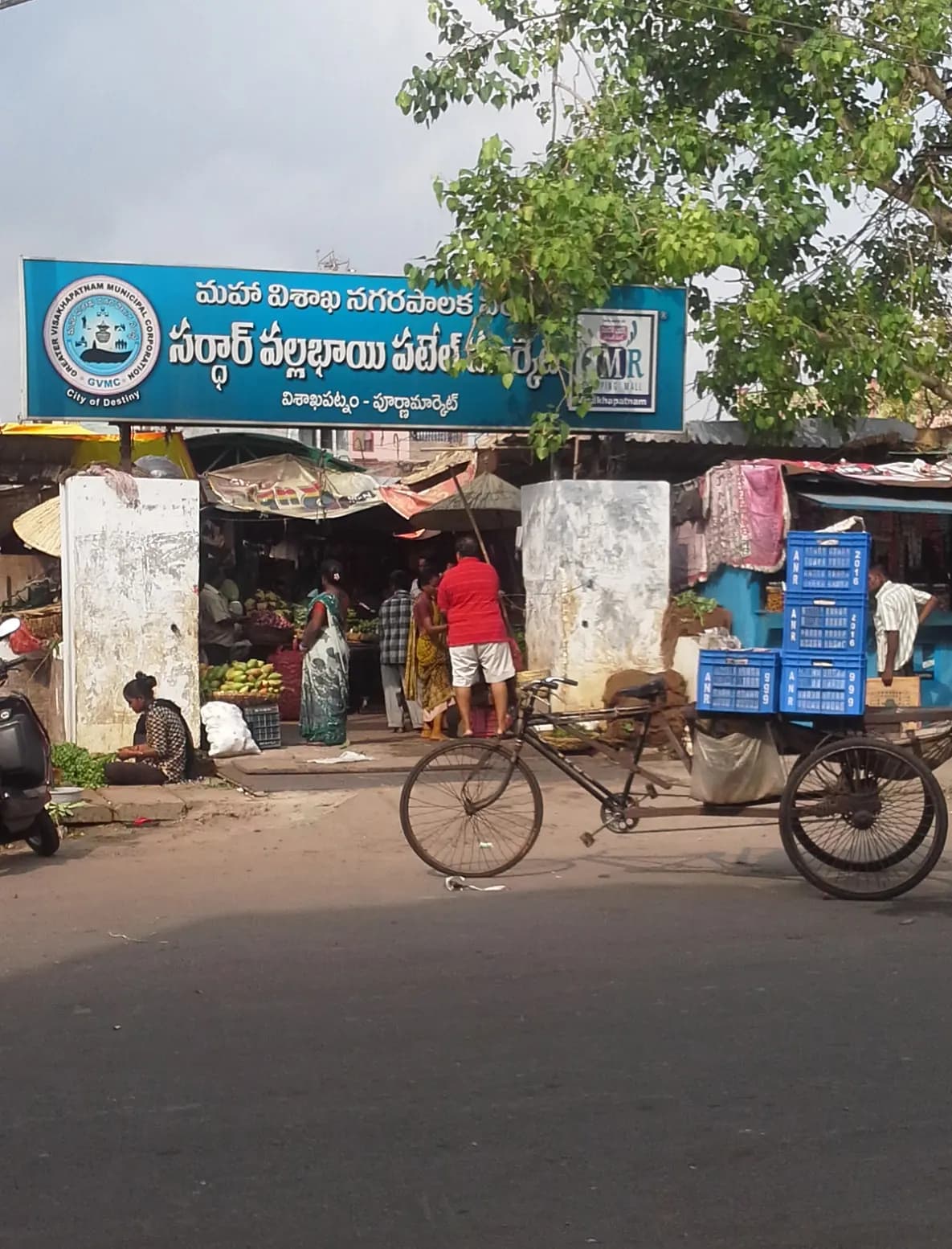
If you plan to build or set up a factory, workshop or workplace using steam, water, mechanical or electrical power, or to install power-driven machinery, the trade licence isn't the first step. Section 264 of the Municipalities Act requires you to apply to the council for permission before construction or installation begins.
The application gives the maximum number of workers you plan to employ on any day, a plan of the premises and the machinery details the council's bye-laws ask for. Before deciding, the council must get the Inspector of Factories' approval of the plan for ventilation and light, room heights and doors, fire exits and other prescribed matters, and consult the municipal health officer on the suitability of the site. It then has 60 days from that approval to grant permission, with or without conditions, or refuse it if the unit would be objectionable because of population density or a likely nuisance.
The permission also caps your workforce. Section 264(5) says no worker may be employed beyond what the permission authorises unless you get fresh permission, again cleared with the Inspector of Factories. A fabrication shop that grows from 8 to 20 workers needs to go back to the council before it hires. This permission sits alongside, not instead of, the trade licence and any factory licence under the Factories Act.
Power-driven workshop in an AP municipality
Step 1
Apply to council (s.264)
before building or installing
Step 2
Inspector of Factories
plan approval
Step 3
Health officer
site suitability
Step 4
Council decision
within 60 days of approval
Step 5
Trade licence
then renew yearly
Fees: what the law says and what we couldn't find
Online guides quote anything from ₹1,000 to ₹25,000 a year for an Andhra Pradesh trade licence, but none cite a government schedule. The law explains why. Section 344(2) of the Municipalities Act says fees for licences are charged "on such units and at such rates as may be fixed by the council", so each municipality sets its own basis — often the type of trade and the floor area used — and its own rates. Corporations fix theirs under their own laws.
We couldn't find a current official fee schedule for Greater Visakhapatnam, Vijayawada, Guntur or any other corporation on an official page in October 2026, so we haven't printed rates. The demand the CDMA service or your ULB raises after verification is the amount to pay. The "Know Your Dues" service on the CDMA platform shows what's outstanding on an existing licence.
Budgeting. Ask your ward secretariat for the rate for your trade category and area before you sign a lease. For a small restaurant in Vijayawada, the first-year bill typically includes the trade licence, FSSAI registration or licence, a fire NOC if the building needs one, and shops and establishments registration for staff — all separate fees from separate offices.
A worked example. Say you open a 400 sq ft tiffin centre in Guntur on 1 June. You'd apply between early March and early May, attaching your FSSAI registration and the owner's consent. Whatever the corporation demands for an eating house of that size, the licence runs only to 31 March, so between 1 January and 1 March you apply again for the next financial year — and each year after. If you expand into the shop next door, the floor area changes and so does the fee, so tell the ward secretariat rather than waiting for an inspector to notice.
Councils can outsource collection. Section 344(3) lets a council place fee collection under people it appoints or farm it out for up to three years. If a collector visits, ask for an official receipt that names the licence and the year.
Validity and renewal
A licence under section 263 expires at the end of the year unless the commissioner, for special reasons, sets an earlier date. "Year" in the Act means the financial year, so licences run the financial year (1 April – 31 March) — the D&O year everyone in AP business circles knows.
Renewing an AP trade licence for the next financial year
1 January – 1 March (30–90 days before 31 March)
Apply to renew on CDMA, at the ward secretariat or ULB office
While a timely renewal is pending
You may act as if the licence has been renewed (s.344(13))
30 days after the commissioner receives it
No order communicated? Renewal deemed allowed
After 31 March without renewal
Treated as having no licence (s.344(8)) — fines and sealing risk
Visakhapatnam's deadlines. GVMC has in recent years asked traders to renew before the end of February — for example 28 February 2025 for the 2025–26 licence — which sits inside the statutory window. Expect a similar notice early each year, and check GVMC's announcements for the exact date.
Don't miss the window. If you apply on time, section 344(13) lets you keep trading as if renewed until orders arrive. If you don't, section 344(8) treats you as being without a licence from the moment the period ends until the licence is renewed.
Closing or changing the business. The CDMA platform has a closure service — use it when you stop trading so dues don't keep building. If you move premises or change trade, apply for a new or amended licence; the old one covers only the place and purpose written on it.
Penalties, suspension and enforcement
Fines. Offences under the Municipalities Act are punished by fines up to the amounts in Schedules VI and VII, and section 336 says the fine in a conviction can't be less than one-third of the maximum of the maximum. Daily fines apply if you continue after a conviction. On top of the fine, section 344(10) requires the magistrate to recover the licence fee you should have paid, and the court may also recover prosecution costs. Paying that fee through the court doesn't give you a licence.
Suspension and revocation. The commissioner can suspend or revoke a licence if you evade or break its conditions, are convicted of breaching the Act or bye-laws in a matter connected with it, or obtained it by misrepresentation or fraud. You must be given a chance to show cause first, and any refusal, suspension or cancellation must be in writing with reasons.
Inspection. Section 344(7) makes it the commissioner's duty to inspect licensable premises. Officers can enter during the day, at night if the place is open to the public or working, and at any time without notice if they suspect unlicensed or non-conforming use.
Sealing in corporations. Corporations act under sections 521 and 622. Guntur's June 2026 statement warned that unlicensed shops would receive notices under section 521 and face action under section 622(4), including sealing. Sealing, not the fine, is the real cost: lost trading days and the hassle of getting premises reopened.
Municipality vs corporation at a glance
Trade licences in Andhra Pradesh (2026)
| Municipality / nagar panchayat | Municipal corporation | |
|---|---|---|
Examples | Tenali, Bhimavaram, Chilakaluripet | Visakhapatnam, Vijayawada, Guntur, Tirupati |
Licensing provision | AP Municipalities Act 1965, s.263 + Schedule IV | Corporation law, s.521 (terms under s.622) |
Licence year | the financial year (1 April – 31 March) | Financial year (renewal notices each Jan–Feb) |
Fee fixed by | The council (s.344(2)) | The corporation |
Deemed approval | 90 days new / 30 days renewal | Check the corporation's rules |
Where to apply | CDMA services, ward secretariat, ULB office | CDMA services, ward secretariat, corporation office |
Examples
- Municipality / nagar panchayat
Tenali, Bhimavaram, Chilakaluripet
- Municipal corporation
Visakhapatnam, Vijayawada, Guntur, Tirupati
Licensing provision
- Municipality / nagar panchayat
AP Municipalities Act 1965, s.263 + Schedule IV
- Municipal corporation
Corporation law, s.521 (terms under s.622)
Licence year
- Municipality / nagar panchayat
the financial year (1 April – 31 March)
- Municipal corporation
Financial year (renewal notices each Jan–Feb)
Fee fixed by
- Municipality / nagar panchayat
The council (s.344(2))
- Municipal corporation
The corporation
Deemed approval
- Municipality / nagar panchayat
90 days new / 30 days renewal
- Municipal corporation
Check the corporation's rules
Where to apply
- Municipality / nagar panchayat
CDMA services, ward secretariat, ULB office
- Municipal corporation
CDMA services, ward secretariat, corporation office
Street vendors and home businesses
Not everyone who sells needs a trade licence. Street vendors in Andhra Pradesh's towns are regulated under the Street Vendors (Protection of Livelihood and Regulation of Street Vending) Act, 2014, which works through vending certificates issued on the recommendation of each town's vending committee, not D&O licences. If you sell from a cart or a pavement spot, ask the ULB about vending registration instead.
Businesses run from a house are a grey area. A tailor or tutor working from a living room rarely attracts an inspector, but a home kitchen supplying caterers, a beauty parlour with walk-in customers or a small workshop with machinery is using the premises for a trade, and the ULB may expect a licence — and, for machinery, section 264 permission. Check with the ward secretariat before you advertise an address.
Common mistakes and how to fix them
Applying the week before opening. The Act expects applications not less than 30 and not more than 90 days ahead. Apply early and keep the acknowledgement.
Setting up machinery before section 264 permission. Installing power-driven machinery without the council's permission can't be fixed by a trade licence later. Apply for permission before construction.
Treating the licence as a labour or tax registration. You still need shops and establishments registration with the Labour Department, Andhra Pradesh professional tax enrolment, and to pay at least the Andhra Pradesh minimum wages to staff.
Ignoring closure. If you shut down and don't close the licence on CDMA, renewal dues can keep building against the premises.
Paying cash to collectors without a receipt. Insist on an official receipt with the licence number and year.
What to do next
Check whether your premises falls under a municipality or a corporation, clear the property tax, and line up FSSAI, fire and pollution approvals if your trade needs them. Apply through the CDMA trade licence services or your ward secretariat at least a month before opening, diary the January–March renewal window, and close the licence properly if you stop trading. Then get Udyam registration for MSME benefits and use our startup cost calculator to budget the first year's licences. Running a business across the border too? See our Telangana trade licence guide.
This is general information, not legal or tax advice — confirm on the official source or with a professional.
Frequently asked questions
The Commissioner and Director of Municipal Administration (CDMA) runs trade licence services for urban local bodies: new licence, renewal, closure, dues, certificate download and status. Apply online through your municipality's website on the CDMA platform, at the ULB office or ward secretariat, or through the Mana Mitra WhatsApp service on 95523 00009.
Licences run for the financial year (1 April – 31 March). Under the AP Municipalities Act, renewal applications must be made not less than 30 and not more than 90 days before the year ends — roughly 1 January to 1 March for a licence expiring on 31 March. Visakhapatnam's corporation has set end-February deadlines in recent years. While a timely renewal is pending, you can carry on as if renewed.
There's no single state fee. Section 344 of the AP Municipalities Act lets each council fix licence fees on its own units and rates, and corporations set theirs under their own laws. We couldn't find a current official fee schedule for Visakhapatnam, Vijayawada or Guntur in October 2026; the portal shows the demand for your trade.
D&O stands for dangerous and offensive trades. In AP municipal corporations, section 521 of the corporation law requires the commissioner's licence for trades that are dangerous, unhealthy or a nuisance, and corporations such as Guntur treat this as covering every business establishment. Municipalities license the purposes listed in Schedule IV of the AP Municipalities Act, 1965.
Under section 344(13) of the AP Municipalities Act, a new licence application is deemed allowed if no order reaches you within 90 days of the commissioner receiving it, and a renewal within 30 days. The deemed licence runs for the year or shorter period you applied for, subject to the Act's conditions.
Yes. In June 2026 Guntur Municipal Corporation warned that unlicensed shops would get notices under section 521 and could face action under section 622(4), including sealing. In municipalities, the commissioner can suspend or revoke licences, and a court convicting an unlicensed trader also recovers the licence fee on top of the fine.
Sources & verification
Figures on this page were checked against the sources below when it was last reviewed on 13 October 2026. Each rate and limit is stored once with its own official source and review date, and official update channels are monitored daily so changes are picked up. How we verify
- 1.Commissioner and Director of Municipal Administration — online services (Trade License) — CDMA, MA&UD Department, Government of Andhra Pradesh · accessed 13 October 2026
- 2.Greater Visakhapatnam Municipal Corporation — website — Greater Visakhapatnam Municipal Corporation · accessed 13 October 2026
- 3.Andhra Pradesh Municipalities Act, 1965 (text as of 2020) — FAOLEX (copy of the Act) · accessed 13 October 2026
- 4.D&O trade licence mandatory (Guntur Municipal Corporation) — The Hans India (15 June 2026) · accessed 13 October 2026
- 5.Andhra Pradesh Municipalities Act, 1965 — section text — LegitQuest · accessed 13 October 2026
- 6.Andhra Pradesh Trade License — apply for business licence — IndiaFilings (consultancy) · accessed 13 October 2026
MSMETOOLS is an independent platform and is not affiliated with any government agency, ministry or department.
Tools for this
Startup Cost Calculator
Estimate how much capital you need to launch.
Invoice Generator
Create professional invoices with tax, logo and custom details.
Related guides
 Shop and Establishment Registration AP 2026: Fees, RulesRead guide
 Trade License Telangana 2026: GHMC Fees, Renewal & PenaltyRead guide
 Trade License Patna 2026: PMC Licence, Fees Cap & RenewalRead guide
 Trade License Indore 2026: e-Nagarpalika, MP Rules & RenewalRead guide
Official links open the government site in a new tab.