 Business registration & legal
What Is a Memorandum of Understanding (MoU)? Meaning, Legal Status, Stamp Duty and Key Clauses (2026)
What is a memorandum of understanding in India (2026): MoU vs agreement under the Contract Act, binding clauses, stamp duty, registration and MSME MoU clauses.
 Edited by Sumeet YadavFounder & editor, MSMETOOLS · fact-checked against official sources
Contents (9)
- 1. What is a memorandum of understanding?
- 2. MoU vs agreement vs contract: what Indian law actually says
- 3. When is an MoU legally binding?
- 4. Stamp duty on an MoU
- 5. Does an MoU need registration or notarisation?
- 6. Key clauses for MSME partnership and JV MoUs
- 7. Worked example: a joint-bid MoU between two MSMEs
- 8. Common mistakes with MoUs
- 9. What to do next
Two MSMEs agree to bid jointly for a tender. A manufacturer signs up a distributor for a new state. A food brand agrees to share a cold store with another. In each case, someone usually says "let's sign an MoU first." This guide explains what a memorandum of understanding actually is under Indian law, when it binds you and when it does not, how it differs from an agreement, what stamp duty and registration apply, and which clauses small businesses should put in one. It ends with a worked joint-bid MoU and the mistakes that cause disputes.
Quick answer
A memorandum of understanding (MoU) is a written record of what two or more parties have agreed or intend to agree. Indian law has no separate category for MoUs: under section 10 of the Indian Contract Act, an MoU is a binding contract if its terms are certain and the parties intended to be bound. If it only records intent to negotiate, its main terms are not enforceable. Most MoUs attract state stamp duty as an 'agreement or memorandum of an agreement'.
Substance decides, not the title — courts read the whole document
Make binding and non-binding clauses explicit
Maharashtra duty for a general agreement: ₹500
Registration is needed only if it deals with immovable property
What is a memorandum of understanding?
A memorandum is simply a written note. A memorandum of understanding is a written note of an understanding between parties: who will do what, by when, at whose cost, and on what terms they can walk away. It is used for business tie-ups, joint bids, research collaborations, distribution arrangements, family settlements, and the investment pledges that state governments sign with companies at investor summits.
The term is not defined in any Indian statute. The Indian Contract Act, 1872 recognises only agreements and contracts. Section 2(e) says every promise and every set of promises forming the consideration for each other is an agreement. Section 2(h) says an agreement enforceable by law is a contract. An MoU is therefore an agreement in written form, and whether it is also a contract depends on what it says.
Do not confuse an MoU with a company's Memorandum of Association (MoA). The MoA is the constitution document filed with the Registrar under section 4 of the Companies Act, 2013, setting out the company's name, registered office, objects and capital. Searchers often mix the two because both are called "memorandum", but they have nothing to do with each other.
Where an MoU usually sits in a deal
Step 1
Initial talks
Step 2
MoU / term sheet
binding: confidentiality, exclusivity
Step 3
Due diligence
Step 4
Definitive agreement
fully binding
Step 5
Performance
MoU vs agreement vs contract: what Indian law actually says
Section 10 of the Contract Act sets the test. All agreements are contracts if they are made by the free consent of parties competent to contract, for a lawful consideration and with a lawful object, and are not expressly declared void. Nothing in section 10 cares whether the document is headed "MoU", "agreement", "letter of intent" or "heads of terms".
Courts apply this consistently. The Supreme Court has held, in cases such as State of Orissa v. Titagarh Paper Mills, that the name given to an instrument does not decide its character; you read all its terms and the rights they create. So a two-page MoU that fixes prices, quantities, delivery dates and payment terms can be enforced like any supply contract. And a ten-page "agreement" whose key terms say "to be mutually decided" can fail.
Two other sections matter in practice:
- Section 29 — uncertainty. Agreements whose meaning is not certain, or capable of being made certain, are void. An MoU that says the parties will share profits "in a fair ratio to be agreed" has no enforceable profit-sharing term.
- Section 27 — restraint of trade. An agreement that restrains anyone from carrying on a lawful trade is void to that extent. A non-compete that lasts during the tie-up is usually defensible; one that bars a partner from the trade for years after the MoU ends is unlikely to be enforced.
MoU, letter of intent, term sheet and definitive agreement
| Document | Typical use | Usually binding? |
|---|---|---|
Memorandum of understanding | Records a tie-up or the principles of a deal | Depends on wording; often partly binding |
Letter of intent (LoI) | One party signals intent to award or buy | Generally not, except clauses stated as binding |
Term sheet | Key commercial terms of an investment or JV | Mostly non-binding, except confidentiality, exclusivity, costs |
Definitive agreement (JV, supply, SHA) | Final, detailed obligations | Yes |
Memorandum of understanding
- Typical use
Records a tie-up or the principles of a deal
- Usually binding?
Depends on wording; often partly binding
Letter of intent (LoI)
- Typical use
One party signals intent to award or buy
- Usually binding?
Generally not, except clauses stated as binding
Term sheet
- Typical use
Key commercial terms of an investment or JV
- Usually binding?
Mostly non-binding, except confidentiality, exclusivity, costs
Definitive agreement (JV, supply, SHA)
- Typical use
Final, detailed obligations
- Usually binding?
Yes
When is an MoU legally binding?
Think of MoUs in three groups. Which group yours falls in decides what you can enforce.
Fully binding MoUs. All essential terms are settled and the parties act on them. A supply MoU with fixed price, quantity, delivery and payment terms, signed by authorised people and followed by orders and invoices, is a contract in all but name.
Agreements to agree. The MoU records a broad understanding and says a detailed agreement will follow. Its commercial terms are usually not enforceable, because an agreement to negotiate in future lacks certainty. If talks collapse, neither side can force the other to sign.
Partly binding MoUs. This is the most common and most useful form for MSMEs. The commercial terms are expressed as non-binding, but certain clauses are stated to bind immediately. Those typically are:
- Confidentiality — information shared during talks stays confidential, usually for a fixed period after the MoU ends.
- Exclusivity — neither side negotiates the same deal with others for a limited period, for example 90 days.
- Costs — each side bears its own costs unless stated otherwise.
- Non-solicitation — neither side poaches the other's staff or customers during the MoU.
- Governing law and dispute resolution — which courts, or arbitration seat, will decide disputes.
- Termination — how and when either side can end the MoU.
The safest drafting is a clause that names exactly which clauses are binding and says the rest are not. Phrases like "subject to contract" or "subject to definitive agreements" help, but a court will still look at what the parties actually did. If you start performing — shipping goods, paying advances — the non-binding label weakens.
Stamp duty on an MoU
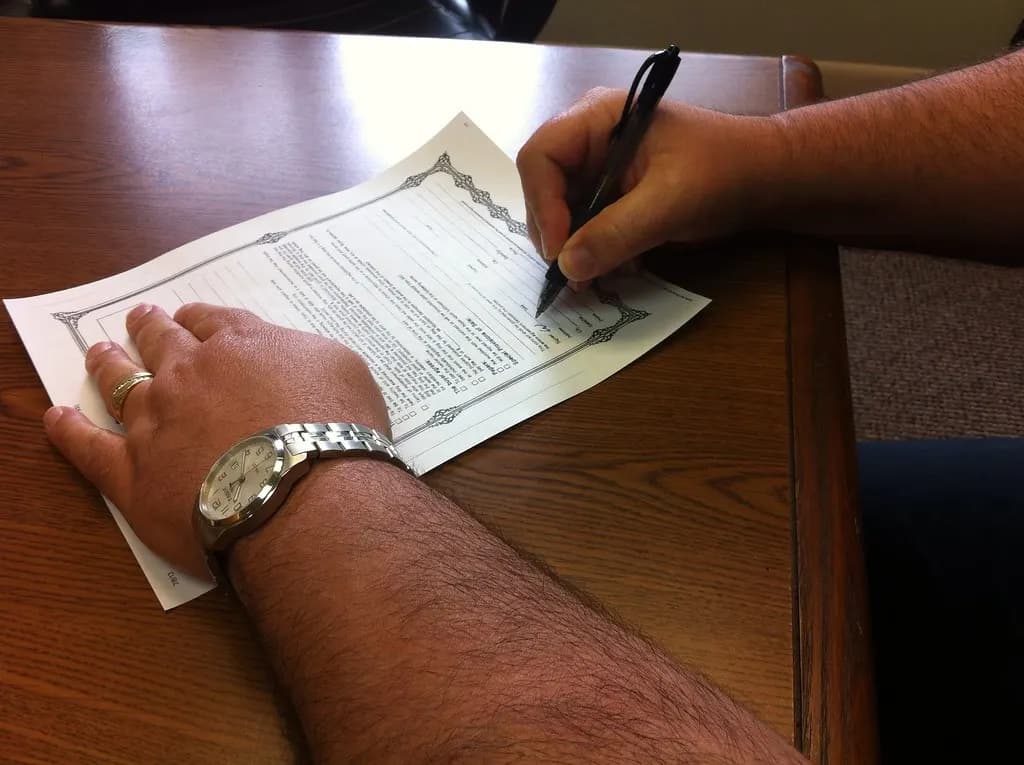
Stamp duty is a state subject, so the amount depends on where the MoU is signed or first brought into the state. Every state's stamp schedule has an article — Article 5 in the Indian Stamp Act and in most state Acts — for an "agreement or memorandum of an agreement". The title itself shows that MoUs were always expected to pay duty.
Within that article, states usually have specific entries (sale of goods, works contracts, development agreements and so on) and a residual entry for agreements "not otherwise provided for". A plain business MoU normally falls in the residual entry and pays a small fixed duty. In Maharashtra, the residual duty under Article 5(h)(B) was raised from ₹100 to ₹500 by the Maharashtra Stamp (Amendment) Ordinance, 2024. Other states set their own figures, typically a few hundred rupees; check the current schedule with your state's registration and stamps department before you buy the stamp.
The duty can be much higher if the MoU is really a different instrument:
- If it transfers or agrees to transfer immovable property, it may be charged like an agreement to sell or a conveyance.
- If it grants use of premises, it may be treated as a lease or licence.
- If it records a loan or security, the duty for a bond, mortgage or guarantee can apply.
How to pay. Most states now collect non-judicial stamp duty through e-stamping run by Stock Holding Corporation of India, as Central Record-keeping Agency, or through the state's own online payment system. Pay before or at the time of signing; the e-stamp certificate carries the parties' names and the document description.
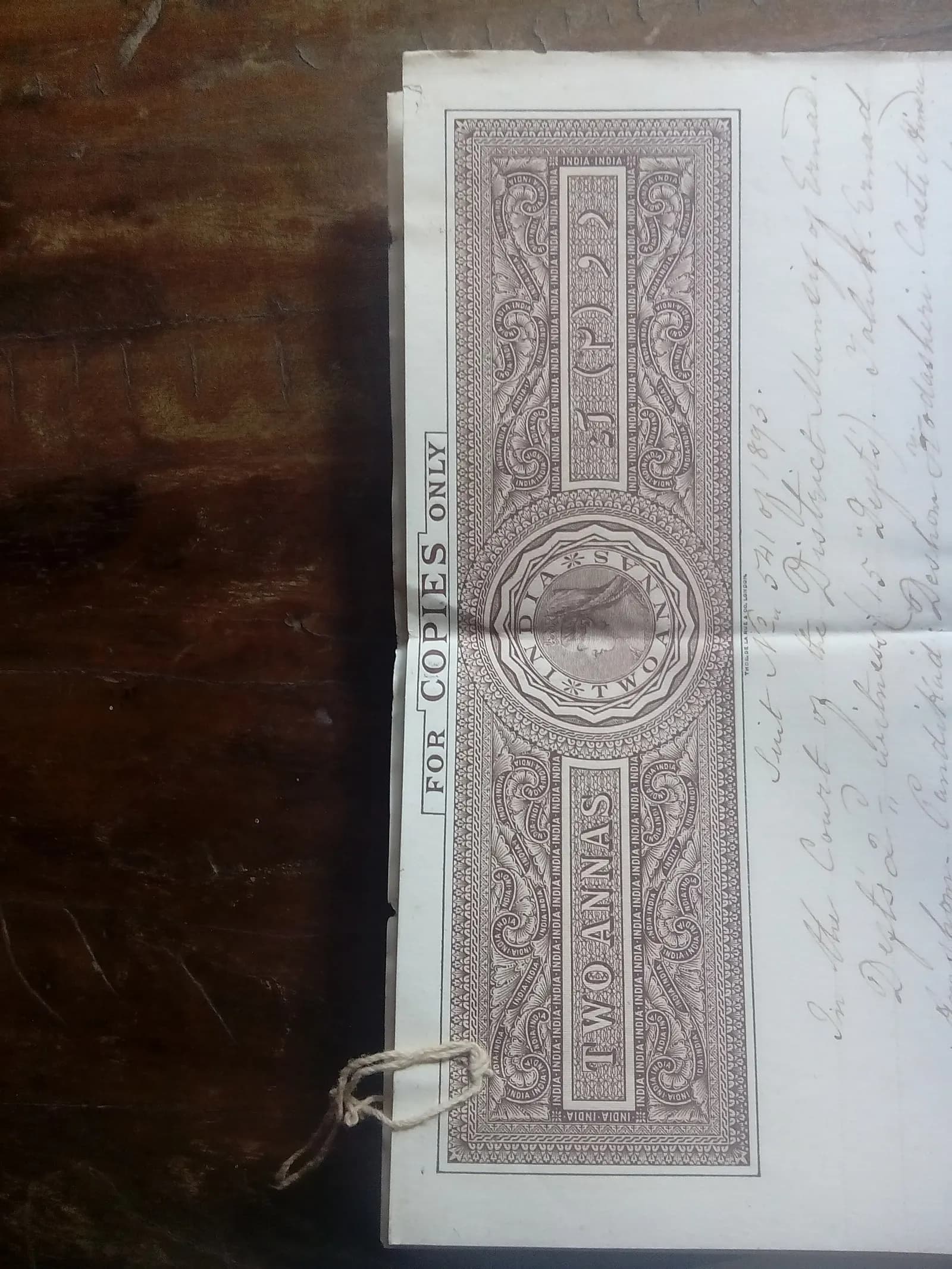
What if you do not stamp it? An unstamped or under-stamped MoU is not void, and you can still act on it. But a court or arbitrator will not admit it as evidence until the deficit and a penalty, which can be several times the duty, are paid. A few hundred rupees at signing avoids that problem entirely.
Does an MoU need registration or notarisation?
Registration under the Registration Act, 1908 is compulsory for documents that create, declare, assign, limit or extinguish a right in immovable property worth ₹100 or more, and for leases of immovable property for more than a year. A family settlement MoU dividing land, or an MoU giving a partner rights in a plot, may fall in this category. An unregistered document that needed registration cannot be used as evidence of the property transaction.
Most MSME business MoUs — joint bids, distribution, technology sharing, marketing tie-ups — do not touch rights in land and do not need registration. You may still register them voluntarily, but few businesses do.
Notarisation is not required by law for an MoU to be valid. It helps as proof that the named people signed on a given date, and some banks, government departments or foreign counterparties ask for it. Two witnesses are a cheap alternative.
Electronic signing is valid for most agreements under the Information Technology Act, 2000, using Aadhaar e-sign or DSCs. Documents involving immovable property and some others are excluded, so check before you sign an MoU about land electronically.
Key clauses for MSME partnership and JV MoUs
A good MoU is short but complete. The checklist below covers what MSMEs most often leave out. The point is not length; it is that each essential term is either fixed, or deliberately left for the final agreement with a deadline.
Clauses every MSME MoU should have
0/11No partnership clause. Under the Indian Partnership Act, sharing profits of a business carried on together can create a partnership by conduct. If you do not intend that, say so, and say neither party can bind the other. If you do intend a long-term business together, consider a formal partnership firm, an LLP or a JV company.
Joint ventures. A JV MoU usually records the shareholding ratio, board seats, capital each side will bring, the business plan, and the conditions for signing a shareholders' agreement and incorporating a JV company. Keep those commercial terms non-binding until due diligence is done, but make confidentiality and exclusivity binding from day one. The private limited company guide covers the incorporation step.
Government and tender MoUs. Many tenders allow a consortium or joint bid supported by an MoU between members, and the tender usually prescribes what it must contain — lead member, share of work, joint and several liability. Follow the tender format exactly; a mismatch is a common reason for technical rejection. If you sell to government, see our GeM registration guide.
Worked example: a joint-bid MoU between two MSMEs
Kavya Pumps, a micro manufacturer in Pune, and Sai Electricals, an electrical contractor in Nashik, want to bid jointly for a ₹40 lakh municipal tender to supply and install solar water pumps. Kavya will supply the pumps, worth about ₹26 lakh; Sai will do installation and electrical work, worth about ₹14 lakh. They sign an MoU in Pune.
How they draft it:
- Lead member and liability. Kavya is lead member and signs the bid; both accept joint and several liability to the buyer, as the tender requires.
- Work and money split. Kavya invoices pumps; Sai invoices installation. The MoU fixes the split at 65:35 of the contract value, in line with the work. Any liquidated damages are shared in the same ratio, unless one party's delay caused them.
- Bid costs. The earnest money deposit of ₹80,000 (2% of tender value, as stated in the tender) is paid by Kavya, and Sai reimburses 35%, or ₹28,000, within seven days. If the bid fails, the EMD refund is shared the same way.
- Binding clauses. The whole MoU is binding because the tender requires it. Exclusivity for this tender only, confidentiality of pricing for two years, and arbitration seated in Pune.
- Exit. If the bid is not awarded, the MoU ends automatically 30 days after the result. If awarded, it continues until the defect liability period ends.
| Item in the MoU | Kavya Pumps (lead) | Sai Electricals |
|---|---|---|
| Scope | Supply of pumps | Installation and electrical work |
| Share of ₹40 lakh contract | 65% (₹26 lakh) | 35% (₹14 lakh) |
| EMD of ₹80,000 | Pays upfront | Reimburses ₹28,000 in 7 days |
| Liquidated damages | 65% unless Sai caused delay | 35% unless Kavya caused delay |
| Stamp duty (Maharashtra) | ₹500 e-stamp, bought by Kavya | — |
Stamp duty: the MoU is signed in Maharashtra and is a general agreement, so Kavya buys an e-stamp of ₹500. It does not involve immovable property, so it is not registered. Both directors sign, with two witnesses, and attach board resolutions authorising them.
The result is a short MoU that a tender committee will accept, that fixes the money, and that gives both sides a clear route if something goes wrong. Contrast that with a one-page MoU saying the two will "cooperate on the tender and share profits suitably" — section 29 would leave the profit term unenforceable, and the dispute would end up in court on what "suitably" meant.
How to draft and sign an MoU
- 1
Agree the commercial points first
Settle scope, roles, money and timelines in a short email or call note before drafting. Disagreements are cheaper to resolve now.
- 2
Decide what is binding
List which clauses bind immediately and which await a final agreement. State it in a dedicated clause.
- 3
Draft and review
Use plain language, define key terms and attach any tender or technical documents as schedules. Have a lawyer review anything above a modest value.
- 4
Pay stamp duty
SHCIL e-stampingBuy an e-stamp or pay through your state's portal for the correct article and amount, before or at signing.
- 5
Sign with authority
Authorised signatories sign each page and the last page, with date, place and two witnesses. Keep board or partner resolutions on file.
- 6
Track deadlines
Diarise the final-agreement deadline, exclusivity end date and termination notice periods.
Common mistakes with MoUs
Treating the MoU as a formality. Parties often sign a vague MoU, start work, and assume the details will sort themselves out. When the relationship sours, there is nothing certain to enforce. Write down the money terms, even if provisional.
Not saying what is binding. If the MoU is silent, a court has to infer intention from the wording and from conduct, which is slow and unpredictable. One clause naming the binding provisions removes most of that risk.
Signing without authority. An MoU signed by a manager without board approval, or by one partner on matters outside the firm's business, can be challenged. Ask for the other side's authority document, and give yours.
Skipping stamp duty. The amount is small for most MoUs, but an unstamped MoU cannot be relied on in evidence until stamped with a penalty. Buy the stamp at signing.
Using an MoU where a different document is needed. If you are actually leasing premises, lending money or selling property, use that document, pay the right duty and register it where required. Calling it an MoU does not change the duty or the registration rule.
Ignoring tax and GST. Revenue sharing between two businesses still needs proper invoices. If one party bills the end customer and pays the other a share, the second party usually invoices the first with GST. Settle the invoicing chain in the MoU so input tax credit flows correctly.
What to do next
Write down the commercial points with your counterparty first, then draft the MoU around them using the clause checklist above. Use our business plan generator to set out the joint project's numbers before you fix the money split, and once the MoU turns into orders, raise them on a proper purchase order. If the tie-up is going to last, move from an MoU to a formal structure — a partnership deed, an LLP agreement or a JV company.
This is general information, not legal or tax advice — confirm on the official source or with a professional.
Frequently asked questions
A memorandum of understanding (MoU) is a written document in which two or more parties record what they have agreed, or intend to agree, about working together. It usually sets out the purpose, each side's role, timelines, costs and how either side can exit. Depending on its wording, an MoU can be a fully binding contract, a partly binding document, or only a statement of intent.
It depends on the content, not the title. Under section 10 of the Indian Contract Act, 1872, an agreement is a contract if it is made with free consent of competent parties, for lawful consideration and object, and is not void. If an MoU has certain terms and shows an intention to be bound, courts treat it as a contract. If it says the parties will negotiate a final agreement later, the main terms are usually not enforceable.
Legally there is no separate category called MoU. An agreement becomes an enforceable contract when it meets section 10 of the Contract Act. An MoU is often used for the earlier, looser stage of a deal, with a definitive agreement to follow. But a detailed MoU with clear obligations can be just as binding as a document called an agreement, and courts look at substance over name.
Usually yes. State stamp laws charge duty on an 'agreement or memorandum of an agreement'. Where no specific article applies, a fixed duty is payable — in Maharashtra it is ₹500. If the MoU transfers property, creates a lease or secures money, the duty for that kind of instrument applies instead. An unstamped MoU is not void, but courts will not admit it as evidence until duty and penalty are paid.
Registration with the sub-registrar is compulsory only if the MoU creates, transfers or limits a right in immovable property worth ₹100 or more, or is a lease of more than a year. Most business MoUs between MSMEs do not, so registration is optional. Notarisation is not required by law but adds proof of who signed and when.
Yes, on the terms the MoU itself sets — usually written notice, a fixed expiry date, or failure to sign the final agreement by a deadline. If the MoU is a binding contract and has no exit clause, ending it unilaterally can be a breach, so always include a termination clause with notice period and what survives termination.
Sources & verification
Figures on this page were checked against the sources below when it was last reviewed on 9 October 2026. Each rate and limit is stored once with its own official source and review date, and official update channels are monitored daily so changes are picked up. How we verify
- 1.The Indian Contract Act, 1872 — India Code (Legislative Department) · accessed 9 October 2026
- 2.The Companies Act, 2013 — India Code (Legislative Department) · accessed 9 October 2026
- 3.Maharashtra Stamp (Amendment) Ordinance, 2024 — Government of Maharashtra (via PRS Legislative Research) · accessed 9 October 2026
- 4.Department of Registration and Stamps, Maharashtra — Government of Maharashtra · accessed 9 October 2026
- 5.e-Stamping — non-judicial stamp duty — Stock Holding Corporation of India (Central Record-keeping Agency) · accessed 9 October 2026
- 6.Memorandum of understanding — features, clauses and case law — iPleaders · accessed 9 October 2026
MSMETOOLS is an independent platform and is not affiliated with any government agency, ministry or department.
Tools for this
Business Plan Generator (US)
Create a professional business plan for US investors and banks.
Purchase Order Generator
Generate purchase orders instantly.
Related guides
 Partnership Firm Registration 2026: Process, Deed & FeesRead guide
 LLP Registration in India 2026: Fees, Process & FormsRead guide
 Partnership Deed Format 2026: Clauses, Stamp Duty & Tax LimitsRead guide
 Legal Metrology Registration for Packers 2026: Rule 27 GuideRead guide
Official links open the government site in a new tab.