 Starting & growing a business
How to Start a Coffee Shop in 2026: Formats, Health Permits, Startup Costs, Staffing and a Worked Break-Even
How to start a coffee shop in 2026: choose a cart, kiosk or cafe, get health permits under the Food Code, budget startup costs and test a worked break-even.
 Edited by Sumeet YadavFounder & editor, MSMETOOLS · fact-checked against official sources
Contents (8)
- 1. Choose your coffee shop format
- 2. Write the plan and register the business
- 3. Health permits: the Food Code, plan review and inspection
- 4. Equipment and startup costs
- 5. Staffing, wages and tips
- 6. Worked example: a coffee kiosk break-even
- 7. Common mistakes when starting a coffee shop
- 8. What to do next
Coffee looks like a simple business: beans, milk, a good machine and a friendly counter. The hard parts are less visible. You need a health permit that depends on a kitchen plan your inspector approves, a location with a morning rush you can actually capture, and a cost structure where rent and labor don't eat a $7 ticket. This guide is for anyone in the US planning to start a coffee shop in 2026, from a cart or kiosk to a drive-thru or a sit-down cafe. It covers how to pick a format, register the business, get health permits, budget startup costs, hire baristas and run a worked break-even. Rules were checked against FDA, BLS, the IRS, the Department of Labor and state and city agencies in October 2026.
Quick answer
To start a coffee shop, pick a format (cart, kiosk, drive-thru or cafe), test the numbers in a business plan, form an LLC and get an EIN, and only then sign a lease, after zoning and health department plan review confirm the space works. You'll need a food establishment permit, a sales tax permit, a certified food manager in most areas, and payroll that follows tip rules.
Most coffee shops cost about $80,000–$300,000 to open; kiosks about $50,000–$100,000 (Bellwether Coffee estimates)
Health permit fee examples: NYC $280; Florida 1–49 seats $262 plus $50 to apply
Baristas: median $15.00 an hour (BLS, fast food and counter workers, May 2025)
Cottage food laws don't cover milk drinks; you need a permitted food establishment
Our kiosk example breaks even at about 140 customers a day on a $7 average ticket
Choose your coffee shop format
Your format decides almost everything that follows: how much you need to raise, which permits apply, how many staff you need and what your daily customer count must be. Decide it first, because a landlord, a lender and your health department will all ask what you're building.
A coffee cart is the cheapest way in. It parks at a farmers market, office lobby or event and usually works under a mobile or temporary food permit tied to a commissary, the same way a food truck does; our food truck business license guide explains that route. A kiosk sits inside a mall, hospital, campus or office building and leans on the host's foot traffic, often with a percentage rent. A drive-thru stand lives on commuter routes and depends on speed: every extra minute at the window costs you cars. A sit-down cafe costs the most to build but sells food and longer visits, which lifts the average ticket.
Coffee shop formats compared
| Format | Typical cost (estimate) | Strengths | Watch out for |
|---|---|---|---|
Cart | Lowest; often under a kiosk | Tests demand, can move | Commissary and event permits, weather, limited menu |
Kiosk | $50,000–$100,000 (Bellwether) | Host foot traffic, small staff | Host rules, percentage rent, little storage |
Drive-thru | Varies by site work | Commuter volume, high tickets per hour | Queue design, zoning for stacking lanes |
Sit-down cafe | $80,000–$300,000 (Bellwether) | Food sales, longer visits, events | Build-out, rent, labor for long hours |
Cart
- Typical cost (estimate)
Lowest; often under a kiosk
- Strengths
Tests demand, can move
- Watch out for
Commissary and event permits, weather, limited menu
Kiosk
- Typical cost (estimate)
$50,000–$100,000 (Bellwether)
- Strengths
Host foot traffic, small staff
- Watch out for
Host rules, percentage rent, little storage
Drive-thru
- Typical cost (estimate)
Varies by site work
- Strengths
Commuter volume, high tickets per hour
- Watch out for
Queue design, zoning for stacking lanes
Sit-down cafe
- Typical cost (estimate)
$80,000–$300,000 (Bellwether)
- Strengths
Food sales, longer visits, events
- Watch out for
Build-out, rent, labor for long hours
Whatever you choose, test it before you commit. Count the morning foot or car traffic past the site for a week between 6 and 10 a.m., note the competitors within a few minutes' walk or drive, and check what they charge for a 12-ounce latte. If a site can't plausibly deliver the daily customer count your break-even needs, no menu will save it.
Write the plan and register the business
Write a business plan before you sign anything. It doesn't need to be long, but it must show how many customers a day you need, at what average ticket, to cover rent, labor and loan payments. Our coffee shop business plan walks through each section with a cost-per-cup table, and the startup cost calculator helps you total the one-time costs. A lender reviewing an SBA-backed loan will expect this level of detail.
Next, set up the legal shell. Most owners form an LLC, which costs $35 – $500 to file depending on the state; our LLC registration guide covers the steps. Get a free EIN from the IRS (Free ($0)), open a business bank account, and register with your state for sales tax. Many states tax coffee drinks and pastries sold for immediate consumption as prepared food, even where grocery food is exempt, so confirm how your state treats hot drinks, bagged beans and to-go food; our sales tax guide shows the method. You'll also need a local business license and, in many cities, a sign permit; see our business licenses guide.
Keep receipts for everything you spend before opening. Under IRS rules in Publication 583, you can deduct up to $5,000 of start-up costs in the year you open, reduced once start-up costs pass $50,000, with the rest amortized over 180 months. Equipment is handled separately through depreciation, so ask your accountant to split the two.
From idea to opening day
- 1
Pick the format and test the site
Count morning traffic, price competitors and set the daily customer count you need.
- 2
Write the plan and arrange funding
Coffee shop business planStartup budget, break-even and three to six months of working capital.
- 3
Form the business
LLC filing ($35 – $500), EIN (Free ($0)), bank account, sales tax permit and local business license.
- 4
Get plan review before the lease is final
Submit the layout and equipment list to the health department; confirm zoning and parking or stacking lanes.
- 5
Build out and pass inspections
Plumbing, electrical, building and fire sign-offs, then the health inspection and permit.
- 6
Hire, train and soft open
Certified food manager, food handler cards where required, drink recipes and a few days of friends-and-family service.
Health permits: the Food Code, plan review and inspection
Coffee shops are regulated by state and local health departments. Their rules are based on the FDA Food Code, a model code FDA publishes for state, local, tribal and territorial agencies to adopt. The latest edition is the 2026 Food Code, but adoption lags, and many states still enforce the 2017 or 2022 edition with their own amendments. Ask your health department which version it uses before you draw the layout.
The permit almost always starts with plan review. You submit a floor plan, an equipment list with specification sheets, finishes for floors, walls and ceilings, a plumbing plan and your menu. For a coffee bar, reviewers typically look for a dedicated handwashing sink at the bar, a three-compartment sink or a commercial dishwasher for pitchers and utensils, a separate mop sink, enough refrigeration to hold milk cold, an approved water supply with backflow protection, and indirect drains (an air gap) for equipment like espresso machines and ice bins. Requirements vary by county, so treat this as the checklist to ask about, not the final word. Building your bar before plan review is approved is the most expensive mistake you can make here.
What a coffee bar plan review usually asks about
0/8After construction, an inspector visits before opening, and you receive a food establishment permit, usually renewed every year. Fees vary widely by place, which is why it pays to check early:
- New York City: the Department of Health's food service establishment permit costs $280. Applicants need a supervisor who has passed the city's food protection course, plus proof of workers' compensation and disability insurance and a sales tax Certificate of Authority.
- Florida: the state Department of Business and Professional Regulation, not a county, licenses restaurants and cafes. Under rule 61C-1.008, a seating establishment with 1 to 49 seats pays $262 a year, a non-seating operation such as a counter-only or drive-thru coffee stand pays $242, and new applicants pay a $50 application fee on top.
- California: food handlers must get a food handler card within 30 days of hire, and the card is valid for three years. Counties issue the health permit and set their own fees.
Most Food Code-based rules also require a certified food protection manager, someone who has passed an accredited exam, and many require that person or another trained person in charge whenever you're open. Budget for the course and exam before opening day.
If you plan to roast your own beans, ask about it during plan review. A small roaster needs ventilation and may need an air permit or fire sign-off, and selling packaged beans wholesale can bring in state food processing rules. Many new owners buy from a local roaster for the first year and add roasting once volume justifies it.
Equipment and startup costs
Startup costs depend mostly on the space. Bellwether Coffee's guide puts most coffee shops at $80,000 to $300,000 to open, with many landing at $150,000 to $200,000. The biggest swing is build-out: taking over an existing cafe runs about $15,000 to $40,000, converting a retail unit $40,000 to $80,000, and a raw shell $80,000 to $150,000 or more. All of these are market estimates, not official figures.
| Item | Estimated cost | Basis |
|---|---|---|
| Espresso machine | $5,000–$35,000 | Bellwether Coffee: budget to premium |
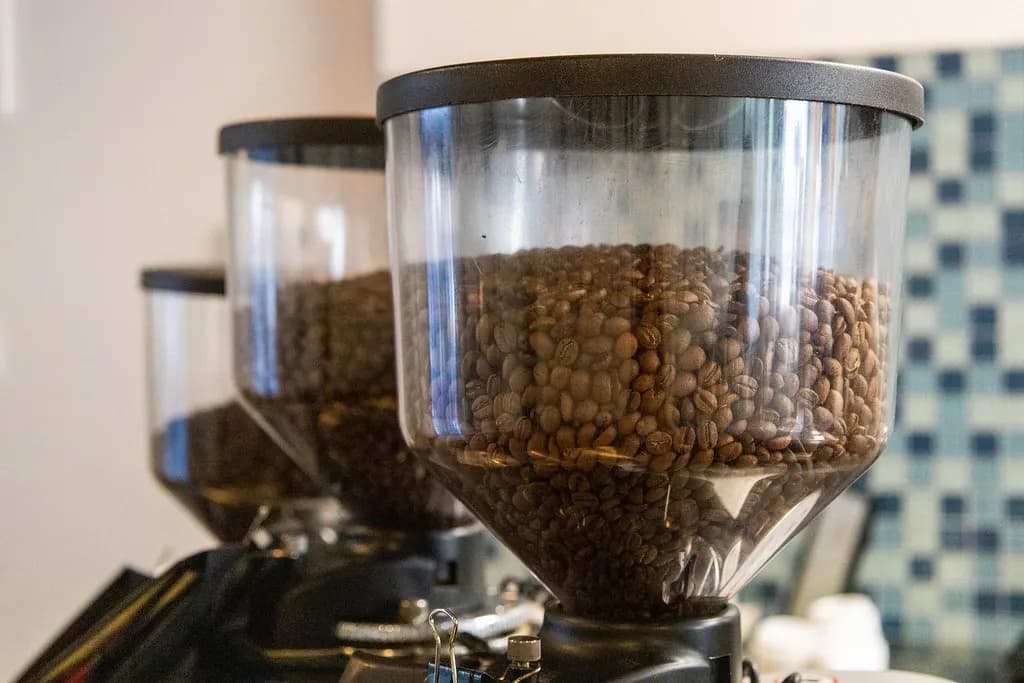
| Espresso grinders | $1,500–$8,000 | Bellwether Coffee: budget to premium |
| All equipment (machine, grinders, brewers, refrigeration, ice, water filtration) | $20,000–$80,000 | Bellwether Coffee |
| Build-out (leasehold improvements) | $20,000–$150,000 | Bellwether Coffee; lowest in a former cafe |
| Licenses and permits | $1,000–$8,000 | Bellwether Coffee; for example NYC permit $280 |
| LLC filing and EIN | $35 – $500; EIN Free ($0) | State filing fees; IRS |
| Working capital | $20,000–$100,000 | Bellwether Coffee: three to six months of costs |
| Opening inventory, smallwares, POS, signage | Several thousand dollars | Our estimate; varies with menu and seat count |
Ingredient prices move, so build your menu from current costs rather than an old spreadsheet. The BLS average retail price of ground roast coffee was $9.30 a pound in August 2026, and whole milk averaged $4.23 a gallon. Cafes buy wholesale beans at different prices than shoppers, but the BLS series is a useful signal of direction: coffee prices rose sharply through 2025 and 2026, and owners who locked menu prices for years absorbed the hit. Our food cost calculator shows the cost share of each drink.
Try it — cost of a latte as a share of its price
Most first-time owners fund a coffee shop with savings, a partner or family money, equipment financing and sometimes an SBA-backed loan. The SBA 7(a) program goes up to $5 million and can cover equipment, leasehold improvements and working capital; our SBA 7(a) loan guide explains what lenders expect. Leasing the espresso machine, or taking one on a supply deal from a roaster, can cut the cash needed on day one, but read the contract for minimum purchase volumes.
Staffing, wages and tips
Labor is usually your biggest cost after ingredients, and coffee has long hours: an early open, a morning rush, a quiet afternoon. BLS groups baristas with fast food and counter workers, whose median wage was $15.00 an hour in May 2025. The federal minimum wage is $7.25 an hour, but many states and cities set higher minimums; California's is $16.90 an hour. Check your state on our minimum wage by state page, and use our first employee guide for the payroll set-up.
Tips. Under the Fair Labor Standards Act, a barista who customarily and regularly receives more than $30 a month in tips is a tipped employee. Federal law lets an employer pay a cash wage as low as $2.13 an hour and claim a tip credit for the rest, but only with proper notice, and many states ban or limit the credit. Most coffee shops pay at least the full minimum wage and let tips sit on top, which keeps payroll simpler. Whichever you choose, owners, managers and supervisors can't keep any part of employees' tips, including from a shared tip jar.
Card tip prompts. The IRS says a payment is a tip only if the customer chooses to pay it and decides the amount. A payment screen that forces the customer to pick a tip above zero before paying turns that amount into a service charge, which counts as wages paid by you, not a tip. A prompt with suggested percentages and a no-tip option is fine. That distinction also matters to your staff, because service charges don't qualify for the federal no tax on tips deduction available for 2025 through 2028.
Worked example: a coffee kiosk break-even
Here's a kiosk in an office and hospital district, open 12 hours a day, 30 days a month. The numbers are illustrative; swap in your own rent and wages.
Sales. The kiosk serves 180 customers a day at a $7.00 average ticket (a drink plus a pastry on some orders), or 5,400 customers and $37,800 a month. Cost of goods, including coffee, milk, syrups, cups and pastries, runs 28% of sales, and card fees about 3%, so each customer leaves $4.83 toward fixed costs.
Fixed costs. Rent $2,500; labor of about 20 staffed hours a day at roughly $17 an hour including payroll taxes ($10,200); utilities $600; insurance $200; POS and software $150; marketing $400; repairs $250; a loan payment on $90,000 over seven years at about 10% ($1,494); accounting $250; other costs $300; and an owner's salary of $4,000. Total: $20,344 a month.
Try it — customers a year to break even
Break-even. $20,344 ÷ $4.83 is about 4,212 customers a month, or 140 a day. At 180 a day, the kiosk keeps about $5,700 a month after paying the owner, before income tax. Labor is 27% of sales and rent under 7%, both healthy for coffee.
The sensitivities tell you where to focus. Each extra $0.50 on the average ticket, from a size upgrade or a pastry, adds about $1,860 a month at this volume. Losing 40 customers a day costs about $5,800, which erases the profit. A rent of $5,000 instead of $2,500 pushes break-even to about 157 a day. For a sit-down cafe, our coffee shop business plan runs the same test with a larger rent and food menu.
Common mistakes when starting a coffee shop
The first mistake is signing a lease before plan review. A space without a floor drain where the bar needs to go, without capacity in the grease or sewer line, or without parking that zoning requires can add tens of thousands of dollars or kill the project. Get the health department and zoning answers in writing, and ask the landlord for a contingency or free-rent period during build-out.
The second is overspending on the machine and underfunding working capital. A premium espresso machine doesn't fix a site with a weak morning rush, and new cafes often take months to build regulars. Keep three to six months of fixed costs in the bank. The third is pricing from competitors instead of from cost: a latte priced below your neighbor's can still lose money if your milk waste or labor is higher.
The fourth is getting tips wrong, such as letting a shift manager share the tip jar or using a payment screen that forces a tip, which turns tips into wages on your payroll. The fifth is staffing the afternoon like the morning. Schedule by the hour using your POS data after the first month, and keep a close eye on labor as a share of sales every week.
Official links
- FDA Food Code 2026The model code behind state and local health rules
- FDA Food Code adoption by stateWhich edition your state uses
- NYC food service establishment permitExample of a city health permit
- Florida rule 61C-1.008 (license fees)Seating and non-seating food service fees
- BLS — food and beverage serving workers payWage data for baristas and counter staff
- Tipped employees, 29 CFR part 531 subpart DTip credit and tip pool rules
- IRS — tip recordkeeping and reportingTips vs service charges
- IRS Publication 583Start-up cost deduction
What to do next
Start with the numbers: total your one-time costs in the startup cost calculator, test the daily customer count with the break-even calculator, and turn it into a lender-ready document with our coffee shop business plan. Then call your local health department about plan review before you sign a lease. If you want to add a full kitchen and table service, read how to start a restaurant; if you'd rather test the market from home with baked goods or beans first, our cottage food guide shows what's allowed. Bakery-cafe owners should also read how to start a bakery.
This is general information, not legal or tax advice — confirm on the official source or with a professional.
Frequently asked questions
There's no official figure. Bellwether Coffee estimates most coffee shops cost $80,000 to $300,000 to open, with many around $150,000 to $200,000, and puts a coffee kiosk at about $50,000 to $100,000. Build-out is the biggest swing: taking over an existing cafe can cost $15,000 to $40,000, while a raw shell can top $150,000. Hold three to six months of working capital on top.
Usually a local business license, a food establishment permit from your health department after plan review and a pre-opening inspection, a certificate of occupancy, a sign permit, and a state sales tax permit. Most areas also require a certified food protection manager. Fees vary: New York City's food service permit costs $280, and Florida's license for a cafe with 1 to 49 seats is $262 plus a $50 application fee.
Not for espresso drinks. Cottage food laws cover shelf-stable foods such as baked goods, and drinks made with milk need refrigeration for safety, so they fall outside. You can often sell whole-bean or ground roasted coffee and dry baked goods under cottage food rules in states that allow it, but a cafe, kiosk or cart that serves drinks needs a permitted food establishment.
It can be, but rent and labor decide it. In our kiosk example, a $7 average ticket and 180 customers a day leave about $5,700 a month after paying the owner a salary, but the break-even is about 140 customers a day. Losing 40 customers a day would wipe out the profit, which is why location and the morning rush matter more than the menu.
BLS groups baristas with fast food and counter workers, whose median wage was $15.00 an hour in May 2025. Many cafes pay above that in high-cost areas, and state minimums can be higher than the federal $7.25 an hour, for example $16.90 an hour in California. Tips belong to the employees, and managers can't share in a tip pool.
A cart or kiosk costs far less and tests demand, but has little seating, limited menu space and depends on foot traffic or a host location. A drive-thru suits commuter routes. A full cafe earns more per customer from food and longer visits but costs the most to build. Many owners start small, prove their volume, then use those numbers to finance a bigger site.
Sources & verification
Figures on this page were checked against the sources below when it was last reviewed on 13 October 2026. Each rate and limit is stored once with its own official source and review date, and official update channels are monitored daily so changes are picked up. How we verify
- 1.FDA Food Code 2026 — U.S. Food and Drug Administration · accessed 13 October 2026
- 2.Adoption of the FDA Food Code by state and territorial agencies — U.S. Food and Drug Administration · accessed 13 October 2026
- 3.Food service establishment permit — NYC Department of Health and Mental Hygiene (NYC Business) · accessed 13 October 2026
- 4.Rule 61C-1.008 — License fees — Florida Department of Business and Professional Regulation (Florida Administrative Code) · accessed 13 October 2026
- 5.California Health and Safety Code section 113948 — State of California (via public.law) · accessed 13 October 2026
- 6.Food and beverage serving and related workers — Pay — U.S. Bureau of Labor Statistics · accessed 13 October 2026
- 7.Average price data: coffee, 100% ground roast (APU0000717311) — U.S. Bureau of Labor Statistics · accessed 13 October 2026
- 8.29 CFR part 531, subpart D — Tipped employees — U.S. Department of Labor (eCFR) · accessed 13 October 2026
- 9.Tip recordkeeping and reporting — Internal Revenue Service · accessed 13 October 2026
- 10.Publication 583, Starting a Business and Keeping Records — Internal Revenue Service · accessed 13 October 2026
- 11.Coffee shop startup costs — Bellwether Coffee (secondary) · accessed 13 October 2026
MSMETOOLS is an independent platform and is not affiliated with any government agency, ministry or department.
Tools for this
Startup Cost Calculator
Estimate how much capital you need to launch.
Break Even Calculator
Find your break even point and units.
Food Cost Calculator
Calculate food cost, menu pricing and profit margins.
Menu Profitability Checker
Find the most profitable items on your menu.
Related guides
 Coffee Shop Business Plan 2026: Outline, Costs & ExampleRead guide
 How to Start a Restaurant in 2026: Permits, Costs & TipsRead guide
 How to Start a Food Truck Business in 2026: Costs & RulesRead guide
 Food Truck Business License 2026: Permits & Costs by CityRead guide
Official links open the government site in a new tab.