 Starting & growing a business
Business Plan for a Coffee Cafe (2026): Outline, Permits, Equipment, Cost per Cup and a Worked Example
Write a business plan for a coffee cafe in 2026: a full outline table, health permits and food handler rules, equipment costs, cost per cup and a worked break-even.
 Edited by Sumeet YadavFounder & editor, MSMETOOLS · fact-checked against official sources
Contents (9)
- 1. The coffee shop business plan outline
- 2. Choose your cafe concept and location
- 3. Health permits and licenses for a coffee shop
- 4. Equipment and startup costs
- 5. Cost per cup: pricing your coffee menu
- 6. Worked example: coffee shop profit and break-even
- 7. Taxes, insurance and staffing
- 8. Mistakes to avoid in a coffee shop business plan
- 9. What to do next
A coffee shop business plan has two jobs. It convinces a lender or landlord that you understand the business, and it forces you to find out, on paper, whether the cafe you have in mind can pay its rent. Most templates handle the first job and skip the second. This guide is for anyone in the US writing a business plan for a coffee cafe in 2026, from a kiosk to a full espresso bar with food. It gives you a full outline table, then fills in the parts lenders test hardest: health permits and food safety certification, equipment and startup costs, cost per cup using real input prices, and a worked break-even in customers per day. Figures were checked against the SBA, BLS and city and state health rules in October 2026.
Quick answer
A business plan for a coffee cafe follows the SBA's nine sections, but the parts that decide whether you get funded are the location and lease, the menu priced from cost per cup, the startup budget with permits and equipment, a 12-month cash-flow forecast and the break-even in customers per day.
Most coffee shops cost about $80,000–$300,000 to open (Bellwether Coffee estimate)
Expect a health department plan review and permit; NYC's permit is $280 a year
California food handlers need a card within 30 days of hire, paid for by the employer
A 12 oz latte costs about $1.07 to make in our example against a $5.25 price
Our example cafe breaks even at about 169 customers a day
The coffee shop business plan outline
The SBA describes two formats. A traditional plan runs through nine sections in detail and is what banks and SBA lenders expect. A lean plan fits on one page and is useful for testing the idea before you spend money on a full plan. If you need a loan or investors, write the traditional plan; you can still start with the lean version to see if the numbers work.
Here's the full outline with what each section should say for a cafe and what a reader checks.
| Section | What to include for a coffee cafe | What a lender or landlord checks |
|---|---|---|
| 1. Executive summary | The concept in two sentences, location, opening date, startup cost, funding request and the year-one revenue and profit target | That the numbers match the rest of the plan |
| 2. Company description | Concept (espresso bar, drive-through, roastery cafe, kiosk), legal structure, owners, what makes it different | A clear reason customers will come back |
| 3. Market analysis | Foot traffic or car counts, nearby offices, schools and homes, every competitor within a mile with prices and hours | Evidence you visited and counted, not national statistics |
| 4. Organization and management | Owners' experience, manager, staffing plan by hour, who holds the food manager certificate | Someone on the team has run a food business |
| 5. Products and menu | Drinks and food with prices, cost per item and gross margin, suppliers | Cost of goods around 25–35% and a sensible average ticket |
| 6. Marketing and sales | Opening plan, loyalty program, catering or wholesale, online ordering | A plan for the slow afternoon hours |
| 7. Funding request | Total startup budget by line, how much you're putting in, how much you need and in what form | Owner equity and a realistic contingency |
| 8. Financial projections | 12-month cash flow, 3-year profit and loss, break-even in customers per day, key assumptions | Break-even achievable within months, not years |
| 9. Appendix | Lease draft or letter of intent, equipment quotes, permits list, résumés, menu, floor plan | Real quotes rather than guesses |
The market analysis is where most cafe plans are weakest. National coffee statistics prove nothing about your corner. What does help is a week of counts: people passing the door between 6 and 10 a.m., cars in the drive-through lane of the nearest competitor, offices and their headcounts within a five-minute walk, and every competitor's prices and opening hours. Put the raw counts in the appendix.
Write the financial section last, because it draws on everything else. A lender will compare the menu prices in section 5 with the average ticket in section 8, and the staffing in section 4 with the labor line in your forecast. If those don't match, the plan loses credibility no matter how good the concept is. Use our business plan generator to draft the structure, then replace every assumption with a number you can defend.
Choose your cafe concept and location
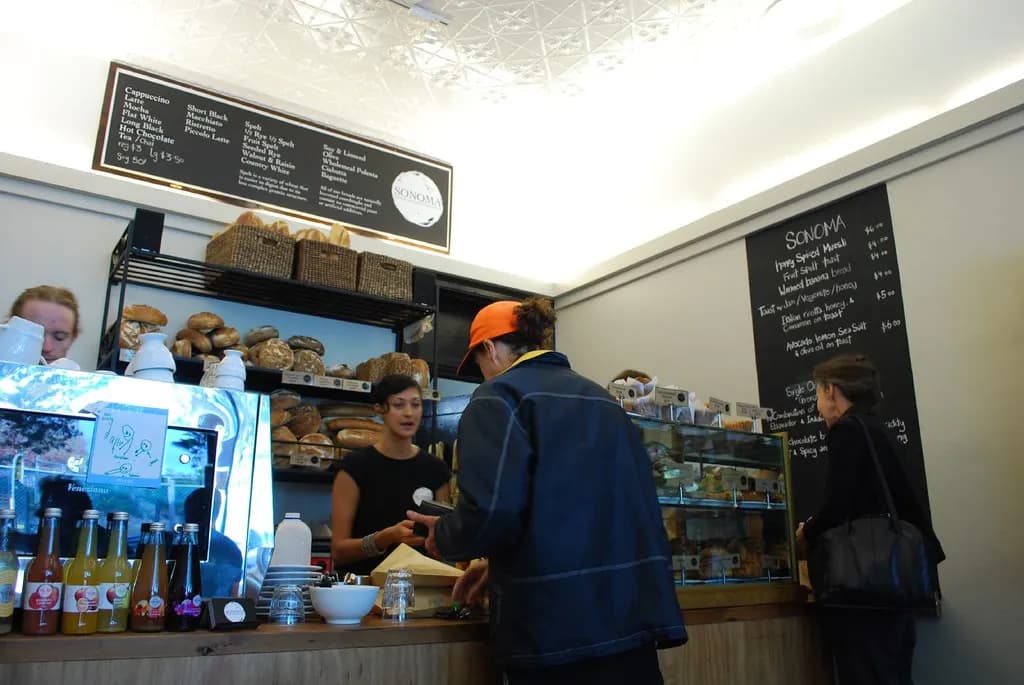
The concept decides almost every number in the plan. An espresso bar in a busy downtown block lives on the morning rush, short visits and high volume. A neighborhood cafe with seating and food sells fewer, larger tickets spread through the day, and needs more space and a kitchen. A drive-through coffee shop needs a pad site with stacking room for cars and lives on speed of service. A kiosk or cart in an office lobby, hospital or campus has the lowest build-out and rent but limited hours and menu. A roastery cafe adds wholesale income and higher margins on beans, with the cost of a roaster and more complex permits.
Location matters more than anything else you control. Look for a space on the morning side of the street for commuters, with visible signage and easy parking or transit. A second-generation space that was already a cafe or restaurant can save tens of thousands of dollars in plumbing, grease and electrical work. Before signing, ask the landlord for the space's previous health permit history and confirm the zoning allows a food use; then negotiate a rent-free period for build-out and a lease contingent on getting permits.
Treat the lease as part of the business plan, because it's the largest fixed cost you'll commit to. Lenders will want to see the base rent, how it rises each year, who pays common-area charges, property tax and insurance, and how long the term runs. A five-year term with an option to renew protects the money you put into the build-out. Ask for a personal guarantee cap or a "good guy" clause if the landlord wants one, and make sure the lease permits the hours you need, outdoor seating if you plan it, and venting for any ovens. Summarize these terms in section 9 of the plan.
Health permits and licenses for a coffee shop
Food businesses are licensed locally, so the list depends on your city and county, but most coffee shops need the same core set. Food safety rules in nearly every state are based on the FDA Food Code, a model code that state and local governments adopt, often with their own changes.
Start with plan review: most health departments require you to submit the floor plan, equipment list and finish schedule before you build, so they can check sinks, surfaces and storage. Build to the approved plan, then pass a pre-opening inspection to get your food service or retail food permit. You'll also need a certificate of occupancy from the building department, a fire inspection, a sign permit, a city or county business license and a state sales tax permit. If you serve alcohol later, that's a separate license.
Typical permit path for a new cafe
Step 1
Zoning and lease check
Step 2
Plan review submitted
Step 3
Build-out
to the approved plan
Step 4
Building and fire sign-off
Step 5
Health inspection
Step 6
Food permit issued
renew yearly
New York City is a good illustration. The Department of Health's food service establishment permit costs $280 for most establishments, plus $25 if you make frozen desserts, and it's renewed every year. You can open 22 days after applying even before the permit arrives, with an unannounced inspection to follow. Before applying, you need proof of workers' compensation and disability insurance, a Certificate of Authority to collect sales tax, and a supervisor who has passed the city's Food Protection Course and is on site during operations.
Food handler and food manager certification
Most states require at least one certified food protection manager, someone who has passed an accredited exam, for any business that handles open, perishable food. California requires at least one owner or employee with that certification. Texas requires at least one certified food manager per establishment, with the certificate posted where customers can see it, and all food employees must complete accredited food handler training.
California also requires every food handler to get a food handler card within 30 days of being hired; the card is valid for three years. Since January 1, 2024, under SB 476, employers must pay for the training and exam and for the time employees spend on them, and can't make an existing card a condition of hiring. Put those costs in your training budget. Other states, including Illinois, have their own food handler rules, and many cities add requirements, so check with your local health department early.
Equipment and startup costs
Equipment is the part of the budget owners tend to overspend on and still get wrong. Buy for your expected volume. A two-group espresso machine handles most single-location cafes; a three-group is for very high volume. Never skimp on grinders: you need at least one for espresso and one for brewed coffee.
| Startup item | Estimated cost | Basis |
|---|---|---|
| Espresso machine | $5,000–$35,000 | Bellwether: budget to premium; most cafes spend $10,000–$20,000 |
| Grinders (at least two) | $1,500–$8,000 | Bellwether: budget to premium |
| Brewers, water filtration, refrigeration, ice machine, blenders | $8,000–$25,000 | Part of Bellwether's $20,000–$80,000 equipment total |
| POS, furniture, smallwares | $5,000–$15,000 | Typical cafe fit-out |
| Build-out (leasehold improvements) | $20,000–$150,000 | Bellwether; second-generation cafe space at the low end |
| Permits and licenses | $1,000–$8,000 | Bellwether; plus your state LLC fee ($35 – $500) |
| Opening inventory | $3,000–$8,000 | Coffee, milk, syrups, cups, food |
| Lease deposit and pre-opening rent | $5,000–$20,000 | One to three months of rent |
| Marketing and opening | $2,000–$8,000 | Signage, launch promotions |
| Working capital (3–6 months) | $20,000–$100,000 | Bellwether |
| Total | About $80,000–$300,000 | Bellwether's range for most coffee shops |
These figures are market estimates from one equipment and roasting company's 2026 guide, not quotes. Get three quotes for every major item and put them in the appendix. Leasing or financing the espresso machine is common and keeps cash in the business. SBA 7(a) loans can fund equipment, leasehold improvements and working capital; see our SBA 7(a) loan guide.
Cost per cup: pricing your coffee menu
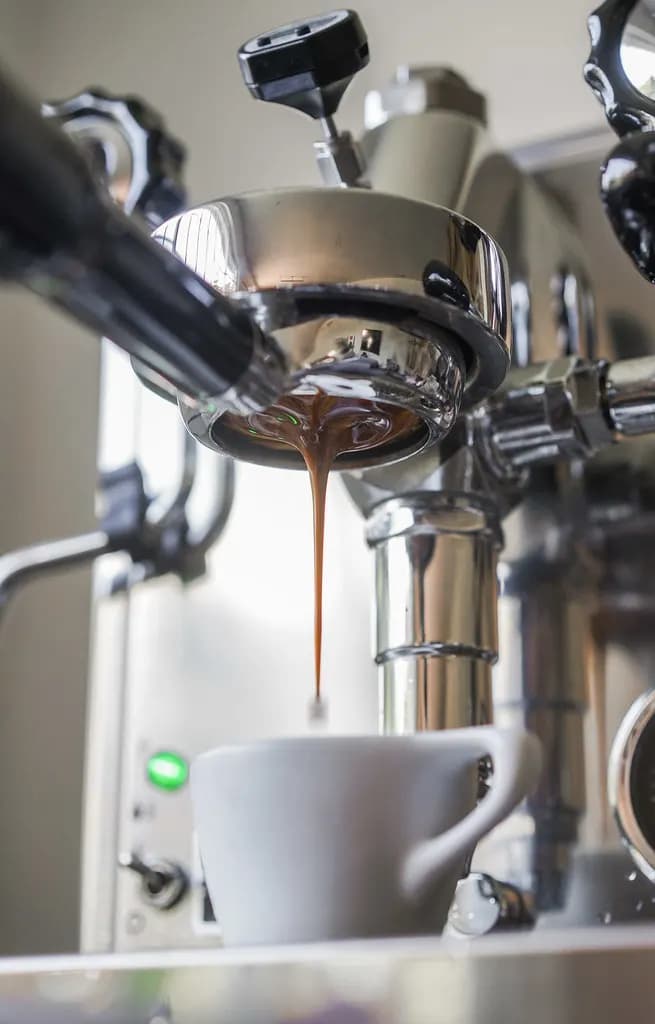
Cost per cup is the most persuasive table in a cafe business plan, because it shows a lender you know exactly where the margin comes from. Work it out for every drink and food item from three inputs: ingredients by weight or volume, packaging, and a small allowance for waste.
For coffee, Bellwether Coffee reports that most cafes pay $10 to $14 a pound for roasted wholesale beans. For context, the BLS average retail price of ground roast coffee was $9.30 a pound in August 2026, and whole milk averaged $4.23 a gallon. Coffee prices rose sharply through 2025 and 2026, so build a price review into your plan rather than locking in a menu for years.
| Drink | Ingredients and packaging | Estimated cost | Menu price | Cost share |
|---|---|---|---|---|
| 12 oz drip coffee | 20 g coffee at $12/lb ($0.53), cup and lid ($0.20) | $0.73 | $3.25 | 22% |
| 12 oz latte | 18 g double shot with 10% waste ($0.52), 10 oz whole milk ($0.33), cup, lid and sleeve ($0.22) | $1.07 | $5.25 | 20% |
| 16 oz vanilla latte | Double shot ($0.52), 13 oz milk ($0.43), syrup ($0.12), cup set ($0.25) | $1.32 | $5.95 | 22% |
Milk here is priced at the BLS retail average; wholesale dairy is usually cheaper, but oat and other plant milks cost more, which is why many cafes charge extra for them. Food has a much higher cost share, often 30% to 40% for pastries bought in and sandwiches made on site, so your blended cost of goods sold across the whole menu will be higher than the drink numbers alone. A blended figure near 30% is a common planning number. Check your full menu in the food cost calculator.
Price from cost, then check the neighborhood. If your latte cost is $1.07 and competitors charge $5.00 to $5.75, you have room to set price by quality and service rather than undercutting. Remember that card fees, typically around 3% of each sale, and sales tax on prepared food and drinks in most states also come out of the price.
Worked example: coffee shop profit and break-even
Here's a worked month for an imagined 1,200 sq ft neighborhood cafe open 30 days a month with drinks and baked goods. The figures are illustrative assumptions, not industry averages.
The average ticket is $8.50 (often a drink and a pastry). Variable cost per ticket is $2.81: cost of goods at a blended 30% ($2.55) and card fees at 3% ($0.26). That leaves $5.69 per customer toward fixed costs. Labor is treated as fixed here because you schedule staff for opening hours whether customers come or not.
Fixed monthly costs are $28,838: rent ($5,000), staff wages for two baristas on shift for 12 hours a day at $18 an hour plus about 10% payroll taxes ($14,256), utilities ($1,200), insurance ($250), POS and software ($150), marketing ($600), repairs ($300), a loan payment on $150,000 over 10 years at about 10% ($1,982), accounting ($300), waste and other costs ($300) and an owner's salary ($4,500).
Try it — coffee shop break-even (customers per month)
Break-even is $28,838 ÷ $5.69, or about 5,068 customers a month, roughly 169 a day. At 200 customers a day, the cafe serves 6,000 a month, takes $51,000 and keeps about $5,302 a month after paying the owner, before income tax. That's about a 10% margin, in line with a well-run independent cafe.
The sensitivities matter more than the base case. Raising the average ticket by $1 (a pastry attachment or a size upgrade) adds about $4,000 a month at 200 customers a day after cost of goods and card fees. Losing 20 customers a day takes away about $3,400. Rent above roughly 10% of sales and labor above roughly 30% are the usual warning signs. Put a table like this in your financial projections so a lender sees you've tested the downside.
Taxes, insurance and staffing
Plan for payroll from day one. Baristas who work set shifts, follow your recipes and use your equipment are employees, so budget for employer payroll taxes, workers' compensation insurance and any state paid leave contributions. Tips are wages for tax purposes and must be reported, and food and beverage employers can claim a federal credit for employer Social Security and Medicare tax paid on certain tips. Many states and cities set minimum wages well above the federal level, so use your local rate in the forecast.
On sales tax, most states tax prepared food and hot drinks sold by a cafe, even where grocery food is exempt, and the rules on cold to-go items vary. Register for a sales tax permit before opening and set up your POS to charge the right rates. For income tax, a sole proprietorship or single-member LLC reports profit on Schedule C and pays self-employment tax of 15.3%; you can deduct up to $5,000 of startup costs in the first year and depreciate or expense equipment.
Insurance for a cafe typically includes general liability, property coverage for equipment and stock (often bundled as a business owner's policy), workers' compensation once you hire, and product liability. Landlords usually require proof of coverage before handing over the keys.
Appendix documents lenders ask for
0/7Mistakes to avoid in a coffee shop business plan
- Using national statistics instead of local counts. Lenders want your corner, not the industry.
- Underestimating build-out. Plumbing, grease, electrical and accessibility work can double the budget in a space that wasn't a cafe.
- Skipping plan review. Building before the health department approves the plan can mean tearing work out.
- Pricing drinks without cost per cup. Rising coffee and milk prices erase margins quietly.
- No working capital. Most cafes take months to build a regular trade; plan at least three to six months of costs.
- Overstaffing the afternoon. Schedule labor to your hourly sales, not your opening hours.
- Ignoring food handler rules. In California, the employer pays for the card and the time.
Official links
- SBA — Write your business planTraditional and lean plan formats
- NYC — Food Service Establishment PermitFee, requirements and inspections
- California Health and Safety Code §113948Food handler cards
- Austin Public Health — Food personnel requirementsTexas food handler and food manager rules
- FDA — Food CodeModel food safety code adopted by states
- BLS — Average price dataCoffee and milk prices for costing
- SBA — 7(a) loansFinancing equipment and build-out
What to do next
Spend a week counting customers at your target location and your nearest competitors, then cost every item on your draft menu before you look at equipment. Call the local health department to ask for its plan review checklist and fees, and price the build-out with a contractor who has done cafes. Put your numbers into the break-even calculator, and when the break-even looks achievable, write the full plan. If you're considering a mobile version, our food truck business plan covers commissaries and mobile permits.
This is general information, not legal or tax advice — confirm on the official source or with a professional.
Frequently asked questions
The SBA's traditional format has nine parts: executive summary, company description, market analysis, organization and management, products, marketing and sales, funding request, financial projections and an appendix. For a cafe, lenders look hardest at the location and lease, the menu with cost per cup, the startup budget, a 12-month cash-flow forecast and the break-even in customers per day.
Bellwether Coffee's 2026 guide puts most coffee shops between $80,000 and $300,000, with many landing around $150,000 to $200,000. Equipment alone runs $20,000 to $80,000, build-out $20,000 to $150,000 depending on whether the space was already a cafe, and you should hold three to six months of working capital. Kiosks and carts can start far lower.
Typically a business license, a food service or retail food permit from the city or county health department after plan review and inspection, a certificate of occupancy, a fire inspection, a sign permit, a sales tax permit, and food safety certification. New York City's food service establishment permit costs $280 a year, and most states require at least one certified food protection manager.
Ingredients and packaging usually run well under a quarter of the menu price for coffee drinks. In our example, a 12 oz latte costs about $1.07 using $12-a-pound wholesale coffee, BLS average milk prices and a cup, lid and sleeve, against a $5.25 menu price. Food items run a higher cost share, so a blended cost of goods near 30% is a common planning figure.
It can be, but rent and labor decide it. In our worked example, a cafe with an $8.50 average ticket breaks even at about 169 customers a day and keeps about $5,300 a month at 200 a day after paying the owner a salary. A slow morning rush, an expensive lease or overstaffed afternoons can wipe that out, which is why the plan needs a break-even.
In many states, yes. California requires food handlers to get a card within 30 days of hire, valid for three years, and since January 1, 2024 the employer must pay for the training and the time. Texas requires accredited food handler training for food employees and at least one certified food manager per establishment. Check your local health department.
Sources & verification
Figures on this page were checked against the sources below when it was last reviewed on 8 October 2026. Each rate and limit is stored once with its own official source and review date, and official update channels are monitored daily so changes are picked up. How we verify
- 1.Write your business plan — U.S. Small Business Administration · accessed 8 October 2026
- 2.Food Service Establishment Permit — NYC Department of Health and Mental Hygiene (NYC Business) · accessed 8 October 2026
- 3.California Health and Safety Code §113948 — California Legislature (via Public.Law) · accessed 8 October 2026
- 4.Food personnel requirements — Austin Public Health · accessed 8 October 2026
- 5.Food Code 2022 — U.S. Food and Drug Administration · accessed 8 October 2026
- 6.Average price data — coffee, 100% ground roast, per lb (APU0000717311) — U.S. Bureau of Labor Statistics · accessed 8 October 2026
- 7.Average price data — milk, fresh, whole, per gallon (APU0000709112) — U.S. Bureau of Labor Statistics · accessed 8 October 2026
- 8.7(a) loans — U.S. Small Business Administration · accessed 8 October 2026
- 9.Coffee shop startup costs — Bellwether Coffee (secondary) · accessed 8 October 2026
- 10.Cost of wholesale coffee per pound — Bellwether Coffee (secondary) · accessed 8 October 2026
MSMETOOLS is an independent platform and is not affiliated with any government agency, ministry or department.
Tools for this
Break Even Calculator
Find your break even point and units.
Food Cost Calculator
Calculate food cost, menu pricing and profit margins.
Menu Profitability Checker
Find the most profitable items on your menu.
Business Plan Generator (US)
Create a professional business plan for US investors and banks.
Related guides
 Food Truck Business Plan 2026: Template, Costs & ExampleRead guide
 How to Start a Coffee Shop in 2026: Permits, Costs & StepsRead guide
 How to Start a Bakery Business in 2026: Home to StorefrontRead guide
 How to Start a Catering Business in 2026: Permits & CostsRead guide
Official links open the government site in a new tab.