 Starting & growing a business
How to Start a Bakery Business in 2026: Home Bakery, Wholesale and Storefront Permits, Labels, Costs and a Worked Break-Even
How to start a bakery business in 2026: cottage food caps, retail and wholesale permits, FDA labeling rules, startup costs and a worked bakery break-even.
 Edited by Sumeet YadavFounder & editor, MSMETOOLS · fact-checked against official sources
Contents (10)
- 1. Choose your bakery path
- 2. Starting a home bakery under cottage food laws
- 3. Wholesale bakeries: state licensing and FDA registration
- 4. Retail storefront permits
- 5. Labels: allergens, ingredients and Nutrition Facts
- 6. Ingredient costs and pricing
- 7. Startup costs
- 8. Worked example: storefront bakery break-even
- 9. Common mistakes when starting a bakery
- 10. What to do next
Most bakeries start smaller than their owners expect: a home kitchen, a farmers market table and a few loyal customers. That's a good thing, because baking has low ingredient costs but heavy labor, early hours and expensive ovens. This guide is for anyone in the US planning to start a bakery business in 2026, whether that's a home bakery under cottage food rules, a wholesale bakery selling to cafes, or a retail storefront. It explains which permits apply to each path, how labeling and FDA registration work, what equipment and space cost, how to price using current ingredient prices, and a worked break-even for a storefront. Rules were checked against FDA, BLS and state agencies in California, Texas, Florida and New York in October 2026.
Quick answer
To start a bakery business, choose your path first: a home bakery under your state's cottage food law, a wholesale bakery in a licensed kitchen, or a retail storefront with a health permit. Form an LLC and get an EIN, get the permit or registration that matches your path, label packaged goods correctly, and price every product from ingredient, labor and packaging costs.
Home bakery caps: Texas $150,000, Florida $250,000, California Class B $177,756
Wholesale: New York's food processing license costs $175 or $400 for two years
Retail bakeries are exempt from FDA facility registration; mostly-wholesale bakeries usually aren't
Commercial bakery equipment: about $60,000–$200,000 (Epos Now estimate)
Our storefront example breaks even at about 131 customers a day on a $12 ticket
Choose your bakery path
There are three main ways to start, and each has its own permit track. Most owners move through them in order as demand grows.
Three ways to start a bakery
| Path | Where you bake | Who regulates it | Main limits |
|---|---|---|---|
Home bakery | Your home kitchen | State cottage food law; sometimes the county | Shelf-stable foods only, sales caps, often direct-to-consumer |
Wholesale bakery | Licensed commercial or shared kitchen | State food processing agency; FDA if mostly wholesale | Labels, inspections, delivery logistics |
Retail storefront | Your own permitted bakery | Local or state health department | Build-out cost, rent, long staffed hours |
Home bakery
- Where you bake
Your home kitchen
- Who regulates it
State cottage food law; sometimes the county
- Main limits
Shelf-stable foods only, sales caps, often direct-to-consumer
Wholesale bakery
- Where you bake
Licensed commercial or shared kitchen
- Who regulates it
State food processing agency; FDA if mostly wholesale
- Main limits
Labels, inspections, delivery logistics
Retail storefront
- Where you bake
Your own permitted bakery
- Who regulates it
Local or state health department
- Main limits
Build-out cost, rent, long staffed hours
A home bakery is the cheapest way to test recipes and prices. A wholesale bakery sells bread, pastries or desserts to cafes, restaurants and grocery stores, which means fewer, larger orders and lower prices per item. A retail bakery sells to the public from a storefront or bakery-cafe, often with coffee, which lifts the average ticket; if that's your plan, read our guide on how to start a coffee shop too. Many successful bakeries combine all three: a storefront that also supplies local cafes and takes custom cake orders.
Starting a home bakery under cottage food laws
Most states allow some home food production under cottage food laws, but the rules differ a lot. The common thread is that you can only sell foods that don't need refrigeration for safety, such as breads, cookies, muffins, many cakes, fruit pies and granola. Cream cheese frosting, custards, cream-filled pastries, cheesecake and meat pies are usually out. Our cottage food business guide covers the laws in detail; here are the four largest states.
Home bakery sales caps (2026)
$88,878
California Class A (direct sales)
Class B: $177,756
$150,000
Texas annual gross income
Since September 1, 2025
$250,000
Florida annual gross sales
No permit needed
No cap stated
New York home processor
Registration, no fee
California has two classes. Class A operations sell directly to consumers, with a 2026 cap of $88,878. Class B can also sell through shops and restaurants and has a higher cap of $177,756. Both caps are adjusted each January for inflation, and you can have only one full-time-equivalent employee outside your family or household. You register (Class A) or get a permit (Class B) from your county.
Texas expanded its law through SB 541 from September 1, 2025, raising the annual gross income cap to $150,000. You need accredited food handler training, and online sales are allowed when you, an employee or a household member personally delivers the order. Florida requires no permit for cottage food operations under $250,000 in annual gross sales and allows online and mail-order sales, but bans wholesale. New York requires a home processor registration with the Department of Agriculture and Markets (no fee, but processing can take up to 16 weeks). Approved items include breads, cookies, cakes without homemade buttercream or cream cheese frosting, and double-crust fruit pies. New York home processors can sell at markets, online and wholesale to local businesses, but only within the state.
Home bakeries still need a business structure and taxes in order. Form an LLC ($35 – $500 to file), get an EIN (Free ($0)), check whether your city requires a home occupation permit, and register for sales tax if your state taxes baked goods. Many states exempt bakery items sold as groceries but tax them when sold with seating or as prepared food, so confirm before your first market; our sales tax guide explains the basics.
When to move out of the home kitchen. Watch for four signals. Your sales are heading toward your state's cap; customers keep asking for items your law excludes, such as cheesecake or cream-filled pastries; a cafe or grocery store wants to stock you and your state bars wholesale from home, as Florida does; or you want to ship to other states, which New York's home processor rules don't allow. Any one of them means it's time to price a shared commercial kitchen. Moving early, while the business is still small, is easier than scrambling after a store has already placed a standing order you can't legally fill.
Wholesale bakeries: state licensing and FDA registration
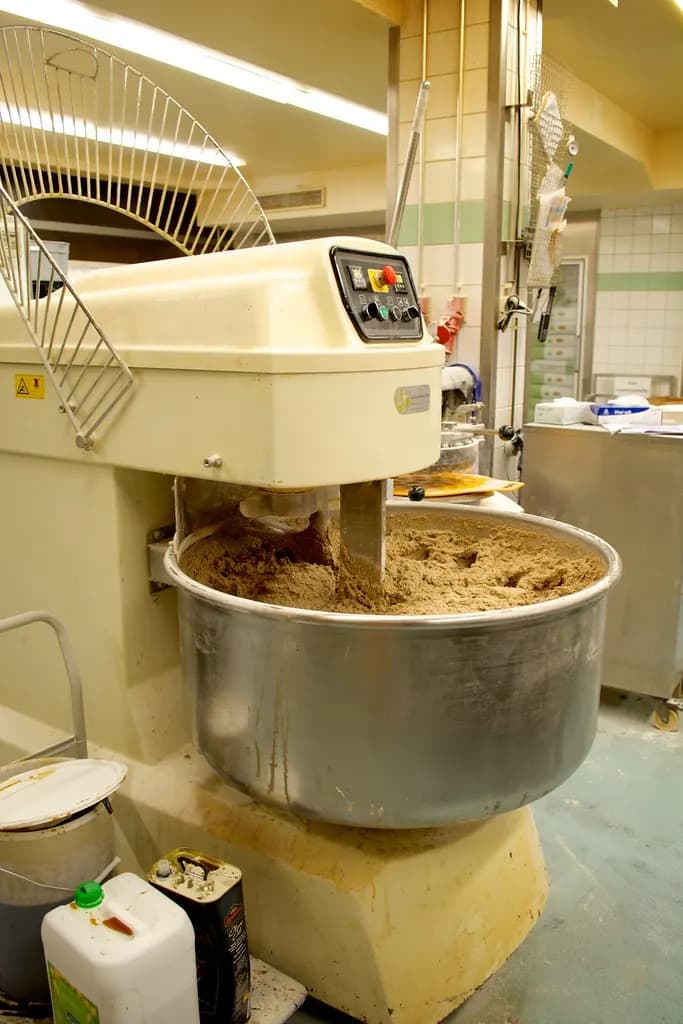
Once you outgrow your home kitchen or want to sell more widely, you'll move into a licensed commercial kitchen, either your own or a shared kitchen. Wholesale food production is usually licensed by a state agency, often the department of agriculture, rather than the local health department. In New York, for example, the Department of Agriculture and Markets licenses wholesale bakeries under Article 20-C. The two-year license costs $175 for businesses with 10 or fewer full-time employees and $400 for larger firms or franchisees, and it's free for a first-time applicant working in a department-recognized incubator kitchen. The state requires an inspection with an "A" grade before the license is issued and asks applicants to allow 60 days for processing.
FDA registration. Federal law requires facilities that manufacture, process, pack or hold food for consumption in the US to register with FDA and renew every other year. Retail food establishments and restaurants are exempt. Under FDA's definition, you're a retail food establishment if your primary function is selling directly to consumers, meaning the value of your food sales directly to consumers is more than the value of sales to all other buyers. Businesses don't count as consumers. So a storefront bakery that also supplies two cafes is usually exempt, while a bakery that sells most of its output to shops and distributors generally has to register. Recheck the split as your wholesale accounts grow.
Retail storefront permits
A retail bakery is a food establishment like a restaurant or cafe. State and local health departments regulate it using codes based on the FDA Food Code, the latest edition of which is the 2026 Food Code, though many states still enforce an older edition. Expect plan review before construction, covering your floor plan, equipment specification sheets, sinks, finishes and ventilation, then a pre-opening inspection and an annual permit. Most areas also require a certified food protection manager.
Ovens drive extra sign-offs. A gas deck or rack oven needs a gas permit and often a ventilation hood, and the fire marshal will look at clearances and suppression. Ask the landlord about electrical capacity and gas service before signing, because upgrading either can cost more than the oven. If you'll serve coffee and seat customers, your permit and sales tax treatment may change, so mention it at plan review.
Labels: allergens, ingredients and Nutrition Facts
Packaged baked goods need a compliant label wherever you sell them. At a minimum that means the product name, an ingredient list in descending order by weight, the net quantity, and the name and address of the business. Federal law recognizes nine major food allergens (milk, eggs, fish, crustacean shellfish, tree nuts, peanuts, wheat, soybeans and sesame), and they must be declared. Cottage food laws add their own wording: New York, for example, requires a phrase such as "Made in a Home Kitchen" in type at least 1/16 inch high.
Nutrition Facts panels are often not required for small bakeries. Under 21 CFR 101.9, a retailer selling directly to consumers is exempt if its annual gross sales are no more than $500,000, or its food sales to consumers are no more than $50,000, as long as the label and advertising make no nutrition claims. Food served in bakeries with facilities for eating on the premises is also exempt. Products from firms with fewer than 100 full-time equivalent employees and fewer than 100,000 units a year can qualify for a low-volume exemption, but most such firms must file a notice with FDA first. Adding words like "low sugar" or "high protein" removes the exemption, so keep marketing claims off the label unless you're ready to do full nutrition labeling.
Ingredient costs and pricing
Baking ingredients are cheap per item, which is why pricing mistakes in a bakery usually come from labor, not flour. Use current prices: in August 2026, the BLS US city average retail price of all-purpose flour was $0.55 a pound, stick butter $4.02 a pound and grade A large eggs $2.27 a dozen. Eggs show why you should review prices often: they averaged more than $6 a dozen in March 2025 before falling back. Wholesale suppliers will be cheaper than these retail averages once you buy by the case or sack.
Worked example: a batch of 48 chocolate chip cookies. Two pounds of flour ($1.10), a pound and a half of butter ($6.03), a pound and a half of sugar (about $1.50), four eggs ($0.76), a pound and a half of chocolate chips (about $6.00) and vanilla, salt and leavening (about $0.60) come to about $16.00, or $0.33 a cookie. Add a bag and label at $0.10 and the cost is $0.43. At $3.00 each, ingredients and packaging are about 14% of the price. The rest pays for mixing, scooping, baking, packing and selling, plus rent, power and your own time. If a batch takes 90 minutes of work at $20 an hour, labor adds another $0.63 a cookie. Our food cost calculator runs this for any recipe.
Try it — ingredient cost share of a baked good
Price wholesale orders separately. A cafe buying your croissants will expect a lower price than your counter customers pay, so cost each wholesale item with labor and delivery included, then set a minimum order size that makes the trip worth it. Our profit margin calculator shows the margin at each price.
Startup costs
Startup costs range from a few thousand dollars for a home bakery to several hundred thousand for a storefront. For commercial equipment, Epos Now estimates a full set-up at $60,000 to $200,000, depending on size, new versus used and specialty items. These are market estimates, not official figures.
| Item | Estimated cost | Basis |
|---|---|---|
| Commercial mixer (planetary or spiral) | $3,000–$15,000 | Epos Now estimate |
| Deck oven | $8,000–$30,000+ | Epos Now estimate; rack ovens $20,000–$60,000+ |
| Convection oven | $3,000–$12,000 | Epos Now estimate |
| Proofing cabinet or retarder-proofer | $1,000–$15,000 | Epos Now estimate |
| Refrigeration and display cases | $5,000–$25,000 | Epos Now estimate |
| Pans, tools, packaging, POS | $4,000–$13,000 | Epos Now estimate |
| Build-out, deposits and working capital | Varies widely | Our note: often larger than equipment for a storefront |
| Permits and licenses | Varies; NY wholesale license $175–$400 | State and local fee schedules |
| LLC filing and EIN | $35 – $500; EIN Free ($0) | State filing fees; IRS |
Used ovens and mixers from bakery closures can cut equipment costs sharply, but have a technician check them before you buy. For financing, the SBA 7(a) program goes up to $5 million and can fund equipment and leasehold improvements; see our SBA 7(a) loan guide. Total your list in the startup cost calculator.
Worked example: storefront bakery break-even
A neighborhood bakery-cafe sells $52,000 a month at a $12 average ticket, about 4,333 customers or 144 a day. Ingredients, packaging and drinks run 30% of sales and card fees 3%, so each $12 ticket leaves $8.04 toward fixed costs.
Fixed monthly costs: rent $4,000; two bakers on an early shift at about $20 an hour including payroll taxes ($9,600); counter staff ($7,650); utilities, which are heavy for ovens ($1,800); insurance $300; POS and software $150; marketing $500; repairs $400; a loan payment on $150,000 over ten years at about 10% ($1,982); accounting $300; waste and other costs $500; and an owner's salary of $4,500. Total: $31,682 a month.
Try it — customers a year to break even
Break-even is $31,682 ÷ $8.04, or about 3,940 customers a month, roughly 131 a day. At 144 a day, the bakery keeps about $3,200 a month after paying the owner. That's a thin margin: a 10% drop in customers puts it below break-even. The usual fixes are a higher average ticket (add coffee, sell whole loaves and cake slices), wholesale accounts that use the ovens in quiet hours, and custom cake orders, which carry better margins than counter items.
Common mistakes when starting a bakery
The first mistake is selling foods your cottage food law excludes, such as cream cheese frosting or custard tarts, from a home kitchen. Check your state's approved list before you post a menu. The second is ignoring labor in pricing: a $3 cookie can lose money if decorating takes 15 minutes. The third is labeling packaged goods without allergens or with nutrition claims that trigger full Nutrition Facts requirements.
The fourth is signing a storefront lease without checking gas, electrical capacity and ventilation for ovens. The fifth is drifting into mostly wholesale sales without noticing that you may now need state food processing licensing and FDA facility registration. Review your sales mix every quarter.
Official links
- California cottage food sales limits (2026)Class A and Class B caps
- Texas cottage food productionSB 541 rules
- Florida Statutes 500.80Cottage food operations
- New York home processingHome processor registration
- New York Article 20-C license applicationWholesale bakery license
- FDA food facility registrationWho must register
- 21 CFR 101.9 nutrition labelingNutrition Facts exemptions
- BLS average price data (flour)Current ingredient prices
What to do next
Start where the risk is lowest: check your state's cottage food rules, bake your best-selling items at home, and track every ingredient cost with the food cost calculator. When you're ready for a storefront, total your list in the startup cost calculator, test the daily customer count in the break-even calculator, and write it up with our business plan generator. If you also want to cater events, see how to start a catering business.
This is general information, not legal or tax advice — confirm on the official source or with a professional.
Frequently asked questions
Yes, in most states, under cottage food laws, as long as you bake foods that don't need refrigeration, such as breads, cookies and many cakes. Limits vary: Texas caps gross income at $150,000, Florida at $250,000, and California at $88,878 for Class A or $177,756 for Class B in 2026. Cream cheese frostings, custards and cream fillings usually need a commercial kitchen.
A home bakery needs whatever your state's cottage food law requires, from nothing in Florida to a registration in New York or a county permit in California. A retail bakery needs a food establishment permit after plan review, a business license and a sales tax permit. A wholesale bakery usually needs a state food processing license; New York's costs $175 for smaller firms.
There's no official figure. A home bakery can start for a few thousand dollars in equipment and packaging. For a storefront, Epos Now estimates a full commercial equipment set-up at $60,000 to $200,000, with deck ovens alone at $8,000 to $30,000 or more, before build-out, rent deposits and working capital. Buying used equipment and taking over a former bakery cut the bill most.
Often not. Federal rules exempt retailers with annual gross sales of no more than $500,000, or food sales to consumers of no more than $50,000, as long as the label makes no nutrition claims. Bakeries selling for immediate consumption with seating are also exempt. Packaged goods still need the ingredient list, allergens, net quantity and your name and address.
It can be, but labor and rent decide it, because ingredient costs are low. In our cookie example, ingredients are about $0.33 a cookie against a $3 price. In our storefront example, a bakery with a $12 average ticket needs about 131 customers a day to break even and makes about $3,200 a month after the owner's salary at $52,000 in monthly sales.
Not if you're a retail food establishment, meaning more than half of your food sales by value go directly to consumers. Restaurants and retail bakeries are exempt. A bakery that sells mostly wholesale to shops, cafes or distributors generally must register its facility with FDA and renew the registration every other year.
Sources & verification
Figures on this page were checked against the sources below when it was last reviewed on 13 October 2026. Each rate and limit is stored once with its own official source and review date, and official update channels are monitored daily so changes are picked up. How we verify
- 1.Cottage food operation adjusted gross annual sales limit (2026) — California Department of Public Health · accessed 13 October 2026
- 2.Texas cottage food production — Texas Department of State Health Services · accessed 13 October 2026
- 3.Florida Statutes section 500.80 — Cottage food operations — Florida Legislature · accessed 13 October 2026
- 4.Home processing — New York State Department of Agriculture and Markets · accessed 13 October 2026
- 5.Application for food processing establishment license — Article 20-C (FSI-303) — New York State Department of Agriculture and Markets · accessed 13 October 2026
- 6.21 CFR 1.226 and 1.227 — Food facility registration exemptions and definitions — U.S. FDA (eCFR) · accessed 13 October 2026
- 7.Registration of food facilities and other submissions — U.S. Food and Drug Administration · accessed 13 October 2026
- 8.21 CFR 101.9 — Nutrition labeling of food — U.S. FDA (eCFR) · accessed 13 October 2026
- 9.Average price data: flour, eggs and butter (APU0000701111, APU0000708111, APU0000FS1101) — U.S. Bureau of Labor Statistics · accessed 13 October 2026
- 10.FDA Food Code 2026 — U.S. Food and Drug Administration · accessed 13 October 2026
- 11.Bakery equipment list — Epos Now (secondary) · accessed 13 October 2026
MSMETOOLS is an independent platform and is not affiliated with any government agency, ministry or department.
Tools for this
Startup Cost Calculator
Estimate how much capital you need to launch.
Food Cost Calculator
Calculate food cost, menu pricing and profit margins.
Break Even Calculator
Find your break even point and units.
Profit Margin Calculator
Calculate profit, markup and margin for your products or services.
Related guides
 How to Start a Coffee Shop in 2026: Permits, Costs & StepsRead guide
 How to Start a Food Truck Business in 2026: Costs & RulesRead guide
 How to Start a Catering Business in 2026: Permits & CostsRead guide
 How to Start a Restaurant in 2026: Permits, Costs & TipsRead guide
Official links open the government site in a new tab.