 Government schemes & funding
Tractor Subsidy in 2026: How Much the Government Pays, Who Qualifies and How to Apply
Subsidy for tractor in 2026: 40–50% under SMAM with caps from ₹1.6 lakh to ₹6.5 lakh, implement rates, custom hiring centres, 5% GST and how to apply.
 Edited by Sumeet YadavFounder & editor, MSMETOOLS · fact-checked against official sources
Contents (11)
- 1. How tractor subsidy works under SMAM
- 2. Tractor subsidy caps by size
- 3. Subsidy on tractor implements
- 4. Custom hiring centres: tractor subsidy as a business
- 5. State tractor subsidy schemes
- 6. Choosing the right size for the subsidy
- 7. How to apply for tractor subsidy
- 8. GST on tractors after GST 2.0
- 9. Common mistakes and how rejections are fixed
- 10. Official links
- 11. What to do next
A tractor is the single biggest purchase most farm families make, and the government will pay a large share of it — but only if you apply through the right scheme, for the right size of machine, before you buy. This guide is for farmers, farmer-entrepreneurs and FPOs who want the exact subsidy on a tractor, power tiller or implement in 2026, how the caps work, when a custom hiring centre is the better route, what state schemes add, how GST 2.0 changed the price, and the application steps on agrimachinery.nic.in. Figures are from the 2025 SMAM operational guidelines, checked in October 2026.
Quick answer
Tractor subsidy is paid under the Sub-Mission on Agricultural Mechanization (SMAM), now part of PM-RKVY. You get 50% of the cost if you are a small or marginal, SC/ST, woman or North-Eastern farmer, and 40% otherwise — but never more than the cap for that tractor size. Apply on agrimachinery.nic.in or your state portal when the window opens; the subsidy is paid by DBT after verification.
Caps run from ₹1.6 lakh (small 2WD, 40% category) to ₹6.5 lakh (above 50 PTO HP, 50% category)
Tractors above 40 HP are meant to go mainly to custom hiring centres
Custom hiring centres get 40% of project cost (projects up to ₹2.5 crore)
GST on tractors is 5% since 22 September 2025
There is no 'PM Kisan Tractor Yojana' — ignore sites that sell forms
How tractor subsidy works under SMAM
The Sub-Mission on Agricultural Mechanization was launched in 2014–15 and is a centrally sponsored scheme run through state agriculture departments. The Centre and most states share its cost 60:40; North-Eastern and Himalayan states share 90:10, and Union Territories are fully centrally funded. Since October 2024 it has been a component of the Pradhan Mantri Rashtriya Krishi Vikas Yojana, which lets states move money between components, so the amount available for tractors in your district depends on your state's annual action plan. According to a PIB backgrounder of July 2026, SMAM had funded 21.61 lakh machines for individual farmers by 2025–26.
The subsidy is a percentage of the machine's cost with a rupee ceiling per machine. Under the 2025 guidelines, small and marginal farmers, SC and ST farmers, women farmers and farmers in the North-Eastern and Himalayan states get 50%; everyone else gets 40%. Forest Rights Act patta holders get 90%, and in the North-Eastern region individual farmers can get 100% on machines costing up to ₹1.25 lakh. You receive whichever is lower: the percentage of the price you actually pay, or the cap in Annexure-I of the guidelines.
You are free to choose any make and model from the manufacturers your state has empanelled, and the guidelines say you may bargain the final price with the dealer. The subsidy then goes to your bank account through DBT once the machine is delivered and physically verified.
Tractor subsidy caps by size
Caps are set by PTO horsepower — the power delivered at the power take-off shaft that drives implements, which is lower than the engine HP printed in brochures. Check the PTO HP on the tractor's test report before you pick a category.
SMAM maximum subsidy per tractor (2025 guidelines)
| Tractor | 50% category: SC/ST, small & marginal, women, NE | 40% category: other farmers |
|---|---|---|
2WD up to 20 PTO HP | ₹2 lakh | ₹1.6 lakh |
4WD up to 20 PTO HP | ₹2.45 lakh | ₹1.96 lakh |
2WD 20–40 PTO HP | ₹3 lakh | ₹2.4 lakh |
4WD 20–40 PTO HP | ₹3.6 lakh | ₹2.88 lakh |
2WD 40–50 PTO HP* | ₹4.5 lakh | ₹3.6 lakh |
4WD 40–50 PTO HP* | ₹5.45 lakh | ₹4.36 lakh |
Above 50 PTO HP* (first listed variant) | ₹6 lakh | ₹4.8 lakh |
Above 50 PTO HP* (second listed variant) | ₹6.5 lakh | ₹5.2 lakh |
Power tiller 8–11 BHP | ₹1 lakh | ₹0.8 lakh |
Power tiller above 11 BHP | ₹1.2 lakh | ₹1 lakh |
2WD up to 20 PTO HP
- 50% category: SC/ST, small & marginal, women, NE
₹2 lakh
- 40% category: other farmers
₹1.6 lakh
4WD up to 20 PTO HP
- 50% category: SC/ST, small & marginal, women, NE
₹2.45 lakh
- 40% category: other farmers
₹1.96 lakh
2WD 20–40 PTO HP
- 50% category: SC/ST, small & marginal, women, NE
₹3 lakh
- 40% category: other farmers
₹2.4 lakh
4WD 20–40 PTO HP
- 50% category: SC/ST, small & marginal, women, NE
₹3.6 lakh
- 40% category: other farmers
₹2.88 lakh
2WD 40–50 PTO HP*
- 50% category: SC/ST, small & marginal, women, NE
₹4.5 lakh
- 40% category: other farmers
₹3.6 lakh
4WD 40–50 PTO HP*
- 50% category: SC/ST, small & marginal, women, NE
₹5.45 lakh
- 40% category: other farmers
₹4.36 lakh
Above 50 PTO HP* (first listed variant)
- 50% category: SC/ST, small & marginal, women, NE
₹6 lakh
- 40% category: other farmers
₹4.8 lakh
Above 50 PTO HP* (second listed variant)
- 50% category: SC/ST, small & marginal, women, NE
₹6.5 lakh
- 40% category: other farmers
₹5.2 lakh
Power tiller 8–11 BHP
- 50% category: SC/ST, small & marginal, women, NE
₹1 lakh
- 40% category: other farmers
₹0.8 lakh
Power tiller above 11 BHP
- 50% category: SC/ST, small & marginal, women, NE
₹1.2 lakh
- 40% category: other farmers
₹1 lakh
The asterisk matters. The guidelines mark tractors above 40 PTO HP, combine harvesters and sugarcane harvesters as expensive machines that states should promote mainly through custom hiring centres and farm machinery banks, and they discourage individual ownership. If a state does fund them for individuals, that spending should be capped at 25% of its budget for individual machines. In practice that means big-tractor windows are smaller and more competitive than the headline caps suggest. The two "above 50 PTO HP" rows are printed with the same 2WD label in the guidelines; the higher one follows the 4WD pattern of the other sizes, so confirm which applies to your model with the state nodal officer.
Worked examples
Small farmer, 35 PTO HP 2WD tractor. Ramvati, a small farmer in Bulandshahr, chooses a 2WD tractor with 35 PTO HP at a negotiated price of ₹6.2 lakh. Half of the price is ₹3.1 lakh, but the cap for her category is ₹3 lakh, so she gets ₹3 lakh and pays ₹3.2 lakh herself.
Other farmer, same tractor. Her neighbour, who owns 6 hectares, buys the same model. At 40%, 40% of ₹6.2 lakh is ₹2.48 lakh, but his cap is ₹2.4 lakh, so he gets ₹2.4 lakh.
Mini tractor. A marginal farmer in Kerala buys an 18 PTO HP 2WD mini tractor for ₹3.4 lakh. Half is ₹1.7 lakh, which is below the ₹2 lakh cap, so the full ₹1.7 lakh is paid. For small tractors the percentage usually decides; for mid-size tractors the cap usually does.
Tractor prices in these examples are illustrative estimates of typical on-road prices; your dealer's quote and your state's empanelled price list decide the real figure.
Subsidy on tractor implements
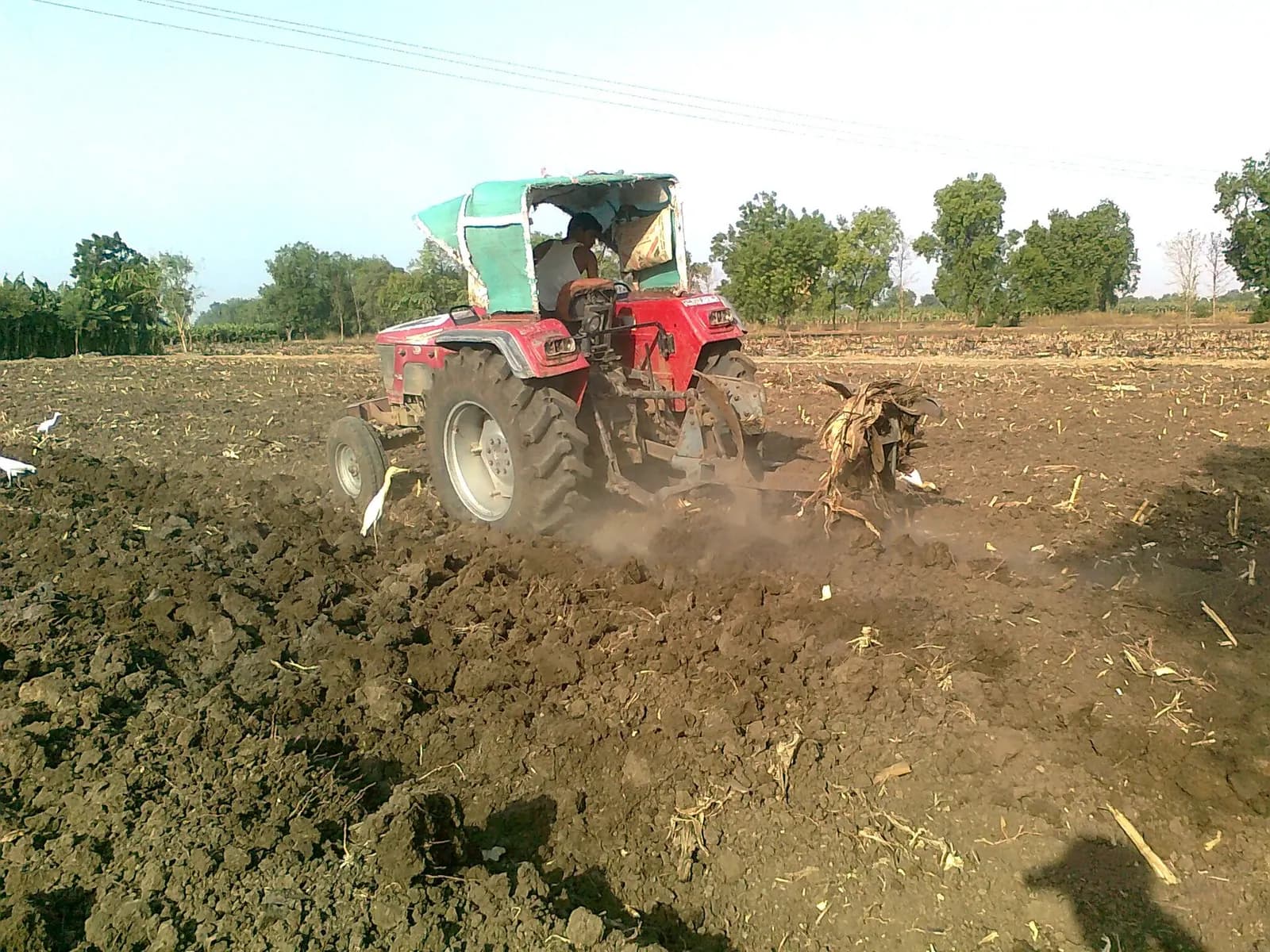
Implements often deliver more value per rupee of subsidy than the tractor itself, and they are easier to get because more units are sanctioned. Annexure-I lists caps for each implement by the size of tractor that pulls it. For tractors of 20–35 BHP, a rotavator up to 5 feet is capped at ₹46,000 in the 50% category and ₹36,800 in the 40% category; a laser land leveller at ₹2 lakh and ₹1.6 lakh. For tractors above 35 BHP, a 6-foot rotavator is capped at ₹60,000 and ₹48,000, a 9-tine seed-cum-fertiliser or zero-till drill at ₹25,000 and ₹20,000, and a tractor-operated backhoe loader-dozer at ₹3.75 lakh and ₹3 lakh. The same pattern — 50% or 40% subject to a cap — applies.
Maharashtra's state mechanisation scheme shows how states use this: the subsidy is paid for only one component per application, either the tractor or a device, and if the tractor is already in a parent's or unmarried family member's name, you can still apply for a tractor-drawn implement by uploading proof of that tractor. A farmer who already owns a tractor can therefore build up implements year by year.
Custom hiring centres: tractor subsidy as a business
If you want to earn from a tractor rather than just use it, a custom hiring centre (CHC) is the intended route. Rural youth, farmer-entrepreneurs, DAY-NRLM self-help groups, FPOs, panchayats, PACS and farmers' cooperatives can set up a CHC with 40% of project cost (projects up to ₹2.5 crore). The subsidy is credit-linked and back-ended: you take a bank loan, set up the centre, and the subsidy is adjusted against the loan after verification. Each machine in the CHC is still limited to its 40% cap from Annexure-I, and training at a Farm Machinery Training and Testing Institute or another reputed institute is mandatory for the beneficiary.
Village-level farm machinery banks (FMBs) for SHG federations, FPOs and cooperatives get 80% of project cost (up to ₹30 lakh), rising to 95% in the North-Eastern region; above a ₹30 lakh project cost the assistance is limited to ₹24 lakh. An FMB may include not more than one tractor, so it's built around implements, processing and value-addition machines rather than a fleet of tractors.
Machinery-as-a-service under SMAM
27,554
Custom hiring centres set up
2014-15 to 2025-26
25,608
Farm machinery banks
PIB, July 2026
40% of project cost (projects up to ₹2.5 crore)
CHC subsidy
₹2,000 per hectare (up to 2 ha a year)
Drone hiring support for small farmers
Worked example (illustrative). An FPO in Vidisha plans a CHC with one 45 PTO HP tractor, a rotavator, a seed drill, a multi-crop thresher and a laser leveller costing ₹38 lakh in all. At 40% the headline assistance is ₹15.2 lakh, but the subsidy on each machine cannot exceed its 40% cap, so the final figure is the sum of the machine-wise amounts — for the tractor alone, ₹3.6 lakh (₹3.6 lakh). The FPO's bank loan and margin money cover the rest, and the back-ended subsidy brings down the loan once the centre is verified and geo-tagged. Hiring charges to members, plus the ₹2,000 per hectare (up to 2 ha a year) that small and marginal farmers receive for hiring drone spraying from CHCs, are the revenue base.
State tractor subsidy schemes
States add their own schemes on top of SMAM or run SMAM through their own portals. Two examples we checked:
- Maharashtra (MahaDBT). The State Agriculture Mechanization Scheme is applied for on the MahaDBT farmer portal. You need Aadhaar, 7/12 and 8-A land extracts, a quotation and the Central Government-approved test certificate for the machine, a caste certificate if you are SC/ST, and a self-declaration; you buy only after the pre-sanction letter. A farmer who received a tractor in one year cannot apply for another tractor for 10 years, though they can apply for a power tiller or implements from the next year.
- Gujarat (iKhedut). The Directorate of Agriculture runs a state scheme of financial assistance to farmers for buying tractors, open to land-holding farmers, with applications taken on the iKhedut portal when the department opens the window. The amount and HP bands are announced with each window, so read the current notification on the portal rather than relying on figures from earlier years.
Other states — Haryana, Punjab, Uttar Pradesh, Madhya Pradesh, Rajasthan and others — run their own portals and often allot by lottery when applications exceed targets, which the 2025 guidelines now ask states to do instead of first-come-first-served.
Choosing the right size for the subsidy
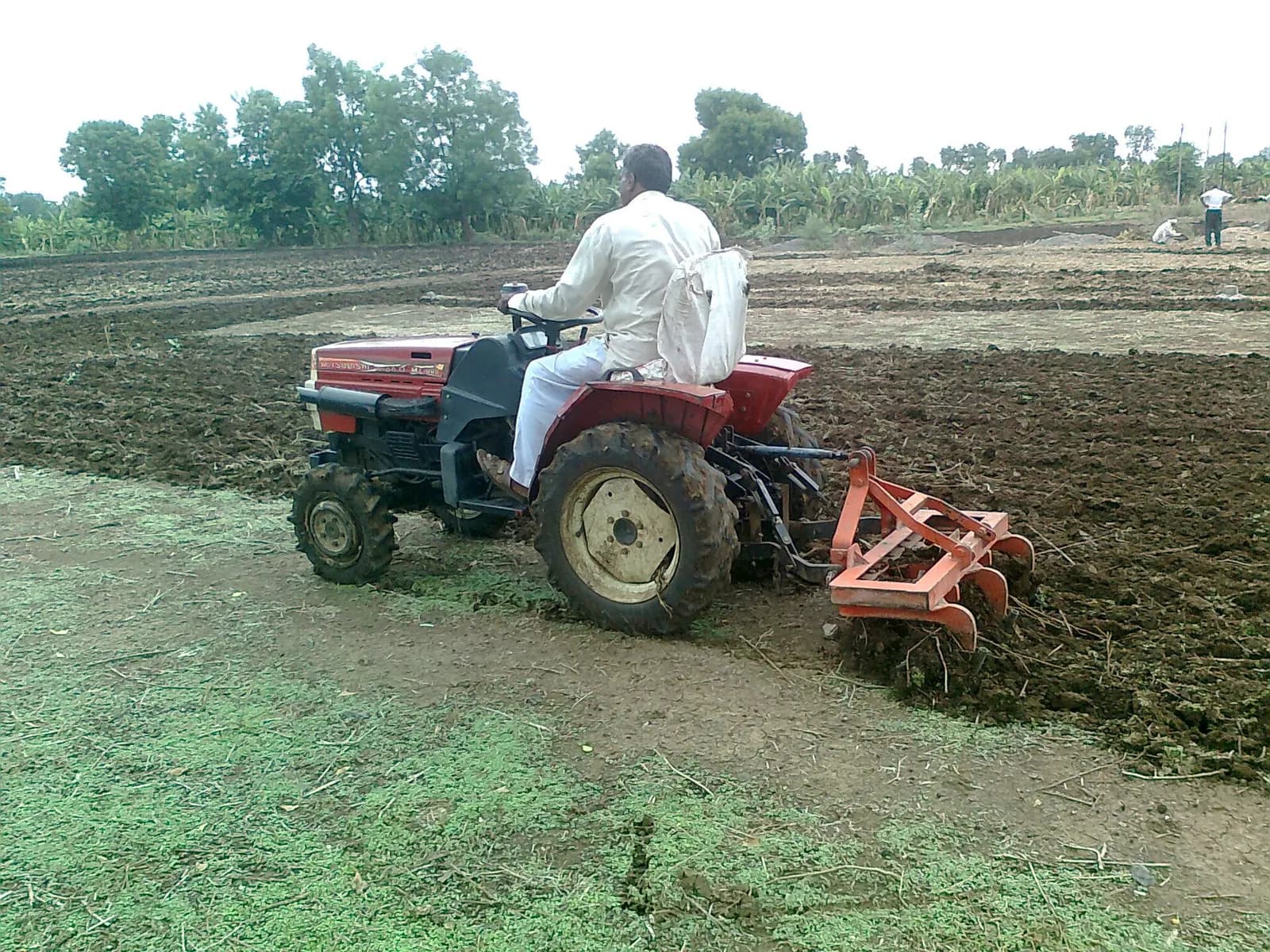
The caps push small holders towards smaller machines, and that is usually the right call. On two or three hectares, a 20–35 PTO HP tractor runs a rotavator, cultivator, seed drill and trolley comfortably, attracts a cap of ₹3 lakh in the 50% category, and keeps your own share — and your loan — manageable. Buying a 50 HP tractor for the same land roughly doubles the price while the subsidy rises far less, and the window for big tractors is smaller because states are told to limit individual ownership of machines above 40 HP. If you need high power only for a few weeks a year, for deep tillage or harvesting, hiring from a CHC is usually cheaper than owning.
The calculation flips if you plan to hire out the tractor. A 45–50 HP tractor with a full set of implements can work several hundred hours a year across a village (our estimate — it depends entirely on local bookings), and a CHC set up under SMAM gets support on every implement as well as the tractor. Many farmer-entrepreneurs start with an individually subsidised mid-size tractor for their own land and add a CHC application a year or two later once they know the local demand.
Women farmers should apply in their own name where the land is theirs. They qualify for the 50% rate regardless of holding size, and the July 2026 PIB backgrounder notes that SMAM earmarks 30% of its funds for women farmers, so the competition in that pool can be lighter than in the general pool.
How to apply for tractor subsidy
Applying for SMAM tractor subsidy
- 1
Check your state's window
SMAM windows open when your state's annual action plan is approved, usually after April. Watch the state agriculture portal or ask the block agriculture officer.
- 2
Register and apply online
Open agrimachinery.nic.inApply on agrimachinery.nic.in (DBT in Agriculture Mechanization) or your state portal, which must share data with the central portal. Enter Aadhaar, bank, land and category details and choose the machine type and size.
- 3
Wait for selection and pre-sanction
If applications exceed the target, the state selects by online lottery. Don't buy until you have the approval or permit.
Tip: A tractor bought before sanction gets no subsidy.
- 4
Buy from an empanelled dealer
Choose any approved make and model, negotiate the price, pay and get the invoice. Tractors must carry a telematics kit and a manufacturer's unique code.
- 5
Verification and DBT
The department physically verifies and geo-references the machine against the manufacturer's uploaded inventory, then releases the subsidy to your Aadhaar-seeded bank account.
Documents for tractor subsidy
0/7The guidelines add two technical conditions you will meet at purchase. Every self-propelled machine costing ₹1 lakh or more — tractors included — must come with an app-based telematics kit that tracks location and work done, provided by manufacturers as standard on machines made after 1 June 2023. And every machine costing ₹1 lakh or more is geo-referenced. The soil health card may be required too; if you don't have one, the state can collect a soil sample and adjust the testing cost against your subsidy.
GST on tractors after GST 2.0
From 22 September 2025, tractors under HSN 8701 attract 5% GST, down from 12% — except road tractors for semi-trailers with engines above 1,800 cc, which are at 18%. A list of tractor parts was also moved to 5%: rear wheel rims, centre and transmission housings, front axle supports, bumpers, brake assemblies, gearboxes, transaxles, road wheels, radiators and cooling systems, silencers, clutch assemblies, steering wheels, hydraulics, and fenders, hoods and fuel tanks for tractors. Agricultural diesel engines above 250 cc for tractors and hydraulic pumps for tractors are at 5% too. Agricultural machinery under HSN 8432, 8433 and 8436 — ploughs, harrows, seed drills, harvesters, threshers and the like — is at 5%. Tractor tyres and tubes are covered in GST on tyres.
In rupees: a tractor with a pre-tax price of ₹6 lakh now carries ₹30,000 of GST instead of ₹72,000, a ₹42,000 drop before any subsidy. A farmer who uses the tractor only for his own cultivation can't claim input tax credit, so the lower rate is a straight saving. A registered business that uses tractors for taxable services, such as a CHC registered under GST, should check with its accountant whether input tax credit is available.
Common mistakes and how rejections are fixed
- Buying before approval. No pre-sanction, no subsidy. If you bought early, the only route is to apply for a different component in a later window.
- Wrong category. Claiming the 50% rate without a valid small/marginal or caste certificate leads to rejection; upload the certificate at application.
- Unlisted dealer or model. Only empanelled manufacturers with valid test reports qualify. Check the state's list before negotiating.
- Land in a parent's name. Most states need land in the applicant's name. Get the mutation done first, or apply for an implement with proof of the family tractor where your state allows it.
- Paying an agent for a "PM Kisan Tractor Yojana" form. There is no such central scheme; applications on government portals are free.
Official links
What to do next
Work out your share and the loan: the EMI calculator shows the monthly instalment after subsidy, and the ROI calculator helps you test whether a CHC tractor pays for itself from hiring income. For drip, horticulture, warehouses and other farm subsidies, see subsidy for agriculture, and for the full GST 2.0 rate list, GST 2.0.
This is general information, not legal or tax advice — confirm on the official source or with a professional.
Frequently asked questions
Under the Sub-Mission on Agricultural Mechanization, small and marginal, SC/ST, women and North-Eastern farmers get 50% of the tractor's cost and other farmers 40%, subject to a cap by size. For a 2WD tractor of 20–40 PTO HP the cap is ₹3 lakh or ₹2.4 lakh. You get whichever is lower — the percentage or the cap.
No central scheme by that name exists. Tractor subsidy from the Centre comes only through SMAM, now part of PM-RKVY, and is applied for on agrimachinery.nic.in or your state's agriculture portal. Websites and social-media posts offering 'PM Kisan Tractor Yojana' forms or 50% tractor loans for a fee are not government schemes.
No. SMAM pays only on new machines from manufacturers empanelled by the state, with a valid test report from a Farm Machinery Training and Testing Institute or another authorised centre. The machine is physically verified and geo-referenced before the subsidy is released, so a used tractor cannot qualify.
Tractors attract 5% GST from 22 September 2025, down from 12%. Road tractors for semi-trailers with engines above 1,800 cc stay at 18%. Listed tractor parts such as gearboxes, clutch, brake and steering assemblies, and rear tractor tyres are also at 5%.
The central guidelines leave this to states. Maharashtra, for example, bars a farmer who got a tractor from applying for another tractor for 10 years, though they can apply for other equipment the following year. Most states allow only one subsidised tractor per family or per land holding, so check your state's rule before applying.
Rural entrepreneurs, farmer-entrepreneurs, FPOs, SHGs, panchayats, PACS and farmers' cooperatives can set up custom hiring centres with 40% of project cost (projects up to ₹2.5 crore) as a credit-linked back-ended subsidy, and must complete training at a Farm Machinery Training and Testing Institute or another recognised institute.
Sources & verification
Figures on this page were checked against the sources below when it was last reviewed on 9 October 2026. Each rate and limit is stored once with its own official source and review date, and official update channels are monitored daily so changes are picked up. How we verify
- 1.Sub-Mission on Agricultural Mechanization — Operational Guidelines 2025 (incl. Annexure-I) — Department of Agriculture & Farmers Welfare · accessed 9 October 2026
- 2.Sub-Mission on Agricultural Mechanization — PIB backgrounder (9 July 2026) — PIB · accessed 9 October 2026
- 3.Digital Platform for Farm Mechanization and Technology — Department of Agriculture & Farmers Welfare · accessed 9 October 2026
- 4.Notification 9/2025–Central Tax (Rate) — CBIC / Gazette of India · accessed 9 October 2026
- 5.56th GST Council — press release — GST Council / PIB · accessed 9 October 2026
- 6.State Agriculture Mechanization Scheme — MahaDBT — Government of Maharashtra · accessed 9 October 2026
- 7.Tractor purchase assistance scheme — Directorate of Agriculture, Gujarat — Government of Gujarat · accessed 9 October 2026
MSMETOOLS is an independent platform and is not affiliated with any government agency, ministry or department.
Tools for this
EMI Calculator
Calculate loan EMIs for business and personal loans.
Loan Eligibility Calculator
Check your business loan eligibility based on income and existing loans.
ROI Calculator
Calculate return on investment for your business projects.
Related guides
 Subsidy for Agriculture 2026: AIF, SMAM, Drip, NHB & KCCRead guide
 Agri Infrastructure Fund 2026: 3% Subvention & StatusRead guide
 Electric Scooter Subsidy for Women 2026: PM E-DRIVE & StatesRead guide
 Annapurna Scheme 2026: Loan, West Bengal Yojana & FactsRead guide
Official links open the government site in a new tab.