 Government schemes & funding
Annapurna Scheme in 2026: Which One You Mean, What Is Still Offered and How to Apply
Annapurna scheme in 2026 explained: West Bengal's ₹3,000/month Annapurna Yojana, the old women's catering loan (no longer offered) and the elderly food scheme.
 Edited by Sumeet YadavFounder & editor, MSMETOOLS · fact-checked against official sources
Contents (7)
Search for "Annapurna scheme" and you'll find three different things mixed together: a 2026 West Bengal cash scheme for women, a 26-year-old central food scheme for elderly people, and a small bank loan for women caterers that many websites still advertise. This guide separates them, tells you plainly which ones are open in 2026, and — if you came here looking for a loan to start a tiffin or catering business — shows what you can actually apply for instead.
Quick answer
In 2026, the active Annapurna scheme most people mean is West Bengal's Annapurna Yojana, which pays eligible women aged 25 to 60 years ₹3,000 a month by DBT from June 2026. The central Annapurna Scheme still gives 10 kg a month of free foodgrains to poor elderly people who don't get a pension. The old Annapurna catering loan for women is not listed by any bank we checked.
West Bengal Annapurna Yojana: notified 19 May 2026, replaces Lakshmir Bhandar
Apply online on the Annapurna Yojana / social registry portal
NSAP Annapurna: 8.31 lakh beneficiaries nationally
For a food business loan, use Mudra (up to ₹20 lakh) or PMEGP
Three schemes called Annapurna
Before you fill any form, work out which Annapurna you need. The name — after the Hindu goddess of food and nourishment — has been used by different governments and banks for unrelated purposes.
Which Annapurna scheme is which
| West Bengal Annapurna Yojana | Annapurna Scheme (NSAP) | Annapurna catering loan | |
|---|---|---|---|
Run by | Govt of West Bengal, WCD & Social Welfare Dept | Centre via states (Ministry of Rural Development) | Banks (historically Bharatiya Mahila Bank) |
Started | Notified 19 May 2026 | 1 April 2000 | Not documented on any current official page |
Benefit | ₹3,000 a month by DBT | 10 kg a month free foodgrains | Small business loan for catering |
Who | Women aged 25 to 60 years in West Bengal | Poor elderly not receiving old-age pension | Women starting food businesses |
Status in 2026 | Active | Active (small, state-run) | Not offered by banks we checked |
Run by
- West Bengal Annapurna Yojana
Govt of West Bengal, WCD & Social Welfare Dept
- Annapurna Scheme (NSAP)
Centre via states (Ministry of Rural Development)
- Annapurna catering loan
Banks (historically Bharatiya Mahila Bank)
Started
- West Bengal Annapurna Yojana
Notified 19 May 2026
- Annapurna Scheme (NSAP)
1 April 2000
- Annapurna catering loan
Not documented on any current official page
Benefit
- West Bengal Annapurna Yojana
₹3,000 a month by DBT
- Annapurna Scheme (NSAP)
10 kg a month free foodgrains
- Annapurna catering loan
Small business loan for catering
Who
- West Bengal Annapurna Yojana
Women aged 25 to 60 years in West Bengal
- Annapurna Scheme (NSAP)
Poor elderly not receiving old-age pension
- Annapurna catering loan
Women starting food businesses
Status in 2026
- West Bengal Annapurna Yojana
Active
- Annapurna Scheme (NSAP)
Active (small, state-run)
- Annapurna catering loan
Not offered by banks we checked
West Bengal's Annapurna Yojana (2026)
This is what most people searching "Annapurna Yojana" or "Annapurna Bhandar" in 2026 want. By a notification dated 19 May 2026 (No. 2411-WCD/O/AB-4/2026), the Department of Women & Child Development and Social Welfare introduced the Annapurna Yojana to give women in the state an assured monthly payment of ₹3,000 a month for their empowerment and socio-economic upliftment. Payments are credited by Direct Benefit Transfer to an Aadhaar-linked bank account in the woman's own name, with effect from 1 June 2026.
The scheme replaces Lakshmir Bhandar, the state's earlier monthly support scheme for women. All existing Lakshmir Bhandar beneficiaries were migrated to Annapurna, except names identified as dead, shifted, deleted or absentee electors during the 2026 Special Intensive Revision of the electoral rolls. Women whose cases are pending before the SIR tribunal, or who have applied under the Citizenship (Amendment) Act, continue to receive the money until their cases are decided.
According to All India Radio, the scheme was formally launched at Nabanna on 3 June 2026, with the first transfer reaching more than 28 lakh women and about two crore women expected to benefit. AIR also reported that beneficiaries were given 90 days to register; check the portal for whether new registrations are still open when you read this.
Eligibility
The notification sets three conditions, and every applicant has to meet all of them.
West Bengal Annapurna Yojana — eligibility
0/6Two points trip people up. First, the exclusion is for women who pay income tax. If you file returns but owe no tax, or your only tax is deducted at source on interest, ask the verifying officer how your case will be treated before you assume you're out. Second, the employment exclusion refers to permanent government jobs with a regular salary or pension; if you work on contract or as an honorary worker, ask the BDO or SDO office whether you qualify rather than guessing.
How to apply
New applicants apply online. The myScheme listing describes the steps on the state's Annapurna Yojana portal at socialregistry.wb.gov.in.
Applying for Annapurna Yojana (West Bengal)
- 1
Open the Annapurna Yojana portal
Annapurna Yojana portalGo to the state's social registry portal and choose the Annapurna Yojana application.
- 2
Select your district and verify your mobile
Pick your district from the list and enter your mobile number to get the form.
- 3
Fill the Family Level Data Collection form
Enter details of the head of the family first, then each family member, including the applicant.
- 4
Upload documents and submit
Upload the documents the form asks for — typically Aadhaar, proof of age and residence, bank passbook and a photograph — and submit.
- 5
Save the application ID
Note the ID; you'll need it to track verification and sanction.
After you apply, government officers enquire into each application. In rural areas the Block Development Officer, and in urban areas the Sub-Divisional Officer, recommends eligible names online to the District Magistrate, who sanctions them; inside Kolkata Municipal Corporation limits, KMC officers do the verification and the KMC Commissioner sanctions. Enquiry reports for sanctioned cases are uploaded to the portal.
What happens after you apply
Step 1
Online application
Step 2
Field enquiry
Step 3
BDO (rural) / SDO (urban) recommends
KMC officers in Kolkata
Step 4
District Magistrate sanctions
KMC Commissioner in Kolkata
Step 5
₹3,000 a month by DBT
If your payment hasn't arrived
Most missed DBT payments come down to the bank account, not the scheme. The money is routed through the Aadhaar payment bridge, so your Aadhaar must be seeded to the account and mapped for DBT — not just written on the passbook. Visit your branch, ask them to confirm Aadhaar seeding and NPCI mapping, and get it in writing. If you have several accounts, DBT goes to the one most recently mapped, which may not be the one you expect.
Name mismatches are the next most common problem. If your name on Aadhaar, the bank account and the application form are spelt differently, the payment can be held up at verification. Correct the record that is wrong — usually the bank account or the form — rather than applying again.
If you were a Lakshmir Bhandar beneficiary and stopped receiving money after the switch, check whether your name was removed in the 2026 electoral roll revision; the notification excludes such names unless you have an appeal pending before the SIR tribunal. Check your status on the portal using your application ID, and if it is still stuck, take your documents to the BDO or SDO office, or the KMC ward office in Kolkata.
The central Annapurna Scheme for elderly people
This is the original Annapurna, and the one asked about in civil-services exams. It started on 1 April 2000 to give free foodgrains to destitute senior citizens. As PIB explained in 2011, grains are provided through state governments and union territory administrations to indigent senior citizens who are not getting an old-age pension, at 10 kg a month per person, free of cost.
After a Planning Commission review, Annapurna and the National Social Assistance Programme were moved to the State Plan from 2002-03, with central funds released to states as additional central assistance. Today Annapurna is one of five NSAP components run by the Ministry of Rural Development, alongside the old-age, widow and disability pensions and the family benefit scheme. A PIB backgrounder from November 2025 puts its coverage at 8.31 lakh beneficiaries across the country, with a central budget of ₹10 crore for 2025-26 — tiny next to the old-age pension's ₹6,645.90 crore.
The scheme is meant for elderly people who would qualify for the Indira Gandhi National Old Age Pension but don't receive it, usually because the state's pension quota is full. If an elderly relative fits that description, ask at the block office or the food and supplies department whether your state still distributes Annapurna grain and how beneficiaries are identified. Separately, the poorest households can get highly subsidised grain under the Antyodaya Anna Yojana, which is a different scheme.
The Annapurna loan for women caterers — what happened to it
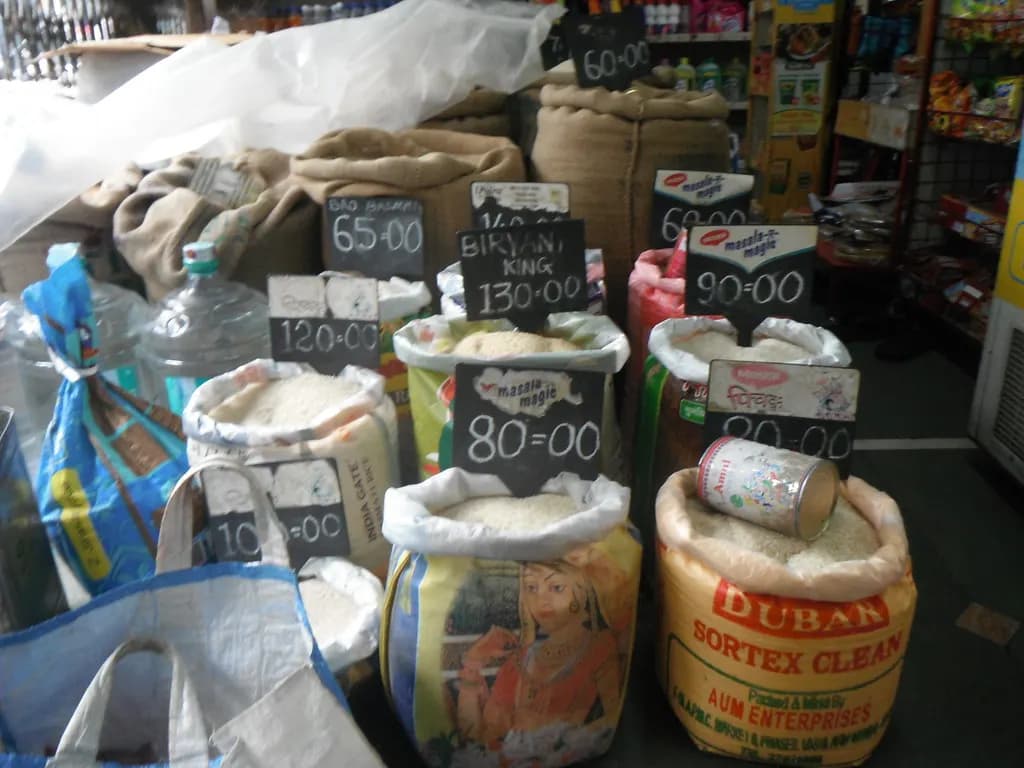
Dozens of loan-company blogs describe an "Annapurna scheme" that lends women up to ₹50,000 to start a food catering business — buying utensils, a gas connection, a mixer and a water filter, and some working capital — repayable over 36 months with no collateral. Many say it is offered by State Bank of India, State Bank of Mysore or Bharatiya Mahila Bank, and some claim the first EMI is waived.
We could not find this product on any current official page. SBI's list of SME government schemes and Bank of Maharashtra's MSME schemes guide, checked on 7 October 2026, contain no Annapurna loan. The banks most often named no longer exist on their own: Bharatiya Mahila Bank and State Bank of Mysore were both merged into SBI from 1 April 2017. Before the merger, according to the government, Bharatiya Mahila Bank had 103 branches and had lent ₹191.09 crore to women entrepreneurs.
So treat the ₹50,000 figure, the 36-month tenure and the waived EMI as history, not as an offer you can walk into a branch and claim. If a branch or an agent says they can give you an "Annapurna loan", ask which scheme the sanction letter will name. Most likely it will be a Mudra Shishu or Kishore loan — which is a perfectly good product, and usually larger.
Loans that actually work for a food or catering business
Women who want to start a tiffin service, home catering, a snacks unit or a small mess have better options today than the old Annapurna loan ever offered.
Mudra loan. For a non-farm micro business — which covers food catering, tiffin services and snack units — banks, small finance banks, microfinance institutions and NBFCs lend up to ₹20 lakh without collateral. Shishu covers loans up to ₹50,000, Kishore up to ₹5 lakh and Tarun up to ₹10 lakh. A first-time caterer will usually start in Shishu or Kishore. See our Mudra loan guide.
PMEGP. If you want to set up a proper unit — a commercial kitchen, a food-processing line or a bakery — PMEGP adds a government subsidy to the bank loan. Women are a special category, so the subsidy is 25% of project cost in urban areas and 35% in rural areas, and your own contribution is only 5%. Read the PMEGP guide.
CGTMSE-backed MSME loan. For bigger amounts, a bank loan to a women-owned micro or small enterprise can carry 90% guarantee cover, so the bank doesn't need your property. RBI also bars banks from taking collateral on micro and small enterprise loans up to ₹20 lakh.
State schemes. In Karnataka, the Udyogini scheme gives women a 30–50% subsidy on a bank loan of up to ₹3 lakh. Other states run their own women's enterprise schemes through women's development corporations and District Industries Centres.
A worked example: a ₹1.5 lakh tiffin business
Meera wants to cook lunch tiffins for 40 office workers in her town. She needs a commercial gas stove and cylinder connection (₹18,000), large cooking vessels and steel tiffin carriers (₹35,000), a refrigerator (₹25,000), a mixer-grinder and water purifier (₹17,000), packaging and two months of groceries and gas as working capital (₹55,000). Total: ₹1.5 lakh. These are illustrative local market prices; get your own quotations.
She applies for a Mudra Kishore loan of ₹1.5 lakh. At an illustrative 11% rate over three years, the EMI is about ₹4,900. If each tiffin sells at ₹80 for 22 working days, 40 customers bring in ₹70,400 a month; if food costs take 45% and gas, packaging and delivery another 15%, she keeps roughly ₹28,000 before the EMI. That leaves room to repay comfortably — and it is a far better fit than a ₹50,000 loan that wouldn't have covered the refrigerator and the stock. Use our food cost calculator to price your menu before you commit.
When she meets the bank, Meera brings quotations for each item, a one-page menu with prices, a list of the offices she has already spoken to, and three months of her savings-account statements showing she can manage money. That file matters more than any scheme name. Banks lending to first-time food businesses mainly worry about two things: whether customers will really pay every month, and whether the owner can keep the kitchen running if she falls ill. Showing advance orders, or a family member who can step in, answers both.
Check the EMI on your food business loan
Registration you'll need
Any food business needs FSSAI registration or a licence before it starts selling. Small operators with turnover up to ₹1.5 crore can usually take basic registration for ₹100/year, but caterers are treated differently and generally need a state licence (₹5,000 a year) — check our FSSAI registration guide. Register the business on Udyam too; it is free and banks ask for it. If you plan the business properly, our catering business plan and cloud kitchen guide walk through costs and margins.
Mistakes to avoid
Paying an agent to "apply for Annapurna". West Bengal's Annapurna Yojana application is free on the government portal, and no bank charges a fee to apply for Mudra. Anyone asking for money to get you into a scheme is a red flag.
Applying for the wrong Annapurna. A woman in Tamil Nadu or Gujarat cannot get West Bengal's ₹3,000 payment, and the catering loan isn't on offer. Work out which scheme fits before you visit an office.
A bank account that can't receive DBT. For the West Bengal scheme, the account must be in the woman's own name and linked to Aadhaar. A joint account in the husband's name, or one without Aadhaar seeding, is the usual reason payments fail.
Treating cash support as business capital. The ₹3,000 a month helps a household, but it is not a business loan. If you want to start a food business, plan on a Mudra or PMEGP loan and use the monthly assistance as a cushion, not as your capital.
Other states have used the Annapurna name too: Maharashtra, for example, announced (as widely reported) a Mukhyamantri Annapurna Yojana in its 2024-25 budget to give eligible households free LPG cylinder refills, and Gujarat runs a Shramik Annapurna meal scheme for registered construction workers. These are separate from everything above — check the state's own portal for their current rules.
Official links
- West Bengal Annapurna Yojana notification (19 May 2026)Eligibility, ₹3,000 benefit, sanction process
- Annapurna Yojana / social registry portal (West Bengal)Online application and status
- myScheme — Annapurna YojanaEligibility check and application steps
- PIB — National Social Assistance ProgrammeAnnapurna food scheme for elderly people
- JanSamarthApply online for Mudra and PMEGP loans
- FSSAI FoSCoSFood business registration and licence
What to do next
If you live in West Bengal and are eligible, check that your bank account is Aadhaar-seeded and apply on the Annapurna Yojana portal, keeping your application ID safe. If you came looking for the Annapurna catering loan, cost your business first, get your FSSAI registration and Udyam in place, and apply for a Mudra loan through your bank or JanSamarth. Our MSME loan guide explains interest rates and documents in detail.
This is general information, not legal or financial advice — confirm the current rules on the official portal or with your bank.
Frequently asked questions
Three different schemes share the name. West Bengal's Annapurna Yojana, notified on 19 May 2026, pays eligible women ₹3,000 a month. The central Annapurna Scheme, part of the National Social Assistance Programme since 2000, gives 10 kg a month of free foodgrains to poor elderly people who don't get an old-age pension. And 'Annapurna' was also a bank loan for women starting catering businesses, which no current bank page lists.
We found no Annapurna catering loan on the current websites of State Bank of India or Bank of Maharashtra as of October 2026. The product is usually traced to Bharatiya Mahila Bank, which merged into SBI on 1 April 2017. Women starting a tiffin or catering business today can use a Mudra loan of up to ₹20 lakh, PMEGP or a CGTMSE-backed MSME loan instead.
Women residing in West Bengal aged 25 to 60 years who are not in permanent government employment or receiving a government pension, and who don't pay income tax. Existing Lakshmir Bhandar beneficiaries were migrated automatically, except names removed during the 2026 electoral roll revision. The money is paid by DBT to the woman's Aadhaar-linked bank account.
New applicants apply online on the state's Annapurna Yojana portal (socialregistry.wb.gov.in), which opened on 1 June 2026. Choose your district, enter your mobile number, fill the family-level data form for the head of the family and members, upload documents and note the application ID. BDOs, SDOs or KMC officers verify applications and District Magistrates sanction them.
Yes, in practice. 'Annapurna Bhandar' is the popular name, echoing the earlier Lakshmir Bhandar scheme, for the women's cash-assistance scheme West Bengal notified as 'Annapurna Yojana' on 19 May 2026. Payments of ₹3,000 a month began in June 2026, and Lakshmir Bhandar beneficiaries were moved to the new scheme.
The central Annapurna Scheme for elderly people started on 1 April 2000 and was moved to the State Plan from 2002-03; it is now one of the five components of the National Social Assistance Programme. West Bengal's Annapurna Yojana was notified on 19 May 2026, with payments from 1 June 2026 and a formal launch event on 3 June 2026.
Sources & verification
Figures on this page were checked against the sources below when it was last reviewed on 7 October 2026. Each rate and limit is stored once with its own official source and review date, and official update channels are monitored daily so changes are picked up. How we verify
- 1.Notification No. 2411-WCD/O/AB-4/2026 dated 19.5.2026 — Annapurna Yojana — Department of Women & Child Development and Social Welfare, Government of West Bengal · accessed 7 October 2026
- 2.myScheme — Annapurna Yojana (West Bengal) — Government of India — myScheme · accessed 7 October 2026
- 3.West Bengal launches Annapurna Yojana; beneficiaries to receive ₹3000 directly in bank accounts (3 June 2026) — All India Radio News (Prasar Bharati) · accessed 7 October 2026
- 4.National Social Assistance Programme — PIB backgrounder (November 2025) — PIB / Ministry of Rural Development · accessed 7 October 2026
- 5.Beneficiaries entitled for 10 kg foodgrains per month under Annapurna Scheme (20 December 2011) — PIB — Ministry of Consumer Affairs, Food & Public Distribution · accessed 7 October 2026
- 6.Merger of Bharatiya Mahila Bank with State Bank of India — PIB — Ministry of Finance · accessed 7 October 2026
- 7.SBI — SME government schemes — State Bank of India · accessed 7 October 2026
- 8.Bank of Maharashtra — MSME schemes guide — Bank of Maharashtra · accessed 7 October 2026
- 9.Pradhan Mantri Mudra Yojana loan limit raised to ₹20 lakh — PIB — Ministry of Finance · accessed 7 October 2026
MSMETOOLS is an independent platform and is not affiliated with any government agency, ministry or department.
Tools for this
Food Cost Calculator
Calculate food cost, menu pricing and profit margins.
EMI Calculator
Calculate loan EMIs for business and personal loans.
Startup Cost Calculator
Estimate how much capital you need to launch.
Related guides
 Udyogini Scheme 2026: Eligibility, Subsidy & How to ApplyRead guide
 Mudra Loan 2026: Shishu to Tarun Plus, Rates & How to ApplyRead guide
 PMEGP Loan 2026: Subsidy up to 35%, Eligibility & ApplyRead guide
 PM SVANidhi 2026: ₹15,000–₹50,000 Loans, Credit Card & ApplyRead guide
Official links open the government site in a new tab.