 Government schemes & funding
Subsidy for Solar Panels in 2026: PM Surya Ghar Amounts, State Top-ups and How to Apply
Subsidy for solar panels in 2026: PM Surya Ghar amounts per kW, RWA rules, state top-ups, how to apply on the national portal, net metering, PM-KUSUM and GST.
 Edited by Sumeet YadavFounder & editor, MSMETOOLS · fact-checked against official sources
Contents (12)
- 1. How much is the solar panel subsidy in 2026?
- 2. Who can get the subsidy — and who can't
- 3. The made-in-India rule and the vendor rule
- 4. Housing societies and RWAs
- 5. State top-ups: how much more you can get
- 6. How to apply on the national portal
- 7. Net metering: what happens to your electricity bill
- 8. Solar panel price for a home after the subsidy — worked examples
- 9. Subsidy for farmers: PM-KUSUM
- 10. Solar for shops, offices and factories
- 11. Common mistakes that delay or cancel the subsidy
- 12. What to do next
Searching for a subsidy for solar panels usually means one of three things: you want rooftop solar on your house and need to know how much the government pays, you run a housing society that wants to cut the common-area bill, or you own a shop, farm or factory and want to know whether any of this applies to you. This guide covers all three. It is built on the Ministry of New and Renewable Energy's own scheme guidelines, the Delhi and Uttar Pradesh state policies and the September 2025 GST rate notification, all checked in October 2026, with rupee examples you can apply to your own quote.
Quick answer
The main subsidy for home solar panels is PM Surya Ghar: Muft Bijli Yojana. The Centre pays ₹30,000 per kW for the first 2 kW and ₹18,000 per kW for the third kW, so the most a household can get is ₹78,000. You apply on pmsuryaghar.gov.in, pick a registered vendor, and the money reaches your bank account after the DISCOM inspects the system.
1 kW → ₹30,000 · 2 kW → ₹60,000 · 3 kW and above → ₹78,000
Housing societies/RWAs: ₹18,000 per kW for common facilities, up to 500 kWp (3 kWp per house)
Made-in-India (DCR) modules and a portal-registered vendor are compulsory
No central subsidy for shops, offices or factories — but solar equipment now carries 5% GST
Farmers' solar pumps come under a separate scheme, PM-KUSUM
How much is the solar panel subsidy in 2026?
PM Surya Ghar: Muft Bijli Yojana was approved by the Union Cabinet on 29 February 2024, with an outlay of ₹75,021 crore, and applies to applications made on the national portal from 13 February 2024. Its aim is rooftop solar on one crore homes, so that each can get up to 300 units a month free or at low cost. Of that outlay, ₹65,700 crore is set aside for the subsidy to households — the central financial assistance, or CFA, that most people mean when they ask about a solar subsidy.
The CFA is worked out from a benchmark cost, not from what your vendor charges. MNRE fixed the benchmark at ₹50,000 per kW for the first 2 kW and ₹45,000 for the next kW. The subsidy is 60% of the benchmark for the first 2 kW and 40% for the third, which gives the fixed rupee amounts in the table below. Because the amounts are fixed per kW, a vendor charging more doesn't raise your subsidy, and one charging less doesn't cut it.
| System size (DC capacity) | Central subsidy (general states) | Central subsidy (special category states/UTs) |
|---|---|---|
| 1 kW | ₹30,000 | ₹33,000 |
| 1.5 kW | ₹45,000 | ₹49,500 |
| 2 kW | ₹60,000 | ₹66,000 |
| 2.5 kW | ₹69,000 | ₹75,900 |
| 3 kW | ₹78,000 | ₹85,800 |
| 4 kW, 5 kW, 10 kW | ₹78,000 (no CFA beyond 3 kW) | ₹85,800 |
The special category rates — ₹33,000 per kW for the first 2 kW and ₹19,800 per kW for the third — apply in Uttarakhand, Himachal Pradesh, Jammu & Kashmir, Ladakh, the North-Eastern states including Sikkim, and the Andaman & Nicobar and Lakshadweep islands. The 1.5 kW and 2.5 kW rows follow MNRE's own illustrations: part of a kilowatt is paid pro rata.
Two details trip people up. First, the subsidy is calculated on the rated capacity of the solar modules, not the inverter. If you fit a 3 kW inverter with 2.2 kW of panels, you are paid for 2.2 kW. Second, batteries, small wind add-ons and trackers are allowed in the system but add nothing to the subsidy.
Who can get the subsidy — and who can't
Any household with its own residential electricity connection can apply. The guidelines tie the subsidy to a grid-connected rooftop system tagged to that residential connection, so the name and consumer number on your electricity bill matter more than who owns the building. Tenants can apply in principle, but in practice you need the owner's written consent to use the roof, and your DISCOM will want the connection holder to sign the net metering agreement.
The system has to sit on a roof, terrace or balcony, or on an elevated structure such as a carport, or be built into the building as building-integrated PV. Systems on group net metering or virtual net metering also qualify if the panels are on a roof or elevated structure and your DISCOM has approved the metering arrangement. Battery-backed hybrid systems that are connected to the grid without exporting can qualify where the state electricity regulator allows them. Fully off-grid systems don't qualify.
The scheme pays only once per installation. If you already took a subsidy under the older Rooftop Solar Phase II programme or under PM Surya Ghar, you can claim more only for the balance up to 3 kW. MNRE's example: a home that got ₹14,588 for 1 kW under Phase II and later expands to 4 kW can claim only for the extra 2 kW, which is ₹48,000. A system that is dismantled and moved to a new house gets nothing a second time.
Who is excluded. The guidelines are blunt: no CFA goes to non-residential consumers, which covers commercial, industrial and government connections. A shop below your flat, a clinic on a commercial meter or a small factory can't use PM Surya Ghar, even if the owner lives upstairs. Mixed-use buildings need care — only the residential connection is eligible, and the DISCOM inspects which meter the system feeds.
The made-in-India rule and the vendor rule
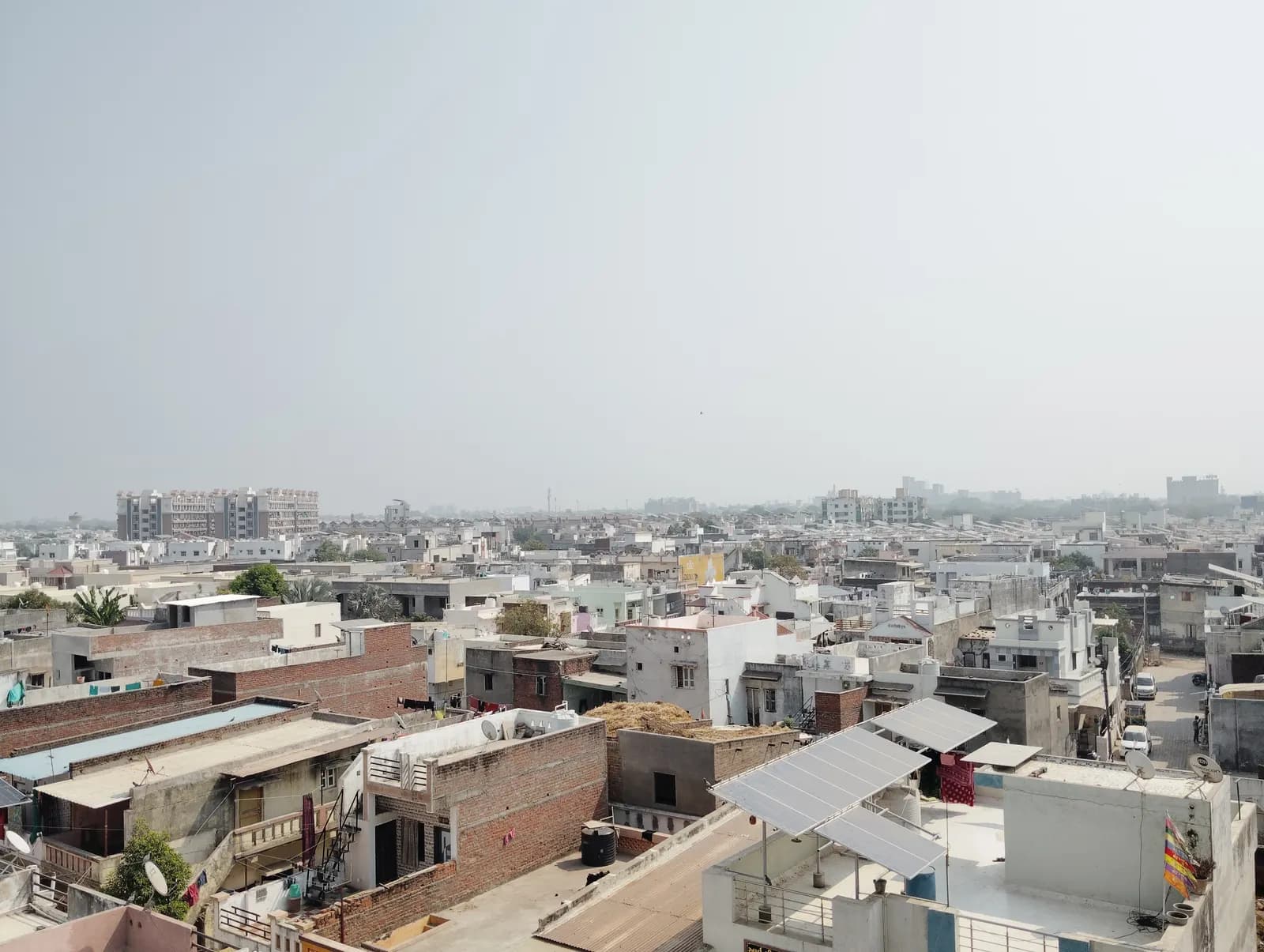
Domestic Content Requirement (DCR). Every solar module in a subsidised system must be manufactured in India from Indian-made solar cells. This is the single most common reason claims fail. The guidelines say that using non-DCR modules "in any form" makes the installation ineligible — so one imported panel in a string of eight costs you the whole subsidy, not one-eighth of it. Ask the vendor to put the module make, model and DCR certificate in the quotation, and check the serial numbers on the panels against the invoice before the DISCOM visit.
Registered vendors only. You have to choose a vendor registered on the national portal. Registration is done by the state's nodal DISCOM or agency, or nationally through the scheme's implementation agency. There is no fixed government price — you and the vendor agree the design and the rate, and the portal shows vendor profiles, ratings and prices so you can compare. Registered vendors must give 5 years of free repairs and maintenance from commissioning under a comprehensive maintenance contract, and replace under-performing parts free in that period. Vendors that install poor-quality systems can be penalised or de-registered.
If you would rather use imported premium modules, you can — just without the subsidy. The portal has a Give It Up option for households that want to forgo the CFA, and the DCR rule doesn't apply to them.
Housing societies and RWAs
Apartment buildings were the hardest case under earlier schemes, and PM Surya Ghar handles them with a separate rate. A group housing society, residents' welfare association, apartment owners' association or cooperative housing society can claim ₹18,000 per kW for a rooftop plant on a connection that serves only common facilities — lifts, water pumps, corridor and campus lighting, and EV charging points. The plant can't be used to supply individual flats.
The supported capacity is the lower of two numbers: 3 kW for every house in the society, or the actual plant size, with an overall ceiling of 500 kW. MNRE gives two examples. A society with 20 houses that installs 100 kW is paid for 60 kW (20 × 3 kW), which is ₹10,80,000. A society with 50 houses installing the same 100 kW is paid for all 100 kW, which is ₹18,00,000. The 500 kW ceiling includes any subsidised plants that individual residents have already put up, so a society where several villa owners claimed for their own roofs has less headroom.
Before you approach vendors, get a general body resolution approving the project and the cost-sharing, confirm the society is the registered holder of the common-area connection, and check the roof's load-bearing capacity with a structural engineer. In older buildings the water tanks, mobile towers and terrace gardens often leave less shadow-free area than the committee assumes, so get the vendor's site survey and layout in writing before you vote on a size.
Who gets what from PM Surya Ghar
| Applicant | Subsidy rate | Maximum | Key condition |
|---|---|---|---|
Individual home | ₹30,000 per kW (first 2 kW), ₹18,000 per kW (3rd kW) | ₹78,000 | Residential connection; DCR modules; registered vendor |
Home in special category state/UT | ₹33,000 per kW / ₹19,800 per kW | ₹85,800 | Same conditions |
GHS / RWA common facilities | ₹18,000 per kW | Lower of 3 kW × houses or plant size, up to 500 kW | Connection only for common areas, incl. EV charging |
Shop, office, factory, government | Nil | — | Non-residential connections excluded |
Individual home
- Subsidy rate
₹30,000 per kW (first 2 kW), ₹18,000 per kW (3rd kW)
- Maximum
₹78,000
- Key condition
Residential connection; DCR modules; registered vendor
Home in special category state/UT
- Subsidy rate
₹33,000 per kW / ₹19,800 per kW
- Maximum
₹85,800
- Key condition
Same conditions
GHS / RWA common facilities
- Subsidy rate
₹18,000 per kW
- Maximum
Lower of 3 kW × houses or plant size, up to 500 kW
- Key condition
Connection only for common areas, incl. EV charging
Shop, office, factory, government
- Subsidy rate
Nil
- Maximum
—
- Key condition
Non-residential connections excluded
State top-ups: how much more you can get
The guidelines let states add their own subsidy on top of the CFA, provided they follow the scheme rules and process the payment through the national portal. Only some states do this, and amounts change with state budgets, so treat the figures below as what was published when we checked and confirm on the state page before you sign a contract.
Delhi. The Delhi Solar Portal lists a state capital subsidy of ₹26,000 per kW (max ₹78,000) for residential rooftop systems up to 3 kW, with nothing extra beyond 3 kW. The state amount is limited so that the combined subsidy doesn't exceed the system cost. Societies get ₹11,000 per kWp for common facilities, again up to 500 kWp at 3 kWp per house. Delhi also runs a generation-based incentive under its solar policy; check the current per-unit rate in the SOP on the portal.
Uttar Pradesh. The UP Solar Energy Policy 2022 promises a state subsidy of ₹15,000 per kW (max ₹30,000 per consumer), over and above the central assistance, paid by reimbursement after the system is installed and commissioned under net metering. UPNEDA runs this, and its rooftop page explains how to claim the state share.
Other states. Several other states and UTs have announced their own top-ups at different times, often for a limited capacity or a fixed budget. Rather than relying on a vendor's list, look for your state's renewable energy agency or DISCOM page linked from the national portal, and ask the vendor to show the state order in writing. If the state share is paid separately and later, your cash flow should not depend on it.
How to apply on the national portal
Everything runs through pmsuryaghar.gov.in — the subsidy can't be claimed any other way. The sequence below follows the scheme guidelines. Don't let a vendor install first and "apply later": the application ID and e-token are created at the start, and the DISCOM checks the system against what was applied for.
Applying for PM Surya Ghar step by step
- 1
Register on the national portal
Open the national portalChoose your state and DISCOM, enter your electricity consumer number and mobile number, and log in. The portal generates an application ID.
- 2
Apply for rooftop solar
Fill in the rooftop solar form with the capacity you want. Systems up to 10 kW are treated as technically feasible without separate DISCOM approval under the consumer rights rules; where your state hasn't operationalised this yet, upload the feasibility documents it asks for.
- 3
Pick a registered vendor and agree terms
Compare registered vendors on the portal, agree the design, DCR module make, price and payment schedule, and sign an agreement. MNRE provides a model vendor–consumer agreement.
Tip: Get the 5-year maintenance terms and the module and inverter warranties in writing.
- 4
Installation
The vendor installs the system, runs safety checks and shows you how to clean and monitor it.
- 5
Upload installation details
Enter the system details and upload the documents and geo-tagged photographs from your login. The vendor can help, but use your own login.
- 6
Net meter and DISCOM inspection
The DISCOM fits the net meter (or you buy one from an empanelled maker where allowed), signs the metering agreement and inspects the system.
- 7
Redeem the e-token
Once the DISCOM approves on the portal, your e-token is activated with the CFA for the capacity actually installed. Redeem it with your bank details; the money is processed within 15 days.
Documents to keep ready: a recent electricity bill showing the consumer number, the bank account in the applicant's name (cancelled cheque or passbook scan), the vendor agreement and invoice, the DCR certificate for the modules, and photographs of the installed system. Mismatched names — a bill in a late parent's name and a bank account in yours — are a common reason for delay; get the electricity connection transferred first.
Loans. You can choose a loan from the portal itself, through the Jan Samarth platform or directly from participating banks. The guidelines envisage standard low-interest loans for systems up to 3 kW, priced around the repo rate plus 0.5 percentage points, with similar products for bigger systems. If you take a loan this way, the subsidy is credited to your loan account first and any balance comes to your savings account.
Net metering: what happens to your electricity bill
A rooftop system makes most of its power in the middle of the day, when many homes use little. Net metering handles the mismatch. The DISCOM replaces your meter with a bi-directional (net) meter, usually a smart meter, that records units you import from the grid and units your panels export. At the end of each billing cycle you pay only for the net units, and in most states surplus exports carry forward to later months, with any leftover at the year-end settled at a rate set by the state regulator.
The scheme covers every metering model your state regulator has approved — net metering, gross metering, net billing, group and virtual net metering — so the exact maths depends on your state's regulations. Under gross metering, for example, you're paid a tariff for every unit generated and you buy all your consumption separately, which gives a smaller saving than net metering.
How a subsidised rooftop system reduces your bill
Step 1
Panels generate in daytime
Step 2
Home uses it first
no units billed
Step 3
Surplus exported
net meter records it
Step 4
Night-time import from grid
Step 5
Bill on net units
credits carry forward per state rules
As a planning rule of thumb, installers and the Delhi portal size systems by monthly consumption: 1–2 kW for homes using up to 150 units a month, 2–3 kW for 150–300 units, and above 3 kW beyond that. Actual generation depends on your city's sunshine, shading, panel orientation and cleaning, so ask the vendor for a site-specific generation estimate rather than a national average.
Solar panel price for a home after the subsidy — worked examples
Vendors set their own prices, and they vary by city, module brand, structure height and inverter type. The examples below use assumed quotes so you can see how the subsidy works; replace them with your own.
Example 1 — a 3 kW system in Pune. Suppose the quote is ₹1,95,000 including GST and a raised structure. The central subsidy is ₹78,000. Your net cost is ₹1,95,000 − ₹78,000 = ₹1,17,000. Maharashtra had no extra state subsidy listed when we checked, so that is the full saving from schemes.
Example 2 — the same system in Delhi. With the Delhi state subsidy at ₹26,000 per kW for 3 kW (₹78,000) on top of the central ₹78,000, the combined subsidy is up to ₹1,56,000, subject to Delhi's rule that the total can't exceed the cost. On a ₹1,95,000 quote the net cost could fall to about ₹39,000.
Example 3 — the same system in Lucknow. Central ₹78,000 plus UP's maximum ₹30,000 per consumer gives ₹1,08,000. Net cost on a ₹1,95,000 quote: ₹87,000 — but the state share is reimbursed after commissioning, so budget to pay ₹1,17,000 first.
Example 4 — a 2 kW system in Shimla. As a special category state, Himachal Pradesh gets ₹33,000 per kW, so the subsidy is ₹66,000 rather than ₹60,000.
Example 5 — financing the gap. If you borrow the ₹1,17,000 net cost in Example 1 over five years, the EMI depends on the rate your bank offers. Try it in the calculator below with the rate on your sanction letter.
Try it — EMI on the net cost of a 3 kW system
Subsidy for farmers: PM-KUSUM
Farm solar is a different scheme. PM-KUSUM, run by MNRE since 2019 and scaled up in 2024, has three parts. Component A supports small solar plants of 500 kW to 2 MW on barren or fallow land, with the farmer either building the plant or leasing land to a developer. Component B helps individual farmers install standalone, off-grid solar pumps of up to 7.5 HP. Component C solarises existing grid-connected pumps, either one pump at a time or a whole agricultural feeder.
For Components B and C (individual pumps), the Centre pays 30% of benchmark or tender cost, the state at least 30%, and the farmer at most 40% — and banks can lend up to 30%, so the farmer can start with about 10% in cash. In the North-Eastern states, Sikkim, Jammu & Kashmir, Himachal Pradesh, Uttarakhand, Lakshadweep and the Andaman & Nicobar Islands, central support is 50% and the farmer's share falls to 20%.
The scheme's period on MNRE's page runs to 31 March 2026. A Lok Sabha reply reported in July 2026 said PM-KUSUM had installed 13.11 GW by that date and that projects with power purchase agreements signed by 31 December 2025 had been given until March 2027. Whether new pump applications are still being sanctioned depends on your state's remaining allocation, so check with your state nodal agency (usually the renewable energy agency or agriculture department) before paying any deposit. Don't pay "registration fees" to websites or callers claiming to sell KUSUM pumps — applications go through your state's nodal agency, and the official links are on the PM-KUSUM national portal.
Solar for shops, offices and factories
Businesses don't get PM Surya Ghar money, but rooftop solar is often more attractive for them than for homes, because commercial tariffs are higher and most power is used in daylight. Four things improve the numbers.
GST is now 5% on solar equipment. Under GST 2.0, from 22 September 2025, solar power generators, solar power-based devices and photovoltaic cells and modules sit in the 5% schedule (they were at 12% before). When a vendor supplies and installs a complete system under one contract, the rate notification deems 70% of the total price to be goods at 5% and the remaining 30% to be services at 18%. The effective GST on a turnkey contract therefore works out to about 8.9%.
Input tax credit. A GST-registered business that uses the electricity for taxable supplies can usually claim ITC on the solar plant. Works contracts for building immovable property are normally blocked credits, but section 17 of the CGST Act carves out plant and machinery — equipment fixed to the earth by a foundation or structural support and used to make taxable supplies. Rulings on large ground-mounted plants have gone different ways, so get your CA's view on a big project. See our input tax credit guide for the conditions.
Depreciation. Under the Income-tax Act, 1961 rate chart, solar power generating systems were in the renewable energy devices block at 40% on the written-down value, much higher than general plant and machinery. The Income-tax Act, 2025 applies from tax year 2026-27 with its own depreciation table, so confirm the rate for your block with your accountant before you count on it.
Zero-capex options. Under a RESCO or OPEX model, a developer installs and owns the plant on your roof and sells you the power at a fixed tariff for 15–25 years. You spend nothing upfront and pay less per unit than the DISCOM tariff, but you don't get the depreciation or ITC, and you're locked into a long contract — read the exit and roof-repair clauses carefully.
Worked example — a 20 kW rooftop on a factory in Ahmedabad. Assume a turnkey price of ₹9,00,000 before tax. Goods portion: 70% = ₹6,30,000 × 5% = ₹31,500. Service portion: 30% = ₹2,70,000 × 18% = ₹48,600. Total GST: ₹80,100 (8.9% effective). If the factory makes taxable supplies, it can claim the ₹80,100 as ITC, so the real cost of the plant is ₹9,00,000.
Try it — GST on the goods portion of a solar contract
Common mistakes that delay or cancel the subsidy
Signing with an unregistered installer. A cheaper local installer who isn't on the portal can't get you the CFA, no matter what they promise. Check the vendor's name on the portal before paying an advance.
Non-DCR modules slipped in. Ask for the DCR certificate and match panel serial numbers. A single non-DCR module disqualifies the system.
Expecting subsidy on 5 kW or 10 kW. The CFA stops at 3 kW. Bigger systems are fine, but the extra capacity is on you.
Paying 100% upfront. Link part of the payment to net meter installation and DISCOM approval, so the vendor stays motivated to fix any inspection points.
Name and account mismatches. The connection holder, applicant and bank account holder should be the same person. Transfer an inherited connection before applying.
Commercial meter in the home. If your home runs on a commercial connection — common where a ground-floor shop shares a meter — you won't qualify until you have a separate residential connection.
Before you sign a rooftop solar contract
0/8Official links
- PM Surya Ghar national portalApply, choose vendor, track application, redeem e-token
- MNRE — amended PM Surya Ghar CFA guidelines (PDF)
- Delhi Solar Portal — state subsidy
- UPNEDA — rooftop solar programmeUP state subsidy process
- MNRE — PM-KUSUM
- PM-KUSUM national portal
- GST rate notification 9/2025 (Maharashtra copy) — entry 437, solar
What to do next
Pull out your last twelve electricity bills, work out your average monthly units, and use that to choose between 1, 2 and 3 kW. Then register on the national portal, shortlist two or three registered vendors and compare written quotes that name DCR modules. If you run a business, run the GST and ROI numbers first with our GST calculator and ROI calculator, and read how GST 2.0 changed rates on related equipment. For farm and dairy projects that pair solar pumps with livestock, see our dairy farm business plan.
This is general information, not legal or tax advice — confirm on the official source or with a professional.
Frequently asked questions
Under PM Surya Ghar: Muft Bijli Yojana the Centre pays ₹30,000 per kW for the first 2 kW and ₹18,000 per kW for the third kW, so a 1 kW system gets ₹30,000, 2 kW gets ₹60,000 and 3 kW or more gets the maximum ₹78,000. Hill and island states get a little more. Some states, such as Delhi and Uttar Pradesh, add their own subsidy on top.
Yes, but the central subsidy stops growing after 3 kW. A 5 kW or 10 kW home system still gets the same ₹78,000 as a 3 kW one, because no CFA is paid for capacity beyond 3 kW. You can still install the bigger system on the same application if your DISCOM allows it, and finance the extra capacity yourself.
Yes. A group housing society or residents' welfare association can claim ₹18,000 per kW for a rooftop plant that powers common facilities such as lifts, pumps, corridor lights and EV chargers. The supported size is capped at 500 kWp (3 kWp per house), and that cap includes any plants individual residents have already installed with subsidy.
No. The scheme guidelines say no central financial assistance goes to non-residential consumers, including commercial, industrial and government connections. Businesses instead benefit from 5% GST on solar equipment, input tax credit, higher depreciation on renewable energy devices and net metering, and many choose a zero-capex RESCO arrangement.
The guidelines say the subsidy is processed within 15 days of the DISCOM approving your installation on the national portal. The slow part is usually before that: vendor installation, net meter fitting and the DISCOM inspection. If you took a loan through the portal, the subsidy goes into your loan account first.
No. The modules must meet the Domestic Content Requirement — made in India using India-made solar cells. Using non-DCR modules anywhere in the system makes the whole installation ineligible. If you want imported panels, you can install them without subsidy, and the portal's Give It Up option lets you formally forgo the CFA.
Sources & verification
Figures on this page were checked against the sources below when it was last reviewed on 8 October 2026. Each rate and limit is stored once with its own official source and review date, and official update channels are monitored daily so changes are picked up. How we verify
- 1.Guidelines for PM-Surya Ghar: Muft Bijli Yojana — Central Financial Assistance to Residential Consumers (amended, July 2025) — Ministry of New and Renewable Energy · accessed 8 October 2026
- 2.Amendment in Guidelines for Implementation of PM-Surya Ghar: Muft Bijli Yojana — CFA to residential consumers (notice) — Ministry of New and Renewable Energy · accessed 8 October 2026
- 3.Central subsidy — PM Surya Ghar — Government of NCT of Delhi — Delhi Solar Portal · accessed 8 October 2026
- 4.State subsidy — Delhi Solar Portal — Government of NCT of Delhi · accessed 8 October 2026
- 5.Uttar Pradesh Solar Energy Policy 2022 — UPNEDA, Government of Uttar Pradesh · accessed 8 October 2026
- 6.Pradhan Mantri Kisan Urja Suraksha evam Utthaan Mahabhiyaan (PM-KUSUM) — Ministry of New and Renewable Energy · accessed 8 October 2026
- 7.PM KUSUM scheme installs 13.11 GW by March 2026, PPA projects extended until March 2027 — Energetica India (reporting a Lok Sabha reply) · accessed 8 October 2026
- 8.Notification No. 9/2025 – State Tax (Rate), Maharashtra (mirrors central Notification 9/2025 – Central Tax (Rate)) — Finance Department, Government of Maharashtra · accessed 8 October 2026
- 9.CGST Act, 2017 — Section 17 (apportionment of credit and blocked credits) — CBIC · accessed 8 October 2026
- 10.Depreciation under the Income Tax Act — rate chart — ClearTax · accessed 8 October 2026
MSMETOOLS is an independent platform and is not affiliated with any government agency, ministry or department.
Tools for this
EMI Calculator
Calculate loan EMIs for business and personal loans.
GST Calculator (India)
Calculate GST for your sales and purchases with current rates.
ROI Calculator
Calculate return on investment for your business projects.
Related guides
 PM SVANidhi 2026: ₹15,000–₹50,000 Loans, Credit Card & ApplyRead guide
 Electric Scooter Subsidy for Women 2026: PM E-DRIVE & StatesRead guide
 GST on Solar Panels 2026: 5% Rate, 70:30 Rule & ITCRead guide
 How to Apply for Government Tenders in India (2026 Guide)Read guide
Official links open the government site in a new tab.