 Government schemes & funding
PM SVANidhi Yojana 2026: Loan Amounts, Credit Card, Eligibility and How to Apply
PM SVANidhi 2026: new ₹15,000, ₹25,000 and ₹50,000 loan tranches, 7% interest subsidy, ₹1,600 cashback, ₹30,000 RuPay credit card and how to apply online.
 Edited by Sumeet YadavFounder & editor, MSMETOOLS · fact-checked against official sources
Contents (9)
- 1. What PM SVANidhi is and what changed in 2025
- 2. Who is eligible
- 3. Loan tranches, interest and the 7% subsidy
- 4. Digital cashback: how to earn ₹1,600 a year
- 5. The PM SVANidhi credit card
- 6. How to apply for a PM SVANidhi loan online
- 7. SVANidhi se Samriddhi: benefits beyond the loan
- 8. Common mistakes and how to avoid them
- 9. What to do next
If you sell vegetables, tea, chaat, clothes or repair shoes on a street, PM SVANidhi is the government's collateral-free working-capital loan made for you. The scheme was restructured in August 2025 and now runs until 31 March 2030, with bigger loans, a UPI-linked credit card and cashback for digital payments. This guide explains the 2026 loan amounts, who is eligible, what the 7% subsidy actually saves you in rupees, and exactly how to apply online.
Quick answer
PM SVANidhi gives street vendors collateral-free loans in three steps — ₹15,000, then ₹25,000, then ₹50,000 — each unlocked by repaying the previous one. You get a 7% a year interest subsidy, up to ₹1,600 a year in UPI cashback, and after the second loan a RuPay credit card of up to ₹30,000. Apply free on pmsvanidhi.mohua.gov.in.
Who: street vendors with a Certificate of Vending, ID card or Letter of Recommendation
Repay in 12, 18 and 36 months respectively; no prepayment penalty
Needs Aadhaar linked to your mobile number and a bank account
Lending open until 31 March 2030
What PM SVANidhi is and what changed in 2025
PM Street Vendor's AtmaNirbhar Nidhi (PM SVANidhi) is a Central Sector Scheme launched on 1 June 2020, when lockdowns wiped out the small savings most vendors run their business on. It is run jointly by the Ministry of Housing & Urban Affairs (MoHUA) and the Department of Financial Services, with SIDBI as the implementing agency.
On 27 August 2025 the Union Cabinet approved a restructured scheme with an outlay of ₹7,332 crore, aiming to reach 1.15 crore vendors including 50 lakh new ones. The main changes:
- Bigger first two loans — ₹10,000 → ₹15,000 and ₹20,000 → ₹25,000; the third stays at ₹50,000.
- UPI-linked RuPay credit card for vendors who repay the second loan (launched 23 January 2026).
- Cashback of up to ₹1,600 a year on retail and wholesale digital transactions.
- Wider coverage — census towns and peri-urban areas, in phases, not just municipal towns.
- Lending extended from 31 December 2024 to 31 March 2030.
By the end of September 2026 the portal showed about 1.2 crore loans disbursed, worth over ₹19,600 crore. According to the PIB FAQ of May 2026, nearly 46% of beneficiaries are women.
PM SVANidhi at a glance (2026)
₹15,000
1st loan
repay in 12 months
₹25,000
2nd loan
repay in 18 months
₹50,000
3rd loan
repay in 36 months
7% a year
Interest subsidy
credited quarterly
Who is eligible
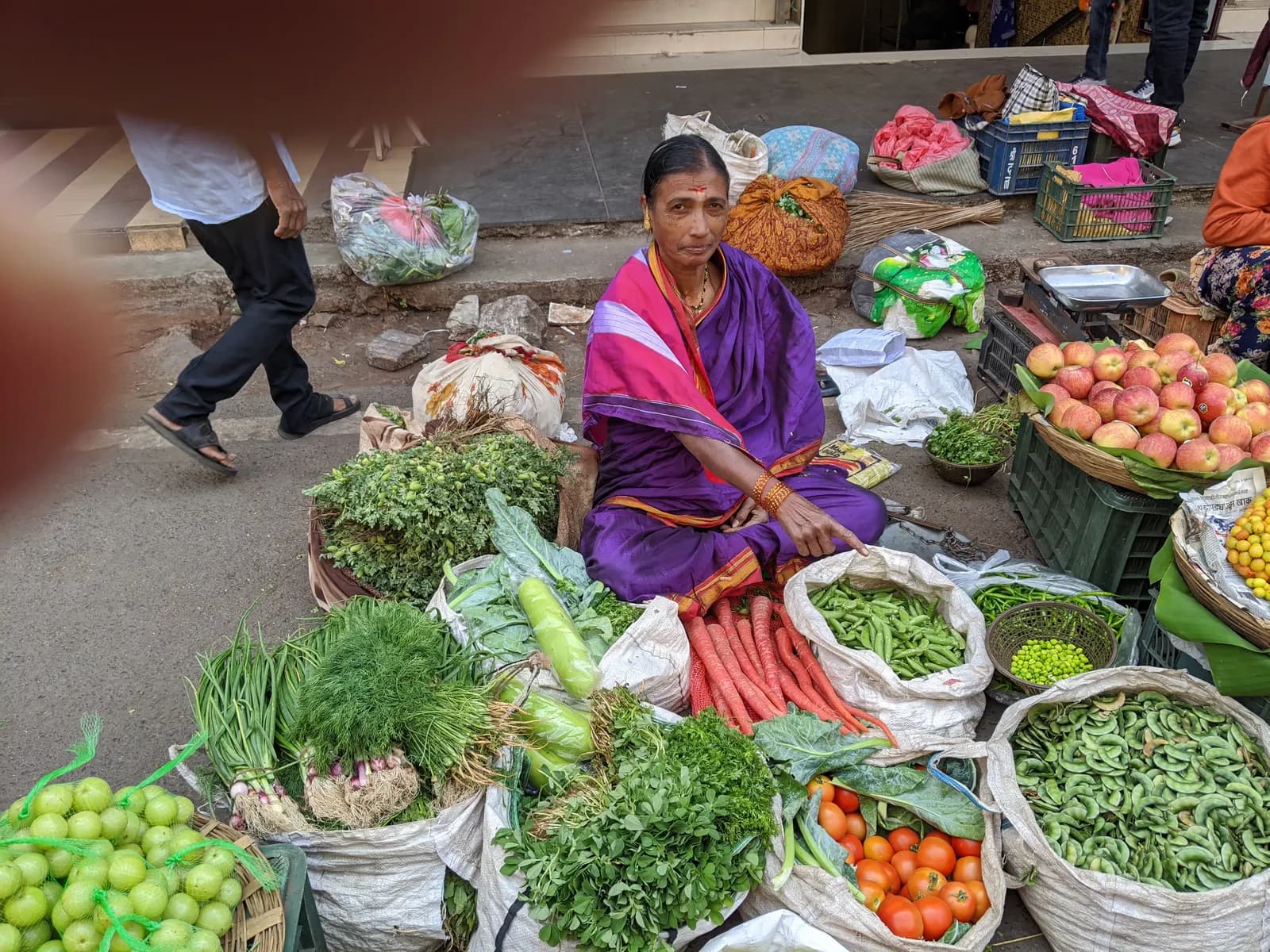
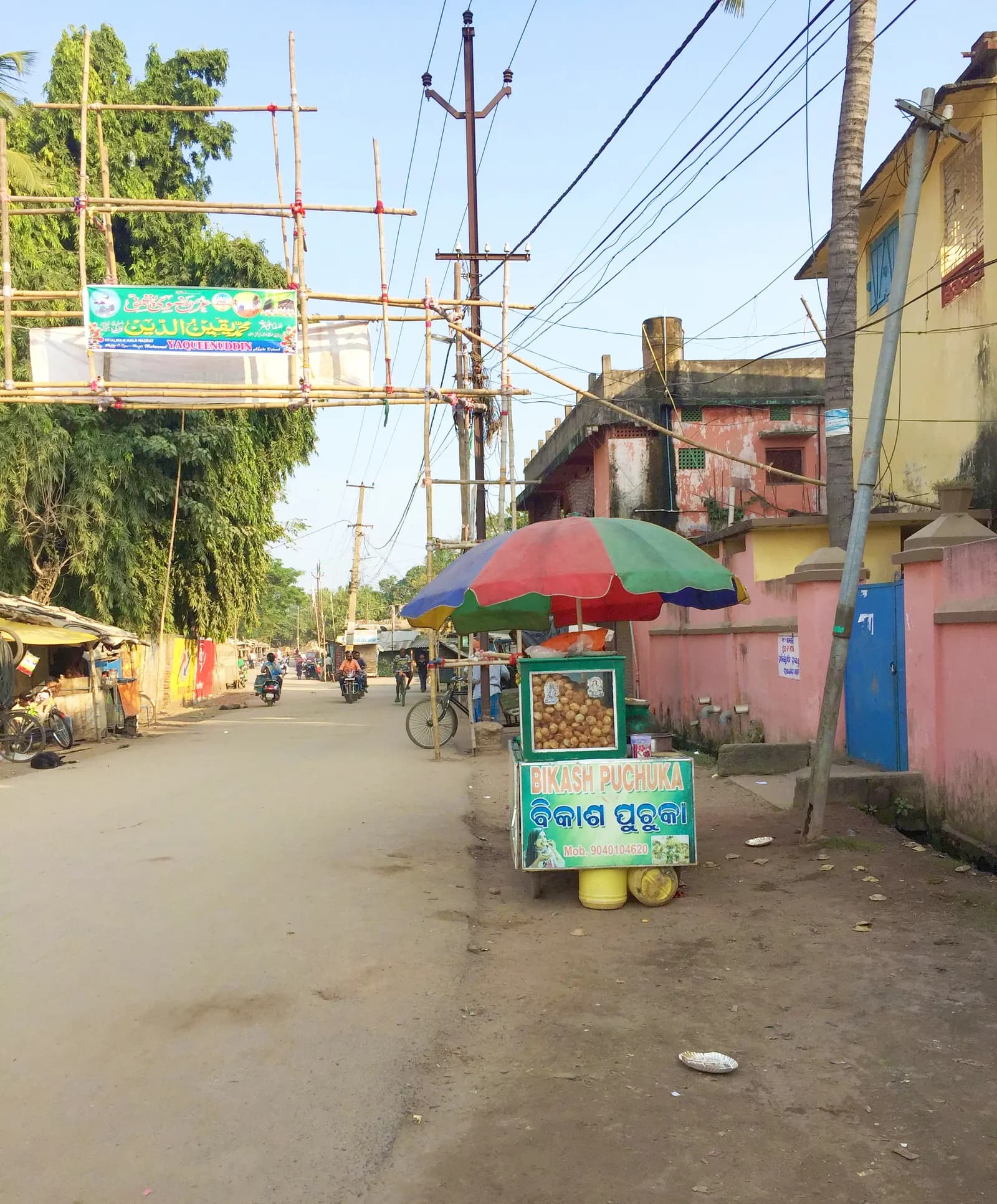
You qualify if you are a street vendor as defined in the Street Vendors (Protection of Livelihood and Regulation of Street Vending) Act, 2014: someone selling goods or services of daily use on a street, footpath, pavement, park or other public place, from a temporary structure or by moving around. Fruit and vegetable sellers, food carts, tea stalls, cobblers, barbers, laundry and pan shops are typical examples. Seasonal, mobile and stationary vendors are all covered.
You need one of these as proof:
- Certificate of Vending (CoV) or Identity Card issued by your Urban Local Body (ULB) or Town Vending Committee, if you were included in the city's vendor survey; or
- Letter of Recommendation (LoR) — if you were left out of the survey. In towns, the ULB issues it; in census towns and peri-urban areas, the Block Development Officer (BDO) issues it after field verification. The guidelines say verification and issue should be completed within 15 days of your application.
The scheme runs only in States and Union Territories that have notified rules and a scheme under the 2014 Act — the portal lists them under "Notified States/UTs".
Loan tranches, interest and the 7% subsidy
| Tranche | Loan amount | Repayment period | How you unlock it |
|---|---|---|---|
| 1st | Up to ₹15,000 | 12 months | Eligible vendor with CoV / ID / LoR |
| 2nd | Up to ₹25,000 | 18 months | Repay the 1st loan on time or early |
| 3rd | Up to ₹50,000 | 36 months | Repay the 2nd loan on time or early |
| Credit card | Up to ₹30,000 | Revolving, 5-year card | Repay the 2nd loan |
Interest rate. Scheduled commercial banks, cooperative banks and SHG banks charge their normal rate; NBFCs and MFIs follow RBI rules for their category. There is no collateral and no prepayment penalty.
Interest subsidy. The government pays 7% a year on your loan, credited into your account every quarter through Indian Bank's PAiSA portal. It is paid only for months in which your account is "standard" — once it slips into NPA, the subsidy stops.
Credit guarantee. Lenders are covered by CGTMSE (31.87% on first loans, 8.25% on second and 6% on third), which is why banks don't ask you for security.
Worked example: what the subsidy saves
Say your bank charges 12% a year (rates vary — this is for illustration):
- 1st loan, ₹15,000 over 12 months: EMI ≈ ₹1,333; total interest ≈ ₹993. The 7% subsidy returns ≈ ₹579, so your real interest cost is about ₹414 — under ₹35 a month.
- 2nd loan, ₹25,000 over 18 months: EMI ≈ ₹1,525; total interest ≈ ₹2,442; subsidy ≈ ₹1,424; real cost about ₹1,018.
- Add up to ₹1,600 a year in UPI cashback and an active digital seller can recover more than the net interest.
Plan your instalments with our EMI calculator before you apply.
Digital cashback: how to earn ₹1,600 a year
Cashback under the restructured scheme
| Type | How it works | Maximum |
|---|---|---|
Retail (any inward or outward UPI payment) | ₹1 per transaction, up to ₹100 a month | ₹1,200 a year in each tranche |
Wholesale purchases | ₹20 per digital payment of at least ₹2,000, up to 5 a quarter | ₹400 a year |
Total | Retail + wholesale | ₹1,600 a year |
Retail (any inward or outward UPI payment)
- How it works
₹1 per transaction, up to ₹100 a month
- Maximum
₹1,200 a year in each tranche
Wholesale purchases
- How it works
₹20 per digital payment of at least ₹2,000, up to 5 a quarter
- Maximum
₹400 a year
Total
- How it works
Retail + wholesale
- Maximum
₹1,600 a year
To qualify, get a UPI ID and QR code through your bank or a digital payment aggregator (BHIM, India Post Payments Bank, Paytm, PhonePe, BharatPe and others are named in the guidelines). ULBs run "Digi Saathi/Sakhi" camps to help with set-up. Pay your wholesaler digitally too — five ₹2,000+ payments a quarter earn the full ₹100.
The PM SVANidhi credit card
The UPI-linked RuPay credit card launched on 23 January 2026 gives repaying vendors on-demand credit for stock or emergencies.
- Who can apply: vendors who have fully repaid their 2nd loan (whether or not they have taken the 3rd), aged 21–65, with no NPA or written-off loan with any lender. A minimum credit score is not required.
- Limit: ₹30,000, starting at an operating limit of ₹10,000 and raised after good use. You can take the card, the 3rd loan, or both.
- Cost: lifetime free — no joining, annual or inactivity fee. Interest-free period of 20–50 days; late fees only if more than ₹500 is overdue.
- Limits on use: domestic only, no cash withdrawal, and blocked categories such as liquor and gambling. Balances of ₹2,500 or more can be converted to EMI at up to 1.5% a month.
- Validity: 5 years. Activate within 60 days of issue.
Apply through "Apply Credit Card" on the portal or the PM SVANidhi app; your own bank is the default issuer if it issues credit cards. You need PAN for the card, in addition to Aadhaar.
How to apply for a PM SVANidhi loan online
Applying on the PM SVANidhi portal
- 1
Link your mobile number to Aadhaar
The application uses Aadhaar OTP e-KYC. If your mobile isn't linked, update it at an Aadhaar centre first.
- 2
Check your survey status
On pmsvanidhi.mohua.gov.in, use 'Check your Survey Status' to see whether your ULB's survey lists you.
- 3
Choose the right application
Open PM SVANidhi portalSurveyed with a CoV/ID? Choose Apply for 15k. Not surveyed? Choose Apply LoR cum Loan (with or without Aadhaar). Repeat borrowers choose Apply for 25k or Apply for 50k.
- 4
Fill in vending and bank details
Enter what you sell, where you vend, and your savings account. Pick a lender — your own bank is usually fastest.
Tip: Applying is free. Don't pay anyone who offers to 'guarantee' a loan.
- 5
LoR verification and bank sanction
The ULB or BDO verifies you (target: 15 days), then the bank sanctions and disburses. MoHUA reports an average of about 23 days to sanction.
- 6
Go digital and repay on time
Set up a UPI QR code for cashback, pay EMIs on time, and your subsidy lands every quarter. Closing the loan unlocks the next tranche.
You can also apply through a bank's business correspondent, an MFI agent, a Common Service Centre or at your ULB office — they file on the same portal. Track progress under Know Your Application Status or on the PM SVANidhi app.
Documents to keep ready
0/6SVANidhi se Samriddhi: benefits beyond the loan
Once you are a borrower, your family can be profiled under SVANidhi se Samriddhi and linked to eight Central Government welfare schemes — the PIB FAQ of May 2026 reports more than 50 lakh families profiled and over 1.52 crore benefits sanctioned. ULBs now hold monthly Lok Kalyan Melas where you can do this profiling, apply for loans and get digital onboarding in one visit. Street-food vendors can also get free hygiene and food-safety training run with FSSAI, and every beneficiary is entitled to a "Parichay Board" to display at the vending spot.
Common mistakes and how to avoid them
- Missing EMIs. A late account loses the subsidy for those months and blocks your next tranche — set up auto-debit.
- Paying middlemen. The application is free. Use the portal, your ULB or the bank.
- Using cash only. Without a UPI QR code you lose up to ₹1,600 a year in cashback.
- Skipping straight to ₹50,000. New vendors always start with the first tranche; there is no direct application for the third.
- Moving city without updating. The portal now has a "ULB Transfer" request so migrating vendors can move their record.
Official links
- PM SVANidhi portal — apply, status, credit cardLoR cum Loan, 15k/25k/50k applications, status check
- PM SVANidhi Scheme Guidelines (MoHUA)Tranches, subsidy, cashback, LoR process
- Credit Card Operational GuidelinesEligibility, limit, charges
- PIB — Cabinet approval of restructuring (27 Aug 2025)New amounts and extension to March 2030
- PIB — PM SVANidhi FAQs (30 May 2026)Latest official Q&A
What to do next
Check your survey status on the portal today, link your mobile to Aadhaar, and apply for the ₹15,000 loan. Once it's running, issue simple receipts to wholesale buyers with our free receipt generator and check how much more you could borrow later with the loan eligibility calculator.
This is general information, not financial advice — confirm the latest terms on the official portal or with your bank.
Frequently asked questions
After the 2025 restructuring, the first loan is up to ₹15,000 (repaid in 12 months), the second up to ₹25,000 (18 months) and the third up to ₹50,000 (36 months). You move to the next tranche only after repaying the previous one on time or early. No collateral is needed for any of them.
The ₹50,000 loan is the third tranche. You must first take and repay the ₹15,000 and ₹25,000 loans. Once the second loan is closed, the portal shows you as eligible and you can apply under 'Apply for 50k'. There is no direct entry to the third tranche for new vendors.
It is a lifetime-free, UPI-linked RuPay credit card for vendors who have fully repaid their second loan, launched on 23 January 2026. The limit is ₹30,000, starting at ₹10,000 and raised with good use. It offers 20–50 days interest-free credit, but no cash withdrawal or international use.
Banks charge their normal rates; NBFCs and MFIs follow RBI rules for their category. The government then pays an interest subsidy of 7% a year, credited to your account every quarter while the loan stays regular. For many vendors this cancels most of the interest cost.
Yes. If you are not in your city's survey, apply online for a Letter of Recommendation (LoR) together with the loan — the portal has an 'Apply LoR cum Loan' option. In census towns and peri-urban areas the Block Development Officer issues the LoR. The guidelines say verification should be completed within 15 days.
Open pmsvanidhi.mohua.gov.in and use 'Know Your Application Status' with your application number or registered mobile, or log in as an applicant. The PM SVANidhi mobile app shows the same status and has a voice-based grievance option.
Sources & verification
Figures on this page were checked against the sources below when it was last reviewed on 7 October 2026. Each rate and limit is stored once with its own official source and review date, and official update channels are monitored daily so changes are picked up. How we verify
- 1.Cabinet approves restructuring & extension of lending period beyond 31.12.2024 of PM SVANidhi — PIB — Cabinet · accessed 7 October 2026
- 2.PM SVANidhi Scheme Guidelines (restructured) — Ministry of Housing & Urban Affairs · accessed 7 October 2026
- 3.PM SVANidhi Credit Card Operational Guidelines — Ministry of Housing & Urban Affairs · accessed 7 October 2026
- 4.PM SVANidhi: Advancing Financial Inclusion for Street Vendors — FAQs (30 May 2026) — PIB Research / MoHUA · accessed 7 October 2026
- 5.Implementation of PM-SVANidhi Scheme (Lok Sabha reply, 23 Jul 2026) — PIB — Ministry of Housing & Urban Affairs · accessed 7 October 2026
- 6.Improvement under PM SVANidhi Scheme (Rajya Sabha reply, 9 Feb 2026) — PIB — Ministry of Housing & Urban Affairs · accessed 7 October 2026
- 7.PM SVANidhi portal — home, dashboard and application links — Ministry of Housing & Urban Affairs · accessed 7 October 2026
- 8.Cabinet clears ₹7,332-cr revamp and extension of PM SVANidhi till 2030 — Business Standard · accessed 7 October 2026
MSMETOOLS is an independent platform and is not affiliated with any government agency, ministry or department.
Tools for this
EMI Calculator
Calculate loan EMIs for business and personal loans.
Loan Eligibility Calculator
Check your business loan eligibility based on income and existing loans.
Payment Receipt Generator
Issue payment receipts in seconds.
Related guides
 PM Vishwakarma Yojana 2026: Benefits, Loan & How to ApplyRead guide
 PM FME Scheme 2026: 35% Subsidy, Status & How to ApplyRead guide
 Subsidy for Solar Panels 2026: PM Surya Ghar ₹78,000 GuideRead guide
 Annapurna Scheme 2026: Loan, West Bengal Yojana & FactsRead guide
Official links open the government site in a new tab.