 HR, payroll & labour
Minimum Wages in Jammu and Kashmir (2026): Daily Rates, Monthly Pay and What the Draft Wage Rules Change
Jammu and Kashmir minimum wages 2026: ₹311 a day unskilled, ₹483 skilled, ₹552 highly skilled under S.O. 513, monthly pay, central rates and draft rules.
 Edited by Sumeet YadavFounder & editor, MSMETOOLS · fact-checked against official sources
- Rates in force
- from 17 October 2022
- Last checked
- Against the official source on 19 October 2026
- Next revision due
- 1 October 2026 (not yet notified)
No revision notified since October 2022. The rates in force from 17 October 2022 are still the latest on the official source; a revision was due by 1 October 2026. Any later order may carry arrears back to its own effective date.
Contents (13)
- 1. Jammu and Kashmir minimum wages in force
- 2. Which employments are covered
- 3. Which category is each job in?
- 4. How the rates have moved since 2017
- 5. The February 2026 "revision": what actually changed
- 6. Central-sphere work in Jammu and Kashmir
- 7. The draft Code on Wages Jammu and Kashmir Rules, 2026
- 8. Worked payroll examples in ₹
- 9. Daily-rated, seasonal and contract workers
- 10. Employer duties under the Code on Wages
- 11. Common mistakes J&K employers make
- 12. What happens if you underpay
- 13. What to do next
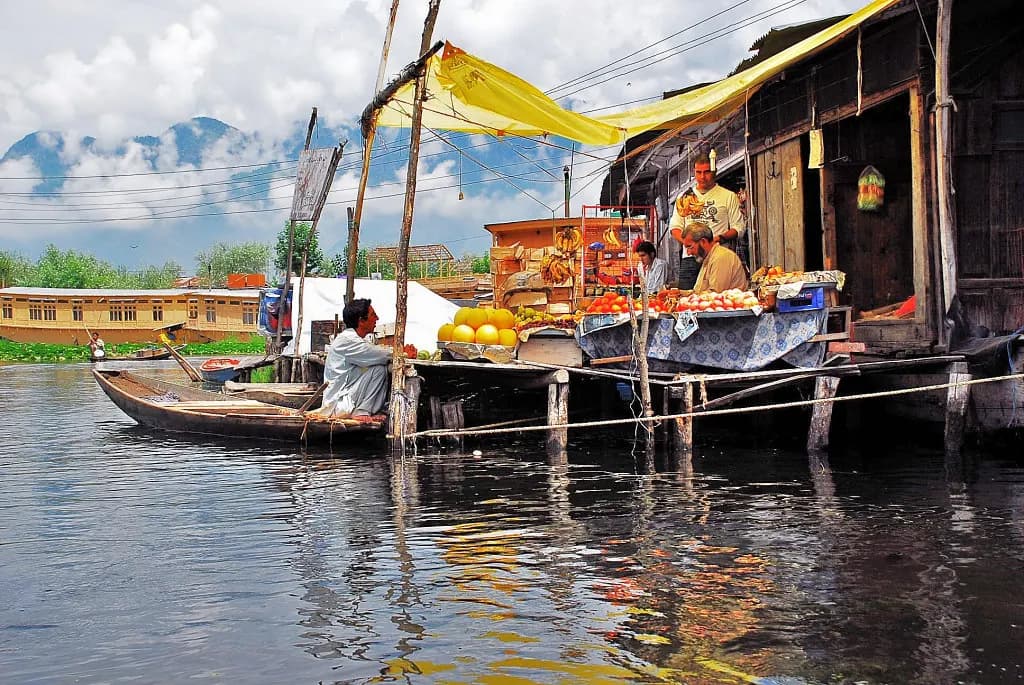
If you run a shop on Srinagar's Residency Road, a hotel in Gulmarg, a rice mill in R.S. Pura or a construction crew in Anantnag, one notification sets the least you can pay: S.O. 513 of 2022, issued by the Labour and Employment Department of Jammu and Kashmir. It works differently from most states. There is one set of daily rates for every scheduled employment, no dearness allowance that moves twice a year, and a separate rate for clerical staff. This guide gives the rates from the gazette itself, converts them into monthly pay, shows which jobs fall in which category, and explains the central rates and the draft 2026 wage rules that will eventually replace the old system.
Quick answer
From 17 October 2022, the minimum wage in Jammu and Kashmir is ₹311 a day a day for unskilled work, ₹400 a day for semi-skilled, ₹483 a day for skilled and ₹552 a day for highly skilled workers (notification S.O. 513 dated 12 October 2022). Administrative and ministerial staff get ₹449 a day a day.
Monthly equivalent at 26 working days: ₹8,086 a month for unskilled work
Same rates for all 45 listed employments plus agriculture — no VDA
No newer J&K rate notification found as of 19 October 2026
Central-sphere work in Jammu and Srinagar (Area B) pays far more — ₹704 a day unskilled
Jammu and Kashmir minimum wages in force
Jammu and Kashmir fixes a single schedule of daily rates that applies across every scheduled employment. The current schedule comes from notification S.O. 513, published in the J&K Official Gazette on 12 October 2022 and in force from 17 October 2022. It was issued under section 5(2) of the Minimum Wages Act, 1948, after a draft (S.O. 315 of 27 June 2022) drew 20 objections that were placed before the Advisory Board. Those notifications continue to apply under the Code on Wages, which has been in force since 21 November 2025, until new rates are fixed.
| Category | Per day | Per month (× 26) |
|---|---|---|
| Unskilled | ₹311 a day | ₹8,086 a month |
| Semi-skilled | ₹400 a day | ₹10,400 |
| Skilled | ₹483 a day | ₹12,558 |
| Highly skilled | ₹552 a day | ₹14,352 |
| Administrative / ministerial | ₹449 a day | ₹11,674 |
The gazette fixes only the daily figure. The monthly column multiplies it by 26, which is how most payroll teams in the union territory convert it and is also the method written into the draft 2026 wage rules. If you pay a fixed monthly salary, check that the salary divided by the number of working days in the month is never below the daily rate for the worker's category.
The rates are the same whether the business is in Jammu, Srinagar, Kathua or a village in Kupwara. Unlike the central sphere, J&K's current schedule has no city zones and no extra amount for remote areas. That may change: the draft rules propose separate rates for urban and rural areas.
Jammu & Kashmir minimum wage calculator
A full month is 26 working days; the daily rate is the monthly rate ÷ 26 where the order fixes only a monthly figure.
Overtime is paid at twice the ordinary rate (daily rate ÷ 8 hours). Arrears assume the same shortfall in every month since the rates took effect on 17 October 2022; a claim under the Code on Wages must generally be filed within 3 years. Estimates only — check the order for your employment.
Which employments are covered
Annexure A to S.O. 513 lists 45 scheduled employments in Part I, and agriculture in Part II. They range from traditional crafts to modern service businesses:
- Crafts and small industry — woollen carpet making and shawl weaving; embroidery including chain-stitch, gabba and namda making; wood carving; walnut processing; tailoring and garments; sports goods; saw mills and joinery.
- Food and processing — rice, flour and dal mills; oil mills including kohlus; food products; drinks and beverages; ice factories and cold storages.
- Construction and materials — roads and building operations, stone breaking and crushing, private brick and tile making, brick kilns, cement and plastic.
- Engineering — workshops, light engineering, steel and metal rolling mills, auto body fabrication, metal utensils, electrical goods, silicates and chemicals.
- Services — shops and establishments; hotels, restaurants, tea stalls and cinemas; hair-cutting saloons; private hospitals and nursing homes; private schools and coaching centres; sweeping and cleaning; public motor transport and private transport; arms and ammunition including private security agencies; local authorities.
If your business is not in the list, the state minimum wage notification does not technically reach you — but the Code on Wages extends minimum wage protection to all employees, and the draft rules make the floor wage the default for categories with no fixed rate. In practice, treat S.O. 513 as the minimum for every worker you hire in J&K.
Which category is each job in?
S.O. 513 defines the four skill levels in plain terms. Unskilled work involves simple operations needing little or no skill or experience on the job. Semi-skilled work needs skill or competence acquired through experience on the job. Skilled work needs longer experience or training as an apprentice in a technical or vocational institute, and calls for initiative and judgement. Highly skilled work needs full competence acquired through intensive technical or professional training or long practical experience, and the worker takes full responsibility for decisions — clerical work at that level is included.
Annexure B then lists occupations under each heading, and some placements surprise employers:
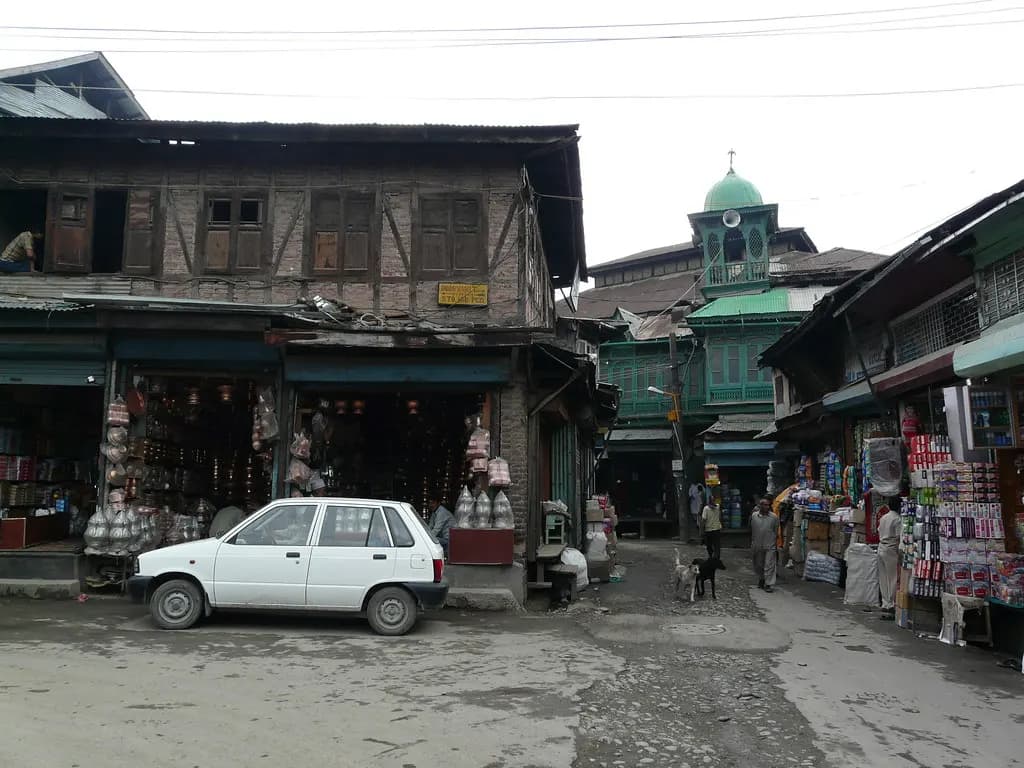
- Unskilled includes helpers, peons, chowkidars, malis, loaders, sweepers, unarmed security guards, waiters, bearers and room boys in hotels — and, in the general list, salesmen.
- Skilled includes masons, carpenters, plumbers, electricians, welders, painters, cooks, tandooriyas, tailors, barbers, drivers, computer operators, armed security guards, head salesmen, shawl weavers, wood carvers and embroiderers. It also covers anyone in a job that needs a graduate qualification.
- Highly skilled includes goldsmiths, diploma-holder overseers, pharmacists, nurses and paramedical staff, X-ray and lab technicians, beauticians, engineers, computer programmers, draftsmen, and JCB, bulldozer and lorry drivers.
- Administrative / ministerial covers all clerical work, store-keepers, tally clerks, timekeepers, munshis, cashiers, accountants, booking clerks, telephone operators and receptionists.
Two quirks matter. First, the 2017 notification (SRO 460) had abolished the semi-skilled category, and S.O. 513 restored a semi-skilled rate of ₹400 a day without listing any semi-skilled jobs in Annexure B. Use it for workers who have picked up a trade on the job but don't fit a listed skilled occupation — an assistant fitter with a few years' experience, for example. Second, the agriculture list places ploughing, sowing and transplanting, weeding and harvesting under skilled work, while soil preparation, manuring, irrigation, threshing and storing are unskilled. An orchard owner in Shopian hiring pickers for the apple harvest should budget at the skilled rate.
The notification says the lists are illustrative, not exhaustive. Where a job isn't named, place the worker in the category whose definition fits the work actually done, and record why.
How the rates have moved since 2017
Jammu and Kashmir revises its minimum wages by full notification rather than through a half-yearly allowance. The 2017 revision (SRO 460, October 2017) set ₹225 a day for unskilled work, ₹350 for skilled, ₹400 for highly skilled and ₹325 for administrative staff. The 2022 revision raised the unskilled rate by 38% to ₹311 and restored the semi-skilled tier.
J&K minimum wages, 2017–2027
26 Oct 2017
SRO 460 — unskilled ₹225 a day; semi-skilled category dropped
27 Jun 2022
S.O. 315 — draft revision published for two months of objections
17 Oct 2022
S.O. 513 in force — unskilled ₹311 a day, highly skilled ₹552 a day
21 Nov 2025
Code on Wages in force across India, including J&K
3 Feb 2026
Assembly told the wage structure stays operative till October 2027
19 Jun 2026
Draft Code on Wages J&K Rules, 2026 (S.O. 176) published
Because there is no dearness allowance, the J&K rates have stayed flat for four years while prices rose. That is why the unskilled rate now sits well below neighbouring Himachal Pradesh, where the unskilled rate is ₹425 a day, and far below the Centre's rates.
The February 2026 "revision": what actually changed
On 3 February 2026, replying to a question in the Legislative Assembly, the government said minimum wages for all skill categories had been revised upward in line with central notifications. Several websites reported this as a J&K wage hike. It wasn't. The reply referred to the half-yearly variable dearness allowance that the Centre adds to central-sphere minimum wages — the rates for railways, banks, mines, central public sector undertakings and their contractors. The government also told the House that the Code on Wages now applies in J&K and that the existing structure remains operative until October 2027, five years after S.O. 513 took effect.
For a private shop, hotel or factory in J&K, nothing changed in February 2026. Keep paying at least the S.O. 513 rates, and treat any figure that claims to be a "2026 J&K minimum wage" with suspicion unless it cites a new S.O. number in the J&K Official Gazette.
Central-sphere work in Jammu and Kashmir
A large share of jobs in J&K are on central projects — railway lines and stations, central public sector hydro plants, airports, banks and defence works. If you supply workers to these, the central minimum wages apply instead of the J&K schedule, and they are much higher. The Centre's area annexure places Jammu and Srinagar (urban agglomerations) in Area B; the rest of the territory is Area C.
| Central-sphere rate from 1 Oct 2026 (per day) | Area B — Jammu, Srinagar | Area C — rest of J&K |
|---|---|---|
| Unskilled construction, sweeping and cleaning | ₹704 | ₹565 |
| Semi-skilled | ₹794 | ₹661 |
| Skilled / unarmed watch and ward | ₹933 | ₹794 |
| Highly skilled / armed watch and ward | ₹1,024 | ₹933 |
A housekeeping contractor cleaning a railway station in Jammu must pay its sweepers at least ₹704 a day — more than double the J&K unskilled rate. Price tenders on the central rate from the start, because the gap is too wide to absorb, and the principal employer will ask for wage registers that show compliance.
The draft Code on Wages Jammu and Kashmir Rules, 2026
On 19 June 2026 the Labour and Employment Department published draft Code on Wages Jammu and Kashmir Rules, 2026 (S.O. 176), inviting objections within 45 days. Once final, they will replace the J&K Payment of Wages Rules, 1972 and the J&K Minimum Wages Rules, 1972. They take effect only after final publication in the Official Gazette, which we had not seen by 9 October 2026.
Three proposals will change how rates look. First, wages would be fixed per day, with the hourly rate at one-eighth and the monthly rate at 26 times the daily rate — the method this page already uses. Second, rates would be fixed for two geographical areas: municipal or urban areas (the Jammu and Srinagar municipal corporations and municipal committees or councils) and rural areas. Third, a technical committee appointed by the Lieutenant Governor would re-sort occupations into the four skill levels — so placements like salesmen as unskilled or harvesters as skilled may be revisited.
The draft also sets out the needs-based norms for fixing wages, such as a net intake of 2,700 calories per day per consumption unit, and keeps the eight-hour working day. None of this changes what you owe today. But when final rules and a new rate notification arrive — likely around the five-year mark in October 2027 — expect a higher urban rate for Jammu and Srinagar and a separate rural rate. The national floor wage under section 9 of the Code had not been notified either; the old advisory figure was ₹176 a day (advisory, 2017).
Worked payroll examples in ₹
Example 1 — a helper in a Srinagar grocery store. Unskilled: ₹311 a day × 26 = ₹8,086 a month a month.
- ESI (wages below ₹21,000/month): employee 0.75% ≈ ₹60.65; employer 3.25% ≈ ₹262.80
- EPF at 12% of wages (if the store is covered): ₹970.32 each side
- Net pay ≈ ₹7,055.03
Example 2 — an electrician in a Jammu engineering workshop. Electricians are skilled: ₹483 a day × 26 = ₹12,558. ESI ≈ ₹94.19; EPF ₹1,506.96; net ≈ ₹10,956.85. Overtime under the Code is twice the normal rate of wages: ₹483 ÷ 8 × 2 = ₹120.75 an hour, so 10 overtime hours add ₹1,207.50.
Example 3 — an accountant in a Sopore wholesale firm. Cashiers and accountants are administrative/ministerial: ₹449 a day × 26 = ₹11,674. A graduate is not automatically "highly skilled" — the Annexure puts all clerical work in the ministerial category.
Example 4 — apple pickers in Shopian for 20 days. Harvesting is listed as skilled under agriculture: 20 × ₹483 a day = ₹9,660 per picker. A worker hired to carry crates or store fruit is unskilled: 20 × ₹311 = ₹6,220.
Example 5 — a sweeper on a railway station cleaning contract in Jammu. Central sphere, Area B: ₹704 a day, ₹18,304 for 26 days — ₹10,218 a month more than the J&K unskilled rate.
Monthly minimum-wage check for a J&K employee
Step 1
Central-sphere work?
Step 2
Yes → central rate
Area B Jammu/Srinagar
Step 3
No → S.O. 513
same rate everywhere
Step 4
Pick the category
Annexure B lists
Step 5
Daily rate × days worked
Step 6
Overtime at 2×, pay by the 7th
Daily-rated, seasonal and contract workers
A large part of J&K's workforce is hired by the day — carpet weavers paid per piece, orchard hands in the apple and walnut seasons, porters and ponywallas in the tourist months, labour on building sites. The daily rate in S.O. 513 is the floor for each day worked, whether the person is hired for a week or a whole season. Keep a daily attendance record for casual workers so that the wage register can show days worked against the amount paid.
Piece rates are allowed, but they must give a worker of average speed at least the daily rate for the category. If a shawl embroiderer earns ₹350 for a day's work on piece rates and embroidery is classed as skilled, you owe the difference up to ₹483. For part-time work, divide the daily rate by eight: an unskilled helper who works four hours must get at least ₹155.50.
Contract workers are covered by the same rates as direct employees. A hotel in Pahalgam that uses an agency for housekeeping is answerable under the Code if the agency pays below the minimum, so ask for monthly wage registers and bank-transfer proof, and check that ESI and EPF are deposited for the workers on your premises.
Employer duties under the Code on Wages
- Pay on time — monthly wages before the end of the 7th day of the next month; full and final settlement within 2 working days.
- Deductions — no more than 50% of wages of wages in total.
- Equal pay — no gender-based difference in wages for the same or similar work.
- Records — keep employee, wage and attendance registers and issue a wage slip every period; the salary slip guide shows what to include.
- Benefits — ESI and EPF come on top of the minimum, not out of it.
J&K minimum wage checklist
0/6Common mistakes J&K employers make
Paying the old 2017 rates. Some payrolls in smaller towns still use ₹225 a day. Every unskilled worker on that rate has been underpaid by ₹86 a day since 17 October 2022 — over ₹2,200 a month.
Treating the February 2026 news as a J&K hike. It referred to central VDA. Don't raise private-sector wage floors on the strength of it, but don't ignore it for central-sphere contracts either.
Using the unskilled rate for skilled farm work. Harvest, sowing and weeding are skilled under Annexure B.
Placing all graduates in the highly skilled tier — or none of them. Clerical graduates are ministerial at ₹449; a graduate in a technical job may be skilled; a professional qualification for the job puts the worker in the highly skilled tier.
Counting free meals as wages. S.O. 513 has no lower rate for food or lodging. In-kind benefits count as wages under the Code only up to up to 15% of total wages.
What happens if you underpay
A worker, a group of workers or a union can claim unpaid minimum wages under the Code on Wages within 3 years, and the authority can award the shortfall plus compensation of up to 10 times the claim. Paying below the minimum is an offence with a fine of up to ₹50,000 for a first offence and up to ₹1 lakh fine and/or 3 months' imprisonment for a repeat. In J&K the Inspector-cum-Facilitator under the draft rules would be the Assistant Labour Commissioner, and claims would go to the authority appointed by the Lieutenant Governor.
What to do next
Check each employee against the S.O. 513 categories, convert daily rates to monthly pay at 26 days, and decide whether any of your contracts are central-sphere work that needs the Centre's higher rates. Then issue wage slips with our free salary slip generator, and read our guides to the four labour codes and the Code on Wages so the move to the new J&K rules doesn't catch you out. If you also employ people across the border, compare our Punjab and Himachal Pradesh pages.
This is general information, not legal or tax advice — confirm on the official source or with a professional.
Frequently asked questions
The rates in force are those fixed by notification S.O. 513 of 12 October 2022, effective 17 October 2022: ₹311 a day a day for unskilled, ₹400 a day for semi-skilled, ₹483 a day for skilled, ₹552 a day for highly skilled and ₹449 a day for administrative or ministerial staff. We found no later J&K rate notification as of 9 October 2026.
S.O. 513 fixes only daily rates. Multiplying by 26 working days, the usual method and the one in the draft J&K wage rules, gives ₹8,086 a month for unskilled work, ₹10,400 for semi-skilled, ₹12,558 for skilled, ₹14,352 for highly skilled and ₹11,674 for clerical staff.
No. S.O. 513 sets flat daily rates with no variable dearness allowance. The VDA increases mentioned in the Assembly in February 2026 were the Centre's half-yearly VDA for central-sphere employments such as railways, banks and central public sector undertakings, not a J&K revision.
The Code on Wages requires states and union territories to review rates at intervals of no more than 5 years. The current rates took effect in October 2022, and the government told the Assembly in February 2026 that the structure stays operative until October 2027. A new draft rate notification would normally come first, with time for objections.
Yes, and much higher. Work under central-sphere authority, such as a railway project or a central public sector hydro plant, follows the Centre's rates. Jammu and Srinagar are Area B, where unskilled construction or cleaning work pays ₹704 a day from 1 October 2026. Other places are Area C at ₹565.
Ladakh has been a separate union territory since 31 October 2019, and S.O. 513 was issued by the Government of Jammu and Kashmir in 2022. Employers in Leh and Kargil should confirm the rates applicable there with the Ladakh labour authorities rather than assume the J&K figures.
Sources & verification
Figures on this page were checked against the sources below when it was last reviewed on 19 October 2026. Each rate and limit is stored once with its own official source and review date, and official update channels are monitored daily so changes are picked up. How we verify
- 1.Notification S.O. 513 dated 12.10.2022 — revision of minimum rates of wages in scheduled employments (J&K Official Gazette, Vol. 135, No. 27-ar) — Labour and Employment Department, Government of Jammu and Kashmir · accessed 9 October 2026
- 2.Notification S.O. 176 dated 19.06.2026 — draft Code on Wages Jammu and Kashmir Rules, 2026 — Labour and Employment Department, Government of Jammu and Kashmir (J&K Law Department portal) · accessed 9 October 2026
- 3.Notification SRO-460 dated 26.10.2017 — previous revision of minimum wages — Labour and Employment Department, Government of Jammu and Kashmir · accessed 9 October 2026
- 4.J&K Govt revises minimum wages across skill categories to address rising inflation (4 Feb 2026) — News On AIR (Prasar Bharati) · accessed 9 October 2026
- 5.Labour Bureau orders dated 30 September 2026 — revised VDA and central minimum wages w.e.f. 01.10.2026, with Area A/B/C annexure — Labour Bureau, Chandigarh, Ministry of Labour & Employment (published on clc.gov.in) · accessed 9 October 2026
- 6.The Code on Wages, 2019 (No. 29 of 2019) — India Code, Legislative Department · accessed 9 October 2026
- 7.Government announces implementation of the four Labour Codes (21 Nov 2025) — PIB — Ministry of Labour & Employment · accessed 9 October 2026
- 8.Latest Minimum Wages for Shops and Establishments in Jammu and Kashmir (October 2022) — DCPSOL · accessed 9 October 2026
MSMETOOLS is an independent platform and is not affiliated with any government agency, ministry or department.
Tools for this
Related guides
 Minimum Wages in Himachal Pradesh 2026: ₹425/Day & RatesRead guide
 Minimum Wages in Punjab 2026: New Rates, Staff CategoriesRead guide
 Minimum Wages in Sikkim 2026: ₹500–₹565 a Day & Altitude PayRead guide
 Minimum Wages in Rajasthan 2026: Current Rates & New RulesRead guide
Official links open the government site in a new tab.