 HR, payroll & labour
Minimum Wages in Punjab (2026): Rates from 1 May by Category, Staff Grades and Employer Rules
Punjab minimum wages 2026: 1 May rates for all skill levels and staff categories A–D, daily and hourly figures, meal rules and ₹ payroll examples.
 Edited by Sumeet YadavFounder & editor, MSMETOOLS · fact-checked against official sources
- Rates in force
- from 1 May 2026
- Last checked
- Against the official source on 16 October 2026
- Next revision due
- 1 September 2026 (not yet notified)
September 2026 order not yet published. The rates in force from 1 May 2026 continue to apply. When the new order is notified, the increase is normally payable with arrears from 1 September 2026.
Contents (12)
- 1. Punjab minimum wage rates in 2026
- 2. Which skill category applies?
- 3. Staff categories A to D: rates for office and shop staff
- 4. Agricultural workers
- 5. What changed in May 2026
- 6. DA and the next revision
- 7. Employer rules in the notification
- 8. Worked payroll examples in ₹
- 9. Paying wages: deadlines, slips and other payroll items
- 10. Common mistakes Punjab employers make
- 11. What if a worker is underpaid?
- 12. What to do next
If you employ anyone in Punjab — a machine operator in a Ludhiana hosiery unit, a salesman in a Jalandhar sports-goods shop, a cook at a dhaba on the Amritsar highway or a helper on a Mohali construction site — the state's minimum wage notification sets the least you may pay. On 1 May 2026 Punjab replaced its old basic-plus-DA tables with new basic rates that are about 15% higher, and kept separate rates for office staff and farm labour. This page gives you the rates in force, read from the Labour Department's own gazette copy, with daily and hourly figures, the special rules for trainees and for workers who get meals, and ₹ payroll examples.
Quick answer
Punjab's minimum wages in force from 1 May 2026 are ₹13,486 a month for unskilled workers, ₹14,383 for semi-skilled, ₹15,414 for skilled and ₹16,601 for highly skilled. Office and clerical staff get ₹14,406 to ₹19,431 depending on Staff Category D to A. When we last checked, on 16 October 2026, no later revision or DA order had been published.
Daily rates: ₹518.69 (unskilled) to ₹638.50 (highly skilled) — monthly ÷ 26, rest day included
These are basic rates — the notification bars splitting them into allowances
Hotels, dhabas, halwais and households may pay 30% less if they give two meals, tea and lodging
One rate for the whole state; brick kilns get a separate notification
Punjab minimum wage rates in 2026
The Labour Department notified the new rates on 1 May 2026 under section 8(3) of the Code on Wages, 2019, after considering the report of the Punjab Minimum Wages Advisory Board. The notification was published in the Punjab Government Gazette (Extraordinary) the same day and took effect immediately. It covers all employments in the state: every establishment, factory, employee, worker and contract labourer as the Code defines them. The per-hour figures below are the ones printed in the notification, not our calculation.
| Category | Monthly rate from 1 May 2026 | Daily rate (÷ 26) | Hourly rate | Overtime per hour (2×) |
|---|---|---|---|---|
| Unskilled | ₹13,486 | ₹518.69 | ₹64.83 | ₹129.66 |
| Semi-skilled | ₹14,383 | ₹553.19 | ₹69.14 | ₹138.28 |
| Skilled | ₹15,414 | ₹592.84 | ₹74.10 | ₹148.20 |
| Highly skilled | ₹16,601 | ₹638.50 | ₹79.81 | ₹159.62 |
The overtime column is our calculation: twice the notified hourly rate, as section 14 of the Code on Wages requires for work beyond normal hours. The notification says its rates are for a normal working day of 8 hours for an adult.
Two groups sit outside this table. Apprentices engaged under the Apprentices Act, 1961 are paid under that Act. Brick-kiln workers will get rates in a separate notification, so a kiln owner should not use these figures. Everyone else — including shop staff covered by the Punjab Shops and Commercial Establishments Act, 1958, factory workers, security guards, domestic workers and people hired through contractors — is covered.
Punjab minimum wage calculator
A full month is 26 working days; the daily rate is the monthly rate ÷ 26 where the order fixes only a monthly figure.
Overtime is paid at twice the ordinary rate (daily rate ÷ 8 hours). Arrears assume the same shortfall in every month since the rates took effect on 1 May 2026; a claim under the Code on Wages must generally be filed within 3 years. Estimates only — check the order for your employment.
Which skill category applies?
The notification lists the four categories without defining them; note 17 says they are to be read as the Code on Wages and its rules define them. In practice:
- Unskilled — work that needs no special training: helpers, loaders, sweepers, packers, watchmen, kitchen helpers.
- Semi-skilled — work that needs some training or experience and is done under supervision: assistant machine operators, junior tailors, assistant cooks, store helpers.
- Skilled — work done independently after training: electricians, welders, fitters, CNC and knitting-machine operators, drivers, cooks, tailors.
- Highly skilled — work needing a high degree of skill and responsibility: tool-room machinists, senior technicians, supervisors of skilled crews.
Job titles don't decide the category; the work does. Where a job straddles two categories, paying the higher rate protects you in an inspection.
Staff categories A to D: rates for office and shop staff
Punjab is unusual in fixing a second scale for clerical and office staff alongside the four skill categories. Many employers miss it and pay a salesman or accounts assistant the semi-skilled rate, which is lower. The notification defines each staff grade by qualification and role.
| Staff grade | Who falls in it | Per month | Per day |
|---|---|---|---|
| Category A | Postgraduate degree, MBA (marketing, finance, HR), Company Secretary or equivalent, or any professional degree | ₹19,431 | ₹747.34 |
| Category B | Graduate in any discipline; undergraduate with a stenography, computer applications or accountancy diploma; supervisory staff who take independent decisions | ₹17,510 | ₹673.46 |
| Category C | Above matriculation but not a graduate; undergraduate with a steno-typist, computer, data-entry or accountancy certificate; includes timekeeper, salesman, assistant and storekeeper | ₹15,786 | ₹607.15 |
| Category D | Any Class-IV employee, whether casual, through a contractor or on contract | ₹14,406 | ₹554.07 |
The practical rule: classify by both the job and the qualification the job requires. A data-entry operator with a computer certificate is Category C even if you call the post "office helper". A graduate you hire as a receptionist is Category B. A peon or office attendant is Category D, which pays slightly more than the unskilled rate. If a role fits nowhere obvious, note 14 tells you to place the worker in the category they most accurately fit, and if you and the worker disagree, the Authority appointed under section 45 of the Code decides.
Agricultural workers
Farm labour has its own lines in the notification. For attached agricultural labour — an unskilled worker engaged by a farmer on a yearly basis — the minimum is ₹90,973.28 a year, consolidated, with meals or the equivalent in food grains. For other agricultural labour paid by the day, the minimum is ₹540.98 a day without meals and ₹486.59 a day with meals. The notification prints these to three decimal places (540.983 and 486.588); round up when you pay.
These rates matter for dairy farms, poultry units, nurseries and contract harvesting gangs, not just crop farming. If you run a rice sheller or a cold store, though, your staff are in an establishment, not agriculture, and the main category table applies to them.
What changed in May 2026
Under the old Minimum Wages Act, 1948 framework, Punjab fixed basic rates and added dearness allowance twice a year. The last revision under that system took effect from 1 September 2025, though it was notified only on 24 December 2025. It set the unskilled rate at ₹11,726.40 a month, semi-skilled at ₹12,506.40, skilled at ₹13,403.40 and highly skilled at ₹14,435.40, according to payroll trackers that reproduced the order.
The May 2026 notification is the first fixation under the Code on Wages, and it changes three things.
A 15% increase across the board. Every category rose by almost exactly 15%. The unskilled rate went from ₹11,726.40 to ₹13,486, an extra ₹1,759.60 a month per worker. For a 30-person garment unit paying mostly unskilled and semi-skilled rates, that is roughly ₹55,000 more in monthly wages before PF and ESI.
Basic rates, not basic plus DA. Note 1 says the notified rates are basic rates that the employer may not split into allowances. Notes 9 and 17 repeat that they are the basic rate of wages. So if you show ₹9,000 basic and ₹4,486 "special allowance" for an unskilled worker, you are out of line even though the total matches. The whole minimum must sit in basic pay.
Indexation still promised. The same note promises 100% neutralisation of any rise or fall in the consumer price index on a pro-rata basis, with adjustments as the Code and Punjab's rules prescribe. Note 2 adds that the new rates will not fall even if prices do.
Recent Punjab minimum wage changes
1 Sep 2025
Last revision under the old Act — unskilled ₹11,726.40/month (notified 24 Dec 2025)
21 Nov 2025
Code on Wages comes into force; Minimum Wages Act, 1948 repealed
29 Dec 2025
Draft Code on Wages (Punjab) Rules, 2026 published for objections
1 May 2026
New basic rates notified under s.8(3) of the Code, effective the same day — unskilled ₹13,486
Oct 2026
No DA order on the May rates yet; draft rules point to revisions before 1 April and 1 October
DA and the next revision
If you also run a unit across the border in Jammu and Kashmir, its rates follow a separate notification; see minimum wages in Jammu and Kashmir.
People searching for "Punjab minimum wages DA" usually want the six-monthly addition. For now there isn't one on top of the May 2026 rates. Note 10 says adjustments will be made at the intervals and in the manner the Punjab Government prescribes.
The mechanism is in the draft Code on Wages (Punjab) Rules, 2026, published on 29 December 2025 for 30 days of objections. The draft says the Labour Commissioner will review wages and the cost-of-living allowance twice a year, before 1 April and 1 October, using the average consumer price index of the previous six months. It also fixes an 8-hour normal working day and a weekly rest day, usually Sunday, after six days of work. When we last checked, on 16 October 2026, we could not confirm that the final Punjab rules had been notified.
What this means for you: pay at least the May 2026 basic rates until a new order appears, and check the Labour Department's website in October and April. Revision orders in Punjab have a history of arriving late with an earlier effective date — the September 2025 revision was notified in December 2025 — so when one comes, you will probably owe arrears.
Employer rules in the notification
The notes attached to the rate table carry obligations that are easy to overlook.
Divisors for daily pay and deductions. Note 7 says the daily rate is the monthly rate divided by 26 and already includes the weekly rest day's wage. But when you deduct a day of absence from a monthly-paid worker, divide the monthly rate by 30. Using 26 for deductions over-deducts, which counts as underpayment.
Contractor workers are your responsibility. Notes 5 and 11 make the occupier, owner, manager or principal employer personally responsible for making sure contractors and outsourcing agencies pay these rates. This applies to factories under the OSH Code, to shops and commercial establishments whether or not they are registered under the 1958 Act, and to state government offices. If your security or housekeeping vendor underpays, the liability lands on you.
Equal pay. Note 4 says there is no difference in wages for men, women, transgender and disabled employees, which matches section 3 of the Code on Wages.
No underpaying a similar worker. Note 6 says no one may be paid less than the minimum for a similar category with the same skills and experience.
Higher pay is fine. Note 12 says establishments already paying more than these rates are not affected, but they must top up whenever their pay falls below the notified minimum.
Meals and lodging in hotels, dhabas and homes
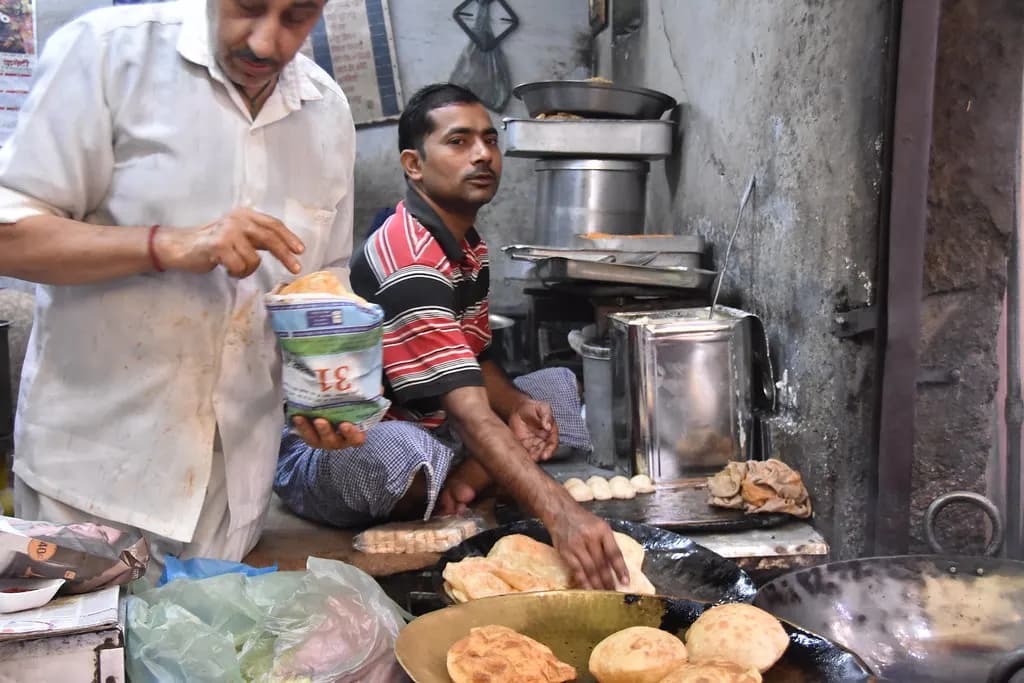
Note 13 is specific to food businesses and households. For employees of hotels, restaurants, tea stalls, halwais, ahatas or taverns attached to wine and liquor shops, and domestic workers in households:
- If you provide two meals, tea twice and lodging, the minimum is 30% less than the rate for the worker's category.
- If you provide two meals and tea twice but no lodging, the minimum is 10% less.
The reduction applies to the category rate, so a cook (skilled) at a dhaba who lives on the premises must get at least 70% of ₹15,414, which is ₹10,789.80 a month. Keep a written record of the meals and lodging you provide, and the worker's acknowledgement of it. If the arrangement is not documented, an inspector will expect the full rate.
Trainees
Note 8 lets you pay a trainee 75% of the rate for the category they are training for, or the unskilled rate, whichever is more. That rate can last only 6 months or the actual training period, whichever is shorter. After that the trainee gets the full rate for the category. The note also forbids engaging an unskilled employee as a trainee or learner — unskilled work needs no training, so those workers get the unskilled rate from day one.
Worked payroll examples in ₹
Example 1 — a skilled operator in Ludhiana. Gurpreet is a skilled knitting-machine operator on ₹15,414 a month. In September he takes one day of unpaid leave and works 10 overtime hours.
| Payslip line | Working | Amount |
|---|---|---|
| Monthly rate (skilled) | As notified | ₹15,414.00 |
| Less: 1 day's absence | ₹15,414 ÷ 30 (note 7) | − ₹513.80 |
| Overtime, 10 hours | 10 × ₹148.20 (2 × hourly rate) | + ₹1,482.00 |
| Gross pay | ₹16,382.20 | |
| Employee PF | 12% of wages of PF wages ₹14,900.20 (overtime excluded) | − ₹1,788 |
| Employee ESI | 0.75% of ₹14,900.20 | − ₹112 |
| Net pay | ₹14,482.20 | |
| Your cost on top | PF 12% (₹1,788) + EDLI and admin + ESI 3.25% (about ₹485) |
His PF wages are under the ₹25,000 a month ceiling and his wages are below the ₹21,000/month ESI limit, so both apply. ESIC uses the Code's wage definition, which leaves overtime out unless excluded items cross half of total pay; confirm the treatment with your ESIC branch office.
Example 2 — a salesman in Jalandhar. A sports-goods shop employs a 12th-pass salesman. Under the staff scale he is Category C, so his basic must be at least ₹15,786, not the semi-skilled ₹14,383. If the shop pays ₹14,500 basic plus ₹1,500 conveyance, it is short by ₹1,286 a month even though the total is ₹16,000, because allowances cannot count towards the minimum.
Example 3 — a daily-rated helper in Mohali. A construction helper (unskilled) works 22 days in a month. Minimum pay = 22 × ₹518.69 = ₹11,411.18. If the helper works all 26 working days, pay the full monthly rate of ₹13,486.
Example 4 — a trainee tailor. A garment unit takes on a trainee to become a skilled tailor. 75% of the skilled rate is ₹11,560.50, but that is below the unskilled rate, so the trainee must get at least ₹13,486. After six months, or sooner if training ends, the tailor must be paid the skilled rate of ₹15,414.
Example 5 — arrears after a missed revision. A small shop in Bathinda kept paying its unskilled helper ₹11,726.40 from May to September 2026. The shortfall is ₹1,759.60 a month, or ₹8,798 over five months. If the helper files a claim, the authority can also award compensation of up to 10 times the claim, and the owner faces a fine of up to ₹50,000. Paying the arrears in the next wage slip is far cheaper.
Punjab vs neighbours — unskilled minimum per month
| State | Unskilled rate | In force from | Structure |
|---|---|---|---|
Punjab | ₹13,486 | 1 May 2026 | Basic rate, 4 skill categories + staff A–D, statewide |
Haryana | ₹15,220.71 | 1 April 2026 | Basic rate, 4 categories, statewide |
Delhi | ₹18,456 | 1 April 2025 | Basic + DA, revised April and October |
Punjab
- Unskilled rate
₹13,486
- In force from
1 May 2026
- Structure
Basic rate, 4 skill categories + staff A–D, statewide
Haryana
- Unskilled rate
₹15,220.71
- In force from
1 April 2026
- Structure
Basic rate, 4 categories, statewide
Delhi
- Unskilled rate
₹18,456
- In force from
1 April 2025
- Structure
Basic + DA, revised April and October
Punjab's unskilled rate is lower than Haryana's and Delhi's. Businesses with units on both sides of the border, such as around Zirakpur and Panchkula, should match each worker to the state where they actually work. Establishments where the central government is the appropriate government — railways, banks, telecom, mines and central PSUs and their contractors — follow the central rates instead; Ludhiana and Amritsar are Area B cities in the central schedule. See our guides to minimum wages in Haryana and central minimum wages.
Paying wages: deadlines, slips and other payroll items
The rate is only part of the duty. The Code on Wages requires monthly wages to be paid before the end of the 7th day of the next month, weekly wages before the weekly holiday and daily wages at the end of the shift. When someone resigns or is dismissed, their dues must be cleared within 2 working days. Total deductions in a wage period cannot exceed 50% of wages. Our Code on Wages guide covers these rules in detail.
Statutory deductions sit on top. EPF applies once you have 20 or more employees and covers everyone with PF wages up to ₹25,000 a month since 17 September 2026 — see PF deduction rules. ESI applies to workers earning up to ₹21,000/month — see ESIC rules. Punjab does not levy a professional tax under that name, but it collects a State Development Tax from salaried people whose income is chargeable to income tax. A worker on minimum wages will usually be below that threshold, but check our professional tax guide for staff on higher pay.
Punjab minimum wage compliance checklist
0/9Common mistakes Punjab employers make
Using the old rate card. Payroll software and HR policies set up in 2025 often still carry ₹11,726.40 for unskilled staff. The gap is ₹1,759.60 a month per worker, and it adds up fast.
Ignoring the staff scale. Paying a salesman, storekeeper or data-entry operator the semi-skilled rate is the most common underpayment we see in Punjab payrolls, because Staff Category C is higher.
Counting allowances. "₹12,000 basic + ₹1,486 HRA" does not meet the unskilled minimum. The basic alone must be ₹13,486.
Applying the meals cut too widely. The 30% and 10% reductions apply only to hotels, restaurants, tea stalls, halwais, liquor-shop ahatas and domestic work. A factory canteen meal does not let a factory pay less.
Deducting absence at ÷26. It looks logical because the daily rate is ÷26, but note 7 says deductions use ÷30.
What if a worker is underpaid?
A worker or trade union can file a claim for unpaid minimum wages under section 45 of the Code on Wages within 3 years. The authority can order the shortfall plus compensation of up to 10 times the claim. Paying less than the minimum is also an offence under section 54: a fine of up to ₹50,000 for a first offence and up to ₹1 lakh fine and/or 3 months' imprisonment for a repeat within five years.
If you find a shortfall, work out the arrears from 1 May 2026 (or from the worker's joining date if later), pay them as a separate line on the next wage slip and keep the working on file.
What to do next
Check every employee's basic pay against the tables above, starting with your staff-grade roles, and pay any arrears due since 1 May 2026. Then look at the Punjab Labour Department's website in late October and again before April for the first DA order on these rates. Build the new figures into your payslips with our free salary slip generator, which shows basic, overtime, PF and ESI on separate lines.
This is general information, not legal or tax advice — confirm on the official source or with a professional.
Frequently asked questions
From 1 May 2026, Punjab's notification fixes ₹13,486 a month for unskilled workers, ₹14,383 for semi-skilled, ₹15,414 for skilled and ₹16,601 for highly skilled workers. Clerical and office staff have separate rates from ₹14,406 (Category D) to ₹19,431 (Category A). When we last checked, on 16 October 2026, no later revision had been published.
The notification divides the monthly rate by 26, so the daily rate is ₹518.69 for unskilled, ₹553.19 for semi-skilled, ₹592.84 for skilled and ₹638.50 for highly skilled workers. The daily rate already includes pay for the weekly rest day. For deducting a day's absence from a monthly salary, divide by 30 instead.
The May 2026 rates are basic rates, and the notification says employers may not split them into allowances. It promises 100% neutralisation of changes in the consumer price index, with adjustments made as the Code on Wages and Punjab's rules prescribe. Punjab's draft rules propose revisions before 1 April and 1 October, but no DA order on top of the May 2026 rates had been issued when we last checked on 16 October 2026.
Punjab fixes separate staff categories. A timekeeper, salesman, assistant or storekeeper, or a non-graduate above matriculation, falls in Staff Category C at ₹15,786 a month. Graduates and supervisory staff are Category B at ₹17,510, postgraduates and professionals Category A at ₹19,431, and Class-IV staff Category D at ₹14,406.
Yes, within limits. Hotels, restaurants, tea stalls, halwais, ahatas attached to liquor shops and households employing domestic workers may pay 30% less than the category rate if the worker gets two meals, tea twice and lodging. If only meals and tea are given, without lodging, the reduction is 10%.
A trainee gets 75% of the rate for the category they are training for, or the unskilled rate if that is higher, for no more than 6 months or the training period, whichever is shorter. After that the full category rate applies. Employers cannot label an unskilled worker a trainee to pay less.
Sources & verification
Figures on this page were checked against the sources below when it was last reviewed on 9 October 2026. Each rate and limit is stored once with its own official source and review date, and official update channels are monitored daily so changes are picked up. How we verify
- 1.Notification No. Labour-LabOMIWA/1/2021-4L (260032)/166 dated 1 May 2026 — basic minimum rates of wages w.e.f. 1 May 2026 (Punjab Govt Gazette Extraordinary, 1 May 2026) — Labour Department, Government of Punjab · accessed 9 October 2026
- 2.Revision of Minimum wages Notification 01.05.2026 (copy) — SGCMS (reproduction of the Punjab notification) · accessed 9 October 2026
- 3.Punjab Labour Department — home page and notifications — Labour Department, Government of Punjab · accessed 9 October 2026
- 4.The Code on Wages, 2019 (No. 29 of 2019) — India Code, Legislative Department · accessed 9 October 2026
- 5.Draft Code on Wages (Punjab) Rules, 2026 — Notification No. LaboMisc/193/2025-42/1080 dated 29 December 2025 — TeamLease RegTech · accessed 9 October 2026
- 6.Punjab minimum wages notification — September 2025 revised wage rates — DCPSOL · accessed 9 October 2026
- 7.Government announces implementation of the four Labour Codes (21 Nov 2025) — PIB — Ministry of Labour & Employment · accessed 9 October 2026
- 8.FAQs — Revision of EPFO statutory wage ceiling to ₹25,000 — EPFO · accessed 9 October 2026
MSMETOOLS is an independent platform and is not affiliated with any government agency, ministry or department.
Tools for this
Related guides
 Minimum Wages in Haryana 2026: New Rates, VDA & RulesRead guide
 Minimum Wages in Delhi 2026: Current Rates, Notification PDF & DARead guide
 PF Registration 2026: Employer Steps, Rates & ₹25,000 CeilingRead guide
 Minimum Wages in Sikkim 2026: ₹500–₹565 a Day & Altitude PayRead guide
Official links open the government site in a new tab.