 HR, payroll & labour
How to Make a Salary Slip in 2026: The Form V Format, Deductions and a Step-by-Step Excel Method
How to make a salary slip in 2026: the Form V wage slip under the Code on Wages, the 50% wages rule, PF, ESI, PT and TDS deductions, ₹ examples and Excel formulas.
 Edited by Sumeet YadavFounder & editor, MSMETOOLS · fact-checked against official sources
Contents (11)
- 1. Is a salary slip mandatory in India?
- 2. The Form V wage slip format
- 3. Salary slip components: earnings and deductions
- 4. The 50% wages rule, worked through
- 5. How to calculate each deduction
- 6. Two complete salary slips in ₹
- 7. How to make a salary slip in Excel, step by step
- 8. Paying on time and keeping the records
- 9. Common salary slip mistakes and how to fix them
- 10. Salary slips for loans, visas and employee requests
- 11. What to do next
If you pay even one employee, you have to hand them a salary slip every month — and since the labour codes took effect, the slip has an official format. This guide is for small-business owners, accountants and HR staff who build payslips themselves, in Excel or with a free tool. You'll get the Form V wage slip fields from the central rules notified on 8 May 2026, the components that count as "wages" under the 50% rule, how to work out PF, ESI, professional tax and TDS, two complete ₹ examples, and Excel formulas you can copy.
Quick answer
A salary slip (wage slip) is compulsory under section 50(3) of the Code on Wages, in force since 21 November 2025. Under the central rules it must follow Form V and be given on or before payment, on paper or electronically. List the rates of basic, DA and allowances, days worked, overtime, gross pay, PF, ESI and other deductions, and net pay.
Work out PF and ESI on wages — basic + DA + special allowance, plus excluded items above 50% of pay
PF 12% of wages on wages up to ₹25,000 a month; ESI 0.75% where wages are up to ₹21,000/month
Add your state's professional tax and the monthly TDS estimate
Total deductions can't exceed 50% of wages
Is a salary slip mandatory in India?
Yes, for almost every employer. Section 50(3) of the Code on Wages, 2019 says every employer shall issue wage slips to employees "in such form and manner as may be prescribed". The Code came into force on 21 November 2025 and replaced the Payment of Wages Act and the Minimum Wages Act, which had their own register and slip formats. The duty applies whatever the size of the business — a two-person shop is covered as much as a factory.
There is one narrow exemption. Section 50(4) switches off the register and wage-slip duties for an employer who employs not more than five people for agriculture or domestic purposes. Even then, the employer must produce reasonable proof of payment if the Inspector-cum-Facilitator asks. A trader with two shop assistants, a clinic with a receptionist or a workshop with three helpers gets no exemption.
The manner is set by rules. For establishments where the central government is the "appropriate government" — central public sector undertakings, railways, mines, banks, insurance companies, ports and a few other sectors — the Code on Wages (Central) Rules, 2026, notified as G.S.R. 343(E) on 8 May 2026 (G.S.R. 343(E)), apply. Rule 52 says every employer shall issue wage slips, "electronically or in physical form", in Form V, on or before the payment of wages. The rules replaced a draft published on 30 December 2025 (G.S.R. 936(E)), and a corrigendum in July 2026 (G.S.R. 629(E)) renamed them the Wages (Central) Rules, 2026.
Most private businesses — shops, small manufacturers, restaurants, service firms — fall under their state government, which makes its own rules under the Code. State rules have been notified at different times and use their own form numbers. Form V is still the best model to follow: it lists the minimum fields a regulator expects, and a slip that carries all of them plus your state's extras will satisfy any inspector.
The Form V wage slip format
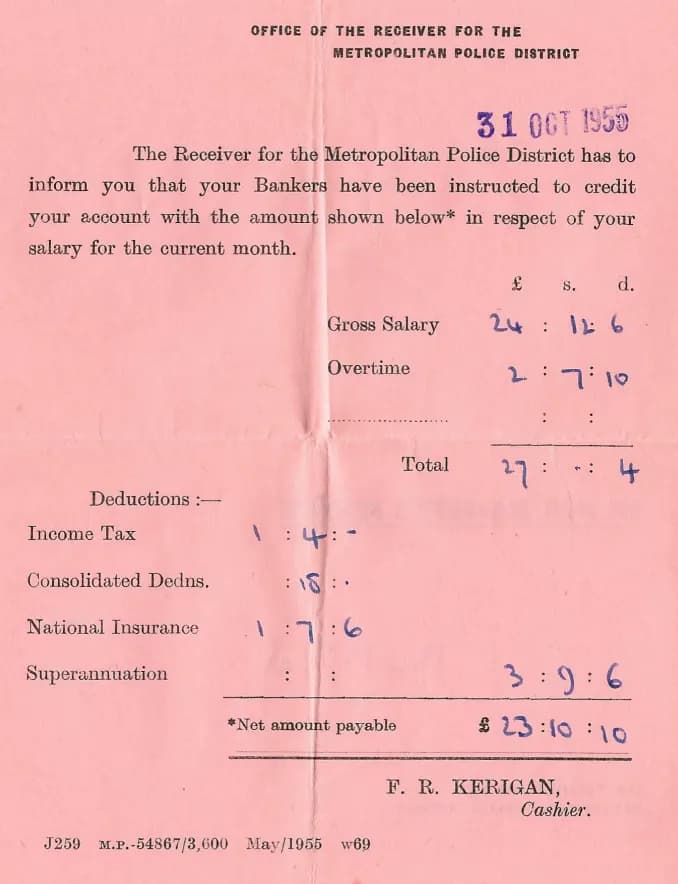
Form V is short. It doesn't prescribe a layout, font or logo — only the information the slip must carry. Here is every field in the order the gazette prints it, with what to put in each.
| Form V field | What to enter |
|---|---|
| Date of issue | The date you hand over or email the slip — on or before pay day |
| Name of the establishment, address | Legal name and the address of the workplace |
| Period | The month or wage period covered |
| 1. Name of employee | As in your employee register (Form I) |
| 2. Father's / mother's / spouse name | Any one |
| 3. Designation | Job title |
| 4. UAN | EPF Universal Account Number (write "not applicable" if not covered) |
| 5. Bank account number | Account the net pay is credited to |
| 6. Wage period | Monthly, fortnightly, weekly or daily |
| 7. Rate of wages payable | a. Basic, b. DA, c. Allowances |
| 8. Total attendance / units of work done | Days present, or pieces for piece-rated workers |
| 9. Overtime wages | Amount for overtime hours |
| 10. Gross wages payable | Total earnings for the period |
| 11. Total deductions | a. PF, b. ESI, c. Others (PT, TDS, advances, fines…) |
| 12. Net wages paid | Gross minus deductions |
Two practical points. Item 7 asks for the rate of wages payable, so show the full monthly rate of each component as well as the amount actually earned after any loss-of-pay days — most payroll systems print both columns, "rate" and "earned". And item 11(c) is a single "others" bucket in the form, but nothing stops you itemising professional tax, income tax, loan recovery and canteen charges separately, which employees and lenders will expect.
The signature line at the bottom is marked as required where the register is kept physically. A slip generated and emailed from payroll software is acceptable without a wet signature; sign or stamp a printed copy when an employee needs one for a bank or embassy.
Salary slip components: earnings and deductions
Before you can fill the form you need a salary structure. These are the components Indian employers commonly use, and how each one is treated under the Code's definition of wages in section 2(y). The treatment matters because PF, ESI, gratuity, bonus and overtime are all calculated on "wages", not on gross pay.
Common salary components under the Code on Wages
| Component | Counts as wages? | Notes |
|---|---|---|
Basic pay | Yes | Core of wages; minimum wage is checked on basic + DA |
Dearness allowance (DA / VDA) | Yes | Includes the variable DA states revise each April and October |
Retaining allowance | Yes | Seasonal workers kept on retainer |
Special / other allowance | Yes | Not on the excluded list, so fully counted |
House rent allowance (HRA) | Excluded* | Added back if excluded items exceed 50% of pay |
Conveyance / travel concession | Excluded* | Same 50% test |
Overtime allowance | Excluded* | But counted for paying wages and equal pay |
Commission | Excluded* | Same 50% test |
Statutory bonus | Excluded | If not part of the agreed remuneration |
Employer PF / pension contribution | Excluded | Never part of wages |
Gratuity, retrenchment compensation | Excluded | Paid on exit |
Basic pay
- Counts as wages?
Yes
- Notes
Core of wages; minimum wage is checked on basic + DA
Dearness allowance (DA / VDA)
- Counts as wages?
Yes
- Notes
Includes the variable DA states revise each April and October
Retaining allowance
- Counts as wages?
Yes
- Notes
Seasonal workers kept on retainer
Special / other allowance
- Counts as wages?
Yes
- Notes
Not on the excluded list, so fully counted
House rent allowance (HRA)
- Counts as wages?
Excluded*
- Notes
Added back if excluded items exceed 50% of pay
Conveyance / travel concession
- Counts as wages?
Excluded*
- Notes
Same 50% test
Overtime allowance
- Counts as wages?
Excluded*
- Notes
But counted for paying wages and equal pay
Commission
- Counts as wages?
Excluded*
- Notes
Same 50% test
Statutory bonus
- Counts as wages?
Excluded
- Notes
If not part of the agreed remuneration
Employer PF / pension contribution
- Counts as wages?
Excluded
- Notes
Never part of wages
Gratuity, retrenchment compensation
- Counts as wages?
Excluded
- Notes
Paid on exit
The starred items are the ones that can come back. The first proviso to section 2(y) says that if the payments in exclusions (a) to (i) — bonus, amenities, employer PF, conveyance, special expenses, HRA, awards, overtime and commission — together exceed one-half of total remuneration, the excess "shall be deemed as remuneration" and added to wages. In plain terms, at least half of what you pay must count as wages.
There is also an in-kind rule. If you give part of the wages in kind — meals or lodging, for instance — the value of that in-kind pay, up to up to 15% of total wages, is treated as part of wages. Show it on the slip as a non-cash earning if you include it.
Deductions are a closed list. Section 18 allows only certain deductions: fines, absence from duty, damage or loss caused by the employee's neglect, housing and amenities the employee has accepted, recovery of advances and loans, income tax, PF and ESI contributions, deductions ordered by a court, contributions to approved funds, and a few others. Anything outside that list — a "uniform charge" the employee never agreed to, for instance — is an unauthorised deduction that the employee can claim back.
The 50% wages rule, worked through
Take Ravi, an accounts assistant in Bengaluru whose monthly pay is ₹30,000, structured as basic ₹10,000, DA ₹1,000, HRA ₹13,000, conveyance ₹3,000 and special allowance ₹3,000.
The excluded items are HRA and conveyance: ₹16,000. Half of total pay is ₹15,000. Excluded items exceed half by ₹1,000, so ₹1,000 is added back. Wages = basic ₹10,000 + DA ₹1,000 + special allowance ₹3,000 + add-back ₹1,000 = ₹15,000.
Under the old practice many employers would have computed PF on basic alone — ₹10,000 — and tested ESI on gross pay of ₹30,000, putting Ravi outside ESI. Under the Code both answers change. PF is due on ₹15,000, and because his wages are within ₹21,000/month, ESI applies as well. ESIC told its regional offices in December 2025 to apply the Code's definition, and warned that many previously exempt employees would come back into coverage. Our ESIC rules guide has the detail.
The rule works in the employee's favour on the other side too. Structures that kept basic at 30–40% and put the rest in a "special allowance" no longer reduce PF, because special allowance is not on the excluded list. If you restructure to cut HRA and raise basic, check the effect on take-home pay first and tell employees in writing.
Salary slip numbers to know (2026)
12% of wages
Employee PF
on wages up to ₹25,000 a month
0.75%
Employee ESI
if wages ≤ ₹21,000/month
50% of wages
Cap on total deductions
before the end of the 7th day of the next month
Monthly wages due
How to calculate each deduction
Provident fund. Deduct 12% of wages of wages from the employee and contribute the same from the employer side (8.33% to the pension scheme within the ceiling, the rest to EPF). The compulsory base is capped at ₹25,000 a month from 17 September 2026, when S.O. 5109(E) raised the ceiling from ₹15,000. So the maximum compulsory employee deduction is now ₹3,000 a month. An employer and employee can agree to contribute on the full wage instead. The employer's share never appears as a deduction from the employee's pay — showing it there is a common mistake. See our PF deduction rules for the split and the admin and EDLI charges.
ESI. If the establishment is covered (generally 10 or more employees) and the employee's wages are up to ₹21,000/month (₹25,000/month for persons with disability), deduct 0.75% of wages; the employer pays 3.25%. Employees on very low daily wages are exempt from the employee share but the employer still pays.
Professional tax. This is a state tax, and the rates differ. Karnataka, for example, charges ₹200 a month on salaries of ₹25,000 or more, with ₹300 in February; Maharashtra charges ₹200 a month (₹300 in February) at the top slab; some states levy none. The constitutional cap is ₹2,500 a year. Use our professional tax guide for your state.
Income tax (TDS). From 1 April 2026, salary TDS sits in section 392 of the Income-tax Act, 2025 (formerly section 192). You estimate the employee's taxable income for the whole year under the regime they choose, compute the tax, and deduct one-twelfth each month, adjusting later months as pay changes. Under the new regime the standard deduction is ₹75,000, and resident individuals with taxable income up to ₹12 lakh get a rebate that wipes out the tax. So an employee whose annual salary is ₹12.75 lakh or less, with no other income, normally has nil TDS under the new regime. The annual TDS certificate is now Form 130 (formerly Form 16). Our TDS guide covers deposit dates.
Other deductions. Advances, loan instalments, canteen or transport charges the employee has accepted, labour welfare fund where your state levies one, and loss-of-pay for unpaid absence. Under rule 13 of the central rules, if authorised deductions in a month exceed 50% of wages, the excess is carried forward and recovered in later months, again within 50% of each month's wages.
Two complete salary slips in ₹
Example 1 — Ravi, accounts assistant, Bengaluru, ₹30,000 a month, full attendance in October 2026.
| Earnings | ₹ | Deductions | ₹ |
|---|---|---|---|
| Basic | 10,000 | PF (12% of ₹15,000 wages) | 1,800.00 |
| DA | 1,000 | ESI (0.75% of ₹15,000) | 112.50 |
| HRA | 13,000 | Professional tax (Karnataka) | 200.00 |
| Conveyance | 3,000 | TDS | 0.00 |
| Special allowance | 3,000 | ||
| Gross | 30,000 | Total deductions | 2,112.50 |
| Net pay | 27,887.50 |
His annual pay of ₹3.6 lakh is far below the rebate limit, so TDS is nil. The employer additionally pays PF of ₹1,800, ESI of ₹487.50 (3.25% of ₹15,000) and EDLI and admin charges of about ₹75 each — so Ravi costs the business about ₹32,438 a month. None of the employer amounts belong in the deductions column; many employers print them in a separate "employer contributions" box for transparency.
Example 2 — Priya, operations manager, Bengaluru, ₹1,20,000 a month. Basic ₹50,000, HRA ₹25,000, conveyance ₹5,000 and special allowance ₹40,000. Excluded items are ₹30,000, well under half of ₹1,20,000, so wages are ₹90,000 with no add-back.
- PF: on the ceiling of ₹25,000 a month, 12% = ₹3,000 (unless she and the employer opt for the full wage)
- ESI: not applicable — wages above ₹21,000/month
- Professional tax: ₹200 (₹300 in February)
- TDS under the new regime: annual salary ₹14,40,000 less ₹75,000 = ₹13,65,000 taxable. Tax = ₹20,000 (5% of ₹4–8 lakh) + ₹40,000 (10% of ₹8–12 lakh) + ₹24,750 (15% of ₹1.65 lakh) = ₹84,750, plus 4% cess = ₹88,140 a year, or about ₹7,345 a month
- Net pay ≈ 1,20,000 − 3,000 − 200 − 7,345 = ₹1,09,455
If Priya declares the old regime, recompute with her rent receipts, investments and PT, and adjust the remaining months.
How to make a salary slip in Excel, step by step
You don't need payroll software to produce a compliant slip. A single workbook with one input sheet and one slip template does the job for a business with up to a few dozen staff.
Build a Form V-ready salary slip in Excel
- 1
Set up an employee master sheet
One row per employee: name, parent/spouse name, designation, UAN, bank account, date of joining, state of work, and monthly rates of basic, DA, HRA, conveyance and special allowance.
- 2
Add an attendance sheet
For each month, record days in the month and days paid (present + paid leave + weekly offs). Loss-of-pay days = days in month − days paid.
- 3
Calculate earned amounts
For each component: =ROUND(Rate * DaysPaid / DaysInMonth, 2). Add overtime separately — at twice the normal rate of wages.
Tip: Pick one LOP method — calendar days or a fixed 26 — and use it for everyone. The central rules use ÷26 when converting monthly minimum wages to a daily rate.
- 4
Compute Code wages with the 50% test
Wages = Basic + DA + Special + MAX(0, (HRA + Conveyance + OT + Commission) − 0.5 × Gross). Put this in its own column so PF and ESI read from it.
- 5
Work out statutory deductions
PF: =ROUND(MIN(Wages, 25000) * 12%, 0). ESI: =IF(Wages <= 21000, ROUND(Wages * 0.75%, 2), 0) — apply only in an ESI-covered unit. PT: a lookup on your state's slab table. TDS: annual estimate ÷ 12.
- 6
Lay out the slip template
Header with the establishment name, address, period and date of issue; employee block with items 1–6 of Form V; earnings and deductions in two columns; net pay in figures and words.
- 7
Generate, check and send
Use INDEX/MATCH on employee code to fill the template, export each slip to PDF, check net pay against the bank transfer file, and email before or on pay day.
Keep the formulas for PF and ESI tied to the wages column, not to basic. That one change is what most older templates downloaded from the internet get wrong.
If you'd rather not build the workbook, our free salary slip generator produces a breakup with basic, HRA, special allowance, PF and professional tax that you can download. It applies the 50% wages rule automatically: PF is worked out on basic or half of gross pay, whichever is higher, capped at the ₹25,000 a month ceiling. If you pay PF on full wages above the ceiling, add the difference under "Other deductions".
Paying on time and keeping the records
The slip is only part of the duty. Under section 17 of the Code, monthly wages must be paid before the end of the 7th day of the next month, and an employee who resigns, is dismissed or retrenched must get their dues within 2 working days. Issue the slip with or before the payment, not weeks later.
The central rules also prescribe three registers, which can be kept electronically: the employee register in Form I; the register of wages, overtime, advances, fines and deductions for damage or loss in Form IV; and the attendance register-cum-muster roll in Form IX. Registers must be preserved for five years after the last entry. If your slips are generated from the same workbook or software that holds these registers, an inspection becomes a matter of printing a few reports. Failing to keep records is punishable with a fine of up to ₹10,000.
Common salary slip mistakes and how to fix them
PF on basic only. If your structure has a special allowance or a large HRA, PF calculated on basic is short. Recompute on Code wages from 21 November 2025 and discuss arrears with your adviser; the PF deduction rules page walks through it.
ESI tested on gross pay. An employee on ₹28,000 gross may have Code wages under ₹21,000/month and must be covered. Re-test everyone up to about ₹40,000 gross.
Employer contributions shown as deductions. The employer's 12% PF and 3.25% ESI are costs to the business. If they appear in the deductions column, the slip suggests the employee is paying them — a red flag in any inspection or claim.
No UAN or bank details. Form V asks for both. A blank UAN on a covered employee's slip often means they were never enrolled.
Missing rate column. Form V wants the rate of wages payable, not only what was paid. Without it, nobody can check that a loss-of-pay deduction was calculated correctly.
Paying below the minimum wage. Basic plus DA must meet your state's minimum for the employee's category. Check the latest notification for your state — for example our pages for Karnataka, Maharashtra or the central sphere.
Deductions above half of wages. A large advance recovery plus PF and TDS can breach the 50% of wages cap. Spread the recovery.
Salary slip checklist
0/8Salary slips for loans, visas and employee requests
Employees most often ask for slips when they apply for a home or personal loan, rent a flat or file a visa application. Lenders usually ask for the last few months' slips and match the net pay against the salary credits on the bank statement, so the net figure on the slip should match the amount actually credited. If you paid arrears or a bonus in a month, show it on its own line so the employee can explain the higher credit.
Lenders also check that the slip identifies the employer clearly — full legal name, address and, for many, a signature or stamp on a printed copy. A slip with only a first name and a total is likely to be rejected. Never issue a slip showing pay you didn't actually pay; it is the employer's record, and it can be used against you in a wage claim or a tax inquiry.
When an employee leaves, give a final slip with the full and final settlement: earned wages to the last day, leave encashment, any bonus due, gratuity if eligible (see our gratuity guide) and recoveries, all within the within 2 working days deadline.
Official links
What to do next
Write down every component in your salary structure, run the 50% test for each employee, and fix PF and ESI on the wages figure before you issue the next slip. Then generate slips with our free salary slip generator or the Excel method above, check professional tax for your state on our professional tax page, and read our Code on Wages guide for the rest of the employer duties.
This is general information, not legal or tax advice — confirm on the official source or with a professional.
Frequently asked questions
Yes. Section 50(3) of the Code on Wages, 2019, in force since 21 November 2025, requires every employer to issue wage slips. The central rules of 8 May 2026 prescribe Form V and say it must be given on or before payment of wages, on paper or electronically. Only employers with five or fewer people in agriculture or domestic work are exempt, and they must still prove payment if asked.
For establishments under the central government, Form V of the Code on Wages (Central) Rules, 2026 (G.S.R. 343(E)). It asks for the establishment's name and address, date of issue, period, employee's name, parent or spouse name, designation, UAN, bank account, wage period, rates of basic, DA and allowances, attendance, overtime, gross wages, PF, ESI and other deductions, and net pay. States use their own rules and forms.
PF is 12% of wages of wages as the Code defines them — basic, DA, retaining allowance and any allowance not on the excluded list, such as special allowance — plus the part of excluded items like HRA and conveyance that exceeds half of total pay. The compulsory base is capped at ₹25,000 a month from 17 September 2026, so the most an employer must deduct is ₹3,000 a month.
Yes. Any format works as long as it carries the details your applicable rules require. Set up an inputs block (days in month, days paid, rates of pay), compute wages under the 50% rule with a MAX formula, cap PF at ₹25,000 a month, apply ESI only where wages are up to ₹21,000/month, add your state's professional tax and the monthly TDS estimate, then print or export one slip per employee.
Total deductions in a wage period cannot exceed 50% of wages under section 18 of the Code on Wages. The central rules add that anything above the cap is carried forward and recovered in later months, again within 50% of each month's wages. PF, ESI, income tax, advances, fines and loss recoveries all count towards the cap.
Form V has a line for the employer's or pay-in-charge's signature, but its note says this is required where records are kept physically. An electronic slip from a payroll system is valid without a wet signature. Banks and visa offices often ask for signed or stamped copies anyway, so many employers sign printed slips on request.
Sources & verification
Figures on this page were checked against the sources below when it was last reviewed on 9 October 2026. Each rate and limit is stored once with its own official source and review date, and official update channels are monitored daily so changes are picked up. How we verify
- 1.The Code on Wages (Central) Rules, 2026 — G.S.R. 343(E) dated 8 May 2026 (Gazette of India, Extraordinary, No. 309) — Ministry of Labour and Employment, Government of India · accessed 9 October 2026
- 2.The Code on Wages, 2019 (No. 29 of 2019) — India Code, Legislative Department · accessed 9 October 2026
- 3.Government announces implementation of the four Labour Codes (21 Nov 2025) — PIB — Ministry of Labour & Employment · accessed 9 October 2026
- 4.Gazette of India S.O. 5109(E) dated 17.09.2026 — wage ceiling of ₹25,000 for Chapter III of the Code on Social Security — Ministry of Labour and Employment, Government of India · accessed 9 October 2026
- 5.Contribution — Employees' State Insurance Corporation · accessed 9 October 2026
- 6.Coverage — Employees' State Insurance Corporation · accessed 9 October 2026
- 7.Individual (resident, below 60 years) — tax slabs for AY 2026-27 — Income Tax Department · accessed 9 October 2026
- 8.Govt clarifies ₹75,000 standard deduction for salaried employees in new tax regime — Outlook Money · accessed 9 October 2026
- 9.[Analysis] Wages (Central) Rules 2026 — chapter-wise guide — Taxmann · accessed 9 October 2026
MSMETOOLS is an independent platform and is not affiliated with any government agency, ministry or department.
Tools for this
Salary Slip Generator
Create professional salary slips in seconds.
TDS Calculator (India)
Calculate TDS for payments and generate reports.
Related guides
 Full and Final Settlement in 2026: 2-Day Rule & CalculationRead guide
 ESIC Rules 2026: Eligibility, Deduction, Periods & BenefitsRead guide
 Appointment Letter Format 2026: OSH Code Rules & TemplateRead guide
 Experience Letter Format 2026: Sample & Relieving LetterRead guide
Official links open the government site in a new tab.