 HR, payroll & labour
Central Minimum Wages (2026): Rates from 1 October by Area and Skill, Who They Cover and the Floor Wage
Central minimum wages 2026: rates from 1 October for construction, sweeping, security, loading, mines and farms by area and skill, plus floor wage status.
 Edited by Sumeet YadavFounder & editor, MSMETOOLS · fact-checked against official sources
- Rates in force
- from 1 October 2026
- Last checked
- Against the official source on 14 October 2026
- Next revision due
- 1 April 2027
Contents (13)
- 1. Central minimum wages from 1 October 2026: construction, sweeping and loading
- 2. Watch and ward, mines and agriculture
- 3. Who central minimum wages apply to
- 4. Area A, B and C: which rate applies where
- 5. What changed in 2026: new rules and a new issuing office
- 6. How the VDA is calculated
- 7. Converting to monthly pay, with worked examples
- 8. Skill categories under the central notifications
- 9. Floor wage: status under the Code on Wages
- 10. Employer obligations in the central sphere
- 11. Common mistakes
- 12. If workers are underpaid
- 13. What to do next
If your business holds a contract with a railway zone, a central public sector company, a bank, an airport, a port or a mine, the wage floor for the people you deploy there is not your state's — it is the central government's. Those central-sphere rates change every April and October with a variable dearness allowance (VDA). This guide sets out the rates in force from 1 October 2026 by area and skill, explains who they cover and who now issues them, converts them to monthly pay, and covers the status of the national floor wage under the Code on Wages.
Quick answer
From 1 October 2026, central minimum wages for construction, sweeping and cleaning are ₹840 a day for an unskilled worker in Area A, ₹704 in Area B and ₹565 in Area C, rising to ₹1,111 for highly skilled work in Area A. The Labour Bureau issued the orders on 30 September 2026.
VDA rose because the CPI-IW average reached 431.42 (linked series), up 6.62 points
Monthly rate = daily rate × 26 under the 2026 central rules — ₹21,840 for Area A unskilled
Covers central government establishments, railways, mines, oilfields, ports, banks, insurers, CPSUs and their contractors
No statutory national floor wage had been notified when we last checked on 7 October 2026
Central minimum wages from 1 October 2026: construction, sweeping and loading
The same rates apply to three groups: construction and maintenance of roads, runways and buildings (including underground cabling, electric lines, water supply and sewer lines); sweeping and cleaning; and, for unskilled work, loading and unloading at railway goods sheds, parcel offices, other godowns and warehouses, docks and ports, and airport cargo. Each figure is basic wage plus VDA, per day.
| Skill grade | Area A | Area B | Area C |
|---|---|---|---|
| Unskilled | ₹840 (₹523 + ₹317) | ₹704 (₹437 + ₹267) | ₹565 (₹350 + ₹215) |
| Semi-skilled / unskilled supervisory | ₹933 | ₹794 | ₹661 |
| Skilled / clerical | ₹1,024 | ₹933 | ₹794 |
| Highly skilled | ₹1,111 | ₹1,024 | ₹933 |
The sweeping and cleaning order sets a single rate per area — the unskilled figures above — and expressly excludes work prohibited under the Employment of Manual Scavengers and Construction of Dry Latrines (Prohibition) Act, 1993. The loading and unloading order also sets only the unskilled rate.
Central sphere minimum wage calculator
A full month is 26 working days; the daily rate is the monthly rate ÷ 26 where the order fixes only a monthly figure.
Overtime is paid at twice the ordinary rate (daily rate ÷ 8 hours). Arrears assume the same shortfall in every month since the rates took effect on 1 October 2026; a claim under the Code on Wages must generally be filed within 3 years. Estimates only — check the order for your employment.
Watch and ward, mines and agriculture
Watch and ward (security guards). Without arms: ₹1,024 a day in Area A (₹637 + ₹387), ₹933 in Area B and ₹794 in Area C. With arms: ₹1,111 in Area A (₹693 + ₹418), ₹1,024 in Area B and ₹933 in Area C. These match the skilled and highly skilled construction rates, which is a useful check when you build a contract price.
Non-coal mines. The order covers about 40 minerals, including iron ore, bauxite, manganese, stone, dolomite, granite, marble, mica, lignite and uranium. Mines rates do not vary by area but by whether the work is above or below ground:
| Skill grade | Above ground | Below ground |
|---|---|---|
| Unskilled | ₹565 (₹350 + ₹215) | ₹704 (₹437 + ₹267) |
| Semi-skilled / unskilled supervisory | ₹704 | ₹840 |
| Skilled / clerical | ₹840 | ₹979 |
| Highly skilled | ₹979 | ₹1,095 |
Stone mines have separate piece rates per 2.831 cubic metres (100 cubic feet) of excavation or per truck-load of broken stone; for example, excavating soft soil pays ₹569 and rock ₹1,131 per 100 cubic feet including VDA. Workers on time rates in stone mines get the above-ground rates.
Agriculture. Agricultural work in the central sphere, such as on farms run by central government institutions, has lower rates:
| Skill grade | Area A | Area B | Area C |
|---|---|---|---|
| Unskilled | ₹537 | ₹491 | ₹486 |
| Semi-skilled / unskilled supervisory | ₹587 | ₹539 | ₹496 |
| Skilled / clerical | ₹637 | ₹587 | ₹538 |
| Highly skilled | ₹705 | ₹655 | ₹587 |
Who central minimum wages apply to
Under section 2(d) of the Code on Wages, the central government is the "appropriate government" for establishments carried on by or under its authority, and for railways, mines, oilfields, major ports, air transport services, telecommunications, banking and insurance companies, corporations set up by central Acts, central public sector undertakings and their subsidiaries, and autonomous bodies the centre owns or controls. That includes the contractors who supply labour to those establishments. For everyone else, the state government is the appropriate government and the state notification applies.
In practice, that means:
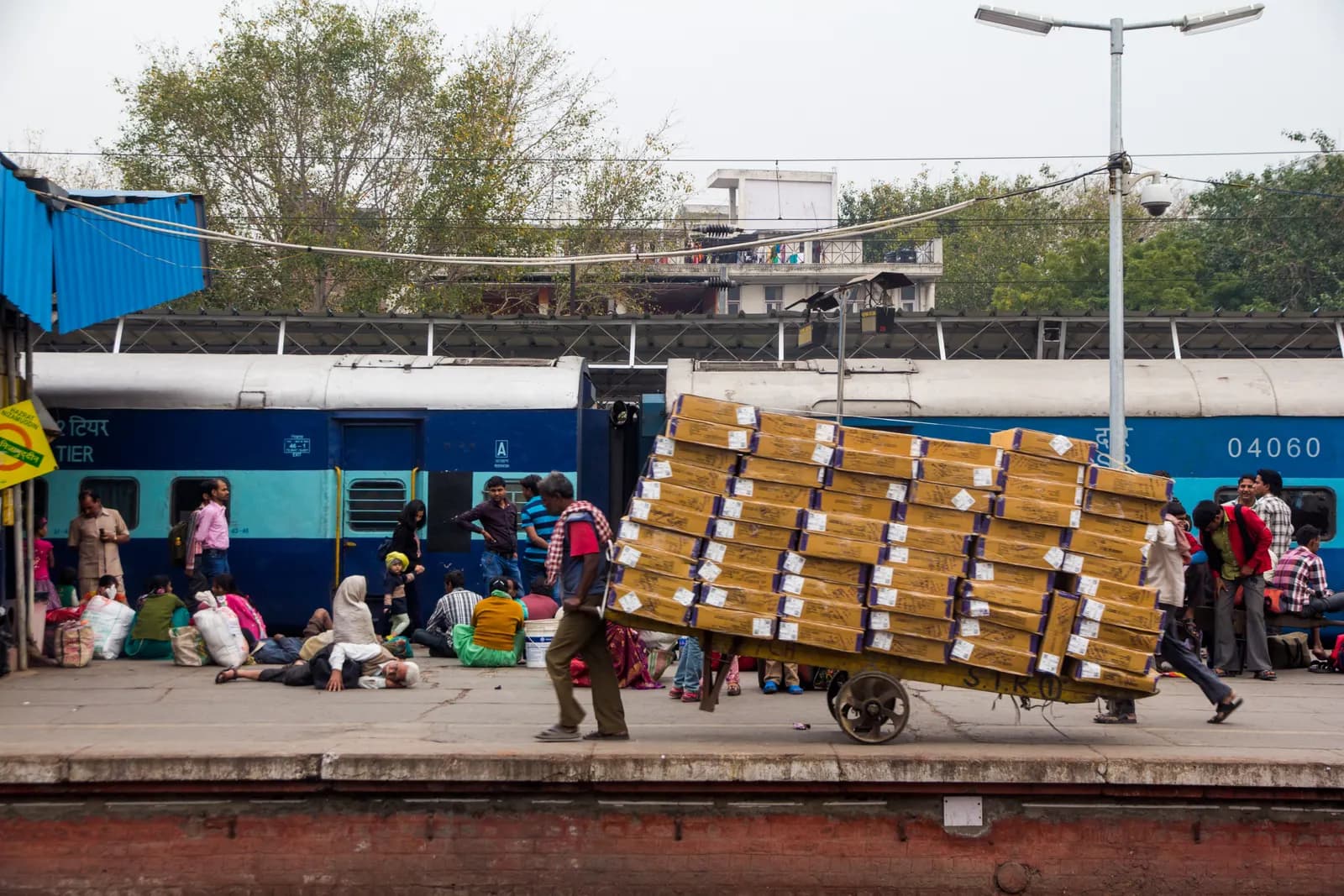
- A housekeeping contractor cleaning a railway station in Lucknow pays its sweepers at least the Area A central rate, not Uttar Pradesh's rate.
- A security agency posting armed guards at a central PSU plant in Visakhapatnam pays the Area B "with arms" rate.
- A civil contractor building a bank branch in a district town pays the Area C construction rates.
- The same agency's guards at a private mall next door are covered by the state's minimum wages.
Area A, B and C: which rate applies where
The cities in each area come from Part II of the 2017 notifications, reproduced as an annexure to every VDA order. Use the place where the work is done, not where the contractor is registered.
- Area A — Ahmedabad, Bengaluru, Chennai, Delhi, Greater Mumbai, Navi Mumbai, Hyderabad, Secunderabad, Kanpur, Kolkata, Lucknow, Nagpur, Pune, the Faridabad complex, Ghaziabad, Gurgaon and Noida.
- Area B — about 100 cities, among them Agra, Amritsar, Bhopal, Bhubaneswar, Chandigarh, Coimbatore, Dehradun, Guwahati, Indore, Jabalpur, Jaipur, Jamshedpur, Kochi, Ludhiana, Madurai, Mysuru, Nashik, Patna, Raipur, Rajkot, Ranchi, Surat, Thiruvananthapuram, Vadodara, Varanasi, Vijayawada, Visakhapatnam and Warangal.
- Area C — every other place where the law applies.
Several payroll sites list Lucknow, Kanpur and Nagpur under Area B. The official annexure places all three in Area A, a difference of ₹136 a day for an unskilled worker.
Jammu and Srinagar are Area B and the rest of Jammu and Kashmir is Area C. Private employers there follow a separate, much lower state schedule; see minimum wages in Jammu and Kashmir for the S.O. 513 rates and when the central rates apply instead.
What changed in 2026: new rules and a new issuing office
Three things changed this year, and all of them affect how you read a central VDA order.
The Code on Wages is now the legal base. The four Labour Codes came into force on 21 November 2025 and repealed the Minimum Wages Act, 1948. The central government's existing minimum wage notifications continue under section 69(2) of the Code until new orders are made under section 7. Every VDA order since then has said so.
New central rules. The Code on Wages (Central) Rules, 2026 were notified on 8 May 2026 (G.S.R. 343(E)) and replace the Minimum Wages (Central) Rules, 1950. They fix minimum wages on a daily basis, set the hourly rate at the daily rate divided by eight and the monthly rate at the daily rate multiplied by 26, and provide for an 8-hour day and a 48-hour week. They also require the cost-of-living allowance to be computed before 1 April and before 1 October each year.
A new signatory. Until April 2026, the Chief Labour Commissioner (Central) signed the VDA orders. Notification S.O. 2451(E) of 12 May 2026 gave that computation to the Director General of the Labour Bureau, so the October 2026 orders came from the Labour Bureau in Chandigarh. Enforcement — inspections, claims and prosecutions — still sits with the Chief Labour Commissioner's organisation.
Central minimum wages — key dates
19 Jan 2017
Basic rates and Area A/B/C classification fixed (S.O. 186(E)–192(E))
21 Nov 2025
Code on Wages in force; Minimum Wages Act, 1948 repealed; old notifications saved by s.69
1 Apr 2026
VDA revised on CPI-IW 424.80 — Area A unskilled construction ₹827 a day (CLC order)
8 May 2026
Code on Wages (Central) Rules, 2026 notified
12 May 2026
S.O. 2451(E): Labour Bureau to compute VDA
1 Oct 2026
VDA revised on CPI-IW 431.42 (linked series) — Area A unskilled ₹840 a day
How the VDA is calculated
The central VDA moves with the Consumer Price Index for Industrial Workers published by the Labour Bureau. Each revision looks at the change in the six-monthly average: the October 2026 orders say the average reached 431.42 (linked series) as on 30 June 2026 — the orders describe it as "linked to Base 2016=100", meaning the current 2016=100 index converted back to the older scale the 2017 notifications were set on — from 424.80 at the previous revision — a rise of 6.62 points. VDA for each category is raised in proportion and rounded up to the next rupee, as decided by the Minimum Wages Advisory Board.
In money terms, the unskilled Area A VDA for construction went from ₹304 to ₹317 a day, so the total rose from ₹827 to ₹840. Basic rates have stayed the same since 2017; only the VDA changes.
October 2026 revision in numbers
424.80 → 431.42 (linked series)
CPI-IW six-monthly average
₹304 → ₹317
Unskilled Area A VDA, per day
₹827 → ₹840
Unskilled Area A total, per day
× 26
Daily to monthly conversion
Converting to monthly pay, with worked examples
Use the 26-day rule from the central rules for monthly-rated staff, and the daily rate for anyone paid by the day.
Example 1 — housekeeping staff at a central office in Bhopal (Area B). An unskilled sweeper works a full month. Minimum monthly wage = ₹704 × 26 = ₹18,304.
- ESI applies (wages below ₹21,000/month): employee 0.75% = ₹137.28; employer 3.25% = ₹594.88
- EPF: wages are below the ₹25,000 a month ceiling, so employee PF at 12% of wages = ₹2,196.48, matched by the employer
- Net pay ≈ ₹15,970.24, before any state professional tax
Example 2 — armed guards at a CPSU plant in Pune (Area A). Minimum = ₹1,111 × 26 = ₹28,886 a month. That is above the ESI limit, so ESI does not apply. It is also above the ₹25,000 a month PF ceiling: statutory PF is due on ₹25,000 (₹3,000 from the guard and ₹3,000 from you), unless you choose to contribute on the full wage.
Example 3 — loaders at a railway goods shed in Nashik (Area B), paid daily. A loader works 21 days in October. Minimum pay = 21 × ₹704 = ₹14,784.
Example 4 — missing the October revision. A civil contractor on a central road project near Noida (Area A) has 30 unskilled workers and keeps paying the April rate of ₹827. Shortfall: ₹13 a day per worker, or ₹10,140 a month across 26 days. Over six months to March 2027 that is ₹60,840 — and a claim can add compensation of up to 10 times the claim.
Skill categories under the central notifications
Workers are classified using Part I of each 2017 notification. Broadly:
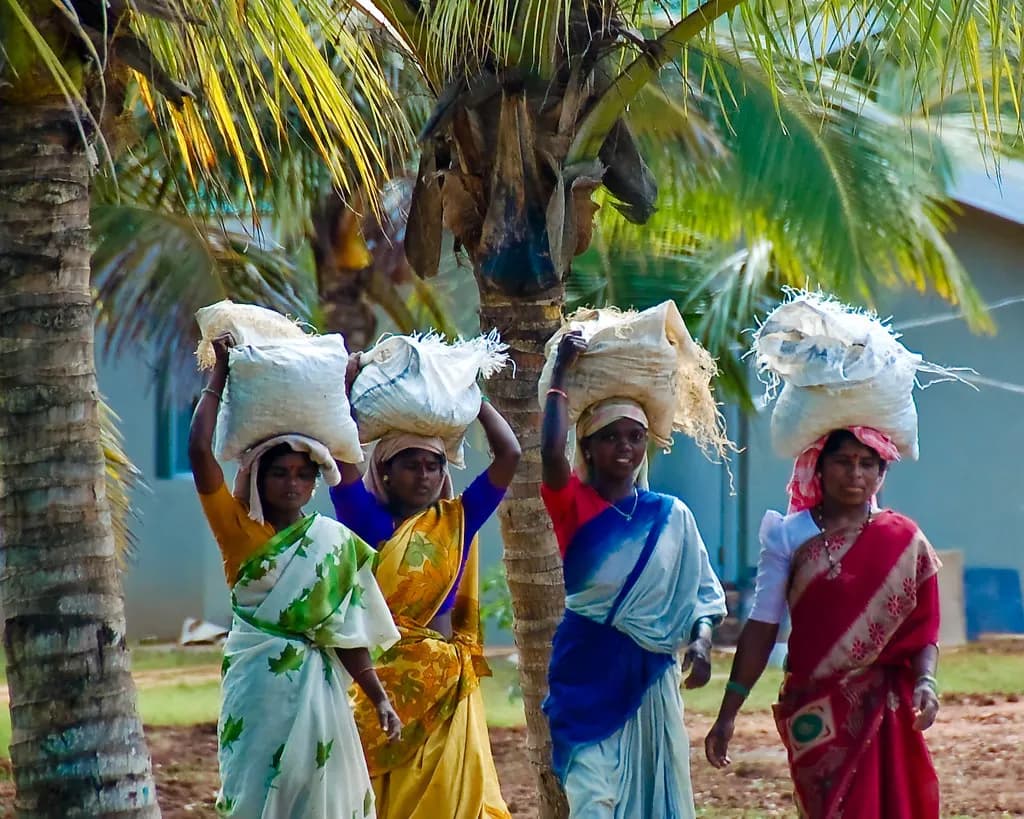
- Unskilled — work needing no special skill or previous experience: helpers, loaders, sweepers, watchmen without arms on some schedules, mazdoors.
- Semi-skilled / unskilled supervisory — work involving some skill acquired on the job under a skilled worker, and supervisors of unskilled workers.
- Skilled / clerical — work involving skill or competence acquired through experience or training, including clerks, store-keepers and drivers.
- Highly skilled — work needing a high degree of skill and full competence, with responsibility for decisions.
Classify by the work actually performed. Listing every worker as "unskilled" to save money is one of the easiest underpayments for an inspector to spot, because the job descriptions in the contract usually say otherwise.
Floor wage: status under the Code on Wages
Section 9 of the Code on Wages requires the central government to fix a floor wage, and once it is fixed no state or central minimum wage may be lower. Rule 10 of the 2026 central rules says the floor wage will be based on a minimum living standard covering food, clothing, housing and other factors, after consulting the Central Advisory Board, and may be revised every five years.
When we last checked, on 7 October 2026, no statutory floor wage had been notified. The older National Floor Level Minimum Wage of ₹176 a day (advisory, 2017) was never binding, and almost every state's unskilled rate is now well above it. PRS Legislative Research has noted that the 2026 rules do not specify the detailed norms — such as consumption units and calorie intake — that the 2025 draft and earlier Labour Conferences used. When the floor wage arrives, check whether your state's rates for the lowest grades need to rise to meet it.
How big is the gap between central and state rates? In Delhi the state unskilled rate is ₹710 a day against the central Area A construction rate of ₹840, so the two are close. In Gurugram, Haryana's unskilled rate is ₹585.41 a day, and in Indore or Bhopal Madhya Pradesh's is ₹484 — well below the central figures of ₹840 (Area A) and ₹704 (Area B). In rural districts the Area C rate of ₹565 is usually higher than the state rate too. So a contractor with mixed central and private work in the same city may legally pay two different minimums to people doing the same job; many choose to pay everyone the higher rate to keep payroll simple and avoid disputes on site.
When a new order comes out, read three things before you change payroll: the employment it covers (the title paragraph lists them), the effective date (always the 1st of April or October, even if the order is signed a few days later), and the annexure of cities. Then update the daily rate, re-run the ×26 conversion for monthly staff, and send the revised figures to every principal employer whose contract has a wage escalation clause.
Employer obligations in the central sphere
The wage rate is only part of what inspectors check. Under the Code on Wages:
- Pay on time — monthly wages before the end of the 7th day of the next month; weekly wages before the weekly holiday; daily wages at the end of the shift (section 17).
- Overtime at twice the normal rate beyond normal hours (section 14), with the 8-hour day and 48-hour week in the central rules.
- Equal pay for the same or similar work, whatever the worker's gender (section 3).
- Principal employer's liability — if a contractor underpays, the principal employer must ensure the minimum is paid. Many principal employers now ask for monthly wage registers and bank statements before releasing contractor bills.
- Registers and wage slips for every worker (section 50).
Central-sphere minimum wage checklist for October 2026
0/8Common mistakes
Paying the state rate on a central contract. This is the biggest one. In Area B cities the central construction rate is far above most state rates.
Using the contractor's city to pick the area. A Delhi agency supplying guards to a CPSU unit in Ranchi pays Area B rates, not Area A.
Ignoring the half-yearly VDA. The October change is small per day but adds up across a large workforce, and contracts priced on April rates can turn loss-making if the escalation clause isn't invoked.
Converting at 30 days. Dividing a monthly salary by 30 to check it against the daily rate understates what the rules require. Multiply the daily rate by 26 to get the monthly minimum.
If workers are underpaid
A worker or union can file a claim within 3 years under section 45 of the Code on Wages, and the authority can award the shortfall plus compensation of up to 10 times the claim. Underpayment is an offence under section 54, with a fine of up to ₹50,000 for a first offence and up to ₹1 lakh fine and/or 3 months' imprisonment for a repeat within five years.
Official links
- Chief Labour Commissioner (Central) — Minimum WagesCentral VDA orders and rate notifications
- CLC VDA orders w.e.f. 1 April 2026 (PDF)Previous half-year's rates
- Labour Bureau VDA orders w.e.f. 1 October 2026 (PDF on clc.gov.in)File No. 6/1/2026-VDA dated 30.09.2026 — all schedules plus the Area A/B/C annexure
- Labour BureauCPI-IW releases used for VDA
- The Code on Wages, 2019 (India Code)
What to do next
If you hold any central-sphere contract, check the area of each site, move pay to the 1 October 2026 rates and invoke the escalation clause with the principal employer. For staff outside the central sphere, use your state's rates — see our guides to minimum wages in Madhya Pradesh, Delhi and Haryana. Our salary slip generator shows basic, VDA, overtime, PF and ESI separately, which is what principal employers ask to see.
This is general information, not legal or tax advice — confirm on the official source or with a professional.
Frequently asked questions
For construction, sweeping and cleaning in the central sphere, the daily minimum including VDA is ₹840 for an unskilled worker in Area A, ₹704 in Area B and ₹565 in Area C. Highly skilled workers get ₹1,111 in Area A. The rates come from Labour Bureau orders dated 30 September 2026.
Until April 2026 the Chief Labour Commissioner (Central) issued the half-yearly VDA orders. From May 2026, notification S.O. 2451(E) gave the Director General of the Labour Bureau the job of computing the cost-of-living allowance, so the October 2026 orders were signed at the Labour Bureau, Chandigarh. The Chief Labour Commissioner's offices still enforce the rates.
They apply where the central government is the 'appropriate government' under the Code on Wages: establishments of the central government, railways, mines, oilfields, major ports, air transport, telecommunications, banking and insurance companies, central public sector undertakings and their contractors. A private shop or factory is covered by its state's minimum wages instead.
The Code on Wages (Central) Rules, 2026 fix minimum wages on a daily basis and say the monthly rate is the daily rate multiplied by 26. So an Area A unskilled construction rate of ₹840 a day works out to ₹21,840 a month. The hourly rate is the daily rate divided by eight.
Not when we last checked, on 7 October 2026. The Code on Wages requires the central government to fix a statutory floor wage, and Rule 10 of the Code on Wages (Central) Rules, 2026 sets out how, but no figure had been notified when we checked. The old National Floor Level Minimum Wage of ₹176 a day (advisory, 2017) was only advisory and does not bind states.
Area A covers Ahmedabad, Bengaluru, Chennai, Delhi, Greater Mumbai, Navi Mumbai, Hyderabad, Secunderabad, Kanpur, Kolkata, Lucknow, Nagpur, Pune, the Faridabad complex, Ghaziabad, Gurgaon and Noida. About 100 other cities such as Jaipur, Indore, Surat and Kochi are Area B, and every other place is Area C.
Sources & verification
Figures on this page were checked against the sources below when it was last reviewed on 14 October 2026. Each rate and limit is stored once with its own official source and review date, and official update channels are monitored daily so changes are picked up. How we verify
- 1.Labour Bureau orders F.No. 6/1/2026-VDA dated 30 September 2026 — revised VDA and minimum wages w.e.f. 01.10.2026 (set of signed orders with area annexure) — Labour Bureau, Chandigarh, Ministry of Labour & Employment (published on clc.gov.in) · accessed 14 October 2026
- 2.Chief Labour Commissioner (C) — VDA orders w.e.f. 01.04.2026 — Office of the Chief Labour Commissioner (Central) · accessed 7 October 2026
- 3.Chief Labour Commissioner (Central) — Minimum Wages — Office of the Chief Labour Commissioner (Central) · accessed 7 October 2026
- 4.Code on Wages (Central) Rules, 2026 — Rules and Regulations Review — PRS Legislative Research · accessed 7 October 2026
- 5.Govt notifies authorities under Code on Wages across jurisdictions — Taxmann · accessed 7 October 2026
- 6.[Analysis] Wages (Central) Rules 2026 — Taxmann · accessed 7 October 2026
- 7.The Code on Wages, 2019 (No. 29 of 2019) — India Code, Legislative Department · accessed 7 October 2026
- 8.Central-sphere minimum wages VDA revised October 2026 — DCPSOL · accessed 7 October 2026
MSMETOOLS is an independent platform and is not affiliated with any government agency, ministry or department.
Tools for this
Related guides
 Minimum Wages in Chandigarh 2026: ₹14,737 a Month & RatesRead guide
 Minimum Wages in Delhi 2026: Current Rates, Notification PDF & DARead guide
 Minimum Wages in Madhya Pradesh 2026: Rates, VDA & RulesRead guide
 Minimum Wages in Arunachal Pradesh 2026: Area I & II RatesRead guide
Official links open the government site in a new tab.