 HR, payroll & labour
Minimum Wages in Rajasthan (2026): Current Rates, Latest Notification and the New Code on Wages Rules
Rajasthan minimum wages 2026: daily and monthly rates for all four skill levels, the latest notification, new Code on Wages rules and payroll examples.
 Edited by Sumeet YadavFounder & editor, MSMETOOLS · fact-checked against official sources
- Rates in force
- from 1 January 2023
- Last checked
- Against the official source on 8 October 2026
- Next revision due
- 1 October 2026 (not yet notified)
No revision notified since January 2023. The rates in force from 1 January 2023 are still the latest on the official source; a revision was due by 1 October 2026. Any later order may carry arrears back to its own effective date.
Contents (11)
- 1. Rajasthan minimum wage rates in 2026
- 2. Which employments are covered
- 3. Which category does your worker fall into?
- 4. Notes in the notification that change payroll
- 5. DA and VDA: what is happening
- 6. Rajasthan compared with neighbouring states
- 7. Worked payroll examples in ₹
- 8. Employer obligations under the Code on Wages and Rajasthan rules
- 9. Common mistakes Rajasthan employers make
- 10. What if a worker is underpaid?
- 11. What to do next
If you employ people anywhere in Rajasthan — a helper in a Jodhpur handicraft unit, a loader in a Bhiwadi factory, a shop assistant in Jaipur, a cook in an Udaipur hotel or a farmhand near Sri Ganganagar — the state's minimum wage notification sets the least you can pay. Rajasthan's rates have not moved since January 2023, and the notification that fixed them came out almost two years late, in December 2024. Meanwhile the state notified its final Code on Wages rules in August 2026, which change how dearness allowance will be revised from now on. This page gives you the rates in force, checked against the Labour Department's own gazette notifications, with hourly figures, ₹ payroll examples and the employer rules.
Quick answer
Rajasthan's minimum wages in force are ₹285 a day (₹7,410 a month) for unskilled, ₹297 (₹7,722) for semi-skilled, ₹309 (₹8,034) for skilled and ₹359 (₹9,334) for highly skilled workers, effective 1 January 2023 under the notification dated 13 December 2024. When we last checked, on 8 October 2026, no later general revision or DA order had been published.
Monthly rate = daily rate × 26; the weekly paid rest day is included
Same rates across the state — no zones for cities like Jaipur or Jodhpur
Part-timers working under 4 hours a day: at least 50% of the daily rate
Code on Wages (Rajasthan) Rules in force from 12 August 2026; DA to be revised on 1 April and 1 October
Rajasthan minimum wage rates in 2026
The table below comes from the Labour Department's notification published in the Rajasthan Gazette Extraordinary on 13 December 2024. It revised the rates for 52 scheduled employments with effect from 1 January 2023, superseding the previous notification of 28 June 2022. The hourly and overtime figures are worked out using the method in the Code on Wages (Rajasthan) Rules, 2026: daily rate divided by eight, with half a rupee or more rounded up.
| Category | Daily rate | Monthly rate (daily × 26) | Hourly (÷ 8, rounded) | Overtime per hour (2×) |
|---|---|---|---|---|
| Unskilled | ₹285 | ₹7,410 | ₹36 | ₹72 |
| Semi-skilled | ₹297 | ₹7,722 | ₹37 | ₹74 |
| Skilled | ₹309 | ₹8,034 | ₹39 | ₹78 |
| Highly skilled | ₹359 | ₹9,334 | ₹45 | ₹90 |
Unlike Gujarat or Uttar Pradesh, Rajasthan has a single rate for the whole state. A security guard in Jaipur and one in Barmer have the same floor. The notification also says the rates include the cash value of any concessions in essential commodities, and that where a worker was already being paid more than these rates on the date they took effect, the higher actual wage becomes that worker's minimum.
Rajasthan minimum wages at a glance
₹285/day
Unskilled
₹7,410 a month
₹309/day
Skilled
₹8,034 a month
₹359/day
Highly skilled
₹9,334 a month
1 January 2023
Rates in force from
Rajasthan minimum wage calculator
A full month is 26 working days; the daily rate is the monthly rate ÷ 26 where the order fixes only a monthly figure.
Overtime is paid at twice the ordinary rate (daily rate ÷ 8 hours). Arrears assume the same shortfall in every month since the rates took effect on 1 January 2023; a claim under the Code on Wages must generally be filed within 3 years. Estimates only — check the order for your employment.
Which employments are covered
The notification lists 52 scheduled employments in two parts. Part I has 51 industrial and service employments, including soap-stone factories, cotton ginning and pressing, automobile workshops, small-scale industries, woollen spinning and weaving, powerlooms, printing presses, oil mills, engineering industries, handloom, shops and commercial establishments, public motor transport, rice, flour and dal mills, road construction and building operations, hotels and restaurants, private schools, private hospitals and nursing homes, cable operators, cement products, cold drinks manufacture, cold storages, computer hardware and services, every factory registered under the Factories Act that isn't listed elsewhere, NGOs, khadi and village industries, LPG distribution, pesticides and pharmaceuticals, petrol pumps, STD/PCO and allied services, tailoring and garments, taxis and travel agencies, textiles, tiles and potteries, and wood-works and furniture manufacture.
Part II covers agriculture in the widest sense: farming, dairy, horticulture, animal husbandry, beekeeping and poultry, and work incidental to farming, including carrying produce to market. Separate notifications on the same date set piece rates for brick kilns and specific rates for domestic workers and sales promotion employees, all linked to the same four skill levels.
Under the Code on Wages, minimum wages apply to every employee in every establishment, not only to listed employments. So even if your business isn't named, assume the rates apply to you. The Code's savings clause keeps the December 2024 notification in force until Rajasthan replaces it with a fixation under the Code.
Which category does your worker fall into?
The notification lists hundreds of job titles under each category, and ends each list with a catch-all: any other worker, whatever their title, who does work of that skill level. The new Rajasthan rules define the categories by the nature of the work. Here is how the notification's own lists translate into common jobs:
- Unskilled — beldars (labourers), chowkidars, sweepers, peons, water carriers, loaders, packers, bag fillers, gatekeepers, delivery boys, cleaners in hotels and restaurants, and other work needing no special training.
- Semi-skilled — munshis, helpers to fitters, wiremen and mechanics, assistant operators, junior clerks, machine attendants, ticket collectors, lift operators, cobblers and similar work done under supervision.
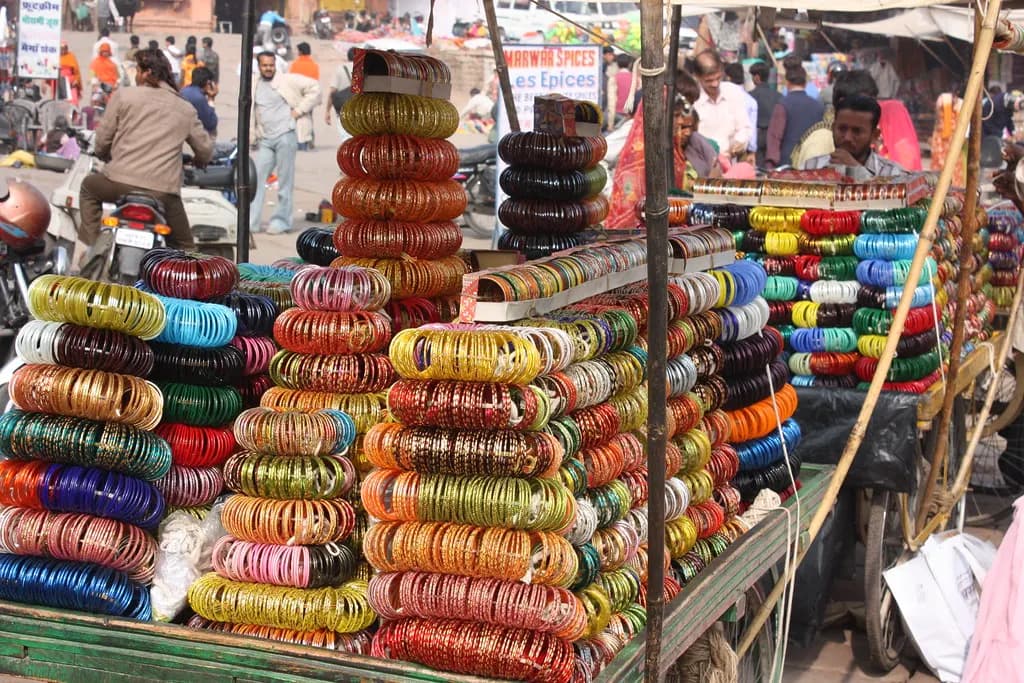
- Skilled — masons, carpenters, blacksmiths, tailors, mechanics, plumbers, electricians, drivers of light and heavy vehicles, tractor drivers, clerks, typists, cashiers, storekeepers, cooks, nurses, security men, block printers, welders, turners and lathe operators.
- Highly skilled — stenographers, accountants, computer operators, managers, sales supervisors and representatives, medical representatives, chemists and pharmacists, lab technicians, radiographers and senior technical assistants.
Classify by what the person actually does. A "helper" who runs a lathe alone is skilled, and a "supervisor" who mostly loads goods is unskilled. If a job could fit two categories, paying the higher rate is the safer choice in an inspection. The 2026 rules also set up a technical committee chaired by the Labour Commissioner to advise on reclassifying occupations, so the lists may change when the state next fixes rates.
Notes in the notification that change payroll
The notes at the end of the December 2024 notification matter as much as the rates:
- Daily-rated workers get the daily rate for their category, which the notification derives by dividing the monthly rate by 26.
- Existing higher wages are protected. If a worker was already earning more than the new rate, that higher wage counts as their minimum.
- Cash value of concessions in essential goods is included in the rate.
- The weekly rest day is paid — the rate already includes wages for the weekly holiday.
- Overtime beyond the normal 8-hour day is paid at twice the ordinary rate.
- Contract workers must get these rates too.
- Workers under 18 and persons with disabilities get the same rate as adults in their category.
- The rates absorb a rise of 687 points in the consumer price index for Jaipur, Alwar and Bhilwara between 1 July 2021 and 31 December 2022.
- Part-time workers who work less than 4 hours a day get 50% of the rate; over 4 hours, the full rate.
- The rates apply from 1 January 2023.
Recent changes to Rajasthan minimum wages
1 Jul 2021
Rates revised to ₹259 (unskilled) – ₹333 (highly skilled) a day
4 Sep 2023
Proposals to revise rates published for objections
13 Dec 2024
Final notification: ₹285–₹359 a day, effective 1 Jan 2023
21 Nov 2025
Code on Wages comes into force; Minimum Wages Act, 1948 repealed
13 Jan 2026
Draft Code on Wages (Rajasthan) Rules published
12 Aug 2026
Final Code on Wages (Rajasthan) Rules in force; DA to be revised every April and October
DA and VDA: what is happening
People searching for "Rajasthan minimum wages VDA" often expect a half-yearly DA figure like Delhi's or Maharashtra's. Rajasthan hasn't worked that way for most employments. The state has paid a variable dearness allowance, revised each year for 1 October to 30 September, only in a handful of employments — stone crushing and grinding outside mines, glass and chinaware, salt, woollen carpets and durries, papad, and tobacco including beedi-making — based on the price index for the Jaipur, Alwar and Bhilwara centres. Everyone else's rates moved only when the state issued a full revision, as it did in 2021 and in December 2024.
That is set to change. Rule 5 of the Code on Wages (Rajasthan) Rules, 2026 says dearness allowance will be revised twice a year, on 1 April and 1 October, using the price index prepared by the Labour Bureau. The rules took effect on 12 August 2026. When we checked the Labour Department's notifications list on 8 October 2026, no DA order for 1 October 2026 had been posted.
What this means for you: keep paying at least the December 2024 rates, and watch the department's notifications page. When the first DA order appears, check its effective date carefully — like the 2024 notification, it may apply from a date before it is published, and you would owe arrears from that date.
Rajasthan compared with neighbouring states
Rajasthan's rates are among the lowest of the larger states. That matters for businesses with staff in more than one state, and for employers near the borders — Bhiwadi and Neemrana sit next to Haryana, and much of southern Rajasthan trades with Gujarat. Minimum wages follow the place where the employee works, so a Gurugram-registered company with a warehouse in Bhiwadi pays Rajasthan rates there, but Haryana rates to staff in Gurugram.
Unskilled minimum wage per month — Rajasthan and neighbours
| State | Unskilled rate | In force from | Structure |
|---|---|---|---|
Rajasthan | ₹7,410 | 1 January 2023 | Single statewide rate; DA to be revised April and October under 2026 rules |
Haryana | ₹15,220.71 | 1 April 2026 | Single basic rate, 4 categories |
Gujarat — Zone 1 | ₹13,637 | 1 October 2026 | Basic + VDA, 2 zones |
Delhi | ₹18,456 | 1 April 2025 | Basic + DA, revised April and October |
Rajasthan
- Unskilled rate
₹7,410
- In force from
1 January 2023
- Structure
Single statewide rate; DA to be revised April and October under 2026 rules
Haryana
- Unskilled rate
₹15,220.71
- In force from
1 April 2026
- Structure
Single basic rate, 4 categories
Gujarat — Zone 1
- Unskilled rate
₹13,637
- In force from
1 October 2026
- Structure
Basic + VDA, 2 zones
Delhi
- Unskilled rate
₹18,456
- In force from
1 April 2025
- Structure
Basic + DA, revised April and October
The gap is large. A business paying Rajasthan's unskilled minimum is paying about half of Haryana's rate. Some employers in Rajasthan pay well above the minimum to attract staff, but the legal floor is what counts in an inspection or a claim. See our guides to minimum wages in Haryana, Gujarat and Madhya Pradesh, and the central minimum wages for central-sphere work such as railways, mines and central government contracts.
Worked payroll examples in ₹
Example 1 — a skilled driver in Jaipur. Mahesh is a skilled driver on the minimum of ₹8,034. In September he takes 2 days of unpaid leave and works 10 hours of overtime.
- Deduction for 2 unpaid days at the daily rate: 2 × ₹309 = ₹618
- Wages for days worked: ₹8,034 − ₹618 = ₹7,416
- Overtime at twice the hourly rate: 10 × ₹78 = ₹780
- Gross: ₹8,196
- ESI applies because his wages are below ₹21,000/month: employee share at 0.75% = ₹61.47, rounded up to ₹62; your share at 3.25% = ₹266.37, rounded up to ₹267
- EPF (if your establishment is covered): his PF wages of ₹7,416 (overtime excluded) are well below the ₹25,000 a month ceiling, so employee PF at 12% = ₹890, and the same from you
- Net pay ≈ ₹8,196 − ₹62 − ₹890 = ₹7,244
Rajasthan does not levy professional tax, so there is no PT deduction, unlike Gujarat, Madhya Pradesh or Maharashtra (see our professional tax guide).
Example 2 — a daily-rated helper. A helper (unskilled) at a building site in Kota works 22 days in a month. Minimum pay = 22 × ₹285 = ₹6,270. If the helper works all 26 working days, pay the full monthly rate of ₹7,410.
Example 3 — a part-time cleaner. A shop in Bikaner engages a cleaner for 3 hours each morning. Because the work is less than 4 hours a day, the minimum is 50% of the unskilled daily rate: 50% × ₹285 = ₹142.50 a day. If the cleaner works 4½ hours, the full ₹285 is due.
Example 4 — arrears from the late notification. The December 2024 notification applied from 1 January 2023. An Ajmer unit that kept paying its unskilled packer the old monthly rate of ₹6,734 until the end of November 2024 owed ₹7,410 − ₹6,734 = ₹676 a month for 23 months — ₹15,548 in arrears for that one worker. Under the Code, a worker can claim unpaid minimum wages within 3 years, and the authority can add compensation of up to 10 times the claim. If you never paid these arrears, settle them now.
A wage slip that shows the rate, days worked, overtime and each deduction on separate lines makes all of this easy to prove. Our free salary slip generator includes PF and ESI fields.
Monthly payroll check for a minimum-wage worker in Rajasthan
Step 1
Map job to 1 of 4 categories
Step 2
Rate ≥ notified minimum
monthly = daily × 26
Step 3
Overtime
2× hourly beyond 8 hrs
Step 4
ESI / PF
Step 5
Pay by the 7th
Form VII wage slip
Employer obligations under the Code on Wages and Rajasthan rules
The rates are only part of the duty. The Code on Wages and the Rajasthan rules add these:
- Hours of work. No employee may work more than 48 hours a week. In a six-day week, the working day plus rest intervals can't spread over more than 10½ hours, and the seventh day is a paid holiday. With the consent of the union or a majority of workers, a shorter week with up to 12-hour spread-overs is allowed.
- Rest intervals. No one may work more than 5 hours at a stretch without a rest interval of at least half an hour.
- Pay on time. Monthly wages must be paid by the 7th of the next month, and final dues within two working days of an employee leaving (section 17 of the Code).
- Wage slips. Every employer must issue a wage slip in Form VII, on paper or electronically, on or before paying wages (rule 43).
- Registers. Keep the registers prescribed under the rules for five years after the last entry.
- Contractors. The rates apply to contract labour. Ask manpower agencies for their wage registers and bank statements each month.
- Equal pay. The Code bars discrimination in wages on the ground of gender for the same or similar work.
Rajasthan minimum wage compliance checklist
0/7Common mistakes Rajasthan employers make
Using the 2021 rate card. Some payroll systems and job adverts still show ₹259 a day for unskilled workers. That rate was superseded from 1 January 2023.
Ignoring the arrears. Because the final notification came in December 2024, many small employers never paid the difference for 2023 and 2024. A worker can still claim it.
Paying daily workers by the hour without the floor. Hourly rates are fine, but a worker who works more than 4 hours in a day must get at least the full daily rate.
Counting overtime in PF wages. Overtime is excluded from PF wages but included in gross pay for ESI. Mixing these up throws off both contributions.
Assuming the neighbouring state's rate. NCR companies often apply Haryana or Delhi pay scales to Bhiwadi or Neemrana sites — that's lawful if it's higher, but the Rajasthan rate is the floor there, and Rajasthan's registers and forms apply.
What if a worker is underpaid?
Under section 45 of the Code on Wages, a worker or trade union can file a claim for unpaid wages within 3 years. The authority can order payment of the shortfall plus compensation of up to 10 times the claim. Paying less than the minimum is also an offence under section 54: a fine of up to ₹50,000 for a first offence, and up to ₹1 lakh fine and/or 3 months' imprisonment for a repeat within five years. Between August and October 2026 Rajasthan appointed inspector-cum-facilitators, appellate authorities and claims authorities under the Code, so the enforcement machinery is now in place.
If you find you've underpaid, work out the arrears from 1 January 2023 (or the worker's joining date if later), pay them as a separate line on the next wage slip, and keep the calculation on file.
What to do next
Check every employee's pay against the table above this week, settle any arrears from 2023–24, and set reminders for April and October to look for DA orders under the new Rajasthan rules. If you're also working out exit costs or contributions, our gratuity guide and ESIC registration guide use the same wage figures.
This is general information, not legal or tax advice — confirm on the official source or with a professional.
Frequently asked questions
The rates in force are ₹285 a day (₹7,410 a month) for unskilled workers, ₹297 (₹7,722) for semi-skilled, ₹309 (₹8,034) for skilled and ₹359 (₹9,334) for highly skilled. They apply from 1 January 2023 under the notification dated 13 December 2024. No later general revision had been published when we last checked on 8 October 2026.
Not for most employments yet. Rajasthan has paid a yearly variable dearness allowance only in a few employments, such as stone crushing, glass and chinaware, salt, woollen carpets, papad and beedi. The Code on Wages (Rajasthan) Rules, 2026 now say DA will be revised on 1 April and 1 October using the Labour Bureau's price index, but no DA order under those rules had been issued when we last checked on 8 October 2026.
The notification fixes the monthly rate as the daily rate multiplied by 26 — for example ₹285 × 26 = ₹7,410. The weekly paid rest day is already included. The 2026 Rajasthan rules keep the same method and say the hourly rate is the daily rate divided by eight, with fractions of half a rupee or more rounded up.
Under the notification, a worker who works less than four hours a day must get at least 50% of the daily minimum rate for their category. Anyone who works more than four hours is entitled to the full daily rate. For an unskilled part-timer that means at least ₹142.50 a day.
Yes. The notification says the rates apply to workers engaged through contractors, and that workers under 18 and persons with disabilities must be paid the same rate as adults in the same skill category. As principal employer you remain liable if a contractor underpays, so ask for wage registers and bank proof each month.
Yes. The Code on Wages came into force on 21 November 2025, and the Code on Wages (Rajasthan) Rules, 2026 took effect on 12 August 2026, repealing the Rajasthan Minimum Wages Rules, 1959 and the payment of wages rules. The existing rate notification continues under the Code's savings clause until the state issues a new one.
Sources & verification
Figures on this page were checked against the sources below when it was last reviewed on 8 October 2026. Each rate and limit is stored once with its own official source and review date, and official update channels are monitored daily so changes are picked up. How we verify
- 1.Notification No. F.8(5)(6)/Nyu.M.Abhi./Shram/IR/2000/Part/00212 dated 13 December 2024 — revised minimum rates of wages w.e.f. 01.01.2023 (Rajasthan Gazette Extraordinary, Part 1(Kha)) — listed as 'MinimumWages 2024' — Labour Department, Government of Rajasthan · accessed 8 October 2026
- 2.Code on Wages (Rajasthan) Rules, 2026 — S.O. 40 dated 12 August 2026 — Labour Department, Government of Rajasthan · accessed 8 October 2026
- 3.Minimum Wages Notification, 2022 (dated 28 June 2022) — rates w.e.f. 01.07.2021 — Labour Department, Government of Rajasthan · accessed 8 October 2026
- 4.Variable Dearness Allowance notifications (October 2023 and October 2024) — Labour Department, Government of Rajasthan · accessed 8 October 2026
- 5.The Code on Wages, 2019 (No. 29 of 2019) — India Code, Legislative Department · accessed 8 October 2026
- 6.Government announces implementation of the four Labour Codes (21 Nov 2025) — PIB — Ministry of Labour & Employment · accessed 8 October 2026
- 7.Minimum Wages in Rajasthan 2026 — Latest Rates — LabourCodes360 · accessed 8 October 2026
- 8.Minimum Wages in Rajasthan for 2026 — factoHR · accessed 8 October 2026
MSMETOOLS is an independent platform and is not affiliated with any government agency, ministry or department.
Tools for this
Related guides
 Minimum Wages in Odisha 2026: Daily Rates, VDA & PayrollRead guide
 Minimum Wages in Madhya Pradesh 2026: Rates, VDA & RulesRead guide
 Minimum Wages in Jharkhand 2026: Daily & Monthly Rates, VDARead guide
 Minimum Wages in Nagaland 2026: ₹176 a Day & the Pending HikeRead guide
Official links open the government site in a new tab.