 HR, payroll & labour
Rules of PF Deduction in 2026: How Much Is Deducted, How the Employer's 12% Splits, and the New ₹25,000 Ceiling
PF deduction rules 2026: the 12% + 12% split (EPS 8.33%, EPF 3.67%), EDLI and admin charges, the ₹25,000 wage ceiling, PF wages under the Code and ₹ payslips.
 Edited by Sumeet YadavFounder & editor, MSMETOOLS · fact-checked against official sources
Contents (12)
- 1. The legal basis in 2026
- 2. Who must contribute
- 3. What counts as PF wages
- 4. The 12% + 12% split
- 5. Worked payslips from October 2026
- 6. September 2026: one ECR, two ceilings
- 7. Voluntary and higher contributions
- 8. What the employer may and may not deduct
- 9. Deadlines and what late payment costs
- 10. Common PF deduction mistakes
- 11. How this affects employees
- 12. What to do next
PF is the largest deduction on most Indian payslips below the income-tax line, and in 2026 the rules behind it changed more than at any time in a decade. A new EPF Scheme took effect in June, the wage ceiling jumped from ₹15,000 to ₹25,000 in September, and "PF wages" now follow the Labour Codes' definition with its 50% rule. This guide is for employers, payroll teams and employees who want to check their deductions. It explains who must contribute, what counts as PF wages, how the 12% + 12% splits, the September 2026 transition, voluntary contributions, and what goes wrong — with ₹ payslips throughout.
Quick answer
The employer deducts 12% of wages of PF wages from the employee and adds its own 12%. Of the employer's 12%, 8.33% goes to the pension scheme (EPS) and the rest — 3.67% within the ceiling — to the employee's EPF account. The employer also pays 0.50% EDLI and 0.50% admin charges. Contributions are compulsory on PF wages up to ₹25,000 a month from 17 September 2026, and are due by the 15th of the following month.
PF wages = basic + DA + retaining allowance, plus any excluded allowances above 50% of pay
Maximum compulsory deduction is now ₹3,000 a month (12% of ₹25,000), up from ₹1,800
The employer's share can never be deducted from salary
Employees can contribute more voluntarily; the employer need not match
The legal basis in 2026
The Employees' Provident Funds and Miscellaneous Provisions Act, 1952 was replaced by Chapter III of the Code on Social Security, 2020 on 21 November 2025. The detailed rules on contributions now sit in the EPF Scheme, 2026, notified on 29 June 2026, which replaced the EPF Scheme, 1952. The pension and insurance schemes run alongside it. The wage ceiling is set by central government notification: S.O. 5109(E) fixed it at ₹25,000 a month with effect from 17 September 2026.
The headline rate did not change. It is still 12% from each side, as it has been for decades. What changed is the base the 12% is applied to and how many employees must be in the scheme.
PF deduction at a glance (2026)
12% of wages
Employee share
Matched by the employer
₹25,000 a month
Wage ceiling
From 17 Sep 2026; was ₹15,000
₹2,083
Maximum employer EPS a month
8.33% of ₹25,000; was ₹1,250
15th of the following month
ECR and payment due
Who must contribute
EPF applies to an establishment once it has 20 or more employees, or earlier if the employer and a majority of employees opt in. Our PF registration guide covers that side. Inside a covered establishment, every employee must become a member from the day they join — unless they are an excluded employee.
Paragraph 2(f) of the EPF Scheme, 2026 defines an excluded employee as one whose wages, at the time they would otherwise join, exceed the wage ceiling. Since 17 September 2026 that means PF wages above ₹25,000 a month. Note the test uses PF wages, not gross salary or CTC. EPFO's FAQs give two examples: an employee with a ₹60,000 gross salary but ₹30,000 PF wages is not compulsorily covered, while one with a ₹50,000 gross and ₹25,000 PF wages must be enrolled in EPF, EPS and EDLI.
Two other groups matter:
- Existing members stay members. Someone who joined below the ceiling and has since been promoted above it does not drop out. They keep contributing, on the ceiling at least.
- Above-ceiling staff can join by choice. Paragraph 9(4) lets an employee and employer jointly opt, in writing, to enrol an employee above the ceiling or to contribute on wages above it. The employer then pays admin charges and must comply with all the rules for that employee.
What counts as PF wages
PF is calculated on "wages" as section 2(88) of the Code on Social Security defines them — the same definition as section 2(y) of the Code on Wages. Wages include basic pay, dearness allowance and retaining allowance. A list of items is excluded: HRA, conveyance, overtime, commission, statutory bonus, the employer's own PF contribution, gratuity and a few others. But if the excluded items (other than the last few retirement-type payments) exceed half of total remuneration, the excess is added back to wages.
Two consequences catch payroll teams out:
- "Special allowance" is wages. It isn't on the excluded list, so PF applies to it in full. Structures that kept basic low and parked the rest in a special allowance no longer reduce PF.
- High-HRA structures attract PF on the excess. If HRA, conveyance and other excluded items take up more than 50% of pay, PF applies to the part above 50%.
| Gross pay of ₹30,000 | Old practice (basic only) | Under the Code |
|---|---|---|
| Basic | ₹10,000 | ₹10,000 |
| Special allowance | not counted | ₹4,000 |
| HRA ₹12,000 + conveyance ₹4,000 = ₹16,000 excluded | not counted | 53.3% of pay; ₹1,000 above 50% added back |
| PF wages | ₹10,000 | ₹15,000 |
| Employee PF at 12% | ₹1,200 | ₹1,800 |
Contributions are worked out on wages actually paid or payable in the month, whether the employee is paid daily, weekly or monthly (paragraph 18(4)). So unpaid leave reduces PF wages for that month, and arrears paid later attract PF in the month they are paid. Each contribution is rounded to the nearest rupee, with 50 paise or more rounded up (paragraph 18(5)).
Daily-rated, part-month, contract and arrears cases
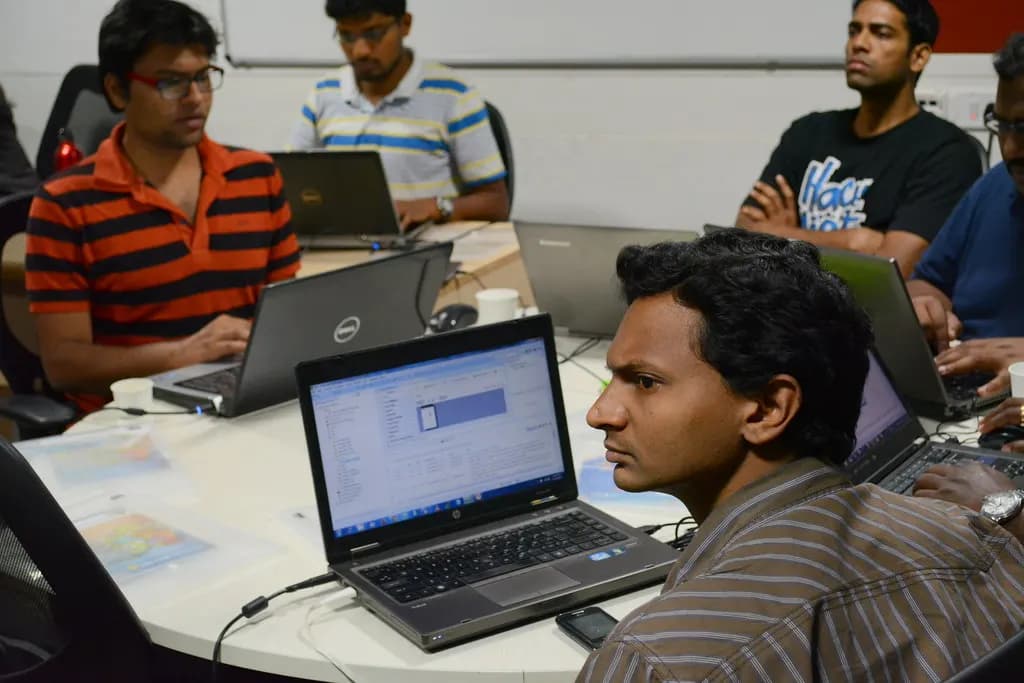
Daily-rated and piece-rated workers. They are members on the same terms as monthly staff. Add up the wages actually paid in the month — for example 22 days at ₹600 is ₹13,200 — and apply 12% to that figure: ₹1,584 from the worker and the same from you. Don't convert a daily rate into a notional 26-day monthly wage for PF.
Joiners and leavers mid-month. PF is on wages paid for the days worked. Someone who joins on the 20th and earns ₹7,000 for the rest of the month contributes ₹840 that month. Record the date of joining and the date of exit in the ECR for that month; a missing exit date is the most common reason a former employee's claim gets stuck.
Arrears and revisions. When you pay arrears of basic or DA — after a minimum wage revision, say — PF is due on them in the month you pay, because contributions follow wages actually paid. Arrears that only cover HRA or another excluded item attract PF only if they push excluded items above half of total pay.
Contract workers. If a contractor supplies workers and is not separately registered, paragraph 20 makes the contractor deduct the workers' share and pay it, with an equal employer share, to you — and makes you, as principal employer, responsible for remitting it. Ask for the contractor's ECR and payment receipt every month.
The 12% + 12% split
Paragraph 18 of the EPF Scheme, 2026 fixes the employer's contribution at 12% of wages of wages and makes the employee's contribution equal to it. A reduced 10% of wages rate applies only to classes of establishments the central government specifically notifies — do not use it unless your industry is on EPFO's list.
| Component | Rate | Paid by | Where it goes |
|---|---|---|---|
| Employee share | 12% of wages of PF wages | Deducted from salary | Employee's EPF account |
| Employer — pension (EPS) | 8.33% of PF wages up to ₹25,000 a month | Employer | Employees' Pension Scheme |
| Employer — provident fund | Balance of 12% (3.67% within the ceiling) | Employer | Employee's EPF account |
| EDLI insurance | 0.50% | Employer | Deposit-linked insurance fund |
| Administrative charges | 0.50%, minimum ₹500 a month | Employer | EPFO |
| Central Government | 1.16% of wages up to ₹15,000 (max ₹174 a month) | Government | Employees' Pension Scheme |
Three details matter for budgeting. First, the employer's EPS share is capped at 8.33% of the ceiling — now ₹2,083 a month, up from ₹1,250 — and anything above that goes to the employee's EPF account instead. Second, the minimum admin charge is ₹500 a month per establishment if anyone contributed in the month, and ₹75 a month if no one did. Third, the Government's 1.16% EPS contribution stays limited to wages of ₹15,000; EPFO says the new ceiling does not raise it beyond ₹174 a month, and that this doesn't affect the member's pension.
In practice the employer's total cost is about 13% of PF wages on top of salary: 12% contribution plus 0.5% EDLI plus 0.5% admin.
Worked payslips from October 2026
These use EPFO's own contribution table for full months after the ceiling change.
Monthly PF at different PF wages (full month, from October 2026)
| PF wages | Employee 12% | Employer EPS 8.33% | Employer EPF | EDLI 0.5% | Admin 0.5% | Total to EPFO |
|---|---|---|---|---|---|---|
₹10,000 | ₹1,200 | ₹833 | ₹367 | ₹50 | ₹50 | ₹2,500 |
₹15,000 | ₹1,800 | ₹1,250 | ₹550 | ₹75 | ₹75 | ₹3,750 |
₹20,000 | ₹2,400 | ₹1,666 | ₹734 | ₹100 | ₹100 | ₹5,000 |
₹25,000 | ₹3,000 | ₹2,083 | ₹917 | ₹125 | ₹125 | ₹6,250 |
₹35,000, non-EPS member contributing on the ceiling | ₹3,000 | ₹0 | ₹3,000 | ₹125 | ₹125 | ₹6,250 |
₹10,000
- Employee 12%
₹1,200
- Employer EPS 8.33%
₹833
- Employer EPF
₹367
- EDLI 0.5%
₹50
- Admin 0.5%
₹50
- Total to EPFO
₹2,500
₹15,000
- Employee 12%
₹1,800
- Employer EPS 8.33%
₹1,250
- Employer EPF
₹550
- EDLI 0.5%
₹75
- Admin 0.5%
₹75
- Total to EPFO
₹3,750
₹20,000
- Employee 12%
₹2,400
- Employer EPS 8.33%
₹1,666
- Employer EPF
₹734
- EDLI 0.5%
₹100
- Admin 0.5%
₹100
- Total to EPFO
₹5,000
₹25,000
- Employee 12%
₹3,000
- Employer EPS 8.33%
₹2,083
- Employer EPF
₹917
- EDLI 0.5%
₹125
- Admin 0.5%
₹125
- Total to EPFO
₹6,250
₹35,000, non-EPS member contributing on the ceiling
- Employee 12%
₹3,000
- Employer EPS 8.33%
₹0
- Employer EPF
₹3,000
- EDLI 0.5%
₹125
- Admin 0.5%
₹125
- Total to EPFO
₹6,250
Payslip 1 — a machine operator on ₹14,000 PF wages. Employee PF is ₹1,680, deducted from pay. The employer adds EPS ₹1,166, EPF ₹514, EDLI ₹70 and admin ₹70. The worker's EPF account gets ₹2,194 a month (₹1,680 + ₹514), and ₹1,166 builds their pension.
Payslip 2 — an accounts executive on ₹20,000 PF wages, newly covered. Before 17 September 2026 she was an excluded employee with no PF. From October her take-home falls by ₹2,400, the employer contributes ₹2,400 (₹1,666 to EPS and ₹734 to EPF) and pays ₹200 in EDLI and admin. Her EPF account grows by ₹3,134 a month and she starts earning pensionable service.
Payslip 3 — a manager on ₹40,000 PF wages who joined years ago below the ceiling and is an EPS member. Contributions are restricted to the ceiling unless a higher-wage option applies: employee ₹3,000, employer EPS ₹2,083 and EPF ₹917, EDLI ₹125 and admin ₹125. Before 17 September the same manager contributed ₹1,800, so take-home falls by ₹1,200 and the combined PF and pension contributions rise by ₹2,400 a month.
Payslip 4 — the same manager opting for full wages. If the manager and employer jointly opt under paragraph 9(4) to contribute on actual wages, the employee pays ₹4,800 and the employer ₹4,800. EPS stays at ₹2,083 unless the employee is among those permitted to contribute to EPS on higher wages; the rest of the employer's share goes to EPF. Admin charges are due on the full wage.
September 2026: one ECR, two ceilings
Because the new ceiling took effect on 17 September, the September 2026 wage month straddles two rules. EPFO's instruction is to file a single ECR, due by 15 October 2026, that applies ₹15,000 to 1–16 September and ₹25,000 to 17–30 September. EPFO has said there will be no postponement to 1 October.
How EPFO's three September 2026 scenarios work (₹20,000 wages)
- 1
Excluded employee who becomes a member on 17 September
No contribution for 1–16 September. For 17–30 September, wages are ₹20,000 × 14/30 = ₹9,333.33. Employee 12% = ₹1,120; employer EPS ₹777.47 and EPF ₹342.53; EDLI and admin ₹46.67 each. Total ₹2,333.34.
- 2
EPF member who was outside EPS, now brought into EPS
EPF wages are the full ₹20,000 (₹10,666.67 + ₹9,333.33), so the employee pays ₹2,400. EPS applies only from 17 September: ₹777.47. The employer's EPF share is ₹1,622.53. EDLI and admin ₹100 each. Total ₹5,000.
- 3
Member capped at ₹15,000, now contributing on ₹20,000
Wages are ₹15,000 × 16/30 = ₹8,000 plus ₹9,333.33 = ₹17,333.33. Employee ₹2,080; employer EPS ₹1,443.87 and EPF ₹636.13; EDLI and admin ₹86.67 each. Total ₹4,333.34.
If you could not deduct the extra employee share from September salaries for newly covered staff, EPFO allows you to recover it from the next payroll without the Inspector-cum-Facilitator's prior approval. You must still file the full September ECR and pay both shares by 15 October.
Voluntary and higher contributions
Additional voluntary contribution (VPF). Paragraph 19 of the EPF Scheme, 2026 lets an employee contribute more than the statutory amount — on wages above the ceiling at the statutory rate, or at any higher rate. The employer remits it through the ECR along with the regular contribution. The rules:
- the voluntary amount cannot exceed the wages left after authorised deductions;
- the employer may match it but is under no obligation to;
- the employer must pay additional admin charges on the wages on which voluntary contributions are made;
- either side can reduce or stop voluntary contributions at any time;
- any voluntary employer contribution goes to the provident fund, not the pension fund.
Contributing on full wages. The paragraph 9(4) joint option described above is different from VPF: it makes both statutory shares apply to wages above the ceiling. Many large employers use it as a retention benefit. Before you agree, cost it properly — it raises the employer's PF and admin cost on every rupee of wages above ₹25,000.
Pension above the ceiling. EPS membership is restricted to the ceiling. Paragraph 18(3) allows the employer to contribute to the pension fund on wages beyond the ceiling only for cases already permitted to contribute on higher wages under the EPS, 1995. A new hire cannot start a higher-wage pension contribution simply by asking.
What the employer may and may not deduct
Only the employee's share. Paragraph 21 bars the employer from deducting or recovering its own contribution from the member's wages, whatever the employment contract says. EPFO's FAQs repeat that relabelling the employer share as part of CTC does not make it a deduction. Deducting the employer's share from wages is also an offence under section 133 of the Code, with a fine of up to ₹50,000.
Only from the same month's wages. Paragraph 22 says the employee's share can be recovered only from wages for the period the contribution relates to. There are narrow exceptions: where the employee falsely declared at joining that they were not already a member, or where a deduction was missed by accidental or clerical error — then, with the Inspector-cum-Facilitator's written consent, it can come out of later wages. The September 2026 deferral is a specific relaxation EPFO announced for newly covered staff.
The employer pays first. Paragraph 20 makes the employer responsible for paying both shares, admin charges and dues for contract workers whose contractor is not separately registered, within 15 days of the end of each month. If you fail to deduct the employee share in time, you may end up paying it yourself.
Deadlines and what late payment costs
Contributions and the ECR for each wage month are due by the 15th of the following month. Late payment brings simple interest of 12% a year (simple) under section 127 of the Code, plus damages of 0.25% of arrears a month for a delay under two months, 0.50% of arrears a month for two to four months and 1% of arrears a month beyond that. A late return costs ₹500 a day, capped at that month's admin charges.
The serious risk is criminal. Not paying contributions after deducting the employee's share is punishable under section 133 with 1 to 3 years' imprisonment and a fine of up to ₹1 lakh. Other non-payment carries 2 to 6 months' imprisonment and a fine of up to ₹50,000. The employee share you deduct is the worker's money held in trust, and EPFO can attach bank accounts to recover it.
Common PF deduction mistakes
Check your payroll for these errors
0/8A quick way to self-audit: take five payslips at different pay levels, recompute PF wages under the Code, apply the table above and compare with what you deducted. Our salary slip generator shows PF wages, employee PF and employer PF on separate lines so the check is easy.
How this affects employees
For employees, a higher PF deduction means a lower take-home but a larger, matched saving. EPFO credited interest at 8.25% a year for FY 2025-26. EPS builds a lifelong pension after ten years of service, and EDLI gives the family life cover of up to ₹7 lakh at no cost to the employee. Under the 2026 withdrawal rules, a member can draw up to 75% of the eligible balance while 25% stays invested — see our PF withdrawal rules for details. ESI is a separate deduction with its own wage limit; see ESIC rules.
Official links
- EPF Scheme, 2026 — G.S.R. 525(E)Paras 9, 18–22: membership, rates, voluntary contributions, deductions
- Wage ceiling notification S.O. 5109(E)₹25,000 from 17 September 2026
- EPFO FAQs on the ₹25,000 ceilingContribution tables and the split September ECR
- EPFO employer portal (Unified Portal)ECR upload and payment
- EPFO member passbookEmployees can check each month's credit
What to do next
Employers: recompute PF wages for every employee under the Code's definition, enrol anyone on ₹15,001–₹25,000 PF wages, check that the September 2026 ECR used the split calculation, and move EPS to the ₹2,083 cap. If you are not yet registered, start with our PF registration guide. Employees: check your passbook each month to confirm both shares are credited.
This is general information, not legal or tax advice — confirm on the official source or with a professional.
Frequently asked questions
The employer deducts 12% of wages of the employee's PF wages — basic pay, dearness allowance and retaining allowance, plus any excess of excluded allowances over half of pay — and adds its own matching 12%. Contributions are compulsory on PF wages up to ₹25,000 a month from 17 September 2026. Both shares are paid to EPFO by the 15th of the following month.
8.33% goes to the Employees' Pension Scheme, on wages up to the ceiling, and the balance — 3.67% for wages within the ceiling — goes to the employee's EPF account. On top of the 12%, the employer pays 0.50% for EDLI insurance and 0.50% administrative charges, with a minimum admin charge of ₹500 a month per establishment.
Three changes matter most. The EPF Scheme, 2026 replaced the 1952 Scheme from 29 June 2026. The wage ceiling rose from ₹15,000 to ₹25,000 a month on 17 September 2026, bringing staff on ₹15,001–₹25,000 PF wages into compulsory EPF, EPS and EDLI. And PF wages now follow the Code on Social Security's definition with its 50% rule.
Yes, if the employee and employer jointly opt in writing to contribute on actual wages above the ceiling (paragraph 9(4) of the EPF Scheme, 2026). Separately, an employee can make additional voluntary contributions at any rate; the employer need not match them but must pay admin charges on those wages. Pension contributions stay capped at the ceiling except for those allowed higher-wage EPS contributions.
No. Paragraph 21 of the EPF Scheme, 2026 says the employer cannot deduct or recover its contribution from the member's wages, whatever the contract says. EPFO's FAQs add that calling the employer share part of CTC does not turn it into an employee deduction. Only the employee's 12% may be deducted from pay.
Overtime, HRA, conveyance, commission and statutory bonus are excluded from PF wages — but only while all excluded items together stay within half of total pay. If they exceed 50%, the excess is added back and PF is due on it. 'Special allowance' is not on the excluded list, so PF applies to it from the first rupee.
Sources & verification
Figures on this page were checked against the sources below when it was last reviewed on 9 October 2026. Each rate and limit is stored once with its own official source and review date, and official update channels are monitored daily so changes are picked up. How we verify
- 1.Employees' Provident Funds Scheme, 2026 — G.S.R. 525(E), Gazette of India, 29 June 2026 — Ministry of Labour & Employment (eGazette) · accessed 9 October 2026
- 2.S.O. 5109(E) dated 17 September 2026 — wage ceiling of ₹25,000 under Chapter III of the Code on Social Security — Ministry of Labour & Employment / EPFO · accessed 9 October 2026
- 3.FAQs — Revision of EPFO statutory wage ceiling from ₹15,000 to ₹25,000 — EPFO · accessed 9 October 2026
- 4.Shram Suvidha Portal — EPFO — EPFO · accessed 9 October 2026
- 5.Government notifies interest and inspection charges under the Social Security Code — Taxmann · accessed 9 October 2026
- 6.Code on Social Security, 2020 — section 133 penalties — AdvocateKhoj (bare act text) · accessed 9 October 2026
- 7.The Code on Wages, 2019 — section 2(y) definition of wages — India Code, Legislative Department · accessed 9 October 2026
- 8.Government announces implementation of the four Labour Codes (21 Nov 2025) — PIB — Ministry of Labour & Employment · accessed 9 October 2026
MSMETOOLS is an independent platform and is not affiliated with any government agency, ministry or department.
Tools for this
Related guides
 PF Registration 2026: Employer Steps, Rates & ₹25,000 CeilingRead guide
 PF Withdrawal Rules 2026: Partial, Full, TDS & New EPF SchemeRead guide
 ESIC Rules 2026: Eligibility, Deduction, Periods & BenefitsRead guide
 Bonus Act 2026: Statutory Bonus Under the Code on WagesRead guide
Official links open the government site in a new tab.