 GST & indirect tax
GST on Tractors in 2026: Rates on Tractors, Parts, Tyres and Farm Machinery, HSN Codes and ITC
GST on tractors in 2026: 5% on farm tractors since GST 2.0, 5% on listed parts, rotavators and harvesters, 18% on other parts, ITC rules and worked ₹ invoices.
 Edited by Sumeet YadavFounder & editor, MSMETOOLS · fact-checked against official sources

Contents (10)
- 1. GST rate on tractors after GST 2.0
- 2. Tractor HSN codes
- 3. GST on tractor parts and spare parts
- 4. Worked invoices: what a farmer pays
- 5. Workshop repairs and service bills
- 6. Input tax credit: farmers, contractors and custom hiring centres
- 7. Dealers and the switch to 5%
- 8. Manufacturers: the inverted duty problem
- 9. Common mistakes with GST on tractors
- 10. What to do next
A tractor is the biggest purchase most farm families make, and GST is now a much smaller part of that bill than it was a year ago. This guide is for farmers, tractor and implement dealers, workshops and manufacturers. It gives the 2026 GST rate on tractors, the 13 tractor parts that moved to the low rate, tyres, implements and harvesters, the HSN codes to put on the invoice, who can and cannot claim input tax credit (ITC), and worked ₹ invoices for a dealer sale, a workshop repair and a tractor maker. Rates were checked against the notified schedule in October 2026.
Quick answer
Tractors attract 5% GST from 22 September 2025, down from 12%. The rate covers farm tractors of any horsepower, mini tractors and power tillers under HSN 8701. Road tractors for semi-trailers above 1,800 cc — the prime movers that pull container trailers — attract 18%. Listed tractor parts, tractor tyres, rotavators, harvesters and other farm machinery are also at 5%.
On a ₹7,00,000 tractor, GST is ₹35,000 (it was ₹84,000 at 12%)
Gearbox, clutch, brakes, steering, hydraulics, radiator and 7 other tractor parts: 5%
Engine parts, filters, bearings, lights and batteries: 18%
Ploughing and hiring out a tractor for farming: exempt
Farmers who only sell their own crop are not registered and cannot claim ITC
GST rate on tractors after GST 2.0
The 56th GST Council, which met on 3 September 2025, cut the rate on tractors from 12% to 5% as part of its focus on farmers and agriculture. Notification 9/2025–Central Tax (Rate), the goods rate schedule that took effect on 22 September 2025, lists tractors in Schedule I — the 2.5% central tax schedule — at serial 442: "Tractors (except road tractors for semi-trailers of engine capacity more than 1800 cc)". With the matching 2.5% state tax, that is 5% on a sale within your state, or the same rate as IGST on a sale across a state border.
The wording matters. Every wheeled farm tractor, every compact or orchard tractor, crawler (track-laying) tractors and single-axle power tillers all sit in heading 8701 and take the low rate, whatever their horsepower or price. Unlike cars, tractors have no engine-size or length test for the farm rate. The one carve-out is the road tractor for semi-trailers — the cab-and-engine unit that hauls container and cargo trailers on highways — when its engine is above 1,800 cc. That vehicle is listed in Schedule II at serial 531, at 18%, down from 28% before GST 2.0. The PIB FAQs on rate rationalisation confirm the same split.
There is no compensation cess on tractors, so the GST rate is the whole tax at the point of sale. Road tax, registration fees and insurance are separate charges and are not part of the GST calculation on the tractor itself.
GST on tractors, parts and farm machinery (2026)
| Item (HSN) | GST now | Before 22 Sep 2025 |
|---|---|---|
Tractors, mini tractors, power tillers (8701) | 5% | 12% |
Road tractors for semi-trailers above 1,800 cc (8701 21–29) | 18% | 28% |
13 listed tractor parts (8708) — gearbox, clutch, brakes, steering, hydraulics, etc. | 5% | 18% |
Hydraulic pumps for tractors (8413 81 90) | 5% | 18% |
Agricultural diesel engines above 250 cc for tractors (8408 20 20) | 5% | 18% |
Tractor tyres, rear tractor tyres and tubes (4011, 4013) | 5% | 18% |
Ploughs, harrows, cultivators, rotavators, seed drills (8432) | 5% | 12% |
Harvesters, threshers, balers, reapers (8433) | 5% | 12% |
Self-loading or self-unloading agricultural trailers (8716 20 00) | 5% | 12% |
Other tractor parts and accessories (8708) | 18% | 28% |
Engine parts (8409) | 18% | 28% |
Other trailers and trolleys (8716) | 18% | — |
Tractors, mini tractors, power tillers (8701)
- GST now
5%
- Before 22 Sep 2025
12%
Road tractors for semi-trailers above 1,800 cc (8701 21–29)
- GST now
18%
- Before 22 Sep 2025
28%
13 listed tractor parts (8708) — gearbox, clutch, brakes, steering, hydraulics, etc.
- GST now
5%
- Before 22 Sep 2025
18%
Hydraulic pumps for tractors (8413 81 90)
- GST now
5%
- Before 22 Sep 2025
18%
Agricultural diesel engines above 250 cc for tractors (8408 20 20)
- GST now
5%
- Before 22 Sep 2025
18%
Tractor tyres, rear tractor tyres and tubes (4011, 4013)
- GST now
5%
- Before 22 Sep 2025
18%
Ploughs, harrows, cultivators, rotavators, seed drills (8432)
- GST now
5%
- Before 22 Sep 2025
12%
Harvesters, threshers, balers, reapers (8433)
- GST now
5%
- Before 22 Sep 2025
12%
Self-loading or self-unloading agricultural trailers (8716 20 00)
- GST now
5%
- Before 22 Sep 2025
12%
Other tractor parts and accessories (8708)
- GST now
18%
- Before 22 Sep 2025
28%
Engine parts (8409)
- GST now
18%
- Before 22 Sep 2025
28%
Other trailers and trolleys (8716)
- GST now
18%
- Before 22 Sep 2025
—
Tractor HSN codes
Heading 8701 covers all tractors, and the six-digit sub-headings follow the international Harmonised System. Single-axle tractors, which include power tillers, are 8701 10. Road tractors for semi-trailers are 8701 21 to 8701 29, split by the type of engine. Track-laying (crawler) tractors are 8701 30. Every other tractor — which means almost every farm tractor sold in India — falls under 8701 91 to 8701 95, split by engine power: up to 18 kW, 18 to 37 kW, 37 to 75 kW, 75 to 130 kW and above 130 kW.
To convert, 1 kW is about 1.34 HP. A 24 HP mini tractor (about 18 kW) sits on the line between 8701 91 and 8701 92, the popular 35 to 50 HP class (26 to 37 kW) is 8701 92, and a 55 to 75 HP tractor is 8701 93. The rate is 5% across all of them, so the sub-heading affects your invoice and returns rather than the tax. A business with aggregate turnover up to ₹5 crore must show at least a 4-digit HSN in the HSN summary of GSTR-1, and larger businesses a 6-digit HSN. Our HSN code guide explains the reporting rules and the HSN code finder helps with less common items.
Implements have their own headings. Ploughs, disc harrows, cultivators, rotavators (rotary tillers), seed drills, planters and manure spreaders are 8432. Combine harvesters, threshers, reapers, straw and fodder balers and mowers are 8433. Other farm and poultry machinery, such as chaff cutters, poultry incubators and germination plant, is 8436. Sprinklers, drip irrigation systems and mechanical sprayers are in 8424. All of these are in Schedule I at 5%, and so are their parts — the notification names "parts" in each of the 8432, 8433 and 8436 entries.
GST on tractor parts and spare parts
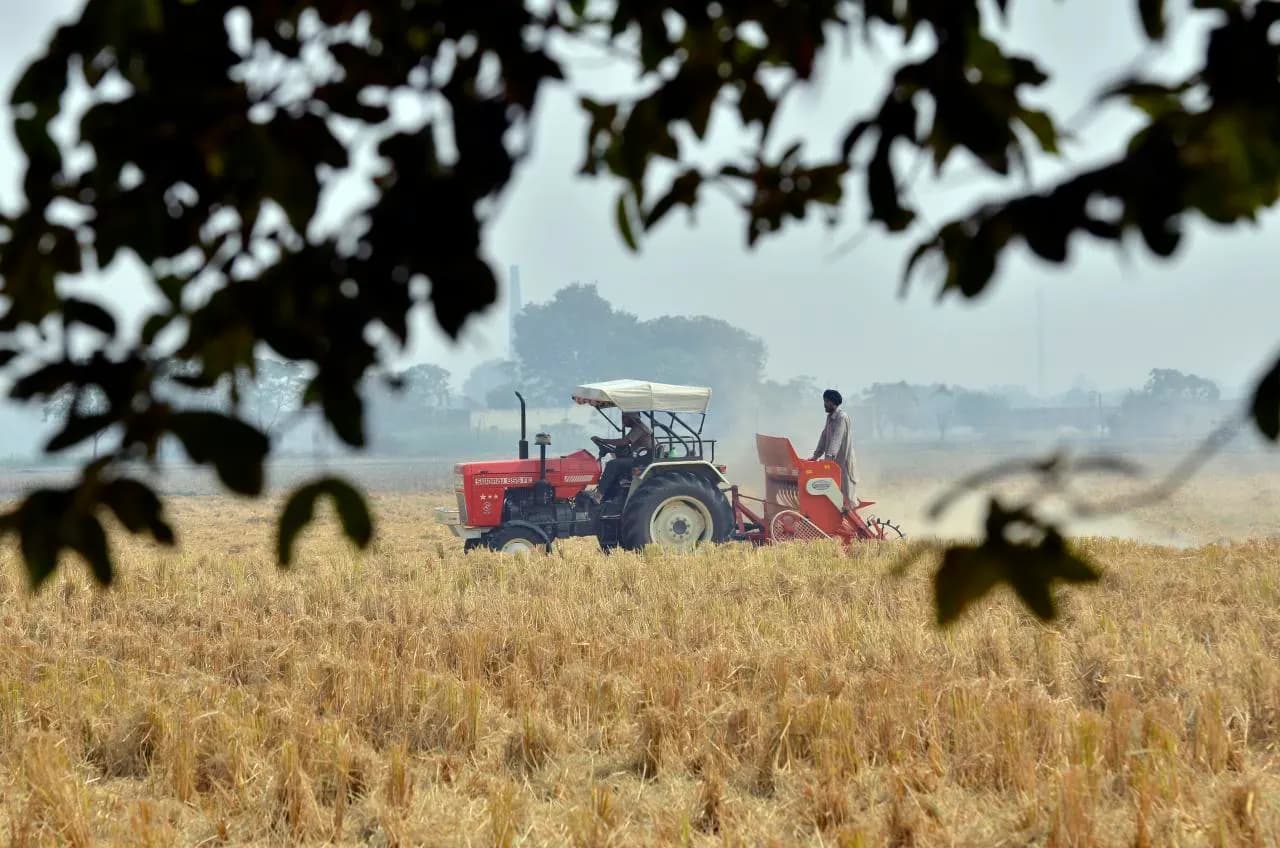
Before GST 2.0, tractor parts were a confusing patchwork: a short list at 18% and the rest at 28% with car and truck parts. The new schedule keeps the idea of a list but moves it down. Schedule I serials 443 to 454 now name these tractor parts at 5%:
- rear tractor wheel rims, tractor centre housing, tractor transmission housing and tractor front axle supports
- bumpers and their parts, brake assemblies and their parts, gearboxes and their parts
- transaxles and their parts, road wheels and their parts and accessories
- radiator assemblies, cooling systems for tractor engines and their parts
- silencer assemblies, clutch assemblies and steering wheels, each with their parts
- hydraulics and their parts
- fenders, hoods, wrappers, grilles, side panels, extension plates and fuel tanks, with their parts
Two related items in other headings also moved to 5%: hydraulic pumps for tractors (8413 81 90, serial 426) and agricultural diesel engines with cylinder capacity above 250 cc for tractors (8408 20 20, serial 424). Tractor tyres, rear tractor tyres and their tubes are at 5% — see our guide to GST on tyres for the full tyre schedule.
Everything else follows the general rate for its own heading. Parts of tractors that are not on the list fall under the general 8708 entry in Schedule II at 18%. Engine parts of heading 8409 — pistons, rings, liners, cylinder heads — are at 18%. Batteries are 18%. Filters, bearings, lamps, wiring harnesses and seats sit in their own chapters, generally at 18%. When a part is made specifically for tractors and appears on the list, bill it at 5%; when in doubt, check the eight-digit tariff item against the serial in the notification rather than going by the shop name for the part.
Worked invoices: what a farmer pays
The prices below are illustrative round numbers to show the arithmetic, not market quotes. Tractor prices vary by brand, model, state and dealer offers; check your dealer's on-road quotation.
Dealer sale to a farmer in the same state. A farmer in Haryana buys a 45 HP tractor, a rotavator and a hydraulic tipping trolley from one dealer.
| Item (HSN) | Pre-tax value | GST rate | GST | At 12% before GST 2.0 |
|---|---|---|---|---|
| 45 HP tractor (8701 92) | ₹7,20,000 | 5% | ₹36,000 | ₹86,400 |
| Rotavator (8432) | ₹1,00,000 | 5% | ₹5,000 | ₹12,000 |
| Hydraulic tipping trolley for farm use (8716 20 00) | ₹1,40,000 | 5% | ₹7,000 | ₹16,800 |
| Total | ₹9,60,000 | ₹48,000 | ₹1,15,200 |
The invoice total is ₹10,08,000, with ₹24,000 shown as CGST and ₹24,000 as SGST. Under the old rates the same purchase carried ₹1,15,200 of GST, so the farmer saves ₹67,200 — about 6.7% of the pre-tax price. If the dealer is in another state, the whole ₹48,000 appears as IGST; the amount does not change.
The trolley line needs care. Serial 460 gives the low rate only to self-loading or self-unloading trailers for agricultural purposes, which in practice means tipping trolleys used on the farm. A plain, non-tipping trailer or a trailer built for road haulage falls under the general 8716 entry at 18%. Ask the dealer to describe the trolley correctly on the bill.
Try it — GST on a tractor bill
To find the GST inside an all-inclusive price, multiply by 5 and divide by 105. A tractor quoted at ₹7,56,000 including GST is ₹7,20,000 plus ₹36,000 tax. Road tax, RTO registration fees and number-plate charges are paid to the state transport department and are not taxed under GST; if the dealer collects them on your behalf as a pure agent and passes them on at cost, they should be shown separately and kept out of the taxable value. Insurance is billed by the insurer with its own GST.
Workshop repairs and service bills
A tractor workshop usually bills parts and labour on one invoice. When the two are itemised with their own values, each line is generally taxed at its own rate. Repair labour is a maintenance and repair service under heading 9987, which entry 25 of Notification 11/2017–Central Tax (Rate) taxes at 18%; there is no farm-machinery concession for repair labour.
| Line | Value | Rate | GST |
|---|---|---|---|
| Clutch assembly for tractor (8708 93 00) | ₹6,000 | 5% | ₹300 |
| Piston ring set (8409) | ₹4,000 | 18% | ₹720 |
| Repair labour (SAC 9987) | ₹2,500 | 18% | ₹450 |
| Total | ₹12,500 | ₹1,470 |
The farmer pays ₹13,970. A workshop that is not registered — turnover below the registration threshold of ₹40 lakh for goods suppliers in most states, or ₹20 lakh if it mainly supplies services — cannot charge GST at all and issues a plain bill. Ask for a GST invoice if your business will claim credit on the repair.
Input tax credit: farmers, contractors and custom hiring centres
Input tax credit is available only to registered persons, and only for goods and services used to make taxable supplies. That rule decides who gets the GST on a tractor back.
Farmers. Section 23(1)(b) of the CGST Act says an agriculturist is not liable to register to the extent he supplies produce out of cultivation of land. Most farmers therefore have no GSTIN, and the GST on a tractor, implements, tyres and repairs is a cost. The rate cut is a direct saving for them. Under the Sub-Mission on Agricultural Mechanisation, the government pays 40% of the price of eligible machines for most farmers and 50% for small, marginal, women and SC/ST farmers, within per-machine caps; our tractor subsidy guide explains how that works with your state's portal.
Custom hiring centres and ploughing services. Entry 54 of Notification 12/2017–Central Tax (Rate) exempts services relating to cultivation by way of agricultural operations — cultivation, harvesting, threshing and plant protection — and renting or leasing of agro machinery. A custom hiring centre, a farmer producer organisation or an individual who hires out a tractor and rotavator to other farmers for field work charges no GST. If those are its only supplies, it does not need to register either, because section 23(1)(a) excludes persons supplying only exempt goods or services. The flip side is that it cannot claim credit on the GST paid on its tractors and implements, since they are used for exempt supplies. If a hiring centre also earns taxable income, such as hauling bricks or sand for builders, it may need to register, charge GST on that work and split its credit under the rules for common inputs.
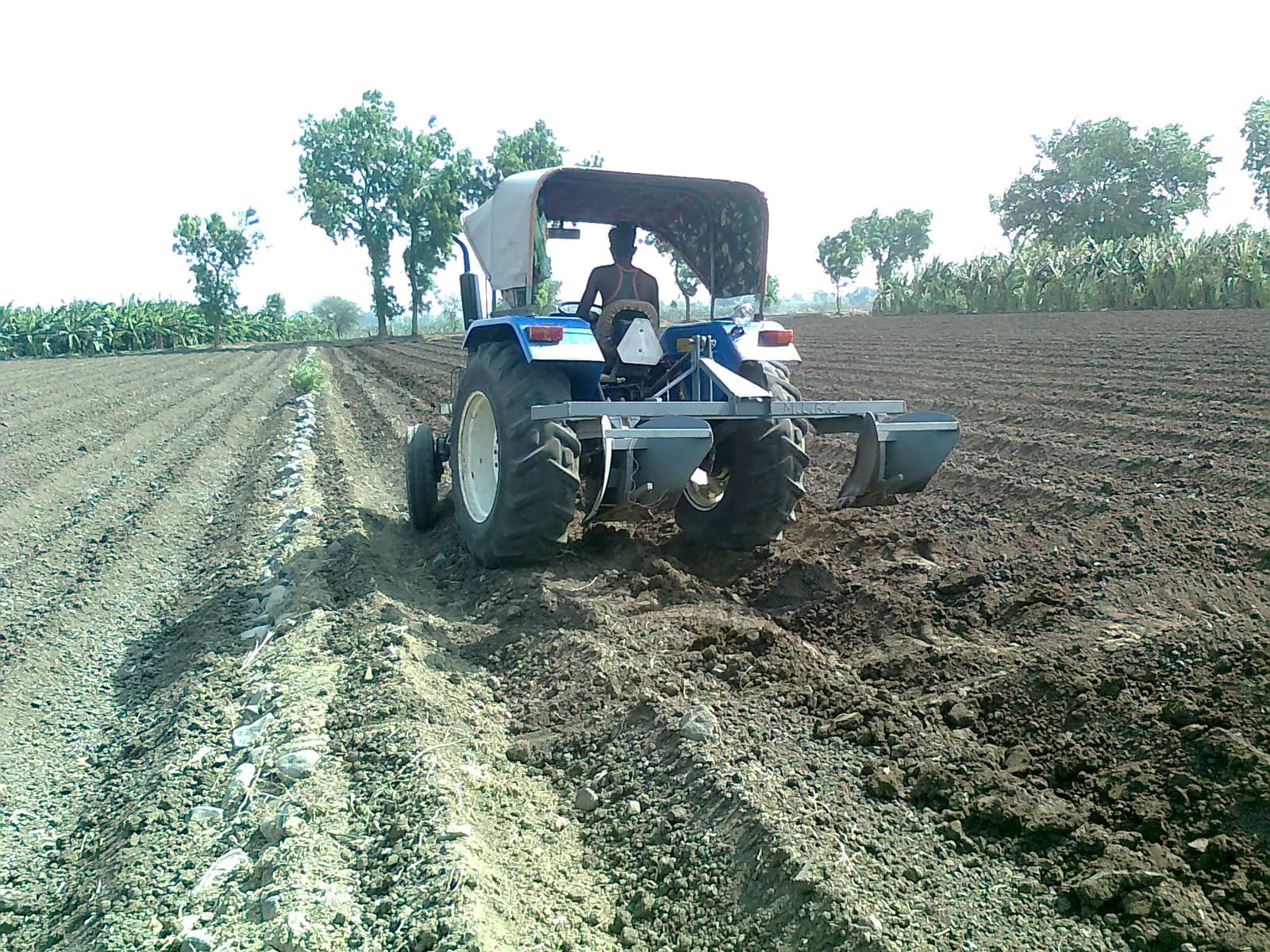
Contractors and businesses. A registered business that uses a tractor in a taxable activity — a road contractor, a brick kiln, a sugar mill moving cane, a dealer's demonstration fleet — can claim the GST on the tractor as credit on capital goods, subject to the usual conditions: a valid tax invoice in its GSTIN, receipt of the goods, the supplier filing its return and the credit showing in GSTR-2B. Motor vehicles for transporting persons are blocked under section 17(5), but a tractor is not a passenger vehicle, so that block does not apply. See our guide to input tax credit for the conditions and time limits.
Dealers and the switch to 5%
A tractor dealer buys and sells at 5%, so on its main stock there is no build-up of credit. Its other costs — showroom rent, advertising, IT services, demonstration fuel — carry 18%, and once tractor sales are taxed at 5% the dealer can find that its credit regularly exceeds its output tax. That surplus stays in the electronic credit ledger and can be set off against future output tax, including tax on taxable services such as paid servicing and extended warranties.
Stock bought at 12% before 22 September 2025 and sold after that date at 5% left many dealers with a one-time surplus of credit. The supply is taxed at the rate in force when the invoice is issued, so a tractor invoiced on or after 22 September 2025 had to be billed at 5% even if it was bought at 12%. The credit already taken on that purchase is not reversed because the output rate fell, but it can only be used against future tax unless the conditions for a refund are met.
Dealers above the e-invoicing limit of ₹5 crore in aggregate turnover must generate e-invoices for sales to registered buyers; sales to farmers without a GSTIN are B2C and do not need an e-invoice. Every consignment of a tractor or implement worth more than ₹50,000 moving by road needs an e-way bill, including stock transfers between branches.
Manufacturers: the inverted duty problem
Tractor and implement makers face the opposite situation to dealers. Most of what goes into a tractor — steel, castings, forgings, bearings, electrical parts, paint and batteries — is taxed at 18%, while the finished tractor is taxed at 5%. Credit piles up with every unit sold.
Take an illustrative tractor sold ex-factory for ₹6,00,000, with output tax of ₹30,000. Suppose the maker bought ₹4,30,000 of components at 18% (₹77,400 of tax) and a set of tractor tyres for ₹40,000 at 5% (₹2,000). Its input tax is ₹79,400 against output tax of ₹30,000, so ₹49,400 of credit is left over for each tractor. Across a year of production that becomes a large amount of working capital locked in the ledger.
Why tractor makers build up credit
Step 1
Steel, castings, parts
18% input tax
Step 2
Tractor sold
5% output tax
Step 3
Surplus credit
about ₹49,400 a unit in our example
Step 4
Refund claim
section 54(3), Rule 89(5)
Section 54(3) of the CGST Act allows a refund of unused credit when it has built up because the tax rate on inputs is higher than the rate on output supplies. Rule 89(5) of the CGST Rules gives the formula, which counts credit on inputs only — input services and capital goods are left out. The 56th Council recommended sanctioning 90% of inverted-duty refund claims on a provisional basis, and the 57th GST Council, which met on 8 October 2026, recommended making credit on input services refundable from 1 November 2026 and credit on plant and machinery from 1 April 2027. Those changes still need notification, and the machinery change needs an amendment to the law; until then, file refunds under the current formula. For inverted-duty cases, the claim must be filed within two years of the due date of the GSTR-3B return for the period in which the credit built up.
Check your tractor bill
0/7Common mistakes with GST on tractors
Billing all tractor parts at 5%. Only the parts named in serials 443 to 454, hydraulic pumps for tractors and agricultural diesel engines for tractors are at 5%. Filters, bearings, lamps, engine internals and batteries are at 18%. Under-charging leads to a demand for the difference with interest.
Billing a road-haulage tractor at the farm rate. A tractor head for semi-trailers with an engine above 1,800 cc is at 18%. A farm tractor that is later used for haulage does not change its rate at sale, but the buyer's use may affect its own GST position.
Charging GST on ploughing or harvesting services. Agricultural operations and renting of agro machinery for cultivation are exempt. Charging GST on them does not make them taxable — it collects tax you were not entitled to collect.
Custom hiring centres claiming credit. A centre that only supplies exempt services must not claim credit on its tractors and implements. If it has both taxable and exempt income, it must reverse the share of credit linked to exempt supplies.
Leaving inverted-duty credit unclaimed. Manufacturers who let surplus credit sit in the ledger lose working capital and eventually the time limit. File refund claims period by period and keep purchase and production records that tie inputs to the tractors sold.
Official links
- Notification 9/2025–CT(Rate) — goods rate scheduleTractors S.No. 442; parts 443–454; machinery 430–434 (Schedule I)
- 56th GST Council — recommendations and rate annexuresOld and new rates
- PIB FAQs on GST rate rationalisationTractors and road tractors
- Notification 12/2017–CT(Rate)Entry 54 — agricultural operations and hiring of agro machinery
- Section 54, CGST Act — refundsInverted-duty refunds
- CGST rate notificationsLater amendments, if any
What to do next
If you are buying a tractor, check that the dealer's quotation shows 5% on the tractor and implements, and apply for your state's mechanisation subsidy before you buy — see our tractor subsidy guide. If you sell or repair tractors, update your billing software with the correct HSN and rates for each part, and use the invoice generator for clean GST invoices. Manufacturers should set up regular inverted-duty refund claims. Use the GST calculator to check any bill, and read our guides to GST on tyres and GST 2.0.
This is general information, not legal or tax advice — confirm on the official source or with a professional.
Frequently asked questions
Tractors under HSN 8701 attract 5% GST from 22 September 2025, down from 12%. This covers farm tractors of every horsepower, mini tractors and single-axle power tillers. The only exception is road tractors for semi-trailers with an engine above 1,800 cc — the prime movers that pull container and cargo trailers — which attract 18%.
At 5%, GST on a tractor priced at ₹7,00,000 before tax is ₹35,000, so the bill comes to ₹7,35,000. A dealer in your state shows ₹17,500 as CGST and ₹17,500 as SGST. Before 22 September 2025 the same tractor carried 12%, or ₹84,000, so the cut saves ₹49,000 on the invoice.
It depends on the part. Gearboxes, clutch, brake and steering assemblies, radiators, silencers, transaxles, road wheels and rims, hydraulics, bumpers, fenders, hoods, grilles and fuel tanks made for tractors attract 5%, as do hydraulic pumps and agricultural diesel engines for tractors. Parts not on that list — engine parts, filters, bearings, lights, batteries — stay at 18%.
Tractors fall under heading 8701. Single-axle tractors such as power tillers are 8701 10, track-laying tractors 8701 30, and ordinary wheeled farm tractors 8701 91 to 8701 95 depending on engine power — a typical 40–50 HP tractor is 8701 92 (18 to 37 kW). Road tractors for semi-trailers are 8701 21 to 8701 29.
Usually not. A farmer selling his own crop does not need GST registration under section 23 of the CGST Act, and only registered persons can claim input tax credit. The GST on the invoice is part of the tractor's cost. A registered business that uses a tractor for taxable supplies, such as a contractor or a manufacturer, can claim the credit.
No. Agricultural operations such as ploughing, harvesting and threshing, and renting or leasing of agro machinery for cultivation, are exempt under entry 54 of Notification 12/2017–Central Tax (Rate). A custom hiring centre that only provides these services does not charge GST — but it also cannot claim credit on the GST it paid on its tractors.
Sources & verification
Figures on this page were checked against the sources below when it was last reviewed on 9 October 2026. Each rate and limit is stored once with its own official source and review date, and official update channels are monitored daily so changes are picked up. How we verify
- 1.Notification No. 9/2025–Central Tax (Rate), 17 September 2025 (Gazette of India) — Ministry of Finance / Gazette of India · accessed 9 October 2026
- 2.Recommendations of the 56th GST Council meeting (press release with rate annexures) — GST Council / PIB · accessed 9 October 2026
- 3.FAQs on GST rate rationalisation (56th GST Council) — PIB / Ministry of Finance · accessed 9 October 2026
- 4.Notification No. 12/2017–Central Tax (Rate), entry 54 — CBIC · accessed 9 October 2026
- 5.Notification No. 11/2017–Central Tax (Rate), entry 25 — CBIC · accessed 9 October 2026
- 6.Section 23 – CGST Act, 2017 (persons not liable for registration) — CBIC · accessed 9 October 2026
- 7.Section 54 – CGST Act, 2017 (refunds) — CBIC · accessed 9 October 2026
- 8.GST Council scraps officials' arrest powers, raises prosecution threshold — Forbes India · accessed 9 October 2026
MSMETOOLS is an independent platform and is not affiliated with any government agency, ministry or department.
Tools for this
GST Calculator (India)
Calculate GST for your sales and purchases with current rates.
Invoice Generator
Create professional invoices with tax, logo and custom details.
HSN Code Finder (India)
Find the correct HSN/SAC code for your product.
Related guides
 GST on Tyres 2026: Car, Bike, Truck & Tractor Rates, HSN 4011Read guide
 GST on Repair & Maintenance 2026: 18% Rate, AMC & WarrantyRead guide
 GST on Footwear 2026: 5% up to ₹2,500, 18% Above, HSN 64Read guide
 GST on Milk Products 2026: Paneer, Ghee, Butter, Curd RatesRead guide
Official links open the government site in a new tab.