 GST & indirect tax
HSN Code for Corrugated Box and GST on Packaging Material in 2026: Cartons, Plastic, Labels, Sacks and Pallets
HSN code for corrugated box is 4819 10, taxed at 5% since GST 2.0. Rates for kraft paper, plastic packaging (3923), labels, tape, sacks and pallets, with ₹ examples.
 Edited by Sumeet YadavFounder & editor, MSMETOOLS · fact-checked against official sources
Contents (10)
- 1. HSN code for corrugated boxes
- 2. GST rates on packaging material in 2026
- 3. Printed boxes, labels and job work
- 4. Worked examples in rupees
- 5. Box makers: inverted duty and refunds
- 6. Input tax credit on packaging for buyers
- 7. Small box makers: registration and composition
- 8. Packing charges, returnable packaging and e-way bills
- 9. Common mistakes with GST on packaging
- 10. What to do next
Every product that leaves a factory or a shop goes out in something — a corrugated box, a plastic pouch, a woven sack, a wooden pallet. This guide is for packaging makers, manufacturers and traders who buy packaging, and e-commerce sellers. It gives the HSN code for corrugated boxes and other packaging, the 2026 GST rate on each material after GST 2.0, how printed boxes and packing charges are treated, how box makers recover their excess credit, and worked ₹ examples. Rates were checked against the notified schedule in October 2026.
Quick answer
The HSN code for a corrugated box is 4819 10 (cartons, boxes and cases of corrugated paper or paperboard); folding cartons of plain board are 4819 20. Both attract 5% GST since 22 September 2025, down from 12%. Corrugated board and kraft paper in rolls or sheets went the other way, from 12% to 18%. Plastic packaging (HSN 3923), film, tape, PP woven sacks and paper labels are 18%.
On ₹1,00,000 of corrugated boxes, GST is ₹5,000
Paper bags, moulded pulp trays and wooden pallets: 5%
Printed boxes made with the maker's own board stay under 4819
Packing charges on an invoice take the rate of the goods
Box makers can claim a refund of excess credit
HSN code for corrugated boxes
Corrugated boxes sit in Chapter 48 of the Customs Tariff, under heading 4819: "Cartons, boxes, cases, bags and other packing containers, of paper, paperboard, cellulose wadding or webs of cellulose fibres". Its six-digit sub-headings, which follow the international Harmonised System, split the heading by type of container:
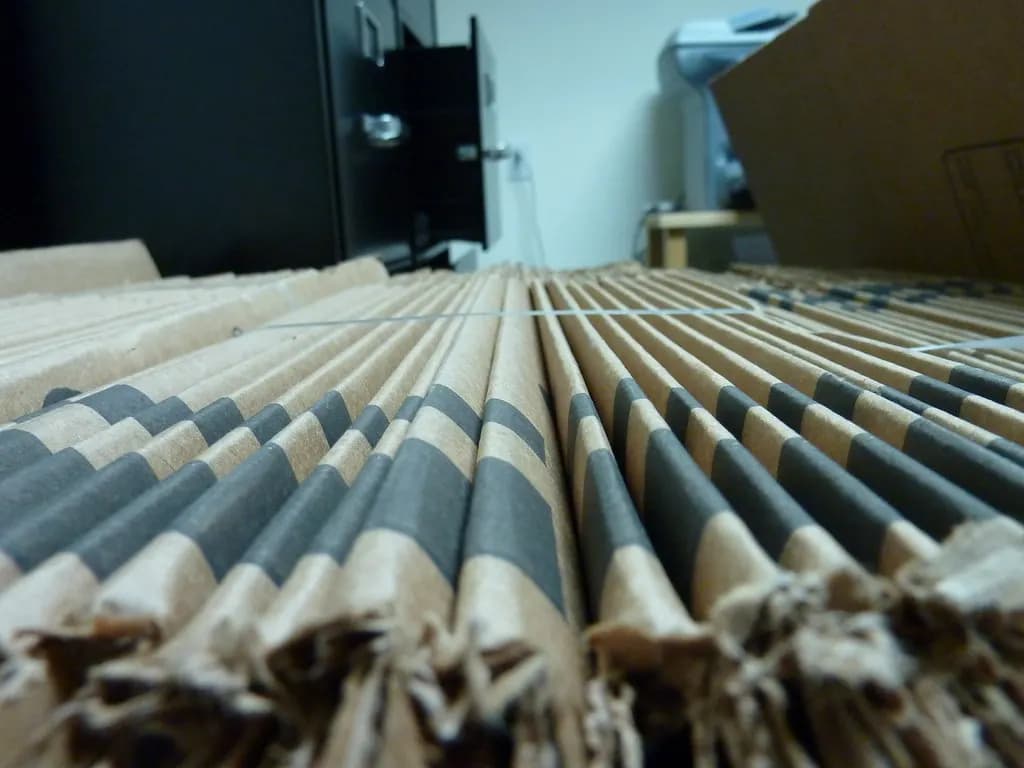
- 4819 10 — cartons, boxes and cases of corrugated paper or paperboard. This is the code for shipping cartons, master cartons, regular slotted containers (RSC), die-cut corrugated boxes, pizza boxes and e-commerce boxes made of 3-ply, 5-ply or 7-ply board.
- 4819 20 — folding cartons, boxes and cases of non-corrugated paper or paperboard. Mono cartons for medicines, cosmetics, sweets and shoes fall here.
- 4819 30 — sacks and bags with a base width of 40 cm or more.
- 4819 40 — other sacks and bags, including cones.
- 4819 50 — other packing containers, including record sleeves.
- 4819 60 — box files, letter trays, storage boxes and similar articles used in offices and shops.
For GST invoices and the HSN summary in GSTR-1, a business with aggregate turnover up to ₹5 crore must report at least a 4-digit HSN — 4819 for any of these — and a larger business a 6-digit HSN, such as 4819 10. Exporters and importers use the full eight-digit tariff item from the Customs Tariff on their shipping bills and bills of entry. Our HSN code guide explains the digit rules, and the HSN code finder helps with less common items.
The distinction that matters most is between a box and the board it is made from. Corrugated paper and board in rolls or sheets — the output of a corrugation plant before it is cut, creased and stitched into boxes — is heading 4808, not 4819. Uncoated kraft paper, the raw material, is 4804. The tax rates on these are very different, as the next section shows.
GST rates on packaging material in 2026
Notification 9/2025–Central Tax (Rate), the goods rate schedule in force since 22 September 2025, put most finished paper and wooden packaging in Schedule I at 2.5% central tax — 5% in all — and left plastic, glass and metal packaging in Schedule II at 9% central tax, or 18%. The 56th GST Council also moved the paper used to make packaging up from 12% to 18%.
GST on packaging material (2026)
| Material (HSN) | GST now | Before 22 Sep 2025 |
|---|---|---|
Corrugated cartons, boxes and cases (4819 10) | 5% | 12% |
Folding cartons of non-corrugated board (4819 20) | 5% | 12% |
Paper sacks and bags; biodegradable bags (Chapters 39, 48) | 5% | 18% |
Other paper containers, box files, storage boxes (4819 50, 4819 60) | 18% | — |
Paper pulp moulded trays — egg and fruit trays (4823) | 5% | 12% |
Uncoated kraft paper and board (4804) | 18% | 12% |
Corrugated paper and board in rolls or sheets (4808) | 18% | 12% |
Paper labels, printed or not (4821) | 18% | 18% |
Woven and textile labels (5807) | 5% | 12% |
Plastic boxes, crates, bottles, pouches, caps and closures (3923) | 18% | 18% |
Plastic film, sheets and laminates (3920, 3921) | 18% | 18% |
BOPP and other self-adhesive tape (3919) | 18% | 18% |
PP/HDPE woven sacks and FIBC jumbo bags (3923, 6305) | 18% | 18% |
Jute and cotton shopping bags (4202 22) | 5% | 12% |
Wooden packing cases, crates, pallets, cable drums (4415) | 5% | 12% |
Glass bottles and jars (7010) | 18% | 18% |
Steel and aluminium cans, drums and containers (7310, 7612) | 18% | 18% |
Corrugated cartons, boxes and cases (4819 10)
- GST now
5%
- Before 22 Sep 2025
12%
Folding cartons of non-corrugated board (4819 20)
- GST now
5%
- Before 22 Sep 2025
12%
Paper sacks and bags; biodegradable bags (Chapters 39, 48)
- GST now
5%
- Before 22 Sep 2025
18%
Other paper containers, box files, storage boxes (4819 50, 4819 60)
- GST now
18%
- Before 22 Sep 2025
—
Paper pulp moulded trays — egg and fruit trays (4823)
- GST now
5%
- Before 22 Sep 2025
12%
Uncoated kraft paper and board (4804)
- GST now
18%
- Before 22 Sep 2025
12%
Corrugated paper and board in rolls or sheets (4808)
- GST now
18%
- Before 22 Sep 2025
12%
Paper labels, printed or not (4821)
- GST now
18%
- Before 22 Sep 2025
18%
Woven and textile labels (5807)
- GST now
5%
- Before 22 Sep 2025
12%
Plastic boxes, crates, bottles, pouches, caps and closures (3923)
- GST now
18%
- Before 22 Sep 2025
18%
Plastic film, sheets and laminates (3920, 3921)
- GST now
18%
- Before 22 Sep 2025
18%
BOPP and other self-adhesive tape (3919)
- GST now
18%
- Before 22 Sep 2025
18%
PP/HDPE woven sacks and FIBC jumbo bags (3923, 6305)
- GST now
18%
- Before 22 Sep 2025
18%
Jute and cotton shopping bags (4202 22)
- GST now
5%
- Before 22 Sep 2025
12%
Wooden packing cases, crates, pallets, cable drums (4415)
- GST now
5%
- Before 22 Sep 2025
12%
Glass bottles and jars (7010)
- GST now
18%
- Before 22 Sep 2025
18%
Steel and aluminium cans, drums and containers (7310, 7612)
- GST now
18%
- Before 22 Sep 2025
18%
The pattern is clear. Paper, wood and jute packaging came down to 5%, while plastic, glass and metal packaging stayed at 18%. Paper in rolls and sheets went up to the standard rate. For most buyers, who purchase finished boxes, bags and pallets rather than paper, packaging became cheaper; for converters, it created the credit build-up described below. Our guide to GST on paper covers the wider paper chain, and the paper bag making business guide covers the paper-bag side in detail.
Printed boxes, labels and job work
Most cartons carry the buyer's brand, product details and barcodes. CBIC's Circular 11/11/2017-GST treats printed cartons and boxes as composite supplies and looks for the principal supply. Where the box maker uses its own paper and board and prints the buyer's design or logo on it, the circular says the predominant supply is goods and the printing is ancillary, so the supply is goods under Chapter 48. A printed corrugated box is therefore still 4819 10 at 5%, and a printed paper label is still 4821 at 18%.
The position changes when the buyer owns the material. If a brand sends its own board or paper to a printer who only prints on it, the printer is doing job work on someone else's goods. Printing of Chapter 48 or 49 goods that are themselves at 5% or nil is taxed at 5% under the job-work entry, while printing on other goods belonging to someone else is taxed at 18%. Agree in writing who owns the board and move it on a delivery challan.
Labels deserve a separate check. Paper and paperboard labels are 4821 at 18%, but woven or printed textile labels sewn into garments are 5807 at 5%, and self-adhesive plastic labels and tapes are 3919 at 18%. A label printer that makes all three needs three HSN lines in its billing software.
Worked examples in rupees
The prices below are illustrative round figures to show the arithmetic, not market quotes. Box and paper prices change with kraft paper rates, ply, grammage and order size.
| Purchase | Pre-tax value | GST rate | GST | Bill total |
|---|---|---|---|---|
| 5,000 corrugated shipping boxes (4819 10) at ₹20 | ₹1,00,000 | 5% | ₹5,000 | ₹1,05,000 |
| 10,000 printed mono cartons (4819 20) at ₹3 | ₹30,000 | 5% | ₹1,500 | ₹31,500 |
| 2,000 plastic courier bags (3923) at ₹4 | ₹8,000 | 18% | ₹1,440 | ₹9,440 |
| 100 rolls of BOPP tape (3919) at ₹60 | ₹6,000 | 18% | ₹1,080 | ₹7,080 |
| 50 wooden pallets (4415) at ₹900 | ₹45,000 | 5% | ₹2,250 | ₹47,250 |
| 1,000 PP woven sacks (3923/6305) at ₹12 | ₹12,000 | 18% | ₹2,160 | ₹14,160 |
A business that buys these for its own taxable sales claims all of the GST as input tax credit, so the rate mainly affects cash flow. For an unregistered buyer, or a business making exempt supplies, the GST is a cost — and the shift from plastic to paper packaging is now cheaper on tax as well.
Try it — GST on a packaging bill
Box makers: inverted duty and refunds
The rate changes created a classic inverted structure for corrugated box plants. Kraft paper (4804) and corrugated board are taxed at 18%, starch adhesive, stitching wire and printing ink at 18%, and the finished boxes at 5%.
Take an illustrative month. A box plant buys 10 tonnes of kraft paper at ₹40,000 a tonne — ₹4,00,000 plus ₹72,000 GST — and ₹50,000 of starch, ink and stitching wire with ₹9,000 GST. It converts them into boxes sold for ₹6,00,000, with output GST of ₹30,000. Its credit on inputs is ₹81,000 against output tax of ₹30,000, leaving ₹51,000 unused — more than 8% of its sales.
Section 54(3) of the CGST Act allows a refund of unused credit where it has built up because the tax on inputs is higher than the tax on output supplies. The refund is claimed in Form RFD-01 for each tax period, using the formula in Rule 89(5) of the CGST Rules, which counts credit on inputs only; input services such as freight and job work, and capital goods such as a new corrugator, are left out. The 56th GST Council recommended sanctioning 90% of inverted-duty claims provisionally. The 57th GST Council, which met on 8 October 2026, recommended making credit on input services refundable from 1 November 2026, and credit on plant and machinery from 1 April 2027 (spread over 60 months). Those changes still need notification, and the machinery change needs an amendment to the law; until then, file under the current formula.
Box maker's credit cycle
Step 1
Kraft paper and board
18% input tax
Step 2
Boxes sold
5% output tax
Step 3
Excess credit
about ₹51,000 in our example
Step 4
RFD-01 refund
section 54(3), Rule 89(5)
Paper bag makers face the same squeeze — paper at 18%, bags at 5% — and so do moulded pulp tray makers. Plastic packaging makers do not: their polymer inputs and their output are both generally at 18%.
Input tax credit on packaging for buyers
For a manufacturer, trader or e-commerce seller, packaging is an input like any other. The GST on boxes, pouches, tape and labels is claimable as input tax credit when the packaging is used for taxable supplies, the invoice carries your GSTIN, the goods have been received, and the supplier has reported the invoice so that it appears in your GSTR-2B. Our input tax credit guide covers the conditions and the time limit.
Three situations reduce the credit. First, if you pack goods that are exempt from GST — fresh fruit and vegetables, for example — the credit on packaging used for those goods has to be reversed under the common-credit rules, because it relates to exempt supplies. Second, section 17(5)(h) blocks credit on goods disposed of as free samples or gifts, which includes the packaging used for them. Third, a business on the composition scheme cannot claim any credit at all.
Exporters are in the best position. Exports are zero-rated, so an exporter keeps full credit on its packaging even though it charges no GST on the export, and can either export under a letter of undertaking and claim a refund of the unused credit, or pay IGST on the export and claim that back.
Who can claim ITC on packaging?
| Buyer | Use of packaging | ITC? |
|---|---|---|
Manufacturer or trader | Packing taxable goods for sale | Yes, in full |
Exporter | Packing zero-rated exports | Yes — refund of unused credit |
Packer of exempt goods (e.g. fresh produce) | Exempt supplies | No — reverse the share |
Any business | Free samples and gifts | No — section 17(5)(h) |
Composition dealer | Any use | No |
Manufacturer or trader
- Use of packaging
Packing taxable goods for sale
- ITC?
Yes, in full
Exporter
- Use of packaging
Packing zero-rated exports
- ITC?
Yes — refund of unused credit
Packer of exempt goods (e.g. fresh produce)
- Use of packaging
Exempt supplies
- ITC?
No — reverse the share
Any business
- Use of packaging
Free samples and gifts
- ITC?
No — section 17(5)(h)
Composition dealer
- Use of packaging
Any use
- ITC?
No
Small box makers: registration and composition
A small corrugated box unit selling only within its state must register once its aggregate turnover crosses ₹40 lakh in most states. In practice most units register earlier, because their buyers are manufacturers who want a GST invoice to claim credit.
The composition scheme, at 1% of turnover for manufacturers, rarely suits a box maker. A composition dealer cannot claim credit, so the 18% paid on kraft paper becomes a cost, and its registered buyers cannot claim any credit on its boxes either. A regular registration, with a refund claim for the excess credit, usually leaves a box maker with lower net tax and keeps it eligible to supply large buyers. Run both calculations with your own purchase and sales figures before choosing.
Packing charges, returnable packaging and e-way bills
Packing charges on an invoice. Section 15(2)(c) of the CGST Act includes in the value of a supply any incidental expenses, including commission and packing, charged by the supplier to the recipient. When a manufacturer adds "packing and forwarding" to an invoice for machinery, the packing charge is taxed at the rate of the machinery, not at the rate of the boxes or crates used. The packing material is part of a composite supply in which the goods are the principal supply.
Buying packaging separately. When you buy boxes or crates from a packaging supplier, the supplier charges the rate for the packaging itself — 5% for cartons, 18% for plastic crates. You claim that as credit if you use the packaging for taxable supplies.
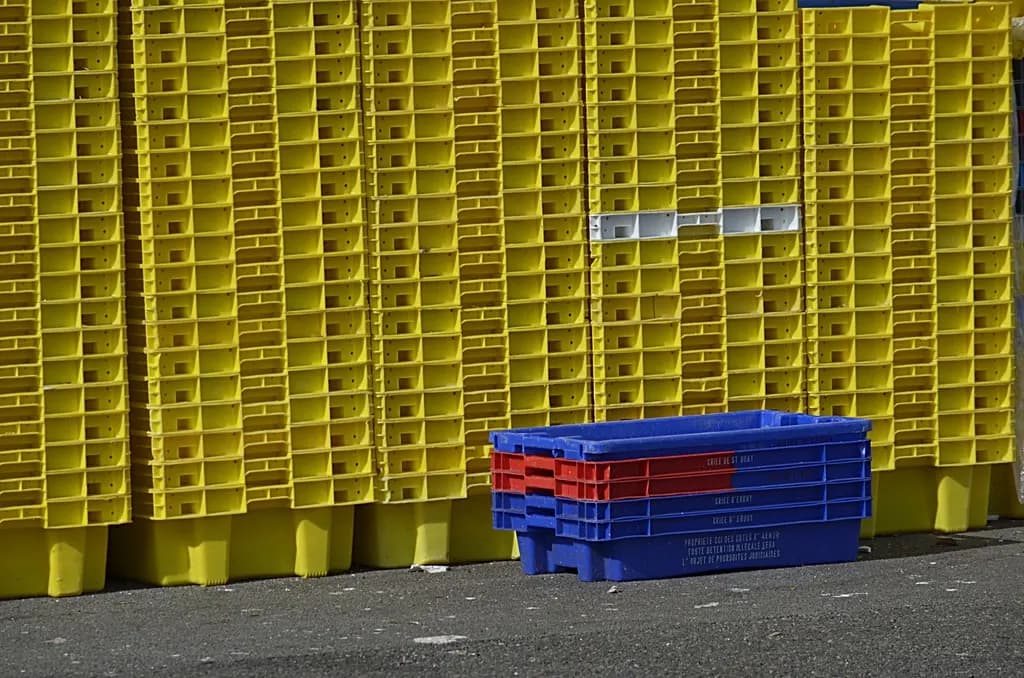
Returnable crates and pallets. Many dairies, beverage companies and auto-parts makers send goods in returnable plastic crates or wooden pallets that come back empty. When they move without a sale, document them on a delivery challan rather than a tax invoice, and keep a register of crates sent and received. Our guide to e-way bills explains when a challan movement needs one.
E-way bills. A consignment of packaging material worth more than ₹50,000, including GST, needs an e-way bill when it moves by road. A truckload of corrugated boxes or a pallet of kraft paper rolls usually crosses that value. Box makers above the e-invoicing limit of ₹5 crore in aggregate turnover must also generate e-invoices for sales to registered buyers, which in this trade is almost every sale.
Check your packaging bill
0/7Common mistakes with GST on packaging
Billing boxes at 12% or 18%. Billing software set up before September 2025 often still carries the old rate for 4819. Since 22 September 2025, cartons and boxes of 4819 10 and 4819 20 are 5%. Over-charging a registered buyer is corrected by a credit note; over-charging consumers can leave you holding tax you were not entitled to collect.
Selling board as boxes. A corrugation plant that sells cut sheets to a box converter is selling 4808 at 18%, not boxes at 5%. Describe each product accurately.
Letting refund claims lapse. Box and paper-bag makers who do not file inverted-duty refunds regularly tie up working capital and risk the two-year time limit, which runs from the due date of the GSTR-3B for the period in which the credit built up.
Using one HSN for all labels. Paper, textile and plastic labels sit in three different headings at two different rates.
Treating packing charges separately. Packing and forwarding charges on a sale invoice take the rate of the goods sold; they cannot be billed at a lower packaging rate.
Official links
- Notification 9/2025–CT(Rate) — goods rate scheduleCartons Sch. I 322; plastics Sch. II 119–124; paper Sch. II 169–189
- 56th GST Council — recommendationsPackaging and paper rate changes
- Circular 11/11/2017-GSTPrinted boxes and cartons — goods or services
- Section 54, CGST Act — refundsInverted-duty refunds
- Search HSN/SAC (GST portal)Free code lookup
- CGST rate notificationsLater amendments, if any
What to do next
If you make or sell packaging, update your item master so each product carries the right HSN — 4819 10, 4819 20, 4808, 3923 and so on — and the matching rate, and set up regular refund claims if you convert 18% paper into 5% boxes or bags. If you buy packaging, check that your supplier's invoices show 5% on cartons and claim the credit. Use the HSN code finder and GST calculator, and read our guides to GST on paper, starting a paper bag business and input tax credit.
This is general information, not legal or tax advice — confirm on the official source or with a professional.
Frequently asked questions
Corrugated boxes, cartons and cases of paper or paperboard fall under HSN 4819 10 — sub-heading 4819 10 covers cartons, boxes and cases of corrugated paper or paperboard. Folding cartons of non-corrugated board, such as mono cartons for medicines and cosmetics, are 4819 20. Both attract 5% GST since 22 September 2025.
Corrugated and non-corrugated cartons, boxes and cases under HSN 4819 10 and 4819 20 attract 5%, down from 12% before GST 2.0. Printing the customer's logo or details on the box does not change the rate when the box maker uses its own board. Corrugated board sold in sheets or rolls, rather than as boxes, is 18%.
It depends on the material. Paper cartons and boxes, paper bags, moulded pulp trays and wooden pallets and crates are 5%. Plastic packaging under 3923, packaging film, PP woven sacks, BOPP tape, paper labels, glass bottles and metal cans are 18%. Kraft paper and corrugated board in rolls or sheets are also 18%.
Articles for the conveyance or packing of goods, of plastics — boxes, crates, bottles, jars, pouches, caps and closures — fall under HSN 3923 at 18%. Plastic film and laminates in rolls are 3920 or 3921, self-adhesive tapes 3919, and woven polypropylene sacks 3923 or 6305 — all at 18%.
Yes. Section 15(2)(c) of the CGST Act includes incidental expenses, including packing, charged by the supplier to the buyer in the value of supply. Packing charges added to an invoice for goods are taxed at the same rate as the goods, not at the rate of the packing material. A separate service of packing someone else's goods is taxed as a service.
Usually yes. Box makers buy kraft paper at 18% and sell boxes at 5%, so credit builds up. Section 54(3) of the CGST Act allows a refund of credit accumulated because the input rate is higher than the output rate, using the Rule 89(5) formula, which counts inputs but not input services or capital goods.
Sources & verification
Figures on this page were checked against the sources below when it was last reviewed on 9 October 2026. Each rate and limit is stored once with its own official source and review date, and official update channels are monitored daily so changes are picked up. How we verify
- 1.Notification No. 9/2025–Central Tax (Rate), 17 September 2025 (Gazette of India) — Ministry of Finance / Gazette of India · accessed 9 October 2026
- 2.Recommendations of the 56th GST Council meeting (press release with rate annexures) — GST Council / PIB · accessed 9 October 2026
- 3.Circular No. 11/11/2017-GST — taxability of printing contracts — CBIC · accessed 9 October 2026
- 4.Section 15 – CGST Act, 2017 (value of supply) — CBIC · accessed 9 October 2026
- 5.Section 54 – CGST Act, 2017 (refunds) — CBIC · accessed 9 October 2026
- 6.GST Council scraps officials' arrest powers, raises prosecution threshold — Forbes India · accessed 9 October 2026
MSMETOOLS is an independent platform and is not affiliated with any government agency, ministry or department.
Tools for this
HSN Code Finder (India)
Find the correct HSN/SAC code for your product.
GST Calculator (India)
Calculate GST for your sales and purchases with current rates.
Invoice Generator
Create professional invoices with tax, logo and custom details.
Related guides
 GST on Paper 2026: HSN 4802–4823 Rates, Notebooks & BoxesRead guide
 GST on Cold Drinks 2026: 40% Rate, Juices, Water & RestaurantsRead guide
 E-Way Bill 2026: Limit, Validity, Rules & How to GenerateRead guide
 GST on Toys 2026: 5% Non-Electronic, 18% Electronic, HSN 9503Read guide
Official links open the government site in a new tab.