 GST & indirect tax
GST on Paper and Paper Products in 2026: HSN-wise Rates After GST 2.0
GST on paper in 2026: A4 and kraft paper 18%, notebooks and books nil, cartons and paper bags 5%. HSN-wise rates, worked ₹ bills and ITC for printers.
 Edited by Sumeet YadavFounder & editor, MSMETOOLS · fact-checked against official sources
Contents (8)
- 1. GST rate on paper by HSN code
- 2. What changed for paper on 22 September 2025
- 3. Notebooks, exercise books and school stationery
- 4. Printed books, publishers and printers
- 5. Packaging: cartons, boxes, kraft paper and paper bags
- 6. Paper merchants, offices and recyclers
- 7. Common mistakes on paper GST
- 8. What to do next
Paper has some of the most finely split GST rates in the tariff, and GST 2.0 pulled them in three directions at once. This guide is for stationery shops, printers, publishers, packaging converters and anyone buying paper in bulk who needs the right rate on an invoice. It covers the 2026 rates for HSN 4801 to 4823 and printed matter in Chapter 49, what changed on 22 September 2025, worked ₹ bills for a school order and a packaging order, when printing is a service rather than goods, and the input tax credit (ITC) problems the new rates created for notebook makers and box makers. All rates were checked against the notified schedules in October 2026.
Quick answer
Most paper and paperboard now carries 18% GST — A4, printing, kraft, corrugated and coated paper all moved up from 12% on 22 September 2025. Notebooks, exercise books and the paper used to make them are now exempt, printed books stay exempt, and cartons, boxes and paper bags fell to 5%.
A4, copier and printing paper (4802): 18%
Notebooks and exercise books (4820): Nil
Printed books, newspapers, maps (4901–4905): Nil
Corrugated and paperboard cartons (4819): 5%
Registers, diaries, envelopes, labels, tissues: 18%
GST rate on paper by HSN code
Paper and paperboard are classified in Chapter 48 of the customs tariff, and printed matter in Chapter 49; GST follows the same headings. Since 22 September 2025, the rates come from Notification 9/2025–Central Tax (Rate), which lists goods at 5% and 18%, and Notification 10/2025–Central Tax (Rate), which lists exempt goods. The old 12% slab, where most paper sat, no longer exists, so every 12% item had to go up or down.
| HSN | Goods | Before 22 Sep 2025 | GST now |
|---|---|---|---|
| 4801 | Newsprint in rolls or sheets | 5% | 5% |
| 4802 | Uncoated writing and printing paper, A4, copier paper | 12% | 18% |
| 4802 | Uncoated paper used for exercise books and notebooks | 12% | Nil |
| 4803 | Tissue, towel and napkin stock | 18% | 18% |
| 4804, 4805 | Kraft paper and board, other uncoated paper in rolls | 12% | 18% |
| 4806, 4807 | Greaseproof, glassine, composite paperboard | 12% | 18% |
| 4808 | Corrugated paper and board in rolls or sheets | 12% | 18% |
| 4810 | Coated paper and board (art paper, duplex board) | 12% | 18% |
| 4811 | Paper coated, laminated or printed in rolls (e.g. gummed, laminated) | 18% | 18% |
| 4817 | Envelopes, letter cards | 18% | 18% |
| 4817 30 | Boxes and wallets containing an assortment of paper stationery | 12% | 5% |
| 4818 | Toilet paper, tissues, napkins, paper towels | 18% | 18% |
| 4819 10, 4819 20 | Cartons, boxes and cases of corrugated or non-corrugated board | 12% | 5% |
| 4820 | Exercise books, graph books, lab notebooks, notebooks | 12% | Nil |
| 4820 | Registers, account books, diaries, letter pads, file covers | 18% | 18% |
| 4821 | Paper labels, printed or not | 18% | 18% |
| 4823 | Paper pulp moulded trays, kites | 12% | 5% |
| 39, 48 | Paper sacks and bags | 18% | 5% |
Before relying on a single number for "paper", check the four-digit heading — the same reel of uncoated paper is exempt when it is sold for notebooks and 18% when it is sold for printing. Our HSN code finder helps with the less common headings.
What changed for paper on 22 September 2025
The 56th GST Council's rate tables, published by PIB, show three movements in the paper chain. Printing, writing and packaging papers in rolls and sheets — 4802 (other than notebook paper), 4804, 4805, 4806, 4807, 4808 and 4810 — went up from 12% to 18%. Finished items used by students and by packaging buyers went down: notebooks and exercise books to nil, cartons and boxes from 12% to 5%, paper bags from 18% to 5%, and moulded pulp trays to 5%. Maps, atlases and globes moved from 12% to nil.
Upstream, most wood pulp and recovered waste paper are at 5%, but chemical wood pulp of dissolving grades went to 18%. The PIB FAQs explain the split: dissolving pulp feeds the textile chain, where the rate was set for parity with other textile inputs, while other pulp feeds the paper chain.
The new rates apply to every sale made on or after 22 September 2025, including stock bought earlier. A paper merchant who bought A4 at 12% in August 2025 and sold it in October had to charge 18%; the credit earned at 12% stays in the electronic credit ledger. A stationery shop that bought notebooks at 12% and sold them after the change could no longer charge GST at all, and had to reverse the credit on that stock because the sale became exempt.
Notebooks, exercise books and school stationery
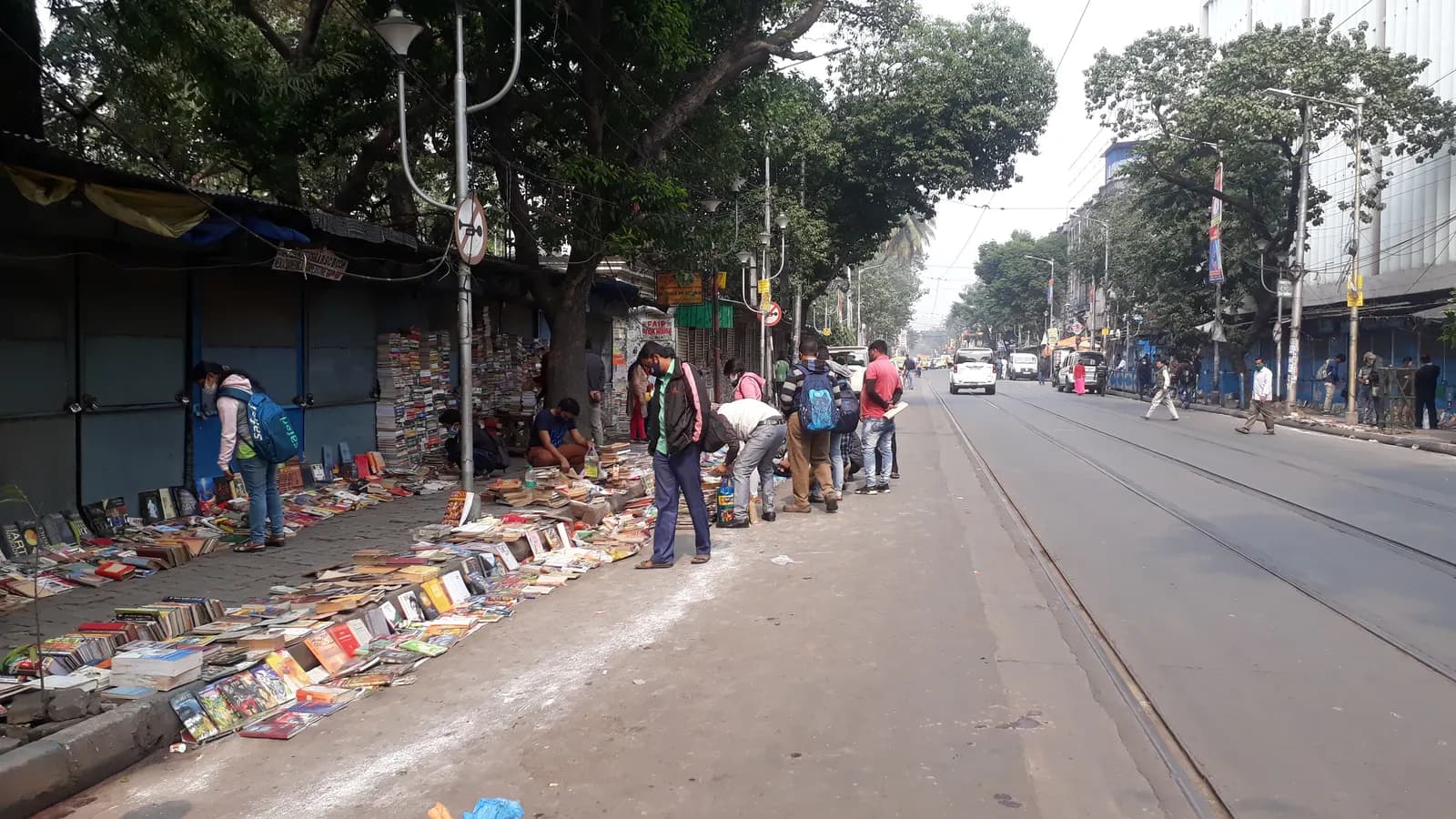
Entry 130 of the exemption notification covers "exercise book, graph book, laboratory note book and notebooks" under HSN 4820, and entry 128 exempts uncoated writing and printing paper of 4802 "used for" making those items. Together they make the core school notebook GST-free at every stage that the notification covers. The exemption does not reach the rest of heading 4820: registers, account books, order books, receipt books, diaries, letter pads, binders and file covers are still at 18%.
The paper exemption depends on end use. A mill or paper merchant selling 4802 paper to a notebook maker can supply it without GST, while the same paper sold to a commercial printer carries 18%. Suppliers usually ask the buyer for a written declaration of use and keep it with the invoice, so the nil rating can be supported if questioned.
Worked bill — a school's stationery order (same state, from a registered dealer):
| Item | HSN | Value | GST |
|---|---|---|---|
| 500 ruled notebooks, 172 pages | 4820 | ₹30,000 | Nil |
| 100 graph books | 4820 | ₹4,000 | Nil |
| 20 attendance registers | 4820 | ₹3,000 | 18% = ₹540 |
| 10 reams A4 copier paper | 4802 | ₹3,200 | 18% = ₹576 |
| 50 printed atlases | 4905 | ₹7,500 | Nil |
| Total | ₹47,700 | ₹1,116 |
The school pays ₹48,816. Before 22 September 2025, the same order carried 12% on the notebooks, graph books, A4 and atlases and 18% on the registers — about ₹5,904 of GST. Note how the copier paper moved the other way: ₹384 of GST at 12% became ₹576 at 18%.
Why notebook prices did not fall by the full 12%. A notebook maker's output is now exempt, so under section 17(2) of the CGST Act it cannot keep credit on inputs used for those sales — covers printed on coated board at 18%, glue, staples, binding thread, shrink-wrap and cartons. That GST becomes part of its cost. The inverted-duty refund under section 54(3) does not help either, because it excludes nil-rated and fully exempt supplies. A maker who used to pay 12% on sales and claim credit on everything now pays nothing on sales but absorbs its input tax, so retail prices fell by less than the headline cut.
Try it — GST on a ream of A4 paper
Printed books, publishers and printers
Printed books, including Braille books, are exempt under entry 132; so are newspapers and periodicals, children's picture, drawing and colouring books, printed or manuscript music, and maps, atlases and globes. Brochures, leaflets and similar printed matter under 4901 carry 5%. Trade advertising material, commercial catalogues, posters and other printed matter under 4911, calendars under 4910 and greeting cards under 4909 carry 18%.
For a publisher, exempt books mean the same ITC problem as notebooks: the GST paid on paper, printing, typesetting and cover design that relates to exempt book sales has to be reversed. A publisher that also earns taxable income — advertising in journals, licensing fees, sponsored content — keeps the credit relating to that income and apportions common credits.
For a printer, the first question is whether the job is a supply of goods or a printing service. CBIC's Circular 11/11/2017-GST answers it by looking for the principal supply. Where a publisher supplies only the content and the printer uses its own paper and ink to print books, pamphlets, brochures or annual reports, the printing service is the main thing and the job is a service under heading 9989. Where a printer makes envelopes, letter cards, printed cartons or tissues carrying a customer's logo using its own materials, the goods are the main thing and the printer charges the goods rate under Chapter 48 or 49.
Printing jobs — how GST applies
| Job | Who owns the paper | Treated as | GST |
|---|---|---|---|
Textbooks with publisher's content | Customer (publisher) | Job work, heading 9988 | 5% |
Books, pamphlets, annual reports with customer's content | Printer | Printing service, heading 9989 | Check current entry |
Envelopes or cartons printed with customer's logo | Printer | Goods, Chapter 48 | Rate of the goods, e.g. cartons 5% |
Posters, catalogues, trade advertising | Printer | Goods, heading 4911 | 18% |
Textbooks with publisher's content
- Who owns the paper
Customer (publisher)
- Treated as
Job work, heading 9988
- GST
5%
Books, pamphlets, annual reports with customer's content
- Who owns the paper
Printer
- Treated as
Printing service, heading 9989
- GST
Check current entry
Envelopes or cartons printed with customer's logo
- Who owns the paper
Printer
- Treated as
Goods, Chapter 48
- GST
Rate of the goods, e.g. cartons 5%
Posters, catalogues, trade advertising
- Who owns the paper
Printer
- Treated as
Goods, heading 4911
- GST
18%
Where the customer supplies the paper and the printer only prints on it — job work — Notification 15/2025–Central Tax (Rate) taxes printing of newspapers, books, journals and periodicals, and printing of Chapter 48 or 49 goods that are themselves at 5% or nil, at 5%, down from 12%. Printing on other goods belonging to someone else stays at 18%.
Worked example — textbook job work in Sivakasi. A publisher sends 40 tonnes of its own paper to a printing press in Sivakasi to print 10,000 school textbooks, and the press charges ₹1,50,000 for printing and binding. Because the paper belongs to the publisher and the books are exempt goods under Chapter 49, the press charges 5% — ₹7,500 — instead of the 12% (₹18,000) it charged before September 2025. The publisher cannot claim that ₹7,500 against exempt book sales, so the lower rate is a direct saving. The press, for its part, keeps full credit on its ink, plates and machinery because job work at 5% is a taxable supply.
If the same press had bought the paper itself and printed the textbooks with the publisher's content, the circular treats the job as a printing service under heading 9989, not as job work. The rate for that entry was not part of the September 2025 job-work amendment, so confirm it against the current services rate notification before quoting a customer.
Packaging: cartons, boxes, kraft paper and paper bags
Packaging is where GST 2.0 created the sharpest inverted duty in the paper chain. A corrugated box maker buys kraft paper (4804) or corrugated board (4808) at 18% and sells cartons (4819 10) at 5%. Its output tax will often be smaller than its input tax, so credit piles up in the ledger month after month.
Worked example — a Rajkot carton maker, one month:
| Line | Value | GST |
|---|---|---|
| Kraft paper and board bought | ₹20,00,000 | 18% = ₹3,60,000 |
| Printing ink, adhesive, stitching wire | ₹1,50,000 | 18% = ₹27,000 |
| Power, rent, repairs (input services) | ₹2,00,000 | 18% = ₹36,000 |
| Cartons sold | ₹32,00,000 | 5% = ₹1,60,000 |
Total credit is ₹4,23,000 against output tax of ₹1,60,000, leaving ₹2,63,000 unused. Section 54(3) allows a refund of unused credit caused by a higher rate on inputs than on output, but the formula in the CGST Rules counts only credit on inputs (goods), not input services or capital goods. So the ₹36,000 on services and any GST on new machinery could not be refunded until now.
The 57th GST Council, on 8 October 2026, recommended widening that refund: credit on input services availed from 1 November 2026, and on plant and machinery availed from 1 April 2027 (spread over 60 months), is to become refundable in inverted-duty cases. Those changes still need notification and, for machinery, amendments to the law; until then, file refunds under the current formula. Paper bag makers face a similar squeeze, buying paper at 18% and selling bags at 5%.
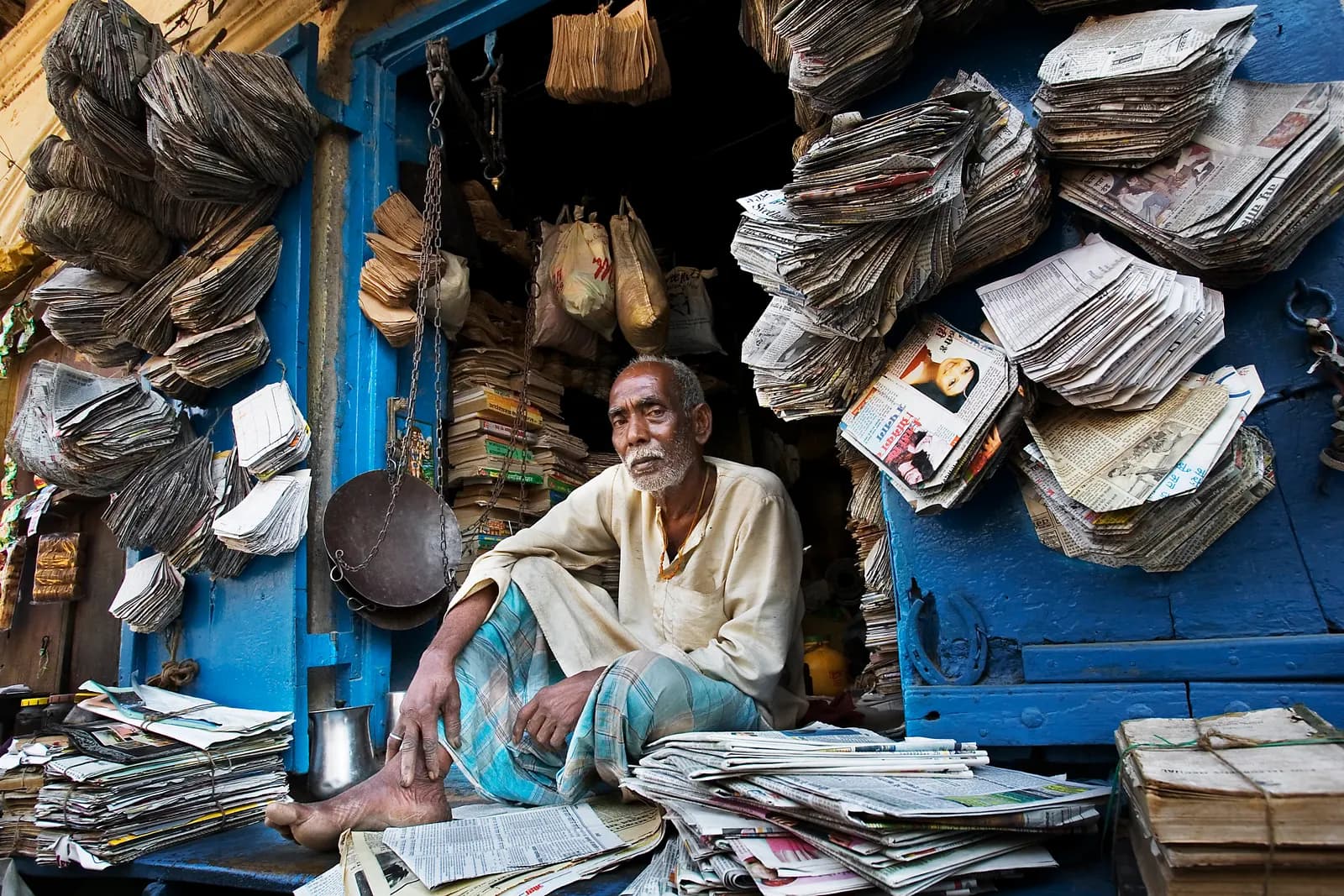
For packaging buyers, the mix on one order can be confusing. An online seller buying 2,000 printed corrugated mailer boxes (₹40,000), 5,000 paper labels (₹4,000) and 1,000 kraft paper bags (₹6,000) pays 5% on the boxes (₹2,000), 18% on the labels (₹720) and 5% on the bags (₹300). A registered seller can claim all ₹3,020 as ITC; each line needs its own HSN on the invoice.
Paper merchants, offices and recyclers
Paper merchants and distributors trade in the widest mix of rates. One truckload can hold exempt notebook paper, 18% copier paper and 5% newsprint, so each line needs its own HSN and rate, and the GSTR-1 HSN summary must split them. A consignment worth more than ₹50,000 needs an e-way bill before it moves; reels of kraft paper or board almost always cross that limit. A small stationery shop with turnover up to ₹1.5 crore can opt for the composition scheme and pay 1% of turnover on taxable sales, but it then charges no GST on its bills and its business customers get no credit — a poor fit if most buyers are offices and schools that want GST invoices.
Offices and businesses buying copier paper, printed stationery and envelopes for their own use can claim the 18% GST as input tax credit, as long as the invoice carries their GSTIN and appears in GSTR-2B. So the September 2025 increase on A4 is a cash-flow cost for most registered businesses, not a real one. It is a real cost for individuals, unregistered firms, composition dealers and organisations with only exempt income, such as many schools and clinics.
Paper GST after GST 2.0
18%
A4, kraft, coated paper
was 12%
Nil
Notebooks and exercise books
was 12%
5%
Cartons and boxes
was 12%
5%
Paper bags
was 18%
Recyclers and mills buy recovered waste paper and paperboard under heading 4707 at 5%, and most wood pulp is also at 5%. A mill making writing or kraft paper at 18% therefore usually pays less GST on its raw material than it collects on output, and does not face the inverted duty that box and bag makers do. A mill that sells a large share of its paper to notebook makers at nil is the exception: its credit relating to those exempt sales must be reversed, which pushes up the cost of notebook paper.
Common mistakes on paper GST
- Charging 12% on A4 or kraft paper. The 12% slab ended on 22 September 2025; these are now 18%.
- Charging GST on notebooks — or not charging it on registers. Notebooks and exercise books are exempt; registers, diaries and receipt books are 18%.
- Keeping ITC on inputs for exempt notebooks or books. Credit relating to exempt sales must be reversed under section 17(2).
- Selling notebook paper at nil without an end-use record. Keep the buyer's declaration with the invoice.
- Using one HSN for a mixed bill. Cartons (4819), labels (4821) and bags need separate lines; businesses above ₹5 crore turnover need 6-digit HSN codes in GSTR-1.
- Missing the inverted-duty refund. Box and bag makers with unused credit can file a refund on the input-goods share; time limits apply.
Official links
- Notification 9/2025–CT(Rate)Goods rate schedule — Chapter 48 and 49 entries
- Notification 10/2025–CT(Rate)Exempt goods — notebooks, books, maps
- Notification 15/2025–CT(Rate)Printing job work at 5%
- 56th GST Council recommendationsBefore-and-after paper rates
- Circular 11/11/2017-GSTPrinting — goods or services
- Section 54, CGST ActInverted-duty refunds
What to do next
Check your item masters: any paper product still coded at 12% needs to move to 18%, 5% or nil depending on its heading. Use the HSN code finder for unfamiliar items and the GST calculator to price bills. Manufacturers with exempt or low-rate output should read our input tax credit guide on reversals and refunds, and anyone moving paper stock in bulk should check the e-way bill rules. Our GST 2.0 guide covers the wider September 2025 changes.
This is general information, not legal or tax advice — confirm on the official source or with a professional.
Frequently asked questions
Most paper and paperboard in rolls or sheets — A4 copier paper, printing paper, kraft paper, coated board and corrugated sheets under HSN 4802 to 4810 — carries 18% since 22 September 2025, up from 12%. Uncoated paper used to make notebooks is exempt and newsprint is 5%. Check the four-digit HSN before invoicing.
No. Exercise books, graph books, laboratory notebooks and notebooks under HSN 4820 have been exempt since 22 September 2025, down from 12%. The uncoated paper used to make them is also exempt. Registers, account books, diaries and letter pads under the same heading still carry 18%.
Printed books, including Braille books, are exempt under HSN 4901, as are newspapers and periodicals, children's picture and colouring books, printed music, and maps and atlases. Maps and atlases moved from 12% to nil in September 2025; books were already exempt. Brochures and leaflets carry 5%.
Cartons, boxes and cases of corrugated or non-corrugated paper or paperboard under HSN 4819 10 and 4819 20 carry 5% since 22 September 2025, down from 12%. The kraft paper and board they are made from went up to 18%, so box makers often build up excess credit and can claim an inverted-duty refund.
Paper and paperboard fall in Chapter 48 of the tariff. A4 and other writing or printing paper is 4802, kraft paper 4804, corrugated paper 4808, coated paper 4810, envelopes 4817, tissues 4818, cartons 4819, notebooks and registers 4820 and labels 4821. Printed books are 4901. Businesses up to ₹5 crore turnover report 4-digit HSN codes; above that, 6-digit HSN.
Not on inputs used to make exempt notebooks. Because the output is exempt, section 17(2) of the CGST Act requires credit relating to those sales to be reversed, and the inverted-duty refund does not apply to nil-rated or fully exempt supplies. GST paid on covers, binding materials and packing becomes a cost, so many makers' prices did not fall by the full 12%.
Sources & verification
Figures on this page were checked against the sources below when it was last reviewed on 9 October 2026. Each rate and limit is stored once with its own official source and review date, and official update channels are monitored daily so changes are picked up. How we verify
- 1.Notification No. 9/2025–Central Tax (Rate), 17 September 2025 (Gazette of India) — Ministry of Finance / Gazette of India · accessed 9 October 2026
- 2.Notification No. 10/2025–Central Tax (Rate), 17 September 2025 (Gazette of India) — Ministry of Finance / Gazette of India · accessed 9 October 2026
- 3.Notification No. 15/2025–Central Tax (Rate), 17 September 2025 (Gazette of India) — Ministry of Finance / Gazette of India · accessed 9 October 2026
- 4.Recommendations of the 56th Meeting of the GST Council — PIB, Ministry of Finance · accessed 9 October 2026
- 5.FAQs on the decisions of the 56th GST Council — PIB, Ministry of Finance · accessed 9 October 2026
- 6.Circular No. 11/11/2017-GST — taxability of printing contracts — CBIC / GST Council · accessed 9 October 2026
- 7.Section 54 – CGST Act, 2017 (refunds) — CBIC · accessed 9 October 2026
- 8.Section 17 – CGST Act, 2017 (apportionment of credit) — CBIC · accessed 9 October 2026
- 9.GST Council scraps officials' arrest powers, raises prosecution threshold — Forbes India · accessed 9 October 2026
MSMETOOLS is an independent platform and is not affiliated with any government agency, ministry or department.
Tools for this
GST Calculator (India)
Calculate GST for your sales and purchases with current rates.
HSN Code Finder (India)
Find the correct HSN/SAC code for your product.
Invoice Generator
Create professional invoices with tax, logo and custom details.
Related guides
 HSN Code for Corrugated Box & GST on Packaging 2026Read guide
 GST on Furniture 2026: Rates, HSN Codes & ITC RulesRead guide
 GST on Education 2026: School, Coaching & Stationery RatesRead guide
 GST on Job Work 2026: Rates, Section 143 & ITC-04 RulesRead guide
Official links open the government site in a new tab.