 GST & indirect tax
GST on Job Work in 2026: Rates After GST 2.0, the Section 143 Procedure and ITC-04
GST on job work in 2026: SAC 9988 rates after GST 2.0 (18%, 5%, 1.5%), section 143 challan procedure, the 1- and 3-year return rule, ITC-04 due dates and examples.
 Edited by Sumeet YadavFounder & editor, MSMETOOLS · fact-checked against official sources

Contents (9)
- 1. What counts as job work under GST
- 2. GST rates on job work after GST 2.0
- 3. The section 143 procedure for sending goods
- 4. The one-year and three-year rule
- 5. ITC-04: what it is and when it is due
- 6. E-way bills and documents
- 7. Worked examples
- 8. Common mistakes and how they are fixed
- 9. What to do next
Most Indian manufacturers send some work outside: fabric to a dyeing house, castings to a CNC shop, gold to a karigar, tablets to a contract packer. GST treats this "job work" differently from a normal sale. The goods go out without tax, the job worker charges GST only on its labour, and the principal must track the goods and bring them back within set time limits. This guide covers the 2026 GST rates on job work after GST 2.0, the section 143 procedure, ITC-04, e-way bills and the mistakes that turn job work into a tax demand, with worked examples in rupees.
Quick answer
Job work is any treatment or process done by a person on goods that belong to another registered person. The principal sends inputs or capital goods on a delivery challan without paying GST (section 143). The job worker charges GST on its job charges under SAC 9988: 18% (9% CGST + 9% SGST, or 18% IGST) generally since 22 September 2025, 5% (2.5% CGST + 2.5% SGST) for listed sectors such as textiles, food, pharma and jewellery, and 1.5% (0.75% CGST + 0.75% SGST) for diamonds.
Inputs must come back within one year, capital goods within three years — or GST is payable with interest
Moulds, dies, jigs, fixtures and tools have no time limit
ITC-04 by the 25th of the month after the period: half-yearly if turnover exceeded ₹5 crore, otherwise yearly
Inter-state movement to a job worker needs an e-way bill whatever the value
What counts as job work under GST
Section 2(68) of the CGST Act defines job work as "any treatment or process undertaken by a person on goods belonging to another registered person". Two points follow. The goods must belong to someone else — the job worker does not buy them — and the owner, called the principal, must be registered under GST. Dyeing someone's grey fabric, machining their castings, plating their components, assembling their kits, stitching their cut pieces and polishing their diamonds are all job work.
If the owner of the goods is not registered — a farmer getting paddy milled, or a consumer getting a dress stitched — the service is not "job work" in the GST sense. CBIC's Circular 126/45/2019-GST made this distinction when it explained that the job work entries cover only processing of goods belonging to registered persons, while processing of goods owned by others falls under a separate entry. After GST 2.0 that separate entry is taxed at 18% (9% CGST + 9% SGST, or 18% IGST), except tailoring and certain printing at 5% (2.5% CGST + 2.5% SGST).
Job work is also different from a contract where the job worker buys the main material and sells you a finished product. If the supplier uses its own steel to make your brackets, that is a sale of goods at the goods rate, not a job work service. Most disputes in this area come from mixed arrangements, so write down in your contract and on your invoices who owns the principal raw material.
GST rates on job work after GST 2.0
The rates are set by serial number 26 of Notification 11/2017-Central Tax (Rate) under heading 9988, "manufacturing services on physical inputs owned by others". Notification 15/2025-Central Tax (Rate), dated 17 September 2025, replaced the whole entry from 22 September 2025 as part of the GST rate rationalisation that the 56th GST Council meeting recommended. The rates below are combined CGST and SGST (or IGST for an inter-state supply).
| Job work in relation to | Rate from 22 Sep 2025 | Entry 26 item |
|---|---|---|
| Diamonds (Chapter 71) | 1.5% (0.75% CGST + 0.75% SGST) | (i) |
| Food and food products (Chapters 1–22); animal feed (Chapter 23, except dog and cat food) | 5% (2.5% CGST + 2.5% SGST) | (ii)(a)–(b) |
| Pharmaceutical products (Chapter 30); hides, skins and leather (Chapter 41, not leather goods or footwear) | 5% (2.5% CGST + 2.5% SGST) | (ii)(c)–(d) |
| Printing of newspapers, books and periodicals; printing of Chapter 48/49 goods taxed at 5% or nil | 5% (2.5% CGST + 2.5% SGST) | (ii)(e)–(f) |
| Textiles and textile products (Chapters 50–63) | 5% | (ii)(g) |
| Bricks taxed at 5%; jewellery and other Chapter 71 goods (not diamonds); handicrafts; umbrellas | 5% (2.5% CGST + 2.5% SGST) | (ii)(h)–(k) |
| Manufacture of alcoholic liquor for human consumption | 18% | (iii) |
| All other job work (engineering, plastics, auto parts, electronics, chemicals, packaging…) | 18% (9% CGST + 9% SGST, or 18% IGST) | (iv) |
| Tailoring services | 5% | (vi) |
| Treatment of goods of an unregistered owner (other than printing and tailoring) | 18% | (vii) |
The biggest change for MSMEs is the residual rate. From 1 October 2019 the GST Council had cut general job work to 12%, as Circular 126/45/2019-GST records. Under GST 2.0 the 12% slab was abolished, and residual job work went up to 18%, while several items that had been in the 12% bracket, such as job work on pharmaceuticals and umbrellas, moved to 5%. Note also that the leather item expressly excludes leather goods and footwear (Chapters 42 and 64), so job work on shoes or bags falls under the residual rate. An engineering job worker that billed 12% until 21 September 2025 must bill 18% from 22 September. Because the principal usually gets full input tax credit, the higher rate mainly affects cash flow and any principal making exempt or low-rated supplies.
Which rate applies when the work is mixed
The rate depends on the goods the job work is done on, not on the job worker's industry. A process house that dyes cotton fabric (Chapter 52) charges 5%; the same house dyeing synthetic leather-cloth for a footwear company may fall outside the textiles item and charge 18%. When a job covers several goods, bill each under its own entry. If you are unsure of the chapter, check the HSN of the goods with the principal; see our HSN code guide.
The section 143 procedure for sending goods
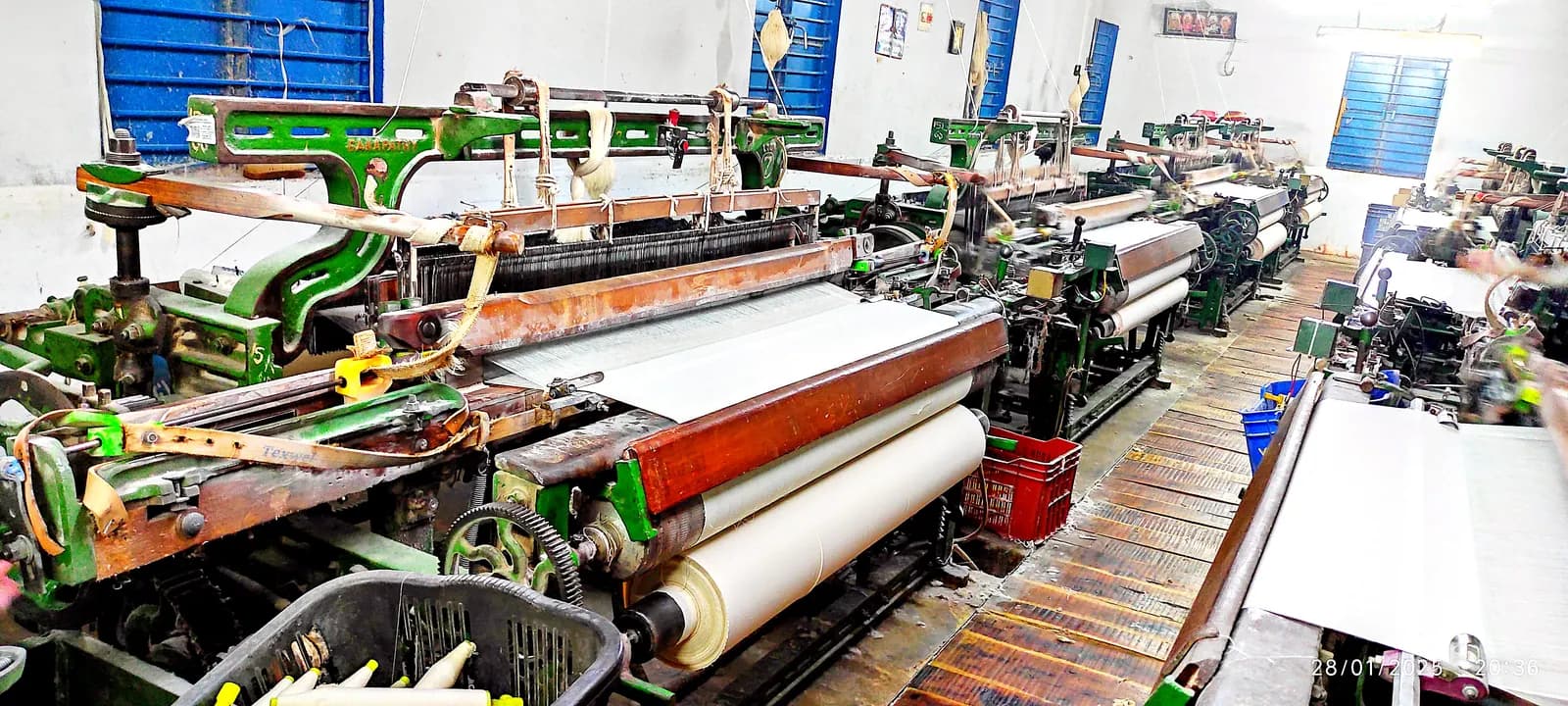
Section 143 lets a registered principal send inputs or capital goods to a job worker without paying tax, and from one job worker on to another. The goods must travel under a challan issued by the principal under rule 45 and rule 55. The challan is serially numbered, carries the principal's GSTIN and the job worker's details, the HSN, description, quantity and taxable value of the goods, and the place of delivery. When goods move from one job worker to the next, either the principal or the sending job worker can issue the challan, and job workers endorse the quantity and description when they pass goods on or return them.
The principal remains responsible for keeping accounts of the goods. That means a register of challans out, quantities processed, quantities returned, waste and scrap, and goods still lying with each job worker.
Job work under section 143, step by step
- 1
Issue a delivery challan
Rule 55 challan for the inputs or capital goods, with HSN, quantity and value. No GST is charged.
Tip: Our free delivery challan generator has the job work fields.
Delivery challan generator - 2
Generate an e-way bill where needed
Always for inter-state movement to a job worker, whatever the value; within a state, above the normal threshold.
- 3
Job worker processes and bills its charges
Tax invoice for job charges under SAC 9988 at the rate for the goods, plus any of its own materials.
- 4
Bring the goods back or sell from the job worker's premises
Inputs within one year, capital goods within three. Direct sale needs a registered job worker or a declared additional place of business.
- 5
Report in ITC-04
Challans sent and received, half-yearly or yearly, by the 25th of the following month.
Selling directly from the job worker's premises
After the job work is done, the principal can bring the goods back to its own premises without paying tax, or supply them straight from the job worker's place to a customer in India on payment of tax, or export them with or without payment of tax. Supplying from the job worker's premises is allowed only if the job worker is registered, or the principal has declared those premises as an additional place of business in its own registration, or the goods are of a type the Commissioner has notified.
Waste and scrap
Waste and scrap generated during job work may be sold by the job worker from its own premises on payment of tax if it is registered. If the job worker is not registered, the principal sells the scrap and pays the tax.
The one-year and three-year rule
Section 143(1) sets the clock. Inputs, including intermediate goods arising from processing, must be brought back or supplied from the job worker's premises within one year of being sent out. Capital goods must come back within three years. Moulds and dies, jigs and fixtures, and tools are excluded, so a die sent to a press shop can stay there indefinitely. On sufficient cause, the Commissioner can extend the one-year limit by up to one more year and the three-year limit by up to two more years.
Where the principal had goods delivered straight from its supplier to the job worker, section 19 says the clock starts when the job worker receives them, not when the supplier's invoice is dated. The principal can take input tax credit on such goods even though they never entered its own premises.
If the deadline passes, section 143(3) and (4) deem the goods to have been supplied by the principal to the job worker on the day they were originally sent out. Rule 45(4) requires the principal to show that supply in GSTR-1 and pay tax with interest. Because the deemed date is the dispatch date, interest at 18% a year runs from the month the goods left, not from when the year expired.
The job work clock for one challan
Day 0
Inputs leave on a challan (or reach the job worker directly from your supplier)
Within 1 year
Inputs back, or supplied from the job worker's premises
Within 3 years
Capital goods back (moulds, dies, jigs, fixtures and tools exempt)
Limit missed
Deemed supply on Day 0 — report in GSTR-1, pay tax with interest
ITC-04: what it is and when it is due
FORM GST ITC-04 is the principal's statement of goods sent to and received from job workers. It lists the challans issued (goods sent out), goods received back, goods sent from one job worker to another, and goods supplied directly from the job worker's premises. Only the principal files it; job workers do not.
The filing frequency changed on 1 October 2021, when Notification 35/2021-Central Tax amended rule 45(3). A principal whose aggregate turnover in the preceding financial year exceeded ₹5 crore files ITC-04 for each half-year: April to September by 25 October, and October to March by 25 April. Every other principal files once a year, by 25 April after the financial year. Many older pages still describe a quarterly return; that has not applied since September 2021. The Commissioner can extend the due date by notification.
For the half-year April to September 2026, a principal above ₹5 crore has until 25 October 2026. A principal below that turnover reports the whole of 2026-27 in one ITC-04 by 25 April 2027. Fill it in carefully: the challan values, quantities and HSN must match your stock records, because ITC-04 is the department's main evidence of what is lying with job workers. No separate late fee is prescribed for ITC-04, but persistent non-filing invites a general penalty and, more seriously, makes it hard to defend goods that were not returned in time.
E-way bills and documents
Rule 138 contains a special proviso for job work: where a principal in one state sends goods to a job worker in another state, an e-way bill must be generated irrespective of the value of the consignment, either by the principal or by the job worker if registered. Within a state, the ordinary threshold of ₹50,000 applies unless the state has set a different one, and the challan accompanies the goods. Handicraft goods moved between states by persons exempt from registration also need an e-way bill regardless of value. See our e-way bill guide for generation steps.
On the job worker's side, the tax invoice is a normal B2B invoice for services: GSTIN of both parties, SAC 9988 (with the six-digit code that fits), description of the process, quantity processed, job charges, and the tax. If the principal is in another state, the job worker charges IGST, because the place of supply of such a service to a registered person is normally the recipient's location. A job worker below the services registration threshold of ₹20 lakh does not have to register merely because its customers are in other states; inter-state services suppliers enjoy the threshold exemption.

Worked examples
Engineering job work at 18%
Shree Auto Components in Pune, registered with turnover of ₹14 crore, sends 5,000 aluminium castings worth ₹6,00,000 to a CNC job worker in Chakan for machining on 10 November 2025. No GST is paid on the castings; a challan and, if the value exceeds the Maharashtra intra-state limit, an e-way bill go with them. The job worker machines them and invoices job charges of ₹4,00,000 under the residual entry: GST at 18% is ₹72,000 (₹36,000 CGST + ₹36,000 SGST). Before 22 September 2025 the same job would have carried 12%, or ₹48,000. Shree Auto takes the ₹72,000 as input tax credit, so its net cost is unchanged, but it funds ₹24,000 more until the credit is used. Because its turnover exceeds ₹5 crore, the challan goes into the ITC-04 for October 2025–March 2026, due 25 April 2026.
What happens if inputs are not returned
Suppose 400 of those castings, worth ₹48,000, are never machined and stay at Chakan beyond 9 November 2026. Under section 143(3) they are deemed supplied to the job worker on 10 November 2025. Shree Auto must declare a supply of ₹48,000 in GSTR-1 and pay GST at the castings' own rate — 18% for these aluminium parts — which is ₹8,640, plus interest at 18% a year from November 2025 — about ₹1,560 if it pays in November 2026. It is far cheaper to chase the job worker before the year ends, or to seek an extension from the Commissioner, than to pay this.
Textile job work at 5%
A garment brand in Tiruppur sends knitted fabric to a dyeing unit in Erode. Dyeing charges are ₹2,50,000; textile job work is 5%, so GST is ₹12,500. The brand then sends dyed fabric to a stitching unit for ₹3,00,000 of stitching charges, also at 5%, or ₹15,000. Because the brand's garments mostly sell at 5%, input services at 5% avoid the inverted-duty build-up that higher-rated services cause; our GST on garments guide explains why job work credit is not refundable under the inverted-duty formula.
Work out GST on your job charges
Common mistakes and how they are fixed
Still billing 12%. Engineering, plastic moulding, electroplating and similar job workers that did not update their billing on 22 September 2025 have under-charged tax. The job worker owes the difference with interest; it can issue debit notes to principals for the extra GST, and principals can take credit on them. Correct the rate master in your billing software first.
No challan, or a challan without values. Goods sent without a proper rule 55 challan look like unaccounted removals, and officers may treat them as supplies. Every movement, including job worker to job worker, needs a challan or an endorsement.
Losing track of the one-year clock. Principals with dozens of job workers often discover in an audit that some inputs have been out for more than a year. Run an ageing report of open challans every quarter and get the goods back, sell them from the job worker's premises with tax, or apply for an extension.
Treating an unregistered owner's goods as job work. A rice mill processing a farmer's paddy or a workshop repairing a consumer's goods is not doing job work; check the right entry before applying a concessional rate.
Supplying from an unregistered job worker's premises. If your job worker is not registered and you have not added its premises to your registration, you cannot invoice customers from there. Add the premises to your registration first; our GST registration guide covers the portal.
Ignoring ITC-04. Because ITC-04 has no late fee, many principals skip it. It is the first document an officer asks for when stock is short, and it is evidence that goods with job workers are not deemed supplies.
What to do next
If you are a job worker, check that your billing software uses the correct entry and rate for each customer's goods, and that you are registered if your turnover has crossed the threshold. If you are a principal, pull a list of open challans, sort them by date sent, and recover anything approaching the one-year mark. Use our delivery challan generator for clean challans and the GST calculator to check job work invoices, and read the GST 2.0 guide for the other rate changes that took effect on 22 September 2025.
This is general information, not legal or tax advice — confirm on the official source or with a professional.
Frequently asked questions
Since 22 September 2025, job work that is not specifically listed is taxed at 18% (9% CGST + 9% SGST, or 18% IGST) under SAC heading 9988. Job work on food products, animal feed, pharmaceuticals, hides and leather, printing of books and Chapter 48/49 goods, textiles, bricks, jewellery other than diamonds, handicrafts and umbrellas is taxed at 5% (2.5% CGST + 2.5% SGST). Job work on diamonds is 1.5% (0.75% CGST + 0.75% SGST), and tailoring is 5%.
Under section 143 of the CGST Act, inputs must come back to the principal, or be supplied from the job worker's premises, within one year of being sent out, and capital goods within three years. The Commissioner can extend these by one and two years. Moulds, dies, jigs, fixtures and tools have no time limit. If the deadline passes, the goods are treated as supplied on the day they were sent.
ITC-04 is due by the 25th of the month after the period. A principal whose aggregate turnover in the previous financial year exceeded ₹5 crore files it every six months: April–September by 25 October and October–March by 25 April. Every other principal files it once a year, by 25 April for the financial year just ended.
Only if its own aggregate turnover crosses the registration threshold for service providers, ₹20 lakh in most states and ₹10 lakh in the special-category states, or it is otherwise required to register. Being a job worker does not by itself require registration. However, the principal can supply finished goods directly from the job worker's premises only if the job worker is registered or the principal declares those premises as an additional place of business.
No. The principal sends inputs or capital goods to the job worker on a delivery challan without paying tax, because ownership does not change. The job worker charges GST only on the job charges, plus any materials of its own that it uses. GST on the goods becomes payable only if they are not returned in time, in which case the principal pays it with interest.
Yes, in most cases. For movement to a job worker in another state or Union territory, rule 138 requires an e-way bill irrespective of the value of the consignment, generated by the principal or by a registered job worker. Within a state, the normal e-way bill threshold of ₹50,000 (or the state's own limit) applies, and the delivery challan travels with the goods.
Sources & verification
Figures on this page were checked against the sources below when it was last reviewed on 9 October 2026. Each rate and limit is stored once with its own official source and review date, and official update channels are monitored daily so changes are picked up. How we verify
- 1.CGST Act, 2017 — section 143 (job work procedure) — CBIC · accessed 9 October 2026
- 2.CGST Act, 2017 — section 19 (ITC on inputs and capital goods sent for job work) — CBIC · accessed 9 October 2026
- 3.CGST Rules — rule 45 (conditions for goods sent to job worker; ITC-04) — CBIC · accessed 9 October 2026
- 4.CGST Rules — rule 55 (delivery challan) and rule 138 (e-way bill) — CBIC · accessed 9 October 2026
- 5.Notification No. 15/2025–Central Tax (Rate), 17 September 2025 (substituting S. No. 26, heading 9988) — Ministry of Finance (copy on ICAI Palakkad branch) · accessed 9 October 2026
- 6.Circular No. 126/45/2019-GST (22 November 2019) — CBIC (GST Council website) · accessed 9 October 2026
- 7.GST rates for job work services: sector-wise rates — Juris Hour · accessed 9 October 2026
MSMETOOLS is an independent platform and is not affiliated with any government agency, ministry or department.
Tools for this
Delivery Challan Generator (India)
Create delivery challans easily.
GST Calculator (India)
Calculate GST for your sales and purchases with current rates.
Related guides
 E-Way Bill 2026: Limit, Validity, Rules & How to GenerateRead guide
 Delivery Challan Format 2026: Rule 55 Fields & GST RulesRead guide
 GST on Garments 2026: 5% vs 18%, ₹2,500 Rule & HSN CodesRead guide
 GST on Beauty Treatment Services 2026: 5% Salon Rate, SACRead guide
Official links open the government site in a new tab.