 GST & indirect tax
GST on Batteries in 2026: Rates for Lithium-ion, Lead-acid, Inverter, Car and EV Batteries
GST on batteries in 2026: 18% on lithium-ion, lead-acid, inverter and car batteries (lead-acid was 28%), EVs at 5%, exchange and scrap rules, worked ₹ bills.
 Edited by Sumeet YadavFounder & editor, MSMETOOLS · fact-checked against official sources
Contents (10)
- 1. GST rates on batteries in 2026
- 2. Battery HSN codes: 8506, 8507 and 8549
- 3. Worked bills: GST on car, inverter and EV batteries
- 4. EV batteries: why the vehicle is 5% but the battery is 18%
- 5. Inverters, UPS systems and solar batteries
- 6. Input tax credit on batteries
- 7. Exchange offers and old batteries
- 8. Battery waste rules and EPR
- 9. Common mistakes with GST on batteries
- 10. What to do next
Batteries were one of the quieter changes in GST 2.0. From 22 September 2025, lead-acid batteries — the ones in cars, two-wheelers, inverters and UPS systems — fell from 28% to 18%, matching the rate lithium-ion batteries already carried. This guide gives the 2026 GST rate for every common battery, the HSN codes, why an electric scooter is taxed at 5% while its replacement battery is taxed at 18%, how exchange offers and scrap batteries are taxed, what the battery waste rules mean for sellers, and worked ₹ bills. Rates were checked against the notified schedule in October 2026.
Quick answer
All rechargeable batteries attract 18% GST (HSN 8507) — lithium-ion, lead-acid, inverter, car, bike and UPS batteries alike. Lead-acid batteries fell from 28% to 18% on 22 September 2025; lithium-ion was already at 18%. Primary cells (AA, AAA, button cells, HSN 8506) also attract 18%.
A battery fitted in an EV at sale is taxed with the vehicle at 5%
A replacement EV battery pack bought alone: 18%
Exchange offers: GST on the price before the exchange discount
Battery scrap (HSN 8549): 18%
On a ₹5,000 car battery, GST is now ₹900 instead of ₹1,400
GST rates on batteries in 2026
The 56th GST Council, meeting on 3 September 2025, moved heading 8507 "electric accumulators … other than lithium-ion battery and other lithium-ion accumulators including lithium-ion power banks" from 28% to 18%. CBIC then notified a new goods rate schedule, Notification 9/2025–Central Tax (Rate), which lists the whole of heading 8507 in Schedule II at 9% central tax, with no carve-out. The result is one rate — 18% — for every rechargeable battery, whatever its chemistry.
GST on batteries from 22 Sep 2025
| Battery (HSN) | Before 22 Sep 2025 | GST now |
|---|---|---|
Lead-acid batteries for cars, bikes, tractors, trucks (8507 10) | 28% | 18% |
Lead-acid inverter and UPS batteries, tubular or flat plate (8507 20) | 28% | 18% |
Lithium-ion batteries and cells — phones, laptops, EV packs, inverters (8507 60) | 18% | 18% |
Lithium-ion power banks (8507) | 18% | 18% |
Nickel-cadmium, nickel-metal hydride and other accumulators (8507) | 28% | 18% |
Primary cells and batteries — AA, AAA, 9V, button cells (8506) | — | 18% |
Battery fitted to an electric vehicle at sale (part of the vehicle, 87) | 5% | 5% |
Waste and scrap of batteries (8549) | — | 18% |
Lead-acid batteries for cars, bikes, tractors, trucks (8507 10)
- Before 22 Sep 2025
28%
- GST now
18%
Lead-acid inverter and UPS batteries, tubular or flat plate (8507 20)
- Before 22 Sep 2025
28%
- GST now
18%
Lithium-ion batteries and cells — phones, laptops, EV packs, inverters (8507 60)
- Before 22 Sep 2025
18%
- GST now
18%
Lithium-ion power banks (8507)
- Before 22 Sep 2025
18%
- GST now
18%
Nickel-cadmium, nickel-metal hydride and other accumulators (8507)
- Before 22 Sep 2025
28%
- GST now
18%
Primary cells and batteries — AA, AAA, 9V, button cells (8506)
- Before 22 Sep 2025
—
- GST now
18%
Battery fitted to an electric vehicle at sale (part of the vehicle, 87)
- Before 22 Sep 2025
5%
- GST now
5%
Waste and scrap of batteries (8549)
- Before 22 Sep 2025
—
- GST now
18%
Where the old rate column shows a dash, we have not shown a figure because we could not confirm it from the official rate tables. Batteries never carried compensation cess, so the GST rate is the whole tax at the point of sale. The rate depends on the date of supply: a lead-acid battery a dealer bought at 28% in August 2025 and sold on or after 22 September 2025 is billed at 18%, and the dealer keeps the credit of the tax it paid, using it against later output tax.
Battery HSN codes: 8506, 8507 and 8549
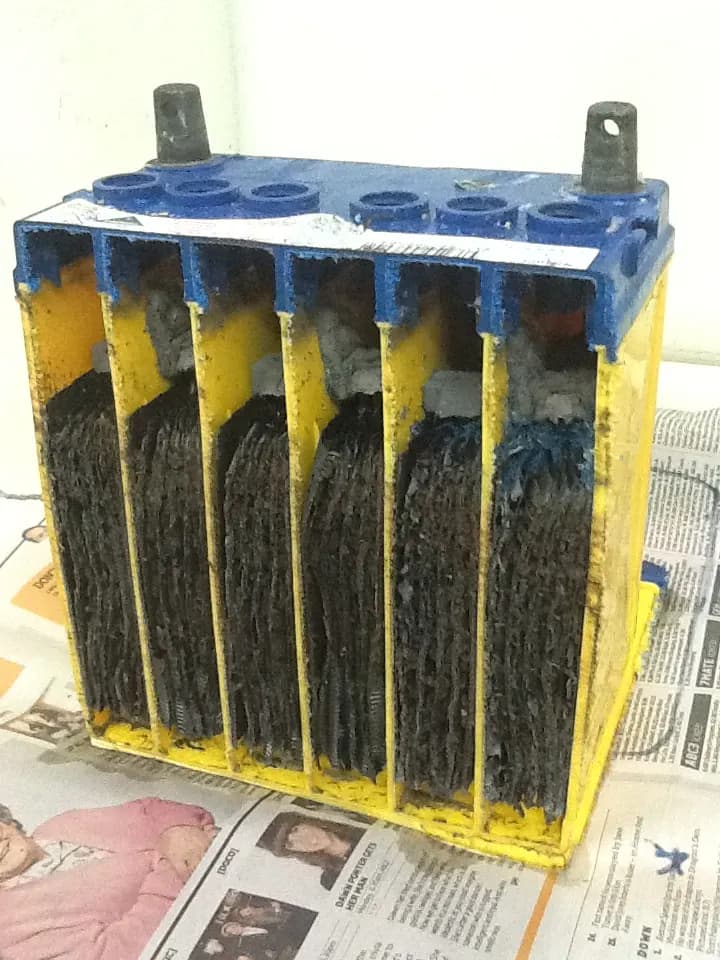
Heading 8507 covers electric accumulators — rechargeable batteries and cells — including their separators, rectangular or not. Its six-digit subheadings follow the chemistry and use. Lead-acid batteries "of a kind used for starting piston engines" — car, bike, truck and tractor batteries — are 8507 10. Other lead-acid batteries, such as tubular inverter batteries, VRLA batteries for UPS systems and traction batteries for forklifts, are 8507 20. Nickel-cadmium is 8507 30, nickel-iron 8507 40, nickel-metal hydride 8507 50, lithium-ion 8507 60 and other types 8507 80. Parts such as separators are 8507 90.
Heading 8506 covers primary cells and batteries — the non-rechargeable kind: zinc-carbon and alkaline AA and AAA cells, 9V batteries, lithium coin cells for watches and car keys, and zinc-air hearing-aid cells. Heading 8549, added to the tariff in 2022, covers electrical and electronic waste and scrap, including spent primary cells, batteries and accumulators.
A business with aggregate turnover up to ₹5 crore must show at least a 4-digit HSN on B2B invoices, and larger businesses a 6-digit HSN. Since every rechargeable battery is at the same rate, the four-digit code 8507 is enough for the tax, but the six-digit code is still required on invoices of larger sellers. Our HSN code finder helps with chargers, cables and other items you sell alongside.
Worked bills: GST on car, inverter and EV batteries
The examples hold the pre-tax price constant, so you can see the effect of the rate change alone. They are illustrative prices, not quotes; shop prices also moved because manufacturers revised their list prices after the cut.
| Battery | Pre-tax price | GST before | Bill before | GST now | Bill now | You save |
|---|---|---|---|---|---|---|
| Car battery, 35Ah lead-acid | ₹5,000 | 28% = ₹1,400 | ₹6,400 | 18% = ₹900 | ₹5,900 | ₹500 |
| Motorcycle battery, 5Ah | ₹1,500 | ₹420 | ₹1,920 | ₹270 | ₹1,770 | ₹150 |
| Tubular inverter battery, 150Ah | ₹12,000 | ₹3,360 | ₹15,360 | ₹2,160 | ₹14,160 | ₹1,200 |
| Lithium-ion inverter battery | ₹45,000 | 18% = ₹8,100 | ₹53,100 | ₹8,100 | ₹53,100 | Nil |
| Replacement e-scooter battery pack | ₹40,000 | 18% = ₹7,200 | ₹47,200 | ₹7,200 | ₹47,200 | Nil |
On a sale within the same state, the GST is split equally between CGST and SGST: the ₹2,160 on the inverter battery becomes ₹1,080 CGST and ₹1,080 SGST. A dealer in Delhi selling to a buyer registered in Haryana charges the full ₹2,160 as IGST. To find the GST inside an all-inclusive price, multiply by 18 and divide by 118: a ₹14,160 inverter battery contains ₹2,160 of GST.
The cut narrowed the tax gap between lead-acid and lithium-ion. Before September 2025, a buyer comparing a lead-acid inverter battery with a lithium-ion one paid 28% on the first and 18% on the second; now both are at 18%, so the comparison is on price, life and warranty alone.
Try it — GST on a battery
EV batteries: why the vehicle is 5% but the battery is 18%
Electrically operated vehicles — including electric two-wheelers, three-wheelers, cars, buses and e-bicycles — sit in Schedule I of the rate notification at 5%. The entry defines them as vehicles run solely on electrical energy from an external source or from one or more batteries fitted to the vehicle. When you buy an electric scooter with its battery, the battery is part of the vehicle and the whole price is taxed at 5%.
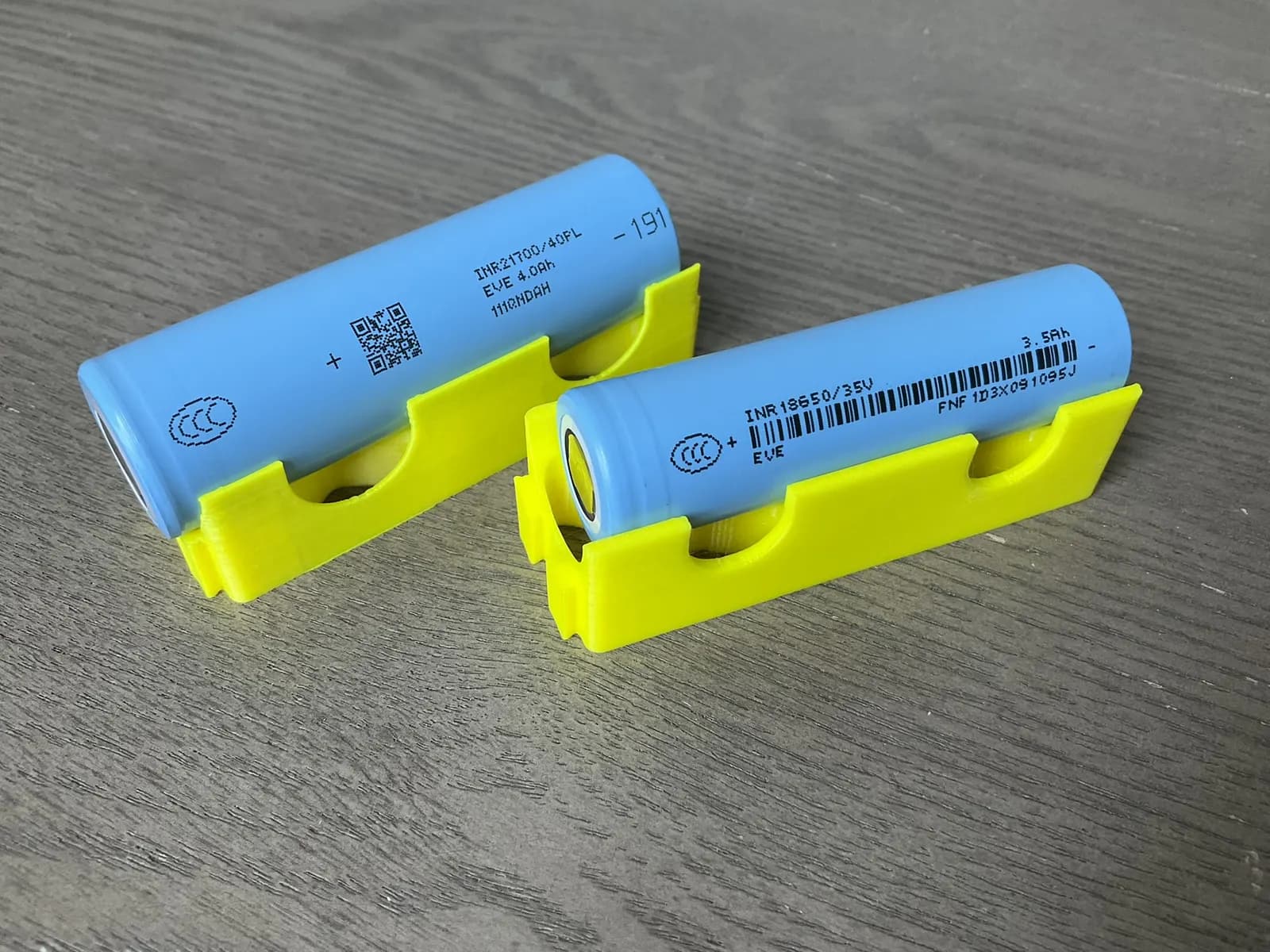
A battery sold on its own is different. A replacement pack for the same scooter, a spare battery for an e-rickshaw or a pack bought by a fleet operator is a lithium-ion accumulator under 8507 60 and attracts 18%. That is a real cost for owners of older electric scooters and e-rickshaws, because the battery is the most expensive part to replace. Fleet operators who are registered and use the vehicles in a taxable business can usually claim the GST as input tax credit.
Some makers sell the vehicle and battery under separate invoices or lease the battery. Whether a vehicle sold without a battery still qualifies as an "electrically operated vehicle" at 5%, and how the battery is then taxed, depends on the facts of each arrangement; check the maker's HSN declaration and, if needed, seek an advance ruling. Battery swapping and battery rental are services, not sales of a battery, and are generally taxed at 18%; the industry has asked the Council for a lower rate, but no cut has been notified as of October 2026. EV chargers and charging stations are taxed at 5%. Our guides to GST on two-wheelers and GST on cars cover the vehicles.
Inverters, UPS systems and solar batteries
An inverter or UPS is a static converter under heading 8504 and attracts 18%, the same as the battery. When a shop sells an "inverter combo" — an inverter and a battery at one price — both items are at 18%, so the bundle question that matters for many other products does not change the tax here. Itemise them anyway, so the customer's warranty papers and your stock records match.
Solar is where the rates diverge. Solar power generators, solar power-based devices and photovoltaic modules are in the 5% schedule, and when solar goods are supplied with installation services, the rate notification deems 70% of the gross price to be goods and the rest services. A battery sold on its own for a solar setup is an accumulator under 8507 at 18%. Whether a battery supplied as part of a complete solar power generating system can share the 5% rate depends on what is supplied and how it is invoiced; check with your adviser before pricing a solar-plus-storage system at the lower rate.
Input tax credit on batteries
Whether you can recover the 18% depends on who buys the battery and what it powers. The general conditions in our input tax credit guide apply: a tax invoice in your name, the invoice in your GSTR-2B, goods received and the supplier having paid the tax.
Who can claim ITC on batteries?
| Buyer | Use | ITC? |
|---|---|---|
Battery dealer or distributor | Stock for resale | Yes, in full |
Factory, office, hospital, data centre | UPS and inverter batteries for the premises | Yes — capital goods or inputs used in business |
Transporter on the forward-charge GTA option | Truck batteries | Yes |
Business owning a car for staff | Car battery | Generally no — section 17(5) |
E-rickshaw or auto operator on the lower passenger rate | Replacement battery | No — that rate allows no credit on goods |
Household | Inverter or car battery | No — not registered |
Battery dealer or distributor
- Use
Stock for resale
- ITC?
Yes, in full
Factory, office, hospital, data centre
- Use
UPS and inverter batteries for the premises
- ITC?
Yes — capital goods or inputs used in business
Transporter on the forward-charge GTA option
- Use
Truck batteries
- ITC?
Yes
Business owning a car for staff
- Use
Car battery
- ITC?
Generally no — section 17(5)
E-rickshaw or auto operator on the lower passenger rate
- Use
Replacement battery
- ITC?
No — that rate allows no credit on goods
Household
- Use
Inverter or car battery
- ITC?
No — not registered
Section 17(5) blocks credit on motor vehicles for carrying people with seating of up to 13 including the driver, and on their servicing, repair and maintenance, unless you deal in such vehicles, carry passengers for hire or run a driving school. A replacement battery for a company car is part of keeping it on the road, so most businesses treat that credit as blocked. Goods vehicles are not caught, which is why a transporter can claim the GST on truck batteries.
A business that buys a large UPS battery bank for a server room usually capitalises it. Credit on capital goods is available in full when the asset is received, provided you do not also claim depreciation on the tax component under the Income-tax Act. If the battery bank is later sold or scrapped, the credit rules for capital goods on disposal apply — typically you pay tax on the sale value, or reverse credit for the remaining life if that is higher.
Exchange offers and old batteries
Battery shops routinely take back the old battery and knock a sum off the new one. For GST, the old battery is part of the consideration — you are paying partly in money and partly in goods. CGST Rule 27 says the value of such a supply is its open market value, and its own illustration is an exchange: a new phone sold for ₹20,000 with an old phone, when the price without exchange is ₹24,000, has a value of ₹24,000.
Applied to batteries: a car battery costs ₹6,000 before tax without exchange and ₹5,000 with an old battery. GST at 18% is charged on ₹6,000 — ₹1,080 — and the customer pays ₹5,000 plus ₹1,080, that is ₹6,080. Billing GST only on ₹5,000 undervalues the supply by the exchange value. The customer, usually unregistered, pays no GST on the old battery it hands over.
The dealer then holds a stock of spent batteries. Selling them to a registered recycler is a taxable supply of waste and scrap under 8549 at 18%. Recyclers often buy lead scrap separately; lead waste and scrap is heading 7802, which falls within the metal scrap of chapters 72 to 81 covered since 10 October 2024 by reverse charge when the seller is unregistered and by GST TDS of 2% (1% CGST + 1% SGST, or 2% IGST) on contracts above ₹2.5 lakh when the seller is registered. Whole spent batteries under 8549 are outside that metal-scrap regime, so a purchase of whole batteries from an unregistered collector carries no GST and no reverse charge — but the recycler then also has no tax invoice, and the waste rules expect batteries to move through registered channels.
Exchange offer, in numbers
₹6,000
Price without exchange
taxable value under Rule 27
₹1,080
GST at 18%
on ₹6,000, not ₹5,000
₹6,080
You pay
₹5,000 + ₹1,080, plus your old battery
The same logic applies to a buy-back or upgrade scheme run by a manufacturer through its dealers. If the manufacturer funds part of the exchange discount and pays the dealer for it, that payment is part of the consideration for the new battery too, and the dealer includes it in the taxable value. Keep the scheme circular and the claim settlement with your invoice file, because the department will compare your billed values with the list price.
Battery waste rules and EPR
GST is not the only compliance on batteries. The Battery Waste Management Rules, 2022, issued under the Environment (Protection) Act and enforced by the Central Pollution Control Board, place extended producer responsibility (EPR) on producers — manufacturers, importers and brand owners who put batteries on the Indian market, including batteries inside equipment and vehicles. Producers register on CPCB's EPR portal for batteries, take on collection and recycling targets, and buy EPR certificates from registered recyclers and refurbishers to meet them. Recyclers and refurbishers register on the same portal and file returns.
For a dealer or retailer, the practical points are to buy from producers who are registered, take back spent batteries where your producer's scheme requires it, and pass them only to registered recyclers or collection agents. EPR certificates and collection fees are commercial transactions between businesses, so look at the GST on them under the usual rules when you invoice or pay them. The rules have been amended several times since 2022; check the CPCB portal for current deadlines and targets.
Check your battery bill
0/6Common mistakes with GST on batteries
Still billing lead-acid at 28%. Billing software and printed price lists that were not updated after 22 September 2025 overcharge customers. Correct the rate master, issue credit notes to registered buyers who were overcharged, and adjust the next return.
Billing a loose EV battery at 5%. The 5% rate belongs to the vehicle. A replacement or spare pack is an accumulator at 18%.
Deducting the exchange value before tax. Rule 27 values an exchange sale at the price without exchange. Invoices that show GST only on the net cash price are a common audit finding at battery dealerships.
Selling scrap batteries without an invoice. Spent batteries are taxable scrap. Cash sales to informal collectors break both the GST trail and the waste rules.
Missing the inverted duty refund. Makers of goods at 5% that use batteries at 18% — electric vehicle makers above all — build up credit. Section 54(3) of the CGST Act allows a refund of credit accumulated because inputs carry a higher rate than the output; file it regularly.
Official links
- Notification 9/2025–CT(Rate) — goods rate scheduleEntries 8506, 8507, 8549 and EVs
- 56th GST Council — recommendationsBatteries other than lithium-ion: 28% to 18%
- Rule 27, CGST RulesValuing exchange offers
- CPCB EPR portal for batteriesProducer and recycler registration
- CGST rate notificationsLater amendments, if any
What to do next
If you sell batteries, check that your billing software uses 18% for every chemistry, the right HSN code, and full-price valuation for exchange offers. If you run a fleet of electric vehicles, budget for 18% on replacement packs and claim the credit where you can. For related products, see our guides to GST on electronics and GST 2.0, and use the GST calculator to check any bill.
This is general information, not legal or tax advice — confirm on the official source or with a professional.
Frequently asked questions
All rechargeable batteries under HSN 8507 — lithium-ion, lead-acid, nickel and others — attract 18% GST. Lead-acid and other non-lithium batteries fell from 28% to 18% on 22 September 2025; lithium-ion was already at 18%. Primary cells such as AA and button cells (HSN 8506) also attract 18%.
Inverter batteries are lead-acid (tubular or flat-plate) or lithium-ion accumulators under heading 8507, so they attract 18%. Before 22 September 2025, a lead-acid inverter battery was taxed at 28%. On a pre-tax price of ₹12,000, GST is now ₹2,160 instead of ₹3,360. The inverter itself, a static converter under 8504, is also taxed at 18%.
Only when the battery is part of the electric vehicle. Electrically operated vehicles, including e-scooters, e-rickshaws and e-bicycles, attract 5%, and the battery fitted to the vehicle at sale is part of that supply. A replacement battery pack bought on its own is a lithium-ion accumulator under 8507 and attracts 18%. EV chargers attract 5%.
Rechargeable batteries (accumulators) fall under heading 8507 — 8507 10 for lead-acid batteries used to start engines, 8507 20 for other lead-acid batteries including inverter batteries, and 8507 60 for lithium-ion. Non-rechargeable primary cells and batteries fall under 8506. Waste and scrap of batteries is under 8549.
The old battery is part of what you pay, so GST is charged on the full price of the new battery before the exchange discount. CGST Rule 27 values such a supply at its open market value. If a battery costs ₹6,000 without exchange and ₹5,000 with your old one, GST is on ₹6,000 — ₹1,080 at 18%.
Waste and scrap of batteries and accumulators falls under HSN 8549 and attracts 18%. A registered dealer selling spent batteries to a recycler charges GST like any other sale. Since whole spent batteries are classified in chapter 85, the reverse charge on metal scrap of chapters 72 to 81 does not cover them, though it does cover lead scrap under heading 7802.
Sources & verification
Figures on this page were checked against the sources below when it was last reviewed on 9 October 2026. Each rate and limit is stored once with its own official source and review date, and official update channels are monitored daily so changes are picked up. How we verify
- 1.Notification No. 9/2025–Central Tax (Rate), 17 September 2025 (Gazette of India) — Ministry of Finance / Gazette of India · accessed 9 October 2026
- 2.Recommendations of the 56th GST Council meeting (press release with annexures) — GST Council / PIB · accessed 9 October 2026
- 3.Rule 27 – CGST Rules, 2017 (value where consideration is not wholly in money) — CBIC · accessed 9 October 2026
- 4.EPR Portal for Battery Waste Management — Central Pollution Control Board · accessed 9 October 2026
- 5.Notification No. 06/2024–Central Tax (Rate), 8 October 2024 — CBIC · accessed 9 October 2026
- 6.HSN Code for Battery, Inverter, UPS & Solar Panel: GST Rates for Power Equipment — Tally Solutions · accessed 9 October 2026
- 7.GST on electric vehicles in India: rates, HSN and incentives — Tax Garden · accessed 9 October 2026
- 8.GST issues faced by battery-as-a-service providers — King Stubb & Kasiva · accessed 9 October 2026
MSMETOOLS is an independent platform and is not affiliated with any government agency, ministry or department.
Tools for this
GST Calculator (India)
Calculate GST for your sales and purchases with current rates.
Invoice Generator
Create professional invoices with tax, logo and custom details.
HSN Code Finder (India)
Find the correct HSN/SAC code for your product.
Related guides
 GST on Bikes 2026: 18% vs 40%, EVs, Bicycles & InsuranceRead guide
 GST on Solar Panels 2026: 5% Rate, 70:30 Rule & ITCRead guide
 GST on Second Hand Cars 2026: 18% on Margin, Rules & ExamplesRead guide
 GST on Tyres 2026: Car, Bike, Truck & Tractor Rates, HSN 4011Read guide
Official links open the government site in a new tab.