 GST & indirect tax
GST on Second-Hand Cars in 2026: The Margin Scheme, Who Pays and Worked Examples
GST on second hand cars in 2026: 18% on the dealer's margin, no GST on sales by individuals, company car sales on depreciated value, negative margin and ₹ examples.
 Edited by Sumeet YadavFounder & editor, MSMETOOLS · fact-checked against official sources
Contents (11)
- 1. Who pays GST on a second-hand car
- 2. The margin scheme: Rule 32(5)
- 3. The rate: 18% on the margin under Notification 8/2018
- 4. Worked examples in rupees
- 5. Used electric cars
- 6. Repossessed cars sold by banks and NBFCs
- 7. Used two-wheelers and commercial vehicles
- 8. Buying a used car for your business: input tax credit
- 9. How dealers should run the margin scheme
- 10. Common mistakes
- 11. What to do next
India's used-car market runs through three kinds of seller: individuals selling their own cars, organised and roadside dealers who buy and resell, and companies, fleet operators and lenders disposing of vehicles they no longer need. GST treats each differently. Individuals pay nothing, dealers pay tax only on their margin, and businesses that claimed depreciation work out the margin on the depreciated value. This guide gives the 2026 rules on GST on second-hand cars — the margin scheme in Rule 32(5), the 18% rate under Notification 8/2018 after the 2025 changes, negative margins, used EVs and repossessed cars — with worked examples in rupees. For new cars, see our GST on cars guide.
Quick answer
Individuals selling their own car pay no GST. A registered dealer or business that took no input tax credit on the car pays 18% on the margin — 9% CGST + 9% SGST on the margin (selling price minus purchase price, or minus depreciated value if income-tax depreciation was claimed), under Rule 32(5) and Notification 8/2018-CT(R). The same 18% applies to small cars, large cars and SUVs, even though new large cars now carry 40%.
Negative margin (sold at a loss) → no GST
Rate on smaller used cars rose from 12% to 18% on 16 January 2025
GST 2.0 (22 September 2025) kept the 18% margin rate for all used vehicles
If input tax credit was claimed on the car, GST is on the full sale price at the new-car rate
Who pays GST on a second-hand car
GST is a tax on supplies made in the course or furtherance of business. That single test sorts most used-car sales.
An individual selling a personal car — to a neighbour, through a classified listing or to a dealer — is not in the business of selling cars. There is no supply for GST purposes and no tax, however high the price. The buyer pays only the agreed amount plus transfer charges at the RTO. When the Council raised the rate on used vehicles in December 2024, the Finance Ministry explained that the change did not affect sales by unregistered individuals.
A registered used-car dealer — from an organised platform to a single-showroom trader — is in the business of buying and selling cars, so every resale is a taxable supply. Two provisions reduce the tax to the dealer's margin, as explained below.
A registered business selling its own car — a company replacing its director's sedan, a travel operator selling an old fleet car, a factory disposing of a staff vehicle — makes a supply in the course of business. Notification 8/2018 lets it pay GST on the margin over the depreciated value, provided it did not take input tax credit on the car.
A bank or NBFC selling a repossessed car is also taxable on the sale, with a special rule for working out the purchase price, covered later in this guide.
GST on a used-car sale, by seller
| Seller | GST? | Taxable value | Rate |
|---|---|---|---|
Individual selling a personal car | No | — | — |
Registered dealer, no ITC on the car | Yes | Selling price − purchase price | 18% on the margin |
Registered business, depreciation claimed, no ITC | Yes | Sale price − depreciated value | 18% on the margin |
Any registered seller that took ITC on the car | Yes | Full sale price | 18% or 40% (new-car rate) |
Individual selling a personal car
- GST?
No
- Taxable value
—
- Rate
—
Registered dealer, no ITC on the car
- GST?
Yes
- Taxable value
Selling price − purchase price
- Rate
18% on the margin
Registered business, depreciation claimed, no ITC
- GST?
Yes
- Taxable value
Sale price − depreciated value
- Rate
18% on the margin
Any registered seller that took ITC on the car
- GST?
Yes
- Taxable value
Full sale price
- Rate
18% or 40% (new-car rate)
The margin scheme: Rule 32(5)
Rule 32(5) of the CGST Rules applies to "a person dealing in buying and selling of second hand goods", meaning used goods sold as such or after minor processing that does not change their nature. Where no input tax credit has been taken on the purchase, the value of supply is the difference between the selling price and the purchase price. If that value is negative, it is ignored.
For a car dealer, this means the tax base is the margin on each car, not the sale price. Washing, polishing, minor dent repair, replacing tyres or servicing a car before resale is the kind of minor processing the rule allows; converting a car into something different would not be.
Two practical points follow from the wording. First, the rule refers only to the purchase price. Refurbishment, commission paid to brokers, parking and transfer costs are not deducted from the margin under the rule's text, even though some explainers suggest adding them to the purchase price. If you want to treat refurbishment differently, take written advice. Second, the scheme works only when the dealer has not claimed credit on the car. A dealer that buys from another registered dealer or a company and claims the GST on that purchase as credit cannot use the margin scheme for that car and must charge tax on the full resale price.
The rate: 18% on the margin under Notification 8/2018
Rule 32(5) fixes the value; the rate comes from Notification 8/2018-Central Tax (Rate), dated 25 January 2018. It reduces the tax on old and used motor vehicles to a concessional rate applied on "the value that represents margin of the supplier", and applies to any supplier that has not availed input tax credit, CENVAT or VAT credit on the vehicle. Its table has four entries — larger petrol cars, larger diesel cars, SUVs and all other used vehicles under Chapter 87 — and an explanation that defines the margin in two ways:
- For a registered person who claimed depreciation under section 32 of the Income-tax Act, 1961: consideration received minus the depreciated value on the date of supply.
- In any other case: selling price minus purchase price.
In both cases a negative margin is ignored.
The rates have changed twice since 2018:
GST on the margin of used vehicles
1 Jul 2017
Rule 32(5) margin scheme in force; margin taxed at the vehicle's normal rate
25 Jan 2018
Notification 8/2018: 18% on larger cars and SUVs, 12% on all other used vehicles
16 Jan 2025
Notification 04/2025 (55th Council): 'all other used vehicles' raised from 12% to 18%
22 Sep 2025
Notification 12/2025 (GST 2.0): concession re-linked to the 18% and 40% schedules — rate stays 18% on margin
The September 2025 change matters for large cars. Under GST 2.0, new petrol cars above 1,200 cc, diesel cars above 1,500 cc or longer than 4,000 mm, and SUVs moved to 40%, with compensation cess removed. Notification 12/2025 amended 8/2018 so that it now reduces tax "specified in Schedule II or Schedule III of Notification No. 9/2025" — the 18% and 40% schedules — to 9% CGST. The result is that a used SUV sold by a dealer is still taxed at 18% on the margin, not 40%.
Worked examples in rupees
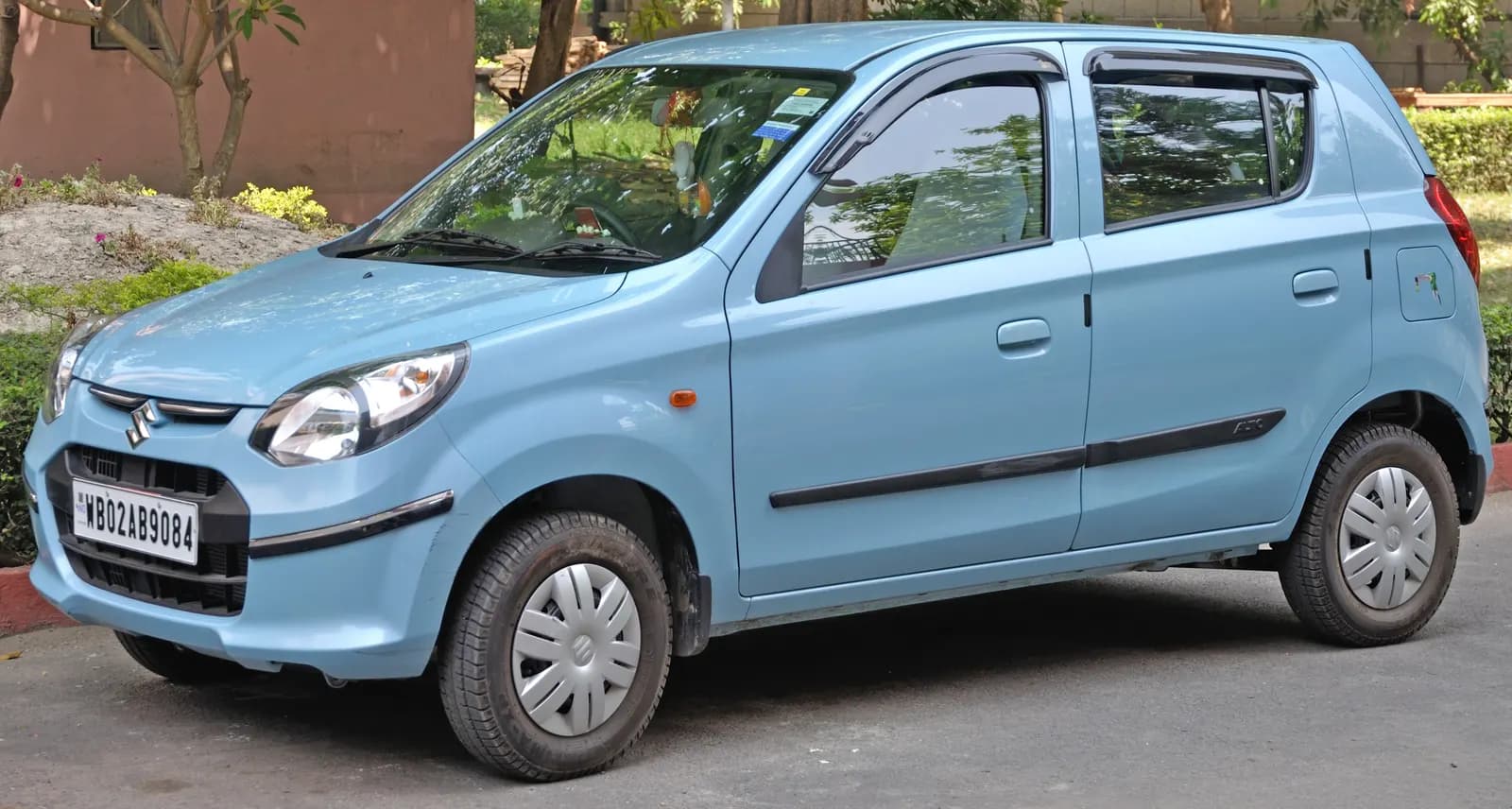
A dealer selling a small car. A Jaipur dealer buys a five-year-old petrol hatchback from an individual for ₹3,40,000, spends ₹18,000 on servicing and detailing, and sells it for ₹4,00,000 before tax. The margin under Rule 32(5) is ₹4,00,000 − ₹3,40,000 = ₹60,000. GST at 18% on the margin is ₹10,800 — ₹5,400 CGST and ₹5,400 SGST — and the buyer pays ₹4,10,800. Before 16 January 2025, the same sale would have attracted 12%, or ₹7,200. The ₹18,000 refurbishment does not reduce the margin under the rule's wording; it simply eats into the dealer's profit.
A dealer selling a used SUV. A Pune dealer buys a diesel SUV from an individual for ₹14,50,000 and sells it for ₹15,75,000. The margin is ₹1,25,000 and GST at 18% is ₹22,500. If the same SUV were taxed at the new-car rate of 40% on the full price, the tax would be ₹6,30,000 — which is why the margin scheme and Notification 8/2018 matter so much to the trade.
A negative margin. A dealer buys a sedan for ₹7,20,000 just before a model change and can sell it only for ₹6,90,000. The margin is −₹30,000, which is ignored. No GST is payable on the sale, and the loss cannot be set off against the margin on other cars, because the calculation is car by car.
A company selling its director's car. A Chennai company bought a sedan in 2022 for ₹18,00,000, took no input tax credit (it was blocked under section 17(5)) and claimed income-tax depreciation every year. In October 2026 it sells the car to a dealer for ₹9,50,000. Suppose the depreciated value on the date of sale, as worked out under the income-tax rules, is ₹8,90,000. The margin is ₹60,000 and GST at 18% is ₹10,800, charged on the company's invoice to the dealer. Had the depreciated value been ₹10,00,000, the margin would be negative and no GST would be payable.
A business that took credit on the car. A car rental company that claimed input tax credit on a hatchback (allowed because it uses the car to rent out with drivers) sells it after three years for ₹4,50,000. Notification 8/2018 does not apply, because credit was taken. GST is payable on the full ₹4,50,000 at the rate for that car — 18% for a small car, or ₹81,000.
Work out GST on a dealer's margin
Used electric cars
New battery electric cars are taxed at 5%, much lower than petrol and diesel cars. When the GST Council recommended the January 2025 increase, its statement described the 18% rate as applying to all old and used vehicles including EVs. The notifications, however, work by reducing tax for vehicles in the 18% and 40% schedules; a new EV sits in the 5% schedule, which Notification 8/2018 does not touch. Practitioners differ on whether a dealer's sale of a used EV is taxed at 5% or 18% on the margin. Until CBIC clarifies, dealers in used EVs should take a written view from their adviser and apply it consistently, and buyers should check the rate shown on the invoice.
Repossessed cars sold by banks and NBFCs
Lenders that repossess cars from defaulting borrowers and auction them face a valuation problem: they never bought the car. The proviso to Rule 32(5) solves it when the borrower is unregistered. The purchase value is deemed to be the borrower's original purchase price, reduced by five percentage points for every quarter, or part of a quarter, between the borrower's purchase and the lender's sale.
Take a car bought by a borrower for ₹8,00,000 on 1 January 2024 and auctioned by the NBFC on 15 September 2026. The gap is ten full quarters plus part of an eleventh, so eleven quarters count, so the deemed purchase price is ₹8,00,000 reduced by 55 percentage points — ₹3,60,000. If the car sells for ₹4,20,000, the margin is ₹60,000 and GST at 18% is ₹10,800. If it sells for ₹3,40,000, the margin is negative and no GST is due.

Used two-wheelers and commercial vehicles
The last entry in Notification 8/2018 covers "all old and used vehicles" under Chapter 87 other than the larger cars and SUVs listed above it, so the same rules reach well beyond cars. A dealer reselling used motorcycles and scooters, a fleet owner selling an old tempo or truck, or a business disposing of a used three-wheeler pays 18% on the margin on the margin, provided no credit was taken on the vehicle. That includes motorcycles above 350 cc, which carry 40% when new under GST 2.0. Commercial vehicle operators deserve a closer look, because many of them do claim credit on trucks used to carry goods; for those vehicles the concession is lost and tax applies on the full sale price at the new-vehicle rate. Our GST on two-wheelers guide covers the new-bike rates.
Buying a used car for your business: input tax credit
If your business buys a used car from a dealer, the GST in the price is generally a cost. Section 17(5)(a) of the CGST Act blocks input tax credit on motor vehicles for transporting persons with seating capacity up to 13, including the driver, except when the business uses them to make further supplies of such vehicles, to transport passengers, to impart driving training or for similar specified purposes. A trading company buying a used sedan for its sales manager therefore cannot claim the tax. A dealer buying stock or a cab operator buying fleet cars can — but if it does, it cannot later use the margin scheme on that car.
Margin-scheme invoices are another practical limit. The dealer pays tax on its margin, not on the full price, so the invoice does not carry GST on the vehicle value that a buyer could claim.
Working out GST on a used vehicle sale
Step 1
ITC taken on the vehicle?
yes → full price at new-vehicle rate
Step 2
Depreciation claimed?
yes → sale price − depreciated value
Step 3
Otherwise
selling price − purchase price
Step 4
Margin negative?
yes → no GST
Step 5
GST = margin × 18%
9% CGST + 9% SGST
How dealers should run the margin scheme
Keep a car-by-car register showing the seller, purchase date and price, the RC transfer, the selling price and the margin. Officers test the margin scheme by matching purchases from individuals with sales, so missing purchase documents can cost the whole benefit for that car. Get a signed purchase agreement or receipt and a copy of the seller's ID and RC for every car bought from an individual.
Report each sale in GSTR-1 at the margin value, and pay tax on the total margin for the month in GSTR-3B. Do not claim input tax credit on the purchase price of cars bought from registered sellers if you intend to use the margin scheme on them. Credit on your own overheads, such as showroom rent, software and advertising, is a separate question; take advice on how it interacts with margin-scheme sales.
If you are a small dealer deciding whether to register, our GST registration guide explains the thresholds and the process.
Common mistakes
Charging GST on the full price. Some small dealers add GST to the whole sale value, overcharging buyers and making themselves less competitive. If no credit was taken, tax only the margin.
Using the 12% rate. Rate masters not updated in January 2025 still charge 12% on small cars. The shortfall must be paid with interest at 18% a year.
Applying 40% to used SUVs. After GST 2.0, some dealers mistakenly applied the new large-car rate to margins. The concession keeps the margin rate at 18%.
Taking credit and still using the margin. The scheme and the concession both disappear for any car on which input tax credit was claimed.
Netting losses across cars. Each car's margin stands alone; a loss on one does not reduce tax on another.
For every used car you sell
0/6Official links
- Rule 32, CGST Rules — margin scheme (sub-rule 5)Second-hand goods and repossessed goods
- Notification 8/2018-CT(R) — used vehiclesOriginal table and margin definitions
- Notification 04/2025-CT(R)12% to 18% from 16 January 2025
- Notification 12/2025-CT(R)Re-linked to GST 2.0 schedules from 22 September 2025
- Section 17, CGST Act — blocked creditsITC on motor vehicles
What to do next
If you are selling your own car, you can ignore GST. If you run a dealership or are disposing of company vehicles, check your billing software uses 18% on the margin for every used vehicle, confirm no credit was taken on each car, and recalculate any sales since 16 January 2025 that went out at 12%. Use our profit margin calculator to price stock after tax and the GST calculator to check invoices. For the rates on new cars after GST 2.0, read the GST on cars guide, and for bikes see GST on two-wheelers.
This is general information, not legal or tax advice — confirm on the official source or with a professional.
Frequently asked questions
A registered dealer or business pays 18% on the margin — 9% CGST plus 9% SGST on the margin, not on the full price — for all old and used motor vehicles, under Notification 8/2018-Central Tax (Rate) as amended in January and September 2025. This applies even to large cars and SUVs that carry 40% when new. It is available only if no input tax credit was taken on the vehicle.
No. An individual selling a personal car is not making a supply in the course of business, so GST does not apply, whatever the price. The same is true when you sell your car to a dealer: the dealer pays you the agreed price with no GST, and the dealer's later resale is taxed only on its margin.
For a dealer, the margin is the selling price minus the purchase price (Rule 32(5) of the CGST Rules). For a business that claimed income-tax depreciation on the car, it is the sale price minus the depreciated value on the date of sale (Notification 8/2018). If the margin is negative, it is ignored and no GST is payable.
18% on the margin. New SUVs and larger cars attract 40% since 22 September 2025, but Notification 12/2025-Central Tax (Rate) kept the used-vehicle concession linked to the new rate schedules, so a used SUV sold by a dealer or business is taxed at 18% on the margin — provided no input tax credit was taken on it.
From 25 January 2018, Notification 8/2018 taxed the margin on larger used cars and SUVs at 18% and on all other used vehicles — small petrol and diesel cars, for example — at 12%. Notification 04/2025-Central Tax (Rate), with immediate effect from 16 January 2025, raised the lower rate to 18%, so all used vehicles now carry the same rate on the margin.
Usually not. Section 17(5) of the CGST Act blocks input tax credit on motor vehicles for carrying up to 13 people, except where they are used for further supply of vehicles, passenger transport, driving training or similar notified purposes. A margin-scheme invoice also does not show GST in a way that supports a credit claim.
Sources & verification
Figures on this page were checked against the sources below when it was last reviewed on 9 October 2026. Each rate and limit is stored once with its own official source and review date, and official update channels are monitored daily so changes are picked up. How we verify
- 1.CGST Rules, 2017 — rule 32 (value of certain supplies), sub-rule (5) — CBIC · accessed 9 October 2026
- 2.Notification No. 8/2018–Central Tax (Rate), 25 January 2018 — Ministry of Finance (GST Council website) · accessed 9 October 2026
- 3.Notification No. 04/2025–Central Tax (Rate), 16 January 2025 — Ministry of Finance (copy on Chhattisgarh Commercial Tax (GST) Department website) · accessed 9 October 2026
- 4.Notification No. 12/2025–Central Tax (Rate), 17 September 2025 — Ministry of Finance (copy on Chhattisgarh Commercial Tax (GST) Department website) · accessed 9 October 2026
- 5.CGST Act, 2017 — section 17 (blocked credits) — CBIC · accessed 9 October 2026
- 6.GST on old and used / refurbished cars — ClearTax · accessed 9 October 2026
- 7.Do you have to pay GST if you sell your old car? What the revision means — Newschecker · accessed 9 October 2026
MSMETOOLS is an independent platform and is not affiliated with any government agency, ministry or department.
Tools for this
GST Calculator (India)
Calculate GST for your sales and purchases with current rates.
EMI Calculator
Calculate loan EMIs for business and personal loans.
Profit Margin Calculator
Calculate profit, markup and margin for your products or services.
Related guides
 GST on Cars 2026: 18% vs 40% Rates, EVs, Used Cars & ITCRead guide
 GST on Batteries 2026: Lithium-ion, Lead-acid & EV RatesRead guide
 GST on Renting of Motor Vehicles 2026: 5% or 18% & RCMRead guide
 GST on Tyres 2026: Car, Bike, Truck & Tractor Rates, HSN 4011Read guide
Official links open the government site in a new tab.