 Starting & growing a business
Laundry and Dry-Cleaning Business in India (2026): Machines, Price List, Licences, GST and a Worked P&L
Start a laundry or dry-cleaning business in India in 2026: machine costs, a dry cleaning price list, pollution consent, GST at 18% or 6%, funding and a worked P&L.
 Edited by Sumeet YadavFounder & editor, MSMETOOLS · fact-checked against official sources
Contents (10)
- 1. Which laundry format suits you
- 2. Laundry machines and equipment: what to buy
- 3. Laundry business cost in India (estimate)
- 4. Dry cleaning and laundry price list (estimate)
- 5. Licences, pollution consent and boiler rules
- 6. GST on laundry and dry cleaning services
- 7. Worked example: monthly P&L and break-even
- 8. Funding a laundry business
- 9. Mistakes that sink new laundries
- 10. What to do next
A laundry looks like a machine business, but it is really a logistics and trust business: you take a customer's clothes, promise a time and a finish, and hand back every piece. The machines decide how many kilos you can wash; the tagging, ironing quality and pickup decide whether customers come back. This guide is for first-time owners in India planning a wash-and-iron laundry, a dry-cleaning counter, a self-service laundromat or a plant serving hotels and hostels. It covers formats, machines and an estimated setup cost table with its basis, an estimated dry cleaning price list, pollution, boiler and other licences, GST, funding and a worked monthly P&L. Rules were checked against CPCB, GST and India Code sources in October 2026.
Quick answer
A small wash-and-iron laundry with a dry-cleaning collection counter in a tier-2 city costs roughly ₹9–21 lakh to set up (our estimate), mostly on two commercial washer-extractors, dryers, steam ironing tables and working capital. Laundry and dry cleaning attract 18% GST; small units can opt for composition at 6%.
CPCB lists a standalone mechanised laundry with a boiler as Orange — consent from your State Pollution Control Board
A steam boiler of 25 litres or more must be registered under the Boilers Act, 2025
Price by kilo for wash-and-iron, by piece for dry cleaning; publish a clear damage and delay policy
Worked example: break-even at about 24 orders a day
Which laundry format suits you
Pick the format before you pick machines, because it decides your space, power load, licences and staff.
- Wash-and-iron laundry (retail, 400–600 sq ft). You wash, dry, iron and pack clothes, charging by kilo or by piece, with pickup and delivery. Most new laundries in India start here; it is the format in our worked example.
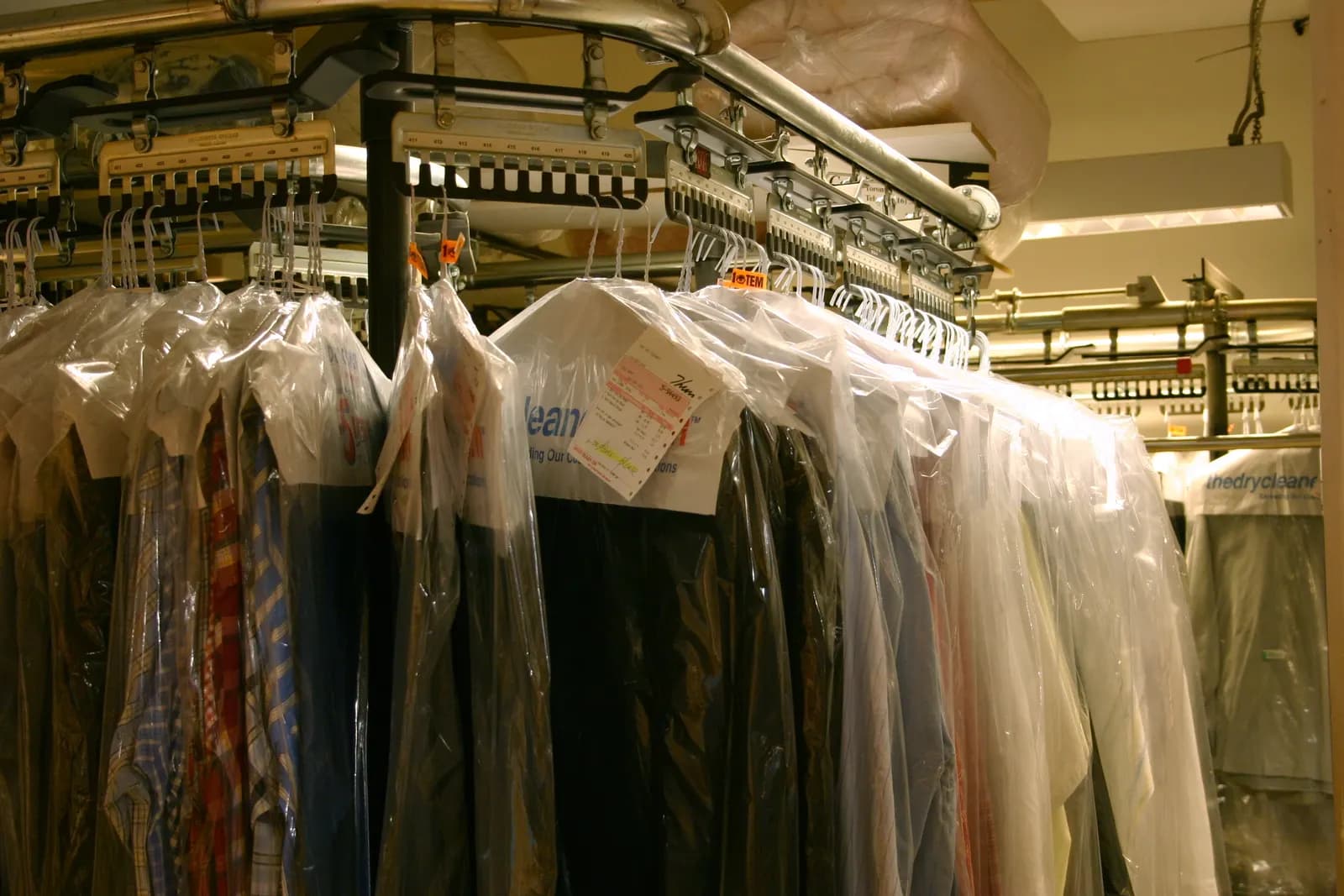
- Dry-cleaning counter with outsourced cleaning. You take in suits, sarees and woollens, tag them and send them to a dry-cleaning plant, keeping a margin of roughly half the price. Low capital, but you depend on the plant's quality and turnaround.
- In-house dry cleaning. A solvent dry-cleaning machine (hydrocarbon or perchloroethylene) lets you control quality and keep the full price, but it brings higher capital, solvent handling and hazardous-waste duties.
- Self-service laundromat (coin or app-operated). Customers wash and dry themselves. It suits student areas, PG and hostel clusters and IT corridors where people live in shared flats; staff costs are low, but you need footfall and reliable machines.
- Commercial or B2B plant. Linen for hotels, hospitals, salons, gyms and restaurants, washed in bulk on large machines, often with a boiler and flatwork ironer. Highest volume and the heaviest compliance.
Franchise brands sell all of these formats for a fee and royalty. A franchise can shorten learning, but compare the total cost — upfront fee, royalty on sales, mandatory machine purchases and marketing levies — with what the same money buys independently.
Laundry machines and equipment: what to buy
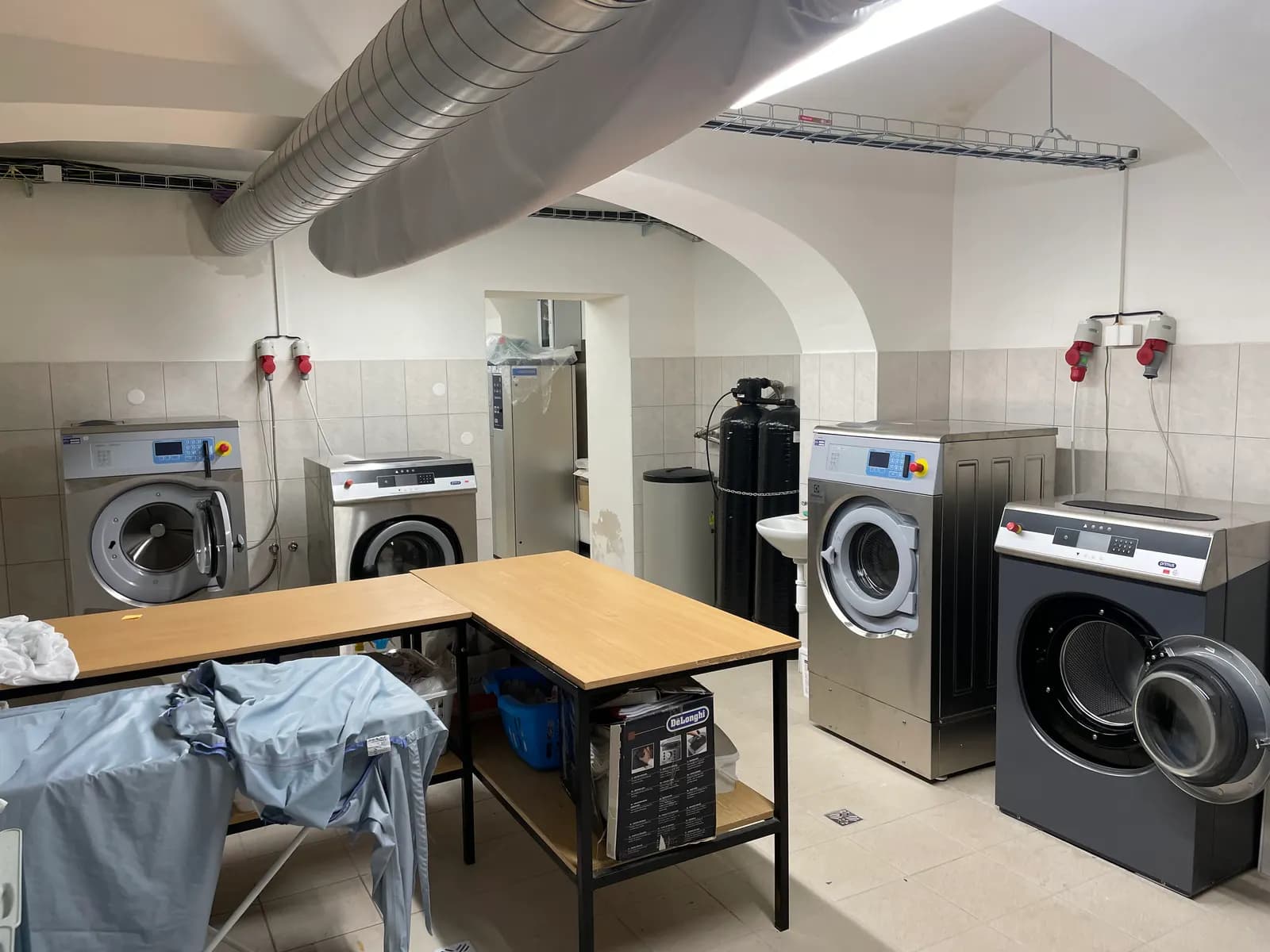
The heart of a laundry is the washer-extractor — a commercial front-loader that washes and then spins at high speed, so clothes come out nearly dry. Domestic machines wear out fast under commercial loads, take longer per cycle and usually lose warranty cover when used commercially. Size your machines from daily kilos: a 25–30 kg washer running eight to ten cycles a day handles about 150–250 kg, enough for a busy neighbourhood laundry. Two medium machines beat one large one, because a breakdown doesn't stop the shop and you can run whites and colours separately.
A tumble dryer of matching or slightly larger capacity follows each washer; a dryer that is too small becomes the bottleneck. Ironing is where labour goes: vacuum ironing tables with a steam iron and a small built-in steam generator give a far better finish than domestic irons and draw away moisture so clothes set quickly. Add a verified weighing scale if you charge by kilo, sorting bins, a folding table, hangers and covers, a garment tagging system, and billing software that prints a ticket with each item listed.
Plan the building around the machines. Washer-extractors need a solid floor, a dedicated water inlet, a drain sized for sudden discharge and often a three-phase power supply; dryers and steam generators need exhaust ducting to the outside. Ask the supplier for a site plan before you sign a lease — moving drains and power lines later is expensive.
Laundry business cost in India (estimate)
The table is a MSMETOOLS estimate for a 400–600 sq ft wash-and-iron laundry with a dry-cleaning collection counter in a tier-2 city in 2026. Machine lines are based on current IndiaMART listings: 30 kg commercial washers are listed from about ₹95,000 to ₹3.5 lakh, tumble dryers from about ₹1.1 lakh to ₹4.8 lakh, and vacuum ironing tables with steam from about ₹19,000 to ₹80,000. Imported brands cost more than these ranges. Replace every line with three real quotes.
| Setup item | Estimated range | Worked plan | Basis / notes |
|---|---|---|---|
| Shop deposit and advance rent | ₹75,000 – ₹1,50,000 | ₹1,25,000 | 3–6 months' rent |
| Plumbing, drainage, three-phase wiring, exhaust ducting, flooring | ₹1,00,000 – ₹2,00,000 | ₹1,50,000 | Drain and power sized for the machines |
| Two commercial washer-extractors (25–30 kg) | ₹2,00,000 – ₹6,00,000 | ₹3,00,000 | IndiaMART listings |
| Two tumble dryers | ₹2,20,000 – ₹5,00,000 | ₹2,40,000 | IndiaMART listings |
| Two to three vacuum ironing tables with steam | ₹40,000 – ₹1,50,000 | ₹90,000 | IndiaMART listings |
| Verified weighing scale, racks, bins, folding table, tagging, hangers | ₹40,000 – ₹80,000 | ₹60,000 | |
| Water softener or filter (hard-water areas) | ₹15,000 – ₹50,000 | ₹30,000 | Protects machines and fabrics |
| Billing software, counter, signboard, licences, launch | ₹30,000 – ₹60,000 | ₹50,000 | |
| Pickup scooter or delivery arrangement | ₹0 – ₹1,00,000 | ₹0 | Use delivery partners at first |
| Working capital (about two months of fixed costs) | ₹1,50,000 – ₹2,50,000 | ₹2,00,000 | Slow first months |
| Total | ₹8,70,000 – ₹21,40,000 | ₹12,45,000 |
Adding an in-house dry cleaning machine changes the picture. Listings for 10–15 kg machines range from under ₹50,000 for basic units to ₹4–12 lakh for fully automatic machines with solvent recovery, and well above ₹20 lakh for imported perchloroethylene machines. The cheapest listings rarely state the solvent system or recovery features; insist on these specifications, a demonstration and local service before you pay. Build your own budget in the startup cost calculator.
Dry cleaning and laundry price list (estimate)
Customers search for a "dry cleaning price list" before they visit, so publish yours on your shop board, WhatsApp catalogue and Google listing. The table is a MSMETOOLS estimate of neighbourhood rates in 2026, based on Delhi NCR service listings on IndiaMART (for example kurta ₹100, jacket ₹160, ladies suit ₹220, medium-work lehenga ₹299, bridal gown ₹1,100) and published 2026 saree cleaning rates of ₹250–₹400 at neighbourhood cleaners. Metro and premium-locality rates sit at the top of each range; small towns sit lower. Survey five competitors before fixing yours.
| Service | Typical range (estimate) | Unit |
|---|---|---|
| Wash and fold | ₹50 – ₹90 | per kg |
| Wash and iron | ₹80 – ₹140 | per kg |
| Steam ironing only (shirt, trouser) | ₹10 – ₹25 | per piece |
| Dry clean — shirt, kurta, trouser | ₹70 – ₹130 | per piece |
| Dry clean — jacket or blazer | ₹160 – ₹300 | per piece |
| Dry clean — two-piece suit | ₹220 – ₹450 | per set |
| Dry clean — ladies suit (three-piece) | ₹180 – ₹300 | per set |
| Saree — plain or cotton / silk | ₹150 – ₹250 / ₹250 – ₹400 | per piece |
| Heavy silk or zari saree, specialist care | ₹800 – ₹3,000 | per piece |
| Lehenga (medium to heavy work) | ₹300 – ₹1,500+ | per piece |
| Blanket, quilt or comforter | ₹250 – ₹600 | per piece |
| Curtains | ₹100 – ₹250 | per panel |
Two pricing choices matter more than the numbers. First, decide whether your prices include GST; if you are registered under the regular scheme, show "plus 18% GST" clearly or price inclusively and say so. Second, publish your damage and delay policy — what you pay if a garment is lost or damaged (many laundries cap it at a multiple of the cleaning charge), how long you hold uncollected items, and which fabrics you take only at the owner's risk. Clear terms at intake prevent most disputes.
Licences, pollution consent and boiler rules
A laundry needs a few routine registrations and, depending on its setup, environmental and boiler approvals that many new owners miss.
- Shops and Establishments registration or intimation with the state labour department, and a trade licence from the municipal body where your city requires one for laundries and dry cleaners.
- Pollution consent. CPCB's January 2025 classification lists a standalone mechanised laundry using a boiler in the Orange category, which needs consent to establish (before you build) and consent to operate (before you start) from the State Pollution Control Board. A small laundry without a boiler isn't named separately, so check your state board's list — some states treat it lightly, others ask for consent because of wastewater. Apply before you finalise the premises; boards can refuse sites in residential zones.
- Wastewater. Detergent-laden water should go to the municipal sewer with permission, never to a storm drain or open land. Large plants may be asked for an effluent treatment arrangement.
- Solvent dry cleaning. Spent solvent and distillation residue from industrial use of solvents are listed hazardous waste streams (category 20 of Schedule I to the Hazardous and Other Wastes Rules, 2016). If you run an in-house machine, ask your state board whether you need hazardous-waste authorisation, store residue in closed labelled containers and hand it only to an authorised recycler or disposal facility. Keep the machine room ventilated and the solvent away from ignition sources.
- Boilers. The Boilers Act, 2025, in force since 1 May 2025, applies to steam vessels of 25 litres or more capacity working above 1 kg/cm² and heating water to 100°C or more. A boiler that crosses these limits must be registered with your state's Chief Inspector of Boilers and inspected before use. Small electric steam generators built into ironing tables are often below the limit — get the capacity and pressure in writing from the supplier and confirm with the inspectorate.
- Weighing scale. If you charge by kilo, the scale is used in trade and must be verified and stamped under the Legal Metrology law.
- Fire safety where your local rules require it — dryers, lint and solvents are the risks inspectors look at. See our fire NOC guide.
- GST once you cross the threshold, and free Udyam registration for MSME benefits and bank loans.
Before you open the doors
0/9GST on laundry and dry cleaning services
Laundry, dry cleaning and other washing, cleaning and dyeing services fall under heading 9997 (SAC 999711 for coin-operated laundry, 999712 for dry cleaning, and related codes for other textile cleaning). They attract 18% — 9% CGST plus 9% SGST, or IGST at the same total — with full input tax credit. GST 2.0 split the old heading 9997 entry on 22 September 2025, moving beauty and physical well-being services to 5% without credit, but washing, cleaning and dyeing stayed at 18%. Salons that also offer laundry should not assume the lower rate carries across.
When to register. A service business must register once aggregate turnover crosses ₹20 lakh in a year (₹10 lakh in the special category states). Our worked laundry crosses this in its first year.
Regular scheme or composition? A laundry with turnover up to ₹50 lakh can opt for the services composition scheme and pay 6% of turnover, filing simpler returns. The trade-off: you can't charge GST on your bill, can't claim credit on machines, detergent or rent, and B2B customers such as hotels and hospitals can't claim credit on your invoice. For a laundry that serves households and has just spent ₹5–7 lakh on machines, compare both carefully: the regular scheme lets you recover around ₹1 lakh of GST paid on the machines, while composition keeps household prices lower. The GST calculator helps you test both; our GST registration guide covers the steps.
Worked example: monthly P&L and break-even
Here's a sample plan for "FreshFold Laundry", a 500 sq ft wash-and-iron laundry with a dry-cleaning collection counter in a tier-2 city, open 30 days a month. Dry cleaning is sent to a plant at half the customer price. All figures are illustrative estimates, before GST.
Revenue assumption: 30 orders a day at an average of ₹355 = about ₹10,650 a day or ₹3,19,500 a month. That blends about 60 kg a day of wash-and-iron at ₹95 a kg (₹1,71,000 a month), 80 steam-ironed pieces a day at ₹15 (₹36,000) and 25 dry-cleaning pieces a day at an average ₹150 (₹1,12,500).
Variable cost: detergent, softener, water, power and packaging for washing at about ₹22 a kg (₹39,600), ironing consumables at ₹3 a piece (₹7,200), the dry-cleaning plant's share (₹56,250) and delivery and app commissions at about 5% of sales (₹16,000) — about ₹1,19,050, or ₹132 per order. Contribution per order = ₹223 (about 63%).
| Fixed monthly cost | Amount (estimate) |
|---|---|
| Rent (500 sq ft) | ₹25,000 |
| Machine operator, two ironing staff, counter and pickup person | ₹59,000 |
| Fixed electricity and water charges, lighting | ₹12,000 |
| Machine maintenance reserve | ₹4,000 |
| Marketing (Google listing, society notice boards, WhatsApp offers) | ₹6,000 |
| Software, phone, accountant | ₹4,000 |
| Loan EMI (₹8 lakh, 10%, 5 years) | ₹17,000 |
| Owner's salary | ₹30,000 |
| Total fixed costs | ₹1,57,000 |
- Monthly contribution = ₹3,19,500 − ₹1,19,050 = about ₹2,00,450
- Profit after the owner's salary = ₹2,00,450 − ₹1,57,000 = about ₹43,450 a month
- Break-even = ₹1,57,000 ÷ ₹223 = about 705 orders a month, or 24 a day
What the numbers say: ironing labour and rent are the costs to control, while bulk B2B contracts — a hostel, a salon's towels, a clinic's linen — fill machines on weekdays when household orders dip. Moving dry cleaning in-house would lift the margin on that line from half to roughly four-fifths, but only once volume justifies the machine, solvent handling and compliance.
Try it — laundry break-even
Funding a laundry business
- Mudra loans — collateral-free credit up to ₹10 lakh under Tarun (₹20 lakh under Tarun Plus for repeat borrowers who repaid on time) through banks and NBFCs. Fast and simple, but no subsidy. See the Mudra loan guide.
- PMEGP — a laundry is a service unit, so projects up to ₹20 lakh qualify for a margin-money subsidy from 15% (urban, general) to 35% (rural, special categories), with your own contribution of 10% or 5%. See our PMEGP guide.
- PM Vishwakarma — washermen (dhobi) are one of the traditional trades covered, with skill training, a toolkit incentive and concessional collateral-free credit for eligible artisans. See the PM Vishwakarma guide.
- Equipment finance — many machine suppliers tie up with NBFCs for 2–4 year equipment loans against the machines themselves; compare the interest rate with a bank term loan.
Mistakes that sink new laundries
- Buying domestic machines to save money. They break within months under commercial loads, and every breakdown means late orders.
- Undersized drains and power. Machines that trip the supply or flood the floor cost days of business. Plan both before the lease.
- No tagging system. Lost and swapped garments are the biggest source of refunds and bad reviews. Tag every item at intake and list it on the bill.
- Ignoring pollution and boiler rules. A laundry with a boiler and no consent, or an unregistered boiler, can be sealed. Solvent residue dumped in the drain is a serious violation.
- Vague pricing. Unclear "per kg" rules (does ironing count? what about heavy items?) cause arguments. Publish a full price list and your damage policy.
Official links
- CPCB — Classification of sectors (January 2025)Laundry with boiler: Orange category
- The Boilers Act, 2025 (India Code)Boiler definition and registration
- CPCB — Hazardous waste SOP (Schedule I categories)Solvent residue categories
- GST Council — 56th meeting press releaseGST 2.0 rate changes
- GST portalRegistration and composition option
- Udyam Registration portalFree MSME registration
What to do next
Count the kilos your target area can give you — households, PGs, salons and clinics within 3 km — and size your machines from that number, not from a supplier's brochure. Put your rent, salaries and EMI into the break-even calculator, ask your State Pollution Control Board which category applies to your setup before you sign a lease, and turn the plan into a bank-ready document with the business plan generator.
This is general information, not legal or tax advice — confirm on the official source or with a professional.
Frequently asked questions
Our estimate for a 400–600 sq ft wash-and-iron laundry with dry-cleaning collection in a tier-2 city is about ₹9 lakh to ₹21 lakh, covering deposit, plumbing and electrical work, two washer-extractors, two dryers, steam ironing tables, a weighing scale, software and working capital. Adding an in-house dry cleaning machine adds roughly ₹1.5 lakh to ₹12 lakh or more depending on capacity and solvent system.
Laundry, dry cleaning and other washing, cleaning and dyeing services fall under heading 9997 and attract 18% GST with input tax credit. GST 2.0 moved beauty and wellness services to 5% from 22 September 2025, but laundry stayed at 18%. A small laundry with turnover up to ₹50 lakh can instead opt for the services composition scheme at 6% without input tax credit.
As a guide based on Delhi NCR listings and published rates in 2026, neighbourhood cleaners charge roughly ₹70–₹130 for a shirt or kurta, ₹220–₹450 for a two-piece suit, ₹150–₹400 for a saree and ₹300–₹1,500 or more for a lehenga, with metros at the upper end. Wash-and-iron by weight usually runs ₹80–₹140 a kg. These are estimates; check five local competitors before you print yours.
It depends on the setup and your state. CPCB's 2025 classification puts a standalone mechanised laundry that uses a boiler in the Orange category, which needs consent to establish and operate from the State Pollution Control Board. Smaller laundries without boilers may fall in a lighter category under your state's list. Solvent dry cleaning creates spent solvent and distillation residue, which are hazardous waste streams.
It can be, because chemicals and power are a modest share of the price, but staff, rent and EMIs make the first months tight. In our worked example a laundry doing 30 orders a day at ₹355 average earns about ₹43,000 a month after paying the owner ₹30,000, and breaks even at about 24 orders a day. Bulk contracts with hostels, salons and clinics fill machines on slow days.
Commercial washer-extractors (front-loading, high-speed spin) in the 15–30 kg range suit most new laundries because they spin clothes almost dry, cutting dryer time and power. Domestic machines wear out quickly under commercial loads and void warranties. Choose capacity from your daily kilos, check service support in your city and confirm the power supply (single or three-phase) before buying.
Sources & verification
Figures on this page were checked against the sources below when it was last reviewed on 9 October 2026. Each rate and limit is stored once with its own official source and review date, and official update channels are monitored daily so changes are picked up. How we verify
- 1.Classification of Sectors into Red, Orange, Green, White and Blue Categories (January 2025) — Central Pollution Control Board (copy hosted by Pollution Control Board, Assam) · accessed 9 October 2026
- 2.The Boilers Act, 2025 (Act 12 of 2025) — India Code / Ministry of Law and Justice · accessed 9 October 2026
- 3.Notification appointing 1 May 2025 for commencement of the Boilers Act, 2025 — Inspectorate of Factories and Boilers, Goa · accessed 9 October 2026
- 4.Recommendations of the 56th GST Council meeting (press release) — GST Council / PIB · accessed 9 October 2026
- 5.CGST rate on other services — heading 9997 (as amended by Notification 15/2025-CT(Rate)) — GST Gyaan · accessed 9 October 2026
- 6.CGST Act 2017, section 22 — persons liable for registration — CBIC · accessed 9 October 2026
- 7.SOP for utilisation of hazardous waste — process/distillation residue, category 20.3 of Schedule I, HOWM Rules 2016 — Central Pollution Control Board · accessed 9 October 2026
- 8.Commercial washing machine listings — IndiaMART · accessed 9 October 2026
- 9.Tumble dryer and vacuum ironing table listings — IndiaMART · accessed 9 October 2026
- 10.Dry cleaning service listings, Delhi NCR — IndiaMART · accessed 9 October 2026
- 11.Silk saree dry cleaning in 2026: what it costs — My Silk Love · accessed 9 October 2026
MSMETOOLS is an independent platform and is not affiliated with any government agency, ministry or department.
Tools for this
Break Even Calculator
Find your break even point and units.
Startup Cost Calculator
Estimate how much capital you need to launch.
Business Plan Generator (US)
Create a professional business plan for US investors and banks.
GST Calculator (India)
Calculate GST for your sales and purchases with current rates.
Related guides
 Xerox and Printing Shop Business 2026: Cost, GST & ProfitRead guide
 Flour Mill Business in India 2026: Chakki Cost, GST & ProfitRead guide
 Candle Making Business in India 2026: Cost, GST & ProfitRead guide
 Event Management Business Plan 2026: Costs, GST & LicencesRead guide
Official links open the government site in a new tab.