 Business registration & legal
Fire NOC in India (2026): Which Buildings Need One, How to Apply and How It Is Renewed
Fire NOC in 2026: which buildings need it, provisional vs final NOC, documents, fees, renewal and inspections, with Delhi, Maharashtra, Karnataka and TN rules.
 Edited by Sumeet YadavFounder & editor, MSMETOOLS · fact-checked against official sources
Contents (9)
- 1. What a fire NOC is, and the law behind it
- 2. Which buildings need a fire NOC
- 3. Provisional vs final fire NOC
- 4. State rules: Delhi, Maharashtra, Karnataka and Tamil Nadu
- 5. How to apply for a fire NOC: the general process
- 6. Fire NOC fees and real costs
- 7. Inspections and why applications fail
- 8. Fire NOC and your other licences
- 9. What to do next
A fire NOC is the clearance from a state fire service that a building's design and fire-safety systems meet the required standard. You need one before you can occupy many buildings, and banks, insurers, licensing departments and big customers ask for it. This guide is for MSME owners opening a factory, warehouse, restaurant, school, clinic or office. It explains which buildings need a fire NOC, how the provisional and final stages work, what documents you need, the fees states actually publish, and how renewal and inspections work in Delhi, Maharashtra, Karnataka and Tamil Nadu.
Quick answer
A fire NOC is needed when your building crosses your state's height, floor-area or occupancy triggers. Assembly spaces for 50 or more people, industrial and storage buildings, hospitals, schools, hotels and taller buildings usually qualify. You get a provisional NOC on the building plans, then a final NOC after the fire systems are installed and inspected, before the occupancy certificate. After that you keep it alive through periodic certificates, such as Delhi's annual Form K or Maharashtra's Form B every January and July.
Fire safety is a state subject; each state applies its own Fire Service Act and building bye-laws
The technical baseline is the National Building Construction Standards 2026, Part F (formerly NBC Part 4)
Delhi now lets empanelled Fire Safety Auditors issue certificates; fee ₹1,000
Maharashtra needs a licensed agency's Form A for the final NOC and Form B every every January and July
Tamil Nadu has a new 2025 Act with Category A/B/C buildings, awaiting commencement
What a fire NOC is, and the law behind it
India has no single national fire law. The fire service is a state subject and a municipal function under the 12th Schedule of the Constitution. Each state therefore runs fire approvals through its own Fire Service Act, fire rules and building bye-laws. The name of the clearance differs. Delhi calls it a Fire Safety Certificate (FSC). Maharashtra speaks of fire approval at the provisional, final and renewal stages. Tamil Nadu calls it a fire licence. In everyday use, "fire NOC" covers all of these.
Fire NOC triggers at a glance (2026)
50+ people
Assembly occupancy
NBCS 2026 Part F
covered area of more than 250 sq m
Delhi — industrial or storage
21 m or more
Karnataka — high-rise NOC to build
24 m
NBCS — residential high-rise provisions
The technical standard behind these approvals is the Bureau of Indian Standards' building code. For decades this was Part 4, "Fire and Life Safety", of the National Building Code of India, last fully revised in 2016. BIS has since revised and renamed it the National Building Construction Standards (NBCS) 2026, published as SP 7:2026, with fire safety now in Part F. Part F sets out occupancy classes, construction types, means of escape, and portable and fixed firefighting installations. Its foreword is clear that it is guidance: the state's bye-laws and fire rules decide what is mandatory. Many state laws still refer to "NBC 2016" or simply "the National Building Code". Your architect and fire consultant should confirm which edition your local authority applies.
Occupancy classes drive everything
Both the old NBC and the NBCS group buildings by use. Fire rules attach requirements to each group:
- Residential — houses, flats, hostels and hotels
- Educational — schools and colleges
- Institutional — hospitals, clinics and care homes
- Assembly — any building where 50 or more people gather, such as restaurants, banquet halls, cinemas, gyms and places of worship
- Business — offices
- Mercantile — shops and markets
- Industrial — split into low, moderate and high hazard
- Storage and Hazardous buildings
The assembly threshold is the one that catches many small businesses. A 60-seat restaurant is an assembly occupancy under the code's 50-person definition, even if it is on the ground floor of a small building.
Which buildings need a fire NOC
Every state publishes its own triggers, and they differ. Delhi's list is the clearest published example. Rule 27 of the Delhi Fire Service Rules, as substituted by the 2025 amendment, says these occupancies are "likely to cause a risk of fire" and need a Fire Safety Certificate:
| Delhi occupancy class | Needs an FSC when |
|---|---|
| Pandals | Seating for more than 50, or covered area above 50 sq m |
| Residential (not hotels) | more than 15 m or five or more storeys, including stilt or mezzanine floors |
| Hotels and guest houses | More than 12 m, or four or more storeys |
| Educational and institutional | More than 9 m, or three or more storeys |
| Assembly buildings | Always |
| Business (offices) | More than 15 m, or five or more storeys |
| Mercantile (shops) | More than 9 m, or three or more storeys |
| Industrial and storage | covered area of more than 250 sq m (all storeys) |
| Hazardous | Covered area above 100 sq m |
| Underground structures | Two or more levels |
For an MSME this means: any Delhi workshop or godown above 250 sq m needs an FSC, whatever its height. So does any restaurant, banquet hall or coaching centre where 50 or more people gather. A three-storey office building does not, but a three-storey shop building does.
Other states use different lines. The NBCS 2026 table, which states may adopt or modify, applies its detailed provisions to residential buildings above 24 m, offices and shops above 15 m, educational, assembly and storage buildings above 9 m, and low- and moderate-hazard industrial buildings of any height once total area exceeds 2,000 sq m. Each class also has a floor-area trigger. Karnataka requires a NOC from the Karnataka State Fire and Emergency Services before anyone constructs a high-rise building of 21 m or more, under section 13 of the Karnataka Fire Force Act as amended in 2023. Tamil Nadu is moving to a category system under its 2025 Act, explained below.
Provisional vs final fire NOC
Most states run fire approval in two stages tied to building permission, and then a third, recurring stage.
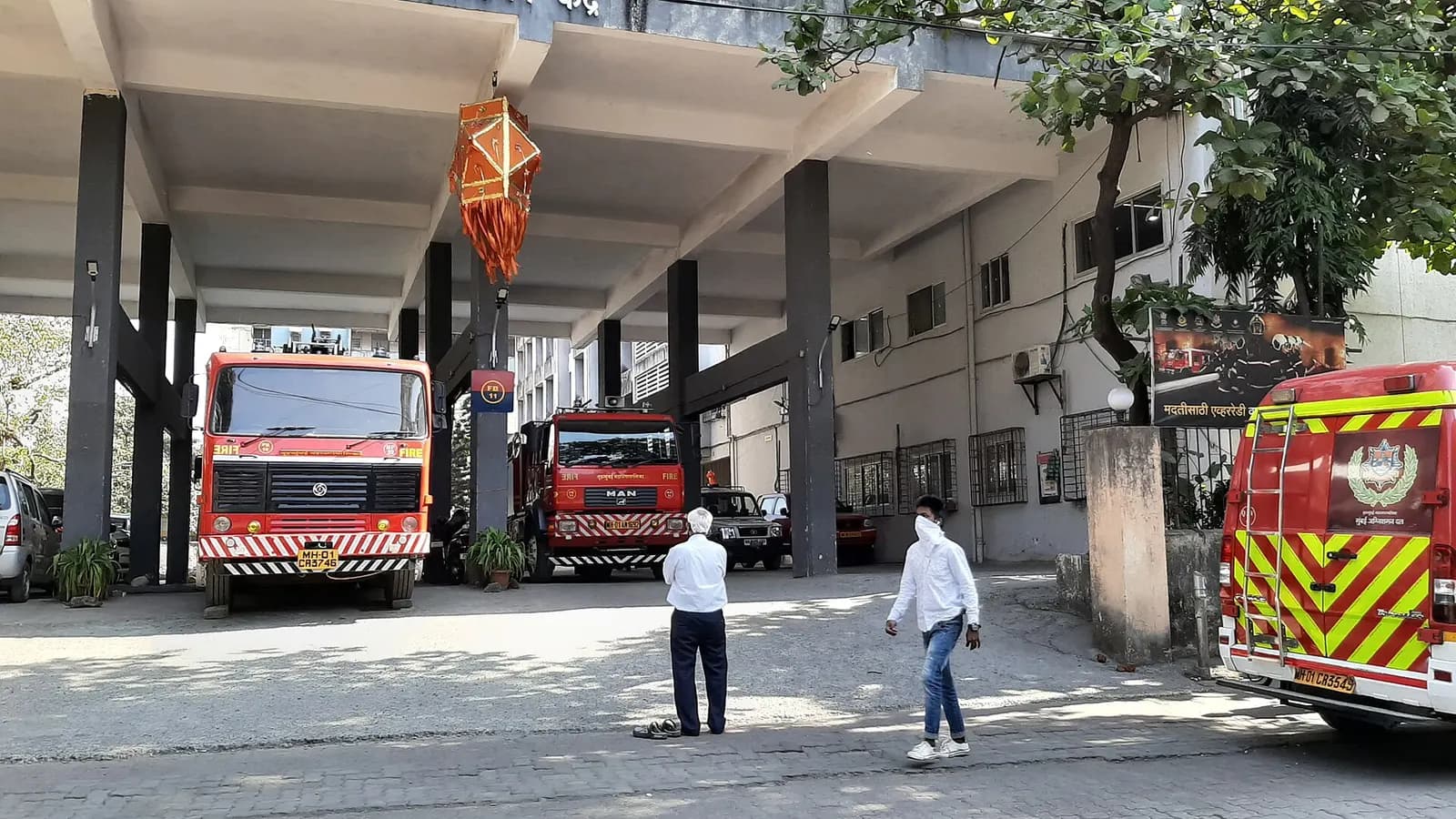
Provisional NOC (plan stage). When you or your developer apply for building plan approval, the plans and a fire safety scheme go to the fire department. It checks access for fire tenders, setbacks, staircases and exits, compartmentation, water storage, and the planned systems: hydrants, sprinklers, detection, alarms and smoke management. It then issues fire safety requirements or a provisional NOC. Delhi Fire Service says it issues these guidelines within three weeks of a complete submission. In MIDC industrial areas, provisional fire approval is part of a combined building-plan application, with a target of 30 days.
Final NOC (before occupation). After construction, the systems are installed, tested and inspected against the approved scheme. Only then is the final NOC issued, and the planning authority will not give an occupancy or completion certificate without it. MIDC targets 15 days for final fire approval once documents and fees are in.
Ongoing compliance. The NOC does not end your duties. You must keep the systems working, and most states require a periodic certificate or renewal. That stage is where the states differ most, as the next sections show.
If you are renting space in an existing building, ask the landlord for the building's current fire NOC and latest periodic certificate before you sign. If your fit-out changes the occupancy, for example an office floor turned into a restaurant or training hall, you need fresh fire clearance for the change.
The fire NOC lifecycle
Step 1
Building plans + fire scheme
Step 2
Provisional NOC
plan stage
Step 3
Construction & installation
Step 4
Inspection / audit
Step 5
Final NOC
before occupancy certificate
Step 6
Periodic certificate
Form K / Form B / renewal
State rules: Delhi, Maharashtra, Karnataka and Tamil Nadu
Delhi: Fire Safety Auditors and annual Form K
Delhi made the biggest change of any state in 2026. The Delhi Fire Service (Amendment) Rules, 2025 were published in the Delhi Gazette on 26 May 2026. Their certificate provisions took effect 90 days later, from 24 August 2026. What changed:
- Third-party certification. Owners or occupiers engage a Fire Safety Auditor from the list on the Delhi Fire Service portal. The auditor inspects the building, files an inspection report in Form J, and issues the Fire Safety Certificate in Form H with a declaration in Form I. These go online to the Director with a fee of ₹1,000. The certificate counts as issued under the Director's delegated authority.
- Random checks. Fire officers must randomly inspect at least 5% of auditor-issued certificates every quarter. False reports expose both the owner and the auditor to action, and auditors are treated as public servants. An auditor cannot certify a building where their firm did the design, installation or maintenance.
- No more fixed-term renewal. Delhi previously renewed certificates every three years for non-residential buildings and hotels, and every five years for residential buildings. A certificate now stays valid unless suspended or cancelled, provided you file a Form K declaration every year with ₹1,000 a year. Existing valid certificates moved to this system automatically.
- Automated monitoring. Buildings in the listed classes must install an Automated Continuous Monitoring System for their fire systems, to standards the Director notifies.
Fire NOC in four states — how you stay compliant
| State | Law | Who certifies | Recurring duty |
|---|---|---|---|
Delhi | Delhi Fire Service Act 2007; Rules 2010 amended 2025 | Empanelled Fire Safety Auditor (Forms H, I, J) | Form K every year + ₹1,000 a year; ACMS |
Maharashtra | Fire Prevention & Life Safety Measures Act 2006; Rules 2009 | Licensed agency (Form A) + fire authority | Form B every every January and July; 2-yearly audit for 30 m+ hotels, hospitals, offices |
Karnataka | Karnataka Fire Force Act 1964 (s.13 amended 2023) | KSFES | As per NOC conditions and renewals |
Tamil Nadu | Fire Service Act 1985 → Fire and Rescue Services Act 2025 (awaiting commencement) | Fire department (A), audit agency (B), self (C) | Renewal as prescribed; certificate valid three years (B) |
Delhi
- Law
Delhi Fire Service Act 2007; Rules 2010 amended 2025
- Who certifies
Empanelled Fire Safety Auditor (Forms H, I, J)
- Recurring duty
Form K every year + ₹1,000 a year; ACMS
Maharashtra
- Law
Fire Prevention & Life Safety Measures Act 2006; Rules 2009
- Who certifies
Licensed agency (Form A) + fire authority
- Recurring duty
Form B every every January and July; 2-yearly audit for 30 m+ hotels, hospitals, offices
Karnataka
- Law
Karnataka Fire Force Act 1964 (s.13 amended 2023)
- Who certifies
KSFES
- Recurring duty
As per NOC conditions and renewals
Tamil Nadu
- Law
Fire Service Act 1985 → Fire and Rescue Services Act 2025 (awaiting commencement)
- Who certifies
Fire department (A), audit agency (B), self (C)
- Recurring duty
Renewal as prescribed; certificate valid three years (B)
Maharashtra: licensed agencies, Form A and Form B
Maharashtra works through the Maharashtra Fire Prevention and Life Safety Measures Act, 2006 and its 2009 Rules, enforced by municipal fire brigades and, in industrial areas, by MIDC's fire service. Fire systems are installed and maintained by licensed agencies approved by the Director of Maharashtra Fire Services. These agencies certify compliance in two forms:
- Form A certifies the installation when the building is ready. MIDC asks for it, with annexures, for final fire approval.
- Form B certifies maintenance and must be submitted every every January and July to the Chief Fire Officer or local fire station. The January certificate covers July–December of the previous year; the July certificate covers January–June. Maintenance must follow the relevant BIS standards, such as IS 2190 for extinguishers and IS 15105 for sprinklers.
The 2023 amendment to the Act formalised provisional, final and renewal approvals. It requires a fire and life safety audit every two years for buildings above 30 m used as hotels, hospitals, business or mixed occupancies, and revised Schedule II, the fire and emergency service fee. MIDC generates the fee as an online demand note under the Fire Protection Fund heads before releasing the provisional NOC.
Karnataka: NOC for high-rise construction
Karnataka's fire law is the Karnataka Fire Force Act, 1964, administered by the Karnataka State Fire and Emergency Services (KSFES). The 2023 amendment to section 13 makes a KSFES NOC compulsory for constructing any high-rise building of 21 m or more, and lets the State prescribe the procedure and fee. Smaller commercial and industrial buildings are dealt with through the fire conditions in the local building bye-laws and the NOC conditions KSFES imposes. Check the KSFES online service for the current fee and checklist.
Tamil Nadu: a new Act with three categories
Tamil Nadu has issued fire licences under the Tamil Nadu Fire Service Act, 1985, with NOCs and licences filed through the state's single-window portal. In 2025 the Assembly passed the Tamil Nadu Fire and Rescue Services Act, 2025, which will replace it with three categories of building:
- Category A — needs a fire licence, applied for online, with escalation to a higher officer and a deemed licence if no decision is taken in time.
- Category B — needs a fire safety certificate from a fire safety audit agency, valid for three years.
- Category C — needs only a self-certified fire safety protocol, auto-generated online and renewed every three years.
Existing buildings get until their current licence expires or 180 days after commencement, whichever is later. The State is to notify the commencement date and the rules that decide which buildings fall in each category. A 2026 amendment has already been made. When we checked in October 2026, we could not find a commencement notification, so Tamil Nadu businesses should keep following the 1985 Act's procedures until the department announces the switch.
How to apply for a fire NOC: the general process
The portal and forms change by state, but the sequence is the same almost everywhere.
Getting a fire NOC for a new or changed building
- 1
Classify your building
Work out the occupancy (assembly, industrial, mercantile and so on), height and built-up area, and check your state's trigger list. Mixed uses are judged by the stricter class.
- 2
Get a fire safety scheme drawn up
A registered architect and fire consultant prepare drawings showing exits, staircases, refuge areas, compartments, water tanks, pumps, hydrants, sprinklers, detection and alarm layouts.
- 3
Apply for the provisional NOC with the building plans
Submit through the building-plan portal or the fire service portal. Pay the demand note the system generates.
Tip: In industrial estates such as MIDC, the fire approval is part of the combined building-plan application.
- 4
Build and install to the approved scheme
Use licensed or qualified installers. Keep test certificates for pumps, hydrants, sprinklers and alarm panels.
- 5
Apply for the final NOC
Upload as-built drawings, area statements, the installer's or licensed agency's certificate (Form A in Maharashtra) and pay any differential fee. The fire officer or empanelled auditor inspects the site.
- 6
Display the certificate and diarise renewals
Display the NOC or certificate in a prominent place, and set reminders for the periodic certificate: Form K in Delhi, Form B in Maharashtra.
Documents usually asked for
Lists vary by state and building type. These are the items that appear across Delhi's inspection forms and MIDC's published checklist.
Fire NOC — documents to keep ready
0/10Fire NOC fees and real costs
Most state fire fees are tied to built-up area, height and occupancy, and they change. We only quote fees a government has published.
- Delhi: ₹1,000 to submit an auditor-issued Fire Safety Certificate, and ₹1,000 a year with each annual Form K, paid by bank draft or the online gateway. The Fire Safety Auditor's professional fee is separate and set by the market.
- Maharashtra: a fire and emergency service fee under Schedule II of the 2006 Act, revised in 2023, worked out by the authority on the building's area, height and occupancy. In MIDC areas, it is billed online as Fire Protection Fund fees, with an additional fee if the as-built area exceeds the approved plan.
- Karnataka and Tamil Nadu: fees are prescribed under each state's rules and shown on the KSFES and single-window portals when you apply. Tamil Nadu's new fee schedule will come with the 2025 Act's rules.
For budgeting, the government fee is rarely the largest item. The real cost is the fire systems: extinguishers, hose reels, hydrants, pumps, water storage, detection and alarm, and sprinklers for larger or riskier buildings. Add the consultant's design fee and the annual maintenance contract with a licensed agency. Get at least two quotes for each, and make sure the contract covers the periodic certificate you will need. Our startup cost calculator helps you add these to your project budget.
Worked example — Delhi garment workshop. An Okhla unit takes 320 sq m over two floors for stitching and storage. Because it is industrial and the covered area is above 250 sq m, it needs a Fire Safety Certificate even though the building is only 8 m high. Under the 2025 rules, the owner hires an empanelled Fire Safety Auditor. The auditor inspects exits, extinguishers, the hose reel, detection and the electrical installation, then issues Forms H, I and J. The owner pays ₹1,000 online with the submission. Every year after that, before the anniversary, the owner files Form K with another ₹1,000 a year. If the unit grows to a third floor, the fire scheme and certificate must be revisited.
Inspections and why applications fail
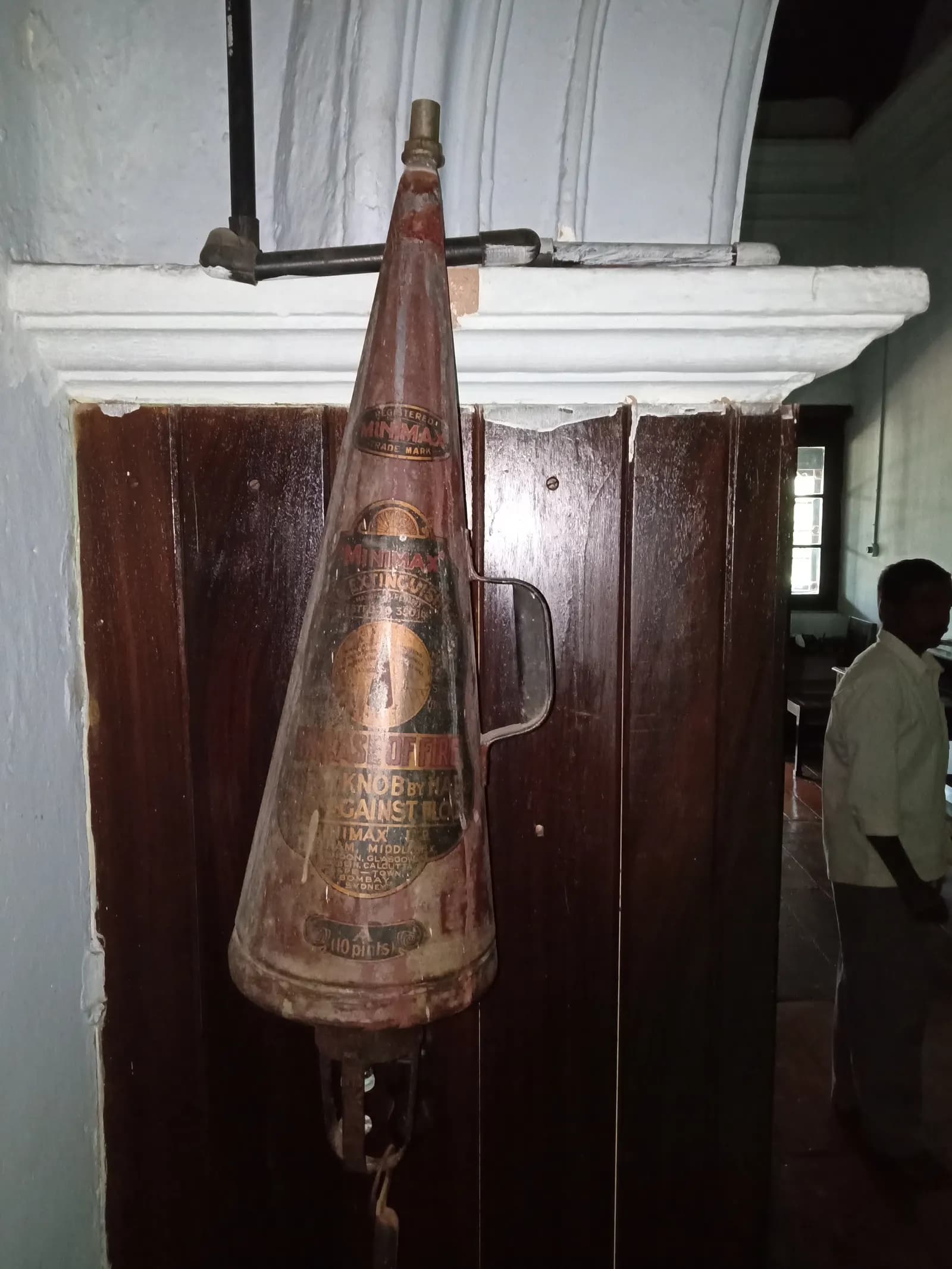
Delhi's inspection report (Form J) shows what an inspector or auditor checks: access for fire tenders, the number, width and arrangement of exits, compartmentation, smoke management, extinguishers, hose reels, detection and alarm, public address and talk-back, sprinklers, internal and yard hydrants, pumps, captive water storage, exit signage, fire lifts, standby power, refuge areas and the fire control room. Each is a place where an application can fail.
The rejections we see most often in published checklists and state guidance:
- As-built does not match the approved plan. An extra mezzanine, an enclosed stilt, or a staircase narrowed during fit-out. Any change in area also triggers a differential fee.
- Blocked or locked exits. Goods stacked in corridors, or exit doors padlocked at night. Delhi's certificate conditions require escape routes to be kept free of obstruction at all times.
- Systems installed but not working. Pumps on manual mode, empty tanks, sprinkler valves shut, alarm panels showing faults. Inspectors test them.
- Change of use without approval. A godown turned into a workshop, or an office floor into a training hall for 60 people, moves the building into a stricter class.
- Lapsed periodic certificates. In Maharashtra, missing a Form B leaves the building out of compliance even if the systems work. In Delhi, the certificate's validity now depends on the annual Form K.
Fixing a rejection usually means correcting the defect, getting the installer's fresh test report, and asking for re-inspection. In Delhi's auditor model, the fire service can act against both the owner and the auditor if a certificate is found to be false. That gives auditors a strong reason to insist on real fixes.
Fire NOC and your other licences
Fire clearance feeds into most other approvals for a physical business. Factories need it alongside the factory licence under the OSH Code. Restaurants need it for local trade and eating-house licensing — in Delhi, eating, lodging and boarding establishments are licensed through a unified portal linked to the fire service — alongside FSSAI registration. Banks and insurers ask for it on project loans and fire policies, and state single-window systems link it to the occupancy certificate. If you are planning a food business, our restaurant business plan guide shows where fire approval sits in the launch timeline.
Official links
- Delhi Fire Service (Amendment) Rules 2025Rules 27, 35–38: occupancy list, Fire Safety Auditors, Form K, fees
- Delhi Fire Service — Act and RulesProcess for fire safety guidelines and certificates
- Maharashtra Fire ServicesLicensed agencies, circulars, Form A/B
- MIDC — Fire NOC procedureProvisional and final fire approval in MIDC areas
- Karnataka State Fire and Emergency ServicesNOC for high-rise buildings, online services
- Tamil Nadu Fire and Rescue Services Act 2025 (Gazette)Category A/B/C buildings — commencement awaited
- BIS — National Building Code / NBCSPart F Fire and Life Safety
What to do next
Before you sign a lease or finalise plans, classify the building and check your state's trigger list. If it needs a NOC, bring in a fire consultant at the design stage, not after construction. Retrofitting staircases and water storage is far more expensive. If you already have a NOC, put the next Form B, Form K or renewal date in your calendar now. Then line up your other registrations, starting with the factory licence or FSSAI registration if they apply, and Udyam registration for MSME benefits.
This is general information, not legal or tax advice — confirm on the official source or with a professional.
Frequently asked questions
Usually not, if the building is low-rise and small. Fire NOCs are triggered by occupancy, height and floor area under each state's fire law. In Delhi, for example, mercantile buildings need one above 9 m or three storeys and business buildings above 15 m or five storeys. A shop inside a mall, however, relies on the mall's NOC and may need its own approval for fit-outs.
The provisional NOC (fire approval at plan stage) is issued on the building plans before construction, confirming the design meets fire norms. The final NOC is issued after the building is built and the fire systems are installed and inspected. It is needed before the occupancy certificate. MIDC, for instance, targets 30 days for provisional and 15 days for final approval.
Fees are set by each state and usually depend on built-up area, height and occupancy. Delhi's amended rules charge ₹1,000 to file a Fire Safety Certificate issued by an empanelled auditor, plus ₹1,000 a year with the annual Form K. Maharashtra levies a fire and emergency service fee under Schedule II of its Act. The bigger costs are the fire systems and the auditor's or licensed agency's charges.
It depends on the state. In Delhi, certificates issued under the amended rules stay valid unless suspended or cancelled, provided you file Form K every year. Maharashtra requires a licensed agency's Form B every every January and July. Tamil Nadu's 2025 Act, once in force, makes a Category B fire safety certificate valid for three years. Other states still issue NOCs for fixed periods.
Most do. Industrial and storage buildings are a separate occupancy class with low area triggers: in Delhi, any industrial or storage building with a covered area of more than 250 sq m needs a Fire Safety Certificate, and hazardous buildings above 100 sq m. Industrial estates such as MIDC require provisional and final fire approval, and factory licensing usually asks for fire clearance.
Yes, in most states. Delhi uses its fire service portal and the Fire Safety Auditor system, Maharashtra uses the Maharashtra Fire Service portal or MIDC's single window inside industrial areas, Karnataka uses the KSFES online service, and Tamil Nadu routes NOCs and fire licences through its single-window portal.
Sources & verification
Figures on this page were checked against the sources below when it was last reviewed on 7 October 2026. Each rate and limit is stored once with its own official source and review date, and official update channels are monitored daily so changes are picked up. How we verify
- 1.Delhi Fire Service (Amendment) Rules, 2025 — Delhi Gazette, 26 May 2026 — Government of NCT of Delhi, Home Department · accessed 7 October 2026
- 2.Delhi Fire Service — Act and Rules; Renewal of Fire Safety Certificate — Delhi Fire Service · accessed 7 October 2026
- 3.National Building Construction Standards 2026 (SP 7:2026), Part F — Fire and Life Safety (copy hosted by Goa DFES) — Bureau of Indian Standards · accessed 7 October 2026
- 4.National Building Code — BIS — Bureau of Indian Standards · accessed 7 October 2026
- 5.Guidelines to issue Form B (Annexure A) — Maharashtra Fire Services · accessed 7 October 2026
- 6.Fire NOC — procedure, checklist and timelines — Maharashtra Industrial Development Corporation · accessed 7 October 2026
- 7.Govt. of Maharashtra notifies amendments to the Maharashtra Fire Prevention and Life Safety Measures Act, 2006 — Lexplosion · accessed 7 October 2026
- 8.Karnataka Fire Force (Amendment) Bill, 2023 — Karnataka Legislative Assembly (via PRS) · accessed 7 October 2026
- 9.Bill to amend Karnataka Fire Force Act to insert NOC for high-rise buildings — Lexplosion · accessed 7 October 2026
- 10.The Tamil Nadu Fire and Rescue Services Act, 2025 (L.A. Bill No. 13 of 2025) — TN Government Gazette, 28 April 2025 — Government of Tamil Nadu · accessed 7 October 2026
- 11.Govt. of Tamil Nadu notifies Tamil Nadu Fire and Rescue Services Act — Lexplosion · accessed 7 October 2026
MSMETOOLS is an independent platform and is not affiliated with any government agency, ministry or department.
Tools for this
Startup Cost Calculator
Estimate how much capital you need to launch.
Business Plan Generator (US)
Create a professional business plan for US investors and banks.
Related guides
 FSSAI Registration 2026: New Limits, Fees & FoSCoS StepsRead guide
 Factory License in India 2026: OSH Code Rules, Fees & StepsRead guide
 Trade License Chennai 2026: GCC Fees, Validity & RenewalRead guide
 Pollution NOC 2026: CTE, CTO, Categories & FeesRead guide
Official links open the government site in a new tab.