 Government schemes & funding
PM Vishwakarma Yojana 2026: Eligibility, Benefits, Loan and Registration
PM Vishwakarma Yojana 2026: 18 trades, ₹15,000 toolkit e-voucher, ₹500/day stipend, ₹3 lakh loan at 5%, CSC registration, status check and the real last date.
 Edited by Sumeet YadavFounder & editor, MSMETOOLS · fact-checked against official sources
Contents (11)
- 1. What is PM Vishwakarma Yojana?
- 2. Who is eligible for PM Vishwakarma?
- 3. The 18 trades covered
- 4. PM Vishwakarma Yojana benefits in 2026
- 5. PM Vishwakarma loan details: two tranches, 5% interest
- 6. How to apply: PM Vishwakarma registration through CSC
- 7. Documents you need
- 8. PM Vishwakarma online apply last date and status check
- 9. Common mistakes that delay benefits
- 10. PM Vishwakarma vs Mudra vs PMEGP — which fits you?
- 11. What to do next
If you earn your living with your hands — stitching, forging, shaping clay, cutting hair, laying bricks — PM Vishwakarma Yojana is the one central scheme built specifically for you. This guide explains, in plain words, who qualifies, what you actually receive (cash, tools, training and a cheap loan), how registration through a Common Service Centre (CSC) works, how to check your status, and what has changed now that the scheme has passed its three-year mark in September 2026. Every figure is checked against the official portal and guidelines as of October 2026.
Quick answer
PM Vishwakarma is a Ministry of MSME scheme for self-employed artisans in 18 traditional trades. After free registration at a CSC and a three-stage verification, you get a certificate and ID card, paid training, a toolkit e-voucher and a collateral-free loan at a fixed 5% interest.
Toolkit incentive up to ₹15,000 (e-RUPI/e-voucher)
Training stipend ₹500 per day during 5–7 days of basic training
Loan up to ₹3 lakh in two tranches — ₹1 lakh then ₹2 lakh
Digital incentive ₹1 per transaction (up to 100 a month)
Registration is free; helpline 1800-267-7777 / 17923
What is PM Vishwakarma Yojana?
PM Vishwakarma is a central sector scheme of the Ministry of Micro, Small and Medium Enterprises. The Union Cabinet approved it on 16 August 2023 and it was launched on 17 September 2023 with an outlay of ₹13,000 crore for FY 2023-24 to FY 2027-28. The Ministry of Skill Development and Entrepreneurship runs the training, and the Department of Financial Services oversees the loans.
The idea is "end-to-end" support. Instead of only a loan, a registered artisan — called a Vishwakarma — moves through a ladder: recognition, skill verification, basic training, toolkit, first loan, digital payments, advanced training, second loan and marketing help. Each rung unlocks the next, which is why people who skip training often find their loan stuck.
The scheme met its target of 30 lakh registered beneficiaries, and the government's three-year update in September 2026 reported more than 24 lakh artisans trained, over 18 lakh toolkits delivered and about 6.2 lakh loans sanctioned. Implementation has shifted from enrolment to delivering training, tools and credit to those already registered.
PM Vishwakarma at a glance (2026)
18
Eligible traditional trades
₹15,000
Toolkit e-voucher
after skill verification
₹3 lakh
Collateral-free credit
two tranches
5%
Interest you pay
GoI pays lender up to 8%
Who is eligible for PM Vishwakarma?
The guidelines set five conditions. All must be true on the date you register:
- Trade: you work with your hands and tools in one of the 18 family-based traditional trades listed below, in the unorganised sector, on a self-employment basis.
- Age: at least 18 years.
- Active in the trade: you are actually practising the trade when you apply. The Gram Panchayat head or urban local body checks this.
- No similar loan in five years: you have not taken a central or state self-employment credit scheme loan such as PMEGP, PM SVANidhi or Mudra in the past five years. There is one exception — if your Mudra or SVANidhi loan is fully repaid, you can still apply. A PMEGP loan in that window disqualifies you outright.
- One per family, no government jobs: only one member of a family (husband, wife and unmarried children) can register, and nobody in government service — or their family — is eligible.
A practical example: Ramesh, a 42-year-old carpenter in Nashik, repaid a ₹40,000 Shishu Mudra loan in 2024. He is eligible. His wife, a tailor, is not — the family already has one registration. His cousin, who took a PMEGP loan in 2023 for a furniture unit, is not eligible either.
The 18 trades covered
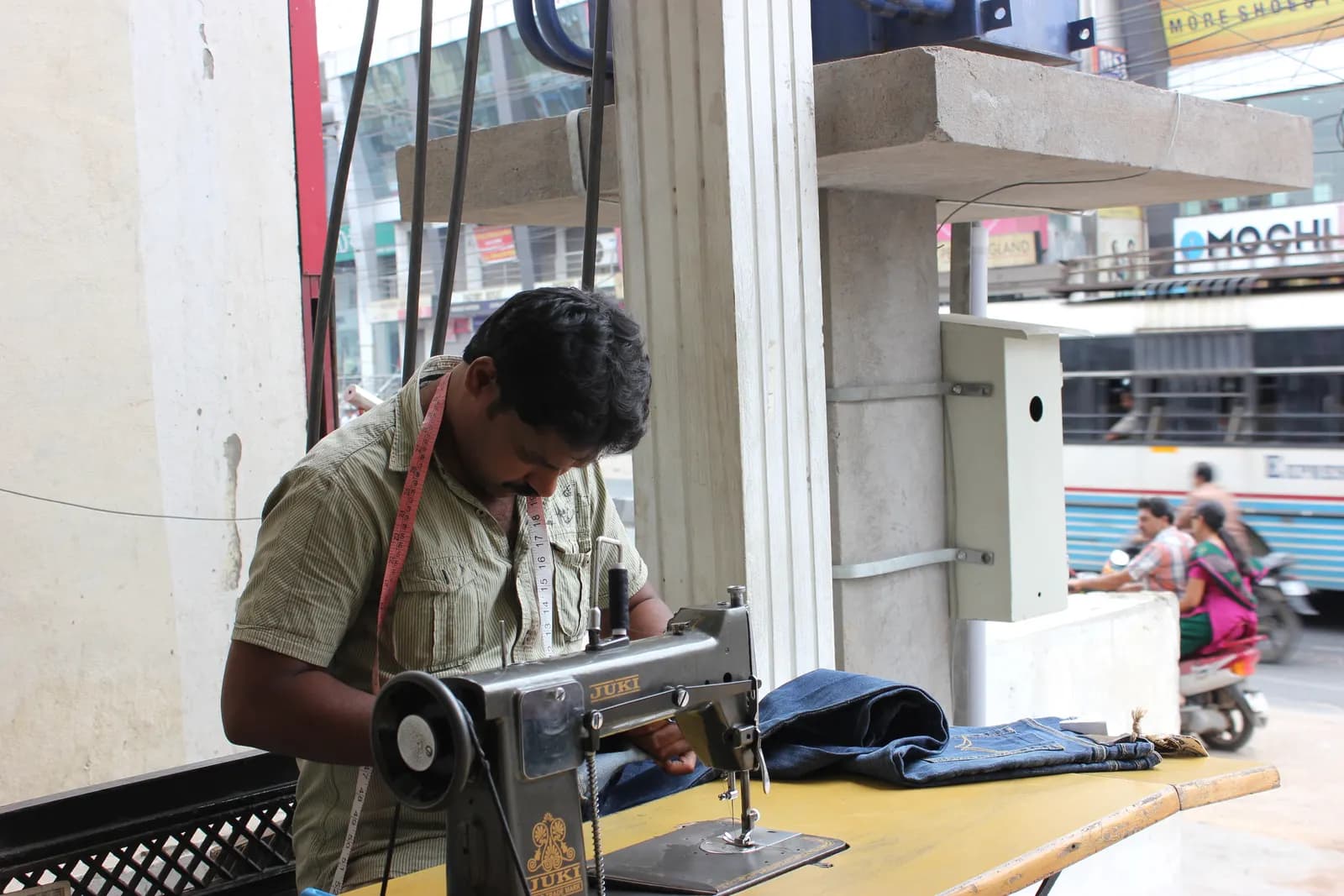
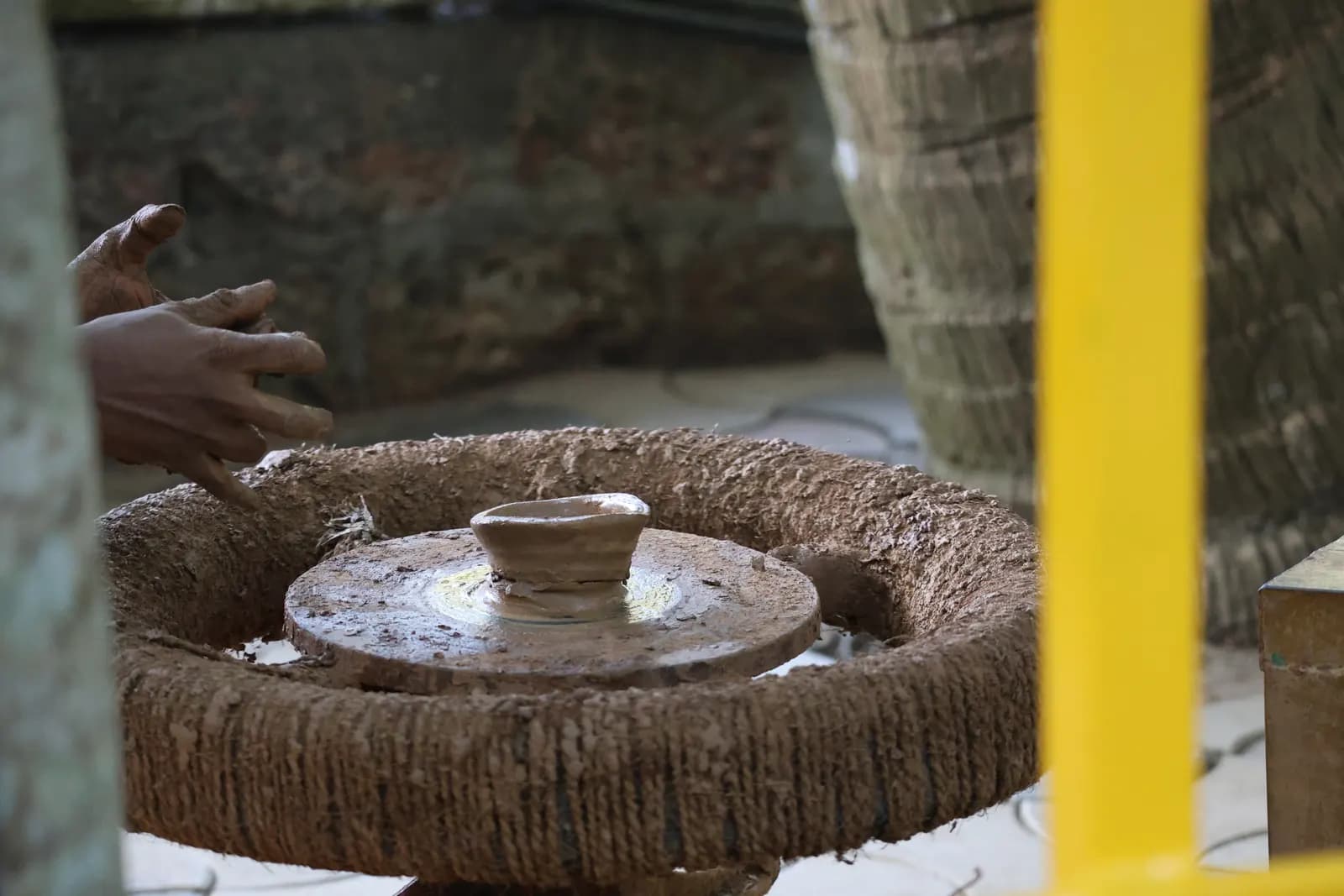
The list is closed — if your work isn't on it, you can't register under a nearby trade. Metal-based trades also include makers of bronze, brass and copper utensils, diyas and figurines.
| Group | Trades |
|---|---|
| Wood | Carpenter (suthar/badhai), boat maker |
| Iron, metal and stone | Armourer, blacksmith (lohar), hammer and tool-kit maker, locksmith, sculptor / stone carver / stone breaker |
| Gold and silver | Goldsmith (sonar) |
| Clay | Potter (kumhaar) |
| Leather | Cobbler (charmkar) / shoesmith / footwear artisan |
| Construction | Mason (rajmistri) |
| Others | Basket / mat / broom maker and coir weaver, traditional doll and toy maker, barber (naai), garland maker (malakaar), washerman (dhobi), tailor (darzi), fishing net maker |
PM Vishwakarma Yojana benefits in 2026
1. Recognition: certificate and ID card
After approval you receive a PM Vishwakarma digital certificate and ID card with a unique number. This is what banks, training centres and the toolkit system look up, so keep it safe — it is your proof of being in the scheme.
2. Skill training with a stipend
Training starts with skill verification, a short assessment of what you already know. Then comes basic training of about 40 hours over 5–7 days, usually at or near your district headquarters. Board and lodging are free and you get ₹500 per day as wage compensation, credited by DBT after you are certified. If you want to grow further, you can opt for advanced training of 15 days (120 hours) with the same stipend. Both end with an NSQF certificate.
For a 7-day basic course that is ₹3,500, and for the 15-day advanced course ₹7,500 — money that matters when you are giving up a week of earnings.
3. Toolkit incentive
Up to ₹15,000 is given after skill verification at the start of basic training. It is not cash: it arrives as an e-RUPI/e-voucher you redeem at designated outlets for improved tools — a power-operated sewing machine for a tailor, an electric wheel for a potter, a better forge kit for a blacksmith.
4. Collateral-free credit at 5%
This is the biggest benefit and has its own section below.
5. Digital transaction incentive
Once you start accepting UPI or other digital payments, you get ₹1 per transaction (up to 100 a month), credited monthly through the Aadhaar-enabled payment system. At the full 100 transactions that is ₹100 a month — small, but regular digital use is one of the routes to the second loan.
6. Marketing support
The National Committee for Marketing supports quality certification, branding, advertising, trade fairs and onboarding on ONDC and the GeM portal, so buyers — including government buyers — can find your products.
PM Vishwakarma loan details: two tranches, 5% interest
The credit is called an Enterprise Development Loan. You need no collateral and pay no guarantee fee — the loans are covered by a graded guarantee through CGTMSE, paid for by the government. Banks, regional rural banks, small finance banks, cooperative banks, NBFCs and microfinance institutions can all lend under the scheme.
First vs second loan tranche
| First tranche | Second tranche | |
|---|---|---|
Amount | Up to ₹1 lakh | Up to ₹2 lakh |
Repayment | 18 months, monthly EMIs | 30 months, monthly EMIs |
When you can take it | After skill verification and completed basic training | After repaying the first tranche, with a standard (non-overdue) account |
Extra condition | — | Adopted digital transactions in the business or completed advanced training |
Interest you pay | 5% | 5% |
Amount
- First tranche
Up to ₹1 lakh
- Second tranche
Up to ₹2 lakh
Repayment
- First tranche
18 months, monthly EMIs
- Second tranche
30 months, monthly EMIs
When you can take it
- First tranche
After skill verification and completed basic training
- Second tranche
After repaying the first tranche, with a standard (non-overdue) account
Extra condition
- First tranche
—
- Second tranche
Adopted digital transactions in the business or completed advanced training
Interest you pay
- First tranche
5%
- Second tranche
5%
The lender may charge a normal rate; the Government of India pays up to 8% of it upfront to the bank, so your rate stays at 5%. The guidelines' own illustration uses a 13% gross rate — 5% from you, 8% from the government. There is no prepayment penalty once six months have passed since disbursement.
What it costs you, in rupees
Using a standard reducing-balance EMI formula:
- First tranche, ₹1,00,000 at 5% for 18 months: EMI about ₹5,778; total interest about ₹4,005.
- The same ₹1 lakh at 13% would cost about ₹6,145 a month and ₹10,606 in interest — the scheme saves you roughly ₹6,600.
- Second tranche, ₹2,00,000 at 5% for 30 months: EMI about ₹7,106; total interest about ₹13,176 (versus about ₹35,329 at 13%).
Before you borrow, check that your monthly earnings can carry the EMI. A barber clearing ₹18,000 a month after shop rent can manage ₹5,778 only if the new tools genuinely bring in extra business. You can change the amount, rate and tenure in our EMI calculator.
How to apply: PM Vishwakarma registration through CSC
Self-registration from a phone isn't how it works. Enrolment is done through a CSC (or an enumerator) with Aadhaar biometric authentication, and the scheme says enrolment, registration and the certificate are completely free — the government pays the CSC.
Registration and approval, step by step
- 1
Visit your nearest Common Service Centre
Carry Aadhaar, your mobile phone (linked to Aadhaar), ration card and bank passbook. The village-level entrepreneur (VLE) logs in to the PM Vishwakarma portal for you.
Tip: Don't pay anyone for a 'form' — enrolment is free under para 5.1.5 of the guidelines.
- 2
Mobile and Aadhaar verification
Your mobile number is verified by OTP and your identity by Aadhaar biometric (fingerprint) e-KYC.
- 3
Fill in the application
The VLE enters personal and family details, your trade, bank account (Aadhaar-seeded) and the benefits you want — training, toolkit, credit, digital and marketing support.
- 4
Stage 1 — Gram Panchayat / ULB verification
The Gram Panchayat head (or the urban local body's executive head) confirms you practise the trade and that only one family member has applied.
- 5
Stage 2 — District Implementation Committee
The district committee vets the application and recommends it.
- 6
Stage 3 — Screening Committee approval
Open the PM Vishwakarma portalThe state-level Screening Committee, chaired by an MSME field officer with the lead bank and MSDE as members, gives final approval. You then get your certificate and ID card.
After approval, you'll be called for skill verification and basic training; the toolkit e-voucher and loan application follow from there.
Documents you need
Keep these ready before going to the CSC
0/6PM Vishwakarma online apply last date and status check
Last date. The guidelines don't fix an annual deadline; the scheme period runs to FY 2027-28. But registrations have reached the 30 lakh target, and since then the focus has been on training, toolkits and credit for people already enrolled. Pages announcing a "PM Vishwakarma online apply 2026 last date" are not official. Whether fresh enrolments are being taken in your area is something only your CSC, the district MSME office or the helpline (1800-267-7777 / 17923) can confirm.
Status. Open pmvishwakarma.gov.in, choose Login, then the applicant/beneficiary option, and sign in with the mobile number you gave at the CSC and the OTP. Your dashboard shows which of the three verification stages the application is at, and later your training, toolkit and loan status. The CSC operator can check it for you too.
If your application has been sitting at Stage 1 for weeks, the most common reasons are a Gram Panchayat head who hasn't logged in, a family member already registered, or a mismatch between your Aadhaar address and your actual district. Ladakh residents whose Aadhaar still says "Jammu & Kashmir", for instance, must update the address first.
Common mistakes that delay benefits
- Paying agents or "silai machine form" sites. There is no separate free sewing-machine scheme; tailors get the same toolkit e-voucher as everyone else.
- Skipping basic training. The first loan tranche is linked to completing it. No training, no loan.
- Applying with an open PMEGP, Mudra or SVANidhi loan. Repay Mudra/SVANidhi first; any PMEGP loan in the last five years rules you out.
- Using a bank account not linked to Aadhaar. Stipend, digital incentive and toolkit all flow by DBT to the Aadhaar-seeded account.
- Missing EMIs on the first tranche. The second ₹2 lakh needs a standard account and full repayment of the first.
PM Vishwakarma vs Mudra vs PMEGP — which fits you?
PM Vishwakarma is for the individual artisan who wants better tools and a small, cheap loan. If your trade isn't one of the 18, or you need more money, look at a Mudra loan — up to ₹20 lakh at bank rates, for any non-farm micro business. If you want to set up a new manufacturing or service unit with a capital subsidy, the PMEGP loan is the route; the FAQ confirms a PM Vishwakarma beneficiary can move to PMEGP once the Vishwakarma loan is repaid. Registering your business on Udyam helps with all three.
Official PM Vishwakarma links
- PM Vishwakarma portalScheme details, login and status
- Scheme guidelines (PDF)Eligibility, benefits, verification, credit terms
- Official FAQDocuments, loan, stipend, toolkit, overlaps
- Contact us and state nodal officersHelpline 1800-267-7777 / 17923
- Find a Common Service CentreWhere registration is done
- PIB: outlay and eligibility (21 Dec 2023)
What to do next
If you're registered, finish basic training first — it unlocks both the toolkit and the first loan. Before signing for the loan, run the numbers in the EMI calculator and check how much you can comfortably repay with the loan eligibility calculator. If you need more than ₹3 lakh or your work isn't one of the 18 trades, read our guides to the Mudra loan and the PMEGP subsidy loan.
This is general information, not legal or financial advice — confirm on the official source or with your CSC, bank or district MSME office.
Frequently asked questions
The guidelines do not set an annual last date — the scheme runs for FY 2023-24 to FY 2027-28. However, the national target of 30 lakh registrations was met, and enrolment now depends on what the portal and your CSC are allowing in your district. Ask your nearest CSC or call 1800-267-7777 / 17923 before paying anyone who promises a 'last date' slot.
Go to pmvishwakarma.gov.in, click Login, choose the applicant/beneficiary login and sign in with the mobile number used at the CSC plus the OTP. Your dashboard shows which verification stage — Gram Panchayat or ULB, District Implementation Committee or Screening Committee — your application is at. Your CSC operator can also check it for you.
Up to ₹3 lakh without collateral: ₹1 lakh first, repayable over 18 months, and then ₹2 lakh repayable over 30 months. You pay 5% interest; the government pays the lender up to 8% on top. The first tranche needs completed basic training; the second needs the first repaid.
There is no separate free sewing-machine scheme. Registered tailors (darzi) get the same toolkit incentive as every trade — up to ₹15,000 as an e-RUPI/e-voucher after skill verification at the start of basic training — which can be spent on a better machine at designated outlets. Websites selling 'silai machine forms' are not official.
If you ever took a PMEGP loan in the past five years you are not eligible. If you have a Mudra or PM SVANidhi loan still outstanding, you cannot apply; once it is fully repaid, you can. After you repay your PM Vishwakarma loan, you may later apply for PMEGP to grow into a bigger unit.
The helpline listed on the official Contact Us page is 1800-267-7777 / 17923. You can also email [email protected] or visit your nearest CSC, MSME Development and Facilitation Office (MSME-DFO) or District Industries Centre (DIC) for help.
Sources & verification
Figures on this page were checked against the sources below when it was last reviewed on 7 October 2026. Each rate and limit is stored once with its own official source and review date, and official update channels are monitored daily so changes are picked up. How we verify
- 1.PM Vishwakarma — official portal (scheme benefits, eligibility, 18 trades) — Ministry of MSME · accessed 7 October 2026
- 2.PM Vishwakarma — Frequently Asked Questions — Ministry of MSME · accessed 7 October 2026
- 3.PM Vishwakarma Scheme Guidelines (v30.0) — Ministry of MSME · accessed 7 October 2026
- 4.PM Vishwakarma — Contact Us (helpline and state nodal officers) — Ministry of MSME · accessed 7 October 2026
- 5.Rs.13,000 crore have been provided for the PM Vishwakarma Scheme from FY 2023-2024 to FY 2027-28 — PIB (Ministry of MSME), 21 Dec 2023 · accessed 7 October 2026
- 6.PM Vishwakarma Scheme Completes Three Years: Key Facts — InsightsIAS · accessed 7 October 2026
- 7.Cabinet approves Rs 13,000 crore 'PM Vishwakarma' scheme to support traditional artisans — The Week · accessed 7 October 2026
MSMETOOLS is an independent platform and is not affiliated with any government agency, ministry or department.
Tools for this
EMI Calculator
Calculate loan EMIs for business and personal loans.
Loan Eligibility Calculator
Check your business loan eligibility based on income and existing loans.
Related guides
 Mudra Loan 2026: Shishu to Tarun Plus, Rates & How to ApplyRead guide
 Udyogini Scheme 2026: Eligibility, Subsidy & How to ApplyRead guide
 PM SVANidhi 2026: ₹15,000–₹50,000 Loans, Credit Card & ApplyRead guide
 Agri Infrastructure Fund 2026: 3% Subvention & StatusRead guide
Official links open the government site in a new tab.