 Starting & growing a business
How to Start a Jewellery Business in 2026: Hallmarking, GST, Costs and a Jewellery Business Plan
How to start a jewellery business in 2026: gold vs imitation, BIS hallmarking and HUID rules, 3% GST, sourcing, inventory risk, setup cost and a worked P&L.
 Edited by Sumeet YadavFounder & editor, MSMETOOLS · fact-checked against official sources

Contents (10)
- 1. Choose your jewellery business model
- 2. BIS hallmarking and HUID rules for gold jewellery
- 3. GST on jewellery and making charges
- 4. Sourcing and inventory risk
- 5. Setup cost for a small gold jewellery shop
- 6. Worked example: a small gold shop's monthly P&L
- 7. Licences, registrations and funding
- 8. Jewellery business plan template
- 9. Mistakes that sink new jewellery businesses
- 10. What to do next
Jewellery is one of India's most trusted purchases — and one of its most regulated retail businesses. Starting one is less about the shop and more about three things: what you sell (gold, silver or imitation), how much stock you can afford to hold, and whether you can comply with BIS hallmarking, GST and cash rules from the first sale. This guide is for first-time founders in India — a goldsmith's son opening his own counter, a homemaker selling imitation sets on Instagram, or a retailer adding silver. It covers choosing a model, the hallmarking and HUID rules after the 2026 amendments, GST on jewellery and making charges, sourcing, inventory risk, an estimated setup cost table, a worked jewellery business plan with break-even, and a fill-in checklist. Rules were checked against BIS and GST sources in October 2026.
Quick answer
To start a jewellery business, choose a model (imitation, silver or gold), register the business and for GST, and — for gold — register with BIS and sell only hallmarked jewellery with a HUID in the 392 districts under mandatory hallmarking. Jewellery carries 3% GST on the full value including making charges. Gold stock is your main investment: our estimate for a small shop is ₹64 lakh–₹2 crore.
Hallmarking fee at BIS centres: ₹75 per article (minimum ₹200 a consignment) from 14 September 2026
GST: 3% on gold, silver and imitation jewellery; 5% on job-work making charges
Imitation jewellery can start from about ₹50,000 and needs no hallmarking
Worked example: a small gold shop breaks even at about 226 grams sold a month
Choose your jewellery business model
The model decides your capital, licences, risks and margins. Most Indian jewellery start-ups fall into one of these:
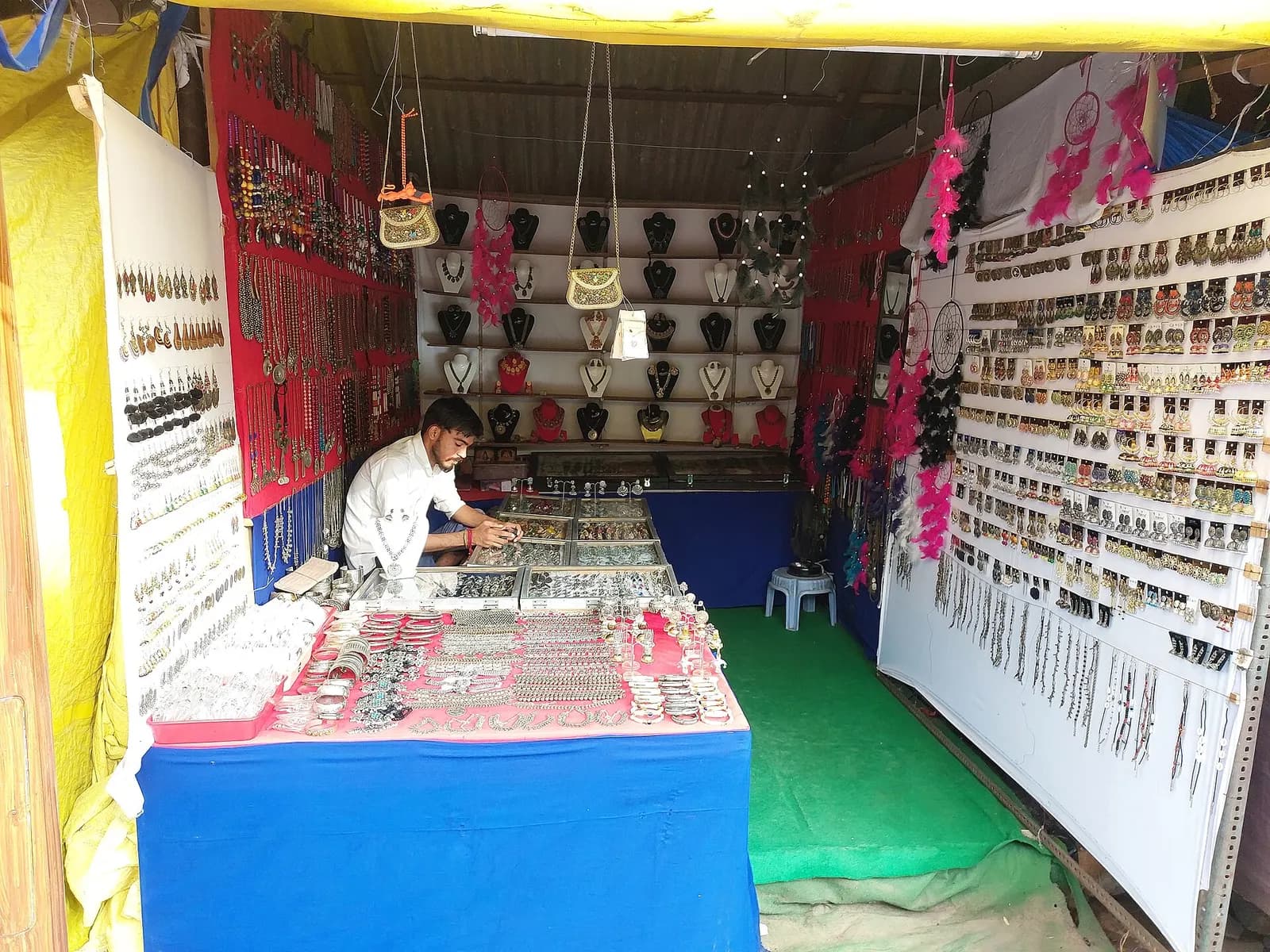
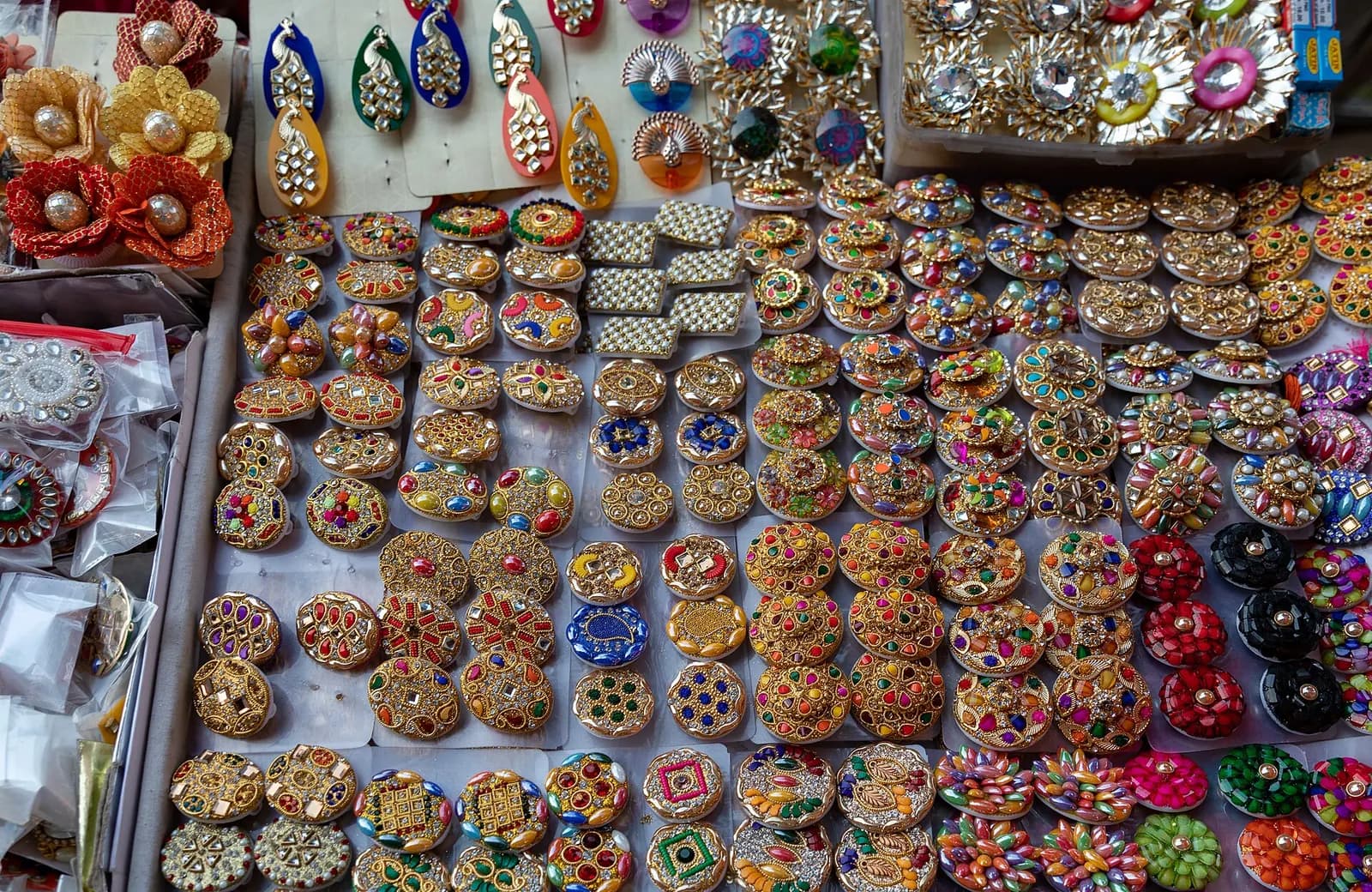
- Imitation or artificial jewellery — brass, copper, alloy or oxidised pieces with stones, plating or kundan-style work. Low ticket, high percentage margin, fashion-driven. Sold from a small shop, market stall, Instagram, WhatsApp or marketplaces. Needs the least capital.
- Silver jewellery — anklets, toe rings, chains, oxidised and 925 sterling pieces. Moderate capital; a good bridge between imitation and gold.
- Gold jewellery retail — a counter or shop selling 22-carat and 18-carat jewellery. The largest capital need, the strictest compliance and the most trust-dependent. Margins come mainly from making charges.
- Manufacturing or karigar work — making jewellery for retailers or doing job work on customers' gold. Skill-heavy, lower stock risk; traditional goldsmiths may also qualify for support under PM Vishwakarma.
- Online-first brand — demi-fine, silver or imitation jewellery sold through your own website and marketplaces. See our e-commerce guide for marketplace rules.
If you are new to the trade, start with imitation or silver and learn buying, pricing and customer service before you put lakhs into gold stock.
BIS hallmarking and HUID rules for gold jewellery
Hallmarking is BIS's certification of the purity of a precious metal article. Under the Hallmarking of Gold Jewellery and Gold Artefacts Order, 2020, hallmarking became mandatory in 256 districts from 23 June 2021. Further orders added districts in phases, and after the third amendment order of 3 August 2026, BIS lists 392 districts under mandatory hallmarking. If your shop is in one of them, the rules below apply to you.
HUID is compulsory. From 1 April 2023, gold jewellery and artefacts in these districts can only be sold or displayed if hallmarked under IS 1417:2016 as amended in July 2021 — the three-part mark with the BIS logo, purity grade (for example 22K916) and a six-character alphanumeric HUID that identifies each piece. Old-style four-mark hallmarks without HUID no longer qualify for sale, except under the limited declaration route the order provided for old stock. Customers can check any HUID on the BIS Care app.
Gold hallmarking at a glance (2026)
392 districts
Under mandatory hallmarking
after the 3 August 2026 order
3 marks
BIS logo + purity (e.g. 22K916) + HUID
1 April 2023
HUID-only sales from
₹75
Hallmarking fee per gold article
from 14 Sep 2026; min ₹200 a consignment
Register with BIS before you sell. A jeweller who makes or sells gold jewellery applies online for a Certificate of Registration for selling hallmarked jewellery. BIS's current guidelines say registration is granted instantly on the portal and can be downloaded at once; BIS then scrutinises it and can cancel registrations with problems. Larger firms can take a corporate registration covering several outlets.
Get every piece hallmarked at a recognised centre. You send consignments to a BIS-recognised Assaying and Hallmarking Centre (AHC) with a written or online request. From 14 September 2026, the fee you pay the AHC is ₹75 per article (minimum ₹200 a consignment); for silver articles it is ₹35 per article (minimum ₹150). Build this into your making charge — on a 4-gram pair of earrings it is now a noticeable cost.
Display and invoice duties. A registered jeweller must display the BIS registration certificate, a "Hallmarked Jewellery available for sale" sign, the components of the hallmark, a 10X magnifying glass, a suitable weighing scale, BIS contact details and hallmarking charges, and a BIS Care app poster. Each invoice must describe every article separately with net weight of precious metal, purity in carat and fineness, and hallmarking charges, and state that the customer can get purity verified at any BIS-recognised AHC. Update HUID status — sold, transferred, returned or melted — in BIS's online system.
Purity failures cost you. If a market sample shows purity short of what is marked, the selling jeweller must compensate the customer under the hallmarking regulations, and serious shortfalls can lead to cancellation and prosecution. Buy only from suppliers who give you hallmarked stock with matching HUIDs on the invoice.
Exemptions. When mandatory hallmarking began in June 2021, the government exempted jewellers with annual turnover up to ₹40 lakh a year and certain traditional jewellery such as kundan, polki and jadau, along with items like gold watches and fountain pens; articles meant purely for export are also exempt. Because the order has been amended many times, confirm the current exemptions with your BIS branch office rather than relying on them for your whole plan. In practice, a gold shop crosses ₹40 lakh of turnover within months.
Getting a gold jewellery counter compliant
- 1
Register the business
PAN, current account, Shops and Establishments registration and free Udyam registration.
- 2
Register for GST
A gold shop crosses the ₹40 lakh goods threshold quickly; most suppliers and banks expect a GSTIN from day one.
- 3
Take BIS jeweller registration
Apply online for a Certificate of Registration to sell hallmarked jewellery; download it and display it.
- 4
Stock only HUID-hallmarked pieces
Check that supplier invoices list each HUID; verify a sample on the BIS Care app.
- 5
Set up the counter
Stamped weighing scale, magnifier, BIS display boards, CCTV, safe and insurance.
Tip: Get your scale verified and stamped under Legal Metrology before the first sale.
GST on jewellery and making charges
After GST 2.0 took effect on 22 September 2025, Notification 9/2025-Central Tax (Rate) kept headings 7106 to 7118 — which include gold and silver jewellery (7113) and imitation jewellery (7117) — at 1.5% CGST plus 1.5% SGST, a total of 3%. Our detailed GST on gold guide covers rates, old-gold exchange and invoices; here is what matters for your business plan:
- Selling jewellery: the taxable value is the whole price — gold value, making charges, wastage, stone-setting and hallmarking you recover. All of it carries 3%; splitting the bill into lines doesn't change that.
- Job work: if a karigar or your workshop makes jewellery from gold supplied by the customer or by another jeweller, the making charge is a job-work service on Chapter 71 goods, taxed at 5%.
- Imitation jewellery under HSN 7117 also carries 3%, so the GST cost is the same as gold even though the product is far cheaper.
- Input tax credit: a registered jeweller claims credit for GST paid on purchases of jewellery and gold, so tax is charged on your margin in effect. Keep every purchase invoice.
- Registration: compulsory once turnover crosses ₹40 lakh in most states. A gold shop selling even 300 grams a month turns over several crore a year.
- Composition scheme: traders and manufacturers can opt for composition up to ₹1.5 crore of turnover at 1%, without input tax credit. It can suit a small imitation or silver shop, but rarely a gold shop, because gold turnover crosses the limit and you lose credit on high-value purchases.
Imports of gold carry customs duty of about 15% (10% BCD + 5% AIDC), which is built into the price you pay your bullion dealer or wholesaler. Test your own bill lines in the GST calculator.
Cash and KYC. Jewellery is a cash-heavy trade, and the law watches it closely. Income-tax law bars accepting ₹2 lakh or more in cash from one person for a single transaction, and buyers must quote PAN for larger purchases. Dealers in precious metals and stones also have KYC and reporting duties under the anti-money-laundering law for large cash transactions. Train your staff to collect PAN and ID for big bills, take card, UPI or bank transfers, and keep records.
Sourcing and inventory risk
Where stock comes from. Small gold retailers usually buy finished, hallmarked jewellery from manufacturers and wholesalers, paying for gold weight plus a wastage or labour charge, or have karigars make pieces from bullion. Many wholesalers offer goods on approval or against an old-gold or cash deposit. Imitation and silver sellers buy from wholesale clusters in cities such as Mumbai, Rajkot and Jaipur, or from online B2B suppliers.
Gold price risk. Your stock is gold, and gold prices move every day. If you sell a 10-gram chain today and re-buy 10 grams next week at a higher rate, part of your margin disappears; if prices fall while you hold a kilo, the stock is worth less. Jewellers manage this by replenishing quickly (sell one, buy one the same day), holding only the stock that turns over, using bank gold metal loans where available, and pricing at the day's rate rather than a fixed price.
Design and dead-stock risk. Unsold designs tie up money. Track which weights and designs sell in the inventory turnover calculator — a small gold shop should aim to turn its stock over four to six times a year. In imitation jewellery, trends change in weeks; buy small lots, reorder winners, and clear slow pieces quickly.
Security and insurance. Fit a proper safe or strongroom, CCTV with remote backup, and an alarm, and insure the stock — jewellers usually take a jewellers' block policy covering stock in the shop, in transit and with karigars. Insurers ask about your safe, CCTV and stock records before they quote.
Setup cost for a small gold jewellery shop
The table below is a MSMETOOLS estimate for a 200–300 sq ft gold and silver jewellery shop in a tier-2 town in 2026. Stock is valued at an illustrative 22-carat gold rate of ₹1,10,000 per 10 grams — replace it with the day's rate when you plan. Interiors, security and deposits vary by city; get local quotes.
| Setup item | Estimated range | Worked plan | Basis / notes |
|---|---|---|---|
| Gold and silver stock (0.5–1.5 kg gold equivalent) | ₹55,00,000 – ₹1,65,00,000 | ₹82,50,000 | 750 g at ₹1.1 lakh per 10 g |
| Shop deposit and advance rent | ₹1,00,000 – ₹3,00,000 | ₹2,00,000 | |
| Interiors, display counters, lighting, signboard | ₹3,00,000 – ₹10,00,000 | ₹5,00,000 | Good lighting sells gold |
| Safe or strongroom | ₹1,00,000 – ₹4,00,000 | ₹2,00,000 | Insurers check this |
| CCTV, alarm, door security | ₹50,000 – ₹1,50,000 | ₹80,000 | |
| Weighing scale (0.01 g, Legal Metrology verified) | ₹15,000 – ₹40,000 | ₹25,000 | Required for display and billing |
| XRF purity analyser (optional) | ₹0 – ₹6,00,000 | ₹0 | Use AHC testing at first |
| Billing and stock software with HUID tracking | ₹20,000 – ₹60,000 | ₹40,000 | |
| Insurance for first year (jewellers' block) | ₹50,000 – ₹1,50,000 | ₹80,000 | |
| Registrations, branding, launch | ₹50,000 – ₹2,00,000 | ₹1,00,000 | |
| Cash working capital | ₹2,00,000 – ₹5,00,000 | ₹3,00,000 | Hallmarking, salaries, slow months |
| Total | ₹63,85,000 – ₹1,99,00,000 | ₹97,75,000 |
An imitation jewellery business is a different scale entirely: roughly ₹50,000 to ₹5 lakh by our estimate for first stock, display or photography, packaging, a website or marketplace listings and marketing. Build your own list in the startup cost calculator.
Worked example: a small gold shop's monthly P&L
Here's a sample jewellery business plan for "Shree Ornaments", the shop in the table above. All figures are illustrative estimates; gold is assumed at ₹1,10,000 per 10 grams of 22-carat.
Per 10 grams sold: the customer pays gold value ₹1,10,000 plus making charges of 12% (₹13,200) = ₹1,23,200, plus 3% GST. Your costs are re-buying the same gold (₹1,10,000), the wholesaler's or karigar's labour and wastage (₹5,500), hallmarking for about two articles (₹150), and packaging and card fees (₹550) = ₹1,16,200. Contribution = ₹7,000 per 10 grams — under 6% of the bill.
Sales assumption: 300 grams a month (about 10 grams a day, for example a couple of chains and a few pairs of earrings) = 30 units of 10 g.
| Fixed monthly cost | Amount (estimate) |
|---|---|
| Rent (250 sq ft, main market) | ₹30,000 |
| Salesperson and helper | ₹30,000 |
| Security, CCTV and alarm upkeep | ₹5,000 |
| Insurance (monthly share) | ₹8,000 |
| Electricity | ₹5,000 |
| Marketing (festive offers, Google listing, social media) | ₹10,000 |
| Accountant and software | ₹5,000 |
| Interest on ₹30 lakh working-capital loan at 10% | ₹25,000 |
| Owner's salary | ₹40,000 |
| Total fixed costs | ₹1,58,000 |
- Monthly contribution = 30 × ₹7,000 = ₹2,10,000
- Profit after the owner's salary = ₹2,10,000 − ₹1,58,000 = about ₹52,000 a month
- Break-even = ₹1,58,000 ÷ ₹7,000 = about 22.6 units, or 226 grams a month (roughly 7.5 grams a day)
Three lessons for your plan. First, profit depends on making charges, not gold: cutting making charges from 12% to 9% to win customers drops contribution to about ₹3,700 per 10 grams and pushes break-even above 420 grams a month. Second, a 1% rise in the gold rate between selling and restocking takes ₹1,100 off every 10 grams, so restock the same day. Third, wedding seasons, Akshaya Tritiya, Dhanteras and Diwali bring a large share of annual sales — plan stock and staff for those weeks.
Try it — jewellery shop break-even (per 10 grams)
Imitation jewellery, by comparison. An online imitation seller with an average order of ₹800 might spend ₹280 on the product, ₹120 on packaging and shipping, and ₹150 on marketplace fees and ads per order, leaving about ₹250. With ₹25,000 a month of fixed costs (part-time help, photography, software, a small storeroom), break-even is about 100 orders a month. The percentage margin is far higher than gold, but returns, damaged pieces and ad costs can swallow it if you don't track them per order.
Licences, registrations and funding
For any jewellery business, line up these registrations:
- Business registration — proprietorship, partnership, LLP or company; PAN and a current account in the business name.
- GST registration — see our GST registration guide.
- BIS registration for selling hallmarked gold jewellery (gold sellers in notified districts).
- Shops and Establishments registration and a municipal trade licence where your city requires one.
- Legal Metrology verification and stamping of weighing scales.
- Udyam registration — free on the government portal; it helps with bank finance and delayed-payment protection. See Udyam registration.
- Trademark for your brand name and logo, especially for an online brand — see trademark registration.
- IEC if you plan to export — see IEC registration.
Funding. Banks finance jewellers through cash-credit limits against stock and, for established jewellers, gold metal loans. A start-up shop will usually need to bring most of the stock money itself and borrow working capital. Imitation and silver sellers can use Mudra loans — collateral-free up to ₹10 lakh under Tarun — for stock and fit-out; see the Mudra loan guide. Women and SC/ST founders of a first enterprise can apply under Stand-Up India for ₹10 lakh to ₹1 crore, which covers trading. Traditional goldsmiths should check PM Vishwakarma for training, a toolkit incentive and concessional credit.
Jewellery business plan template
Fill in each line; the business plan generator can turn it into a document for your bank or partner.
Fill-in jewellery business plan
0/11Mistakes that sink new jewellery businesses
- Buying un-hallmarked or unverified stock. In a notified district you can't legally sell it, and purity shortfalls make you liable. Check every HUID.
- Holding too much stock. A kilo of gold that turns over twice a year earns less than half a kilo that turns over five times — and carries twice the price risk.
- Underpricing making charges. Matching the big chains' discounts on making charges leaves nothing to pay rent and staff.
- Splitting bills to "save" GST. The full jewellery value is taxable at 3%; mislabelled bills invite penalties and lose customer trust.
- Weak cash discipline. Accepting large cash sums without PAN and records creates income-tax and anti-money-laundering exposure.
- No insurance or security. One theft can wipe out years of profit.
Official links
- BIS hallmarking overview and ordersOrders, amendments, district list, jeweller guidelines
- BIS Hallmarking Amendment Regulations 2026₹75 per article fee from 14 September 2026
- Districts under mandatory hallmarkingCheck whether your district is covered
- BIS Guidelines for JewellersRegistration, display and invoice rules
- GST portalRegistration and returns
- Udyam Registration portalFree MSME registration
What to do next
Decide your model first, then check on BIS's district list whether mandatory hallmarking applies where you'll open. Price ten of your likely best-sellers with realistic making charges, run them through the break-even calculator, and read our GST on gold guide before you print your first invoice. Register for GST and with BIS before you stock the counter.
This is general information, not legal or tax advice — confirm on the official source or with a professional.
Frequently asked questions
It depends on what you sell. An imitation or artificial jewellery business from home or online can start with roughly ₹50,000 to ₹5 lakh. A small gold jewellery shop needs far more because stock is the investment: our estimate is about ₹64 lakh to ₹2 crore, of which ₹55 lakh to ₹1.65 crore is 0.5–1.5 kg of gold inventory. These are estimates; gold prices move daily.
Yes, in the 392 districts notified under the BIS hallmarking order. Since 1 April 2023, gold jewellery there can only be sold with the hallmark that includes a six-character HUID. Jewellers must register with BIS (granted instantly on the online portal) and get articles hallmarked at a BIS-recognised centre, which charges ₹75 per article (minimum ₹200 a consignment) from 14 September 2026.
When you sell jewellery, the whole bill — gold value, making charges, wastage and hallmarking recovered — is taxed at 3%. If a karigar only does job work on a customer's own gold, the making charge is a job-work service taxed at 5%. Imitation jewellery (HSN 7117) is also taxed at 3%.
A gold jewellery shop needs BIS registration for selling hallmarked jewellery, GST registration, Shops and Establishments registration, a municipal trade licence where required, Legal Metrology verification of weighing scales, and Udyam registration for MSME benefits. An imitation jewellery seller needs GST once over the threshold or when selling online, plus Shops and Establishments for a physical shop.
Margins on gold value are thin; jewellers earn mainly on making charges, design and service. In our worked example, a small gold shop selling 300 grams a month earns about ₹52,000 after paying the owner, and breaks even at roughly 226 grams a month. Imitation jewellery carries much higher percentage margins but lower ticket sizes, and depends on marketing and returns.
Yes, especially imitation, silver or handmade jewellery sold through Instagram, WhatsApp and marketplaces. Register under GST before selling on most marketplaces, keep purchase bills for every lot, and use proper packaging. Selling gold jewellery from home is harder: hallmarking, insurance, security and the cash-and-KYC rules make a registered shop or an online store with secure logistics far more practical.
Sources & verification
Figures on this page were checked against the sources below when it was last reviewed on 7 October 2026. Each rate and limit is stored once with its own official source and review date, and official update channels are monitored daily so changes are picked up. How we verify
- 1.BIS (Hallmarking) Amendment Regulations, 2026 (14 September 2026) — Bureau of Indian Standards · accessed 7 October 2026
- 2.Phase-wise coverage of districts under gold mandatory hallmarking — Bureau of Indian Standards · accessed 7 October 2026
- 3.Hallmarking of Gold Jewellery and Gold Artefacts (Third Amendment) Order, 2026 (3 August 2026) — Department of Consumer Affairs · accessed 7 October 2026
- 4.Hallmarking of Gold Jewellery and Gold Artefacts (Amendment) Order, 2023 — Department of Consumer Affairs · accessed 7 October 2026
- 5.Guidelines for Jewellers (Jewellers Registration Scheme) — Bureau of Indian Standards · accessed 7 October 2026
- 6.Guidelines on exemptions in the Hallmarking Order (4 January 2022) — Bureau of Indian Standards · accessed 7 October 2026
- 7.Mandatory hallmarking of gold jewellery kicks in — The Tribune · accessed 7 October 2026
- 8.Notification No. 9/2025-Central Tax (Rate) (compiled copy) — CBIC (via compiled copy) · accessed 7 October 2026
- 9.Notification No. 11/2017-Central Tax (Rate) — job work entries — CBIC · accessed 7 October 2026
MSMETOOLS is an independent platform and is not affiliated with any government agency, ministry or department.
Tools for this
Break Even Calculator
Find your break even point and units.
GST Calculator (India)
Calculate GST for your sales and purchases with current rates.
Inventory Turnover Calculator
See how fast stock sells through.
Startup Cost Calculator
Estimate how much capital you need to launch.
Related guides
 How to Start an Ecommerce Business in India (2026 Guide)Read guide
 How to Start a Boutique in India (2026): Cost, GST & NamesRead guide
 How to Start a Clothing Business in 2026: Costs & GSTRead guide
 Clothing Manufacturing Business 2026: Costs, Licences & ProfitRead guide
Official links open the government site in a new tab.