 Business registration & legal
Trade License in Kerala (2026): K-SMART Applications, the 2026 Enterprise Licence Rules, Fees and Renewal
Kerala trade licence (D&O) in 2026: the new 2026 municipal fee slabs from ₹250, K-SMART steps, 5-day deemed approval, renewal late fees and K-SWIFT exemption.
 Edited by Sumeet YadavFounder & editor, MSMETOOLS · fact-checked against official sources
Contents (12)
- 1. What the Kerala trade licence is — and why people call it D&O
- 2. Who needs it: Category I, Category II and the registration route
- 3. The 2026 municipal fee slabs
- 4. How to apply on K-SMART
- 5. Documents you'll need
- 6. Validity, renewal and late fees
- 7. Home-based businesses and residential buildings
- 8. K-SWIFT: when an MSME can start without a licence
- 9. Panchayats: what's different
- 10. Transfers, closures, cancellation and appeals
- 11. Common mistakes and how to fix them
- 12. What to do next
If you're opening a shop, café, salon, workshop, office or small factory in Kerala, the local body has to license the premises before you start — and in 2026 the rules for that licence changed. This guide is for owners in Kochi, Thiruvananthapuram, Kozhikode, Thrissur and every municipality and panchayat in the state. It covers what people still call the D&O licence, the new municipal fee slabs notified in March 2026, how to apply and renew on K-SMART, how quickly the local body must decide, what happens if you're late, and when a K-SWIFT certificate lets you skip the licence for now. We checked it against the gazette and the Local Self Government Department's own documents in October 2026.
Quick answer
In Kerala's municipalities and corporations, apply on K-SMART for a licence under the Kerala Municipality enterprise licence rules notified on 11 March 2026. The fee is set only by your capital investment — from ₹250 a year for up to ₹1 lakh — and the secretary must decide within 5 days, or the licence is deemed granted.
Validity: up to 5 years from issue, not beyond your lease
Renew 30–90 days before expiry; 10% of one year's fee late fee in the last 30 days, 20% of the fee for each year after expiry
White/green-category and industrial-estate units only register — certificate in 3 days
Panchayats moved to K-SMART in April 2025 and are applying the 2025 enterprise licensing rules
Non-Red MSMEs with K-SWIFT approval are exempt for 3.5 years
What the Kerala trade licence is — and why people call it D&O
Every Kerala local body controls how land and buildings in its area are used for business. The Kerala Municipality Act, 1994 (section 447) and the Kerala Panchayat Raj Act, 1994 (section 232) say that certain premises can't be used for a trade, industry or service without the local body's licence. For decades the rules made under those sections were called the "dangerous and offensive trades and factories" rules, which is why accountants and shop owners still ask for a D&O licence.
In 2018, as part of Kerala's ease-of-doing-business changes, the rules were renamed to cover "industries, factories, trades, entrepreneurship activities and other services". That wording matters because it made clear that ordinary shops, offices and services need a licence too, not just smoky workshops. Municipalities worked under 2011 rules and panchayats under 1996 rules, both amended many times.
In 2025 and 2026 both sets were replaced. Panchayats got the Kerala Panchayat Raj (Licensing of Enterprises) Rules, 2025. Municipalities and municipal corporations got new municipal enterprise licence rules, published as S.R.O. No. 364/2026 in the Kerala Gazette on 11 March 2026. The licence still doesn't create a business entity or replace other registrations — it is permission for your activity at that address.
Who needs it: Category I, Category II and the registration route
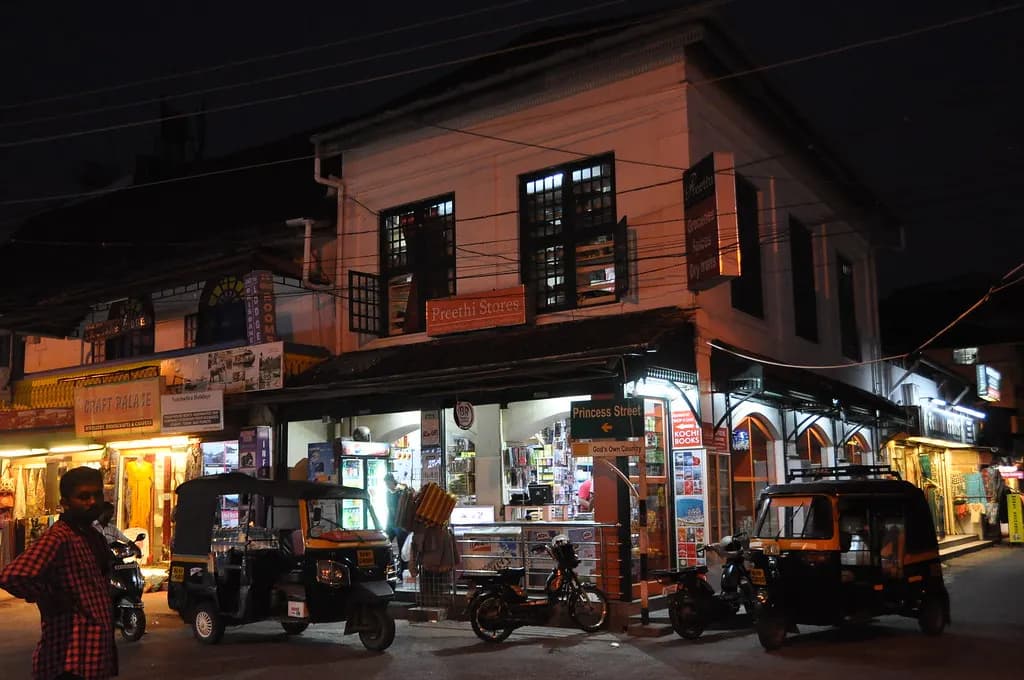
The 2026 municipal rules sort every enterprise into one of two groups. Category I covers factories, industries, workshops and workplaces that turn raw material into a product, by hand or with power. Category II covers everything that provides a service or trades — shops, restaurants, salons, clinics, offices, lodges, showrooms and so on. Most readers of this page are Category II.
Category II businesses apply for a licence on Form 1. Category I units first need the municipality's permission to set up the factory or install machinery. The council decides on that within 30 days, after reports where relevant from the district medical officer on pollution and the regional fire officer on fire safety. If no decision is communicated in that time, the permission is treated as given.
A third route, registration, is lighter. Rule 10 says these units register rather than seek a full licence:
- units in industrial estates, growth centres, development areas and plots, export processing zones and industrial parks declared by the government or its agencies;
- industrial units classed white or green by the Kerala State Pollution Control Board;
- units with machinery under 5 HP that the Industries Department or the Pollution Control Board certifies as non-polluting.
You apply on Form 5 at least 15 days before starting, and the secretary issues a registration certificate on Form 6 within 3 days. Registration fees are lower than licence fees in the middle slabs — for example ₹750 a year for ₹10–25 lakh of investment against ₹1,000 for a licence.
Exempt activities. The rules don't apply to activities that need a licence under another provision of the Act, cinemas licensed under the Kerala Cinemas (Regulation) Act, places of public resort licensed under the Kerala Places of Public Resort Act (though those under 50 sq m need this licence), bona fide charitable and religious institutions, and free shelters and charitable hospitals. Turfs are outside the rules entirely.
The 2026 municipal fee slabs
The biggest change in the 2026 rules is how fees are worked out. The old rules set maximum fees and left each council to fix rates by type of trade, so a bakery in one town and a bakery in the next could pay very different amounts. Now Schedule 1 sets a single state-wide annual fee by capital investment.
Kerala municipal enterprise licence — annual fee (Schedule 1, 2026 rules)
| Capital investment | Annual licence fee |
|---|---|
Up to ₹1 lakh | ₹250 |
₹1 lakh – ₹10 lakh | ₹500 |
₹10 lakh – ₹25 lakh | ₹1,000 |
₹25 lakh – ₹50 lakh | ₹2,500 |
₹50 lakh – ₹75 lakh | ₹5,000 |
₹75 lakh – ₹1 crore | ₹10,000 |
₹1 crore – ₹5 crore | ₹15,000 |
Above ₹5 crore | ₹15,000 + ₹1,000 per extra crore |
Up to ₹1 lakh
- Annual licence fee
₹250
₹1 lakh – ₹10 lakh
- Annual licence fee
₹500
₹10 lakh – ₹25 lakh
- Annual licence fee
₹1,000
₹25 lakh – ₹50 lakh
- Annual licence fee
₹2,500
₹50 lakh – ₹75 lakh
- Annual licence fee
₹5,000
₹75 lakh – ₹1 crore
- Annual licence fee
₹10,000
₹1 crore – ₹5 crore
- Annual licence fee
₹15,000
Above ₹5 crore
- Annual licence fee
₹15,000 + ₹1,000 per extra crore
What counts as capital investment. The rules define it as the total invested in the enterprise, including the value of any building constructed for it and the land used for it — or, if you don't own the land or building, what you paid to get possession of it, such as a lease premium. That is a wider definition than the MSME classification, which looks at plant and machinery. A café that spends ₹8 lakh on fit-out and equipment and pays a ₹4 lakh lease deposit should count ₹12 lakh and pay ₹1,000, not ₹500.
Adding activities or investment later. One licence can cover several activities at the same premises, and all of them are written on it. If you add a new activity or raise your investment, you must tell the secretary in writing, get the licence amended, and pay the extra fee from the date the investment increased.
What about panchayats? We couldn't find the fee schedule of the Kerala Panchayat Raj (Licensing of Enterprises) Rules, 2025 on any official page in October 2026. Under the older panchayat rules, the K-SMART "Know Your Approval" document shows maximum annual fees from ₹500 for a micro enterprise up to ₹15,000 for a large one. Use the demand K-SMART calculates for your panchayat and don't rely on agency fee tables.
How to apply on K-SMART
K-SMART is the Information Kerala Mission's online platform for local body services. It went live in municipalities and corporations on 1 January 2024 and was extended to all 941 grama panchayats in April 2025, replacing the older ILGMS system. On K-SMART the licence appears as a business or enterprise licence service.
New enterprise licence in a Kerala municipality
- 1
Check the building first
The building must comply with the Kerala Municipality Building Rules for its use. Ask the owner for the building permit or occupancy certificate and the latest property tax receipt — K-SMART shows building tax arrears when you pick the building.
Tip: If the building is residential, read the home-business limits below before you sign anything.
- 2
Log in to K-SMART
Open K-SMARTRegister with your Aadhaar-linked mobile number at ksmart.lsgkerala.gov.in and choose the business licence service of your municipality or corporation.
- 3
Fill Form 1
Enter the place of activity (ward, door number, owner or rented), business category and type, capital investment, desired licence period and employee count, and the applicant's Aadhaar and contact details.
- 4
Upload documents and pay
Upload ownership proof or the lease/rent agreement or owner's consent on stamp paper, any Pollution Control Board registration, and your declaration on other approvals. Pay the fee for the years you choose.
- 5
Respond to queries within 5 days
If a document is missing, the secretary must tell you in writing at once and allow you to submit it as soon as possible, within 5 days of the application.
- 6
Licence on Form 2
Once the building is found suitable, the licence must be issued within 5 days. Download it from K-SMART and display it at the premises.
Apply early. Rule 3 asks you to apply at least 30 days before the date you need the licence. In practice, an online application with clean documents is processed far faster, but the 30-day lead time protects you if the inspection or a document query takes longer.
Deemed licence. If the secretary doesn't communicate a decision within the time limit, the licence is treated as granted for the period you applied for, subject to the Act, rules and bye-laws. The secretary can still cancel it later if a violation comes to light, but only after a show-cause notice and considering your reply. Keep the K-SMART acknowledgement and payment receipt — they are your proof of the date.
Documents you'll need
Documents for a Kerala enterprise licence
0/8The rules keep the list short on purpose: ownership or occupation proof, any pollution clearance, and a self-declaration that you will get the other approvals yourself. The declaration matters. A restaurant still needs FSSAI, a fire NOC where the building or kitchen requires it, and registration under the Kerala Shops and Commercial Establishments Act for its staff. The local body won't chase those for you, but other departments will, and a cancelled licence often follows.
Validity, renewal and late fees
How long a licence lasts. A municipal licence under the 2026 rules can be issued for up to 5 years from the date of issue. The rules define a "year" as running from a date in one month to the day before the same date a year later, so licences no longer have to end on 31 March. If you don't own the building, the licence can't run beyond the end date of your lease, rent agreement or the owner's consent — so a three-year lease means a three-year licence at most.
Renewing a Kerala municipal licence (2026 rules)
90 to 30 days before expiry
Pay the renewal fee — renewed without a fresh application
Last 30 days before expiry
Renewal fee + late fee of 10% of one year's fee
After expiry
Late fee of 20% of the fee for each year not renewed
Any time
New activity or higher investment — get the secretary's approval and pay the difference
Renewal is just a payment if you're on time. Rule 11 says a licence or registration is renewed simply by paying the fee in the window that opens 90 days before expiry and closes 30 days before it. No new application is needed.
Worked example. A Thrissur textile shop with ₹40 lakh invested pays ₹2,500 a year. If the owner renews 60 days before expiry, the bill is ₹2,500. Renewing 10 days before expiry adds 10%, so ₹2,750. If the licence lapses and the owner renews 14 months later, two years' fees are due plus 20% of each year's fee — roughly ₹6,000 instead of ₹5,000. The penalty is modest, but trading without a valid licence also exposes the shop to closure and cancellation, which is the real cost.
Transitional rule. Businesses that already hold a licence under the 2011 municipal rules keep it until it expires. The 2026 rules apply from your next renewal, so that's when you'll see the new investment-based fee.
Home-based businesses and residential buildings

Until 2025, most small enterprises in houses couldn't get a local body licence because the building rules treated the house as residential occupancy only. The 2026 municipal rules open this up in two ways.
First, residents can get a licence for enterprises that the Kerala Municipality Building Rules, 2019 already allow in Group A1 residential occupancy. Second, enterprises such as flour mills, food processing units and bakery units can be licensed in houses — but not in apartments or flats — provided the part of the building used for the business is no more than 100 sq m or 50% of the built-up area, whichever is less.
So a home baker in a 150 sq m house in Kozhikode can use up to 75 sq m (50%) for the unit. In a 250 sq m house the cap is 100 sq m. A tailoring unit or a tuition centre in a flat doesn't get this relaxation; check with the municipality's licence section before you invest. Food units in homes still need FSSAI registration and must follow the Pollution Control Board's category for their activity.
Before you commit, ask the municipality's licence section to confirm in writing that your activity fits within these limits, and keep the area calculation with your application. Neighbours' complaints about noise, smoke or smell can still lead the secretary to order the nuisance fixed, so plan ventilation and waste handling for a home unit as you would for a shop.
K-SWIFT: when an MSME can start without a licence
The Kerala Micro, Small and Medium Enterprises Facilitation Act, 2019 lets an MSME that isn't in the Pollution Control Board's Red category file a self-declaration on the K-SWIFT single-window portal and start work immediately. It gets an in-principle approval certificate, formerly called an acknowledgement certificate.
The Local Self Government Department's order G.O.(Ms) No. 82/2026/LSGD, dated 11 March 2026, says these units are exempt from building permits, trade licences and other statutory approvals for 3.5 years from the date of approval, and that the certificate is treated as a validly obtained licence during that period. Before it runs out, you must apply to the municipality or panchayat for a regular licence, which will then be renewed in the normal way.
For units whose period had already expired without an application, the same order gave a one-time six-month window from 11 March 2026. By our count that ran to about 11 September 2026; units that missed it are treated as unauthorised. If you're in that position, apply on K-SMART now and keep evidence of when you applied.
K-SWIFT route for a non-Red MSME
Step 1
Self-declaration on K-SWIFT
start work at once
Step 2
In-principle approval
counts as licence
Step 3
Exempt for 3.5 years
no trade licence or building permit
Step 4
Apply on K-SMART
before the period ends
Step 5
Regular licence
renewed normally
Panchayats: what's different
Grama panchayats license under the Kerala Panchayat Raj Act, 1994. The older panchayat rules worked on yearly licences, renewed by paying the fee with a self-certificate within 30 days before the end of the year, with a 25% extra fee for late renewals. The Right to Service timeline in K-SMART's Know Your Approval document is 7 days for a new panchayat licence and same day for renewal.
The Kerala Panchayat Raj (Licensing of Enterprises) Rules, 2025 replace the 1996 rules. Press reports on the draft said fees would be based only on capital investment, licences would run year to year rather than by financial year, white- and green-category manufacturing units would only register, and licences could be transferred to a new owner if the business stayed the same. Panchayat websites confirm the 2025 rules are in force and that licences are renewed every year. We couldn't find the notified text with its fee schedule on an official page, so confirm the fee and validity on K-SMART or with the panchayat secretary.
Transfers, closures, cancellation and appeals
Selling the business. Under the 2026 municipal rules, the buyer applies to the secretary with proof of the transfer of ownership or management and proof of possession of the premises. The licence is transferred on payment of 50% of the fee or ₹1,000, whichever is lower. That's far cheaper than a fresh licence, so don't let a buyer start from scratch.
Closing down. If you stop the enterprise, tell the secretary so the licence is closed rather than left running up renewal demands.
Cancellation. The secretary must cancel a licence or registration obtained with false information or documents, or where conditions are violated. The rules also list convictions under the Protection of Civil Rights Act, section 6 of COTPA (selling tobacco near educational institutions or to minors) and the NDPS Act as grounds. Cancellation can't happen without notice and a fair hearing. The secretary can also order a nuisance from a licensed activity to be fixed and, if it isn't, stop the activity until it is.
Appeals. Any order, decision or failure to decide under the rules can be appealed to the Tribunal for Local Self Government Institutions set up under section 509 of the Kerala Municipality Act.
Municipality vs panchayat in Kerala (2026)
| Municipality / corporation | Grama panchayat | |
|---|---|---|
Law | Kerala Municipality Act 1994, s.447 | Kerala Panchayat Raj Act 1994, s.232 |
Current rules | Municipal enterprise licence rules, 11 March 2026 | Licensing of Enterprises Rules, 2025 |
Fee basis | Capital investment (Schedule 1) | Capital investment — confirm on K-SMART |
Validity | Up to up to 5 years | Yearly |
Decision time | 5 days, then deemed | 7 days (Right to Service) |
Portal | K-SMART | K-SMART (since April 2025) |
Law
- Municipality / corporation
Kerala Municipality Act 1994, s.447
- Grama panchayat
Kerala Panchayat Raj Act 1994, s.232
Current rules
- Municipality / corporation
Municipal enterprise licence rules, 11 March 2026
- Grama panchayat
Licensing of Enterprises Rules, 2025
Fee basis
- Municipality / corporation
Capital investment (Schedule 1)
- Grama panchayat
Capital investment — confirm on K-SMART
Validity
- Municipality / corporation
Up to up to 5 years
- Grama panchayat
Yearly
Decision time
- Municipality / corporation
5 days, then deemed
- Grama panchayat
7 days (Right to Service)
Portal
- Municipality / corporation
K-SMART
- Grama panchayat
K-SMART (since April 2025)
Common mistakes and how to fix them
Undervaluing investment. Leaving out the lease premium or the building cost puts you in a lower slab, and the difference becomes due later with a possible query. Declare the full figure.
Letting the lease and licence drift apart. Your licence ends when your lease does. Renew the lease first, upload it, then renew the licence.
Missing the 30-day line. Put a reminder 60 days before expiry. Paying in the 90-to-30-day window costs nothing extra.
Assuming the trade licence covers labour law. It doesn't. Register under the Shops and Commercial Establishments Act, enrol for Kerala professional tax and pay at least the Kerala minimum wages.
Using an agent for a free online process. K-SMART needs only Aadhaar, an upload and an online payment. If someone quotes far above the fee in the schedule, the difference is their charge.
Official links
- K-SMARTApply, renew, pay and download local body licences
- LSGD — Business facilitation (licence for trade and industries)Service description
- Know Your Approval (KYA)Forms, timelines and older fee schedules
- K-SWIFT single windowMSME in-principle approval and the 3.5-year exemption
- Kerala Gazette authenticationVerify the S.R.O. 364/2026 gazette copy
What to do next
Work out your full capital investment, including any lease premium or building cost, and find your slab. Check that the building and your lease support the licence period you want, then apply on K-SMART at least a month before opening and diary the renewal window. If you're a non-Red MSME, a K-SWIFT certificate lets you start straight away — but mark the date it expires. Then line up the rest: Udyam registration, GST when you cross the threshold, and FSSAI for food. Our startup cost calculator helps you budget the first year's fees.
This is general information, not legal or tax advice — confirm on the official source or with a professional.
Frequently asked questions
Yes, but the name and the rules have changed. The old 'dangerous and offensive trades' licence became a licence to industries, factories, trades, entrepreneurship activities and other services in 2018. In municipalities and corporations it is now issued under the Kerala Municipality enterprise licence rules notified on 11 March 2026. People still call it the D&O or trade licence, and it is applied for on K-SMART.
In municipalities and corporations the annual fee now depends only on capital investment: ₹250 up to ₹1 lakh, ₹500 for ₹1–10 lakh, ₹1,000 for ₹10–25 lakh, rising to ₹15,000 for ₹1–5 crore. Investment includes land and building costs. Panchayat fees follow their own rules, so check the demand K-SMART shows.
Under the 2026 municipal rules, the secretary must grant the licence within 5 days of a complete application once the building is found suitable. If no decision is communicated in time, the licence is treated as granted for the period you asked for. Low-risk units that only need registration get a certificate within 3 days.
A municipal licence under the 2026 rules can run for up to 5 years from the date of issue, paying each year's fee in advance. If you are a tenant, it cannot run past the end of your lease or the owner's consent. Panchayat licences have been yearly; the Licensing of Enterprises Rules, 2025 are being applied panchayat by panchayat.
Renew between 30 and 90 days before expiry to pay only the fee. If you pay within the last 30 days, a late fee of 10% of one year's fee is added. After expiry, the late fee is 20% of the fee for each year you didn't renew. These are the municipal rules from March 2026.
Yes, within limits. The 2026 municipal rules let residents license enterprises allowed in residential occupancy, and units such as flour mills, food processing and bakeries in houses (not apartments or flats), as long as the business uses no more than 100 sq m or 50% of the built-up area, whichever is less.
Not at first. Under G.O.(Ms) No. 82/2026/LSGD, non-Red category MSMEs holding a K-SWIFT in-principle approval are exempt from trade licences and building permits for 3.5 years from the approval date. The certificate counts as a valid licence for that period, but you must apply to the local body before it ends.
Sources & verification
Figures on this page were checked against the sources below when it was last reviewed on 12 October 2026. Each rate and limit is stored once with its own official source and review date, and official update channels are monitored daily so changes are picked up. How we verify
- 1.Kerala Municipality enterprise licence rules, 2026 — S.R.O. No. 364/2026, Kerala Gazette Extraordinary No. 1119, 11 March 2026 (Malayalam; copy of the gazette) — Local Self Government Department, Government of Kerala (gazette copy hosted by Simpliance) · accessed 12 October 2026
- 2.KYA (Know Your Approval) — business facilitation services of local bodies — Local Self Government Department, Kerala (K-SMART) · accessed 12 October 2026
- 3.Business Facilitation (Licence for Trade and Industries) — Local Self Government Department, Kerala · accessed 12 October 2026
- 4.K-SWIFT — notice on G.O.(Ms) No. 82/2026/LSGD dated 11.03.2026 — Government of Kerala (KSIDC) · accessed 12 October 2026
- 5.Ayyappancoil Grama Panchayat — trade licence — Ayyappancoil Grama Panchayat (LSGD Kerala website) · accessed 12 October 2026
- 6.K-SMART services rolled out across Kerala's panchayats — The Week (PTI) · accessed 12 October 2026
- 7.Kerala panchayats to licence home-based small-scale enterprises — Onmanorama · accessed 12 October 2026
- 8.Kerala Municipality (Issue of Licence to Enterprises) Rules, 2026 — legal update — TeamLease RegTech · accessed 12 October 2026
MSMETOOLS is an independent platform and is not affiliated with any government agency, ministry or department.
Tools for this
Startup Cost Calculator
Estimate how much capital you need to launch.
Invoice Generator
Create professional invoices with tax, logo and custom details.
Related guides
 Trade License Bangalore 2026: GBA Renewal, Penalty & RulesRead guide
 Professional Tax Kerala 2026: Half-Yearly Slabs & Due DatesRead guide
 Trade License Odisha 2026: SUJOG, BMC Fees & RenewalRead guide
 Trade License Raipur 2026: Fees, Rules & 43-Trade ExemptionRead guide
Official links open the government site in a new tab.