 Business registration & legal
Trade License in Odisha (2026): SUJOG, Bhubaneswar and Cuttack — Fees, Online Steps and Renewal
Trade licence in Odisha for 2026: SUJOG and BMC online steps, instant provisional licence, Cuttack and other city fees, 1–5 year validity and how to renew.
 Edited by Sumeet YadavFounder & editor, MSMETOOLS · fact-checked against official sources
Contents (12)
- 1. What a trade licence is in Odisha
- 2. The law: what changed in 2020
- 3. Which portal to use: SUJOG or BMC
- 4. Trade licence fees in Odisha
- 5. Documents you need
- 6. How to apply on SUJOG, step by step
- 7. Temporary licences for fairs and events
- 8. Worked example: a kirana shop in Cuttack
- 9. Renewal, changes and closure
- 10. Other registrations you'll usually need
- 11. Common mistakes and how to fix them
- 12. What to do next
If you run a shop, restaurant, clinic, workshop, office or factory inside a city or town in Odisha, the local municipal body expects you to hold a trade licence — and since 2020 the rules for getting one have been far simpler than most guides suggest. This page is for owners and managers setting up or renewing anywhere in Odisha: the law behind the licence, how SUJOG and Bhubaneswar's own portal work, what the fee is in Cuttack, Berhampur, Sambalpur and other towns, the documents, the instant provisional licence, validity of up to five years and how renewal works. Everything was checked against the state's own portals and gazette in October 2026.
Quick answer
Apply online on SUJOG (sujog.odisha.gov.in) for every urban local body except Bhubaneswar, which uses BMC's citizen services portal. Pay the tariff fee and you get a provisional licence instantly, valid for three months while the ULB verifies and inspects. Final licences run for 1 to 5 years; renew within 30 days before expiry.
Fees vary by city, trade and floor area — e.g. Cuttack kirana shop up to 200 sq ft: ₹1,000
Two documents: owner's ID proof and proof of right to use the premises
Explosives, fuel and other dangerous trades need an NOC before the provisional licence
Shops & Establishment registration is now part of the same SUJOG form
What a trade licence is in Odisha
A trade licence is the municipal body's permission to carry on a particular trade or business at a particular place. It doesn't register your business as a legal entity and it doesn't replace GST, Udyam or Shops and Establishment registration. Its purpose is local: to let the city check that the activity suits the premises and the neighbourhood, that it isn't a nuisance or a safety risk, and that the business pays its share of the cost of regulating trades.
Bhubaneswar Municipal Corporation's own FAQ puts the rule plainly: every person carrying on any trade, profession or calling within the BMC area must obtain a trade licence. The same principle applies across the state. Odisha's urban local bodies — municipal corporations, municipalities and notified area councils — all issue licences, and all of them follow the same basic law since 2020.
The law: what changed in 2020
The current framework comes from the Odisha Municipal Laws (Amendment) Ordinance, 2020, published in the Odisha Gazette on 26 August 2020. It rewrote the trade-licence provisions in both of the state's municipal laws. In the Odisha Municipal Act, 1950, which governs municipalities and notified area councils, it replaced section 290 and renamed the chapter "Licence for Trade or Business". In the Odisha Municipal Corporation Act, 2003, which governs the corporations such as Bhubaneswar, Cuttack, Berhampur, Sambalpur and Rourkela, it inserted a new Chapter XXIIIA with section 616A. SUJOG publishes the gazette text as its "rules and regulations" for the service.
The key rules are the same in both Acts:
- Same-day provisional licence. When you apply in the prescribed form with the documents and fee, the licensing officer must grant a provisional licence on the day the application is received.
- Three months to decide. The provisional licence is valid for three months, and the officer must either grant or refuse the final licence before it expires.
- Up to five years. A licence can be granted for up to five years and renewed for further periods of up to five years, with the fee collected for the whole period chosen.
- Renew in time. The renewal application must be made within 30 days before expiry.
- Appeal. If the licence is refused, you have 30 days to appeal — to the Commissioner in a municipal corporation, or to the District Magistrate in a municipality.
How the 2020 law handles an application
Step 1
Apply with documents and fee
Step 2
Provisional licence
same day
Step 3
Verification and inspection
Step 4
Grant or refuse
within 3 months
Step 5
Licence for 1–5 years
renew 30 days before expiry
In a corporation, the licensing officer must be at least a Deputy Commissioner authorised by the Commissioner; in a municipality, it is the Executive Officer. Both Acts let the officer or an authorised person enter trade premises to check compliance and to issue directions if the business causes a nuisance affecting public health or movement.
Which portal to use: SUJOG or BMC
SUJOG — short for Sustainable Urban Services in a Jiffy — is the Housing & Urban Development Department's e-governance platform for urban local bodies. It replaced the older e-Municipality system (ulbodisha.gov.in), which the department's citizen charter still describes along with the manual route of buying Form 353 for ₹2 at the municipal office. If an old guide tells you to visit ulbodisha.gov.in or collect forms from the ward health inspector, it is out of date for most towns. SUJOG covers new licences, renewals, amendments, ownership changes, supplementary licences and temporary licences, with online payment and downloadable certificates. Its published tariff file lists fees for 114 urban local bodies, including Cuttack, Berhampur, Rourkela, Sambalpur, Puri and Balasore.
Bhubaneswar is the exception. The tariff file has no Bhubaneswar entries, and BMC runs trade licences through its own citizen services portal, built by Bhubaneswar Smart City Ltd, with options to apply, renew, close a licence, correct trade details and track status. BMC's guide describes a slightly different sequence: you apply online, BMC sends an official to assess the commercial area, and the licence fee is fixed on that basis before you pay. BMC doesn't publish its fee schedule on the portal's public pages, so you'll only see your fee after assessment.
Trade licence fees in Odisha
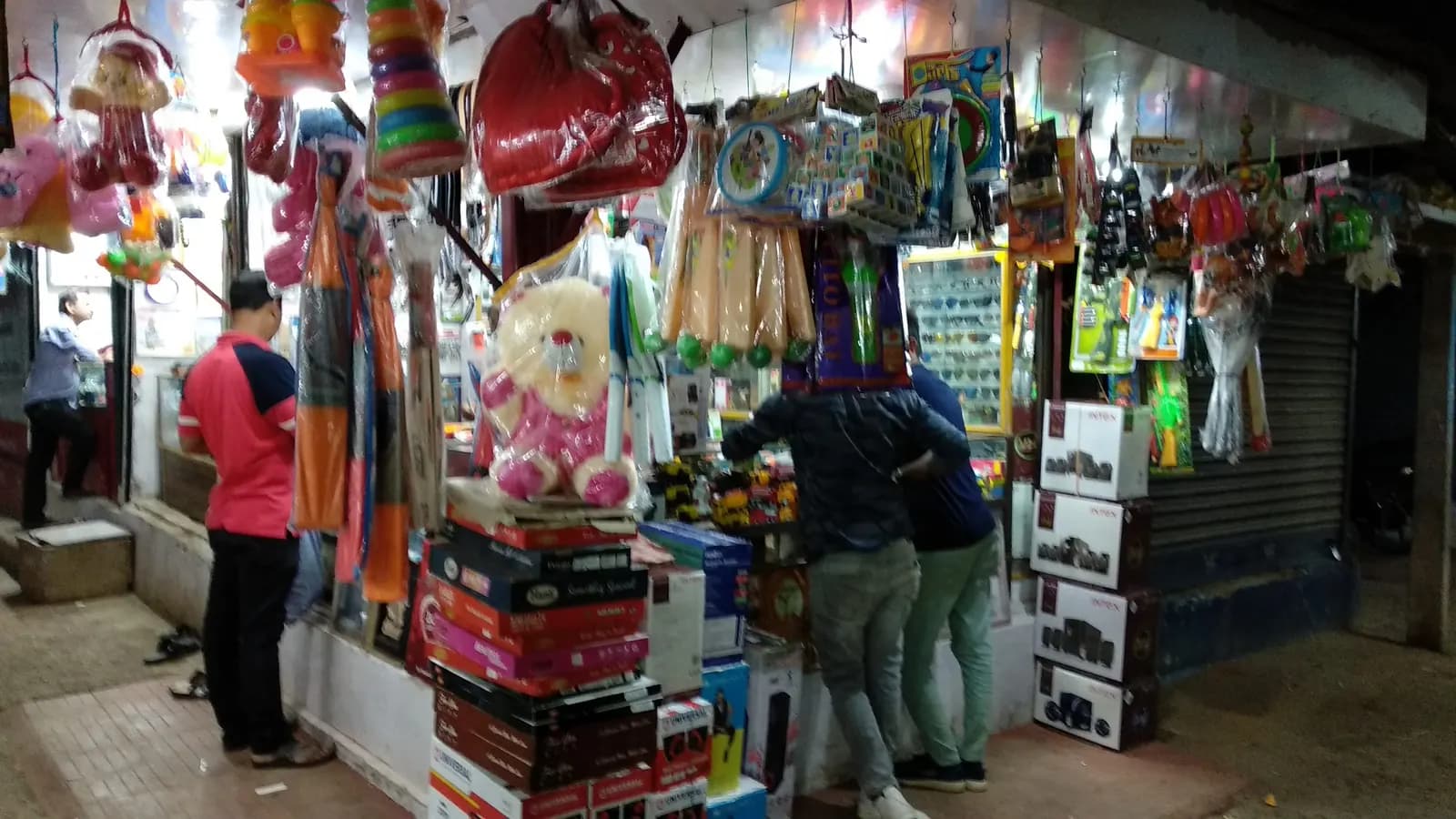
There's no single state fee. Each urban local body sets a tariff by trade type and, for most trades, by floor area in square feet (some use number of rooms or a flat fee). SUJOG publishes the whole statewide schedule as one file, dated July 2024 and still the file linked from the service page in October 2026. The table below shows new permanent licences in Cuttack.
| Trade (Cuttack) | Floor area | Fee |
|---|---|---|
| Kirana shop | Up to 200 sq ft | ₹1,000 |
| Kirana shop | 501–1,000 sq ft | ₹2,000 |
| Tailor shop | Up to 200 sq ft | ₹500 |
| Restaurant, non-AC | Up to 500 sq ft | ₹1,000 |
| Restaurant, AC | 501–1,000 sq ft | ₹3,000 |
| Medical and general store | Any | ₹3,000 |
| Software company | Up to 1,000 sq ft | ₹3,000 |
| Any other factory | Up to 5,000 sq ft | ₹5,000 |
The differences between towns are large. A kirana shop of up to 200 sq ft pays ₹1,000 in Cuttack, ₹500 in Berhampur and ₹2,000 in Sambalpur. Sambalpur charges a flat ₹7,500 for any restaurant, AC or not, while Cuttack's non-AC restaurant of up to 500 sq ft pays ₹1,000. Rourkela and Puri charge flat fees of ₹1,000 for kirana and grocery stores regardless of size.
Category choice matters too. In Balasore, the schedule lists a "Kirana Shop" at a flat ₹5,000 but "Groceries Stores" by floor area from ₹500. Pick the category that honestly describes your trade — the inspector will check it — but read the whole list for your town before choosing, because similar-sounding categories can carry very different fees. SUJOG's dashboard reported an average fee of ₹4,272 across licences processed, which reflects the mix of trades rather than a typical small shop.
Documents you need
SUJOG keeps documents to a minimum. The same list applies to new, renewal and temporary licences, and each document must be a single file, combined into one PDF if necessary.
Documents for a trade licence on SUJOG
0/5SUJOG's FAQ notes that the number of documents can vary by trade type under the regulations, so a restaurant or chemical store may be asked for more than a stationery shop. BMC's process uses its own form, so check the list shown when you apply there.
How to apply on SUJOG, step by step
New permanent trade licence on SUJOG
- 1
Register and log in
SUJOG — Trade LicenseCreate an account on SUJOG with your mobile number and open the Trade License tile.
- 2
Enter trade details
Choose your ULB, trade category and floor area, the trade start date and the licence period you want (1 to 5 years), and the location.
- 3
Add owner details and upload documents
Fill in owner details and upload ID proof, premises proof and a photo. You can't edit the application after submission.
- 4
Pay the fee and download the provisional licence
Pay online; the receipt and Provisional Trade License Certificate download immediately.
- 5
Verification, inspection and approval
The ULB checks documents, inspects the premises and approves. Download the final certificate when SMS confirms approval.
SUJOG's published workflow sets the internal timelines for a permanent licence: document verification within 30 days of payment, field inspection within 60 days, and approval and final certificate within 90 days from payment. The law requires a decision within the three-month life of the provisional licence. In practice, SUJOG's dashboard (last updated 30 September 2026) reported a one-day average for the cases it counted, against a one-day time limit it lists under Odisha's public service guarantee law; the provisional certificate itself is issued instantly on payment.
The provisional licence is granted on your self-certification. SUJOG's FAQ warns that if any statement in your undertaking is later found to be false, the licence can be cancelled and the fee forfeited.
Temporary licences for fairs and events
If you will trade for a short period — a stall at a mela, a festival counter or a pop-up sale — apply for a temporary trade licence instead. It is valid for up to 30 days, must be applied for at least seven days before you start trading, and goes through a compressed timeline: document check within two days of payment, inspection within four, and approval within six. Fees are flat per category; in Cuttack, for example, a café stall or bag seller pays ₹1,000 for up to 30 days and a cabin ₹700.
Worked example: a kirana shop in Cuttack
Take an illustrative grocery shop of 450 sq ft opening in Cuttack in 2026. Under the "Kirana Shop" category, 450 sq ft falls in the 201–500 sq ft band, with a tariff of ₹1,500. The owner logs in to SUJOG, chooses a one-year licence, uploads her PAN card and the registered rent deed, pays ₹1,500 online and downloads the provisional licence the same day. The municipal team inspects within the next few weeks and the final certificate follows.
If she expands into the shop next door and reaches 900 sq ft, she must apply for an amendment, and the tariff moves to the 501–1,000 sq ft band of ₹2,000. If she had opened the same 450 sq ft shop in Berhampur, the band would cost ₹1,000; in Sambalpur, ₹3,000. Because the portal calculates the amount for the period you choose, check the total shown before paying for a multi-year licence. Taking a longer licence spares her yearly renewal and the risk of missing a deadline.
Renewal, changes and closure
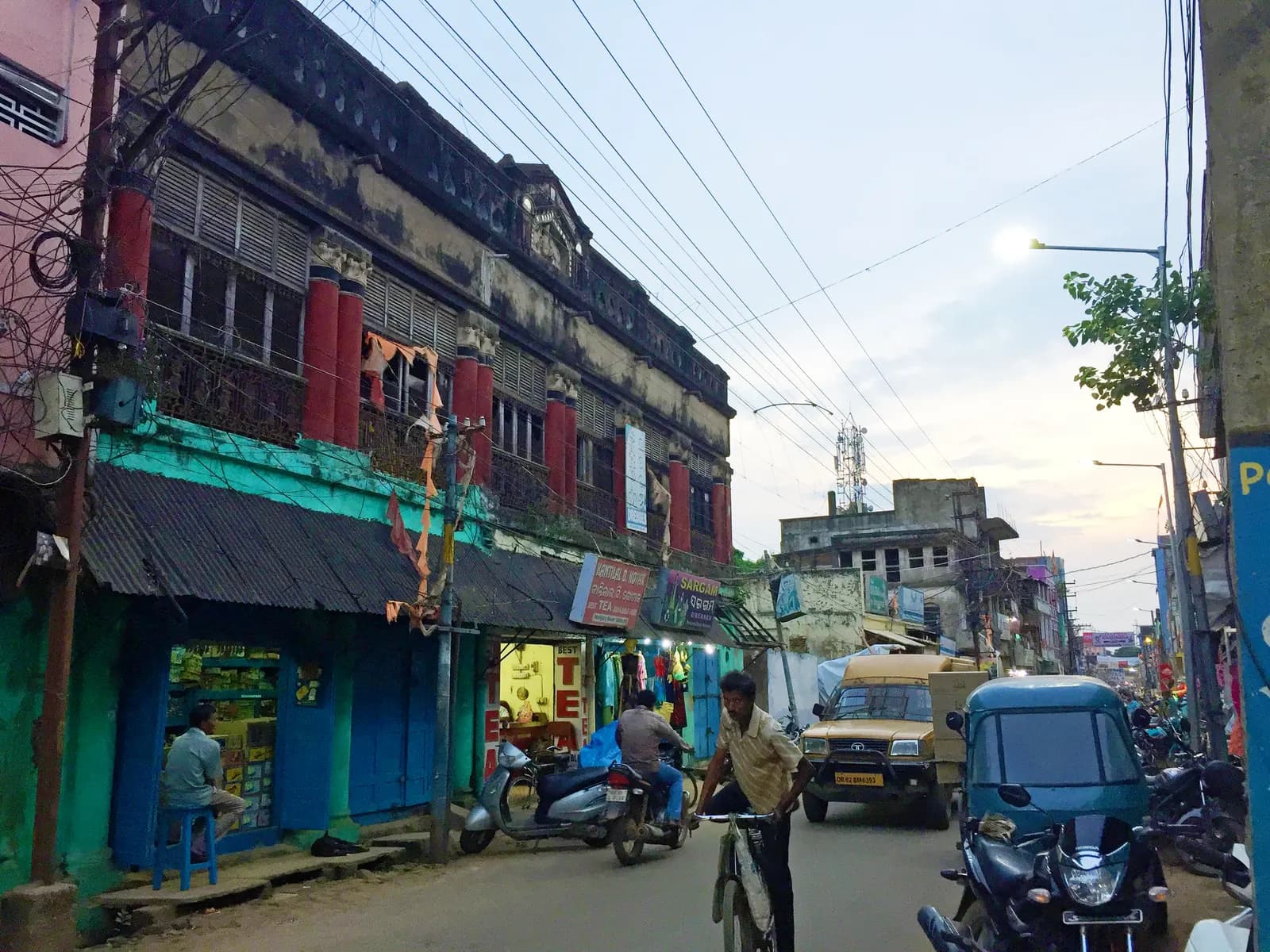
Renewal is where most businesses slip. The law requires you to apply within 30 days before expiry; SUJOG makes the Renew Now option visible one month before expiry and keeps it available after the certificate has lapsed, and it sends SMS and app reminders. The renewal form is the same as the new application, with the documents re-uploaded. While a licence is expired, you can't apply for a correction or a transfer of ownership, so renew first.
SUJOG has also announced a 5% discount on renewal for businesses whose signboards comply with the state's Odia-language requirement. Check that your board displays the business name in Odia before you renew.
Other changes go through the same portal: an amendment if you change trade category or area, an ownership transfer if the business is sold or inherited, a supplementary licence for an additional trade at the same premises, and — in Bhubaneswar — licence closure when you stop trading. Closing properly matters, because an open licence can generate renewal demands long after you've moved.
Life of an Odisha trade licence
Day 0
Apply and pay; provisional licence issued instantly
Within 30 days
Documents verified by the ULB
Within 60 days
Premises inspected
Within 90 days
Final certificate approved (provisional licence lapses at 3 months)
30 days before expiry
Apply for renewal for 1 to 5 years
Other registrations you'll usually need
A trade licence is one of several permissions. SUJOG now says Shops and Establishment registration under the Odisha Shops and Commercial Establishments Act is integrated with the trade-licence application, so you can complete both in a single form. Food businesses also need FSSAI registration or a licence; larger or high-risk premises need a fire NOC; and once turnover crosses the threshold, GST registration. Udyam registration is free and opens up MSME benefits.
If you employ staff, pay at least the state rates in our Odisha minimum wages guide. Odisha abolished its profession tax from 1 April 2026, so there's no PT registration to add. Industrial units that need several state clearances can apply through GO SWIFT, Odisha's single-window system under the Odisha Industries (Facilitation) Act, 2004; projects under ₹50 crore go through the District Industries Centre.
Permissions a small business in an Odisha town usually needs
| Permission | Issued by | When it applies |
|---|---|---|
Trade licence | Municipal body (SUJOG or BMC) | Any trade or business in a ULB area |
Shops & Establishment registration | Labour department (via SUJOG form) | Shops, offices, restaurants and other establishments |
FSSAI registration or licence | Food Safety authority | Any food business |
Fire NOC | Odisha Fire & Emergency Service | Larger or higher-risk premises, dangerous goods |
GST registration | GST department | Above the turnover threshold or for inter-state supply |
Trade licence
- Issued by
Municipal body (SUJOG or BMC)
- When it applies
Any trade or business in a ULB area
Shops & Establishment registration
- Issued by
Labour department (via SUJOG form)
- When it applies
Shops, offices, restaurants and other establishments
FSSAI registration or licence
- Issued by
Food Safety authority
- When it applies
Any food business
Fire NOC
- Issued by
Odisha Fire & Emergency Service
- When it applies
Larger or higher-risk premises, dangerous goods
GST registration
- Issued by
GST department
- When it applies
Above the turnover threshold or for inter-state supply
Common mistakes and how to fix them
Using the old e-Municipality route. Most towns now process licences only on SUJOG. If a municipal office hands you a paper form, ask whether it can be done on SUJOG instead — the online route gives you the instant provisional licence and a clear audit trail.
Choosing the wrong trade category. Inspectors verify the category and floor area. Under-declaring area or choosing a cheaper category leads to a rejection or a revised demand after inspection. Measure the carpet area used for the trade, and read your town's full schedule first.
Mismatched premises documents. A rent agreement in a relative's name, or an unregistered sale deed, is the most common reason for queries. Upload a document that names the applicant or a power of attorney that authorises them.
Skipping the NOC for dangerous goods. A paint shop storing thinner, a gas agency or a firecracker seller can't get even a provisional licence without the relevant NOC. Get it before you apply.
Letting the licence lapse. Expired licences block corrections and transfers and invite enforcement. Choose a longer licence period if your lease allows it, and act on SUJOG's renewal reminders.
Official links
- SUJOG — Trade LicenseApply, renew, dashboard, documents and tariff
- SUJOG — Trade tariffs for Odisha ULBsFee schedule for 114 ULBs
- Odisha Municipal Laws (Amendment) Ordinance, 2020Trade licence law text
- SUJOG — Trade License workflowTimelines
- BMC — Trade License servicesBhubaneswar apply, renew, close
- GO SWIFT — single windowIndustrial clearances
What to do next
Find your town's category and fee in the SUJOG tariff file, gather your ID and premises documents, and apply online — you'll have a provisional licence the same day. Then line up the other registrations your business needs. If you're budgeting for a new shop, our startup cost calculator helps you add licence fees, deposits and fit-out costs, and the invoice generator gets you billing from day one.
This is general information, not legal or tax advice — confirm on the official source or with a professional.
Frequently asked questions
Outside Bhubaneswar, apply on SUJOG, the Housing & Urban Development Department's portal for urban local bodies: choose Trade License, enter trade and owner details, upload identity and premises proof, and pay the tariff fee. You get a provisional licence instantly. In Bhubaneswar, apply on BMC's citizen services portal, where BMC assesses the premises before fixing the fee.
Each urban local body sets its own tariff by trade type and floor area, published on SUJOG. In Cuttack, a kirana shop up to 200 sq ft pays ₹1,000, an AC restaurant of 501–1,000 sq ft ₹3,000 and a medical and general store ₹3,000. The same kirana shop pays ₹500 in Berhampur and ₹2,000 in Sambalpur.
Under the 2020 amendments to the Odisha Municipal Act and the Odisha Municipal Corporation Act, a trade licence can be granted for up to five years and renewed for up to five years at a time. On SUJOG you choose a period of one to five years when you apply. A provisional licence is valid for three months, and a temporary licence for up to 30 days.
The law requires the renewal application within 30 days before expiry. SUJOG shows a Renew option one month before the expiry date and sends SMS reminders. You can't apply for a correction or ownership transfer until an expired licence is renewed. SUJOG also announced a 5% renewal discount for businesses with signboards in Odia.
SUJOG asks for two mandatory documents and a photo: owner's identity proof (voter ID, driving licence, PAN or passport) and proof of the right to use the premises (lease document, record of rights, rent deed, property registration or power of attorney). Trades involving explosives, fuel or other dangerous goods also need the relevant NOC before a provisional licence is issued.
No — they are separate permissions under separate laws. The trade licence comes from the municipal body; Shops and Establishment registration comes from the Labour department. SUJOG now announces that Shops and Establishment registration is integrated with the trade licence application, so you can apply for both in a single form.
Sources & verification
Figures on this page were checked against the sources below when it was last reviewed on 9 October 2026. Each rate and limit is stored once with its own official source and review date, and official update channels are monitored daily so changes are picked up. How we verify
- 1.SUJOG — Trade License service page and public dashboard — Housing & Urban Development Department, Government of Odisha · accessed 9 October 2026
- 2.SUJOG — home page notices — Housing & Urban Development Department, Government of Odisha · accessed 9 October 2026
- 3.Odisha Municipal Laws (Amendment) Ordinance, 2020 (Odisha Gazette No. 1081, 26 August 2020) — Law Department, Government of Odisha · accessed 9 October 2026
- 4.SUJOG — Trade tariffs for Odisha ULBs — Housing & Urban Development Department, Government of Odisha · accessed 9 October 2026
- 5.SUJOG — Trade License workflow and timelines — Housing & Urban Development Department, Government of Odisha · accessed 9 October 2026
- 6.SUJOG — List of documents for new, renewal and temporary trade licences — Housing & Urban Development Department, Government of Odisha · accessed 9 October 2026
- 7.SUJOG — FAQ document — Housing & Urban Development Department, Government of Odisha · accessed 9 October 2026
- 8.SUJOG — Trade License citizen user manual (July 2024) — Housing & Urban Development Department, Government of Odisha · accessed 9 October 2026
- 9.Bhubaneswar Municipal Corporation — Trade License (citizen services) — Bhubaneswar Municipal Corporation / Bhubaneswar Smart City Ltd · accessed 9 October 2026
- 10.Citizen Charter — Housing & Urban Development Department (draft) — Housing & Urban Development Department, Government of Odisha · accessed 9 October 2026
- 11.Invest Odisha — GO SWIFT single window — Government of Odisha (IPICOL) · accessed 9 October 2026
MSMETOOLS is an independent platform and is not affiliated with any government agency, ministry or department.
Tools for this
Startup Cost Calculator
Estimate how much capital you need to launch.
Invoice Generator
Create professional invoices with tax, logo and custom details.
Related guides
 Fire NOC in India 2026: Who Needs It, Documents & FeesRead guide
 Trade License West Bengal 2026: KMC, Fees & Online StepsRead guide
 Trade License Kerala 2026: K-SMART, D&O Fees & RenewalRead guide
 Trade License Telangana 2026: GHMC Fees, Renewal & PenaltyRead guide
Official links open the government site in a new tab.