 Income tax & TDS
Professional Tax in Kerala (2026): Half-Yearly Slabs, Who Collects It and Due Dates
Kerala professional tax 2026: half-yearly slabs from ₹320 to ₹1,250 (revised 1 Oct 2024), who collects it, August and February due dates and ₹ examples.
 Edited by Sumeet YadavFounder & editor, MSMETOOLS · fact-checked against official sources

Contents (10)
- 1. Kerala professional tax slab (half-yearly) from October 2024
- 2. Who collects it: panchayats, municipalities and corporations
- 3. What counts as half-yearly income
- 4. Due dates and the half-yearly cycle
- 5. Registration and online payment
- 6. Worked examples in ₹
- 7. Penalties and recovery
- 8. Common mistakes
- 9. Staff outside Kerala and income-tax treatment
- 10. What to do next
Kerala is one of the few states where professional tax is not a state tax at all. It is a local body tax, levied every half-year by the grama panchayat, municipality or corporation where you work, on your half-yearly income. That changes everything a payroll team is used to: there is no monthly deduction, no state portal for most employers, and the rate can differ slightly from one local body to the next. This guide is for employers, HR teams, shop owners and professionals in Kochi, Thiruvananthapuram, Kozhikode, Thrissur and every panchayat in between. It covers the slabs revised in October 2024, who collects the tax, the two due dates, the rules on what counts as income, online payment, penalties, and worked ₹ examples.
Quick answer
Kerala profession tax is charged per half-year (April–September and October–March) on half-yearly income: nil below ₹12,000, then ₹320 rising to ₹1,250 for ₹1,25,000 or more. These maximum rates apply from 1 October 2024. The local body sends a demand, and employers recover the tax from salaries and pay it before the end of August and the end of February.
Collected by grama panchayats, municipalities and corporations — not the Commercial Taxes Department
Top rate ₹1,250 a half-year = ₹2,500 a year, the constitutional limit
HRA, CCA, conveyance and travelling allowance are left out of income
Online payment only in 6 corporations and 86 municipalities
Kerala professional tax slab (half-yearly) from October 2024
The Local Self Government Department revised the rates by G.O.(Rt) No.1149/2024/LSGD dated 27 June 2024, accepting recommendation 2.118 of the Sixth State Finance Commission's second report. The order applies to grama panchayats and to urban local bodies, and took effect from 1 October 2024 — the start of the second half-year of 2024-25. It also directed amendments to the Kerala Municipality (Profession Tax) Rules, 2005 and the Kerala Panchayat Raj (Profession Tax) Rules, 1996 to carry the new figures. We found no later revision as of October 2026.
| Half-yearly income | Before 1 Oct 2024 | From 1 Oct 2024 |
|---|---|---|
| Up to ₹11,999 | Nil | Nil |
| ₹12,000 – ₹17,999 | ₹120 | ₹320 |
| ₹18,000 – ₹29,999 | ₹180 | ₹450 |
| ₹30,000 – ₹44,999 | ₹300 | ₹600 |
| ₹45,000 – ₹99,999 | ₹450 / ₹600 / ₹750 | ₹750 |
| ₹1,00,000 – ₹1,24,999 | ₹1,000 | ₹1,000 |
| ₹1,25,000 and above | ₹1,250 | ₹1,250 |
The old ₹45,000–₹99,999 range had three bands — ₹450 up to ₹59,999, ₹600 up to ₹74,999 and ₹750 up to ₹99,999. They were merged into one ₹750 band. The biggest increases are at the bottom: a worker with half-yearly income of ₹15,000 now pays ₹320 instead of ₹120, almost three times as much. The top two bands did not move.
To read the table in monthly terms, divide the half-yearly figure by six. Nil applies below about ₹2,000 a month. The top rate applies from about ₹20,834 a month (₹1,25,000 for six months). Two half-years at ₹1,250 make ₹2,500, the ₹2,500 a year ceiling in Article 276 of the Constitution.
Rates are maximums. Rule 3 of the Profession Tax Rules says these are the maximum half-yearly rates. Each panchayat or municipal council fixes the tax for each class up to that maximum, in whole rupees, and may exempt a class — but it cannot exempt a higher class while taxing the lowest. In practice almost every local body adopts the maximum, but the demand notice from your local body is what you pay.
Who collects it: panchayats, municipalities and corporations
Profession tax in Kerala sits in the local government laws:
- Grama panchayats levy it under sections 204 to 205I of the Kerala Panchayat Raj Act, 1994 and the Kerala Panchayat Raj (Profession Tax) Rules, 1996.
- Municipalities and corporations levy it under the Kerala Municipality Act, 1994 and the Kerala Municipality (Profession Tax) Rules, 2005.
So an IT company in Technopark pays Thiruvananthapuram Corporation; a hospital in Aluva pays Aluva Municipality; a rubber processing unit in a village pays the grama panchayat. The Secretary of the local body is the officer you deal with.
The 60-day rule. Section 204(1) of the Panchayat Raj Act levies the tax every half-year on any company that transacts business in the area for sixty days or more in the half-year, and on any person who, for sixty days or more in the half-year, practises a profession, art or calling, transacts business or holds an appointment there. Someone who works elsewhere but lives in the area for sixty days can also be taxed by their home local body. Under rule 4, having an office or place of employment in the area is enough to count as transacting business there.
No double tax. Section 204(4) says that if you have paid profession tax to one local body in Kerala for a half-year, another local body can only charge you the difference — even if you moved office or job mid-way. If you would otherwise be taxed by two bodies, section 204(5) makes you pay only the higher amount, to the body that charges it.
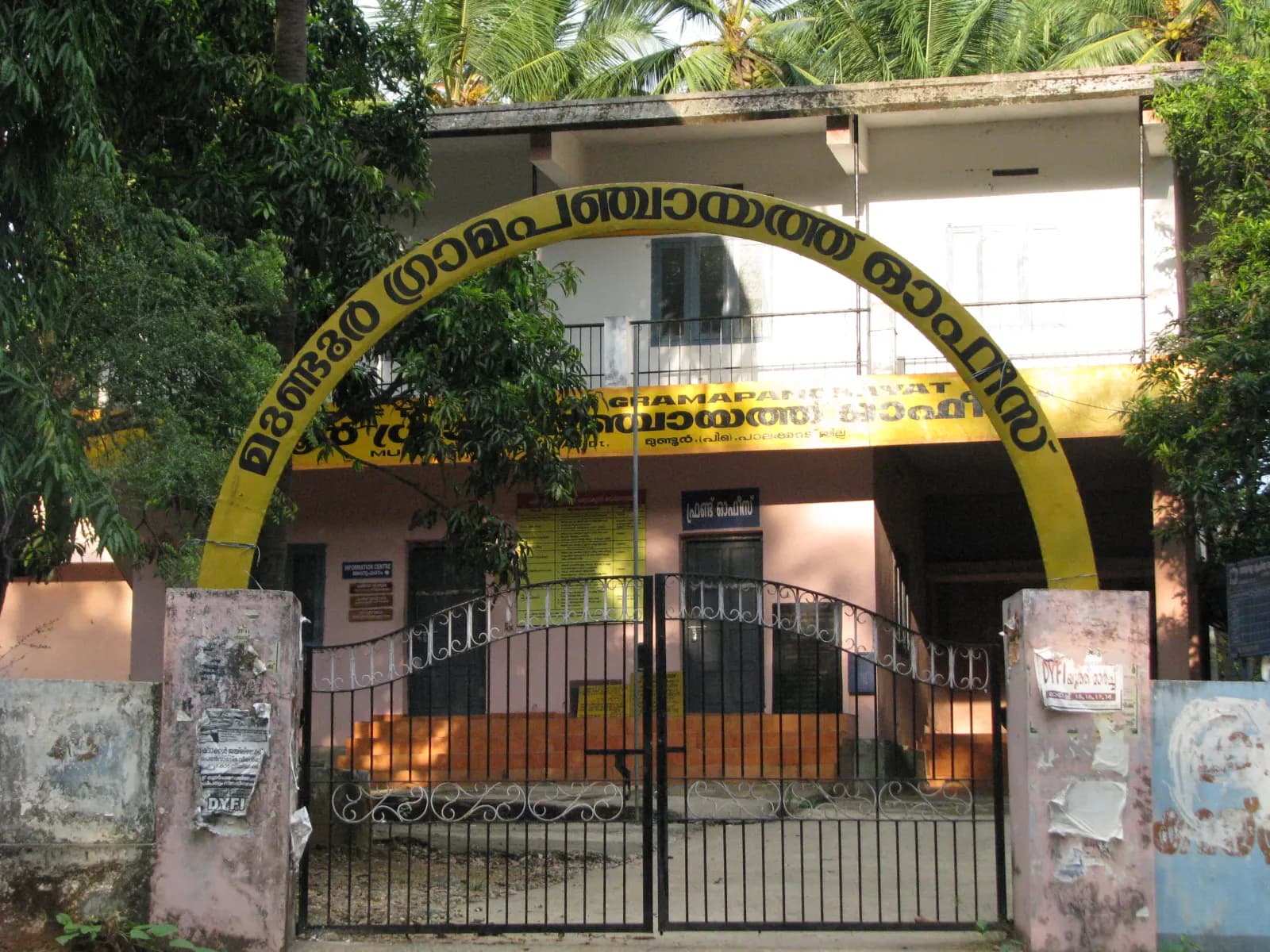
What counts as half-yearly income
Section 204(3) places each person in the class that matches their aggregate income from the sources in sub-section (1) — salary, profession, business — for the half-year. The Explanation to that sub-section leaves out four allowances: House Rent Allowance, City Compensatory Allowance, Conveyance Allowance and travelling allowance. Basic pay, dearness allowance and other regular payments are included.
This exclusion matters more since the 2024 revision, because a few thousand rupees can move someone across a band. An employee on basic plus DA of ₹14,000 and HRA of ₹4,000 a month has gross pay of ₹18,000 but half-yearly income of ₹84,000 for profession tax, not ₹1,08,000 — so the tax is ₹750, not ₹1,000.
For a business that operates only in one panchayat, rule 5 deems its income for the half-year from its income-tax assessment for the year (half of the assessed profits), or failing that from its turnover in the area. A company or person with a branch or agent in the panchayat is treated as transacting business there, and the agent or branch head is answerable for the tax.
Due dates and the half-yearly cycle
The calendar runs on two half-years — 1 April to 30 September and 1 October to 31 March. The Act lays out a fixed sequence of notices and payments for each:
Kerala profession tax cycle each year
April
Secretary asks every office and employer for its name, address and head of office; offices are entered in a register (s.205E)
May
Notice to employers to assess and remit the first half-year's tax (s.205F)
end of August
Employers recover the April–September tax from staff and pay it with an employee list (s.205F)
November
Notice for the second half-year (s.205F)
end of February
Employers pay the October–March tax with the employee list (s.205F)
Within 10 days of deducting
Remit tax recovered after a demand notice to the Secretary (rule 20)
Section 205F requires each head of office or employer to assess and recover the tax from every liable employee before the end of August and February, and pay it to the local body with a list showing each employee's name, designation, half-yearly income and tax recovered, certifying that nobody liable has been left out. In other words, you pay the first half-year's tax before the half-year ends, based on the salary for the half. If a raise or new joiner later changes the figure, the local body adjusts it on the next demand.
Self-drawing officers — mostly senior government staff who draw their own salary — pay their own tax before the end of August and February with a statement of their half-yearly income (section 205H), and certify in their February and August salary bills that it has been paid (rule 21). When an employee is transferred, the relieving office recovers the tax and notes it in the last pay certificate; on retirement, salary is released only after the tax is recovered (rule 20).
The local body's Secretary issues a receipt in the name of the head of office, and each employer must give every employee a certificate for the half-year (section 205G). Keep these: they are your proof under section 204(4) if another local body raises a demand.
Registration and online payment
Kerala has no separate state "PT registration certificate" for employers. Instead, the local body registers your office in its demand register when you reply to its April requisition, and it can ask for a list of all employees and their salaries at any time under section 205C. A new business should write to the Secretary of the local body when it opens, so its office is entered and the first demand reaches the right person.
Online payment. The Director of Urban Affairs runs the Profession Tax Online Payment System at professiontax.lsgkerala.gov.in. Its FAQ says it covers six corporations — Thiruvananthapuram, Kollam, Kochi, Thrissur, Kozhikode and Kannur — and 86 municipalities, from Aluva and Alappuzha to Thalassery and Thodupuzha. Employers register, download a CSV template, upload employee and salary details, let the system calculate the tax, and pay by net banking, debit or credit card. Individuals register their profession and income slab and pay the same way. The system generates a receipt with the transaction details. You are asked to upload the last paid receipt to show there are no arrears.
Grama panchayats are not on the list, so in a panchayat you pay at the office or as its demand notice directs. When we checked in October 2026 the payment site was showing an expired security certificate; some payroll advisers also report that a few local bodies have not accepted receipts from it. Before switching to online payment, ask your local body to confirm it will accept the system's receipt.

Worked examples in ₹
Example 1 — an IT engineer in Thiruvananthapuram. Anjali's basic plus DA is ₹45,000 a month; she also gets HRA of ₹18,000. Her half-yearly income for profession tax is 6 × ₹45,000 = ₹2,70,000 (HRA excluded). That is above ₹1,25,000, so she pays ₹1,250 for April–September, recovered by her employer before 31 August, and another ₹1,250 for October–March before the end of February. Total: ₹2,500 a year.
Example 2 — a shop assistant in Kozhikode. Basheer earns ₹9,000 a month with no allowances: ₹54,000 a half-year. He falls in the ₹45,000–₹99,999 band and pays ₹750 each half-year, ₹1,500 a year. Before October 2024 the same income was in the ₹450 band.
Example 3 — a part-time helper. A helper in a Thrissur clinic earns ₹4,000 a month: ₹24,000 a half-year. Tax: ₹450 per half-year, up from ₹180. At ₹1,800 a month (₹10,800 a half-year) she would pay nothing.
Example 4 — a 30-person textile showroom in Kochi. Six staff earn ₹12,000–₹16,000 a month (half-yearly ₹72,000–₹96,000: ₹750 each), twenty earn ₹17,000–₹20,000 basic (half-yearly ₹1,02,000–₹1,20,000: ₹1,000 each), and four managers are above ₹1,25,000 (₹1,250 each). Half-yearly bill: 6 × ₹750 + 20 × ₹1,000 + 4 × ₹1,250 = ₹29,500, recovered from salaries and paid to Kochi Corporation before 31 August and again before the end of February. The company that owns the showroom also pays tax on its own half-yearly income — ₹1,250 per half-year if that income is ₹1,25,000 or more.
Example 5 — a joiner in December. Rahul joins a Kollam firm on 1 December on ₹30,000 a month. For October–March he is employed for about 120 days — more than sixty — so he is liable for the half-year. His income for the half-year is ₹1,20,000 (four months), which falls in the ₹1,00,000–₹1,24,999 band: ₹1,000, recovered before the end of February.
Our free salary slip generator lets you show the half-yearly profession tax deduction in the August and February payslips.
Penalties and recovery
Kerala's profession tax rules lean on recovery rather than fines:
- Employer liability. Section 205 says that if tax falls into arrears because the employer failed to collect or remit it, it can be recovered from the employer as if it were the employer's own arrear. Rule 24(2) repeats this, pointing to the general recovery powers in section 210.
- Information failures. Rule 24(1) makes failing to comply with a Secretary's requisition, or giving false information, an offence punishable on conviction with a fine of ₹100.
- Civil recovery. Rule 24(3) keeps the local body's right to prosecute a taxpayer or file a civil suit for arrears.
Read every demand notice carefully: the amount, the date and any penal charge it states are what the local body enforces. If you receive a demand for a period you already paid to a different local body, send the receipt and the employee certificate and ask for it to be withdrawn under section 204(4).
Kerala profession tax checklist
0/7Common mistakes
Still using the old rates. Deducting ₹120 or ₹180 from low-paid staff for any period after 1 October 2024 leaves a shortfall the local body will demand from you, the employer. Update payroll masters to the new figures.
Treating it as a monthly tax. Kerala's tax is half-yearly. Whether you recover it in one go or spread it over the half-year's payslips, the full amount has to reach the local body before the end of August or February. Many employers simply deduct the full half-yearly amount from the August and February salaries.
Including HRA. Using gross salary pushes staff into higher bands. Strip out HRA, CCA, conveyance and travel allowance before you look up the slab.
Paying the wrong local body. Profession tax goes to the local body where the office or place of employment is, which may not be the one in your registered address. A company with branches in three municipalities pays each of them for the staff working there.
Forgetting the business's own tax. A company or firm is itself a taxpayer if it transacts business in the area for sixty days in the half-year. That is separate from the employee deductions.
Staff outside Kerala and income-tax treatment
Profession tax follows the place of work. A Kochi company with staff in Chennai pays Greater Chennai Corporation's half-yearly rates (see our Tamil Nadu guide); staff in Bengaluru pay Karnataka's ₹200 a month; staff in Mumbai pay Maharashtra's monthly PT with the ₹300 February deduction. Odisha stopped levying professional tax from 1 April 2026. Our state-wise due dates table shows every state's calendar.
For income tax, employees can deduct profession tax paid from salary income only under the old tax regime. A business can claim its own profession tax as an expense.
What to do next
Update your payroll to the October 2024 slabs, check which local body each office falls under, and put the end of August and the end of February in your compliance calendar. Setting pay for new staff? Check the Kerala minimum wages first, and use the state-wise professional tax guide if you also employ people outside Kerala.
This is general information, not legal or tax advice — confirm on the official source or with a professional.
Frequently asked questions
Kerala taxes half-yearly income. Up to ₹11,999 is nil; ₹12,000–17,999 pays ₹320; ₹18,000–29,999 pays ₹450; ₹30,000–44,999 pays ₹600; ₹45,000–99,999 pays ₹750; ₹1,00,000–1,24,999 pays ₹1,000; and ₹1,25,000 or more pays ₹1,250 a half-year. These maximum rates apply from 1 October 2024.
The Sixth State Finance Commission recommended revising profession tax in grama panchayats and urban local bodies. The Local Self Government Department accepted it in G.O.(Rt) No.1149/2024/LSGD dated 27 June 2024, effective from the second half of 2024-25. The lower bands rose sharply — ₹120 to ₹320, ₹180 to ₹450, ₹300 to ₹600 — while the top two bands stayed at ₹1,000 and ₹1,250.
Local bodies, not a state tax department. The grama panchayat collects in its area under the Kerala Panchayat Raj Act, 1994, and municipalities and corporations collect under the Kerala Municipality Act, 1994. The local body's Secretary sends the demand, the employer recovers the tax from salaries and pays it to the local body where the office is located.
There are two half-years: April to September and October to March. Under section 205F of the Kerala Panchayat Raj Act, employers must assess, recover and pay the tax for each half-year before the end of August and the end of February respectively, with a list of employees. Once a demand notice is served, deducted tax must reach the local body within 10 days.
Partly. The LSGD Profession Tax Online Payment System lets registered employers and individuals pay for six corporations — Thiruvananthapuram, Kollam, Kochi, Thrissur, Kozhikode and Kannur — and 86 municipalities. Employers upload staff and salary details as a CSV and pay by net banking or card. Grama panchayats are not on that list, so payment there is through the panchayat office.
No. The Explanation to section 204(3) of the Kerala Panchayat Raj Act excludes House Rent Allowance, City Compensatory Allowance, Conveyance Allowance and travelling allowance from the aggregate income used to fix the class. Basic pay, dearness allowance and other regular pay count. So an employee's half-yearly figure can be noticeably lower than gross salary.
Sources & verification
Figures on this page were checked against the sources below when it was last reviewed on 11 October 2026. Each rate and limit is stored once with its own official source and review date, and official update channels are monitored daily so changes are picked up. How we verify
- 1.G.O.(Rt) No.1149/2024/LSGD dated 27.06.2024 — revision of profession tax rates in grama panchayats and urban local bodies (Malayalam) — Local Self Government Department, Government of Kerala · accessed 11 October 2026
- 2.Kerala Panchayat Raj Act, 1994 — section 204 (Profession tax) — Local Self Government Department, Kerala (Panchayatwiki Law Manual) · accessed 11 October 2026
- 3.Kerala Panchayat Raj Act, 1994 — sections 205, 205A–205D — Local Self Government Department, Kerala (Panchayatwiki Law Manual) · accessed 11 October 2026
- 4.Kerala Panchayat Raj Act, 1994 — sections 205E–205I — Local Self Government Department, Kerala (Panchayatwiki Law Manual) · accessed 11 October 2026
- 5.Profession Tax Online Payment System — FAQ — Director of Urban Affairs, LSGD Kerala · accessed 11 October 2026
- 6.Kerala Panchayat Raj (Profession Tax) Rules, 1996 (consolidated copy) — Government of Kerala (copy hosted by jameskutty.info) · accessed 11 October 2026
- 7.Professional Tax — Kerala (revised rates) — SGCMS · accessed 11 October 2026
MSMETOOLS is an independent platform and is not affiliated with any government agency, ministry or department.
Tools for this
Salary Slip Generator
Create professional salary slips in seconds.
TDS Calculator (India)
Calculate TDS for payments and generate reports.
Related guides
 Tamil Nadu Professional Tax 2026: Slabs, Due Dates & PaymentRead guide
 Professional Tax Karnataka 2026: Slab, ₹300 Feb & Due DatesRead guide
 Professional Tax Gujarat 2026: Slab, AMC/SMC & Due DatesRead guide
 Professional Tax Puducherry 2026: Half-Yearly Slabs & RulesRead guide
Official links open the government site in a new tab.