 Finance & accounting
Estimate vs Quote: What Binds You, What Doesn't, and How Far a Bill Can Move
Estimate vs quote in 2026: which one binds you, state auto-repair and contractor estimate rules, binding vs non-binding mover estimates and change orders, worked.
 Edited by Sumeet YadavFounder & editor, MSMETOOLS · fact-checked against official sources
Contents (9)
- 1. The core difference between an estimate and a quote
- 2. Is an estimate legally binding?
- 3. Binding vs non-binding estimates: the clearest legal definitions
- 4. State auto repair estimate rules
- 5. Contractor estimates, bids and change orders
- 6. Worked examples: how far can the final bill move?
- 7. Choosing between an estimate and a quote
- 8. Common mistakes and how to fix them
- 9. What to do next
Customers often treat "estimate" and "quote" as the same word, and then argue when the final bill is different from the number they were given. For a US small business the difference matters: one is an approximation you can revise, the other is a price you'll usually be held to. This guide is for contractors, repair shops, movers, agencies and anyone who prices work before doing it. It explains the legal difference, what "binding" and "non-binding" mean, the state laws that cap how far an auto repair bill can exceed an estimate, how change orders protect both sides, and how to turn a loose estimate into a price customers trust.
Quick answer
A quote is a fixed price for a defined scope, valid for a stated period; once accepted it usually becomes the contract price. An estimate is a good-faith approximation that can change as the work reveals more. Estimates aren't a blank cheque, though: several states cap overruns in regulated trades, and any change in scope should go through a signed change order before the extra work starts.
Quote = fixed price; estimate = approximation with room to move
Florida auto shops: no more than $10 or 10% (whichever is greater), capped at $50 over a written estimate without new authorization
Interstate movers: customers pay at most 110% of the estimate of a non-binding estimate at delivery
California home improvement: price or scope changes need a written change order signed first
Label every document clearly, and add a not-to-exceed figure when you estimate
The core difference between an estimate and a quote
A quote answers the question "what will this cost?" with a single number and a promise. You've measured the job, priced the materials and labor, and you're prepared to do exactly that work for exactly that price if the customer accepts before the expiry date. A quote suits work you can define completely in advance: 300 printed mailers, a specified water heater installed in an existing location, a month of bookkeeping for a business with a known transaction volume, or a pallet of parts at a listed unit price.
An estimate answers the same question with "probably about this much, and here's why it might change." You give an estimate when you can't see everything before you start. A mechanic can't price a transmission repair until the unit is opened. A remodeler can't know whether the subfloor under a bathroom is rotten until the tile comes up. A web developer can't promise a fixed price for a feature whose requirements the client hasn't settled. In each case the honest answer is a range or a best guess, with a clear explanation of what could move it.
Neither word has a single statutory definition that applies across every industry, so courts and regulators look at what the document actually says and how the parties behaved. A document headed "Estimate" that lists exact quantities, a total and a signature line with "I accept this price" may be treated as a fixed-price agreement. A document headed "Quote" that says "final price depends on site conditions" may be treated as an estimate. The label helps, but the terms decide.
Estimate vs quote at a glance
| Estimate | Quote | |
|---|---|---|
What it promises | A good-faith approximation | A fixed price for a defined scope |
Can the final bill differ? | Yes, within any legal or agreed limits | Only through an agreed change in scope |
Best for | Diagnosis, repairs, hidden conditions, open-ended work | Measurable goods and work |
Typical wording | Estimated cost, approximately, not to exceed | Price, total, valid until, sign to accept |
Legal effect once accepted | Agreement to proceed, price may move | Usually the contract price |
Main risk | Customer surprise and disputes over overruns | You absorb cost increases |
What it promises
- Estimate
A good-faith approximation
- Quote
A fixed price for a defined scope
Can the final bill differ?
- Estimate
Yes, within any legal or agreed limits
- Quote
Only through an agreed change in scope
Best for
- Estimate
Diagnosis, repairs, hidden conditions, open-ended work
- Quote
Measurable goods and work
Typical wording
- Estimate
Estimated cost, approximately, not to exceed
- Quote
Price, total, valid until, sign to accept
Legal effect once accepted
- Estimate
Agreement to proceed, price may move
- Quote
Usually the contract price
Main risk
- Estimate
Customer surprise and disputes over overruns
- Quote
You absorb cost increases
Is an estimate legally binding?
The general answer is no: an estimate is not a promise that the final bill will match it. But that isn't the same as saying an estimate has no legal weight. Three things limit how far you can stray from it.
First, consumer protection statutes in many states regulate estimates in specific trades, most often auto repair. These laws require a written estimate, set a tolerance for overruns, and make it unlawful to charge more without the customer's fresh authorization. They are covered in detail below.
Second, the general law against deceptive practices applies. An estimate that is deliberately lowballed to win the job, with the plan of charging far more once the customer is committed, can be challenged as misleading under state unfair and deceptive practices laws. Your estimate should reflect a genuine assessment based on the information you had.
Third, the parties' agreement matters. If the customer signed an estimate that says "the final price will not exceed $4,500", you've given a not-to-exceed promise, and that cap binds you even though the document calls itself an estimate. Many customers ask for exactly this, and it's often the best compromise between a quote and an open-ended estimate.
When does a quote become binding?
A quote usually binds you once the customer accepts it before it expires and before you withdraw it. A detailed quotation that names the customer, describes the scope, sets quantities and a total and invites a signature generally works as an offer, so acceptance creates a contract on those terms. For sales of goods between merchants there's an extra rule: under UCC § 2-205, a merchant's signed written promise to hold a price open can't be revoked during the stated period, up to a maximum of three months. If you'd like the full treatment of offer, acceptance, validity periods and the battle of the forms, our guide on how to write a quotation covers it, so this article focuses on estimates.
Three ways to price uncertain work
Step 1
Non-binding estimate
final price follows actual work
Step 2
Not-to-exceed estimate
price can fall, not rise above the cap
Step 3
Binding estimate or quote
fixed for the stated scope
Binding vs non-binding estimates: the clearest legal definitions
The phrases "binding estimate" and "non-binding estimate" come up in many industries, but the clearest legal definitions sit in the federal rules for interstate household goods movers. They're worth understanding even if you aren't a mover, because they show how regulators think about the line between an approximation and a fixed price.
Under 49 CFR 375.403, a binding estimate is a guaranteed total for the services described. It must be in writing, must say on its face that it binds both the mover and the customer, and the customer pays that amount for the services listed. If the customer adds goods or services that weren't in the estimate, the mover can refuse to honor it, but before loading must either reaffirm it, prepare a new binding estimate the customer signs, or agree in writing to treat it as non-binding. Once the truck is loaded without a new estimate, the original binding figure stands.
Under 49 CFR 375.405, a non-binding estimate is a reasonably accurate approximation of what the customer should expect to pay, with the final charge based on the mover's tariff and the actual weight or services. The protection for customers is a hard cap on what can be collected at delivery: no more than 110% of the estimate. Any balance above that can only be billed after 30 days from delivery.
The structure is a useful model for any business. A binding figure gives the customer certainty and shifts the risk of overruns to you. A non-binding figure lets the price follow reality, but a clear cap on what's due at completion keeps the customer from being ambushed. If you run a moving business, our moving company guide covers licensing; the estimate rules apply to every interstate household move you book.
Overrun limits written into law (2026)
$10 or 10% (whichever is greater), capped at $50
Florida auto repair: maximum over a written estimate without new authorization
10%
Illinois auto repair: maximum over an itemized estimate
non-itemized limited price: 0%
110% of the estimate
Interstate movers: most collectible at delivery on a non-binding estimate
30 days
Wait before a mover can bill the balance above 110%
State auto repair estimate rules
Auto repair is the trade where states most often regulate estimates, because customers can't easily check what's behind a quoted repair. If you run or are starting a repair shop, these rules shape your paperwork; if you're a customer, they tell you what you can refuse to pay.
Florida. Under section 559.905 of the Florida Statutes, when a customer asks for repair work that will cost more than $150, the shop must prepare a written estimate before doing any diagnostic or repair work. The estimate has to include the shop's and customer's details, the vehicle's year, make, model, odometer reading and tag number, the proposed completion date, whether labor is flat-rate or hourly, the estimated cost including shop supplies, any charge for the estimate itself, the guarantee, whether the customer wants replaced parts saved, and daily storage charges. The customer also signs a disclosure in capital letters choosing whether they want a written estimate, want to set a dollar limit instead, or waive the estimate. That threshold rose from $100 when the statute was amended in 2024.
Section 559.909 then caps overruns. If the shop finds the actual charges will exceed the written estimate by more than $10 or 10% (whichever is greater), capped at $50, it must contact the customer, who can authorize, modify or cancel the work orally or in writing. Charging more than that tolerance without authorization is unlawful, and a shop can't keep the car because the customer refuses to pay for unauthorized work. If the customer cancels after teardown, the shop may charge for teardown and reassembly only if the estimate warned of those costs before diagnosis started.

California. The Bureau of Automotive Repair's consumer guide says a shop must give a written estimate before doing any work. The estimate must give the total estimated price for parts and labor for a specified repair, itemize the parts and the method of repair, and the shop must stick to those unless the customer agrees in advance to changes. If the technician later finds more work is needed, the shop must contact the customer, describe the work and cost and get permission before going ahead. For complex jobs such as transmissions or bodywork, a separate teardown estimate can cover the cost of taking the vehicle apart, with a warning that it may not be possible to reassemble it as before.
Illinois. According to the Illinois Attorney General's summary of the Automotive Repair Act, customers are entitled to a written estimate for repairs costing $100 or more, unless they waive it or there was no face-to-face contact. The law offers two kinds of estimate. An itemized estimate that separates parts and labor can't be exceeded by more than 10% without consent. A non-itemized estimate that states only a total price can't be exceeded at all. In other words, Illinois treats the non-itemized total as something close to a quote.
New York. The New York DMV tells consumers that under the state's Repair Shop Act, a shop must give a written estimate of parts and labor for each specific repair if the customer asks, may charge a reasonable fee for preparing it, and may not charge more than the estimated price without the customer's permission. When work is authorized by phone, the invoice must record the date, time and name of the person who approved it.
| State | Written estimate required | Limit on going over without new consent |
|---|---|---|
| California | Before any work | None: consent needed for any increase |
| Florida | Repairs over $150 (customer may waive) | $10 or 10% (whichever is greater), capped at $50 |
| Illinois | Repairs of $100 or more (customer may waive) | 10% on itemized; 0% on non-itemized total |
| New York | On the customer's request | None: permission needed to charge more |
Other states have their own versions, and some cities add more. Before you design your repair order, read your state attorney general's or consumer affairs agency's auto repair page. The common thread is consistent: a written estimate before work, the customer's consent before going over it, and a record of that consent on the final invoice.
Contractor estimates, bids and change orders
Construction and home improvement work sits between the two worlds. Contractors often call their pricing an "estimate" or a "bid", but once the homeowner signs, the document usually becomes a contract with a fixed price for the described scope. The flexibility comes not from the word "estimate" but from how the contract handles changes.
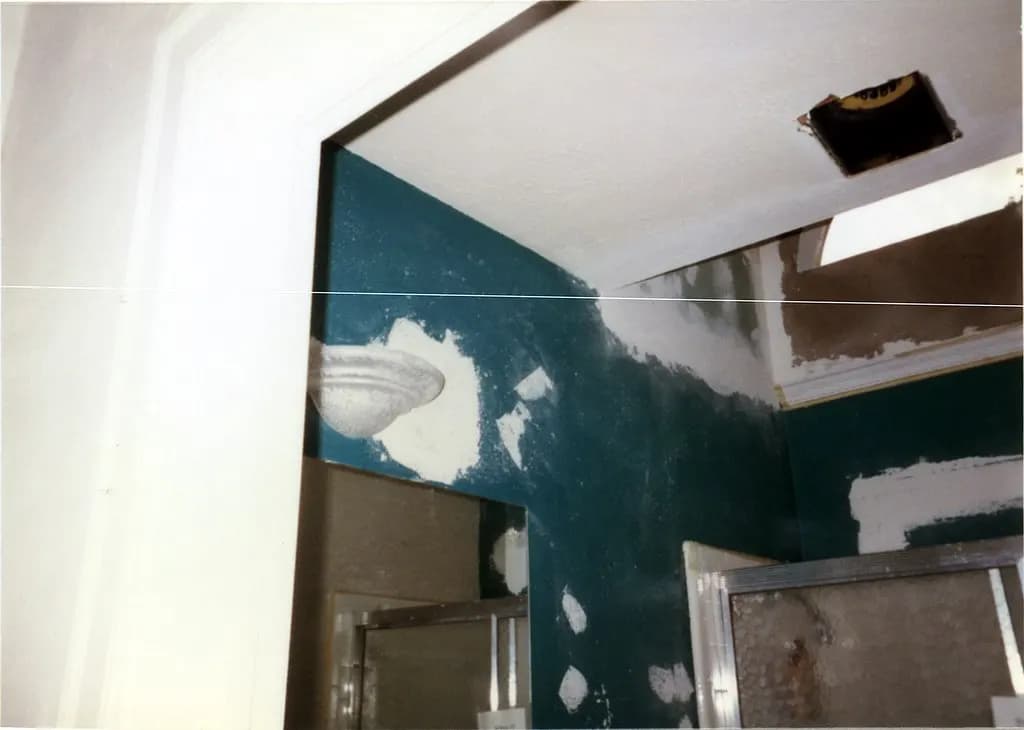
In California, the Contractors State License Board says a written contract is required for home improvement jobs over $500, the down payment can't exceed $1,000 or 10% of the contract price, whichever is less, and any change to the price or scope must be made through a written change order signed by both the customer and the contractor before the change is made. The signed change order then becomes part of the contract. Many other states have similar home improvement rules, and even where the law is silent, a signed change order is the document that wins disputes.
A good change order is short and specific. It identifies the original contract, describes the added or removed work, states the price change (or says it's at no cost), says how it affects the completion date, and has signatures and dates from both parties. Price it before you do the work, not afterwards. A homeowner who agreed to "fix whatever's under the tile" without a number has, in practice, agreed to argue with you later.
Time and materials, allowances and not-to-exceed pricing
Time and materials (T&M). You charge an agreed hourly rate plus materials at cost or cost plus a stated markup, and give an estimate of total hours. The rate is fixed; the total isn't.
Allowances. You quote a fixed price for everything you can define and include an allowance for items the customer hasn't chosen yet, such as $1,200 for a vanity or $6 per square foot for tile. If the customer picks something more expensive, the difference is added through a change order; if cheaper, it's credited.
Not-to-exceed (NTE). You estimate the work but promise the bill won't go above a stated cap without a signed change order. The customer gets certainty about the worst case; you keep the benefit if the job comes in under. NTE is often the most practical answer when a customer asks for a quote on work you can only estimate.
Worked examples: how far can the final bill move?
Florida brake and suspension repair. A Tampa shop gives a written estimate of $820 for front brakes and a sway bar link. During the repair, the technician finds a seized caliper that adds $140. Ten percent of $820 is $82, which is greater than $10, but the Florida tolerance is capped at $50, so the most the shop can charge without fresh authorization is $870. Because the extra work would take the bill to $960, the shop must call the customer, describe the caliper and its cost, and get approval before fitting it. It should note the date, time and approving person on the work order.
Illinois repair, itemized vs total-price estimate. The same $820 job in Chicago on an itemized estimate (parts and labor shown separately) could run to $902 without fresh consent, because the Illinois tolerance is 10%. If the shop had instead given a non-itemized total of $820, it could not charge a cent more without consent. Shops that want flexibility should itemize; customers who want certainty should ask for the total-price form.
Interstate move on a non-binding estimate. A family moving from Atlanta to Denver receives a non-binding estimate of $4,000. On delivery, the actual weight puts the tariff charge at $4,700. The mover can collect at most $4,400 at delivery, which is 110% of the estimate, and must wait 30 days before billing the remaining $300. On a binding estimate of $4,000 with no change in goods or services, the customer would pay $4,000 regardless of weight.
Bathroom remodel with a change order. A remodeler signs a $14,500 contract for a bathroom. After demolition, rot is found in 30 square feet of subfloor. The contractor writes change order #1: replace damaged subfloor and joist sistering, $1,150, adds two working days. The homeowner signs before the repair starts, and the contract price becomes $15,650. Without that signature, the contractor would be arguing for payment of work the customer never agreed to price.
How to give an estimate customers trust
- 1
Label the document honestly
Head it ESTIMATE and say in plain words that the final price depends on what the work reveals.
- 2
Show your assumptions
List what the number assumes, such as no rot behind the tile, parts available from stock, or 12 hours of development.
- 3
Give a range or a ceiling
A range ("$2,800–$3,400") or a not-to-exceed figure stops the bill from feeling unlimited.
- 4
Follow your state's trade rules
Use the written estimate, disclosures and overrun limits your state sets for auto repair, moving or home improvement.
- 5
Stop and ask before going over
Contact the customer, describe the extra work and price, and get approval in writing or recorded on the work order.
- 6
Invoice against the estimate
How to make an invoiceReference the estimate and each change order on the final invoice so the customer can see how the total was reached.
Choosing between an estimate and a quote
The choice is a risk decision. A quote puts the risk of cost increases on you, and in exchange you win more jobs, because customers prefer certainty and can compare quotes side by side. An estimate keeps that risk with the customer, which is fair when you truly can't see the work, but costs you some sales and invites disputes if the final number lands far from the guess.
Quote when you can define the scope fully, your input costs are stable over the validity period, and you've done enough similar jobs to price confidently. Estimate when diagnosis is part of the work, when the job involves hidden conditions, or when the customer hasn't finished deciding what they want. Many businesses use both in sequence: a paid diagnostic or discovery phase priced as a quote, followed by a quote for the repair or build once the facts are known. That approach is common in auto repair, software projects and older-home renovations.
Your pricing method also matters. If you price by the hour, your estimate is only as good as your hours forecast, so track actual hours against estimated hours on every job and adjust. If you price by markup on materials, review supplier prices before every quote. Our guide on how to price services covers both approaches, and the construction bid guide covers competitive bids on larger projects.
Common mistakes and how to fix them
Calling a fixed price an estimate to keep wiggle room. If your document lists exact quantities and a total and asks for a signature accepting the price, a customer, court or regulator may treat it as a quote. Decide which you mean and write the document to match.
No written record of consent to an overrun. A verbal "go ahead" is easy to deny. Note the date, time, name and approved amount on the work order or send a confirming text or email, and repeat it on the invoice. New York requires exactly this for phone authorizations at repair shops.
Starting extra work before the change order is signed. But in California home improvement work, the written change order must be signed before the change, and anywhere else an unsigned extra is the hardest part of a bill to collect.
Estimates with no expiry date. Prices for materials and labor move. Even an estimate should say how long its assumptions hold, for example "based on supplier prices as of October 12; recheck after 30 days."
Leaving out tax and fees. A customer who budgets for the estimate and then sees sales tax, disposal and permit fees added feels misled. Show taxes and pass-through fees on the estimate, even if they're approximate.
Ignoring the customer's purchase order. When a business customer responds to your estimate or quote with a purchase order, the PO's terms can become part of the contract. Read it before you start; our purchase order guide explains how that works.
Put these on every estimate
0/11Official references
- Florida Statutes § 559.905Written repair estimate and disclosure
- Florida Statutes § 559.909Charges above the estimate
- California BAR — Consumer's Guide to Auto RepairWritten estimates, consent, teardown
- Illinois Attorney General — Automotive Repair ActItemized vs non-itemized estimates
- New York DMV — Know your rights in auto repairEstimates and authorization
- eCFR — 49 CFR 375.405 non-binding estimates110% rule for interstate movers
- CSLB — Home improvement contractsWritten change orders
What to do next
Decide which of your jobs you can quote and which you must estimate, then build one template for each. The free quotation generator lets you switch the document title between quotation and estimate, add line items, tax and terms, and download a PDF. When a business customer replies with a purchase order, check it against your terms with the purchase order generator layout in mind, and when the work is done, bill it from the same line items with the invoice generator. For the deeper legal mechanics of offers and acceptance, read how to write a quotation.
This is general information, not legal or tax advice — confirm on the official source or with a professional.
Frequently asked questions
An estimate is generally a good-faith approximation, not a promise of the final price, so it doesn't bind you the way an accepted quote does. But several states limit how far a bill can exceed an estimate in regulated trades. Florida auto shops can't go more than $10 or 10% (whichever is greater), capped at $50 over a written estimate without the customer's authorization, and interstate movers can't collect more than 110% of the estimate at delivery.
Only if the estimate was clearly an estimate, the extra cost comes from work or conditions outside the original scope, and the customer agreed to it. Most contracts handle this through a written change order signed before the extra work starts. In California, the Contractors State License Board says any change to price or scope on a home improvement contract must be in a written change order signed by both sides first.
A binding estimate fixes the total for the described services, so the customer pays that amount and no more unless the scope changes in writing. A non-binding estimate is an approximation, and the final charge follows actual work or weight. The terms come from moving regulation, where interstate movers must label every estimate as binding or non-binding and can collect only 110% of a non-binding one at delivery.
Give a quote when you can measure the job up front and are willing to stand behind the price, such as installing a specified water heater or printing 500 brochures. Give an estimate when hidden conditions could change the work, such as diagnosis, demolition or older buildings. If you estimate, add a not-to-exceed figure or a percentage cap and a written change-order process so the customer isn't surprised.
It depends on the state. Florida allows no more than $10 or 10% (whichever is greater), capped at $50 over a written estimate without new authorization. Illinois allows 10% over an itemized estimate and nothing over a non-itemized limited-price estimate. California and New York require the shop to get your permission before charging more than the estimate. Check your state's consumer agency for the exact rule.
Often, yes. A detailed quote that names the customer, the scope, quantities and a total, and invites acceptance, usually works as an offer, so the customer's signature forms a contract on those terms. An estimate labeled as an approximation is less likely to be treated as a fixed-price promise. Our guide on writing a quotation covers offer, acceptance and firm offers in detail.
Sources & verification
Figures on this page were checked against the sources below when it was last reviewed on 12 October 2026. Each rate and limit is stored once with its own official source and review date, and official update channels are monitored daily so changes are picked up. How we verify
- 1.Florida Statutes § 559.905 — Written motor vehicle repair estimate and disclosure statement required — The Florida Senate · accessed 12 October 2026
- 2.Florida Statutes § 559.909 — Notification of charges in excess of repair estimate — The Florida Senate · accessed 12 October 2026
- 3.A Consumer's Guide to Auto Repair — California Bureau of Automotive Repair · accessed 12 October 2026
- 4.Illinois Automotive Repair Act — consumer summary — Illinois Attorney General · accessed 12 October 2026
- 5.Know your rights in auto repair — New York State DMV · accessed 12 October 2026
- 6.49 CFR 375.403 and 375.405 — Binding and non-binding estimates — eCFR (National Archives) · accessed 12 October 2026
- 7.Learn About Home Improvement Contracts — California Contractors State License Board · accessed 12 October 2026
- 8.UCC § 2-205 — Firm offers — Legal Information Institute (Cornell Law School) · accessed 12 October 2026
MSMETOOLS is an independent platform and is not affiliated with any government agency, ministry or department.
Tools for this
Quotation Generator
Create professional quotes for clients.
Invoice Generator
Create professional invoices with tax, logo and custom details.
Purchase Order Generator
Generate purchase orders instantly.
Proforma Invoice Generator
Send advance invoices before supply.
Related guides
 How to Write a Quotation (2026): Template, Terms & Tax LinesRead guide
 Purchase Order (2026): Meaning, Contract Rules & 3-Way MatchRead guide
 How to Bid a Construction Job (2026): Estimate to AwardRead guide
 How to Price Your Services (2026): Hourly, Project or ValueRead guide
Official links open the government site in a new tab.