 Government schemes & funding
Technology Upgradation Fund Scheme in 2026: Has ATUFS Ended, and What Can Textile MSMEs Use Now?
Is the Technology Upgradation Fund still open in 2026? ATUFS ended in March 2022. See subsidy rates, pending claims, and what textile MSMEs can use now.
 Edited by Sumeet YadavFounder & editor, MSMETOOLS · fact-checked against official sources
Contents (8)
If you run a weaving shed, processing house or garment unit, you have probably heard that the government pays part of the cost of new machinery under the "TUF scheme". That was true for over twenty years. It is not true for new purchases in 2026. This guide explains what the Technology Upgradation Fund was, the exact status of the Amended TUFS (ATUFS) today, how pending claims are being settled, and which central schemes a textile or general MSME can actually use now to upgrade technology. It includes ₹ examples and the Budget 2026-27 figures.
Quick answer
The Amended Technology Upgradation Fund Scheme (ATUFS) — the textile ministry's credit-linked capital subsidy on new machinery — ended on 31 March 2022. No new projects can register. Only claims for projects that got a Unique ID (UID) before that date are being paid, and the 2026-27 Budget keeps just a token ₹0.03 crore for it.
ATUFS paid a one-time 15% (garments, technical textiles) or 10% (weaving, processing, jute, silk) subsidy on eligible machines
PLI for textiles took its last new applications on 31 March 2026
The new Textile Expansion and Employment (TEEM) Scheme, announced in Budget 2026-27, will fund machinery and cluster modernisation — check texmin.gov.in for guidelines
Non-textile MSMEs: the old CLCS-TUS is closed; use ZED, Lean, CGTMSE loans and state capital subsidies instead
What the Technology Upgradation Fund Scheme was
The Ministry of Textiles started the Technology Upgradation Fund Scheme (TUFS) in 1999. It was credit-linked: you took a term loan from a bank or financial institution to buy approved, modern machinery, and the government either paid part of the interest or gave a capital subsidy. The aim was to replace old shuttle looms, outdated processing machines and manual stitching lines with machines that could meet export quality.
TUFS ran in several versions. The Revised Restructured TUFS (RRTUFS) was the last version before 2016. On 13 January 2016 the ministry notified the Amended TUFS (ATUFS), which switched to a one-time capital investment subsidy (CIS) and capped how much any single company could get, so that more MSMEs benefited.
The rules that mattered under ATUFS:
- Credit-linked. The term loan for machinery had to be at least 50% of the project cost. Banks, State Financial Corporations, SIDCs and RBI-registered NBFCs could lend under the scheme.
- Brand-new, benchmarked machines. Only eligible machines in listed segments counted, and in weaving only brand-new shuttle-less looms.
- One-time subsidy per entity. Units that had taken RRTUFS subsidy could claim only the balance up to the cap.
- Minimum loan tenure. At least three years (including moratorium) for small-scale units, five years for others, and the unit was expected to keep running for that period.
ATUFS subsidy rates (scheme closed 31 March 2022)
| Segment | Capital subsidy on eligible machines | Cap per entity |
|---|---|---|
Garmenting, technical textiles | 15% | ₹30 crore |
Weaving (new shuttle-less looms, incl. preparatory & knitting), processing, jute, silk, handloom | 10% | ₹20 crore |
Composite unit, garmenting/technical textiles > 50% of eligible cost | 15% | ₹30 crore |
Composite unit, garmenting/technical textiles < 50% | 10% | ₹20 crore |
Garmenting, technical textiles
- Capital subsidy on eligible machines
15%
- Cap per entity
₹30 crore
Weaving (new shuttle-less looms, incl. preparatory & knitting), processing, jute, silk, handloom
- Capital subsidy on eligible machines
10%
- Cap per entity
₹20 crore
Composite unit, garmenting/technical textiles > 50% of eligible cost
- Capital subsidy on eligible machines
15%
- Cap per entity
₹30 crore
Composite unit, garmenting/technical textiles < 50%
- Capital subsidy on eligible machines
10%
- Cap per entity
₹20 crore
Worked example (historical). A Tiruppur garment exporter buying ₹2 crore of eligible stitching and cutting machines in 2019 would have qualified for 15% — ₹30 lakh — released into its loan account after the machines were installed and inspected. A Surat weaving unit buying ₹2 crore of new rapier looms would have got 10%, or ₹20 lakh.
Is ATUFS still open in 2026? The exact status
No. The scheme period ended on 31 March 2022. The ministry has been clearing only committed liabilities, meaning projects that got a Unique Identification Number (UID) on the i-ATUFS system before that date.
The Budget numbers show the wind-down clearly:
ATUFS in the Union Budget
₹449.99 crore
Revised estimate 2025-26
pending claims paid
₹0.03 crore
Budget estimate 2026-27
token amount
31 March 2022
Last date of the scheme period
1999
Year TUFS began
A ₹0.03 crore line (₹3 lakh) keeps the budget head open so any remaining claims can be paid through supplementary grants. It does not mean new applications are being taken. If anyone offers to "get you ATUFS subsidy" on machinery you are buying in 2026, walk away.
If your ATUFS claim is still pending
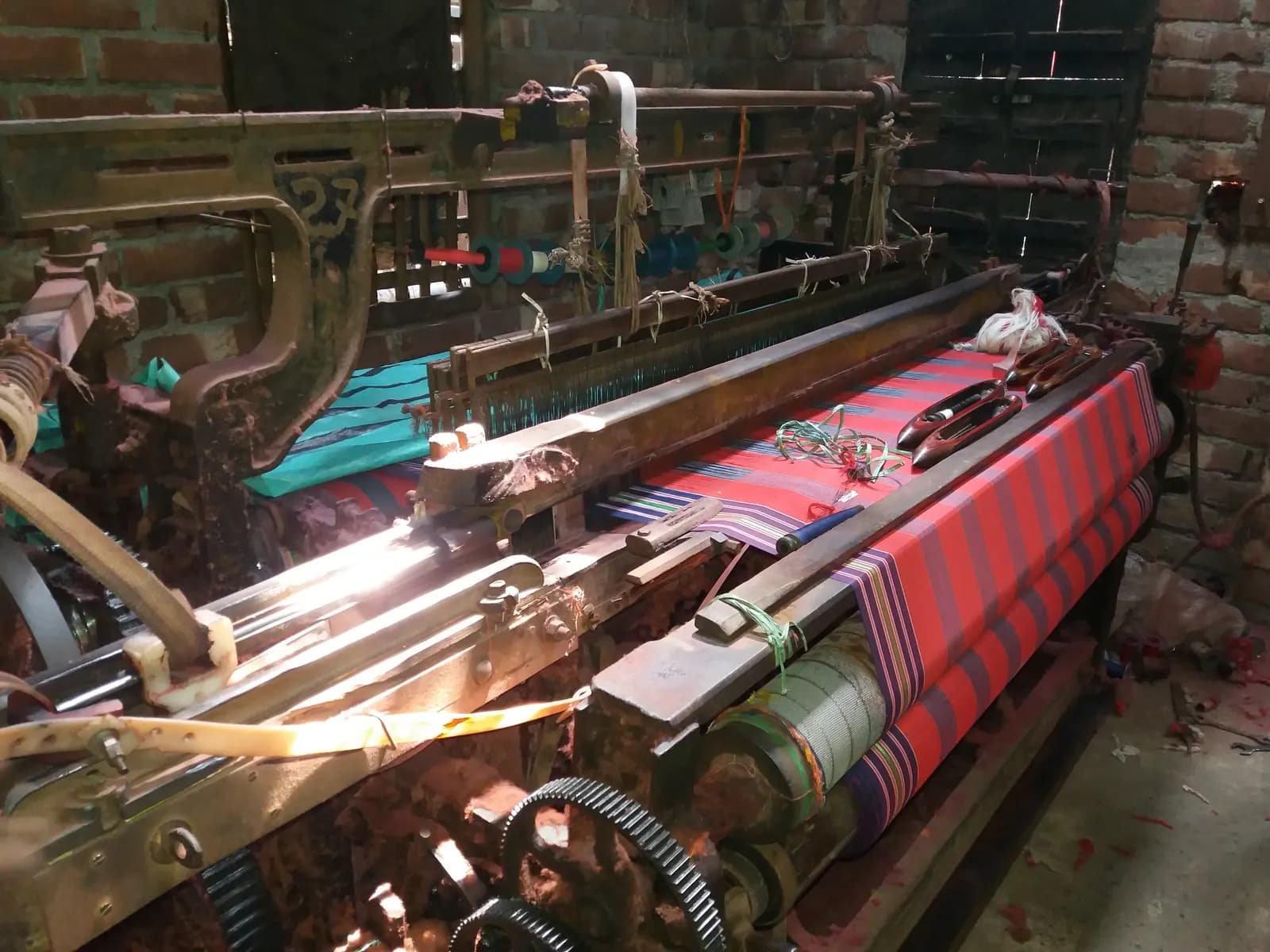
Many units that bought machinery between 2016 and 2022 are still waiting for part or all of their subsidy. The claim is handled through your lending bank and the Office of the Textile Commissioner, Mumbai, on the i-ATUFS system. In most cases the subsidy is released only after a Joint Inspection Team (JIT) has physically verified that the machines exist and match the invoices.
How to chase a pending ATUFS subsidy
- 1
Confirm your UID
Find the UID issued on i-ATUFS and check that it was generated on or before 31 March 2022. Projects without a UID by then are not covered.
- 2
Check the stage with your bank
Your lending branch can see whether the claim is at the bank, awaiting physical verification, or with the Textile Commissioner's office.
Tip: Ask for the status in writing; branch staff change and files move.
- 3
Keep inspection papers ready
Machine invoices, import documents (Bill of Entry for imported machines), installation proof, photos with machine serial numbers and the loan sanction letter.
- 4
Escalate through the Textile Commissioner
Ministry of Textiles — TUFS pageIf the file has been stuck after inspection, write to the Office of the Textile Commissioner with your UID and bank details.
- 5
Don't sell or move the machines
The scheme expected the unit to run at least for the minimum loan tenure. Selling or relocating machines before inspection can sink the claim.
What is open now for textile units
With ATUFS closed, support for textile machinery now comes from several schemes, each with a different purpose. Here is what is open, closed or still being designed as of October 2026.
| Scheme | What it supports | Status in 2026 |
|---|---|---|
| ATUFS | One-time capital subsidy on new machines | Closed to new projects since 31 March 2022; only committed claims |
| PLI Scheme for Textiles | Incentive on incremental turnover for large MMF apparel, MMF fabric and technical textile investments | Round 3 applications closed 31 March 2026; approved firms earn incentives to FY 2029-30 |
| PM MITRA parks | Plug-and-play land and infrastructure in 7 mega parks | Open for land allotment as each state's park SPV notifies |
| Integrated Textile Programme (incl. TEEM) | Machinery, technology upgradation and common testing centres in clusters | Announced in Budget 2026-27 with ₹1,500 crore; check texmin.gov.in for guidelines |
| Textile Cluster Development Scheme | Shared infrastructure and linkages in textile clusters | Running; proposals come through cluster bodies or states |
| National Technical Textiles Mission | R&D, start-ups, education in technical textiles | Mission had been extended to 31 March 2026; Budget 2026-27 still provides ₹256 crore for it |
PLI Scheme for Textiles — closed to new applicants
The Production Linked Incentive scheme (notified 24 September 2021, outlay ₹10,683 crore) pays an incentive linked to incremental turnover for man-made fibre (MMF) apparel, MMF fabrics and technical textiles. It is aimed at large investments, not small units. The portal reopened in August 2025 for a third round and took fresh applications until 31 March 2026. Approvals for that round continued into mid-2026, bringing the number of selected companies in Round 3 to 96. Unless the ministry reopens the window, there is no way to join now.
PM MITRA parks — space, not a machinery subsidy
The government approved seven PM Mega Integrated Textile Region and Apparel (PM MITRA) parks with an outlay of ₹4,445 crore up to 2027-28: Virudhunagar (Tamil Nadu), Warangal (Telangana), Navsari (Gujarat), Kalaburagi (Karnataka), Dhar (Madhya Pradesh), Lucknow (Uttar Pradesh) and Amravati (Maharashtra). The parks offer developed plots, common effluent treatment and plug-and-play sheds. For an MSME planning a new unit, the benefit is lower set-up cost and shared utilities. Land allotment is handled by each park's state-level SPV, so watch your state industries or textile department for allotment notices.
TEEM — the closest thing to a TUFS successor
The Union Budget 2026-27 (1 February 2026) announced an Integrated Programme for the textile sector with five parts: a National Fibre Scheme, the Textile Expansion and Employment Scheme (TEEM), a National Handloom and Handicraft Programme, the Tex-Eco Initiative for sustainable manufacturing, and Samarth 2.0 for skilling. The budget papers give the Integrated Textile Program ₹1,500 crore for 2026-27.
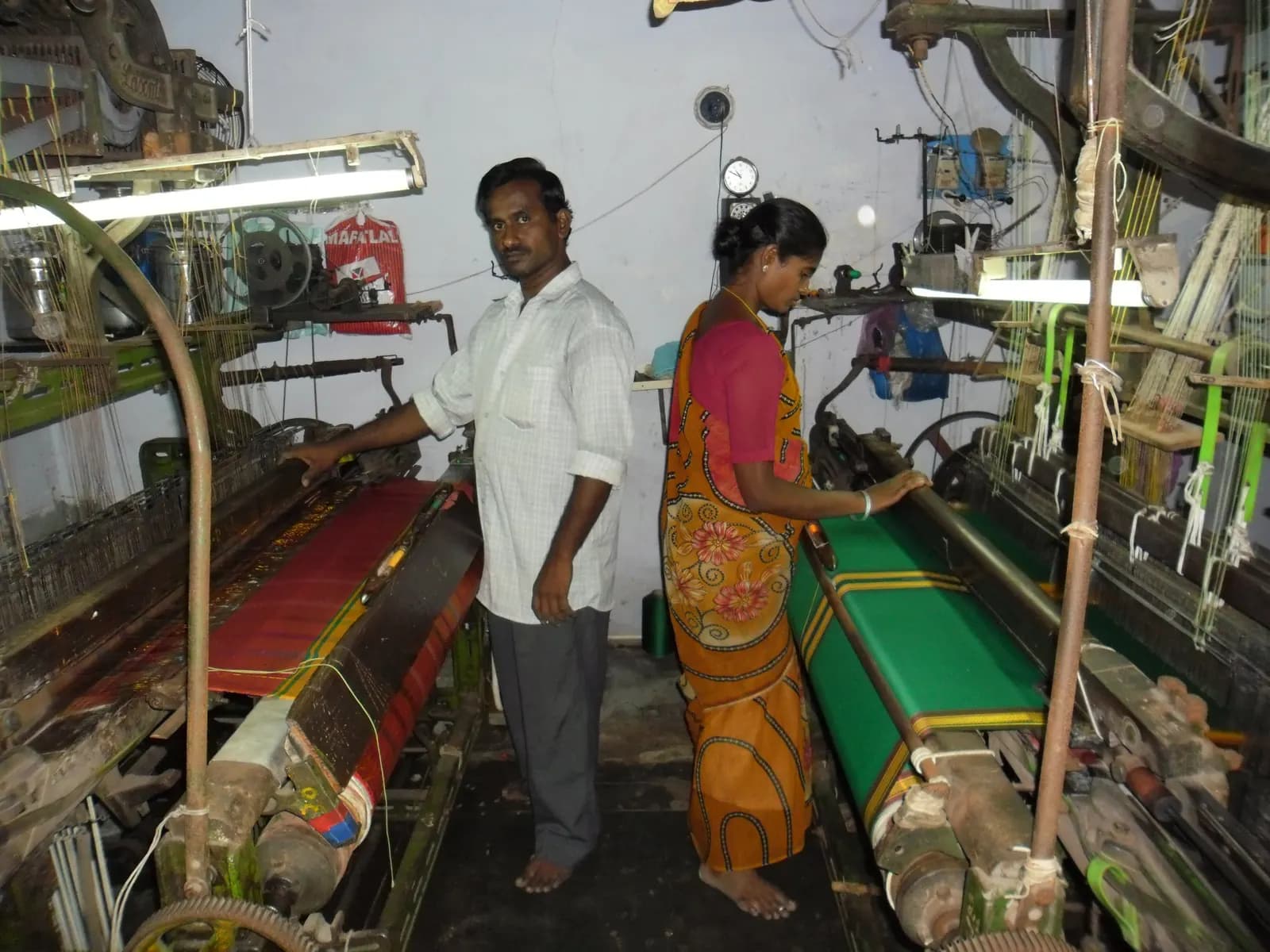
TEEM is the part that matters for machinery. The government describes it as capital support for machinery, technology upgradation and common testing and certification centres to modernise traditional clusters in weaving, processing and garmenting. In February and March 2026 the ministry held industry and state consultations to work out how it would run; industry asked for time-bound approvals and better MSME financing.
What this means for you:
- Don't assume retrospective cover. No official document says TEEM will pay for machines bought before its guidelines are notified. If you can wait, wait for the guidelines.
- Keep your paperwork scheme-ready. Udyam registration, GST returns, audited accounts and a bank willing to finance the project are almost certainly going to be needed, as they were under ATUFS.
- Watch two places: texmin.gov.in (scheme guidelines and portal) and the Office of the Textile Commissioner.
Technology upgradation support for non-textile MSMEs
Searchers often mix up the textile TUFS with the Ministry of MSME's Credit Linked Capital Subsidy for Technology Upgradation (CLCS-TUS). CLCS gave micro and small enterprises a 15% subsidy on institutional credit of up to ₹1 crore (a ₹15 lakh cap) for proven technologies. The ministry's own Budget 2026-27 notes describe it in the past tense, and it carries only token allocations, so treat it as closed to new cases.
What a manufacturer outside textiles can use instead:
- MSME Champions Scheme — three components: MSME Sustainable (ZED) certification, MSME Competitive (Lean) and MSME Innovative (incubation, design and IPR). It has ₹54.72 crore in the 2026-27 Budget.
- ZED certification subsidy — the government pays 80% of the certification cost for micro units, 60% for small and 50% for medium, plus a ₹10,000 joining reward. ZED also offers support for testing and for technology upgradation towards zero-effect (cleaner) solutions. See our ISO certification guide for how ZED and ISO differ.
- RAMP sub-schemes — including MSE-GIFT (green investment and financing for transformation) and MSE-SPICE (circular economy), run through the World Bank-supported RAMP programme.
- Collateral-free credit — a machinery loan of up to ₹10 crore can be covered under CGTMSE, so you don't need to pledge property.
- State capital subsidies — most states' industrial and textile policies offer capital or interest subsidies on plant and machinery for MSMEs. Rates and eligibility differ by state and by district category, so check your state industries department.
Try it — EMI on a ₹50 lakh machinery loan
Worked example. Without ATUFS, a micro weaving unit buying ₹50 lakh of new rapier looms now funds the full cost. On a 7-year loan at 10%, the EMI is about ₹83,000 a month. Under ATUFS the same unit would have received ₹5 lakh (10%) once, cutting the loan to about ₹45 lakh and the EMI to roughly ₹75,000. A state capital subsidy, if your state offers one, can partly fill that gap. Run your own numbers with the calculator above before you sign a purchase order.
Mistakes to avoid
Before you buy machinery expecting a subsidy:
- Don't rely on any agent's promise of 'TUF subsidy' for machines bought after March 2022 — the scheme is closed
- Read the notified guidelines of TEEM or any state scheme before placing the order; many schemes exclude machines bought before you apply
- Keep the term loan, invoices and installation proof in the unit's name, matching your Udyam and GST registration
- Buy brand-new machines with clear serial numbers — second-hand machinery was excluded under ATUFS and is often excluded by state schemes
- If you hold an old ATUFS UID, don't sell or shift the machines until the subsidy is released
- Get your state's capital subsidy confirmed in writing — district category and sector rules vary
Official links
Official sources for textile and MSME technology upgradation
- Ministry of TextilesATUFS, TEEM, PM MITRA, PLI notices
- ATUFS Resolution and guidelines (PDF)Rates, caps and eligibility
- PLI Scheme for Textiles portalApplications closed 31 March 2026
- Budget 2026-27 — Ministry of Textiles notes (PDF)Scheme-wise allocations
- MSME Sustainable (ZED) CertificationRegister, pledge and apply for certification subsidy
- Ministry of MSME schemesMSME Champions, RAMP and other schemes
What to do next
If you are planning a machinery upgrade, first make sure your Udyam registration is current, then line up finance — a CGTMSE-covered loan avoids collateral, and the EMI calculator shows what you can afford. Check your state's industrial or textile policy for a capital subsidy, and keep an eye on texmin.gov.in for TEEM guidelines before you place large orders. If you are setting up a new unit, also read our factory licence guide.
This is general information, not legal or tax advice — confirm on the official source or with a professional.
Frequently asked questions
No. The Amended Technology Upgradation Fund Scheme (ATUFS) ran from 13 January 2016 to 31 March 2022. No new Unique IDs (UIDs) can be generated. The Ministry of Textiles is only settling committed liabilities for UIDs issued before that date, and the Union Budget 2026-27 keeps just a token ₹0.03 crore for it.
ATUFS gave a one-time capital investment subsidy of 15% on eligible machines for garmenting and technical textiles, capped at ₹30 crore per entity, and 10% for weaving (brand-new shuttle-less looms), processing, jute, silk and handloom, capped at ₹20 crore. The term loan had to cover at least 50% of the project cost.
There is no single like-for-like replacement yet. The Budget 2026-27 announced an Integrated Programme for textiles with a Textile Expansion and Employment (TEEM) Scheme for machinery and cluster modernisation, alongside PM MITRA parks, the PLI scheme for MMF and technical textiles, and the Textile Cluster Development Scheme. Check texmin.gov.in for TEEM guidelines before you buy machinery.
If your project got a UID before 31 March 2022, your claim is a committed liability. Pending claims go through your lending bank and the Office of the Textile Commissioner on the i-ATUFS system, usually after a Joint Inspection Team check of the machinery. Keep invoices, the loan sanction and machine photos ready and ask your bank for the claim status.
The Ministry of MSME's Credit Linked Capital Subsidy for Technology Upgradation (CLCS-TUS) is no longer taking new cases; it gets only token budget lines. Current central support runs through the MSME Champions Scheme (ZED certification, Lean and Innovative components) and RAMP sub-schemes such as MSE-GIFT for green technology. Many states also offer capital subsidies under their industrial policies.
Sources & verification
Figures on this page were checked against the sources below when it was last reviewed on 7 October 2026. Each rate and limit is stored once with its own official source and review date, and official update channels are monitored daily so changes are picked up. How we verify
- 1.Resolution No. 6/5/2015-TUFS — Amended Technology Upgradation Fund Scheme and guidelines — Ministry of Textiles · accessed 7 October 2026
- 2.Notes on Demands for Grants 2026-27 — Demand No. 98, Ministry of Textiles — Ministry of Finance (Union Budget) · accessed 7 October 2026
- 3.Notes on Demands for Grants 2026-27 — Demand No. 68, Ministry of MSME — Ministry of Finance (Union Budget) · accessed 7 October 2026
- 4.Technology Upgradation Fund Scheme for modernization and technology upgradation of the textile industry (Rajya Sabha reply) — Press Information Bureau, Ministry of Textiles · accessed 7 October 2026
- 5.Year End Review 2025 of Ministry of Textiles — Press Information Bureau, Ministry of Textiles · accessed 7 October 2026
- 6.PLI Scheme for Textiles: last date for new applications extended to 31 March 2026 — Press Information Bureau, Ministry of Textiles · accessed 7 October 2026
- 7.Union Budget 2026–27: Strengthening India's Textile Value Chain — Press Information Bureau · accessed 7 October 2026
- 8.Western Zone consultation on Union Budget 2026–27 textile initiatives — Press Information Bureau, Ministry of Textiles · accessed 7 October 2026
- 9.MSME Sustainable (ZED) — Subsidy on cost of certification — Ministry of MSME / Quality Council of India · accessed 7 October 2026
- 10.Government approves 22 additional textile PLI applicants, taking total to 96 — Apparel Resources · accessed 7 October 2026
MSMETOOLS is an independent platform and is not affiliated with any government agency, ministry or department.
Tools for this
EMI Calculator
Calculate loan EMIs for business and personal loans.
ROI Calculator
Calculate return on investment for your business projects.
Break Even Calculator
Find your break even point and units.
Related guides
 Credit Linked Capital Subsidy Scheme (CLCSS): Status in 2026Read guide
 ASPIRE Scheme 2026: LBI Grants, Eligibility & Current StatusRead guide
 Tractor Subsidy 2026: SMAM Rates, Caps & How to ApplyRead guide
 NSIC Schemes 2026: Raw Material, Bill Discounting & SPRSRead guide
Official links open the government site in a new tab.