 Government schemes & funding
National SC-ST Hub (NSSH) in 2026: Subsidies, Reimbursements and How SC/ST Entrepreneurs Apply
SC ST Hub in 2026: 25% capital subsidy up to ₹25 lakh, 80% refunds on testing, bank guarantee and loan fees, trade-fair help and how SC/ST MSEs apply.
 Edited by Sumeet YadavFounder & editor, MSMETOOLS · fact-checked against official sources
Contents (8)
If you are a Scheduled Caste or Scheduled Tribe entrepreneur, or plan to become one, the National SC-ST Hub is probably the most useful government scheme you have never claimed from. Beyond its headline capital subsidy, it refunds most of the small, irritating costs of selling to government: lab testing, bank guarantees, loan processing fees, export council memberships and trade-fair stalls. This guide covers every benefit with its current limit, who qualifies, how to apply, the mistakes that get claims rejected, and where the scheme stands in 2026 now that its 2021-26 approval has ended.
Quick answer
The National SC-ST Hub (NSSH), run by NSIC for the Ministry of MSME, helps SC/ST-owned micro and small enterprises win a share of the 4% of central government purchases reserved for them. It pays a 25% capital subsidy up to ₹25 lakh on machinery loans, and refunds 80% (up to ₹1 lakh a year each) of testing fees, performance bank guarantee charges and loan processing fees. It also funds trade fairs and training. Apply on scsthub.in or at one of NSIC's 15 hub offices.
Eligible: SC/ST proprietor, or at least 51% SC/ST ownership, plus Udyam registration
2026-27 Budget: ₹115 crore; the scheme is running while its 2026-31 renewal is reviewed
NSIC Single Point Registration fee is refunded in full
All reimbursements are paid to your bank account through PFMS
What the SC-ST Hub is and why it exists
Since 2012 the Public Procurement Policy for Micro and Small Enterprises has required central ministries, departments and public sector undertakings to buy at least 25% of their annual purchases from MSEs. Within that, 4% is earmarked for SC/ST-owned units. The policy became mandatory from April 2015. In practice, SC/ST firms were barely winning any of it. In 2015-16, central buyers bought just ₹99.37 crore from SC/ST-owned MSEs, 0.07% of their purchases.
The Hub was announced in the 2016-17 Budget and launched by the Prime Minister in October 2016 to close that gap. It works on both sides of the market. For entrepreneurs, it funds machinery, testing, guarantees, training and marketing. For buyers, it runs vendor development programmes with CPSEs and shares data on SC/ST suppliers. NSIC runs it through an NSSH Cell in Delhi and 15 National SC-ST Hub Offices (NSSHOs), at Agra, Bengaluru, Bhubaneswar, Bodhgaya, Chennai, Guwahati, Hyderabad, Kolkata, Lucknow, Ludhiana, Mumbai, Pune, Ranchi, Raipur and Surat.
The results are real but well short of the target. According to the Hub's 2025-26 annual report, purchases from SC/ST-owned MSEs reached ₹3,942.70 crore (1.67% of the total) in 2025-26. That is a 39-fold rise in value since 2015-16, but less than half of the 4% target. For you as a supplier, the shortfall is an opportunity. Most CPSEs are under pressure to find capable SC/ST vendors.
National SC-ST Hub in numbers
1,90,414
SC/ST beneficiaries assisted
to 31 July 2026
₹3,942.70 cr
Bought from SC/ST MSEs, 2025-26
1.67% vs 4% target
₹356.10 crore to 3,160 MSEs
Capital subsidy paid since 2016
₹115 crore
Budget 2026-27
Who is eligible
Under the Hub's guidelines (and the ministry's 2014 definition), an enterprise counts as SC/ST-owned if:
- it is a proprietorship and the proprietor is SC or ST;
- it is a partnership and SC/ST partners hold at least 51% of the shares; or
- it is a private limited company and SC/ST promoters hold at least 51% of the shares. LLPs and cooperatives qualify for the capital subsidy on the same 51% test.
It must be a micro or small enterprise with a valid Udyam registration. Medium enterprises are outside the scheme, with one exception: a unit that grew from small to medium keeps its capital subsidy eligibility for three years after graduating. For the capital subsidy you also need a seller account on GeM.
Training programmes are open to any SC/ST person over 18, including people who don't have a business yet. The guidelines ask training institutes to give preference to women and persons with disabilities and to draw trainees from aspirational districts.
How an SCLCSS claim moves
Step 1
Bank sanctions term loan
Step 2
Machine installed, last disbursement
Step 3
You submit claim to bank
within 1 year
Step 4
Bank uploads on MIS portal
within 30 days
Step 5
DIC confirms no double subsidy
Step 6
Subsidy held as 3-year deposit
then adjusted against loan
The benefits, one by one
1. Special Credit Linked Capital Subsidy (SCLCSS)
This is the Hub's biggest benefit and what most people mean by "SC ST Hub subsidy". If an SC/ST-owned MSE takes a term loan from a bank to buy new plant, machinery or equipment, it gets 25% of the loan or of the machinery cost, whichever is lower, on loans up to ₹1 crore. That makes the maximum ₹25 lakh. It survived when the general 15% CLCSS for all MSEs ended in 2020; see our CLCSS guide for that history.
The rules that decide most claims:
- Sectors: manufacturing and, since 15 November 2021, services. Trading (NIC 45, 46 and 47) is excluded. A mixed unit qualifies only if manufacturing or services is its main activity. Industries in the pollution "red" category are excluded.
- Lender: scheduled commercial banks, cooperative banks, RRBs, state financial corporations and NEDFi, through a nodal bank or through SIDBI or NABARD. Loans from NBFCs don't qualify.
- What counts: new machines only. Second-hand and fabricated machines are excluded, and so are tools, dies, moulds, spares, installation, software, generator sets, cabling and freight. For imported machines, import duty, shipping, customs clearance and GST count.
- No double subsidy: you can't claim SCLCSS on a machine that already got a central or state subsidy. Since June 2023 the ministry asks for a confirmation from your District Industries Centre before releasing the money. You can take other kinds of state support, such as an interest subsidy, as long as it is not for buying the same machine.
- One per family: only one person in a family (self and spouse) can get SCLCSS.
- Claim window: submit documents to your bank within one year of the last loan disbursement. The bank uploads them on the CLCSS/SCLCSS MIS portal within 30 days. You cannot apply directly.
- Lock-in: the subsidy is kept as a term deposit for three years from the last disbursement. If you repay or close the loan early, or the unit stops production, the subsidy is taken back.
2. Reimbursement sub-schemes
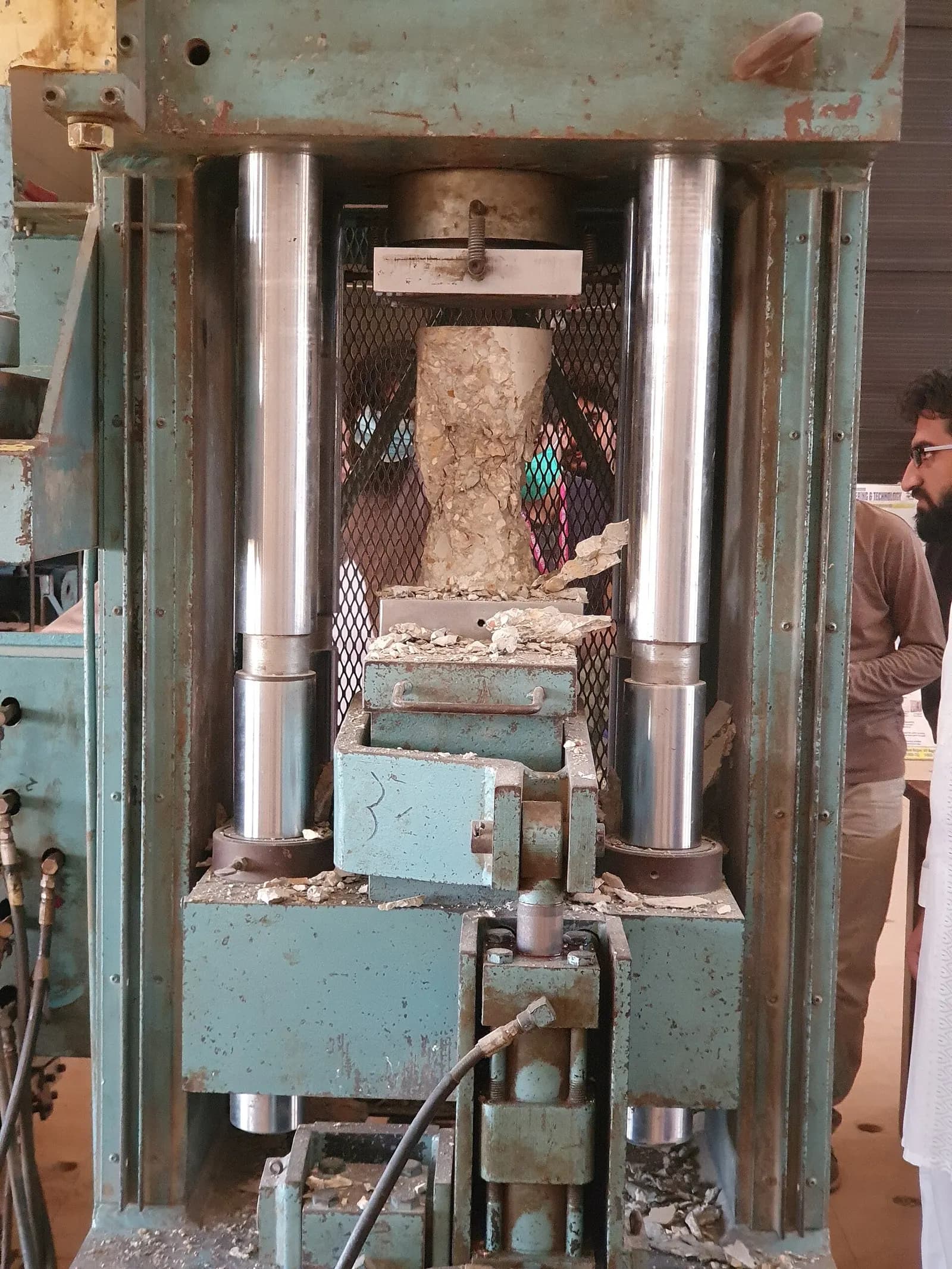
These are small amounts individually, but together they remove much of the cost of becoming a government supplier. All caps below exclude GST and apply per enterprise per financial year.
| Sub-scheme | What is refunded | Limit |
|---|---|---|
| Testing fee | Tests on raw materials, semi-finished or finished products at a NABL or BIS-accredited lab or a government lab, and BIS licences or certification | 80% or ₹1 lakh a year, whichever is less; can be claimed several times a year |
| Performance bank guarantee | Bank charges for a PBG given to a central or state ministry, department or PSU that awarded you work (not PBGs used as EMD) | 80% or ₹1 lakh a year, whichever is less |
| Bank loan processing fee | Processing fee on business loans (fund and non-fund based) from banks, NBFCs or state financial corporations | 80% or ₹1 lakh a year, whichever is less |
| Export council membership | Membership, subscription or entry fee of export promotion councils, commodity boards and similar bodies (RCMC needed) | 80% or ₹20,000 a year, whichever is less |
| Government e-commerce portals | Annual membership of GeM, e-Khadi, TRIFED/Tribes India, MSME Mart and similar portals | 80% or ₹25,000 a year, whichever is less |
| Management courses | Short courses at top-50 NIRF management institutes, including boarding for residential courses | 90% of the fee or ₹1 lakh, whichever is less; two courses a year |
| NSIC Single Point Registration | Fee for NSIC's SPRS registration for government purchases | 100% |
Note one difference between the sub-schemes. Loan processing fees from NBFCs are refunded, even though NBFC loans are excluded from the capital subsidy.
The performance bank guarantee refund matters more than it looks. The procurement policy exempts small firms from paying earnest money deposit and gives them tender documents free, but it does not exempt them from performance bank guarantees. A PBG is typically a percentage of the contract value, and banks charge a commission on it for as long as it is live. Our bank guarantee guide explains how that works.
3. Special Marketing Assistance Scheme (SMAS)
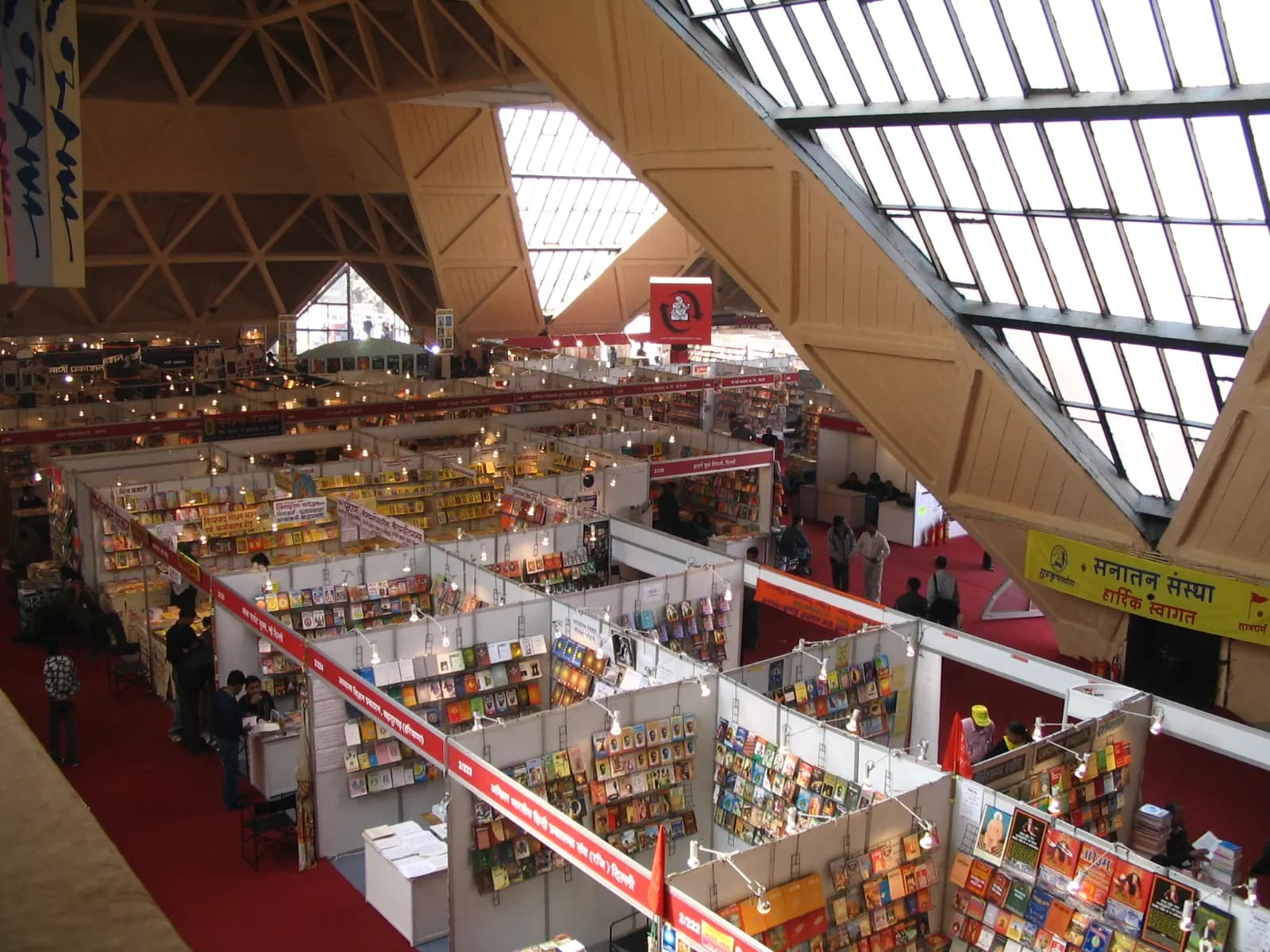
SMAS pays for SC/ST units to take part in trade fairs and exhibitions, both domestic and international, and funds vendor development programmes and awareness workshops with CPSEs. Each entrepreneur can claim for at most one international and two domestic events a year.
- International fairs: 100% of the economy airfare for one SC/ST representative and of the minimum-size built-up stall, double the MEA daily allowance, and freight up to ₹30,000. The total is capped at ₹3 lakh for a micro unit, ₹2.5 lakh for a small unit and ₹1.5 lakh for a medium unit per event. At least five SC/ST units must take part.
- Domestic fairs: to-and-fro fare (up to AC 3-tier by train, or the equivalent) for one person, the minimum stall in full, and transport of goods up to ₹15,000.
Apply at least a month ahead for domestic events and two months ahead for international ones. In 2025-26 SMAS supported 141 SC/ST units at four domestic exhibitions. The Hub and CPSEs also ran 247 special vendor development programmes, 197 e-tendering workshops and 230 awareness workshops that year.
4. Training and the Business Accelerator Programme
The Hub pays government and autonomous training institutes, such as MSME Technology Centres, NI-MSME, CIPET, NTSC and Institutes of Hotel Management, to run skill courses for SC/ST candidates. The courses are chosen to match what CPSEs and GeM buyers purchase, from welding and CAD/CAM to catering, laundry and tailoring. Private institutes and NGOs are not funded to run them. Candidates need at least 75% attendance and can take at most two courses a year. By 31 March 2026, 54,499 people had been trained, 10,717 of them in 2025-26, and 55% of those were women. Some courses include a toolkit worth up to ₹50,000. For existing entrepreneurs and their children, the Business Accelerator Programme runs week-long courses at IIMs and IRMA. The call for 2026-27 was open on scsthub.in in October 2026.
5. CPSE Connect and vendor development
Benefits on paper only help if buyers know you exist. The Hub's website has a section called CPSE Connect that lists the products and services more than 64 central public sector enterprises regularly buy, along with a compendium of the procurement practices CPSEs use to include SC/ST vendors. Use it to match what you make with a named buyer before you spend on testing or certification. NSSH offices also organise special vendor development programmes with individual CPSEs, where purchase managers explain their tender process and vendor registration. In 2025-26 the Hub also held five round-table conferences with more than 150 CPSEs on meeting their SC/ST procurement targets. Ask your nearest hub office for the calendar. These meetings are free, and often they are the fastest way to get your firm onto a CPSE's approved vendor list.
A worked example: what one unit can claim in a year
Meera, an SC entrepreneur, runs a small fabrication unit in Nagpur that supplies steel racks to railway and defence PSUs. In 2026 she:
- buys a CNC plasma cutter for ₹32 lakh with a ₹30 lakh bank term loan;
- pays a 1% processing fee on that loan (₹30,000), an illustrative figure since banks set their own fees;
- gets her products tested at a NABL lab three times for tenders, paying ₹45,000 in all;
- gives a PSU a performance bank guarantee for a ₹40 lakh order, on which her bank charges ₹6,000 (illustrative); and
- renews her NSIC SPRS registration and pays a GeM-related annual fee.
| Claim | Calculation | Amount |
|---|---|---|
| SCLCSS capital subsidy | 25% of the lower of loan (₹30 lakh) or machine (₹32 lakh) | ₹7,50,000 (held 3 years against the loan) |
| Loan processing fee | 80% of ₹30,000 | ₹24,000 |
| Testing fees | 80% of ₹45,000 | ₹36,000 |
| PBG charges | 80% of ₹6,000 | ₹4,800 |
| NSIC SPRS fee | 100% | Full fee |
That is more than ₹8 lakh of support, most of it locked against the machine loan, and about ₹65,000 paid straight back to her account. Because she is a woman, she also gets 90% cover on a CGTMSE guarantee, so she needs no collateral for the loan.
How to apply
Getting started with the SC-ST Hub
- 1
Register on Udyam and GeM
GeM registration guideUdyam is free on udyamregistration.gov.in. A GeM seller ID is compulsory for the capital subsidy and is how most government buyers will find you.
- 2
Contact your nearest NSSH office
NSIC's 15 hub offices help with registration, tenders and claims. Contacts are on scsthub.in under National SC ST Hub Offices.
- 3
For machinery, apply through your bank
Ask for the loan to be processed under SCLCSS. Submit the claim documents to the bank within one year of the last disbursement; the bank uploads them on the MIS portal and gets the DIC confirmation.
- 4
For reimbursements, apply online
Use the sub-scheme forms on scsthub.in with self-attested proof of SC/ST ownership, Udyam, the invoice or bank certificate and payment proof. Claims for a quarter should reach the Hub by the end of the next quarter.
- 5
Track and keep records
Approved amounts come through PFMS to your current account. Keep originals for audit.
For reimbursement claims, the "reference date" is the date the fee left your account: the processing fee debit, the PBG charge debit, the testing fee payment or the membership receipt. If you paid a testing fee on 10 February, the quarter is January–March, so your claim should reach the Hub by 30 June. Each sub-scheme has its own document list. The common ones are proof of the owner's SC/ST status (and the shareholding for firms), the Udyam certificate, a cancelled cheque of the business account, the bank's or lab's invoice or certificate, and a bank statement showing the debit. For PBG claims, add the work order and the buyer department's details. For export council claims, add the RCMC.
Common reasons claims are rejected
- Ownership below 51% in a partnership or company, or ownership documents that don't show it.
- NBFC loan used for a machinery claim under SCLCSS.
- Second-hand or fabricated machines, or a trading business.
- Late claims: SCLCSS documents more than a year after the last disbursement, or reimbursement claims after the quarter's deadline.
- Double subsidy: the same machine already subsidised under a state scheme. The DIC check now catches this.
- Early loan closure within three years, which leads to the subsidy being recovered.
- PBG submitted as EMD, which is not covered.
Is the SC-ST Hub open in 2026?
The scheme's revised guidelines say it applies until 31 March 2026, with an outlay of ₹588 crore for 2021-22 to 2025-26, and that "further continuation of the scheme shall be subject to review/evaluation". That is the standard wording for schemes tied to the 15th Finance Commission cycle.
In practice the Hub is working. The 2026-27 Budget gives it ₹115 crore, up from ₹100 crore spent in 2025-26. In October 2026 scsthub.in was inviting training proposals and Business Accelerator applications for 2026-27 and had updated its office contacts. We found no published order renewing the scheme for 2026-31, so limits and conditions may change when renewal comes. File claims promptly and check scsthub.in for revised guidelines before large commitments.
Other help for SC/ST entrepreneurs: Stand-Up India loans ended in March 2025 and a revamp is awaited. PMEGP pays SC/ST applicants the higher special-category subsidy of 25% urban and 35% rural.
Official links
- National SC-ST Hub portalSub-schemes, application forms, office contacts
- NSSH revised guidelines (May 2025)All limits and documents
- NSSH offices (Oct 2026)15 hub offices
- Public Procurement Policy FAQs4% SC/ST sub-target, EMD exemption
- GeM seller registrationNeeded for SCLCSS and most government orders
- Udyam RegistrationFree
What to do next
If you already have an SC/ST-owned unit, start with the claims that cost nothing to make. Collect last quarter's testing, PBG and loan processing receipts and file them on scsthub.in before the deadline. If you are planning a machine purchase, ask your bank to process the loan under SCLCSS from the start, and check the EMI with the EMI calculator. For every other scheme open to small businesses, see our list of government schemes for MSMEs.
This is general information, not legal or tax advice — confirm on the official source or with a professional.
Frequently asked questions
The National Scheduled Caste and Scheduled Tribe Hub (NSSH) is a Ministry of MSME scheme run by NSIC. It was launched in October 2016 to help SC/ST-owned micro and small enterprises win government orders, so that central ministries, departments and CPSEs meet the target of buying 4% of their annual purchases from SC/ST enterprises. It gives capital subsidy, fee reimbursements, training and trade-fair support.
Under the Special Credit Linked Capital Subsidy Scheme (SCLCSS), an SC/ST-owned micro or small enterprise gets 25% of a bank term loan of up to ₹1 crore for new plant, machinery or equipment, a maximum of ₹25 lakh. It covers manufacturing and services but not trading. Your bank files the claim; the subsidy is held as a three-year deposit against the loan.
A micro or small enterprise where the proprietor is SC/ST, or where SC/ST partners or promoters hold at least 51% of the shares in a partnership or company. It needs a valid Udyam registration. For the capital subsidy it must also be registered as a seller on GeM. Training programmes are open to any SC/ST person over 18, including people who have not started a business yet.
Yes. The Public Procurement Policy exempts small firms from earnest money deposit but not from performance bank guarantees. NSSH reimburses 80% or ₹1 lakh a year, whichever is less of the bank charges for a PBG given to a central or state department or PSU that awarded you work. PBGs given as EMD are not covered.
Apply online on scsthub.in under the relevant sub-scheme, or through your nearest National SC-ST Hub Office (there are 15, run by NSIC). Upload self-attested proof of SC/ST ownership, Udyam, the bill or bank certificate and proof of payment. Claims for a quarter should reach the Hub by the end of the next quarter. Approved amounts are paid to your bank account through PFMS.
Yes. Its 2021-26 guidelines ran to 31 March 2026 and further continuation is subject to review, but the 2026-27 Budget gives it ₹115 crore and scsthub.in was taking 2026-27 applications for training and the Business Accelerator Programme in October 2026. Expect revised terms once the 2026-31 renewal is approved.
Sources & verification
Figures on this page were checked against the sources below when it was last reviewed on 9 October 2026. Each rate and limit is stored once with its own official source and review date, and official update channels are monitored daily so changes are picked up. How we verify
- 1.Revised Guidelines of National SC-ST Hub Scheme for 2021-22 to 2025-26 (OM of 15 May 2025) — Ministry of MSME (SME Section) · accessed 9 October 2026
- 2.NSSH Annual Report 2025-26 — National SC-ST Hub (NSIC) · accessed 9 October 2026
- 3.National SC-ST Hub portal — key highlights and notices — National SC-ST Hub (NSIC) · accessed 9 October 2026
- 4.National SC-ST Hub Offices — contact details (Oct 2026) — NSIC · accessed 9 October 2026
- 5.Issuance of DIC certificate for release of SCLCSS subsidy (15 Jun 2023) — Ministry of MSME · accessed 9 October 2026
- 6.Notes on Demands for Grants 2026-27, Demand No. 68 — Ministry of MSME — Ministry of Finance (Union Budget) · accessed 9 October 2026
- 7.FAQs on Public Procurement Policy for MSEs Order, 2012 (25 Mar 2022) — Office of the DC (MSME) · accessed 9 October 2026
MSMETOOLS is an independent platform and is not affiliated with any government agency, ministry or department.
Tools for this
EMI Calculator
Calculate loan EMIs for business and personal loans.
Loan Eligibility Calculator
Check your business loan eligibility based on income and existing loans.
Related guides
 Credit Linked Capital Subsidy Scheme (CLCSS): Status in 2026Read guide
 List of Government Schemes for MSME 2026: Status & BenefitsRead guide
 Stand-Up India Loan 2026: Eligibility, Limits & StatusRead guide
 MSME Champions Scheme 2026: ZED, LEAN, Innovative & StatusRead guide
Official links open the government site in a new tab.