 Government schemes & funding
MSME Loans in 2026: Types, Interest Rates, Collateral Rules and How to Apply
Apply for an MSME loan in 2026: loan types, how interest is set (repo-linked EBLR), the new ₹20 lakh collateral-free rule, documents and JanSamarth steps.
 Edited by Sumeet YadavFounder & editor, MSMETOOLS · fact-checked against official sources
Contents (11)
- 1. What counts as an MSME loan
- 2. Types of MSME loans and which one fits
- 3. How MSME loan interest rates are set
- 4. Collateral: the new ₹20 lakh rule and guarantees
- 5. The micro-enterprise credit card
- 6. How much working capital you can get
- 7. Documents for an MSME loan
- 8. How to apply: JanSamarth, PSB 59 Minutes, bank or branch
- 9. Why MSME loans get rejected — and how to fix it
- 10. After sanction: costs to watch
- 11. What to do next
An MSME loan is any bank or NBFC credit given to a business registered as a micro, small or medium enterprise — a machine loan for a fabrication shop, a cash credit limit for a garment unit, or a Mudra loan for a tea stall. This guide is for owners who want to know which loan fits, what interest they will really pay, what the lender can and can't demand as security, and how to apply in 2026 without wasting weeks at the branch. It includes the rule changes of 2026 that most lender pages have not caught up with.
Quick answer
To apply for an MSME loan, get Udyam registration, choose the loan type (term loan, working capital, Mudra or a scheme loan), and apply through JanSamarth, PSB Loans in 59 Minutes, your bank's website or branch. Interest isn't fixed by the government: banks price MSME loans over an external benchmark — usually the repo rate (5.50%) — plus a spread for risk.
No collateral on micro and small enterprise loans up to ₹20 lakh for loans sanctioned or renewed from 1 April 2026
CGTMSE guarantee can cover collateral-free loans up to ₹10 crore
Udyam micro units can get a business credit card of up to ₹5 lakh
Banks must decide loans up to ₹25 lakh within 14 working days
No pre-payment penalty on floating-rate MSE loans sanctioned from 1 January 2026
What counts as an MSME loan
Lenders treat a loan as an MSME loan when the borrower is classified as a micro, small or medium enterprise, and since 2020 that classification comes from the Udyam Registration Certificate. RBI's own FAQ is explicit that banks follow the category printed on the certificate for priority-sector purposes. In practice, this means the first question at the branch is "Do you have Udyam?" — if you don't, register free on the Udyam portal before you apply.
The current limits, revised from 1 April 2025, are: micro up to ₹2.5 crore investment and ₹10 crore turnover; small up to ₹25 crore and ₹100 crore; medium up to ₹125 crore and ₹500 crore. Very small informal units that are exempt from GST can get an Udyam Assist certificate through a bank or NBFC, which RBI treats on par with a regular Udyam certificate for priority-sector lending.
Why it matters: MSME loans count towards the priority-sector targets banks must meet, collateral rules are more lenient, decisions are time-bound, and a whole set of guarantee schemes only works for Udyam-registered borrowers. A trader, a service business and a manufacturer can all qualify, although some schemes, such as PMEGP, exclude pure trading.
MSME lending rules at a glance (2026)
5.50%
RBI repo rate
benchmark for most MSE loans, from 7 Oct 2026
₹20 lakh
Collateral-free MSE loans
sanctioned/renewed from 1 Apr 2026
₹10 crore
Max CGTMSE guarantee
per borrower
14 working days
Decision deadline
MSE loans up to ₹25 lakh
Types of MSME loans and which one fits
Most owners need one of six products. Picking the right one matters more than chasing the lowest headline rate, because the wrong structure — say, buying machinery from an overdraft — strains cash flow for years.
Term loan. A lump sum for fixed assets — machines, a vehicle, shed construction or a new production line — repaid in monthly or quarterly instalments over three to seven years, often with a moratorium of a few months while the asset starts earning. The bank funds a share of the cost and you bring the rest as margin.
Working capital (cash credit or overdraft). A revolving limit for stock, raw material, wages and the credit you give buyers. You pay interest only on what you use. Limits are renewed every year based on your accounts and stock statements.
Composite loan. RBI allows banks to sanction a single composite limit of up to ₹1 crore that covers both term loan and working capital through one window — useful for a new unit that needs both on day one.
Mudra loan. For non-farm micro enterprises, up to ₹20 lakh in four tiers — Shishu up to ₹50,000, Kishore up to ₹5 lakh, Tarun up to ₹10 lakh and Tarun Plus above that for borrowers who repaid an earlier Tarun loan. No collateral is taken; the guarantee comes from CGFMU. See our Mudra loan guide.
CGTMSE-backed loan. Any term loan or working capital limit to a micro or small enterprise can be covered by the CGTMSE guarantee, so the bank doesn't need property. Cover runs from 75% to 90% depending on loan size and borrower category, up to ₹10 crore. Details are in our CGTMSE guide.
Credit card for micro enterprises. Announced in the Budget 2025-26 and rolled out by banks in 2026, it gives Udyam-registered micro units a business credit card of up to ₹5 lakh for short-term working capital. More on this below.
Which MSME loan fits your need
| Need | Product | Typical size | Security |
|---|---|---|---|
Buy a machine or build a shed | Term loan | Project-based | The asset financed; CGTMSE above ₹20 lakh |
Stock, raw material, wages | Cash credit / overdraft | Linked to turnover | Stock and debtors (hypothecation) |
New unit needing both | Composite loan | Up to ₹1 crore | Primary security + CGTMSE |
Micro business, first loan | Mudra (Shishu–Tarun Plus) | Up to ₹20 lakh | None (CGFMU guarantee) |
Small, short-term expenses | Micro-enterprise credit card | ₹50,000–₹5 lakh | CGTMSE cover |
Large machinery purchase | Term loan under MCGS-MSME | Up to ₹100 crore | 60% NCGTC guarantee |
Buy a machine or build a shed
- Product
Term loan
- Typical size
Project-based
- Security
The asset financed; CGTMSE above ₹20 lakh
Stock, raw material, wages
- Product
Cash credit / overdraft
- Typical size
Linked to turnover
- Security
Stock and debtors (hypothecation)
New unit needing both
- Product
Composite loan
- Typical size
Up to ₹1 crore
- Security
Primary security + CGTMSE
Micro business, first loan
- Product
Mudra (Shishu–Tarun Plus)
- Typical size
Up to ₹20 lakh
- Security
None (CGFMU guarantee)
Small, short-term expenses
- Product
Micro-enterprise credit card
- Typical size
₹50,000–₹5 lakh
- Security
CGTMSE cover
Large machinery purchase
- Product
Term loan under MCGS-MSME
- Typical size
Up to ₹100 crore
- Security
60% NCGTC guarantee
For bigger machinery projects, the Mutual Credit Guarantee Scheme (MCGS-MSME), launched in January 2025 and widened on 21 March 2026, gives lenders a 60% guarantee from NCGTC on loans up to ₹100 crore. The March 2026 changes brought service-sector MSMEs into the scheme, cut the share of project cost that must go to machinery to 60%, and made the 5% upfront contribution refundable from the fourth year if the account performs.
How MSME loan interest rates are set
This is the part most "MSME loan interest rate" pages skip. RBI deregulated lending rates long ago, so the government does not fix a rate for MSME loans. What RBI does control is the method. Since 1 October 2019, banks must link new floating-rate loans to micro and small enterprises to an external benchmark, and since 1 April 2020 the same applies to medium enterprises. Most banks use the RBI policy repo rate as that benchmark, producing what they call an EBLR or RLLR (external benchmark or repo-linked lending rate).
Your rate is built in three layers. First, the benchmark: the repo rate, which the RBI's Monetary Policy Committee raised by 25 basis points to 5.50% on 7 October 2026. Second, the bank's spread over the benchmark, which covers its operating costs and is published as the bank's EBLR. Third, a credit-risk premium for you specifically — set by your internal rating, credit score, collateral or guarantee cover, and the loan's tenure. The bank can't change the credit-risk premium unless your credit assessment changes substantially, as agreed in the loan contract.
The rate must be reset at least once every three months. That means the October 2026 repo increase will flow into existing floating-rate MSME loans at their next reset date, normally within three months. If your EMI or the interest debited to your cash credit account rises, check whether the increase matches the 0.25 percentage point change in the benchmark. A larger jump means the spread or premium has moved, and you can ask the branch for the reason in writing.
Older loans may still be on MCLR (the marginal cost of funds based lending rate), which banks calculate from their own funding costs and reset on a fixed schedule, often every six or twelve months. If you have an MCLR loan, ask whether switching to the external benchmark would cut your rate, and what the switch fee is.
A worked example in ₹
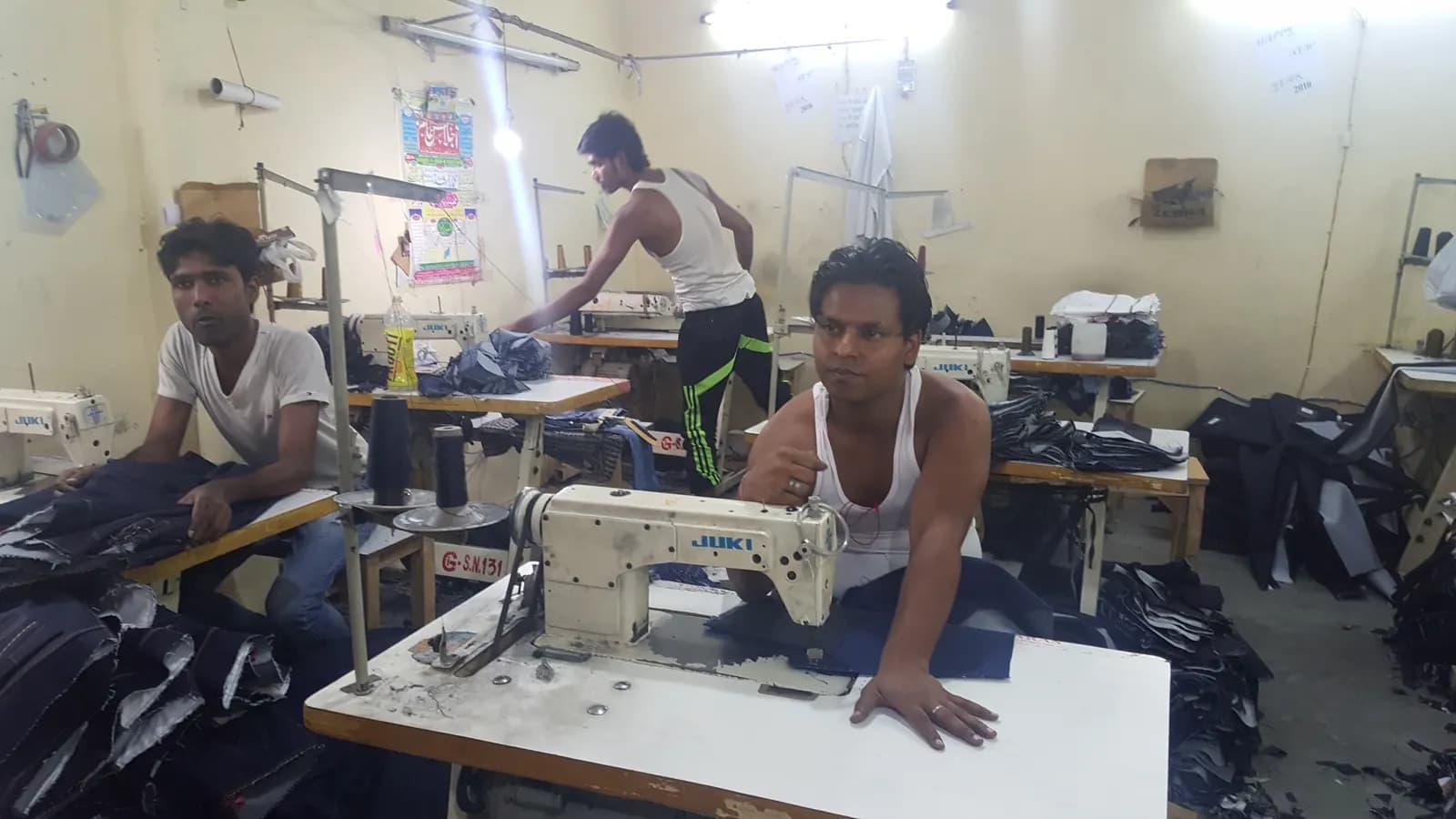
The figures below are illustrative, not any bank's published rate — your bank's EBLR and your premium will differ. Suppose a bank's repo-linked rate is the repo rate plus a 2.75% spread, giving 8.25%, and the bank adds a 1.50% credit-risk premium for your rating. Your rate is 9.75%. A ₹10 lakh term loan over five years then costs an EMI of about ₹21,124, and total interest of about ₹2.67 lakh.
If the same loan were priced at 12% — common for a weaker rating or a smaller bank — the EMI rises to about ₹22,244 and total interest to about ₹3.35 lakh. At 16–18%, the range many NBFCs and fintech lenders quote for unsecured business loans, total interest climbs to between ₹4.6 lakh and ₹5.2 lakh on the same ₹10 lakh. The difference between a bank loan backed by a guarantee and an unsecured fintech loan can easily be more than ₹2 lakh over five years.
Now the effect of the October 2026 hike: on a ₹25 lakh, seven-year term loan, moving from 10.50% to 10.75% lifts the EMI from about ₹42,152 to ₹42,478 — roughly ₹326 a month, or ₹27,000 more interest over the life of the loan. Small per month, but it adds up, which is why the reset clause is worth reading. Run your own numbers in the EMI calculator.
Check your MSME loan EMI
Collateral: the new ₹20 lakh rule and guarantees
For years, RBI barred banks from taking collateral on micro and small enterprise loans up to ₹10 lakh. By a circular dated 9 February 2026, RBI doubled that to ₹20 lakh for all loans to MSE borrowers sanctioned or renewed on or after 1 April 2026. Banks may go further and waive collateral up to ₹25 lakh for units with a good track record and sound finances, under their own policy. The same ₹20 lakh collateral-free treatment applies to every unit financed under PMEGP.
"Collateral" here means extra security — your house, a plot, an FD or a third-party guarantee. The bank will still take a charge on the assets the loan pays for (the machine, the stock), called primary security. If a branch asks for property on a ₹15 lakh MSE loan sanctioned after April 2026, point it to paragraph 4.1 of the RBI Master Direction on lending to the MSME sector.
Above the collateral-free limit, ask for CGTMSE cover rather than pledging property. The guarantee fee — an annual charge of 0.37% a year to 1.20% a year of the amount covered, depending on loan size and category — is often passed on to the borrower, so include it when you compare offers. Women-owned micro and small units get the highest cover, 90%, which makes banks more willing to lend without property.
The micro-enterprise credit card
The Budget 2025-26 promised customised credit cards with a ₹5 lakh limit for micro enterprises registered on the Udyam portal, with 10 lakh cards in the first year. According to a Lok Sabha reply of 3 August 2026, as reported, the scheme went live on 25 May 2026, and 12,398 cards with ₹136.91 crore of limits had been sanctioned nationally by 20 July 2026 — a slow start against the target.
SBI's published terms give a good picture of how the card works. It is a RuPay business credit card with a limit from ₹50,000 to ₹5 lakh, one card per enterprise, with no margin and an interest-free period of up to 50 days. It is covered by CGTMSE, so no collateral is needed, and it can only be used for business spending, not personal expenses. SBI's page also says the enterprise must be classified as micro on its Udyam certificate and, at least for SBI, be a borrower the bank has financed under a government-sponsored scheme — so it isn't open to every micro unit at every bank. Apply through your home branch or the government schemes section of JanSamarth.
Used well, the card replaces costly informal credit for short gaps: paying a supplier on the 5th when your buyer pays on the 30th. Used badly — rolling the balance month after month — it becomes expensive. Ask the bank for the interest rate on revolving balances before you sign.
How much working capital you can get
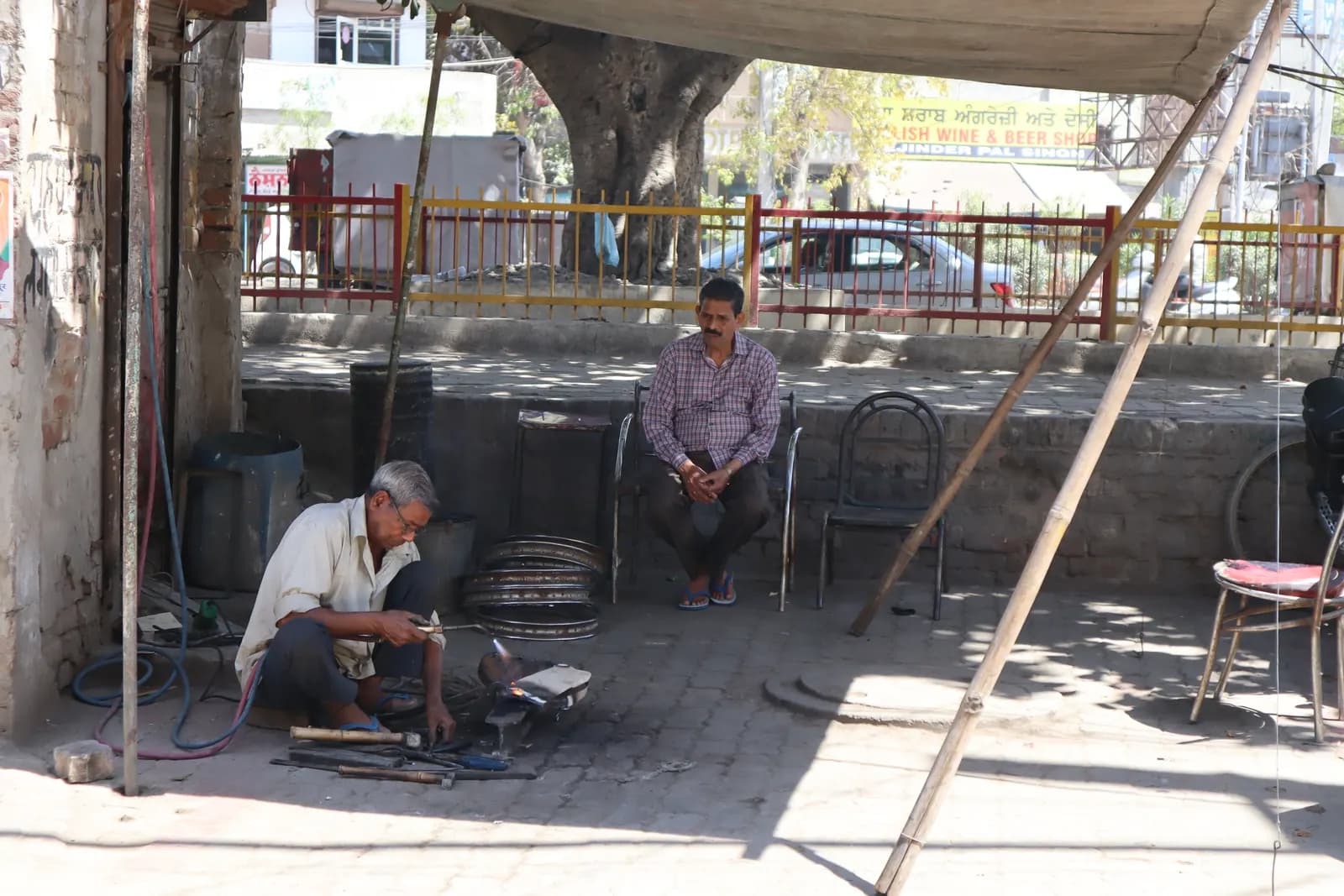
For micro and small units with working capital needs up to ₹5 crore, banks use the turnover method recommended by the Nayak Committee: the limit is computed at a minimum of 20% of your projected annual turnover. Here's how that works in ₹. A garment unit projecting ₹1.5 crore turnover next year has an assessed working capital need of 25% of turnover, or ₹37.5 lakh. The bank finances at least 20% of turnover — ₹30 lakh — and you fund the remaining ₹7.5 lakh (5% of turnover) from your own money as margin.
Banks also look at whether the projection is believable. If last year's turnover was ₹80 lakh, a jump to ₹1.5 crore needs firm orders or a new buyer to back it. RBI also asks banks to offer standby credit on term loans, additional working capital for emergent needs, and a mid-year review of working capital limits when sales grow faster than expected — if business picks up mid-year, ask for that review instead of waiting for the annual renewal. Use the working capital calculator to estimate your cycle before you meet the bank.
Documents for an MSME loan
Lenders differ slightly, but every bank asks for the same core file. RBI has told banks to publish an indicative document checklist for MSME loans on their websites, so download your bank's list before you go.
MSME loan documents to keep ready
0/10For a new business without returns, the project report carries most of the weight. Show realistic sales, every cost including rent, wages, power and EMI, and where the margin money will come from. Lenders also pull your credit report — including the CIBIL MSME Rank for businesses and the personal scores of the owners — so check yours first using our CIBIL score guide.
How to apply: JanSamarth, PSB 59 Minutes, bank or branch
There are four routes, and you can use more than one at the same time to compare offers.
JanSamarth is the government's portal for credit-linked central schemes, launched on 6 June 2022. It now lists 15 schemes, including PMEGP, Mudra, PM SVANidhi and the Weaver Mudra Scheme, with about 250 lenders onboard — public and private banks, regional rural banks, cooperative banks, small finance banks and NBFCs. It checks eligibility against your Aadhaar, PAN, income-tax, GST and credit bureau data with your consent, then sends the application to the lender you choose. Use it when you want a scheme loan with a subsidy or guarantee attached.
PSB Loans in 59 Minutes is the route for regular MSME loans from public sector banks. After you share GST, ITR and bank statement data, it gives an in-principle approval for loans up to ₹5 crore and lets you pick a bank and branch. The 59 minutes is only the in-principle stage; the branch then does its own checks before sanction.
Your bank's own digital journey. Most large banks now run online MSME loans that pull GST and bank data and sanction smaller limits in a few days. These are worth trying first if you already bank there, because the bank can see your account conduct.
The branch. For larger term loans, composite loans or anything with a complex project, sit down with the branch or the bank's SME centre. Ask for the acknowledgement number — RBI requires banks to track every MSME application centrally and send you the status.
Applying for an MSME loan, step by step
- 1
Register on Udyam
Udyam portalRegister free at udyamregistration.gov.in with Aadhaar and PAN. Update turnover and investment each year so your category is current.
- 2
Decide the loan type and amount
Term loan for assets, working capital for the cycle, or a Mudra/scheme loan for a small first loan. Size it from your project report or 20% of projected turnover.
- 3
Check your credit reports
Pull the owners' credit reports and the business's CIBIL MSME Rank. Clear small overdues before you apply.
- 4
Apply on JanSamarth or PSB 59 Minutes, or with your bank
Open JanSamarthUse JanSamarth for scheme loans, PSB 59 Minutes for public sector bank MSME loans, or your bank's online journey. Note the application number.
- 5
Compare written offers
Ask each lender for the benchmark, spread, credit-risk premium, processing fee, CGTMSE fee and any insurance. Compare the total cost, not the headline rate.
- 6
Sign and track
Read the sanction letter before signing: security, covenants, reset dates. Banks must decide loans up to ₹25 lakh within 14 working days.
Why MSME loans get rejected — and how to fix it
RBI requires banks to tell you, in writing, the main reasons a loan was rejected. Ask for that letter — it tells you exactly what to fix.
Thin or messy banking. If your sales go to a personal account or are mostly in cash, the bank can't see your turnover. Route business receipts through one current account for at least six months before applying.
Credit report problems. A missed credit card payment or an old written-off loan in a partner's name can sink an application. Settle it, get a no-dues letter, and wait for the bureau to update — usually one or two reporting cycles.
Asking for the wrong product. Machinery funded from an overdraft, or working capital requested as a term loan, makes the bank's assessment fail. Match the product to the use.
Projections that don't add up. A projected tripling of turnover with no orders to show will be cut down. Base projections on last year plus documented new business.
Collateral demands you don't have to meet. If you are a micro or small enterprise and the loan is within ₹20 lakh, the bank shouldn't ask for collateral. Above it, ask about CGTMSE. If the branch won't budge, escalate to the regional office, then the bank's grievance officer, and after 30 days to the RBI Ombudsman.
If your loan is refused or stuck
Step 1
Ask for the written rejection reason
Step 2
Fix the gap and reapply, or
Step 3
Escalate to the regional office
Step 4
Bank's grievance officer
Step 5
RBI Ombudsman
after 30 days without a reply — cms.rbi.org.in
After sanction: costs to watch
A loan's cost doesn't stop at the interest rate. Before you sign, list every charge in the sanction letter: processing fee, documentation and inspection charges, CGTMSE guarantee fee if passed on, stamp duty on the loan agreement, and any insurance the bank requires on the stock or machine. Ask for the annualised total so you can compare banks.
One 2026 change helps you here. Under RBI's Pre-payment Charges on Loans Directions, 2025, no pre-payment penalty can be charged on floating-rate business loans to individuals and micro and small enterprises sanctioned or renewed on or after 1 January 2026 by commercial banks (except small finance, regional rural and local area banks), Tier 4 urban cooperative banks, upper-layer NBFCs and all-India financial institutions. Small finance banks, RRBs, smaller cooperative banks and middle-layer NBFCs can't charge it on such loans up to ₹50 lakh. So if another lender later offers a better rate, you can move the loan without a penalty.
Finally, keep paying on time and keep filing GST and income-tax returns on schedule. Each annual renewal of a working capital limit is a fresh credit assessment; a clean year of returns and account conduct is what earns a higher limit and a lower premium next time.
Official links
- RBI Master Direction — Lending to MSME Sector₹20 lakh collateral-free rule, timelines, rejection reasons
- RBI FAQs on MSME lendingInterest benchmark, working capital method, composite loans
- JanSamarth — credit-linked government schemesApply for Mudra, PMEGP and other scheme loans
- Udyam Registration portalFree MSME registration needed before applying
- CGTMSEGuarantee cover and fees for collateral-free loans
- NCGTC — MCGS-MSMEGuarantee for machinery loans up to ₹100 crore
What to do next
Register on Udyam if you haven't, pull your credit reports, and work out the amount you need using the turnover method or a simple project report. Then apply through two routes — JanSamarth or PSB 59 Minutes plus your own bank — and compare the written offers line by line. If you are still deciding between schemes, read our comparison of loans for a small business and check your eligibility in the loan eligibility calculator.
This is general information, not financial or legal advice — confirm the terms on the official source or with your bank.
Frequently asked questions
There is no single MSME rate. Banks must link floating-rate loans to micro, small and medium enterprises to an external benchmark — usually the RBI repo rate, which is 5.50% after the 7 October 2026 policy. Your rate is that benchmark plus the bank's spread plus a credit-risk premium based on your rating, security and track record. Ask for the benchmark and spread in writing.
For loans sanctioned or renewed from 1 April 2026, RBI tells banks not to take collateral on loans up to ₹20 lakh to micro and small enterprises, and banks may stretch this to ₹25 lakh for units with a good record. Above that, a CGTMSE guarantee of up to ₹10 crore can replace property as security.
Get Udyam registration first. For scheme loans such as Mudra or PMEGP, apply on JanSamarth, which checks eligibility and routes you to a lender. For general business loans from public sector banks, PSB Loans in 59 Minutes gives an in-principle approval after reading your GST, ITR and bank data. You can also apply on your own bank's website or at the branch.
KYC of the business and owners (PAN, Aadhaar), Udyam certificate, address proof of the unit, GST registration and returns if registered, income-tax returns and financial statements for two to three years, six to twelve months of bank statements, and for new projects a project report with quotations. Working capital limits also need stock and debtor details.
RBI's Master Direction says the credit decision on loans up to ₹25 lakh to micro and small enterprises should take no more than 14 working days. Larger loans follow the bank's board-approved timelines. Banks must give you an acknowledgement number and, if they reject the loan, tell you the main reasons in writing.
Yes. The Budget 2025-26 announced customised credit cards of up to ₹5 lakh for Udyam-registered micro enterprises, and banks began issuing them in 2026. SBI's version is a RuPay business card from ₹50,000 to ₹5 lakh, covered by CGTMSE and limited to business spending. Ask your bank whether you qualify.
For business loans to individuals and micro and small enterprises sanctioned or renewed from 1 January 2026, RBI bars commercial banks (other than small finance, regional rural and local area banks) and large NBFCs from charging pre-payment penalties on floating-rate loans. Smaller lenders can't charge them on such loans up to ₹50 lakh.
Sources & verification
Figures on this page were checked against the sources below when it was last reviewed on 7 October 2026. Each rate and limit is stored once with its own official source and review date, and official update channels are monitored daily so changes are picked up. How we verify
- 1.Master Direction – Lending to Micro, Small & Medium Enterprises (MSME) Sector (updated 9 February 2026) — Reserve Bank of India · accessed 7 October 2026
- 2.RBI FAQs — Micro, Small and Medium Enterprises (30 July 2025) — Reserve Bank of India · accessed 7 October 2026
- 3.RBI home page — current policy rates (as at 7 October 2026) and MPC resolution, 5–7 October 2026 — Reserve Bank of India · accessed 7 October 2026
- 4.External Benchmark Based Lending — circular RBI/2019-20/53 (4 September 2019) — Reserve Bank of India · accessed 7 October 2026
- 5.Reserve Bank of India (Pre-payment Charges on Loans) Directions, 2025 — Reserve Bank of India · accessed 7 October 2026
- 6.SBI — Micro Credit Card — State Bank of India · accessed 7 October 2026
- 7.JanSamarth Portal — Department of Financial Services, Ministry of Finance · accessed 7 October 2026
- 8.Government modifies Mutual Credit Guarantee Scheme (MCGS-MSME) — 21 March 2026 — PIB — Ministry of Finance · accessed 7 October 2026
- 9.Union Budget 2026-27: Building Champion MSMEs for a Global India (15 February 2026) — PIB · accessed 7 October 2026
- 10.Investment and turnover limits for classification of MSMEs enhanced; credit cards for micro enterprises (Budget 2025-26) — PIB — Ministry of Finance · accessed 7 October 2026
- 11.J&K gets 72 credit cards under new micro enterprise scheme: Lok Sabha (USQ 2305, 3 August 2026) — Kashmir Life (reporting a Lok Sabha reply) · accessed 7 October 2026
- 12.PSB Loans in 59 Minutes — PSB Loans in 59 Minutes · accessed 7 October 2026
MSMETOOLS is an independent platform and is not affiliated with any government agency, ministry or department.
Tools for this
EMI Calculator
Calculate loan EMIs for business and personal loans.
Loan Eligibility Calculator
Check your business loan eligibility based on income and existing loans.
Working Capital Calculator
Check working capital, current and quick ratios.
Related guides
 CGTMSE Scheme 2026: ₹10 Crore Cover, Fees & How to ApplyRead guide
 Loan for a Small Business (2026): Schemes & How to ApplyRead guide
 Mudra Loan 2026: Shishu to Tarun Plus, Rates & How to ApplyRead guide
 Govt Loan for Business (2026): Every Central Scheme ComparedRead guide
Official links open the government site in a new tab.