 Government schemes & funding
Udyogini Scheme in 2026: Who Runs It, Eligibility, Subsidy and How to Apply
Udyogini scheme in 2026: a Karnataka scheme giving women ₹1–3 lakh bank loans with a 30–50% subsidy. Eligibility, documents, how to apply and options elsewhere.
 Edited by Sumeet YadavFounder & editor, MSMETOOLS · fact-checked against official sources
Contents (11)
- 1. What the Udyogini scheme is — and who runs it
- 2. Eligibility
- 3. How much loan and subsidy you get
- 4. Interest rate and collateral
- 5. Which businesses qualify
- 6. Documents you need
- 7. How to apply, step by step
- 8. Targets, waiting and why applications get rejected
- 9. After the loan: what the scheme expects from you
- 10. If you live outside Karnataka
- 11. What to do next
The Udyogini scheme helps women from low-income families start a small business with a bank loan, part of which is paid off by the state as a subsidy. If you have searched for it, you have probably seen it described as a national "₹3 lakh interest-free loan for women". That isn't accurate. This guide explains who actually runs Udyogini, who qualifies, how much subsidy you get, how the application really moves from the CDPO's office to the bank, and what to apply for if you live outside Karnataka.
Quick answer
Udyogini is a Government of Karnataka scheme run by the Karnataka State Women's Development Corporation (KSWDC) — not a central scheme. Women in Karnataka aged 18 to 55 years with low family income can take a bank loan of ₹1 lakh–₹3 lakh for a small business and get a state subsidy on it.
Subsidy: 30% up to ₹90,000 for general/special category; 50% for SC/ST women
Family income limit: ₹1.5 lakh (general/special), ₹2 lakh (SC/ST)
Apply through the taluk CDPO / KSWDC district office and a bank branch
Outside Karnataka: use Mudra, PMEGP or a CGTMSE-backed loan instead
What the Udyogini scheme is — and who runs it
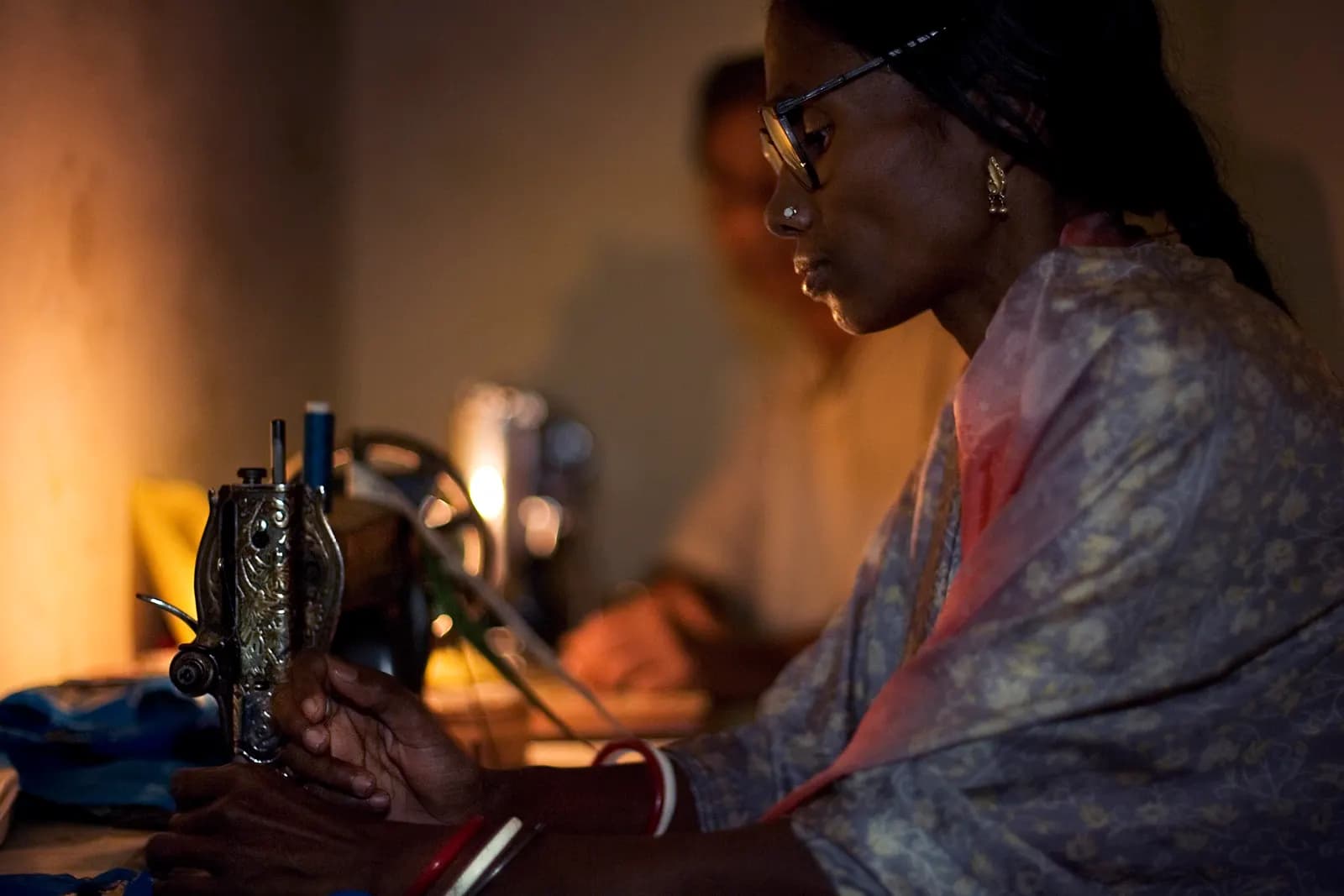
Udyogini was started by the Government of Karnataka in 1997-98 and amended in 2004-05. It is run by the Karnataka State Women's Development Corporation, a state body under the Women and Child Development Department. The idea is simple: many women who want to run a tailoring shop, a small food business or a beauty parlour end up borrowing from moneylenders at high interest. Udyogini routes them to a bank instead and pays part of the loan through a state subsidy, so the woman repays less.
The Government of India's myScheme portal lists Udyogini as a state-level scheme for Karnataka, under the Karnataka Women and Child Development Department, and the only Udyogini scheme it lists is that one. We found no central scheme called Udyogini on myScheme, on the Ministry of Women and Child Development's pages, or on the Department of Financial Services' list of credit schemes.
So why do so many websites call it a national scheme? Most of the pages ranking for "udyogini yojana" are written by loan companies and fintech apps. Several claim the scheme is run by a central women's development corporation through Punjab & Sind Bank, offers interest-free loans, and covers 88 business categories nationwide. We could not find any of those claims on an official government or bank page. Treat them with caution, and don't pay anyone who offers to "apply for Udyogini" for you outside Karnataka.
There is also a well-known non-profit called Udyogini, founded in 1992, that runs enterprise training and value-chain programmes for rural women in states such as Uttarakhand, Jharkhand and Madhya Pradesh. It is unrelated to the Karnataka scheme and does not give loans or subsidies.
Eligibility
The eligibility rules published by KSWDC and repeated on myScheme are short, but each one is checked.
Udyogini eligibility checklist
0/7Income is family income, not personal income. The tahsildar's income certificate covers the household, so a woman with no income of her own but a husband earning ₹2.5 lakh a year will usually fail the general-category limit.
Priority groups. The scheme asks selection committees to prefer very poor and destitute women, widows and women with disabilities. Women who have completed skill or vocational training run by KSWDC or another department can also get preference, and about 10% of the district target is earmarked for members of Stree Shakthi or Swashakthi self-help groups.
"Special category" in the Udyogini rules refers to groups such as widows, destitute women and women with disabilities. They get the same 30% subsidy rate as general category women; only SC/ST women get the higher 50% rate.
How much loan and subsidy you get
Under the current rules, the unit cost — what the bank lends for your activity — ranges from ₹1 lakh to ₹3 lakh. The subsidy is paid by KSWDC to your bank and reduces what you have to repay.
Udyogini loan and subsidy by category
| Category | Unit cost | Subsidy | Family income limit |
|---|---|---|---|
General | ₹1 lakh–₹3 lakh | 30%, max ₹90,000 | Below ₹1.5 lakh |
Special (widow, destitute, disabled) | ₹1 lakh–₹3 lakh | 30%, max ₹90,000 | Below ₹1.5 lakh; none for widows and disabled |
SC/ST | ₹1 lakh–₹3 lakh | 50% of the loan | Below ₹2 lakh |
General
- Unit cost
₹1 lakh–₹3 lakh
- Subsidy
30%, max ₹90,000
- Family income limit
Below ₹1.5 lakh
Special (widow, destitute, disabled)
- Unit cost
₹1 lakh–₹3 lakh
- Subsidy
30%, max ₹90,000
- Family income limit
Below ₹1.5 lakh; none for widows and disabled
SC/ST
- Unit cost
₹1 lakh–₹3 lakh
- Subsidy
50% of the loan
- Family income limit
Below ₹2 lakh
Worked examples in ₹
A general-category tailor in Mysuru. Lakshmi wants two industrial sewing machines, a cutting table, an overlock machine and three months of fabric stock: ₹3 lakh in all. The bank sanctions ₹3 lakh and KSWDC's subsidy is 30% of that, ₹90,000 — exactly the cap. Lakshmi's own repayment burden falls to ₹2.1 lakh plus interest. If she repays that ₹2.1 lakh over three years at an illustrative 11% bank rate, the EMI works out to roughly ₹6,900 a month. Her actual rate will be the bank's normal rate for small business loans.
An SC woman running a mess in Kalaburagi. Savitha needs ₹2 lakh for utensils, a commercial stove, a refrigerator and working capital. With a 50% subsidy, ₹1 lakh is covered by KSWDC and she repays the other ₹1 lakh plus interest.
A smaller project. A general-category woman setting up a ₹1.5 lakh pickle and papad unit gets 30% of ₹1.5 lakh — ₹45,000. Because the cap only binds at ₹3 lakh, smaller projects get the full 30%.
How and when the subsidy reaches your account depends on how your bank handles it. The scheme has historically treated the money as a "back-end subsidy" — the bank receives it from KSWDC and adjusts it against your loan rather than handing you cash. Ask the branch in writing whether interest is charged on the subsidy portion and when it will be adjusted, because that changes your EMI.
Interest rate and collateral
There is no special Udyogini interest rate. The subsidy is the benefit; the loan itself is an ordinary bank loan priced under your bank's rules. For a micro or small enterprise, that means a floating rate linked to an external benchmark, usually the RBI repo rate, plus a spread. Read our guide to MSME loan interest rates to understand how the number is built. Claims that Udyogini loans are "interest-free" come from non-government websites and are not in the KSWDC or myScheme scheme text.
On security, a ₹3 lakh loan is well within RBI's rule that banks must not take collateral on loans to micro and small enterprises up to ₹20 lakh (for loans sanctioned or renewed from 1 April 2026). If your activity is registered on Udyam, quote that rule if a branch asks for property or a guarantor. The bank will still take a charge on the machines and stock bought with the loan.
Which businesses qualify
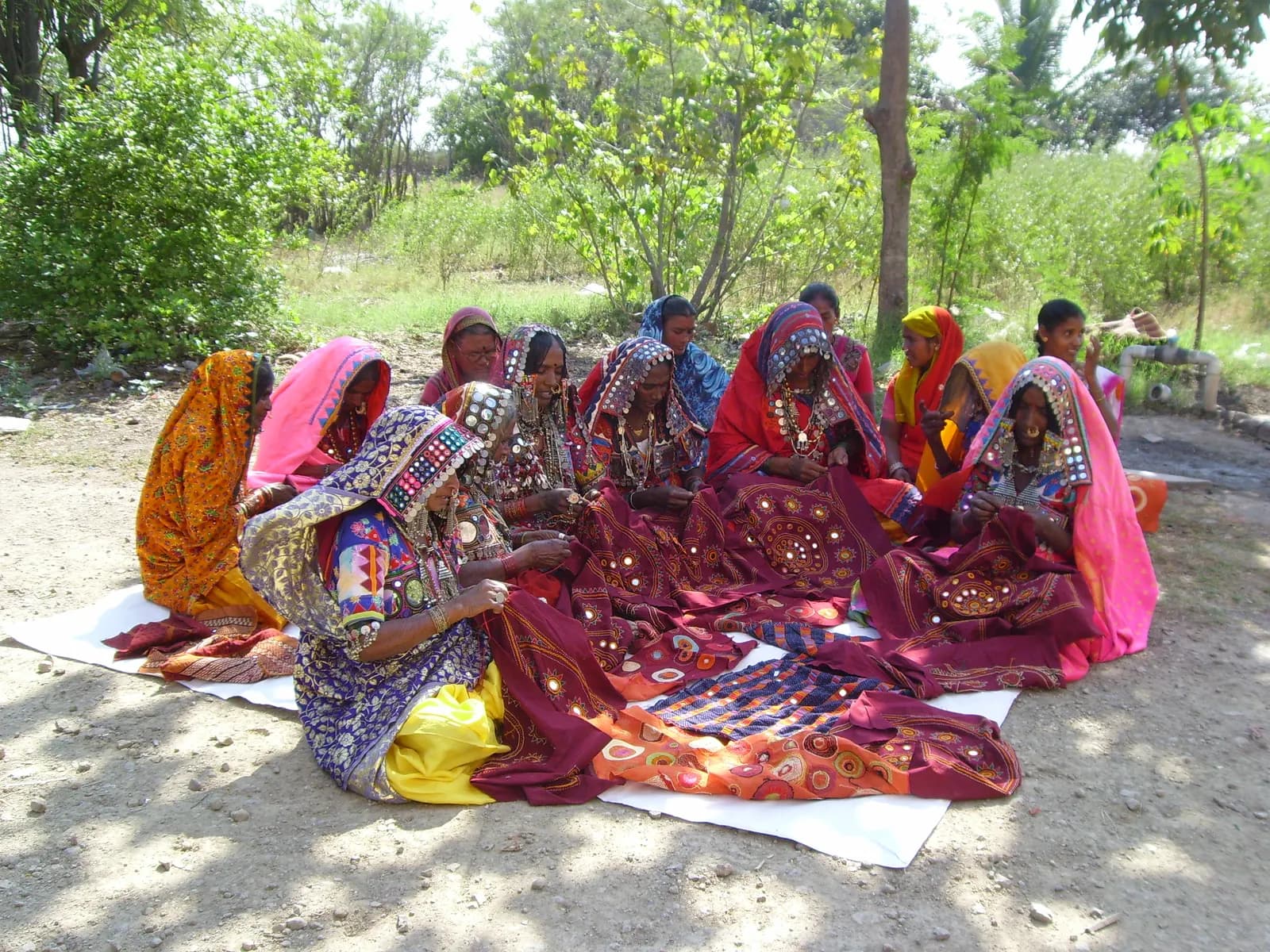
Udyogini supports self-employment mainly in trade and services, along with small home-based manufacturing. Examples given in the scheme description include book-binding and notebook making, chalk and crayon making, jam, jelly and pickle making, papad making, saree and embroidery work, printing and dyeing of cloth and woollen weaving. Banks and CDPOs routinely see tailoring units, beauty parlours, tiffin and mess services, provision stores, flour mills, dairy-linked activities, photocopy and DTP shops, and bangle or fancy stores.
Some websites print a list of exactly 88 activities. We couldn't find that list on an official source, and in practice the test is not whether your activity appears on a list but whether the bank and the selection committee think it is viable at your location. A beauty parlour on a street with five others will be questioned; one in a growing residential layout with no competition will look stronger.
Documents you need
KSWDC lists a short set of documents, but banks add their own loan paperwork. Keep both sets ready before you visit the CDPO.
Documents for an Udyogini application
0/9The project report is what most applications fail on. It doesn't need to be long. On two or three pages, show what you will sell, who your customers are, what the machines and stock cost (with quotations), monthly expenses such as rent and electricity, expected monthly sales and how the EMI will be paid. Our business plan generator can help you produce one.
How to apply, step by step
The application moves through three offices: the taluk CDPO (Child Development Project Officer) of the Women and Child Development Department, a district selection committee, and the bank. Knowing this order saves wasted trips.
Applying for the Udyogini scheme
- 1
Get the form from the CDPO or KSWDC office
KSWDC — UdyoginiForms are available at the taluk CDPO and the district Deputy Director's office of Women and Child Development, and the scheme details are on the KSWDC website. Ask whether your district is currently accepting applications.
- 2
Prepare your project and documents
Get the income and caste certificates from the tahsildar, quotations for machines and stock, and a short project report.
- 3
Submit to the CDPO
The CDPO checks eligibility, may visit your proposed business site, and forwards the application to the district selection committee.
- 4
District selection committee
The committee — officials of Women and Child Development, the Lead District Manager, bankers and others — selects applicants within the district's target and sends them to banks.
- 5
Bank appraisal and sanction
The bank or KSFC branch appraises your project and sanctions the loan, then asks KSWDC to release the subsidy.
- 6
Training and disbursement
Selected women may be asked to attend a short Entrepreneurship Development Programme before the money is released. The loan is usually paid to the supplier for machines or equipment.
Some banks let you start the loan application online on their own websites, and myScheme describes an online route in which the CDPO examines applications, verifies the site and forwards them to the selection committee. Either way, the subsidy decision rests with the district selection process, so register with your CDPO even if you start at the bank. If an agent offers to apply for you "online" for a fee, don't pay — the scheme has no application fee.
Targets, waiting and why applications get rejected
The biggest practical limit on Udyogini is money. KSWDC allocates a physical and financial target to each district every year, based on the state budget. When more eligible women apply than the target allows, the rest are asked to wait. A study by the Karnataka government's own Fiscal Policy Institute found that in Bengaluru Urban district in 2015-16, banks sanctioned 1,767 of 3,980 applications — about 44% — largely because subsidy funds ran short. The same study found unspent subsidy sitting in some district offices while others ran out, which is why one district may still be accepting applications when the next has closed.
Common reasons applications fail, and the fix for each:
Income certificate above the limit. The tahsildar's certificate is for the whole family. If it shows ₹1.6 lakh, you are out for the general category, however small your own earnings are.
Credit history. The bank checks bureau records. An unpaid gold loan, a microfinance default or a co-borrower's overdue loan can block sanction. Clear it and get a closure letter before you apply.
Weak project. A report with no quotations, unrealistic sales or no plan for rent is often sent back. Price every item and show modest, believable sales.
Applying after the district target is filled. Ask the CDPO about the timing and be ready with documents when applications open, rather than applying late in the financial year.
Expansion instead of a new venture. The scheme is meant to help women start self-employment. If you already run the business, ask whether you can still apply, or consider a Mudra loan instead.
Where your Udyogini file goes
Step 1
CDPO (taluk)
Step 2
District selection committee
Step 3
Bank / KSFC branch
Step 4
KSWDC releases subsidy
to the bank
Step 5
Loan disbursed
After the loan: what the scheme expects from you
Getting the money is only half of it. The scheme rules studied by the Fiscal Policy Institute required the enterprise to display a board saying it was set up with KSWDC support under Udyogini, and the CDPO to hold a meeting of beneficiaries every six months, with bank representatives present, to sort out delays in disbursement or repayment. Your district may follow these practices differently today, but expect the CDPO or a bank officer to visit and check that the machines and stock you bought are actually in use. If they aren't, the subsidy can be recovered.
Repay on time from the first instalment. The subsidy is meant to be adjusted against a loan that is performing; a loan that falls overdue can lose the benefit, and a default stays on your credit record for years, blocking future loans for you and anyone you co-sign for. If sales are slow in the first few months, talk to the branch before you miss an EMI — banks can sometimes reschedule a micro loan that is still standard.
Keep simple records from day one: a cash book, purchase bills and a bank account used only for the business. These records are what the bank will ask for when you want a second, larger loan — for instance a Mudra Kishore loan to add more machines once the Udyogini loan is repaid. Register the business on Udyam as soon as it starts; it is free, and it opens the door to priority-sector lending, collateral-free loans and government purchase preferences. Most Udyogini-sized units will be far below the GST registration threshold, but check the rule for your activity before you start selling to businesses or online.
If you live outside Karnataka
There is no Udyogini scheme to apply for in Tamil Nadu, Telangana, Maharashtra or other states, even though many search results suggest otherwise. Women there have stronger options through central schemes that work in every state.
Options for women entrepreneurs outside Karnataka
| Scheme | Amount | What you get | Where to apply |
|---|---|---|---|
Mudra (PMMY) | Up to ₹20 lakh | Collateral-free loan, no subsidy | Any bank, MFI or NBFC; JanSamarth |
PMEGP | Projects up to ₹50 lakh (mfg) | Subsidy 25%–35% for women | KVIC PMEGP portal, DIC |
CGTMSE-backed loan | Up to ₹10 crore | 90% guarantee instead of property | Any member bank or NBFC |
State women's corporation schemes | Varies by state | Subsidy or low-cost loan | State WDC / District Industries Centre |
Mudra (PMMY)
- Amount
Up to ₹20 lakh
- What you get
Collateral-free loan, no subsidy
- Where to apply
Any bank, MFI or NBFC; JanSamarth
PMEGP
- Amount
Projects up to ₹50 lakh (mfg)
- What you get
Subsidy 25%–35% for women
- Where to apply
KVIC PMEGP portal, DIC
CGTMSE-backed loan
- Amount
Up to ₹10 crore
- What you get
90% guarantee instead of property
- Where to apply
Any member bank or NBFC
State women's corporation schemes
- Amount
Varies by state
- What you get
Subsidy or low-cost loan
- Where to apply
State WDC / District Industries Centre
A Mudra loan gives non-farm micro businesses up to ₹20 lakh without collateral, through any bank, small finance bank, microfinance institution or NBFC. Most first-time women borrowers start in the Shishu or Kishore band.
PMEGP is the closest central equivalent to Udyogini because it adds a subsidy to a bank loan for a new unit. Women count as a special category, so they put in only 5% of the project cost and get a subsidy of 25% in urban areas or 35% in rural areas, on projects up to ₹50 lakh in manufacturing and ₹20 lakh in services.
For a regular bank loan, women-owned micro and small enterprises get 90% guarantee cover under CGTMSE, the highest of any category, which makes banks more willing to lend without property. The Stand-Up India scheme for women and SC/ST founders of a first enterprise lapsed on 31 March 2025 and is awaiting a redesigned version, so check its status before relying on it. Finally, ask your state's women's development corporation and the District Industries Centre — several states run their own subsidy schemes for women under different names.
Official links
- KSWDC — Udyogini SchemeLoan range, subsidy, eligibility, documents
- myScheme — Udyogini Scheme (Karnataka)Eligibility check and application process
- Karnataka Women & Child Development — Fiscal Policy Institute studyHow selection and subsidy release work
- Udyam Registration portalFree MSME registration for your new unit
- JanSamarthApply for Mudra and PMEGP if you are outside Karnataka
What to do next
If you live in Karnataka, visit your taluk CDPO this month to ask whether applications are open, get your income certificate from the tahsildar, and prepare a one-page project with quotations. If you live elsewhere, compare Mudra and PMEGP for your project size, and register the business on Udyam so you can use the women's CGTMSE cover. Our guide to MSME loans explains the application routes and interest rates in more detail.
This is general information, not financial or legal advice — confirm the current terms with KSWDC, your CDPO or your bank.
Frequently asked questions
No. Udyogini is a Government of Karnataka scheme run by the Karnataka State Women's Development Corporation (KSWDC) under the Women and Child Development Department. The government's myScheme portal lists it as a state scheme for Karnataka only. Many bank and loan-app blogs describe a nationwide Udyogini loan, but we found no central scheme of that name on any government portal.
The bank loan, or unit cost, ranges from ₹1 lakh to ₹3 lakh. KSWDC pays a subsidy on it: 30% (up to ₹90,000) for general and special-category women, and 50% for SC/ST women. The bank decides the actual loan amount after appraising your project.
Women aged 18 to 55 years who are permanent residents of Karnataka, with annual family income below ₹1.5 lakh (general and special category) or ₹2 lakh (SC/ST). myScheme notes that widows and women with disabilities have no income limit. You must not be a defaulter with any bank, and the activity should be in trade, services or small manufacturing.
Partly. Some participating banks accept loan applications online, and KSWDC publishes the scheme details on its website. But selection still runs through the Child Development Project Officer (CDPO) and a district selection committee, and most applicants submit the form and documents at the CDPO or KSWDC district office and the bank branch. Ask the CDPO when your district is accepting applications.
There is no single national last date. KSWDC allocates a yearly target and subsidy budget to each district, and applications are invited when funds are available. Once a district's target is met, further applications usually wait for the next year. Check with your taluk CDPO or the KSWDC district office for the current window.
Use central schemes open in every state: a Mudra loan up to ₹20 lakh without collateral, PMEGP with a subsidy of up to 35% for women in rural areas, and CGTMSE-backed bank loans with 90% cover for women-owned units. Your state's women's development corporation or District Industries Centre may also run its own subsidy scheme.
Sources & verification
Figures on this page were checked against the sources below when it was last reviewed on 7 October 2026. Each rate and limit is stored once with its own official source and review date, and official update channels are monitored daily so changes are picked up. How we verify
- 1.Udyogini Scheme — Karnataka State Women's Development Corporation — Karnataka State Women's Development Corporation · accessed 7 October 2026
- 2.myScheme — Udyogini Scheme (Karnataka, Women and Child Development Department) — Government of India — myScheme (MeitY / NeGD) · accessed 7 October 2026
- 3.Budgetary Allocation and Implementation of the Udyogini Scheme (Fiscal Policy Institute, Government of Karnataka) — Fiscal Policy Institute, Bengaluru · accessed 7 October 2026
- 4.Udyogini (NGO) — About — Udyogini · accessed 7 October 2026
- 5.Master Direction – Lending to MSME Sector (updated 9 February 2026) — Reserve Bank of India · accessed 7 October 2026
- 6.CGTMSE — Scheme Document CGS-I (updated as on 1 April 2026) — CGTMSE · accessed 7 October 2026
- 7.Pradhan Mantri Mudra Yojana loan limit raised to ₹20 lakh — PIB — Ministry of Finance · accessed 7 October 2026
MSMETOOLS is an independent platform and is not affiliated with any government agency, ministry or department.
Tools for this
EMI Calculator
Calculate loan EMIs for business and personal loans.
Business Plan Generator (US)
Create a professional business plan for US investors and banks.
Startup Cost Calculator
Estimate how much capital you need to launch.
Related guides
 PMEGP Loan 2026: Subsidy up to 35%, Eligibility & ApplyRead guide
 Stand-Up India Loan 2026: Eligibility, Limits & StatusRead guide
 Annapurna Scheme 2026: Loan, West Bengal Yojana & FactsRead guide
 PM Vishwakarma Yojana 2026: Benefits, Loan & How to ApplyRead guide
Official links open the government site in a new tab.