 HR, payroll & labour
Minimum Wages in Dadra & Nagar Haveli and Daman & Diu (2026): Daily Rates with Special Allowance
DNH & DD minimum wages 2026: ₹501.50 a day unskilled, ₹512.50 semi-skilled, ₹522.50 skilled from 1 April 2026, special allowance, monthly pay and examples.
 Edited by Sumeet YadavFounder & editor, MSMETOOLS · fact-checked against official sources
- Rates in force
- from 1 April 2026
- Last checked
- Against the official source on 12 October 2026
- Next revision due
- 1 October 2026 (not yet notified)
October 2026 order not yet published. The rates in force from 1 April 2026 continue to apply. When the new order is notified, the increase is normally payable with arrears from 1 October 2026.
Contents (13)
- 1. How the UT's minimum wages work
- 2. One rate for every employment
- 3. Choosing the right skill grade
- 4. Monthly pay, hours and overtime
- 5. The special allowance cycle and arrears
- 6. The draft Code on Wages (DNH&DD) Rules, 2026
- 7. Central-sphere work in the UT
- 8. Worked payroll examples in ₹
- 9. Contract and migrant workers
- 10. Employer duties under the Code on Wages
- 11. Common mistakes employers in the UT make
- 12. What happens if you underpay
- 13. What to do next
If you run a plastics unit in a Silvassa industrial estate, a pharmaceutical plant in Dabhel, a beach hotel in Devka or a restaurant near Diu Fort, the Labour Department of the merged union territory sets the least you can pay. Since 2023 one set of rates has applied across Dadra & Nagar Haveli, Daman and Diu, made up of a basic rate fixed in August 2023 and a special allowance revised every six months. This guide gives the current figures from the April 2026 declaration, explains how the allowance moves and why its late arrival creates arrears, converts daily rates into monthly and hourly pay, covers the July 2026 draft wage rules and works through payroll in rupees.
Quick answer
From 1 April 2026, the minimum wage in every scheduled employment in Dadra & Nagar Haveli and Daman & Diu is ₹501.50 a day for unskilled work, ₹512.50 a day for semi-skilled and ₹522.50 a day for skilled work, under the Labour Department's declaration of 30 April 2026.
Each rate = basic (₹441 / ₹452 / ₹462) + special allowance of ₹60.50 a day
The allowance rose by ₹12 a day from 1 April 2026; basic rates are unchanged since August 2023
About ₹13,039 a month for unskilled work on 26 days
Same rates in Silvassa, Daman and Diu; no October 2026 declaration as of 12 October 2026
How the UT's minimum wages work
Dadra & Nagar Haveli and Daman & Diu were merged into one union territory in January 2020. The two parts had separate wage notifications until the Labour Department, Daman, fixed basic rates for all scheduled employments across the merged UT under notification No. LE/LI/DMN/MWA-3(I)/2023/349 dated 18 August 2023. On top of that basic, it declares a special allowance based on the cost-of-living index, revised from 1 April and 1 October.
The current declaration, No. LE/LI/DMN/MWA-3(II)/2026 dated 30 April 2026, was issued in the name of the Administrator and signed by the Commissioner-cum-Secretary (Labour). It raises the daily special allowance by ₹12 from 1 April 2026, on top of the increases declared on 28 October 2024, 9 May 2025 and 25 November 2025.
| Skill grade | Basic a day | Special allowance | Total a day from 1 Apr 2026 | ×26 days | ×30 days |
|---|---|---|---|---|---|
| Unskilled | ₹441.00 | ₹60.50 | ₹501.50 a day | ₹13,039 | ₹15,045 |
| Semi-skilled | ₹452.00 | ₹60.50 | ₹512.50 a day | ₹13,325 | ₹15,375 |
| Skilled | ₹462.00 | ₹60.50 | ₹522.50 a day | ₹13,585 | ₹15,675 |
The rates still sit under the Minimum Wages Act, 1948 framework. The Code on Wages has been in force since 21 November 2025, and notifications made under the old Act continue until the UT fixes new rates under the Code.
Dadra & Nagar Haveli and Daman & Diu minimum wage calculator
A full month is 26 working days; the daily rate is the monthly rate ÷ 26 where the order fixes only a monthly figure.
Overtime is paid at twice the ordinary rate (daily rate ÷ 8 hours). Arrears assume the same shortfall in every month since the rates took effect on 1 April 2026; a claim under the Code on Wages must generally be filed within 3 years. Estimates only — check the order for your employment.
One rate for every employment
The declaration applies "in respect of all the employments in the schedule" across the union territory. So the three grades above cover factory workers, shop staff, hotel and restaurant employees, construction workers, security guards, domestic workers, drivers and every other scheduled employment. There are no separate schedules by trade, as there are in Gujarat or Maharashtra across the border.
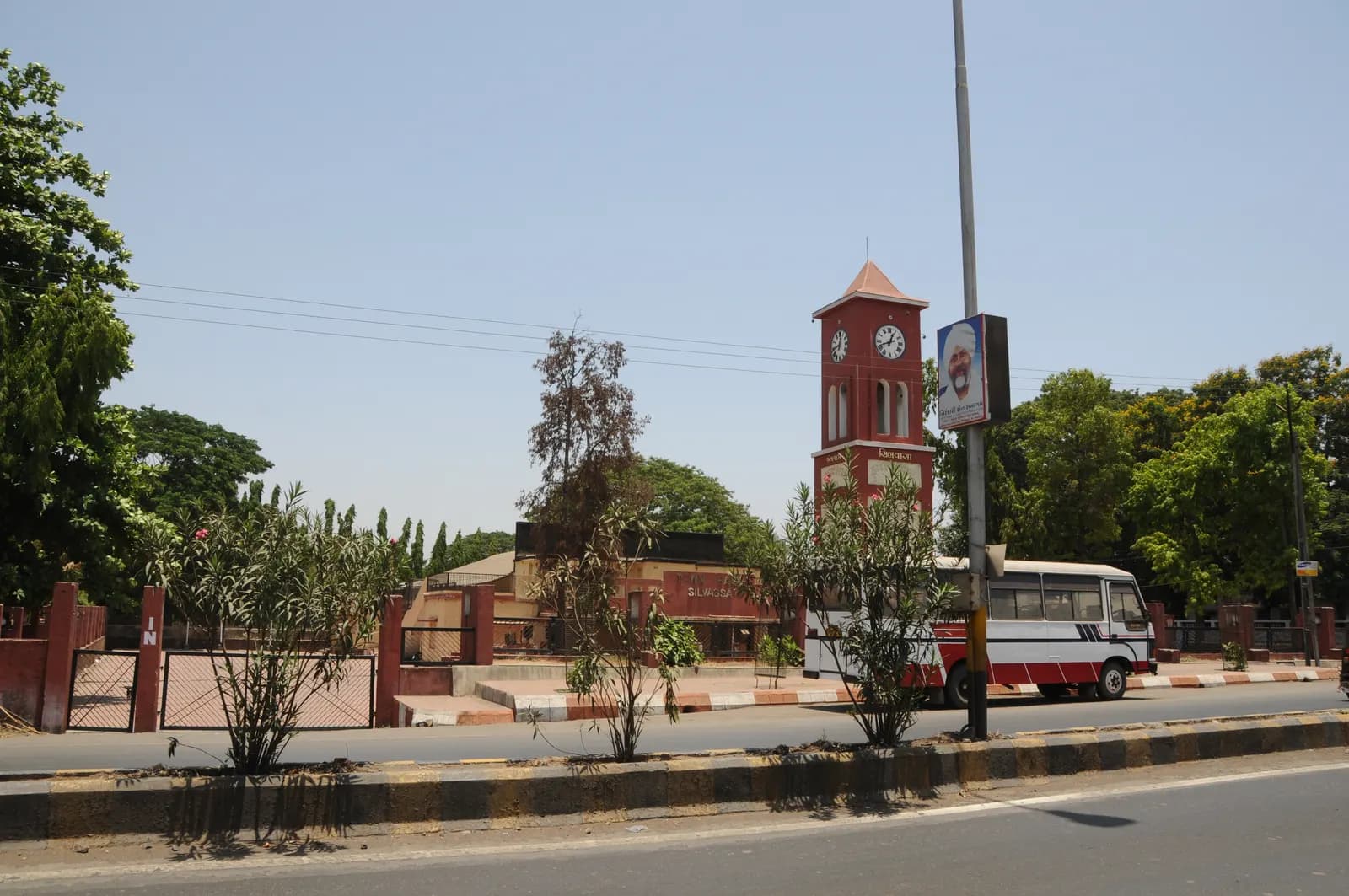
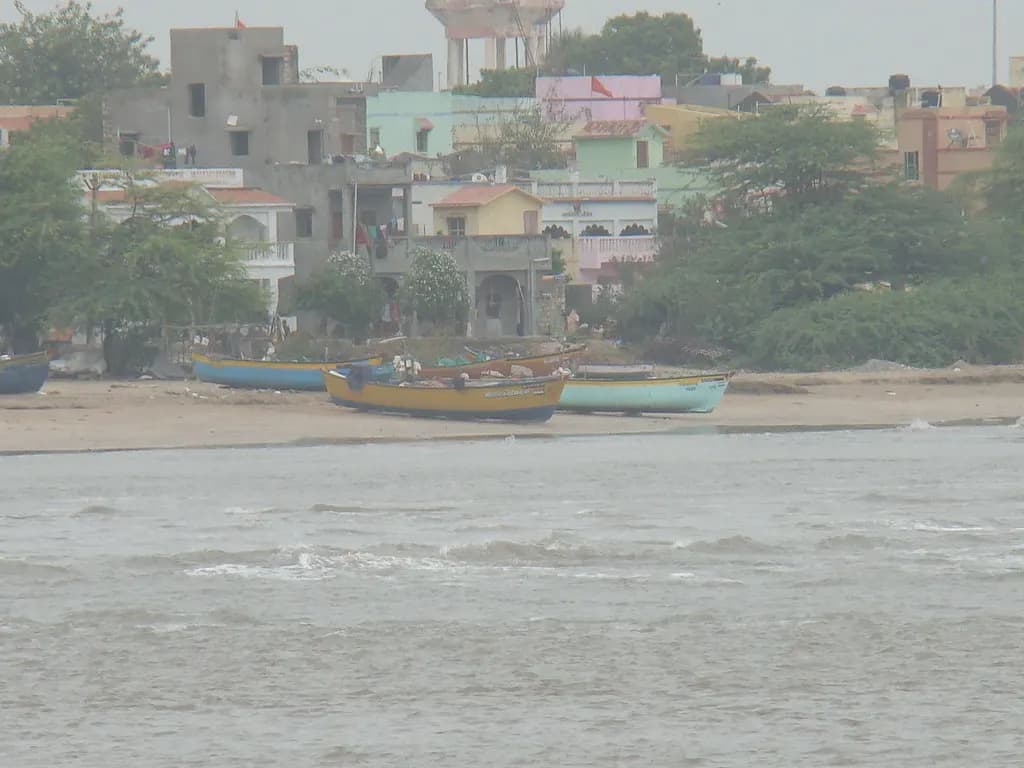
That simplicity is useful in a territory that is mostly industrial. Silvassa, Dadra, Naroli, Khadoli and the other estates of Dadra & Nagar Haveli host thousands of units in plastics, textiles and yarn, pharmaceuticals, chemicals, packaging and engineering. Daman's Kachigam, Dabhel, Bhimpore and Somnath areas are similar. Diu runs more on tourism and fishing. Wherever a worker is, the only question is the grade.
The rates are also the same in all three districts. A machine helper in Silvassa and a hotel helper in Diu are both owed at least ₹501.50 a day.
Household employers are not exempt. A family in Silvassa or Daman that employs a full-time cook, cleaner or driver pays the same grade-based minimum as a factory, and a part-time domestic worker is owed the hourly equivalent — the daily rate divided by eight, times the hours worked. Three hours of cleaning a day at the unskilled rate comes to about ₹188 a day, or roughly ₹4,890 for 26 days.
Choosing the right skill grade
With one rate table, the grade decides everything, and the gaps between grades are small — ₹11 a day from unskilled to semi-skilled and ₹10 more to skilled. The usual definitions apply:
- Unskilled — simple work needing little or no skill or experience: helpers, loaders, packers, sweepers, cleaners, watchmen, kitchen helpers, housekeeping staff.
- Semi-skilled — some skill gained on the job, done under a skilled worker's guidance, including supervising unskilled workers: machine helpers, assistant operators, waiters, store helpers, experienced security guards.
- Skilled — skill gained through experience, apprenticeship or a technical institute, with work calling for judgement: machine operators, fitters, electricians, welders, masons, carpenters, cooks, drivers, clerks and accountants.
Because the difference between unskilled and skilled is only ₹21 a day, misgrading rarely saves much money but can still lead to claims for three years of arrears. If in doubt, use the higher grade. Record each worker's grade in the appointment letter and wage register, and move them up when their work changes.
Monthly pay, hours and overtime
The declaration fixes daily rates. To convert to a month, most payroll teams multiply by 26 working days, giving ₹501.50 a day × 26 = ₹13,039 for unskilled work. The UT's draft Code on Wages rules use the same ×26 method. If you pay a flat monthly salary that covers the weekly rest day, 30 days at the daily rate — ₹15,045 for unskilled work — is the more generous reading and removes any argument.
For an hourly rate, divide by eight: about ₹62.69 for unskilled work and ₹65.31 for skilled. Overtime under the Code on Wages is twice the normal rate of wages, so roughly ₹125.38 and ₹130.63 an hour. The draft rules set a normal day of eight hours with rest intervals of up to an hour, no more than 48 hours a week, and a spread-over of no more than ten and a half hours. Factories must also respect the working-hour and overtime limits under the Occupational Safety, Health and Working Conditions Code, which replaced the Factories Act along with the other codes.
DNH & DD minimum wage at a glance (2026)
₹501.50 a day
Unskilled, per day
from 1 Apr 2026
₹522.50 a day
Skilled, per day
₹60.50 a day
Special allowance
+₹12 from April 2026
2×
Overtime rate
The special allowance cycle and arrears
The special allowance tracks the cost-of-living index and is revised from 1 April and 1 October. The declarations arrive after the date they apply from: the October 2024 one on 28 October 2024, the April 2025 one on 9 May 2025, the October 2025 one on 25 November 2025 and the April 2026 one on 30 April 2026.
Working back from the April 2026 declaration, which raised the allowance by ₹12 to ₹60.50, the allowance from 1 October 2025 was ₹48.50. That made the October 2025 rates ₹489.50 a day for unskilled work, ₹500.50 for semi-skilled and ₹510.50 for skilled.
Late declarations create arrears. An employer who kept paying ₹489.50 until the April 2026 declaration appeared at the start of May owed ₹12 a day for every day worked in April. Last year's October revision came almost two months late, so a business that waited for it owed nearly two months of arrears in one go. The simplest approach is to set aside an estimate from each 1 April and 1 October, then settle the exact difference with the next payroll once the declaration is out. Deduct EPF and ESI on arrears as on ordinary wages.
When we checked the Labour Department's document list on 12 October 2026, no declaration for 1 October 2026 had been posted. Expect one in October or November 2026, applying from 1 October.
DNH & DD minimum wages, 2023–26
18 Aug 2023
Basic rates fixed for all employments across the merged UT
1 Oct 2024
Special allowance declared (notice of 28 Oct 2024)
1 Apr 2025
Special allowance revised (notice of 9 May 2025)
1 Oct 2025
Allowance ₹48.50 — ₹489.50 unskilled (notice of 25 Nov 2025)
1 Apr 2026
Allowance +₹12 to ₹60.50 — ₹501.50 a day unskilled (notice of 30 Apr 2026)
1 Oct 2026
Next revision due — not declared as of 12 October
The draft Code on Wages (DNH&DD) Rules, 2026
The UT first put draft wage rules on its website in November 2023. On 20 July 2026, after the Code was brought fully into force, the Labour Department issued revised draft rules — the Dadra and Nagar Haveli and Daman and Diu Code on Wages Rules, 2026, notification No. LE/LI/DMN/Wages/210543/2026/219 — with 45 days for objections from the date the Gazette copies become available. Objections go to the Commissioner-cum-Secretary (Labour) at Vidhyut Bhawan, Kachigam, Nani Daman, or by email.
Once final, the rules will replace four sets of old rules: the Dadra & Nagar Haveli Minimum Wages Rules, 1970 and Payment of Wages Rules, 1977, and the Goa, Daman & Diu Payment of Wages Rules, 1964 and Minimum Wages Rules, 1975. Among other things, the draft would:
- divide a daily rate by eight for an hourly rate and multiply by 26 for a monthly one;
- ask for the dearness allowance to be computed before 1 April and 1 October each year from the Labour Bureau's consumer price index for industrial workers — the same half-yearly rhythm as now;
- let hotels, restaurants, tea stalls, halwais, liquor and beverage shop ahatas, and households employing domestic workers pay ₹1,765 less than the minimum where they provide two meals, tea twice and lodging, or ₹500 less where they provide meals and tea without lodging;
- fix an eight-hour normal day and a 48-hour week.
The meal-and-lodging deduction would be a real change for Diu's hotels and for households with live-in domestic help. It is only a draft: until the final rules are notified, pay the full cash rate.
Central-sphere work in the UT
If your workers are employed by or for a central government office, a bank, the airport at Daman, a central public sector undertaking or the Coast Guard station, the central minimum wages apply instead of the UT rates. The Centre's area annexure doesn't list Silvassa, Daman or Diu in Area A or B, so the whole UT is Area C.
From 1 October 2026 that means ₹565 a day for unskilled construction, sweeping and cleaning, ₹661 for semi-skilled work, ₹794 for skilled work and unarmed guards, and ₹933 for highly skilled work and armed guards. An unskilled cleaner on a bank contract in Daman is owed ₹63.50 a day more than the UT rate. Central rates also move every 1 April and 1 October.
Worked payroll examples in ₹
Example 1 — a packing helper in a Silvassa plastics unit. Unskilled, 26 days: 26 × ₹501.50 = ₹13,039. ESI (wages below ₹21,000/month): employee 0.75% ≈ ₹97.79, employer 3.25% ≈ ₹423.77. EPF at 12% of wages: ₹1,564.68 each side. Net pay ≈ ₹11,376.53.
Example 2 — a machine operator in Daman with overtime. Skilled: ₹522.50 a day. He works 26 days and ten hours of overtime. Ordinary pay: ₹13,585. Overtime: ₹522.50 ÷ 8 × 2 = ₹130.63 an hour, ten hours ≈ ₹1,306. Total about ₹14,891.
Example 3 — April 2026 arrears. A Dabhel unit paid an unskilled worker ₹489.50 a day for 26 days in April 2026 before the declaration came out. Shortfall: ₹12 × 26 = ₹312, payable with the next wages.
Example 4 — a waiter at a Diu restaurant. Semi-skilled: ₹512.50 a day a day, or ₹13,325 a month on 26 days. If the restaurant provides meals, the full cash wage is still due under the current rules; the draft rules' ₹500 deduction applies only once they are final.
Example 5 — a guard on a bank contract in Silvassa. Central-sphere work, Area C. An unarmed guard gets the skilled rate of ₹794 a day — ₹20,644 a month on 26 days.
Minimum-wage check for a DNH & DD employee
Step 1
Central-sphere work? → central Area C rates
Step 2
Pick the grade
unskilled, semi-skilled or skilled
Step 3
Daily rate × days worked (×26 for a month)
Step 4
Add overtime at 2×
Step 5
1 April / 1 October
reserve for the allowance increase
Step 6
Pay arrears when the declaration arrives
Contract and migrant workers
Most factory labour in the UT comes through contractors, and much of it from other states — Uttar Pradesh, Bihar, Odisha, Jharkhand and neighbouring Gujarat and Maharashtra. Those workers are owed UT rates for work done in the UT, whatever the contractor's home state. Contract workers must get the same rates as direct employees doing the same work, and the principal employer — the factory or hotel that hires the contractor — can be held answerable if the contractor pays less.
Ask contractors for wage registers, bank-transfer proof and ESI and EPF challans every month, and write a clause into the contract that passes on each new special allowance from its effective date. Units near the borders with Vapi or Valsad should not assume Gujarat rates apply to a worker who lives in Gujarat but works in Daman or Silvassa; the place of work decides.
Employer duties under the Code on Wages
- Pay on time — monthly wages before the end of the 7th day of the next month; full and final settlement within 2 working days.
- Deductions — no more than 50% of wages of wages in total.
- Overtime — twice the normal rate of wages.
- Records — keep employee, wage and attendance registers and give a wage slip each period; see our salary slip guide.
- Benefits — ESI and EPF come on top of the minimum.
DNH & DD minimum wage checklist
0/7Common mistakes employers in the UT make
Using old Daman & Diu or DNH rates. Separate rate lists ended with the 2023 notification; one set now covers the whole UT.
Paying only the basic. The special allowance is part of the minimum. Paying ₹441 to an unskilled worker leaves them ₹60.50 a day short.
Waiting for the declaration. The rates apply from 1 April and 1 October, not from the date the notice is signed.
Applying the draft meal deduction now. It isn't law until the final rules are notified.
Using UT rates on central contracts. Bank, airport and central PSU work pays central Area C rates.
What happens if you underpay
A worker, a group of workers or a union can claim unpaid minimum wages under the Code on Wages within 3 years, and the authority can award the shortfall plus compensation of up to 10 times the claim. Paying below the minimum is an offence with a fine of up to ₹50,000 for a first offence and up to ₹1 lakh fine and/or 3 months' imprisonment for a repeat. The Labour Department in Daman and the Labour Enforcement Officers and Labour Inspectors for Dadra & Nagar Haveli, Daman and Diu handle complaints and inspections.
What to do next
Check each worker's grade and pay against the April 2026 table, clear any arrears from April, and set aside a reserve for the October 2026 allowance. Then issue wage slips with our free salary slip generator, read our guides to the four labour codes and the Code on Wages, and compare our Gujarat and Maharashtra pages if you also employ people across the border.
This is general information, not legal or tax advice — confirm on the official source or with a professional.
Frequently asked questions
From 1 April 2026, every scheduled employment in the union territory pays at least ₹501.50 a day for unskilled work, ₹512.50 a day for semi-skilled and ₹522.50 a day for skilled work. Each figure is a basic rate plus a special allowance of ₹60.50 a day, declared by the Labour Department on 30 April 2026.
The UT fixes daily rates. Multiplied by 26 working days, the unskilled rate gives ₹13,039 a month, semi-skilled ₹13,325 and skilled ₹13,585. That is also the method in the UT's draft Code on Wages rules. If you pay for 30 days, the unskilled figure is ₹15,045.
Yes. Since the August 2023 notification the basic rates have been fixed for the whole merged union territory, and the special allowance declarations apply to all employments in it. A worker in Silvassa, Dadra, Daman or Diu gets the same rate for the same grade.
Twice a year, from 1 April and 1 October, based on the cost-of-living index. Declarations usually arrive a few weeks later: the April 2026 one was signed on 30 April and the October 2025 one on 25 November 2025. No October 2026 declaration had been posted by 12 October 2026.
From 1 October 2025 the special allowance was ₹48.50 a day — the April 2026 declaration raised it by ₹12 to ₹60.50. So the unskilled rate was ₹489.50, semi-skilled ₹500.50 and skilled ₹510.50 a day.
Only for central-sphere work — central government offices, banks, the airport at Daman, central public sector undertakings and their contractors. None of the UT's towns is in Area A or B, so Area C applies: ₹565 a day for unskilled construction, sweeping and cleaning from 1 October 2026.
Sources & verification
Figures on this page were checked against the sources below when it was last reviewed on 12 October 2026. Each rate and limit is stored once with its own official source and review date, and official update channels are monitored daily so changes are picked up. How we verify
- 1.Declaration of Special Allowance under the Minimum Wages Act, 1948 — No. LE/LI/DMN/MWA-3(II)/2026 dated 30-04-2026 (w.e.f. 1 April 2026) — Department of Labour & Employment, UT Administration of Dadra & Nagar Haveli and Daman & Diu · accessed 12 October 2026
- 2.DNH & DD Administration — Labour & Employment documents — UT Administration of Dadra & Nagar Haveli and Daman & Diu · accessed 12 October 2026
- 3.Draft Code on Wages (DNH&DD) Rules, 2026 — No. LE/LI/DMN/Wages/210543/2026/219 dated 20-07-2026 — Department of Labour & Employment, UT Administration of DNH & DD · accessed 12 October 2026
- 4.Labour Bureau orders dated 30 September 2026 — revised VDA and central minimum wages w.e.f. 01.10.2026, with Area A/B/C annexure — Labour Bureau, Chandigarh, Ministry of Labour & Employment (published on clc.gov.in) · accessed 12 October 2026
- 5.The Code on Wages, 2019 (No. 29 of 2019) — India Code, Legislative Department · accessed 12 October 2026
- 6.Government announces implementation of the four Labour Codes (21 Nov 2025) — PIB — Ministry of Labour & Employment · accessed 12 October 2026
- 7.Daman and Diu Minimum Wages Revised from 01 April 2026 — ComplianceBook · accessed 12 October 2026
- 8.Dadra & Nagar Haveli and Daman & Diu — Minimum Wages Increased (2026) — Chheda Consultancy Services · accessed 12 October 2026
MSMETOOLS is an independent platform and is not affiliated with any government agency, ministry or department.
Tools for this
Related guides
 Minimum Wages in Gujarat 2026: Zone Rates & New VDARead guide
 Minimum Wages in Maharashtra 2026: Zone Rates & AllowanceRead guide
 Minimum Wages in Goa 2026: Zone A & B Rates with VDARead guide
 New Labour Codes 2026: All 4 Codes Explained for EmployersRead guide
Official links open the government site in a new tab.