 HR, payroll & labour
Minimum Wages in Gujarat (2026): Zone-wise Rates, Latest VDA and Employer Rules
Gujarat minimum wages 2026: new VDA of ₹72.50 a day from 1 October, Zone I and II daily and monthly rates, hourly and overtime pay, payroll examples and rules.
 Edited by Sumeet YadavFounder & editor, MSMETOOLS · fact-checked against official sources
- Rates in force
- 1 October 2026 – 31 March 2027
- Last checked
- Against the official source on 7 October 2026
- Next revision due
- 1 April 2027
Contents (11)
- 1. Gujarat minimum wage rates from October 2026
- 2. Which employments do these rates cover?
- 3. How the special allowance (VDA) is worked out
- 4. Zone I and Zone II: which applies to you?
- 5. Skilled, semi-skilled or unskilled: classifying your staff
- 6. Worked payroll examples in ₹
- 7. Apprentices, contractors and other rules in the notification
- 8. Overtime, hours and payment rules under the Code on Wages
- 9. Common mistakes Gujarat employers make
- 10. What if a worker is underpaid?
- 11. What to do next
Whether you run a textile unit in Surat, an auto-parts workshop in Rajkot, a restaurant in Ahmedabad or a warehouse near Vadodara, Gujarat's minimum wage is built from two pieces: a daily basic rate fixed by the state government and a special allowance that the Labour Commissioner resets every April and October. The latest reset took effect on 1 October 2026 and was published on 5 October, so many payroll calendars and websites still show the old figure. This guide gives you the rates in force now, taken from the Commissionerate's own documents, with monthly and hourly conversions, ₹ payroll examples and the rules that decide who gets what.
Quick answer
From 1 October 2026 to 31 March 2027, Gujarat's minimum wage for the 46 common scheduled employments is the basic rate plus a special allowance (VDA) of ₹72.50 a day. An unskilled worker in Zone I must get at least ₹524.50 a day (about ₹13,637 a month); in Zone II the floor is ₹513.50 a day.
Skilled workers: ₹546.50 a day in Zone I and ₹534.50 in Zone II
Zone I = municipal corporations, municipalities and urban development authority areas; Zone II = the rest
The special allowance rose by ₹12 a day from ₹60.50 a day, under a declaration dated 5 October 2026
Brick, zari, readymade garments, salt, tobacco/bidi and agriculture get a higher allowance of ₹158.50 a day
Gujarat minimum wage rates from October 2026
The table below combines the basic daily rates fixed by the state's notification of 27 March 2023 (in force from 1 April 2023 for 46 scheduled employments) with the special allowance of ₹72.50 a day declared on 5 October 2026. Gujarat fixes daily rates; the monthly figures multiply by 26, which is the convention the state's payroll trackers use, and the hourly and overtime figures divide the daily rate by an eight-hour day. Those conversions are our own calculations.
| Zone and category | Basic per day | Special allowance per day | Total per day | Per month (× 26) | Per hour (our calc.) | Overtime per hour (2×) |
|---|---|---|---|---|---|---|
| Zone I — skilled | ₹474 | ₹72.50 a day | ₹546.50 | ₹14,209 | ₹68.31 | ₹136.63 |
| Zone I — semi-skilled | ₹462 | ₹72.50 a day | ₹534.50 | ₹13,897 | ₹66.81 | ₹133.63 |
| Zone I — unskilled | ₹452 | ₹72.50 a day | ₹524.50 | ₹13,637 | ₹65.56 | ₹131.13 |
| Zone II — skilled | ₹462 | ₹72.50 a day | ₹534.50 | ₹13,897 | ₹66.81 | ₹133.63 |
| Zone II — semi-skilled | ₹452 | ₹72.50 a day | ₹524.50 | ₹13,637 | ₹65.56 | ₹131.13 |
| Zone II — unskilled | ₹441 | ₹72.50 a day | ₹513.50 | ₹13,351 | ₹64.19 | ₹128.38 |
Notice that the gaps are small. A skilled worker in Zone I earns only ₹22 a day more than an unskilled one, and Zone II rates trail Zone I by ₹10 to ₹12 a day. That compressed structure is one reason Gujarat's floor sits below Maharashtra's and well below Karnataka's, but it also means a wrong skill category costs relatively little to fix. Gujarat does not have a separate highly skilled category in this schedule; supervisors, accountants and mechanics are listed under "skilled" in the annexure.
Gujarat minimum wages at a glance (Oct 2026 – Mar 2027)
₹524.50
Unskilled, Zone I, per day
≈ ₹13,637/month
₹546.50
Skilled, Zone I, per day
≈ ₹14,209/month
₹72.50 a day
Special allowance (VDA)
was ₹60.50 a day
46
Scheduled employments on the common basic rate
Gujarat minimum wage calculator
A full month is 26 working days; the daily rate is the monthly rate ÷ 26 where the order fixes only a monthly figure.
Overtime is paid at twice the ordinary rate (daily rate ÷ 8 hours). Arrears assume the same shortfall in every month since the rates took effect on 1 October 2026; a claim under the Code on Wages must generally be filed within 3 years. Estimates only — check the order for your employment.
Which employments do these rates cover?
The 2023 notification sets one common basic rate for 46 scheduled employments and attaches an annexure that lists, employment by employment, which jobs count as skilled, semi-skilled and unskilled. It begins with automobile repairing workshops and garages, bakeries and the bobbin industry, and runs through the employments most small businesses in the state fall into, including shops and commercial establishments, hotels and restaurants, engineering, plastics, printing, construction and security services. In the garage schedule, for example, mechanics, electricians, cashiers and accountants are skilled; fitters, welders, painters, clerks and drivers are semi-skilled; and helpers, cleaners, watchmen, sweepers and peons are unskilled.
A handful of employments are fixed by separate notifications and are not on the common basic rate:
- Sweeping and cleaning (basic notification of April 2023) and ship breaking (September 2022) — these use their own basic rates but get the same special allowance of ₹72.50 a day.
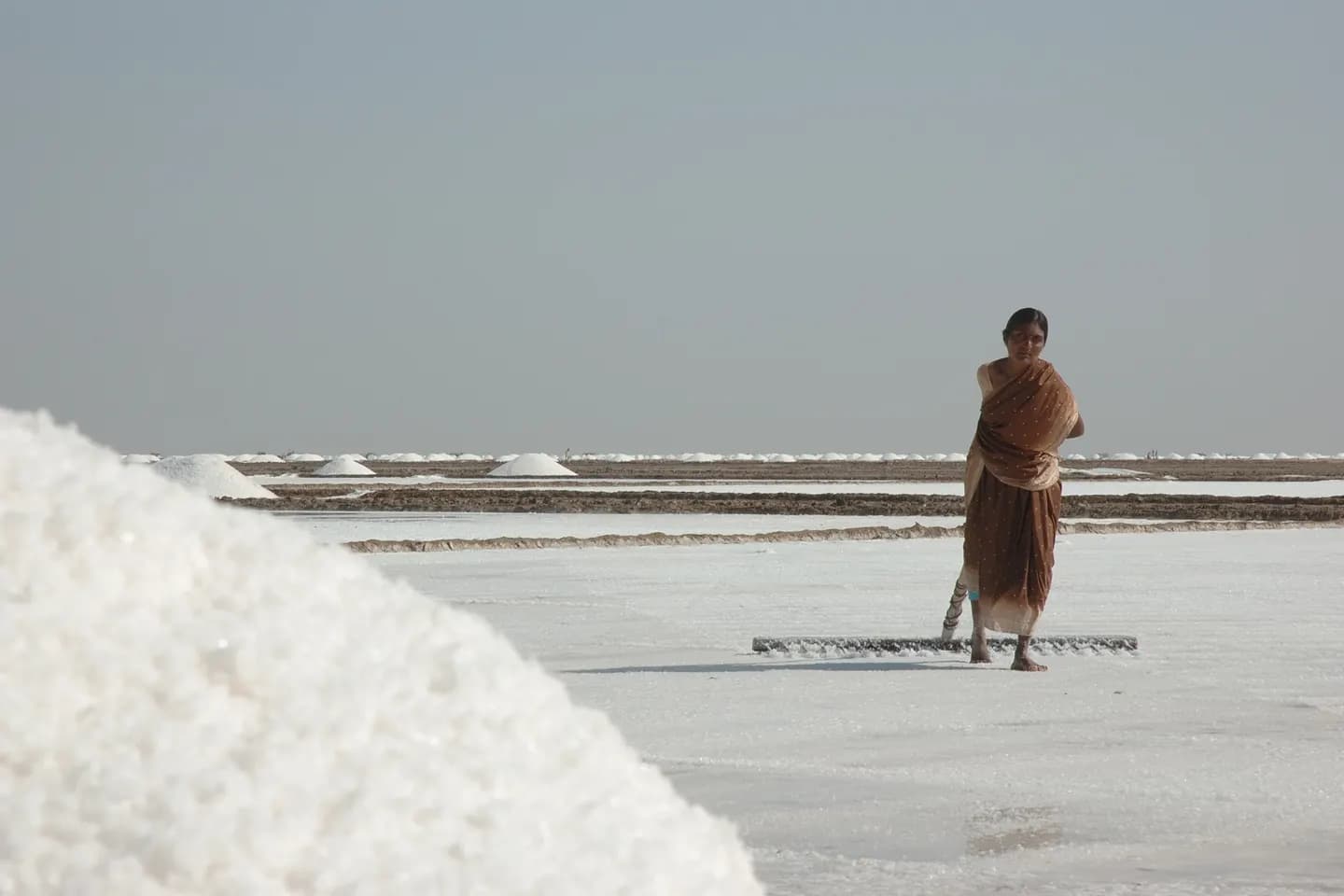
- Brick manufacturing, zari, readymade garments, salt pans, tobacco including bidi making, and agriculture — these have basic rates notified between 2020 and 2021 and get a higher special allowance of ₹158.50 a day from 1 October 2026 (it was ₹146.00 for April–September 2026).
- Sugarcane and agarbatti making have their own notifications listed on the Commissionerate's rates page.
If your business is in one of those, take the basic from its own notification and add the right allowance. Don't apply the 46-employment table.
How the special allowance (VDA) is worked out
Gujarat links the special allowance to a cost of living index. Under the 2023 notification, the competent authority adjusts it every six months, from 1 October and 1 April, using the average index for the six months ending 30 June and 31 December respectively. For every rise of five points above an index of 7270, the allowance goes up by ₹0.20 a day (₹5.20 a month); a fall reduces it at the same rate, but never below the 7270 base. The declarations themselves only state the resulting daily figure, signed by the Deputy Labour Commissioner as competent authority under the Minimum Wages Act.
That formula explains the size of the October 2026 increase. Moving from ₹60.50 a day to ₹72.50 a day — ₹12 a day — implies the average index rose by around 300 points between the two six-month periods. For an unskilled worker on a 26-day month, the increase is ₹312 a month.
Because each declaration is published a few days after the period starts, there is always a short catch-up. The October 2026 figure was signed on 5 October but applies from 1 October; the April 2026 figure was signed on 2 April. If you run payroll on the first of the month, you may need a small arrears line in the next cycle.
Recent Gujarat minimum wage changes
26 Dec 2014
Earlier common basic rates for 46 scheduled employments
1 Apr 2023
New basic rates in force (notification of 27 Mar 2023) — unskilled Zone I ₹452/day
21 Nov 2025
Code on Wages in force; old notifications saved by s.69(2)
1 Apr 2026
Special allowance ₹60.50 a day (declared 2 Apr 2026)
1 Oct 2026
Special allowance ₹72.50 a day (declared 5 Oct 2026)
1 Apr 2027
Next half-yearly revision due
Zone I and Zone II: which applies to you?
The notification defines Zone I as the area within the limits of municipal corporations constituted under the Gujarat Provincial Municipal Corporations Act, 1949, the areas within municipalities under the Gujarat Municipalities Act, 1963, and the areas within the jurisdiction of the concerned urban development authority and nagar palika. Zone II is everything else in Gujarat.
In practice, Ahmedabad, Surat, Vadodara, Rajkot, Bhavnagar, Jamnagar, Gandhinagar and Junagadh — and the development-authority belts around them — are Zone I, as is any town with a municipality. Zone II is mainly rural and village areas, which includes many factory clusters located outside municipal limits. University campuses, agricultural university campuses and cantonment areas pay the rate of the nearest zone.
Two practical points. First, the zone follows the place of work, so a Mumbai-headquartered company with a depot near Bharuch pays the Gujarat rate for that depot. Second, urban development authorities extend far beyond city limits, so check the authority's boundary before you assume a peri-urban industrial plot is Zone II.
Skilled, semi-skilled or unskilled: classifying your staff
Gujarat's notification doesn't leave classification to job titles. Its annexure lists, for each of the 46 employments, which posts are skilled, semi-skilled and unskilled, and the lists differ from one employment to the next. In shops and commercial establishments, for instance, packers and shop assistants appear as semi-skilled, while in the garage schedule a driver is semi-skilled and a mechanic is skilled. A post that isn't named should be matched to the closest listed post doing similar work.
Three rules of thumb help when a job is borderline. Judge by what the person actually does every day, not by the designation in the appointment letter. If a worker regularly does two kinds of work, pay the rate for the higher one. And when you hire someone as a trainee to do a skilled job, remember that only genuine apprentices on skilled or semi-skilled work can be paid 75% of the rate, and only for the first three months. Because Gujarat's skill gaps are small — ₹10 to ₹12 a day between neighbouring categories — paying the higher category in doubtful cases costs little and removes an easy inspection finding.
Worked payroll examples in ₹
Example 1 — an unskilled helper in Ahmedabad (Zone I), full month. Mahesh is a helper in a printing unit on the minimum. For October 2026 his minimum is ₹524.50 × 26 = ₹13,637. He works 8 hours of overtime.
- Overtime at twice the normal rate (Code on Wages s.14): 8 × ₹131.13 = ₹1,049.04
- Gross wages: ₹13,637 + ₹1,049.04 = ₹14,686.04
- Employee PF at 12% of wages on basic + special allowance (₹13,637): ₹1,636.44; you contribute the same
- ESI applies below ₹21,000/month: employee share at 0.75% ≈ ₹110.15; your share at 3.25% ≈ ₹477.30
- Professional tax: ₹200, because Gujarat levies PT on salaries above ₹12,000 a month (see our professional tax guide)
- Net pay ≈ ₹14,686.04 − ₹1,636.44 − ₹110.15 − ₹200 = ₹12,739.45
Monthly payroll check for a minimum-wage worker in Gujarat
Step 1
Find your employment's basic
Step 2
Pick Zone I or II
place of work
Step 3
Add special allowance
₹72.50 a day
Step 4
× days worked
or × 26 for a month
Step 5
Overtime
2× hourly
Step 6
Pay by the 7th
with wage slip
Example 2 — a daily-rated semi-skilled worker in Zone II. A machine helper in a ceramic unit in a village outside any municipality or development-authority area works 22 days in October. Minimum pay = 22 × ₹524.50 = ₹11,539. If the same worker works a full six-day week all month, pay at least the monthly equivalent of ₹13,637.
Example 3 — a part-time cleaner. A cleaner in a Surat office works three hours a day. The notification says anyone working up to four hours must get 50% of the minimum wage plus special allowance, so the daily floor is 50% × ₹524.50 = ₹262.25. If she works five hours on a busy day, she must be paid the full daily rate for that day.
Example 4 — October arrears. A Vadodara shop paid its five unskilled staff the April rate (₹512.50 a day) for October 2026 because the new declaration arrived late. Shortfall: ₹12 × 26 days × 5 people = ₹1,560. Add it as an arrears line in the November wage slip.
Apprentices, contractors and other rules in the notification
The 2023 notification carries several conditions that payroll teams often miss:
- Apprentices on skilled or semi-skilled work must get at least 75% of the minimum wage and special allowance for their category for the first three months, and the full rate after that.
- Piece-rate workers must earn at least the daily rate plus special allowance for a normal working day's output.
- Contract workers supplied by a contractor or agency can't be paid less than the rate for their category.
- Perks can't be clawed back. Facilities or perquisites already given to an employee can't be withdrawn or deducted because the minimum wage has been fixed.
- Equal pay. Male, female and transgender employees must get equal wages for equal work.
- Hotels and eating houses covered by the Gujarat Shops and Establishments Act, 2019 use an older 2001 notification to compute the cash value of meals provided.
Gujarat minimum wage compliance checklist
0/8Overtime, hours and payment rules under the Code on Wages
Gujarat's daily rates assume a normal working day of eight hours. Work beyond normal hours must be paid at least twice the normal rate under section 14 of the Code on Wages, so an unskilled Zone I worker earns ₹131.13 for each overtime hour from October 2026. Monthly wages must be paid by the seventh day of the following month, and final dues within two working days of resignation or removal (section 17). You must keep registers and issue wage slips (section 50).
The Code on Wages, 2019 came into force on 21 November 2025. It repeals the Minimum Wages Act, but section 69(2) keeps old notifications in force until they are replaced. That is why the October 2026 declaration still refers to the 1948 Act. Gujarat published draft rules under the Code in 2021; when we last checked, on 7 October 2026, we could not find final Gujarat Code on Wages rules on the Commissionerate's rates page, which still lists the Minimum Wages Act and the Gujarat Minimum Wages Rules, 1961. Watch for them, because final rules could change the revision dates or the skill categories. The national floor wage under section 9 also had not been notified when we checked.
Common mistakes Gujarat employers make
Using last period's VDA. Because the declaration comes out after the period starts, payroll tools often keep the April figure for October. That leaves every worker ₹312 a month short.
Forgetting the six special employments. A readymade garment unit or a brick kiln that applies ₹72.50 a day instead of ₹158.50 a day underpays by ₹86 a day per worker.
Treating the outskirts as Zone II. Urban development authority areas around Ahmedabad, Surat and Vadodara are Zone I even where the land looks rural.
Paying part-timers by the hour below the floor. A three-hour worker must get half the daily rate, not three-eighths of it.
Assuming Maharashtra or Rajasthan rates carry over. Minimum wages follow the workplace, so a group with plants in several states needs a separate rate card for each. Compare our guides to minimum wages in Maharashtra and minimum wages in Karnataka.
Unskilled worker, top urban zone — Gujarat vs neighbouring states
| State | Monthly minimum | Period | How it is revised |
|---|---|---|---|
Gujarat (Zone I) | ₹13,637 | Oct 2026–Mar 2027 | Daily basic + special allowance, every April and October |
Maharashtra (Zone I, shops) | ₹14,155 | Jul–Dec 2026 | Basic + special allowance, every January and July |
Karnataka (Zone 1, Bengaluru) | ₹23,376.43 | From 22 May 2026 | Common rate for all schedules; VDA each April |
Gujarat (Zone I)
- Monthly minimum
₹13,637
- Period
Oct 2026–Mar 2027
- How it is revised
Daily basic + special allowance, every April and October
Maharashtra (Zone I, shops)
- Monthly minimum
₹14,155
- Period
Jul–Dec 2026
- How it is revised
Basic + special allowance, every January and July
Karnataka (Zone 1, Bengaluru)
- Monthly minimum
₹23,376.43
- Period
From 22 May 2026
- How it is revised
Common rate for all schedules; VDA each April
Multi-state employers often notice that Gujarat's floor is the lowest of the three western and southern industrial states in this comparison. That gap is a reason to keep separate rate cards for each state, not a reason to apply the Gujarat figure elsewhere: each worker is owed the minimum for the place where they work.
What if a worker is underpaid?
A worker or a trade union can claim unpaid minimum wages under section 45 of the Code on Wages within 3 years, and the authority can add compensation of up to 10 times the claim. Paying less than the minimum is an offence under section 54, with a fine of up to ₹50,000 for a first offence and up to ₹1 lakh fine and/or 3 months' imprisonment for a repeat within five years. If you find a shortfall, calculate arrears from the date the rate took effect, pay them on a separate wage-slip line and keep the working on file. Our free salary slip generator shows basic, special allowance, overtime and deductions separately.
Official links
- Commissionerate of Labour, Gujarat — Rates of Minimum WagesBasic-rate notifications and every special allowance declaration
- Special allowance declaration dated 5 Oct 2026 (1 Oct 2026–31 Mar 2027)
- Special allowance declaration dated 2 Apr 2026 (1 Apr–30 Sep 2026)
- Basic rates for 46 scheduled employments (notification of 27 Mar 2023)
- The Code on Wages, 2019 (India Code)
What to do next
Update your payroll to the October 2026 special allowance today, pay any arrears for the first days of October, and check that each workplace is in the right zone. Then set a reminder for the first week of April 2027, when the next declaration is due, and keep an eye on the Commissionerate's page for final rules under the Code on Wages. If you're also budgeting exit costs, our gratuity guide uses the same wage figures.
This is general information, not legal or tax advice — confirm on the official source or with a professional.
Frequently asked questions
For the 46 common scheduled employments, the rate from 1 October 2026 to 31 March 2027 is the basic plus a special allowance of ₹72.50 a day. That gives ₹524.50 a day for an unskilled worker in Zone I and ₹513.50 in Zone II — about ₹13,637 and ₹13,351 a month at 26 days.
Gujarat calls it the special allowance. It was ₹60.50 a day for April–September 2026 and rose to ₹72.50 a day from 1 October 2026 under the Labour Commissioner's declaration dated 5 October 2026. Six employments — brick making, zari, readymade garments, salt, tobacco and bidi, and agriculture — get ₹158.50 a day instead.
Zone I covers areas within municipal corporations, municipalities and nagar palikas, and areas under the jurisdiction of the urban development authority concerned — so Ahmedabad, Surat, Vadodara, Rajkot and their development-authority areas are Zone I. Zone II is every other part of Gujarat. University campuses and cantonments pay the rate of the nearest zone.
Gujarat fixes daily rates. Payroll trackers and most employers multiply by 26, because the weekly rest day is paid separately in a six-day week. An unskilled Zone I worker at ₹524.50 a day therefore needs at least ₹13,637 for a full month.
The 2023 notification says a part-time employee who works up to four hours must get 50% of the minimum wage plus special allowance. Anyone who works more than four hours in a day must get the full daily rate. For an unskilled Zone I worker that means at least ₹262.25 for a four-hour day from October 2026.
Yes. The Code on Wages came into force on 21 November 2025, and section 69(2) keeps notifications made under the Minimum Wages Act alive until they are replaced. Gujarat's October 2026 special allowance declaration was issued on that basis, so it is enforceable now.
Sources & verification
Figures on this page were checked against the sources below when it was last reviewed on 7 October 2026. Each rate and limit is stored once with its own official source and review date, and official update channels are monitored daily so changes are picked up. How we verify
- 1.Declaration of special allowance under the Minimum Wages Act, 1948 for 01-10-2026 to 31-03-2027 — No. Shra.Aa.6/Te.3/2026/503-528 dated 05.10.2026 — Labour Commissioner, Government of Gujarat · accessed 7 October 2026
- 2.Declaration of special allowance for 01-04-2026 to 30-09-2026 — No. Shra.Aa.6/Te.3/2026 dated 02.04.2026 — Labour Commissioner, Government of Gujarat · accessed 7 October 2026
- 3.Notification No. KHR/2023/28/LVD/10/2022/18/M2 dated 27 March 2023 — basic rates for 46 scheduled employments w.e.f. 1 April 2023 — Labour, Skill Development and Employment Department, Government of Gujarat · accessed 7 October 2026
- 4.Rates of Minimum Wages — list of basic-rate notifications and special allowance declarations — Commissionerate of Labour, Gujarat · accessed 7 October 2026
- 5.The Code on Wages, 2019 (No. 29 of 2019) — India Code, Legislative Department · accessed 7 October 2026
- 6.Government announces implementation of the four Labour Codes (21 Nov 2025) — PIB — Ministry of Labour & Employment · accessed 7 October 2026
- 7.Minimum Rate of Wages — Gujarat (April 2026) — SGCMS · accessed 7 October 2026
MSMETOOLS is an independent platform and is not affiliated with any government agency, ministry or department.
Tools for this
Related guides
 Minimum Wages in Maharashtra 2026: Zone Rates & AllowanceRead guide
 Minimum Wages in Karnataka 2026-27: New Zone Rates & VDARead guide
 Minimum Wages in Goa 2026: Zone A & B Rates with VDARead guide
 Minimum Wages in Daman & Dadra Nagar Haveli 2026: RatesRead guide
Official links open the government site in a new tab.